
Botox 10 ml Vacuum-dried injection
PDF Leaflet Revision Date: 10 March 2026
Clinical Summary
Quick overview from the medicine insert
Indication
Treatment of various neurologic and bladder disorders, cosmetic indications.
Dosage (summary)
Individualized; up to 400 Units for adults, 3-8 Units/kg for pediatric spasticity.
Onset of Action / Duration
Onset: 2-14 days, Duration: 3-6 months
Special Populations
- Elderly
- Pediatric patients
- Patients with significant medical history
Pregnancy & Breastfeeding
Not recommended during pregnancy or lactation; safety not established.
Key Drug Interactions
- Aminoglycosides
- Neuromuscular blocking agents
Contraindications
- Hypersensitivity to botulinum toxin
- Infection at injection site
- Neuromuscular disorders
Common side effects
- Muscle weakness
- Injection site pain
- Dysphagia
- Urinary tract infection
Counselling Points
- Seek immediate care for swallowing or breathing difficulties
- Avoid driving if experiencing dizziness
- Report any adverse reactions promptly
Serious warnings
- Risk of distant spread of toxin
- Caution in patients with neuromuscular disorders
- Potential for serious allergic reactions
Important Disclaimer
The Botox 10 ml Vacuum-dried injection professional information leaflet below is the property of AbbVie and is provided on Medinsert exactly as issued, with no.. alterations or editorial changes. We make every effort to keep content current by updating documents as soon as new versions become available. Medinsert serves as a trusted access point for healthcare professionals, but does not replace official sources or clinical judgement. For more details, please read our full disclaimer. read more>>
 Healthcare Professionals Only
This content is for registered healthcare professionals
Sign in or create a free account to read the full package insert.
Free for HPCSA-registered professionals. Powered by Medinsert.
Clinical Particulars
Section 4 of the official insert — extracted exactly as issued, no alterations
4.1 Therapeutic indications
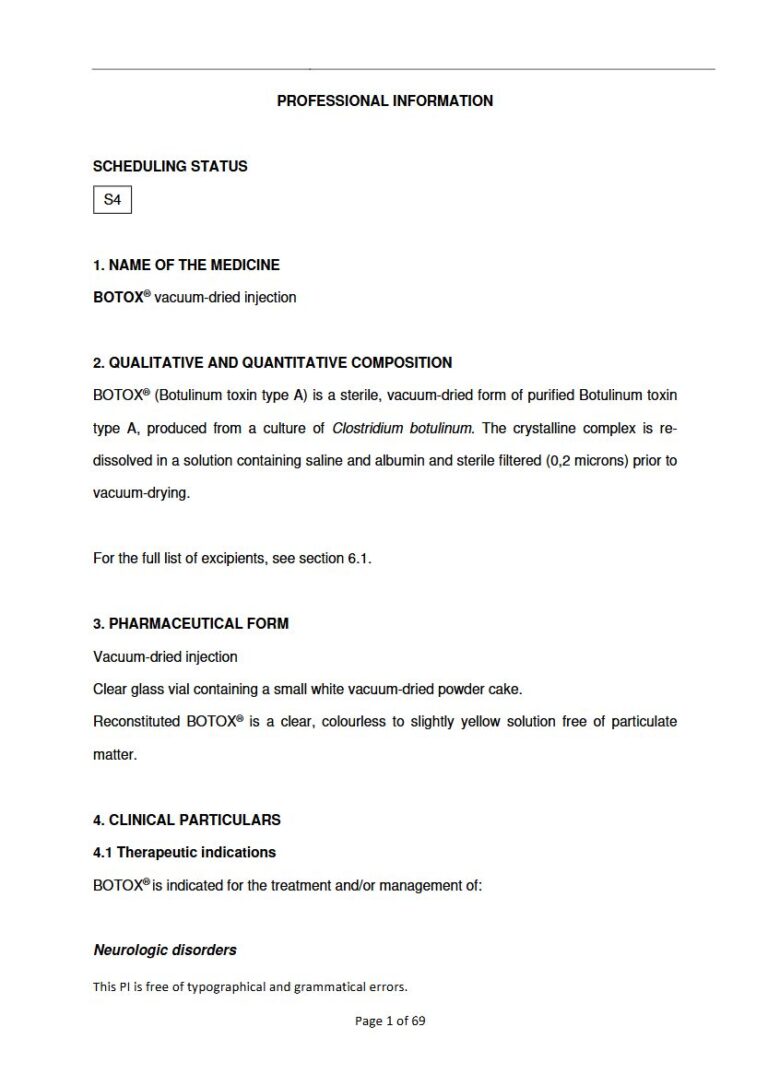
BOTOX u00ae is indicated for the treatment and/or management of:
Neurologic disorders
- Focal spasticity, including:
- Upper and lower limb spasticity in paediatric patients two years of age and older
- Upper and lower limb spasticity in adults.
- Selected cases of strabismus and blepharospasm associated with dystonia, including benign essential blepharospasm or VII nerve disorders (hemifacial spasm), in patients 12 years of age and older. The efficacy of BOTOX u00ae in deviations over 50 prism diopters, in restrictive strabismus, in Duane's syndrome with lateral rectus weakness and in secondary strabismus caused by prior surgical over-recession of the antagonist is doubtful. BOTOX u00ae is ineffective in chronic paralytic strabismus.
- The reduction of the signs and symptoms of cervical dystonia (spasmodic torticollis) in adults.
- Symptom relief in adults fulfilling criteria for chronic migraine (headaches on u2265 15 days per month of which at least 8 days with migraine) in patients who have responded inadequately or are intolerant of prophylactic migraine medications.
Bladder disorders
- Idiopathic overactive bladder with symptoms of urinary incontinence (defined as three or more episodes of urinary incontinence per 3 days), urgency and urinary frequency in adult female patients who have an inadequate response to anticholinergic medicines), or who are intolerant of anticholinergic medication. Efficacy and safety have not been demonstrated for more than 2 treatment cycles. Efficacy has not been demonstrated in males with idiopathic overactive bladder (see section 4.4).
- Urinary incontinence due to neurogenic detrusor overactivity caused by spinal cord injury (SCI) or multiple sclerosis (MS) in adult patients who are willing and able to perform clean intermittent self-catheterisation, if required.
Skin and skin appendage disorders
- Persistent severe primary hyperhidrosis of the axillae, which interferes with the activities of daily living and is resistant to topical treatment.
- Moderate to severe glabellar lines associated with corrugator and/or procerus muscle activity in people less than or equal to 65 years of age. Efficacy beyond 4 treatments has not been demonstrated.
- Moderate to severe lateral canthal lines (crowu2019s feet lines) seen at maximum smile. Efficacy beyond 4 treatments has not been demonstrated.
- Moderate to severe forehead lines seen at maximum eyebrow elevation.
Lower Facial Muscle Prominence
- For the improvement in the appearance of platysma prominence in adults.
4.2 Posology and method of administration
Posology
Please note that dosage and directions for use is specific to each individual indication. BOTOX u00ae should be administered only by a suitably qualified and registered medical practitioner. BOTOX u00ae is for single patient use only.
FOR INTRADERMAL, INTRADETRUSOR OR INTRAMUSCULAR USE
Once opened and reconstituted in the vial, use within twenty four hours and discard remaining solution, as the product and diluent do not contain a preservative. Reconstituted BOTOX u00ae should not be frozen. When BOTOX u00ae is diluted for urinary incontinence in a syringe, it should be used immediately. Optimum dose levels and number of injection sites per muscle have not been established. Individual treatment regimens should therefore be drawn up by the medical practitioner. Optimum dose levels should be determined by titration.
Special populations
Elderly
With the exception of overactive bladder, clinical studies of BOTOX u00ae did not identify differences in responses between the elderly and younger patients. The lowest effective dose with the longest clinically indicated interval between injections is recommended for elderly patients. Older people with significant medical history and concomitant medications should not be treated (for overactive bladder, see section 5.1 and section 4.8).
Paediatric population
The safety and efficacy of BOTOX u00ae in the treatment of individual indications have not been established in children and adolescents under the ages listed in Table 1. No data are available.
Table 1: Paediatric use
- Focal spasticity in paediatric patients 2 years
- Strabismus, blepharospasm and hemifacial spasm 12 years
- Cervical dystonia 16 years
- Chronic migraine 18 years
- Overactive bladder and neurogenic detrusor overactivity 18 years
- Primary hyperhidrosis of the axillae 18 years
- Glabellar lines, crowu2019s feet lines and forehead lines 18 years
- Platysma Prominence 18 years
The safety and efficacy of BOTOX u00ae in indications other than those described for the paediatric population in Table 1 have not been established. Post-marketing reports of distant spread of toxin have been reported in paediatric patients with comorbidities, predominantly with cerebral palsy (see section 4.8). There have been spontaneous reports of death sometimes associated with aspiration pneumonia in children with severe cerebral palsy after treatment with BOTOX u00ae, including following off-label use (e.g. neck area). Extreme caution should be exercised when treating paediatric patients who have significant neurologic debility, dysphagia, or have a recent history of aspiration pneumonia or lung disease. BOTOX u00ae should not be used in patients with poor underlying health status.
Dilution technique
The following information is important: If different vial sizes of BOTOX u00ae are being used as one injection procedure, care should be taken to use the correct amount of diluent when reconstituting a particular number of Units per 0,1 ml. The amount of diluent varies between BOTOX u00ae 50 Allergan Units, BOTOX u00ae 100 Allergan Units and BOTOX u00ae 200 Allergan Units. Each syringe should be labelled accordingly. BOTOX u00ae must only be reconstituted with sterile non-preserved sodium chloride 9 mg/ml (0,9 %) solution for injection. The appropriate amount of diluent (see Table 2) should be drawn up into a syringe. Since BOTOX u00ae is denatured by bubbling or similar violent agitation; inject the diluent into the vial gently. Discard the vial if a vacuum does not pull the diluent into the vial. Record the date and the time of reconstitution on the space on the label. BOTOX u00ae should be administered within 24 hours after reconstitution. During this time period, reconstituted BOTOX u00ae should be stored in a refrigerator (2 u00b0 to 8 u00b0C). Reconstituted BOTOX u00ae should be clear, colourless and free of particulate matter. Parenteral products should be inspected visually for particulate matter and discolouration prior to administration and whenever the solution and the container permit.
Table 2: Dilution table for BOTOX u00ae 50, 100 and 200 Unit vials for all indications except bladder disorders
| Resulting dose (Units per 0,1 ml) | 50 Unit vial | 100 Unit vial | 200 Unit vial |
|---|---|---|---|
| 20 Units | 0,25 ml | 0,5 ml | 1 ml |
| 10 Units | 0,5 ml | 1 ml | 2 ml |
| 5 Units | 1 ml | 2 ml | 4 ml |
| 4 Units | 1,25 ml | 2,5 ml | 5 ml |
| 2,5 Units | 2 ml | 4 ml | 8 ml |
| 1,25 Units | 4 ml | 8 ml | N/A |
Note: These dilutions are calculated for an injection volume of 0,1 ml. A decrease or increase in the BOTOX u00ae dose is also possible by administering a smaller or larger injection volume - from 0,05 ml (50 % decrease in dose) to 0,15 ml (50 % increase in dose).
An injection of BOTOX u00ae is prepared by drawing into a sterile 1,0 ml syringe an amount of the properly diluted toxin (see Table 2) slightly greater than the intended dose. Air bubbles in the syringe barrel are expelled and the syringe is attached to the electro-myographic injection needle, preferably a 27 gauge needle. Injection volume in excess of the intended dose is expelled through the needle into an appropriate waste container to assure patency of the needle and to confirm that there is no syringe-needle leakage. A new, sterile needle and syringe should be used to enter the vial on each occasion for dilution or removal of BOTOX u00ae.
Overactive bladder - dilution instructions
It is recommended that one 100 Unit or two 50 Unit vials are used for convenience of reconstitution.
Dilution instructions using a 100 Unit vial
- Reconstitute a 100 Unit vial of BOTOX u00ae with 10 ml of 0,9 % non-preserved saline solution and mix gently.
- Draw the 10 ml from the vial into a 10 ml syringe.
Dilution instructions using two 50 Unit vials
- Reconstitute two 50 Unit vials of BOTOX u00ae each with 5 ml of 0,9 % non-preserved saline solution and mix the vials gently.
- Draw the 5 ml from each of the vials into a single 10 ml syringe. This will result in a 10 ml syringe containing a total of 100 Units of reconstituted BOTOX u00ae. Use immediately after reconstitution in the syringe. Dispose of any unused saline.
Urinary incontinence due to neurogenic detrusor overactivity - dilution instructions
It is recommended that a 200 Unit vial or two 100 Unit vials are used for convenience of reconstitution.
Dilution instructions using two 100 Unit vials
- Reconstitute two 100 Unit vials of BOTOX u00ae, each with 6 ml of 0,9 % non-preserved saline solution and mix the vials gently.
- Draw 4 ml from each vial into each of two 10 ml syringes. Draw the remaining 2 ml from each vial into a third 10 ml syringe.
- Complete the reconstitution by adding 6 ml of 0,9 % non-preserved saline solution into each of the 10 ml syringes, and mix gently.
Dilution instructions using a 200 Unit vial
- Reconstitute a 200 Unit vial of BOTOX u00ae with 6 ml of 0,9 % non-preserved saline solution and mix the vial gently.
- Draw 2 ml from the vial into each of three 10 ml syringes.
- Complete the reconstitution by adding 8 ml of 0,9 % non-preserved saline solution into each of the 10 ml syringes, and mix gently.
Dilution instructions using four 50 Unit vials
- Reconstitute four 50 Unit vials of BOTOX, each with 3 ml of 0,9 % non-preserved saline solution and mix the vials gently.
- Draw 3 ml from the first vial and 1 ml from the second vial into one 10 ml syringe.
- Draw 3 ml from the third vial and 1 ml from the fourth vial into a second 10 ml syringe.
- Draw the remaining 2 ml from the second and fourth vials into a third 10 ml syringe.
- Complete the reconstitution by adding 6 ml of 0,9 % non-preserved saline solution into each of the three 10 ml syringes, and mix gently.
This will result in three 10 ml syringes each containing 10 ml (~67 Units in each), for a total of 200 Units of reconstituted BOTOX u00ae. Use immediately after reconstitution in the syringe. Dispose of any unused saline.
Method of administration
Neurologic disorders
Focal spasticity of the upper limb in paediatric patients
Recommended needle: Appropriately sized sterile needle. Needle length should be determined based on muscle location and depth. Administration guidance: Localisation of the involved muscles with techniques such as electromyographic guidance, nerve stimulation, or ultrasound is recommended. Prior to injection, local anaesthesia or local anaesthesia in combination with minimal or moderate sedation may be used, per local site practice. The safety and efficacy of BOTOX u00ae in the treatment of paediatric spasticity has not been evaluated under general anaesthesia or deep sedation/analgesia. The following diagram indicates the injection sites for paediatric upper limb spasticity:
Recommended dose: The recommended dose for treating paediatric upper limb spasticity is 3 Units/kg to 6 Units/kg body weight divided among the affected muscles. BOTOX u00ae Dosing by Muscle for Paediatric Upper Limb Spasticity
Muscles Injected BOTOX 3 Units/kg (maximum Units per muscle) BOTOX 6 Units/kg (maximum Units per muscle) Number of Injection Sites
Elbow Flexor Muscles Biceps 1,5 Units/kg (50 Units) 3 Units/kg (100 Units) 4
Brachialis 1 Unit/kg (30 Units) 2 Units/kg (60 Units) 2
Brachioradialis 0,5 Units/kg (20 Units) 1 Unit/kg (40 Units) 2
Wrist Muscles Flexor carpi radialis 1 Unit/kg (25 Units) 2 Units/kg (50 Units) 2
Flexor carpi ulnaris 1 Unit/kg (25 Units) 2 Units/kg (50 Units) 2
Finger Muscles Flexor digitorum profundus 0,5 Units/kg (25 Units) 1 Unit/kg (50 Units) 2
Flexor digitorum sublimis 0,5 Units/kg (25 Units) 1 Unit/kg (50 Units) 2
Maximum dose: The total dose of BOTOX u00ae administered per treatment session in the upper limb should not exceed 6 Units/kg body weight or 200 Units, whichever is lower. If it is deemed appropriate by the treating healthcare practitioner, the patient should be considered for re-injection when the clinical effect of the previous injection has diminished, no sooner than 12 weeks after the previous injection. When treating the upper and lower limbs in combination, the total dose should not exceed the lower of 10 Units/kg body weight or 340 Units, in a 12-week interval. Additional information: Treatment with BOTOX u00ae is not intended to substitute for usual standard of care rehabilitation regimens. Clinical improvement generally occurs within the first two weeks after injection. Repeat treatment should be administered when the clinical effect of a previous injection diminishes but not more frequently than every 12 weeks.
4.3 Contraindications
BOTOX u00ae is contraindicated:
- in individuals with known hypersensitivity to botulinum toxin type A or any ingredient in the formulation;
- in the presence of infection or inflammation at the proposed injection site(s); or
- when excessive weakness or atrophy is present in the target muscle.
BOTOX u00ae should not be used for treatment of patients with amyotrophic lateral sclerosis or disorders that produce peripheral neuromuscular dysfunction, or when there are neuromuscular junctional disorders e.g. myasthenia gravis or Eaton Lambert Syndrome.
BOTOX u00ae for management of bladder disorders is contraindicated:
- in patients who have urinary tract infection at the time of treatment;
- in patients with acute urinary retention at the time of treatment, who are not routinely catheterising;
- in patients who are not willing or able to initiate self-catheterisation post-treatment if required.
4.4 Special warnings and precautions for use
Medical practitioners wishing to inject BOTOX u00ae should ensure that they are adequately trained to do so and have access to adequate resuscitating facilities. Botulinum toxin units are not interchangeable from one product to another. Doses recommended in Allergan Units are different from other botulinum toxin preparations. The recommended dosages and frequencies of administration of BOTOX u00ae should not be exceeded due to the potential for overdose, exaggerated muscle weakness, distant spread of toxin and the formation of neutralising antibodies. Initial dosing in treatment nau00efve patients should begin with the lowest recommended dose for the specific indication. This medicine contains less than 1 mmol sodium (23 mg) per vial, i.e. essentially u201csodium freeu201d. Prescribers and patients should be aware that side effects can occur despite previous injections being well tolerated. Caution should therefore be exercised on the occasion of each administration. Post-marketing safety data from BOTOX u00ae suggest that botulinum toxin effects may, in some cases, be observed beyond the site of local injection. These effects have been reported hours to weeks after injection, and may include muscular weakness, ptosis, diplopia, blurred vision, facial weakness, swallowing and speech disorders, constipation, aspiration pneumonia, difficulty in breathing and respiratory depression. The risk of symptoms is probably greatest in children treated for spasticity, but symptoms can also occur in patients who have underlying conditions and comorbidities that would predispose them to these symptoms, including children and adults treated for spasticity and other conditions.
Patients treated with BOTOX u00ae may also experience exaggerated muscle weakness. Older and debilitated patients should be treated with caution. Consideration should be given to the risk-benefit implications for the individual patient before embarking on treatment with BOTOX u00ae. Dysphagia has also been reported following injection to sites other than the cervical musculature (see section 4.4, Cervical dystonia). Individuals with peripheral motor neuropathic diseases (e.g. amyotrophic lateral sclerosis or motor neuropathy) or neuromuscular junctional disorders (e.g. myasthenia gravis or Lambert-Eaton syndrome) should not receive BOTOX u00ae. Patients with known or unrecognised neuromuscular junctional disorders are at increased risk of clinically significant systemic effects including severe dysphagia and respiratory compromise from typical doses of BOTOX u00ae (see section 4.3). There have been cases of administration of botulinum toxin to patients with known or unrecognised neuromuscular junction disorders where the patients have shown extreme sensitivity to the systemic effects of typical clinical doses. In some of these cases, dysphagia has lasted several months and required placement of a gastric feeding tube. When exposed to very high doses, patients with neurologic disorders, e.g. paediatric cerebral palsy or adult spasticity, may also be at increased risk of clinically significant systemic effects. Swallowing and breathing difficulties can be life threatening and death has been reported. Caution should be exercised when treating patients who have neurological debility or dysphagia or have a recent history of aspiration pneumonia or lung disease.
Patients or caregivers should be advised to seek immediate medical care if swallowing, speech or respiratory disorders arise. Sedentary patients should be cautioned to resume activity slowly and carefully following administration of BOTOX u00ae. The relevant anatomy, and any alterations to the anatomy due to prior surgical procedures, must be understood prior to administering BOTOX u00ae and injection into vulnerable anatomic structures must be avoided. Pneumothorax associated with injection procedure has been reported following the administration of BOTOX u00ae near the thorax. Caution is warranted when injecting in proximity to the lung, particularly the apices. Serious adverse events including fatal outcomes have been reported in patients who had received BOTOX u00ae injected directly into salivary glands, the oro-lingual-pharyngeal region, oesophagus and stomach. Some patients had pre-existing dysphagia or significant debility. Epinephrine (adrenaline) and other precautions as necessary should be available should an anaphylactic reaction occur. In the treatment of some indications with BOTOX u00ae, there have been reports of death, sometimes associated with dysphagia, pneumonia and/or other significant debility. Patients or caregivers should be advised to seek immediate medical care if swallowing, speech or respiratory disorders arise. BOTOX u00ae should be given only by medical practitioners with appropriate qualifications, and expertise in the treatment and the use of the required equipment.
4.5 Interactions with other medicines
The effect of botulinum toxin type A may be potentiated by aminoglycoside antibiotics or any other medicinal products that interfere with neuromuscular transmission (e.g. neuromuscular blocking agents). Caution should be exercised when BOTOX u00ae is used in patients receiving aminoglycosides (e.g. streptomycin, tobramycin, neomycin, gentamycin, netilmycin, kanamycin, amikacin), tetracyclines, lincomycin, or any other medicine that interferes with neuromuscular transmission (e.g. neuromuscular blocking agents, both depolarising and non-depolarising, lincosamides, polymyxins, quinidine, magnesium sulfate, and anticholinesterases). (See section 4.8.) No tests have been carried out to establish the possibility of clinical interaction with other medicinal product. The effect of administering different botulinum neurotoxin serotypes at the same time or within several months of each other is unknown. Excessive weakness may be exacerbated by administration of another dose of BOTOX u00ae prior to the resolution of the effects of a previously administered BOTOX u00ae.
4.6 Fertility, pregnancy and lactation
Pregnancy
BOTOX u00ae should not be used during pregnancy. Safety of BOTOX u00ae when administered during pregnancy has not been established.
Breastfeeding
BOTOX u00ae should not be used during lactation. Safety of BOTOX u00ae when administered during lactation has not been established. No information is available on the passage of the toxin into breast milk.
Fertility
There is no fertility data available.
4.7 Effects on ability to drive and use machines
BOTOX u00ae may cause asthenia, muscle weakness, dizziness and visual disturbance, which could make driving or using machines dangerous.
4.8 Undesirable effects
General
Patients can be expected to experience an adverse reaction after treatment with BOTOX u00ae at the rates of 35 % for blepharospasm, 28 % with cervical dystonia, 8 % for paediatric cerebral palsy, 11 % for hyperhidrosis of the axillae, 9% in adults with focal spasticity of the upper limb, 11 % in adults with focal spasticity of the lower limb. In clinical trials for overactive bladder the incidence was 26 % with the first treatment and 22 % with the second treatment. In clinical trials for urinary incontinence due to neurogenic detrusor overactivity, the incidence of adverse reactions was 32 % with the first treatment and declined to 18 % with a second treatment. In clinical trials for chronic migraine, the incidence was 26 % with the first treatment and declined to 11 % with the second treatment. In controlled clinical trials for glabellar lines, adverse events considered by the investigators to be related to BOTOX u00ae were reported in 23,5 % (placebo: 19,2 %) of patients. In treatment cycle 1 of the pivotal controlled clinical trials for crowu2019s feet lines seen at maximum smile, such events were reported in 7,6 % (24 Units for crowu2019s feet lines alone) and 6,2 % (44 Units : 24 Units for crowu2019s feet lines administered simultaneously with 20 Units for glabellar lines) of patients compared to 4,5 % for placebo. Adverse reactions may be related to the treatment, injection technique or both. In treatment cycle 1 of clinical trials for forehead lines seen at maximum eyebrow elevation, adverse events considered by the investigators to be related to BOTOX u00ae were reported in 20,6 % of patients treated with 40 Units (20 Units to the frontalis with 20 Units to the glabellar complex), and 14,3 % of patients treated with 64 Units (20 Units to the frontalis with 20 Units to the glabellar complex and 24 Units to the lateral canthal lines areas), compared to 8,9 % of patients that received placebo.
Adverse reactions usually occur within the first few days following injection and may have duration of several months or, in some cases, longer. Local muscle weakness represents the expected pharmacological action of botulinum toxin in muscle tissue. However, weakness of adjacent and/or distant muscles has also occurred due to spread of toxin. Localised pain, inflammation, paraesthesia, hypoaesthesia, tenderness, swelling/oedema, erythema, localised infection, bleeding and/or bruising may be associated with the injection. Fever and flu-like symptoms have also been reported after injections with botulinum toxin. Needle-related pain and/or anxiety have resulted in vasovagal responses, including transient symptomatic hypotension and syncope.
Adverse reactions u2013 frequency by indication
For each indication the frequency of adverse reactions arising from clinical experience is given as follows: Very common (u2265 1/10); Common (u2265 1/100, <1/10); Uncommon (u2265 1/1 000, <1/100); Rare (u2265 1/10 000, <1/1 000); Very rare (<1/10 000).
Below are lists of side effects which vary depending on the part of the body where BOTOX u00ae is injected.
Neurologic disorders
Focal spasticity of the upper limb in paediatric patients
System Organ Class Preferred Term Frequency
- Infections and infestations Upper respiratory tract infection Common
- Gastrointestinal disorders Nausea Common
- Musculoskeletal and connective tissue disorders Muscular weakness Common
- General disorders and administration site conditions Injection site pain Common
Focal spasticity of the lower limb in paediatric patients
System Organ Class Preferred Term Frequency
- Skin and subcutaneous tissue disorders Rash Common
- Musculoskeletal and connective tissue disorders Muscular weakness Uncommon
- General disorders and administration site conditions Gait disturbance, injection site pain Common
- Injury, poisoning and procedural complications Ligament sprain, skin abrasion Common
Focal upper limb spasticity in adult patients
System Organ Class Preferred Term Frequency
- Gastrointestinal disorders Nausea Common
- Musculoskeletal and connective tissue disorders Pain in extremity, muscular weakness Common
- General disorders and administration site conditions Fatigue, peripheral oedema Common
Focal lower limb spasticity in adult patients
System Organ Class Preferred Term Frequency
- Skin and subcutaneous tissue disorders Rash Common
- Musculoskeletal and connective tissue disorders Arthralgia, musculoskeletal stiffness, muscular weakness Common
- General disorders and administration site conditions Peripheral oedema Common
- Injury, poisoning and procedural complications Fall Common
Strabismus
System Organ Class Preferred Term Frequency
- Eye disorders Eyelid ptosis, eye movement disorder Very common
- Ocular retrobulbar haemorrhages, eye penetration, Holmes-Adie pupil Uncommon
- Vitreous haemorrhage Rare
Blepharospasm and hemifacial spasm
System Organ Class Preferred Term Frequency
- Nervous system disorders Dizziness, facial paresis, facial palsy Uncommon
- Eye disorders Eyelid ptosis Very common
- Punctuate keratitis, lagophthalmos, dry eye, photophobia, eye irritation, increased lacrimation Common
- Keratitis, ectropion, diplopia, entropion, visual disturbance, blurred vision Uncommon
- Eyelid oedema Rare
- Ulcerative keratitis, corneal epithelium defect, corneal perforation Very rare
Skin and subcutaneous tissue disorder Ecchymosis Common
Rash/dermatitis Uncommon
General disorders and administration site conditions Irritation, face oedema Common
Fatigue Uncommon
Cervical dystonia
Safety data were compiled from placebo controlled, double-blind trials involving 231 patients treated with BOTOX u00ae. The following adverse reactions were reported:
System Organ Class Preferred Term Frequency
- Infections and infestations Rhinitis, upper respiratory tract infection Common
- Nervous system disorders Dizziness, hypertonia, hypoaesthesia, somnolence, headache Common
- Eye disorders Diplopia, eyelid ptosis Uncommon
- Respiratory, thoracic and mediastinal disorders Dyspnoea, dysphonia Uncommon
- Gastrointestinal disorders Dysphagia Very common
- Dry mouth, nausea Common
- Musculoskeletal and connective tissue disorders Muscular weakness Very common
- Musculoskeletal stiffness, soreness Common
- General disorders and administration site conditions Pain Very common
- Asthenia, influenza-like illness, malaise Common
- Pyrexia Uncommon
Chronic migraine
System Organ Class Preferred Term Frequency
- Nervous system disorders Headache, migraine including worsening of migraine, facial paresis Common
- Eye disorders Eyelid ptosis Common
- Skin and subcutaneous tissue disorders Pruritus, rash Common
- Pain of skin Uncommon
- Musculoskeletal and connective tissue disorders Neck pain, myalgia, musculoskeletal pain, musculoskeletal stiffness, muscle spasms, muscle tightness, muscular weakness Common
- Pain in jaw Uncommon
- General disorders and administration site conditions Injection site pain Common
- Gastrointestinal disorders Dysphagia Uncommon
The discontinuation rate due to adverse events in these phase 3 trials was 3,8 % for BOTOX u00ae vs. 1,2 % for placebo.
Bladder disorders
Overactive bladder
System Organ Class Preferred Term Frequency
- Infections and infestations Urinary tract infection Very common
- Bacteriuria Common
Renal and urinary disorders Dysuria Very common
Urinary retention, pollakiuria, leukocyturia Common
Investigations Residual urine volume* Common
* Elevated post-void residual urine volume (PVR) not requiring catheterisation
Procedure-related adverse reactions that occurred with a common frequency were dysuria and haematuria. During the complete treatment cycle, urinary tract infections and urinary retention were reported in 25,5 % and 5,8 %, respectively, for patients treated with BOTOX u00ae. Clean intermittent catheterisation was initiated in 6,5 % of patients following treatment with BOTOX u00ae 100 Units versus 0,4 % in the placebo group.
Of 1242 patients in the placebo-controlled clinical studies, 41,4 % of patients (n = 514) were u2265 65 years of age and 14,7 % (n = 182) were u2265 75 years of age. No overall difference in the safety profile following BOTOX u00ae treatment was observed between patients u2265 65 years compared to patients < 65 years in these studies, with the exception of urinary tract infection where the incidence was higher in older people in both the placebo and BOTOX u00ae groups compared to the younger patients. In patients 65 years and older, urinary tract infection was reported in 33,1 % and 15,2 % in patients treated with BOTOX u00ae and placebo respectively. In patients less than 65 years of age, urinary tract infection was reported in 21,2 % and 6,6 % in patients treated with BOTOX u00ae and placebo respectively. In patients 65 years and older, urinary retention was reported in 8,4 % and 0,4 % in patients treated with BOTOX u00ae and placebo respectively. In patients less than 65 years of age, urinary retention was reported in 6,1 % and 0,6 % in patients treated with BOTOX u00ae and placebo respectively. No change was observed in the overall safety profile with one repeat dosing.
Urinary incontinence due to neurogenic detrusor overactivity
The following rates in double-blind studies with BOTOX u00ae 200 Units were reported during the complete treatment cycle (median duration of 44 weeks of exposure):
System Organ Class Preferred Term Frequency
- Infections and infestations Urinary tract infection Very common
- Psychiatric disorders Insomnia Common
- Gastrointestinal disorders Constipation Common
- Musculoskeletal and connective tissue disorders Muscular weakness, muscle spasm Common
- Renal and urinary disorders Urinary retention Very common
- Haematuria*, dysuria*, bladder diverticulum Common
- General disorders and administration site conditions Fatigue, gait disturbance Common
- Injury, poisoning and procedural complications Autonomic dysreflexia*, fall Common
* Procedure-related adverse reactions In clinical trials urinary tract infection was reported in 49,2 % of patients treated with 200 Units of BOTOX u00ae and in 35,7 % of patients treated with placebo (53,0 % of multiple sclerosis patients treated with 200 Units vs. 29,3 % with placebo; 45,4 % of spinal cord injury patients treated with 200 Units vs. 41,7 % with placebo). Urinary retention was reported in 17,2 % of patients treated with 200 Units of BOTOX u00ae and in 2,9 % of patients treated with placebo (28,8 % of multiple sclerosis patients treated with 200 Units vs. 4,5 % with placebo; 5,4 % of spinal cord injury patients treated with 200 Units vs. 1,4 % with placebo). No change was observed in the overall safety profile with repeat dosing. No difference on the multiple sclerosis (MS) exacerbation annualised rate (i.e. number of MS exacerbation events per patient-year) was observed (BOTOX u00ae = 0,23; placebo = 0,20) in the MS patients enrolled in the pivotal studies.
4.9 Overdose
Signs and symptoms of overdose are likely not to be apparent immediately post-injection. Overdose may produce local, or distant, generalised and profound neuromuscular paralysis. Should accidental injection or oral ingestion occur or overdose be suspected, the patient should be medically monitored for up to several weeks for progressive signs or symptoms of systemic muscular weakness which could be local, or distant from the site of injection which may include ptosis, diplopia, dysphagia, dysarthria, generalised weakness or respiratory failure. These patients should be considered for further medical evaluation and appropriate medical therapy immediately instituted, which may include hospitalisation.
If the musculature of the oropharynx and oesophagus are affected, aspiration may occur which may lead to development of aspiration pneumonia. If the respiratory muscles become paralysed or sufficiently weakened, intubation and assisted respiration may be necessary until recovery takes place, and may involve the need for a tracheostomy and prolonged mechanical ventilation, in addition to other general supportive care.
