
R-Cin Plus 150 mg and 75 mg Coated tablet.
PDF Leaflet Revision Date: 14 March 2023
Clinical Summary
Quick overview from the medicine insert
Indication
Continuation phase treatment of pulmonary or extra-pulmonary tuberculosis.
Dosage (summary)
Daily for 4 months: Rifampicin 10 mg/kg (max 600 mg), Isoniazid 5 mg/kg (max 300 mg).
Special Populations
- Elderly
- Hepatic impairment
- Renal impairment
Pregnancy & Breastfeeding
Safety not established; avoid breastfeeding.
Key Drug Interactions
- Saquinavir/ritonavir
- Nevirapine
- Alcohol
Contraindications
- Hypersensitivity to rifamycins
- Jaundice
- Acute porphyria
- Severe renal failure
Common side effects
- Nausea
- Dizziness
- Headache
- Hepatitis
Counselling Points
- Take on an empty stomach
- Avoid alcohol
- Monitor for liver function abnormalities
Serious warnings
- Hepatotoxicity
- Severe hypersensitivity reactions
- Risk of bleeding
Important Disclaimer
The R-Cin Plus 150 mg and 75 mg Coated tablet. professional information leaflet below is the property of Pharma Dynamics and is provided on Medinsert exactly as issued, with no.. alterations or editorial changes. We make every effort to keep content current by updating documents as soon as new versions become available. Medinsert serves as a trusted access point for healthcare professionals, but does not replace official sources or clinical judgement. For more details, please read our full disclaimer. read more>>
 Healthcare Professionals Only
This content is for registered healthcare professionals
Sign in or create a free account to read the full package insert.
Free for HPCSA-registered professionals. Powered by Medinsert.
Clinical Particulars
Section 4 of the official insert — extracted exactly as issued, no alterations
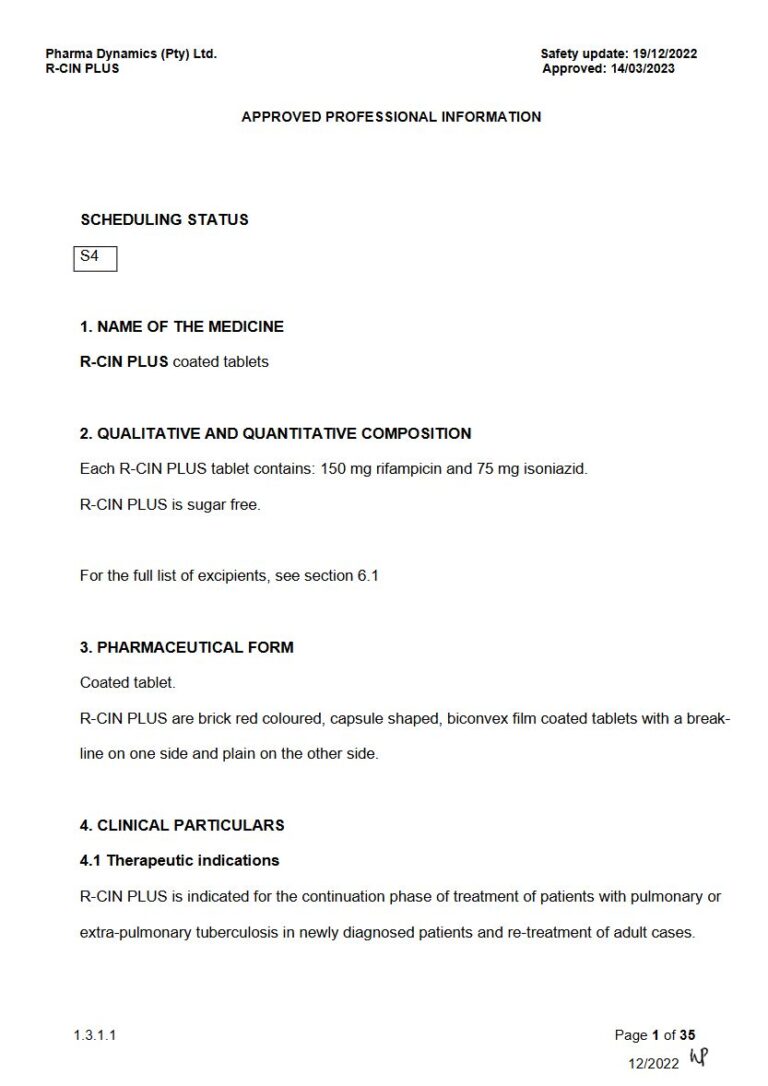
4.1 Therapeutic indications
R-CIN PLUS is indicated for the continuation phase of treatment of patients with pulmonary or extra-pulmonary tuberculosis in newly diagnosed patients and re-treatment of adult cases.
4.2 Posology and method of administration
R-CIN PLUS tablets are recommended in the continuation phase of the treatment of pulmonary and extra-pulmonary tuberculosis. South African National Tuberculosis Control Programme dosage recommendation: New, smear positive patients, new smear negative patients and extra-pulmonary TB: During this phase, which lasts for 4 months, this medicine should be administered daily for 5 consecutive days per week. WHO dosage recommendation: During this phase, which lasts for 4 months, R-CIN PLUS should be administered on a continuous daily basis. The total dosage requirement is as follows:
Daily:
Rifampicin 10 mg/kg maximum 600 mg per day (8-12 mg/kg)
Isoniazid 5 mg/kg maximum 300 mg/kg (4-6 mg/kg)
Patient body mass (kg)
Number of tablets (daily)
R - CIN PLUS
30 - 37 2
38 - 54 3
Paediatric population
R-CIN PLUS tablets are not suitable for children under 12 years.
Method of administration
For oral use. R-CIN PLUS should be taken on an empty stomach at least 30 minutes before a meal or 2 hours after a meal. Missed dose: Doctors should advise patients who forget to take R-CIN PLUS to take a dose as soon as possible and then continue with the normal dose. Patients should not take a double dose to compensate for the missed dose.
4.3 Contraindications
- Hypersensitivity to rifamycins, isoniazid or to any of the ingredients of R-CIN PLUS (see section 6.1).
- R-CIN PLUS is contraindicated in jaundice and acute porphyria (see section 4.4).
- R-CIN PLUS can cause thrombocytopenia and purpura usually with intermittent tuberculosis regimens; further administration is contraindicated (see section 4.8).
- Concomitant use of R-CIN PLUS tablets with the combination of saquinavir/ritonavir is contraindicated (see section 4.5).
- Concomitant use of R-CIN PLUS and nevirapine are contraindicated (see section 4.5)
- R-CIN PLUS is also contraindicated in:
- Alcoholism, active or in remission.
- Hepatic function impairment (rifampicin is metabolised in the liver and may also be hepatotoxic. Increased risk of hepatitis with daily consumption of alcohol or hepatic function impairment).
- Severe renal failure, an increased risk of toxicity [creatinine clearance < 10 ml/min]
- Seizure disorders (isoniazid may be neurotoxic and cause seizures).
4.4 Special warnings and precautions for use
R-CIN PLUS is not indicated for initial treatment or prophylaxis of pulmonary tuberculosis, for meningococcal infections, or in the treatment of asymptomatic meningococcal carries to eliminate Neisseria meningitidis from the nasopharynx. R-CIN PLUS is a combination of rifampicin and isoniazid, each of which has been associated with liver dysfunction. All tuberculosis patients should have pre-treatment measurements of liver function. Adults treated for tuberculosis with R-CIN PLUS should have baseline measurements of hepatic enzymes, bilirubin, serum creatinine, a complete blood count and a platelet count (or estimate). Patients should be seen at least monthly during therapy and should be questioned specifically about symptoms associated with adverse reactions.
All patients with abnormalities should have follow-up, including laboratory testing, if necessary. However, because there is a higher frequency of isoniazid-associated hepatitis among persons older than 35 years of age, a transaminase measurement should be obtained at baseline and at least monthly during therapy in this age group. Other factors associated with an increased risk of hepatitis include daily use of alcohol, chronic liver disease, intravenous drug use and being a black or Hispanic woman. If the patient has no evidence of pre-existing liver disease and normal pre-treatment liver function, liver function tests need only be repeated if fever, vomiting, jaundice or other deterioration in the patient's condition occurs.
Severe, systemic hypersensitivity reactions, including fatal cases, such as Drug Reaction with Eosinophilia and Systemic Symptoms (DRESS) syndrome have been observed during treatment with anti-tuberculosis therapy (see section 4.8). It is important to note that early manifestations of hypersensitivity, such as fever, lymphadenopathy or biological abnormalities (including eosinophilia, liver abnormalities) may be present even though rash is not evident. If such signs or symptoms are present, the patient should be advised to consult immediately their doctor. R-CIN PLUS should be discontinued if an alternative aetiology for the signs and symptoms cannot be established.
4.5 Interactions with other medicines
When R-CIN PLUS is given concomitantly with the combination saquinavir/ritonavir, the potential for hepatotoxicity is increased. Therefore, concomitant use of R-CIN PLUS with saquinavir/ritonavir is contraindicated (see section 4.3).
Cytochrome P - 450 enzyme interaction
Rifampicin is known to induce, and isoniazid is known to inhibit certain cytochrome P-450 enzymes. In general, the impact of the competing effects of rifampicin and isoniazid on the metabolism of medicines that undergo biotransformation through the affected pathways is unknown. Therefore, caution should be used when prescribing R-CIN PLUS with medicines metabolised by cytochrome P-450. To maintain optimum therapeutic blood levels, dosages of medicines metabolised by these enzymes may require adjustment when starting or stopping R-CIN PLUS.
Interactions with Rifampicin
Pharmacodynamic interactions
Chronic use of hepatic enzyme inducing agents prior to anaesthesia except isoflurane, may increase anaesthetic metabolism, leading to increased risk of hepatotoxicity. Halogenated inhalation anaesthetics have been reported to increase hepatotoxicity of both compounds. The concomitant use of rifampicin and halothane should be avoided. Patients receiving both rifampicin and isoniazid, as in R-CIN PLUS, should be monitored closely for hepatotoxicity.
The concomitant use of rifampicin with other antibiotics causing vitamin K dependent coagulopathy such as cefazolin (or other cephalosporins with N-methyl-thiotetrazole side chain) should be avoided as it may lead to severe coagulation disorders, which may result in fatal outcome (specially with high doses).
Effect of rifampicin on other medicines
Induction of Drug Metabolising Enzymes and Transporters
Rifampicin accelerates the metabolism of many medicines by inducing microsomal liver enzymes (in particular cytochrome P450 isoenzyme (CYP) 1A2, 2B6, 2C8, 2C9, 2C19 and 3A4, UDP-glucuronyltransferases (UGT), sulfotransferases, carboxylesterases, or medicine transporter proteins (such as p-glycoprotein)) and multidrug resistance-associated protein 2 (MRP2). Most medicines are substrates for one or more of these enzyme or transporter pathways, and these pathways may be induced by R-CIN PLUS simultaneously. Therefore, R-CIN PLUS may accelerate the metabolism and reduce the activity of certain co-administered medicines and has the potential to perpetuate clinically important interactions against many medicines and across many medicine classes (refer below). Medicines so affected may require an increase in dosage to maintain efficacy and patients should be monitored closely when starting or stopping concurrent rifampicin treatment such as R-CIN PLUS.
4.6 Fertility, pregnancy and lactation
The safety of R - CIN PLUS has not been established in pregnancy and lactating women.
Rifampicin
Blood coagulation monitoring and treatment with Vitamin K to mothers and neonates is recommended when the mother has received rifampicin during the last few weeks of pregnancy as rifampicin can cause post-natal haemorrhages in the mother and infant. Neonates should be carefully observed for evidence of adverse effects.
Isoniazid
Isoniazid crosses the placenta, resulting in foetal serum concentrations that may exceed maternal serum concentrations. Pyridoxine supplementation is recommended for all pregnant women receiving isoniazid.
Breastfeeding
Rifampicin and isoniazid are excreted into breast milk. Infants should not be breast fed by a patient receiving R-CIN PLUS.
4.7 Effects on ability to drive and use machines
R-CIN PLUS may influence the ability to drive as dizziness, drowsiness and visual disorders are side effects (see section 4.8). Patients should be informed of these, and advised that if affected, they should not drive or operate machinery until they know how R-CIN PLUS affects them.
4.8 Undesirable effects
Summary of the safety profile
RIFAMPICIN: Reactions to rifampicin occurring with either daily or intermittent dosage regimens include:
Tabulated summary of adverse reactions
System Organ Class Frequency Side effects
Infections and Infestations Frequency unknown Pseudomembranous colitis, Influenza
Blood and lymphatic system disorders Frequent Less frequent Frequency unknown Thrombocytopenia with or without purpura may occur, usually when given as intermittent therapy, but may be reversible if the medicine is discontinued as soon as purpura occurs. Leukopenia Disseminated intravascular coagulation, eosinophilia, haemolytic anaemia, oedema, muscle weakness and myopathy, agranulocytosis, Vitamin K dependent coagulation disorders
Immune system disorders Frequency unknown Anaphylactic reaction
Endocrine disorders Frequency unknown Chronic pancreatic insufficiency, adrenal insufficiency in patients with compromised adrenal function
Metabolism and nutrition disorders Frequency unknown Decreased appetite
Psychiatric disorders Frequency unknown Psychotic disorder
Nervous system disorders Frequent Less frequent Headache, drowsiness, ataxia, dizziness, and numbness Cerebral haemorrhage and fatalities have been reported when rifampicin administration has been continued or resumed after the appearance of purpura
Eye disorders Less frequent Frequency unknown Eye irritation, visual disturbances Tear discolouration
Vascular disorders Frequency unknown Shock, flushing, vasculitis, bleeding
Respiratory, thoracic and mediastinal disorders Frequency unknown Pulmonary fibrosis and pneumonitis, dyspnoea, wheezing, sputum and saliva discoloured
Gastrointestinal disorders Frequent Less frequent Frequency unknown Nausea, vomiting, anorexia, epigastric distress Diarrhoea Gastrointestinal bleeding, erosive gastritis, ulcerative colitis and eosinophilic colitis, tooth discolouration which may be permanent
Hepatobiliary disorders Frequency unknown Hepatitis, hyperbilirubinaemia, cholestasis (see section 4.4)
Skin and subcutaneous tissue disorders Frequency unknown Erythema multiforme, Stevens-Johnson syndrome (SJS), Toxic epidermal necrolysis (TEN), Drug reaction with eosinophilia and systemic symptoms (DRESS), acute generalised exanthematous pustulosis (AGEP) (see section 4.4), skin reaction, pruritus, rash pruritic urticaria, allergic dermatitis pemphigoid, sweat discolouration
Musculoskeletal, connective tissue and bone disorders Frequency unknown Muscle weakness, myopathy, bone pain
Renal and urinary disorders Frequency unknown Alterations in kidney function and renal failure, acute kidney injury usually due to acute tubular necrosis or to acute interstitial nephritis, chromaturia
Pregnancy, puerperium and perinatal conditions Frequency unknown Post-partum haemorrhage, foetal-maternal haemorrhage
Reproductive system and breast disorders Frequency unknown Disturbances of the menstrual cycle
Congenital and familial/genetic disorders Frequency unknown Porphyria exacerbation
General disorders and administrative site conditions Frequent Less frequent Frequency unknown Soft contact lenses may become permanently stained. Adverse effects during intermittent therapy or after restarting interrupted treatment. u201cFlu Syndromeu201d consisting of episodes of fever, chills, headache, dizziness, and bone pain, shortness of breath and malaise Oedema
Investigations Frequent Frequency unknown Increased blood bilirubin aspartate aminotransferase alanine aminotransferase Decreased blood pressure, increased blood creatinine and hepatic enzyme
ISONIAZID: Tabulated summary of adverse reactions
System Organ Class Frequency Side effects
Blood and lymphatic system disorders Less frequent Eosinophilia, agranulocytosis, thrombocytopenia, anaemia, bleeding associated with acquired inhibition of fibrin stabilisation or factor XIII and red cell aplasia
Immune system disorders Less frequent Frequency unknown Fever, skin reactions (including erythema multiforme) and vasculitis Anaphylactic reactions
Endocrine disorders Less frequent Isoniazid induced pancreatitis
Metabolism and nutrition disorders Frequency unknown Hyperglycaemia, pellagra
Psychiatric disorders Frequency unknown Psychotic reactions
Nervous system disorders Less frequent Frequency unknown Peripheral neuropathy, ataxia, cerebellar toxicity, psychotic reactions (characterised by delusions, hallucinations and confusion, seizures, memory impairment, toxic psychosis), convulsions toxic encephalopathy, optic neuritis and atrophy Polyneuritis presenting as paraesthesia, muscle weakness, loss of tendon reflexes
Ear and labyrinth disorders Frequency unknown Vertigo
Gastrointestinal disorders Frequent Less frequent Nausea, vomiting, epigastric distress, constipation, dry mouth Pancreatitis
Hepatobiliary disorders Less frequent Severe and sometimes fatal hepatitis
Skin and subcutaneous tissue disorders Less frequent Frequency unknown Rash, acne, exfoliative dermatitis Alopecia, urticaria, purpura, Drug Reaction with Eosinophilia and Systemic Symptoms (DRESS) syndrome (See section 4.4), rash, acne, Toxic Epidermal Necrolysis (TEN), Stevens-Johnson syndrome, pemphigus
Musculoskeletal, connective tissue and bone disorders Frequency unknown Systemic lupus erythematous-like syndrome
Reproductive system and breast disorders Frequency unknown Gynaecomastia
General disorders and administrative site conditions Less frequent Fever
Investigations Frequency unknown Anti-nuclear bodies
4.9 Overdose
Signs and symptoms : Information pertaining to overdose involving combination of rifampicin and isoniazid is limited.
Rifampicin
Acute and chronic effects : Mental obtundation; periorbital or facial oedema; pruritus, generalised; Redman syndrome, headache and increasing lethargy, pruritus and gastrointestinal intolerance (nausea, vomiting, abdominal pain) occurred in most patients and will probably occur within a short time after acute ingestion, unconsciousness may occur when there is severe hepatic disease. Transient increases in liver enzymes and/or bilirubin may occur. Brownish-red or orange colouration of the skin, urine, sweat, saliva, tears and faeces will occur, and its intensity is proportional to the amount ingested. Facial or periorbital oedema has occurred in most patients. Hypotension, sinus tachycardia, ventricular dysrhythmias, seizures and cardiac arrest were reported in some fatal cases. The minimum acute lethal or toxic dose is not well established. However, nonfatal acute overdoses in adults have been reported with doses ranging from 9 to 12 g rifampicin. Fatalities in adults occurred with doses over 14 g. Fatalities are more likely to occur if there is underlying hepatic disease, frequent use or abuse of alcohol, or concurrent intake of other hepatotoxic medicines. Nonfatal overdoses in paediatric patients ages 1 to 4 years old of 100 mg/kg for one to two doses have been reported.
Isoniazid
Isoniazid doses of 6 g or more are associated with severe toxicity and doses above 15 g may be fatal without appropriate treatment. Symptoms may not occur until 2 hours after ingestion. Acute and chronic effects : Gastrointestinal disturbances (severe nausea and vomiting); neurotoxicity (dizziness, slurred speech, lethargy, disorientation, hyperflexia, seizures; coma). Patients may be asymptomatic for 30 minutes to 2 hours after an acute overdose. Early symptoms include nausea and vomiting, dizziness, slurred speech, lethargy, disorientation, blurring of vision, visual hallucinations (including bright colours and strange designs) and hyperflexia. Seizures usually occur within 1 to 3 hours after ingestion, and are often repetitive and refractory to treatment with usual anticonvulsants. Lactic acid accumulation produces an anion-gap metabolic acidosis within a few hours, which is often severe and refractory to treatment with sodium bicarbonate. Severe metabolic acidosis, acetonuria, hyperglycaemia, glycosuria and ketonuria have also been reported.
Management of overdose: Because seizures may occur soon after ingestion, induction of emesis with ipecac is not recommended. Gastric lavage may be performed within 2 to 3 hours of ingestion, and activated charcoal and a cathartic may be administered if the patientu2019s seizures are controlled and the airway protected. Supportive measures such as establishing intravenous lines, hydration, correction of electrolyte imbalance, oxygenation, and support of ventilatory function are essential for maintaining the vital functions of the patient. Patients in whom intentional overdose is confirmed or suspected should be referred for psychiatric consultation. If acute isoniazid overdose is suspected, even in asymptomatic patients, the administration of intravenous pyridoxine (vitamin B6) should be considered. In patients with seizures not controlled with pyridoxine, anticonvulsant therapy should be administered. Sodium bicarbonate should be given to control metabolic acidosis. Haemodialysis is advised for refractory cases; if this is not available, peritoneal dialysis can be used along with forced diuresis.
