
Asceprib Injection
Clinical Summary
Quick overview from the medicine insert
Indication
Management of mild to moderate pain, inflammation, and fever.
Dosage (summary)
400 mg to 600 mg administered as a solution for infusion, typically every 6 to 8 hours as needed, not exceeding 2400 mg per day.
Onset of Action / Duration
Onset of action is typically within 30 minutes, with peak effects occurring within 1 to 2 hours.
Special Populations
- Elderly patients
- Patients with renal impairment
- Patients with hepatic impairment
- Patients with cardiovascular disease
Pregnancy & Breastfeeding
Use during pregnancy, especially in the third trimester, is contraindicated. Ibuprofen is excreted in breast milk; caution is advised when administering to nursing mothers.
Key Drug Interactions
- Increased risk of gastrointestinal bleeding with anticoagulants (e.g., warfarin).
- May reduce the effectiveness of antihypertensive medications.
- Increased risk of nephrotoxicity with other NSAIDs or nephrotoxic agents.
Contraindications
- Active peptic ulcer disease.
- Severe heart failure.
- History of hypersensitivity to ibuprofen or other NSAIDs.
- Severe hepatic impairment.
Common side effects
- Gastrointestinal discomfort.
- Nausea and vomiting.
- Dizziness.
- Headache.
- Rash.
Counselling Points
- Take with food or milk to minimize gastrointestinal irritation.
- Avoid alcohol to reduce the risk of gastrointestinal bleeding.
- Report any signs of gastrointestinal bleeding, such as black stools or vomiting blood.
- Inform healthcare provider of any other medications being taken.
Serious warnings
- Use with caution in patients with a history of gastrointestinal disease.
- Monitor renal function in long-term use.
- May cause cardiovascular events; use the lowest effective dose for the shortest duration necessary.
Important Disclaimer
The Asceprib Injection professional information leaflet below is the property of Ascendis Pharma and is provided on Medinsert exactly as issued, with no.. alterations or editorial changes. We make every effort to keep content current by updating documents as soon as new versions become available. Medinsert serves as a trusted access point for healthcare professionals, but does not replace official sources or clinical judgement. For more details, please read our full disclaimer. read more>>
 Healthcare Professionals Only
This content is for registered healthcare professionals
Sign in or create a free account to read the full package insert.
Free for HPCSA-registered professionals. Powered by Medinsert.
Clinical Particulars
Section 4 of the official insert — extracted exactly as issued, no alterations
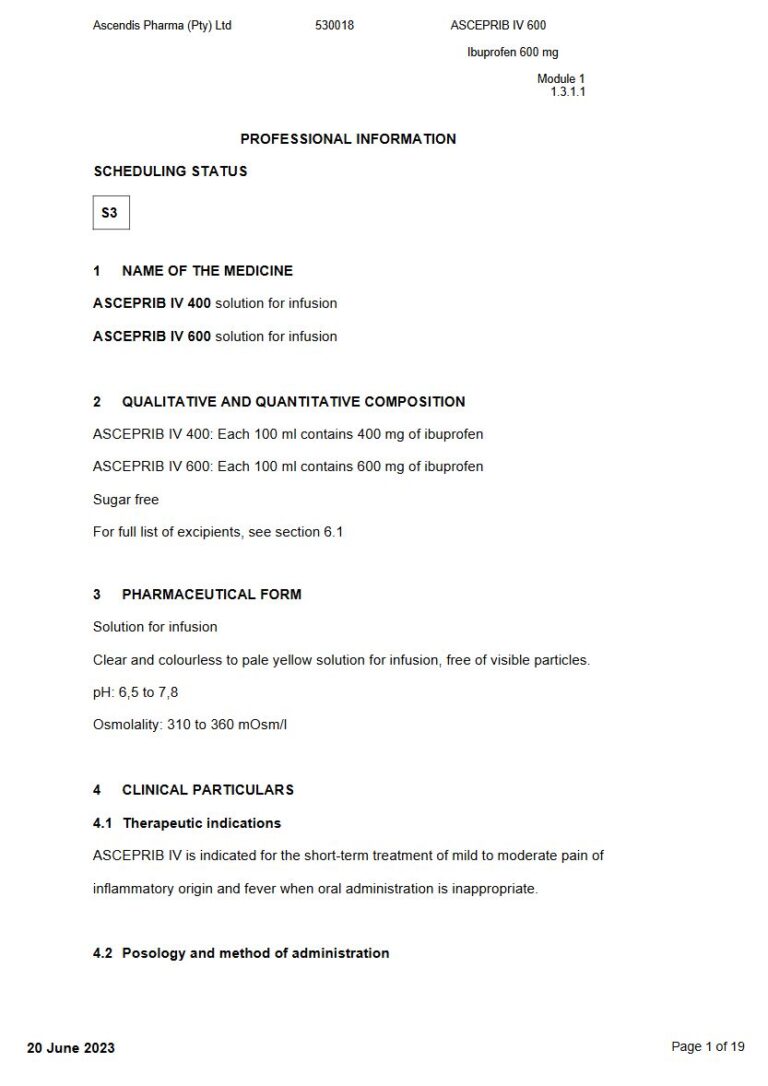
4.1 Therapeutic indications
ASCEPRIB IV is indicated for the short-term treatment of mild to moderate pain of inflammatory origin and fever when oral administration is inappropriate.
4.2 Posology and method of administration
Posology
Use the lowest effective dose for the shortest possible duration of treatment (see section 4.4). Use should be limited to situations where oral administration is inappropriate. Patients must switch to oral treatment as soon as this is possible. ASCEPRIB IV is indicated for short-term acute treatment only and should not be used for more than 3 days. Adequate hydration of the patient should be maintained to minimize the risk of possible renal adverse reactions.
Adults
One dose of 400 mg or 600 mg of ibuprofen. If clinically justified, another dose can be administered after 6 to 8 hours depending on the intensity of the treatment. The maximum total daily dose is 1 200 mg.
Special populations
Elderly patients
Precautions should be taken when treating elderly patients as they are generally more prone to adverse effects (see section 4.4 and 4.8), and are more likely to have renal, hepatic and cardiovascular dysfunction and to be using concomitant medications. Specifically, it is recommended to administer the lowest effective dose for the shortest duration necessary to control symptoms for this population. Treatment should be reviewed at regular intervals and discontinued if no benefit is seen or intolerance occurs.
Renal insufficiency
Precautions should be taken when NSAIDs are used in patients with renal insufficiency. In patients with mild or moderate renal impairment the initial dose should be reduced and be kept as low as possible for the shortest duration necessary to control symptoms and renal function should be monitored. ASCEPRIB IV is contraindicated in patients with severe renal insufficiency (see section 4.3).
Hepatic insufficiency
Precautions should be taken when NSAIDs are used in this population although differences in the pharmacokinetic profile have not been observed. Patients with mild or moderate hepatic insufficiency should start the treatment with reduced doses, the dose should be kept as low as possible for the shortest duration necessary and they should be carefully monitored. ASCEPRIB IV is contraindicated in patients with severe hepatic insufficiency (see section 4.3).
Paediatric population
ASCEPRIB IV should not be used in children and adolescents. The use of ASCEPRIB IV has not been studied in children and adolescents. Therefore, the safety and efficacy have not been established.
Method of administration
For intravenous use. Restricted to hospital use only. The solution should be administered as an intravenous infusion over 30 minutes.
4.3 Contraindications
- Hypersensitivity to ibuprofen or to any of the excipients (see section 6.1)
- Heart failure
- History of gastrointestinal perforation, ulceration or bleeding (PUBs) related to previous NSAIDs, including ASCEPRIB IV.
- Active or history of recurrent ulcer/haemorrhage/perforations.
- Pregnancy (see section 4.6).
- Patients who have previously shown hypersensitivity reactions (e.g. asthma, rhinitis, angioedema or urticaria), in response to ibuprofen, aspirin or other non-steroidal anti-inflammatory drugs.
- Renal failure.
- Conditions involving an increased tendency or active bleeding such as thrombocytopenia.
- Severe dehydration (caused by vomiting, diarrhoea or insufficient fluid intake).
- Children and adolescents (see section 4.2).
4.4 Special warnings and precautions for use
Cardiovascular events
Caution is required in patients with a history of hypertension and/or heart failure as fluid retention and oedema have been reported in association with ASCEPRIB IV therapy. In view of the ASCEPRIB IVu2019s inherent potential to cause fluid retention, heart failure may be precipitated in some compromised patients.
Caution is required in patients with significant risk factors for cardiovascular events (e.g. hypertension, hyperlipidaemia, diabetes mellitus, smoking) and should only be treated with ASCEPRIB IV after careful consideration.
Elderly
The elderly has an increased frequency of adverse reactions to NSAIDs including ASCEPRIB IV, especially gastrointestinal perforation, ulceration and bleeding (PUBs) which may be fatal.
Gastrointestinal
The risk of gastrointestinal perforation, ulceration or bleeding (PUBs) is higher with increasing doses of ASCEPRIB IV, in patients with a history of ulcers, and the elderly. When gastrointestinal bleeding or ulceration occurs in patients receiving ASCEPRIB IV, treatment with ASCEPRIB IV should be stopped. ASCEPRIB IV should be given with caution to patients with a history of gastrointestinal disease (e.g. ulcerative colitis, Crohnu2019s disease, hiatus hernia, gastro-oesophageal reflux disease, angiodysplasia) as the condition may be exacerbated.
Dermatological
Serious skin reactions, some of them fatal, including exfoliative dermatitis, Stevens-Johnson syndrome, and toxic epidermal necrolysis have been reported. ASCEPRIB IV should be discontinued at the first appearance of skin rash, mucosal lesions, or any other sign of hypersensitivity (see section 4.8).
Pregnancy
Regular use of NSAIDs such as ASCEPRIB IV during the third trimester of pregnancy, may result in premature closure of the foetal ductus arteriosus in utero, and possibly, in persistent pulmonary hypertension of the new-born. The onset of labour may be delayed, and its duration increased.
Drug Reaction with Eosinophilia and Systemic Symptoms (DRESS) has been reported in patients receiving NSAIDs such as ASCEPRIB IV. Some of these events have been fatal or life-threatening. DRESS typically, although not exclusively, presents with fever, rash, lymphadenopathy, and/or facial swelling. Other clinical manifestations may include hepatitis, nephritis, haematological abnormalities, myocarditis, or myositis. Sometimes symptoms of DRESS may resemble an acute viral infection. Eosinophilia is often present. Because this disorder is variable in its presentation, other organ systems not noted here may be involved. It is important to note that early manifestations of hypersensitivity, such as fever or lymphadenopathy, may be present even though rash is not evident. If such signs or symptoms are present, discontinue ASCEPRIB IV and evaluate the patient immediately.
Respiratory
Bronchospasm may be precipitated in patients suffering from or with a previous history of bronchial asthma or allergic disease.
Anaphylactoid reactions
As standard practice during intravenous infusion, close patient monitoring is recommended, especially at the beginning of the infusion to detect any anaphylactic reaction caused by the active substance or the excipients. Severe acute hypersensitivity reactions (e.g. anaphylactic shock) are rarely observed. At the first signs of a hypersensitivity reaction following the administration of ibuprofen, therapy must be stopped, and symptomatic treatment must be established. Medically required measures, in line with the symptoms, must be initiated by specialist personnel.
Ibuprofen can mask symptoms of infection, which may lead to delayed initiation of appropriate treatment and thereby worsening the outcome of the infection. This has been observed in bacterial community acquired pneumonia and bacterial complications to varicella. Some cases of aseptic meningitis have been reported with the use of ibuprofen in patients with systemic lupus erythematosus (SLE). Aseptic meningitis is probably more likely to occur in patients with systemic lupus erythematosus and related connective tissue diseases.
Precautions regarding excipients
ASCEPRIB IV 400 contains 15,56 mmol (358 mg) sodium per bottle. ASCEPRIB IV 600 contains 15,65 mmol (360 mg) sodium per bottle. To be taken into consideration for patients on a controlled sodium diet.
4.5 Interaction with other medicines and other forms of interaction
NSAIDs
Use of two or more NSAIDs concomitantly could result in an increase in side effects.
Corticosteroids
Increased risk of gastrointestinal perforation, ulceration or bleeding (PUBs).
Anti-coagulants
ASCEPRIB IV may enhance the effects of anti-coagulants such as warfarin.
Anti-platelet and selective serotonin reuptake inhibitors (SSRIs)
Anti-platelet medicines (e.g. clopidogrel and tioclopidine) and SSRIs can cause an increased risk of gastrointestinal bleeding.
Anti-hypertensive, beta-blockers and diuretics
ASCEPRIB IV may reduce the effect of anti-hypertensives, such as ACE inhibitors, beta-blockers and diuretics. Diuretics can also increase the risk of nephrotoxicity of ASCEPRIB IV.
Cardiac glycosides
ASCEPRIB IV may exacerbate cardiac failure, reduce GFR and increase plasma glycoside (e.g. digoxin) levels.
Lithium
Decreased elimination of lithium and potentially increase plasma levels of lithium.
Ciclosporin
Increased risk of nephrotoxicity.
Mifepristone
A decrease in the efficacy of the medicine can occur due to the anti-prostaglandin properties of ASCEPRIB IV. ASCEPRIB IV should not be used for 8-12 days after mifepristone administration.
Quinolone antibiotics
Animal data indicate that NSAIDs can increase the risk of convulsions associated with quinolone antibiotics. Patients taking ASCEPRIB IV and quinolones may have an increased risk of developing convulsions.
Aminoglycosides
ASCEPRIB IV may decrease the excretion of aminoglycosides.
Herbal extracts
Ginkgo biloba may potentiate the risk of bleeding with ASCEPRIB IV.
Methotrexate
There may be potential increases in plasma methotrexate concentration in renal dysfunction.
Tacrolimus
Possible increased risk of nephrotoxicity when ASCEPRIB IV is given with tacrolimus.
Zidovudine
Increased risk of haematological toxicity when ASCEPRIB IV is given with zidovudine. There is evidence of an increased risk of haemarthroses and haematoma in HIV (+) haemophiliacs receiving concurrent treatment with zidovudine and ibuprofen.
4.6 Fertility, pregnancy and lactation
Pregnancy
ASCEPRIB IV is contraindicated in pregnancy (see section 4.3)
First trimester
Inhibition of prostaglandin synthesis may adversely affect the pregnancy and/or the embryo/foetal development. Data from epidemiological studies raise concern about an increased risk of miscarriage and of cardiac malformation and gastroschisis after use of a prostaglandin synthesis inhibitor in early pregnancy. The absolute risk for cardiovascular malformation was increased from less than 1 %, up to approximately 1,5 %. In animals, administration of a prostaglandin synthesis inhibitor has been shown to result in increased pre- and post-implantation loss and embryo-foetal lethality. In addition, increased incidences of various malformations including cardiovascular, have been reported in animals given a prostaglandin synthesis inhibitor during the organogenetic period.
Second and third trimester.
During the third trimester of pregnancy, prostaglandin synthesis inhibitors, may expose the foetus to: cardiopulmonary toxicity (with premature closure of the ductus arteriosus and pulmonary hypertension); renal dysfunction, which may progress to renal failure with oligo-hydroamniosis. At the end of pregnancy, the mother and the neonate may be exposed to: possible prolongation of bleeding time, an anti-aggregating effect which may occur even at very low doses; inhibition of uterine contractions resulting in delayed or prolonged labour.
Breastfeeding
In limited studies, ibuprofen appears in the breast milk in very low concentration and is unlikely to affect the breastfed infant adversely.
Fertility
Females
Based on the mechanism of action, the use of prostaglandin mediated NSAIDs, including ASCEPRIB IV, may delay or prevent rupture of ovarian follicles, which has been associated with reversible infertility in some women. Consider withdrawal of ASCEPRIB IV in women who have difficulties conceiving or who are undergoing investigation of infertility.
4.7 Effects on ability to drive and use machines
Undesirable effects such as nausea, dizziness, drowsiness, fatigue and visual disturbances are possible after taking ASCEPRIB IV (see section 4.8). If affected, patients should be advised not to drive or operate machinery.
4.8 Undesirable effects
a. Summary of the safety profile
The most commonly observed adverse events are gastrointestinal in nature. Peptic ulcers, perforations or gastrointestinal bleeding, sometimes fatal.
b. Tabulated summary of adverse reactions
MedDRA system organ class
Frequency
Adverse reactions
Infections and infestations
Less frequent
Exacerbation of infection-related inflammations (e.g. development of necrotising fasciitis)
Blood and lymphatic system disorders
Less frequent
Haematopoietic disorders (anaemia, leukopenia, thrombocytopenia, pancytopenia, agranulocytosis). First signs are: fever, sore throat, superficial mouth ulcers, flu-like symptoms, severe exhaustion, unexplained bleeding and bruising
Immune system disorders
Less frequent
Hypersensitivity reactions with urticaria and pruritus, severe hypersensitivity reactions. Symptoms could be facial, tongue and laryngeal swelling, dyspnoea, tachycardia, hypotension, (anaphylaxis, angioedema or severe shock).
Frequency unknown
In patients with existing autoimmune disorders (such as systemic lupus erythematosus, mixed connective tissue disease) during treatment with ibuprofen, single cases of symptoms of aseptic meningitis, such as stiff neck, headache, nausea, vomiting, fever or disorientation have been observed. Respiratory tract reactivity, e.g. asthma, aggravated asthma, bronchospasm, dyspnoea.
Exfoliative and bullous dermatoses (including epidermal necrolysis and erythema multiforme)
Psychiatric disorders
Less frequent
Anxiety, restlessness, psychotic reactions, nervousness, confusion or disorientation and depression
Nervous system disorders
Frequent
Fatigue, insomnia, headache, dizziness
Less frequent
Agitation, irritability
Eye disorders
Less frequent
Visual disturbances, reversible toxic amblyopia
Ear and labyrinth disorders
Frequent
Vertigo
Less frequent
Tinnitus, hearing disorders
Cardiac disorders
Less frequent
Palpitations, oedema, hypertension, cardiac failure, myocardial infarction
Vascular disorders
Less frequent
Arterial hypertension
Respiratory, thoracic and mediastinal disorders
Less frequent
Asthma, bronchospasm, dyspnoea and wheezing
Gastrointestinal disorders
Frequent
Pyrosis, abdominal pain, nausea, vomiting, flatulence, diarrhoea, constipation, peptic ulcers, perforations or gastrointestinal bleeding, sometimes fatal, ulcerative stomatitis, gastritis, exacerbation of colitis and Crohn's disease
Less frequent
Dyspepsia, melaena, gastritis, oesophageal stenosis, exacerbation of diverticular disease, unspecific haemorrhagic colitis, oesophagitis, pancreatitis
Hepato-biliary disorders
Less frequent
Jaundice, hepatic dysfunction, hepatic damage (particularly in long-term therapy), acute hepatitis
Frequency unknown
Hepatic insufficiency
Skin and subcutaneous tissue disorders
Frequent
Skin eruption
Less frequent
Bullous reactions, including Stevens-Johnson syndrome and toxic epidermal necrolysis, photosensitivity reactions
Frequency
Drug reaction with eosinophilia and systemic symptoms (DRESS syndrome)
Musculoskeletal and connective tissue disorders
Less frequent
Stiff neck
Renal and urinary disorders
Less frequent
Reduced urinary excretion, particularly in patients with arterial hypertension or renal insufficiency, nephrotic syndrome, interstitial nephritis, acute renal failure, papillary necrosis, especially in long-term use, associated with increased serum urea and oedema.
General disorders and administration site conditions
Frequent
Pain and burning sensation in the administration site
Frequency unknown
Site of injection reactions such as swelling, haematoma or bleeding
Reporting of suspected adverse reactions
Reporting suspected adverse reactions after authorisation of the medicine is important. It allows continued monitoring of the benefit/risk balance of the medicine. Health care providers are asked to report any suspected adverse reactions to SAHPRA via the u201c6.04 Adverse Drug Reactions Reporting Formu201d, found online under SAHPRAu2019s publications: https://www.sahpra.org.za/Publications/Index/8
4.9 Overdose
Symptoms
Central nervous system disturbances include headache, tinnitus, nausea, dizziness, light-headedness, unconsciousness and ataxia, as well as abdominal pain, nausea and vomiting, may occur as symptoms of an overdose. In addition, gastrointestinal bleeding, as well as functional disturbances of the liver and kidneys, is possible. There may furthermore be hypotension, respiratory depression and cyanosis.
Treatment
Treatment is symptomatic and there is no specific antidote. If recently taken, gastric lavage will remove any unabsorbed ibuprofen. Electrolytes may be corrected by intravenous infusions, if necessary. Treatment is symptomatic and supportive.
