
Ascorbic Acid 500mg/5ml Fresenius Injection
PDF Leaflet Revision Date: 23 January 2024
Clinical Summary
Quick overview from the medicine insert
Indication
Severe deficiency states and conditions preventing oral intake.
Dosage (summary)
Up to 1 g daily in divided doses; 200-600 mg therapeutic, 25-75 mg prophylactic.
Special Populations
- Renal impairment
- G6PD deficiency
Pregnancy & Breastfeeding
High doses may harm the fetus; crosses into breast milk.
Key Drug Interactions
- Aspirin
- Alcohol
- Iron
- Phenytoin
- Oral contraceptives
Contraindications
- Hypersensitivity to ascorbic acid
- Hyperoxaluria
Common side effects
- Diarrhoea
- Gastrointestinal disturbances
- Haemolysis in G6PD deficiency
Counselling Points
- Avoid high doses during pregnancy and breastfeeding
- Monitor for side effects with high doses
Serious warnings
- Risk of renal oxalate calculi in renal failure
- Tolerance may develop with high doses
Important Disclaimer
The Ascorbic Acid 500mg/5ml Fresenius Injection professional information leaflet below is the property of Fresenius Kabi Manufacturing Sa and is provided on Medinsert exactly as issued, with no.. alterations or editorial changes. We make every effort to keep content current by updating documents as soon as new versions become available. Medinsert serves as a trusted access point for healthcare professionals, but does not replace official sources or clinical judgement. For more details, please read our full disclaimer. read more>>
 Healthcare Professionals Only
This content is for registered healthcare professionals
Sign in or create a free account to read the full package insert.
Free for HPCSA-registered professionals. Powered by Medinsert.
Clinical Particulars
Section 4 of the official insert — extracted exactly as issued, no alterations
4.1 Therapeutic indications
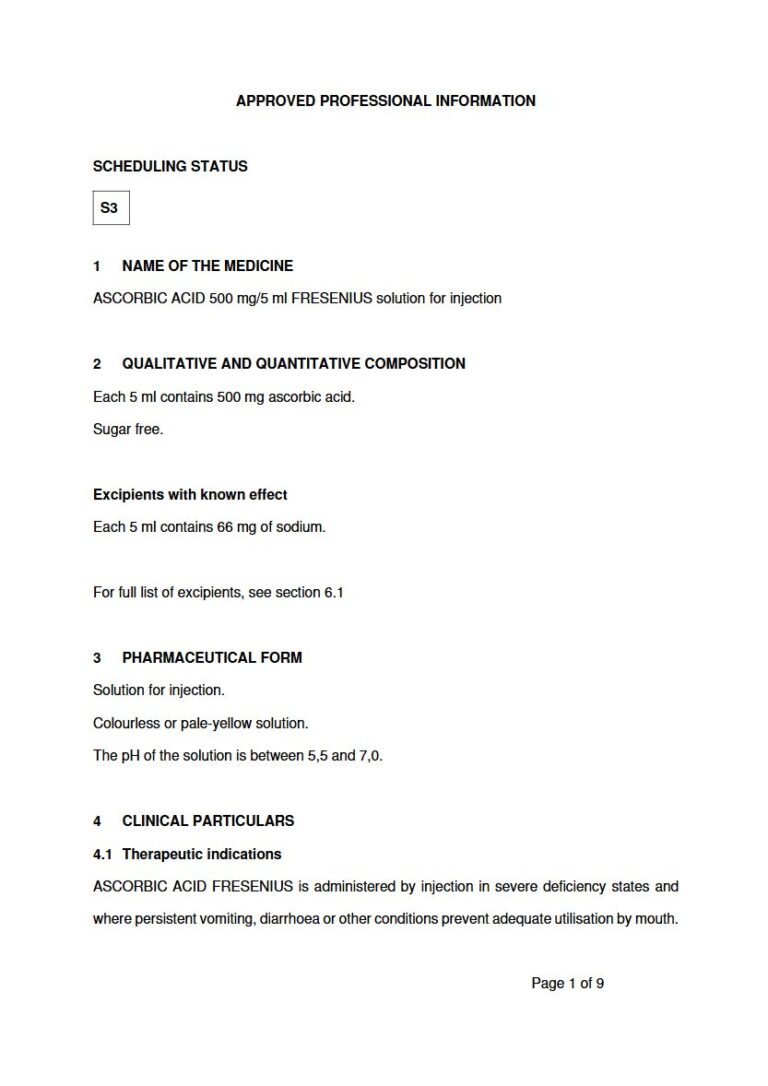
ASCORBIC ACID FRESENIUS is administered by injection in severe deficiency states and where persistent vomiting, diarrhoea or other conditions prevent adequate utilisation by mouth.
4.2 Posology and method of administration
Posology
Doses of up to 1 g daily in divided doses have been recommended.
Prophylactic: 25 to 75 mg daily
Therapeutic: 200 to 600 mg daily
Children up to 5 years: 50 mg daily.
Method of administration
ASCORBIC ACID FRESENIUS may be administered, as sodium ascorbate, by the intramuscular route, and by the intravenous or subcutaneous routes.
4.3 Contraindications
- Hypersensitivity to ascorbic acid or to any of the excipients listed in section 6.1.
- Hyperoxaluria and the formation of renal calcium oxalate calculi.
4.4 Special warnings and precautions for use
ASCORBIC ACID FRESENIUS should be given with care to patients with underlying renal failure due to the risk of formation of renal oxalate calculi. Tolerance may be induced in patients taking high doses. Large doses of ASCORBIC ACID FRESENIUS may result in haemolysis in patients with glucose-6-phosphate dehydrogenase (G6PD) deficiency. Very high doses of ASCORBIC ACID FRESENIUS may interfere with tests for sugar in the urine. Monitoring of cardiac function has also been recommended for patients receiving combined treatment with high doses of ASCORBIC ACID FRESENIUS and desferrioxamine. ASCORBIC ACID FRESENIUS contains 66 mg sodium per 5 ml, equivalent to 3,3 % of the WHO recommended maximum daily intake of 2 g sodium for an adult.
4.5 Interaction with other medicines and other forms of interaction
Medicines which induce tissue desaturation of ascorbic acid include aspirin, nicotine from cigarettes, alcohol, several appetite suppressants, iron, phenytoin, some anticonvulsant medicines, the oestrogen component of oral contraceptives and tetracycline. Large doses of ASCORBIC ACID FRESENIUS may cause the urine to become acidic causing unexpected renal tubular reabsorption of acidic medicines, thus producing an exaggerated response. Conversely basic medicines may exhibit decreased reabsorption resulting in a decreased therapeutic effect. Large doses may reduce the response to oral anticoagulants. There is evidence that the overall effect of a large supplement of ASCORBIC ACID FRESENIUS is to convert a low-oestrogen oral contraceptive into a high-dose oral contraceptive. It has been reported that concurrent administration of ascorbic acid and fluphenazine has resulted in decreased fluphenazine plasma concentrations. Increased dosages of fluphenazine are necessary while under ASCORBIC ACID FRESENIUS treatment. ASCORBIC ACID FRESENIUS is a strong reducing agent and interferes with numerous laboratory tests based on oxidation-reduction reactions. Specialised references should be consulted for specific information on laboratory test interferences caused by ascorbic acid. ASCORBIC ACID FRESENIUS may increase the absorption of iron in iron-deficiency states. ASCORBIC ACID FRESENIUS given in addition to desferrioxamine in patients with iron overload to achieve better iron excretion may worsen iron toxicity, particularly to the heart, early on in the treatment when there is excessive tissue iron. Therefore, it is recommended that in patients with normal cardiac function ascorbic acid should not be given for the first month after starting desferrioxamine. ASCORBIC ACID FRESENIUS should not be given in conjunction with desferrioxamine in patients with cardiac dysfunction. Aspirin can reduce the absorption of ASCORBIC ACID FRESENIUS by approximately a third and decreases urinary excretion by about half. The clinical importance of this is uncertain. Patients with kidney failure given aluminium antacids and oral citrate can develop a potentially fatal encephalopathy due to marked rise in blood aluminium levels. There is evidence that vitamin C may interact similarly. Oral contraceptives lower serum levels of ascorbic acid.
4.6 Fertility, pregnancy and lactation
Pregnancy
Healthy foetal growth and development depends on a steady supply of nutrients from mother to foetus. However, high dosage of ASCORBIC ACID FRESENIUS throughout pregnancy may harm the foetus.
Breastfeeding
ASCORBIC ACID FRESENIUS crosses the placenta and is distributed into the breast milk. High dosage of ASCORBIC ACID FRESENIUS while breastfeeding may be harmful to the baby and should be avoided.
4.7 Effects on ability to drive and use machines
ASCORBIC ACID FRESENIUS is unlikely to affect the patient's ability to drive a vehicle or use machinery.
4.8 Undesirable effects
After the administration of ASCORBIC ACID FRESENIUS, the following side effects may occur:
Blood and lymphatic system disorders
Frequency unknown: Reports of haemolysis in patients with glucose-6-phosphate dehydrogenase deficiency following large doses of ASCORBIC ACID FRESENIUS. High doses of ASCORBIC ACID FRESENIUS may cause certain blood problems.
Gastrointestinal disorders
Frequency unknown: Tolerance may be induced with prolonged use of large doses. Large doses are reported to cause diarrhoea and other gastrointestinal disturbances.
Renal and urinary disorders
Frequency unknown: Renal impairment associated with excessive oxalate excretion has been reported following the administration of large doses of ASCORBIC ACID FRESENIUS.
General disorders and administration site conditions
Frequency unknown: It has been stated that large doses may result in hyperoxaluria and the formation of renal calcium oxalate calculi.
4.9 Overdose
In overdose, side effects can be precipitated and/or be of increased severity (See section 4.8). Treatment is symptomatic and supportive.
