
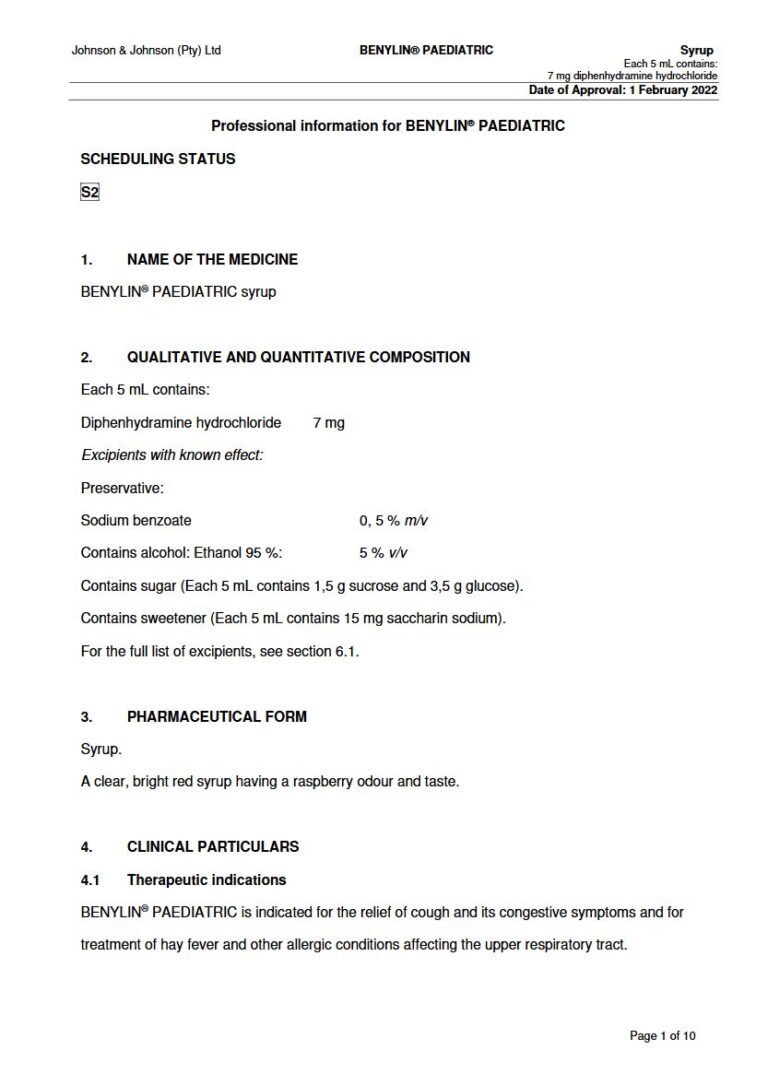
Benylin Paediatric Syrup
PDF Leaflet Revision Date: 1 February 2022
Clinical Summary
Quick overview from the medicine insert
Indication
Relief of cough and allergic conditions.
Dosage (summary)
Children 6-12 years: 10 mL every 3 hours, max 4 doses/day.
Special Populations
- Elderly
- Hepatic impairment
- Renal impairment
Pregnancy & Breastfeeding
Safety not established; crosses placenta and excreted in breast milk.
Key Drug Interactions
- Enhances CNS depressants
- MAOIs
- Atropine
- Tricyclic antidepressants
Contraindications
- Hypersensitivity to diphenhydramine
- Acute asthmatic attacks
- Children under 6 years
- Hepatic impairment
- Renal impairment
Common side effects
- Drowsiness
- Sedation
- Dry mouth
- Nausea
- Tachycardia
Counselling Points
- Avoid alcohol
- Do not exceed recommended dose
- Report any allergic reactions
Serious warnings
- CNS stimulation in children
- Risk of overdose fatality
- May impair ability to drive
Important Disclaimer
The Benylin Paediatric Syrup professional information leaflet below is the property of Johnson and is provided on Medinsert exactly as issued, with no.. alterations or editorial changes. We make every effort to keep content current by updating documents as soon as new versions become available. Medinsert serves as a trusted access point for healthcare professionals, but does not replace official sources or clinical judgement. For more details, please read our full disclaimer. read more>>
 Healthcare Professionals Only
This content is for registered healthcare professionals
Sign in or create a free account to read the full package insert.
Free for HPCSA-registered professionals. Powered by Medinsert.
Clinical Particulars
Section 4 of the official insert — extracted exactly as issued, no alterations
4.1 Therapeutic indications
BENYLIN u00ae PAEDIATRIC is indicated for the relief of cough and its congestive symptoms and for treatment of hay fever and other allergic conditions affecting the upper respiratory tract.
4.2 Posology and method of administration
A maximum of four doses per day should not be exceeded. Shake the bottle before use. Children 6 to 12 years: Two 5 mL medicine measures (10 mL) every 3 hours. Children below 6 years of age: Not recommended
4.3 Contraindications
Known hypersensitivity to diphenhydramine hydrochloride or to any of the other ingredients in BENYLIN u00ae PAEDIATRIC (see section 6.1). Diphenhydramine hydrochloride should not be used with monoamine oxidase inhibitors or within 14 days of stopping monoamine oxidase inhibitor treatment. Contraindicated during acute asthmatic attacks, and in patients with impaired hepatic or renal function. BENYLIN u00ae PAEDIATRIC should not be used in children below 6 years of age.
4.4 Special warnings and precautions for use
BENYLIN u00ae PAEDIATRIC may lead to drowsiness and impaired concentration which may be aggravated by the simultaneous intake of alcohol or other central nervous system depressant medicines. In infants and children, it may act as a cerebral stimulant. Symptoms of stimulation include insomnia, nervousness, tachycardia, tremors and convulsions. Large doses may precipitate fits in epileptics. Deepening coma, extrapyramidal effects and photosensitization of the skin may occur.
Elderly patients are more susceptible to the central nervous system depressant and hypotensive effects. Do not use with any other product containing diphenhydramine even ones used on skin. The positive results of skin tests may be suppressed. Diphenhydramine hydrochloride has anticholinergic properties and should be used with care in conditions such as a respiratory condition including emphysema (adult products), chronic bronchitis, or acute or chronic bronchial asthma, glaucoma, urinary retention and prostatic hypertrophy. Diphenhydramine hydrochloride should be used with caution in patients with liver impairment or cardiovascular disease.
Patients should not use BENYLIN u00ae PAEDIATRIC for persistent or chronic cough, such as occurs with asthma, or where cough is accompanied by excessive secretions, unless directed by a physician.
BENYLIN u00ae PAEDIATRIC contains sugar: sucrose and glucose. Patients with rare hereditary problems of fructose intolerance, glucose-galactose malabsorption or sucrase-isomaltase insufficiency should not take BENYLIN u00ae PAEDIATRIC.
BENYLIN u00ae PAEDIATRIC contains sodium benzoate. An increase in bilirubinaemia following its displacement from albumin may increase neonatal jaundice which may develop into kernicterus (non-conjugated bilirubin deposits in the brain tissue).
4.5 Interaction with other medicines and other forms of interaction
The anticholinergic effects of atropine and tricyclic antidepressants may be enhanced by diphenhydramine hydrochloride. Monoamine oxidase inhibitors (MAOIs) may enhance the anticholinergic effects. Diphenhydramine hydrochloride may mask the warning symptoms of damage caused by ototoxic medicines, such as aminoglycoside antibiotics, and may affect the metabolism of other medicines in the liver. It may enhance the sedative effect of central nervous system depressants including alcohol, barbiturates, hypnotics, narcotic analgesics, sedatives and tranquillisers.
4.6 Fertility, pregnancy and lactation
Safety in pregnancy and lactation has not been established. Diphenhydramine crosses the placenta and is excreted into breast milk.
4.7 Effects on ability to drive and use machines
BENYLIN u00ae PAEDIATRIC may cause drowsiness, dizziness or blurred vision. Patients should be warned not to drive a motor vehicle, operate dangerous machinery or climb dangerous heights as impaired decision making could lead to accidents.
4.8 Undesirable effects
Blood and the lymphatic system disorders: Less frequent: thrombocytopenia Frequency unknown: agranulocytosis, leucopenia and haemolytic anaemia
Immune system disorders: Frequency unknown: allergic reactions, anaphylaxis
Endocrine disorders: Less frequent: epigastric pain
Metabolism and nutrition disorders: Less frequent: anorexia, increased appetite
Psychiatric disorders: Less frequent: euphoria, confusional state, irritability, hallucination, nervousness
Nervous system disorders: Frequent: sedation Less frequent: headache, agitation, abnormal coordination, convulsion, dizziness, insomnia, paraesthesia, somnolence, tremor
Eye disorders: Less frequent: blurred vision
Ear and labyrinth disorders: Less frequent: tinnitus
Cardiac disorders: Less frequent: palpitations, tachycardia
Vascular disorders: Less frequent: hypotension
Respiratory, thoracic and mediastinal disorders: Less frequent: tightness of the chest, dry throat, nasal dryness
Gastrointestinal disorders: Less frequent: nausea, vomiting, diarrhoea, constipation, dryness of the mouth
Skin and subcutaneous tissue disorders: Less frequent: rash, pruritus, urticaria
Musculoskeletal, connective tissue and bone disorders: Less frequent: muscular weakness
Renal and urinary disorders: Less frequent: difficulty in micturition, dysuria, urinary retention
General disorders and administration site conditions: Less frequent: asthenia
Reporting of suspected adverse reactions: Reporting suspected adverse reactions after authorisation of BENYLIN u00ae PAEDIATRIC is important. It allows continued monitoring of the benefit/risk balance of BENYLIN u00ae PAEDIATRIC. Health care providers are asked to report any suspected adverse reactions to SAHPRA via the u201c6.04 Adverse Drug Reactions Reporting Formu201d, found online under SAHPRAu2019s publications: https://www.sahpra.org.za/Publications/Index/8. For further information, please contact the Johnson & Johnson call centre on 0860 410032 (landline).
4.9 Overdose
Diphenhydramine hydrochloride: Overdosage may be fatal especially in infants and children.
In infants and children CNS stimulation predominates over CNS depression causing ataxia, excitement, tremors, psychoses, hallucinations and convulsions; hyperpyrexia may also occur. Deepening coma and cardiorespiratory collapse may follow. In adults: CNS depression with drowsiness, coma and convulsions, progressing to respiratory failure or possibly cardiovascular collapse. Treatment is symptomatic and supportive.
