
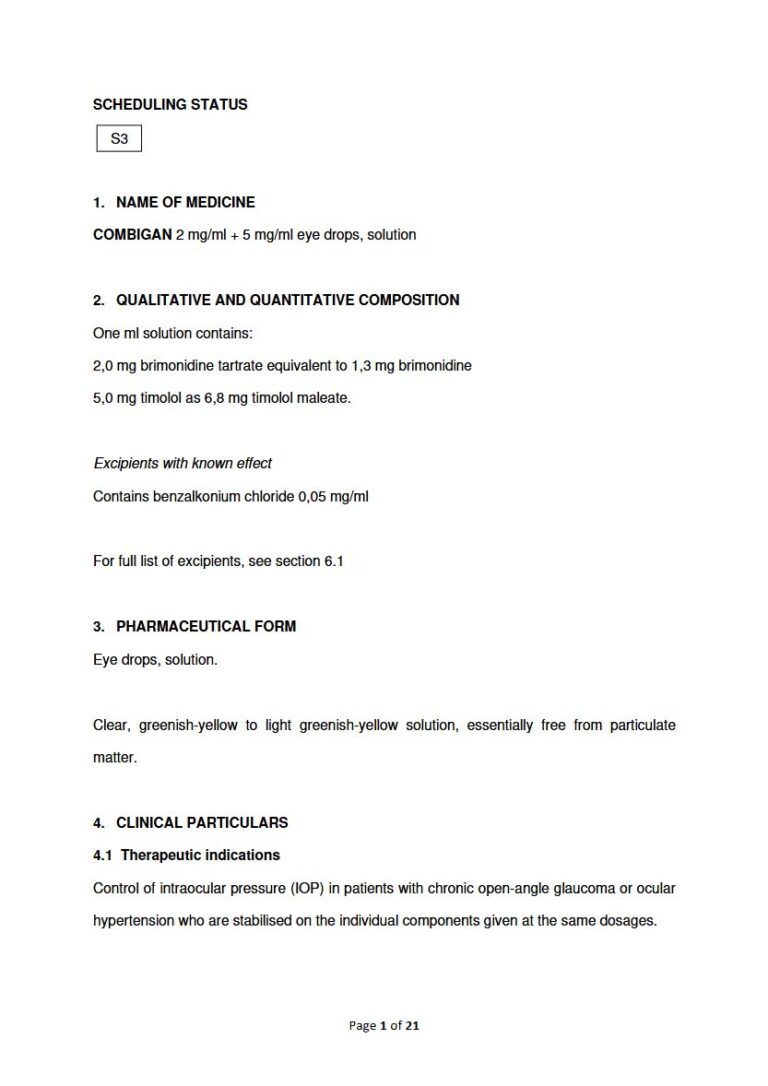
Combigan 2 mg/ml + 5 mg/ml Ophthalmic solution
PDF Leaflet Revision Date: 17 February 2025
Clinical Summary
Quick overview from the medicine insert
Indication
Control of intraocular pressure in chronic open-angle glaucoma or ocular hypertension.
Dosage (summary)
One drop in affected eye(s) twice daily, 12 hours apart.
Special Populations
- Renal impairment
- Hepatic impairment
Pregnancy & Breastfeeding
Not recommended during pregnancy or breastfeeding.
Key Drug Interactions
- MAO inhibitors
- CNS depressants
- Beta-blockers
Contraindications
- Hypersensitivity
- Reactive airway disease
- Severe cardiac conditions
- Patients under 18 years
Common side effects
- Conjunctival hyperaemia
- Burning sensation
- Bradycardia
- Somnolence
Counselling Points
- Avoid contact with the eye tip
- Remove contact lenses before use
- Monitor for allergic reactions
Serious warnings
- Respiratory and cardiac reactions
- Caution in patients with asthma
- Potential for systemic absorption
Important Disclaimer
The Combigan 2 mg/ml + 5 mg/ml Ophthalmic solution professional information leaflet below is the property of AbbVie and is provided on Medinsert exactly as issued, with no.. alterations or editorial changes. We make every effort to keep content current by updating documents as soon as new versions become available. Medinsert serves as a trusted access point for healthcare professionals, but does not replace official sources or clinical judgement. For more details, please read our full disclaimer. read more>>
 Healthcare Professionals Only
This content is for registered healthcare professionals
Sign in or create a free account to read the full package insert.
Free for HPCSA-registered professionals. Powered by Medinsert.
Clinical Particulars
Section 4 of the official insert — extracted exactly as issued, no alterations
4.1 Therapeutic indications
Control of intraocular pressure (IOP) in patients with chronic open-angle glaucoma or ocular hypertension who are stabilised on the individual components given at the same dosages.
4.2 Posology and method of administration
Posology
Recommended dosage in adults (including the elderly)
The recommended dose is one drop of COMBIGAN in the affected eye(s) twice daily, approximately 12 hours apart.
Special populations
Use in renal and hepatic impairment
COMBIGAN has not been studied in patients with hepatic or renal impairment. Therefore, caution should be used in treating such patients.
Paediatric population
Safety and efficacy have not been demonstrated in patients younger than 18 years (see section 4.3).
Method of administration
To reduce possible systemic absorption, it is recommended that the lachrymal sac be compressed at the medial canthus (punctual occlusion) or eyelids are closed for two minutes. This should be performed immediately following the instillation of each drop. To avoid contamination of the eye or eye drops do not allow the dropper tip to come into contact with any surface. Keep the container tightly closed. If more than one topical ophthalmic medicine is to be used, the different medicines should be instilled at least 5 minutes apart.
4.3 Contraindications
- Hypersensitivity to the active substances or to any of the excipients listed in section 6.1.
- The safety and effectiveness in patients less than 18 years of age have not been established (see section 4.4).
- Reactive airway disease including bronchospasm, bronchial asthma or a history of bronchial asthma, severe chronic obstructive pulmonary disease (see section 4.4).
- Sinus bradycardia, sick sinus syndrome, sino-atrial nodal block, second and third degree atrioventricular block not controlled with a pacemaker, overt cardiac failure (see section 4.4), cardiogenic shock.
- Use in neonates and infants (less than two years of age) (see section 4.4, Paediatric population).
- Patients receiving monoamine oxidase (MAO) inhibitor therapy or within 2 weeks of stopping MAO-inhibitor therapy.
- Concomitant use of linezolid.
- Patients on antidepressants which affect noradrenergic transmission (e.g. tricyclic antidepressants).
4.4 Special warnings and precautions for use
Respiratory and cardiac reactions have been reported including death due to bronchospasm or associated with cardiac failure. Hypersensitivity: Because of the brimonidine tartrate component COMBIGAN should be used with caution in patients with known hypersensitivity to other alpha-adrenoceptor agonists. While taking beta-blockers, patients with a history of atopy or a history of severe anaphylactic reaction to a variety of allergens may be more reactive to repeated accidental, diagnostic, or therapeutic challenge with such allergens. These patients may be unresponsive to the usual doses of epinephrine (adrenaline) used to treat anaphylactic reactions since timolol maleate may blunt the beta-agonist effect of epinephrine (adrenaline). In such cases, alternatives to epinephrine should be considered. Allergic conjunctivitis was seen in 5,2 % of patients using COMBIGAN in clinical trials. Onset was typically between 3 and 9 months resulting in an overall discontinuation rate of 3,1 %. Allergic blepharitis was uncommonly reported (< 1 %). If allergic reactions are observed, treatment with COMBIGAN should be discontinued. Delayed ocular hypersensitivity reactions have been reported with brimonidine tartrate ophthalmic solution 0,2 %, with some reported to be associated with an increase in IOP. COMBIGAN may be absorbed systemically. No enhancement of the systemic absorption of the individual active substances has been observed. Due to beta-adrenergic component, timolol, the same types of cardiovascular, pulmonary and other adverse reactions seen with systemic beta-adrenergic blocking medicines may occur. To reduce the systemic absorption, see section 4.2, Method of administration.
General: Patients prescribed IOP-lowering medication should be routinely monitored for IOP. COMBIGAN ophthalmic solution should be used with caution in patients with depression, cerebral or coronary insufficiency, Raynaudu2019s phenomenon, orthostatic hypotension or thromboangitis obliterans.
Cardiac disorders: Patients with cardiovascular diseases (e.g. coronary heart disease, Prinzmetal's angina and cardiac failure) and hypotension therapy with beta-blockers should be critically assessed and the therapy with other active substances should be considered. Patients with cardiovascular diseases should be monitored for signs of deterioration of these diseases and of adverse reactions. Due to its negative effect on conduction time, beta-blockers should only be given with caution to patients with first degree heart block. COMBIGAN may enhance the hypotensive effects of all types of anti-hypertensives (see section 4.5).
Vascular disorders: Patients with severe peripheral circulatory disturbance/disorders (i.e. Raynaudu2019s phenomenon) should be treated with caution.
Respiratory disorders: Respiratory reactions, including death due to bronchospasm in patients with asthma have been reported following administration of ophthalmic beta-blockers, such as in COMBIGAN. COMBIGAN should be used with caution, in patients with mild/moderate asthma and only if the potential benefit outweighs the potential risk (see section 4.3).
Obstructive pulmonary disease: Patients with chronic obstructive pulmonary disease (e.g. chronic bronchitis, emphysema) of mild or moderate severity, bronchospastic disease, or a history of bronchospastic disease (other than bronchial asthma or a history of bronchial asthma in which COMBIGAN is contraindicated) should not receive beta-blocking medicines, including COMBIGAN.
Hypoglycaemia / Diabetes: Beta-blockers such as those contained in COMBIGAN should be administered with caution in patients subject to spontaneous hypoglycaemia or to patients with diabetes mellitus (especially those with labile diabetes) as beta-blockers such as those contained in COMBIGAN may mask the signs and symptoms of acute hypoglycaemia.
Hyperthyroidism and thyrotoxicosis: Beta-blockers as contained in COMBIGAN may mask the signs of hyperthyroidism (e.g. tachycardia). Patients suspected of developing thyrotoxicosis should be managed carefully to avoid abrupt withdrawal of beta-adrenergic blocking medicines that might precipitate a thyroid storm. COMBIGAN must be used with caution in patients with metabolic acidosis and untreated phaeochromocytoma.
Corneal diseases: Ophthalmic beta-blockers such as in COMBIGAN may induce dryness of eyes. Patients with corneal diseases should be treated with caution.
Other beta-blocking medicines: Caution should be exercised when used concomitantly with systemic beta-adrenergic blocking medicines because of the potential for additive effects on systemic beta-blockade. The response of these patients should be closely observed. The use of two topical beta-adrenergic blocking medicines is not recommended (see section 4.5).
Choroidal detachment: Choroidal detachment has been reported with administration of aqueous suppressant therapy (e.g. timolol as in COMBIGAN) after filtration procedures.
Major surgery: The necessity or desirability of withdrawal of beta-adrenergic blocking medication including COMBIGAN prior to major surgery is controversial. If necessary, during surgery, the effects of beta-adrenergic blocking medicines may be reversed by sufficient doses of such agonists as isoproterenol, dopamine, dobutamine or levarterenol.
Surgical anaesthesia: Beta-blocking ophthalmological preparations such as in COMBIGAN may block systemic beta-agonist effects e.g. of adrenaline. COMBIGAN may impair compensatory tachycardia and increase risk of hypotension when used in conjunction with anaesthetics. The anaesthetist must be informed if the patient is using COMBIGAN.
Angle-closure glaucoma: COMBIGAN has not been studied in patients with closed-angle glaucoma.
Muscle weakness: Beta-adrenergic blockade has been reported to increase muscle weakness consistent with certain myasthenic symptoms (e.g. diplopia, ptosis and generalised weakness). Timolol maleate, as contained in COMBIGAN, has been reported to increase muscle weakness in some patients with myasthenia gravis or myasthenic symptoms.
Cerebrovascular insufficiency: Because of potential effects of beta-adrenergic blocking medicines on blood pressure and pulse, COMBIGAN should be used with caution in patients with cerebrovascular insufficiency. If signs or symptoms suggesting reduced cerebral blood flow develop following initiation of therapy with COMBIGAN, alternative therapy should be considered. As the possibility of adverse effects on the corneal permeability, and the danger of disruption of the corneal epithelium with prolonged or repeated usage of benzalkonium chloride preserved ophthalmological preparations such as COMBIGAN cannot be excluded, regular ophthalmological examination is required. Caution should be exercised in the use of benzalkonium chloride preserved topical medication such as COMBIGAN over an extended period in patients with extensive ocular surface disease.
Information for patients: Patients should be instructed to avoid allowing the tip of the dispensing container to make contact with the eye or surrounding structures. If handled improperly, COMBIGAN can become contaminated by common bacteria known to cause ocular infections. Serious damage to the eye and subsequent loss of vision may result from using contaminated COMBIGAN.
There have been reports of bacterial keratitis associated with the use of multiple dose containers of topical ophthalmic medicines, including COMBIGAN. These containers had been inadvertently contaminated by patients who, in most cases, had a concurrent corneal disease or a disruption to the ocular epithelial surface. Patients should also be advised that if they have ocular surgery or develop an intercurrent ocular condition (e.g. trauma or infection), they should immediately seek their doctoru2019s advice concerning the continued use of the present multi-dose container.
Contact lenses: The preservative in COMBIGAN, benzalkonium chloride, may cause eye irritation. Patients wearing contact lenses should be instructed to remove them prior to application and wait at least 15 minutes after instilling COMBIGAN before reinsertion. Benzalkonium chloride is known to discolour soft contact lenses. Avoid contact with soft contact lenses.
Paediatric population: The use of COMBIGAN in paediatric patients is not recommended. Several serious adverse reactions have been reported in association with the administration of brimonidine tartrate ophthalmic solution 0,2 % to infants in the age range of 28 days to 3 months. COMBIGAN should not be used in patients younger than 18 years of age. There are no adequate and well-controlled studies with COMBIGAN in children less than 18 years old. In a 3-month, Phase 3 study in children (ages 2-7 years) with glaucoma inadequately controlled by beta-blockers, a high prevalence of somnolence (55 %) was reported with brimonidine tartrate ophthalmic solution 0,2 % as adjunctive treatment to topical beta-blockers. Somnolence was severe in 8 % of the children and led to discontinuation of treatment in 13 %.
During post-marketing surveillance, apnoea, bradycardia, coma, hypotension, hypothermia, hypotonia, lethargy, pallor, respiratory depression, and somnolence have been reported in neonates, infants, and children receiving brimonidine either for congenital glaucoma or by accidental ingestion (see section 4.3).
4.5 Interaction with other medicines and other forms of interaction
No interaction studies have been performed with COMBIGAN.
Monoamine oxidase (MAO) inhibitor therapy: Brimonidine is contraindicated in patients receiving monoamine oxidase inhibitor (MAOI) therapy, including the antibiotic linezolid, and in patients on antidepressants which affect noradrenergic transmission (e.g. tricyclic antidepressants and miaserin) (see section 4.3). Patients who have been receiving MAOI therapy should wait 14 days after discontinuation before commencing treatment with COMBIGAN.
CNS depressants: No interaction studies have been performed with COMBIGAN. The theoretical possibility of an additive or potentiating effect with CNS depressants (alcohol, barbiturates, opiates, sedatives, or anaesthetics) should be considered.
Beta-adrenergic blocking medicines: Patients who are receiving both a systemic (e.g., oral or intravenous) beta-adrenergic blocking medicine and COMBIGAN should be observed for potential additive effects of beta-blockade, both systemic and on intraocular pressure (see section 4.4).
Anti-hypertensives / Digoxin: There is a potential for additive effects resulting in hypotension, and/or marked bradycardia when ophthalmic beta-blockers solution is administered concomitantly with oral calcium channel blockers, beta-adrenergic blocking medicines, anti-dysrhythmics (including amiodarone), digoxin or parasympathomimetics.
Epinephrine: Mydriasis resulting from concomitant use of timolol maleate, an ingredient in COMBIGAN and adrenaline (epinephrine) has been reported. COMBIGAN may increase the hypoglycaemic effect of antidiabetic medicines. COMBIGAN can mask the signs and symptoms of hypoglycaemia (see section 4.4).
Clonidine: The hypertensive reaction to sudden withdrawal of clonidine can be potentiated when taking beta-blockers such as COMBIGAN.
CYP2D6 inhibitors: Potentiated systemic beta-blockade (e.g. decreased heart rate, depression) has been reported during combined treatment with CYP2D6 inhibitors (e.g. quinidine, fluoxetine, paroxetine) and timolol, an ingredient of COMBIGAN. Concomitant use of timolol as in COMBIGAN with anaesthetic medicines may attenuate compensatory tachycardia and increase the risk of hypotension (see section 4.4), and therefore the anaesthetist must be informed if the patient is using COMBIGAN.
Iodine contrast products / Lidocaine (lignocaine): Caution must be exercised if COMBIGAN is used concomitantly with iodine contrast products or intravenously administered lidocaine (lignocaine).
Cimetidine / Hydralazine / Alcohol: Cimetidine, hydralazine and alcohol may increase the plasma concentrations of timolol.
Calcium channel blockers or catecholamine-depleting agents: No data on the level of circulating catecholamines after COMBIGAN administration are available. Caution, however, is advised in patients taking medication which can affect the metabolism and uptake of circulating amines (e.g. chlorpromazine, methylphenidate, reserpine).
Alpha-adrenergic agonists: Caution is advised when initiating (or changing the dose of) a concomitant systemic medicine (irrespective of pharmaceutical form) which may interact with alpha-adrenergic agonists or interfere with their activity (i.e. agonists or antagonists of the adrenergic receptor such as isoprenaline or prazosin).
Prostamides / Prostaglandins / Carbonic anhydrase inhibitors / Pilocarpine: Although specific medicine interactions studies have not been conducted with COMBIGAN, the theoretical possibility of an additive IOP lowering effect with prostamides, prostaglandins, carbonic anhydrase inhibitors and pilocarpine should be considered.
4.6 Fertility, pregnancy and lactation
Safety of COMBIGAN in pregnancy and lactation has not been established in controlled clinical studies in pregnant or lactating women.
Pregnancy
Brimonidine tartrate Studies in rats have shown reproductive toxicity only at high maternotoxic doses representing an exposure margin 580-times the human exposure after topical ocular COMBIGAN. There was no reproductive toxicity observed in rabbits. The potential risk for humans is unknown.
Timolol Studies in animals have shown reproductive toxicity at doses significantly higher than would be used in clinical practice. No foetal malformations were observed in mice, rats or rabbits at oral doses up to 50 mg/kg/day which is 4200-fold the daily dose of COMBIGAN in humans. However, epidemiological studies suggest that a risk of intra uterine growth retardation may exist following exposure to systemic beta-blockers. In addition, some signs and symptoms of beta-blockade (e.g. bradycardia) have been observed in both the foetus and the neonate. Consequently, COMBIGAN should not be used during pregnancy.
Breastfeeding
COMBIGAN should not be used by women breast-feeding infants.
Brimonidine tartrate It is not known if brimonidine is excreted in human milk but it is excreted in the milk of the lactating rat.
Timolol Beta-blockers are excreted in breast milk.
4.7 Effects on ability to drive and use machines
COMBIGAN may influence the ability to drive and use machines. COMBIGAN may cause transient blurring of vision, visual disturbance, fatigue and/or drowsiness which may impair the ability to drive or operate machines. The patient should wait until these symptoms have cleared before driving or using machinery.
4.8 Undesirable effects
Summary of the safety profile
The most commonly reported side effects are conjunctival hyperaemia (approximately 15 % of patients) and burning sensation in the eye (approximately 11 % of patients). The majority of these cases were mild and led to discontinuation rates of only 3,4 % and 0,5 % respectively.
Tabulated list of adverse reactions
The frequency of adverse reactions documented during clinical trials and through post-marketing experience is given below and is defined as follows: Very Common (u2265 1/10); Common (u22651/100 to <1/10); Uncommon (u22651/1,000 to <1/100); Rare (u22651/10,000 to <1/1,000); Very Rare (<1/10,000); Not Known (cannot be estimated from available data).
System organ class Frequency Adverse Reaction / Side Effect
Eye disorders Very common Conjunctival hyperaemia, burning sensation Common Stinging sensation in the eye, eye pruritus, allergic conjunctivitis, conjunctival folliculosis, visual disturbance, blepharitis, epiphora, corneal erosion, superficial punctuate keratitis, eye dryness, eye discharge, eye pain, eye irritation, foreign body sensation, eyelid erythema, eyelids pruritus, eyelid oedema Uncommon Visual acuity worsened, conjunctival oedema, follicular conjunctivitis, allergic blepharitis, conjunctivitis, vitreous floater, asthenopia, photophobia, papillary hypertrophy, eyelid pain, conjunctival blanching, corneal oedema, corneal infiltrates, vitreous detachment Not known Vision blurred, reduced visual acuity
Psychiatric disorders Common Depression Nervous system disorders Common Somnolence, headache, dizziness Uncommon Syncope
Cardiac disorders Common Bradycardia Uncommon Congestive heart failure, palpitations Not known Dysrhythmia, bradycardia, tachycardia
Vascular disorders Common Hypertension Uncommon Hypotension
Respiratory, thoracic and mediastinal disorders Common Rhinitis Uncommon Nasal dryness
Gastrointestinal disorders Common Oral dryness, nausea, diarrhoea Uncommon Taste perversion
Immune system disorders Uncommon Allergic contact dermatitis
Skin and subcutaneous disorders Not known Facial erythema
General disorders and administration site conditions Common Asthenia
Brimonidine System organ class Adverse Reaction / Side Effect Eye disorders Iritis, iridocyclitis (anterior uveitis), miosis Psychiatric disorders Insomnia Respiratory, thoracic and mediastinal disorders Upper respiratory symptoms, dyspnoea Gastrointestinal disorders Gastrointestinal symptoms General disorders and administration site conditions Systemic allergic reactions Immune system disorders Hypersensitivity, skin reaction including erythema, face oedema, pruritus, rash and vasodilatation
A high incidence and severity of somnolence has been reported in children of 2 years of age and older, especially those in the 2-7 age range and/or weighing u2264 20 kg (see section 4.3 and 4.4).
Timolol COMBIGAN (brimonidine tartrate / timolol) is absorbed into the systemic circulation. Absorption of timolol may cause similar undesirable effects as seen with systemic beta-blocking medicines. To reduce the systemic absorption, see section 4.2. Additional adverse reactions that have been seen with ophthalmic beta-blockers and may potentially occur also with COMBIGAN are listed below.
System organ class Adverse Reaction / Side Effect
Immune system disorders Systemic allergic reactions including anaphylaxis, angioedema, urticaria, localised and generalised rash, pruritus, systemic lupus erythematosus Metabolism and nutrition disorders Hypoglycaemia Psychiatric disorders Behavioural changes and psychic disturbances including anxiety, confusion, disorientation, hallucinations, insomnia, nightmares, memory loss, nervousness Nervous system disorders Cerebral vascular accident, cerebral ischaemia, increase in signs and symptoms of myasthenia gravis, paraesthesia Eye disorders Keratitis, decreased corneal sensitivity, diplopia, ptosis, choroidal detachment following filtration surgery (see section 4.4), corneal erosion, cystoid macular oedema, pseudopemphigoid, refractive changes Cardiac disorders Chest pain, oedema, atrioventricular block, cardiac arrest, cardiac failure, heart block, pulmonary oedema, worsening of angina pectoris Ear and labyrinth disorders Tinnitus Vascular disorders Raynaudu2019s phenomenon, cold hands and feet, claudication Respiratory, thoracic and mediastinal disorders Bronchospasm (predominantly in patients with pre-existing bronchospastic disease), dyspnoea, cough, nasal congestion, respiratory failure, upper respiratory infection Gastrointestinal disorders Dyspepsia, abdominal pain, vomiting, anorexia, dysgeusia Skin and subcutaneous tissue disorders Alopecia, psoriasiform rash, exacerbation of psoriasis, skin rash Musculoskeletal and connective tissue disorders Myalgia Reproductive system and breast disorders Sexual dysfunction, decreased libido, Peyronieu2019s disease, retroperitoneal fibrosis General disorders and administration site conditions Fatigue
4.9 Overdose
There is limited data available of overdosage in humans with the use of COMBIGAN. Bradycardia has been reported in association with use of a higher than recommended dose. If overdosage occurs, treatment should be symptomatic and supportive. A patent airway should be maintained.
Brimonidine
Systemic overdose resulting from accidental ingestion (Adults) There is very limited information regarding accidental ingestion of brimonidine in adults. The only adverse event reported to date was hypotension. It was reported that the hypotensive episode was followed by rebound hypertension.
Paediatric population
Symptoms of brimonidine overdose such as apnoea, bradycardia, coma, hypotension, hypothermia, hypotonia, lethargy, pallor, respiratory depression, and somnolence have been reported in neonates, infants, and children receiving brimonidine tartrate ophthalmic solution as part of medical treatment of congenital glaucoma or by accidental oral ingestion (see section 4.4, Paediatric population).
Timolol
Symptoms of systemic timolol overdose include: bradycardia, hypotension, bronchospasm, headache, dizziness, and cardiac arrest. A study of patients showed that timolol did not dialyse readily.
