
Lorfast 10 mg Tablet
PDF Leaflet Revision Date: 09 October 2022
Clinical Summary
Quick overview from the medicine insert
Indication
Relief of symptoms associated with seasonal allergic rhinitis and chronic urticaria.
Dosage (summary)
Adults: one tablet daily, limited to 14 days.
Special Populations
- Elderly
- Children under 2
- Severe liver impairment
- Renal impairment
Pregnancy & Breastfeeding
Safety in pregnancy and lactation not established; avoid use during pregnancy and breastfeeding.
Key Drug Interactions
- CYP3A4 inhibitors
- CYP2D6 inhibitors
- Cimetidine
- Ketoconazole
- Clarithromycin
- Erythromycin
Contraindications
- Hypersensitivity to loratadine
- Cross sensitivity to antihistamines
- Porphyria
Common side effects
- Headache
- Somnolence
- Dry mouth
- Nausea
- Rash
Counselling Points
- Limit use to 14 days
- Avoid alcohol and CNS depressants
- Determine individual response before driving
Serious warnings
- Use with caution in severe liver impairment
- May cause sedation in some individuals
Important Disclaimer
The Lorfast 10 mg Tablet professional information leaflet below is the property of Ranbaxy Pharmaceuticals and is provided on Medinsert exactly as issued, with no.. alterations or editorial changes. We make every effort to keep content current by updating documents as soon as new versions become available. Medinsert serves as a trusted access point for healthcare professionals, but does not replace official sources or clinical judgement. For more details, please read our full disclaimer. read more>>
 Healthcare Professionals Only
This content is for registered healthcare professionals
Sign in or create a free account to read the full package insert.
Free for HPCSA-registered professionals. Powered by Medinsert.
Clinical Particulars
Section 4 of the official insert — extracted exactly as issued, no alterations
4.1 Therapeutic indications
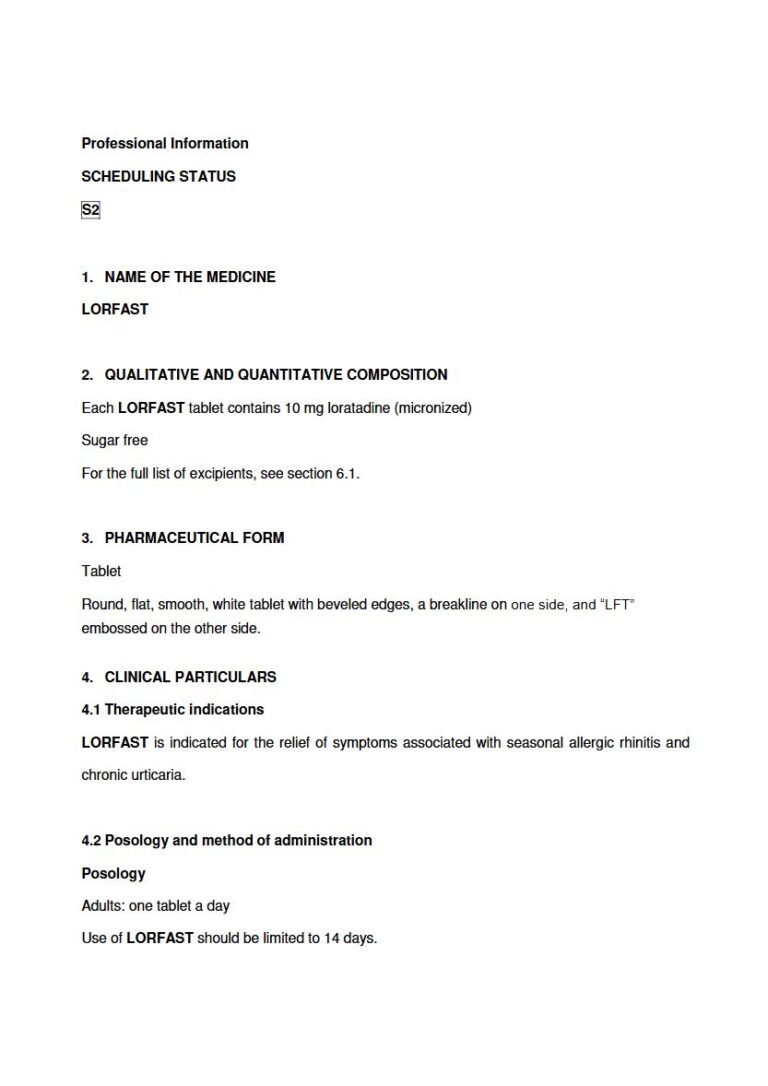
LORFAST is indicated for the relief of symptoms associated with seasonal allergic rhinitis and chronic urticaria.
4.2 Posology and method of administration
Posology
- Adults: one tablet a day
Use of LORFAST should be limited to 14 days.
Method of administration
- Oral use.
4.3 Contraindications
- LORFAST should not be used in patients with known hypersensitivity to loratadine or any of the excipients of LORFAST (listed in section 6.1).
- Cross sensitivity to other antihistamines.
- Porphyria.
4.4 Special warnings and precautions for use
The safety of LORFAST in the elderly has not been established. The safety of LORFAST in children under two years has not been established.
LORFAST should be used with caution in patients:
- severe liver impairment, as reduced clearance of loratadine may occur. Dosage adjustment may be needed.
- Renal impairment - A lower starting dose should be used. In patients with chronic renal impairment, (creatinine clearance of 30 ml/minute or less), both oral bioavailability and peak plasma concentrations of loratadine may be increased. However, the elimination half-life of loratadine and its active metabolite appear to be similar to those individuals with normal renal function.
- The use of LORFAST should be discontinued approximately 48 hours prior to skin testing procedures since it may prevent or diminish otherwise positive reactions to dermal reactivity indicators.
- LORFAST shall be used with caution when the following medical conditions exist and/or in patients using other medicines metabolised by the cytochrome P-450 system: Emphysema; prostatic hypertrophy; narrow angle glaucoma; cardiovascular disorder; epilepsy; and during acute attacks of asthma.
4.5 Interaction with other medicines and other forms of interaction
Potential interaction may occur with all known inhibitors of CYP3A4 or CYP2D6 resulting in elevated levels of loratadine, which may cause an increase in adverse events. Concomitant use of LORFAST with inhibitors of cytochrome P-450 enzyme system such as cimetidine, ketoconazole, clarithromycin and erythromycin may increase the plasma concentrations of LORFAST.
4.6 Fertility, pregnancy and lactation
Pregnancy
Safety and efficacy in pregnancy and lactation have not been established. A large amount of data on pregnant women (more than 1000 exposed outcomes) indicate no malformative nor feto/neonatal toxicity of loratadine. Animal studies do not indicate direct or indirect harmful effects with respect to reproductive toxicity. As a precautionary measure, it is preferable to avoid the use of loratadine tablet during pregnancy.
Breastfeeding
Loratadine and its metabolites have been detected in breast milk. Small amounts of LORFAST entering breast milk may cause drowsiness or excitement in infants. Therefore, the use of LORFAST is not recommended in breast-feeding women.
Fertility
There are no data available on male and female fertility.
4.7 Effects on ability to drive and use machines
LORFAST lacks significant sedative effects. Patients should, however be warned that a small number of individuals may experience sedation. It is therefore advisable to determine individual response before driving or performing complicated tasks. This effect may be compounded by the simultaneous intake of alcohol or other central nervous system depressants.
4.8 Undesirable effects
System Order Class
- Frequent
- Less frequent
- Frequency unknown
Immune system disorders
- Anaphylaxis including angioedema
Nervous system disorders
- Headache, somnolence, confusion, nightmares
- Sedation, nervousness
- Dizziness, convulsions
Eye disorders
- Blurred vision
Cardiac disorders
- Tachycardia and palpitation
Gastrointestinal disorders
- Dry mouth, nausea and gastritis
Hepato-biliary disorders
- Abnormal hepatic function
Skin and subcutaneous tissue disorders
- Rash, alopecia
Metabolism and nutrition disorders
- Increased appetite
General disorders and administration site conditions
- Fatigue
Reporting of suspected adverse reactions
Reporting suspected adverse reactions after authorisation of the medicine is important. It allows continued monitoring of the benefit/risk balance of the medicine. Health care providers are asked to report any suspected adverse reactions to SAHPRA via the u201c6.04 Adverse Drug Reactions Reporting Formu201d, found online under SAHPRAu2019s publications: https:// www.sahpra.org.za/
4.9 Overdose
Symptoms of overdose that have been reported are somnolence, tachycardia and headaches. In children, extrapyramidal manifestations and palpitations have been reported.
Treatment of overdose
Treatment is symptomatic and supportive. Administration of activated charcoal after emesis may be useful in preventing absorption of LORFAST. Saline cathartics may be of value to rapidly dilute bowel contents. LORFAST is not cleared by haemodialysis.
