
Allergex Non Drowsy 10mg Tablets
Clinical Summary
Quick overview from the medicine insert
Indication
Relief of allergic rhinitis and chronic urticaria.
Dosage (summary)
10 mg once daily.
Onset of Action / Duration
Effects typically begin within 1 hour and last for 24 hours.
Special Populations
- Elderly patients
- Patients with hepatic impairment
- Patients with renal impairment
Pregnancy & Breastfeeding
Use during pregnancy only if clearly needed. Loratadine is excreted in breast milk; caution is advised.
Key Drug Interactions
- Alcohol may enhance the sedative effects of other antihistamines.
- CYP3A4 inhibitors may increase the plasma concentration of Loratadine.
Contraindications
- Hypersensitivity to Loratadine or any of the excipients.
- Severe hepatic impairment.
Common side effects
- Headache
- Dry mouth
- Fatigue
- Nausea
- Dizziness
Counselling Points
- Take the medication at the same time each day for best results.
- Avoid alcohol while taking this medication.
- Inform your healthcare provider if you experience any severe side effects.
Serious warnings
- Caution in patients with severe liver disease.
- Not recommended for use in children under 2 years of age without medical advice.
Important Disclaimer
The Allergex Non Drowsy 10mg Tablets professional information leaflet below is the property of Adcock Ingram and is provided on Medinsert exactly as issued, with no.. alterations or editorial changes. We make every effort to keep content current by updating documents as soon as new versions become available. Medinsert serves as a trusted access point for healthcare professionals, but does not replace official sources or clinical judgement. For more details, please read our full disclaimer. read more>>
 Healthcare Professionals Only
This content is for registered healthcare professionals
Sign in or create a free account to read the full package insert.
Free for HPCSA-registered professionals. Powered by Medinsert.
Clinical Particulars
Section 4 of the official insert — extracted exactly as issued, no alterations
4.1 Therapeutic Indications
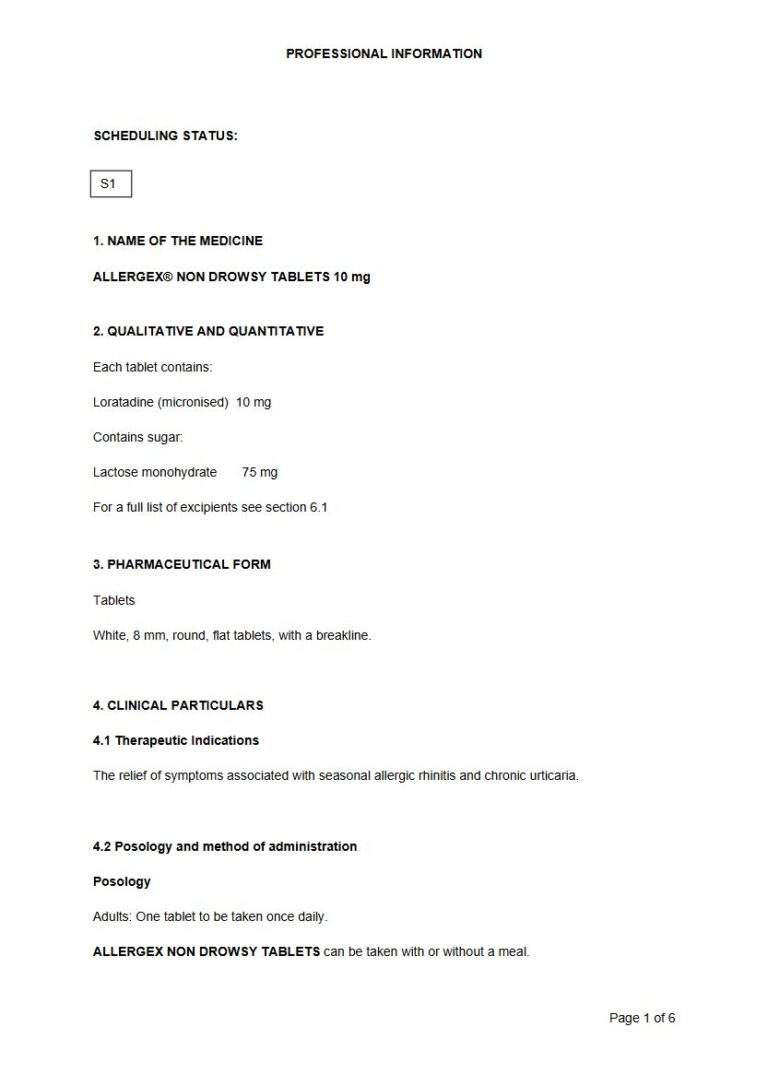
The relief of symptoms associated with seasonal allergic rhinitis and chronic urticaria.
4.2 Posology and method of administration
Posology
Adults: One tablet to be taken once daily. ALLERGEX NON DROWSY TABLETS can be taken with or without a meal.
Method of administration
For oral administration.
4.3 CONTRAINDICATIONS
- Hypersensitivity to Loratadine or any of the other excipients contained in ALLERGEX NON DROWSY TABLETS, listed in section 6.1
- The safe use of ALLERGEX NON DROWSY TABLETS in the elderly has not been established.
4.4 SPECIAL WARNINGS AND PRECAUTIONS FOR USE
ALLERGEX NON DROWSY TABLETS lack significant sedative properties. However, patients should be advised that a small number of individuals may experience sedation. Therefore, the effect of the medicine on a particular patient should be ascertained before they drive or operate machinery. This effect can be compounded by the simultaneous intake of alcohol or other central nervous system depressants.
A lower dose should be administered to patients with hepatic impairment as they may have decreased clearance of loratadine; i.e., an initial dose of 5 mg once daily or 10 mg on alternate days.
ALLERGEX NON DROWSY TABLETS contains lactose monohydrate. Patients with the rare hereditary problems of galactose intolerance, total lactase deficiency or glucose-galactose malabsorption should not take ALLERGEX NON DROWSY TABLETS.
H1 receptor antihistamines such as ALLERGEX NON DROWSY TABLETS have been shown to cause weight gain.
4.5 Interaction with other medicines and other forms of interaction
The use of ALLERGEX NON-DROWSY TABLETS should be stopped several days before skin testing as antihistamines may suppress the positive skin response to allergen extracts.
Medicines known to inhibit the hepatic metabolism of loratadine include cimetidine, erythromycin, ketoconazole, quinidine, fluconazole and fluoxetine.
4.6 Fertility, pregnancy and lactation
Fertility
No available data.
Pregnancy
Safety in pregnancy has not been established.
Lactation
Safety in lactation has not been established.
4.7 Effects on ability to drive and use machines
This medicine lacks significant sedative effects. Patients should be advised that a small number of individuals may experience sedation. (see section 4.4)
4.8 Undesirable effects
Tabulated summary of adverse reactions
| System organ class | Frequency | Undesirable effects |
|---|---|---|
| Immune system disorders | Unknown | Hypersensitivity reactions (including angioedema and anaphylaxis) |
| Metabolism and nutritional disorders | Unknown | Increased appetite |
| Nervous system disorders | Unknown | Headache, somnolence, sedation, nervousness, dizziness, convulsion |
| Cardiac disorders | Unknown | Tachycardia, palpitations |
| Gastrointestinal disorders | Unknown | Nausea, dry mouth, vomiting, diarrhoea, gastritis or epigastric pain |
| Skin and subcutaneous tissue disorders | Unknown | Rash, alopecia |
| General disorders and administrative site conditions | Unknown | Fatigue |
Reporting of suspected adverse reactions
Reporting suspected adverse reactions after authorisation of the medicine is important. It allows continued monitoring of the benefit/risk balance of the medicine. Health care providers are requested to report any suspected adverse reactions to SAHPRA via the Med Safety APP (Medsafety X SAHPRA) and eReporting platform (who-umc.org) found on SAHPRA website. You may also report to Adcock Ingram Limited using the following email: [email protected]
4.9 Overdose
Refer to u201cUndesirable effectsu201d
Cardiac effects such as tachycardia have been reported. Headache and somnolence have also been reported with overdoses. In the event of overdosage, treatment should be started immediately. Treatment is symptomatic and supportive. Haemodialysis is not an effective means of removing loratadine or its metabolite from the body.
