
Macleods Efavirenz 600 mg Tablets
PDF Leaflet Revision Date: 13 June 2023
Clinical Summary
Quick overview from the medicine insert
Indication
For treatment of HIV-1 in combination with other antiretroviral agents.
Dosage (summary)
600 mg orally, once daily, preferably at bedtime on an empty stomach.
Special Populations
- Hepatic impairment
- Renal impairment
- Elderly patients
Pregnancy & Breastfeeding
May cause fetal harm; contraindicated in pregnancy. Not recommended during breastfeeding.
Key Drug Interactions
- CYP3A4 inducers/inhibitors
- Rifampicin
- St John's wort
Contraindications
- Hypersensitivity to efavirenz
- Severe hepatic impairment
- Weight < 40 kg
Common side effects
- Rash
- Dizziness
- Nausea
- Headache
- Fatigue
Counselling Points
- Take on an empty stomach
- Avoid high-fat meals
- Use barrier contraception
Serious warnings
- Serious psychiatric symptoms
- Risk of liver injury
- Immune Reconstitution Inflammatory Syndrome
Important Disclaimer
The Macleods Efavirenz 600 mg Tablets professional information leaflet below is the property of Macleods Pharmaceuticals Sa and is provided on Medinsert exactly as issued, with no.. alterations or editorial changes. We make every effort to keep content current by updating documents as soon as new versions become available. Medinsert serves as a trusted access point for healthcare professionals, but does not replace official sources or clinical judgement. For more details, please read our full disclaimer. read more>>
 Healthcare Professionals Only
This content is for registered healthcare professionals
Sign in or create a free account to read the full package insert.
Free for HPCSA-registered professionals. Powered by Medinsert.
Clinical Particulars
Section 4 of the official insert — extracted exactly as issued, no alterations
4.1 Therapeutic indications
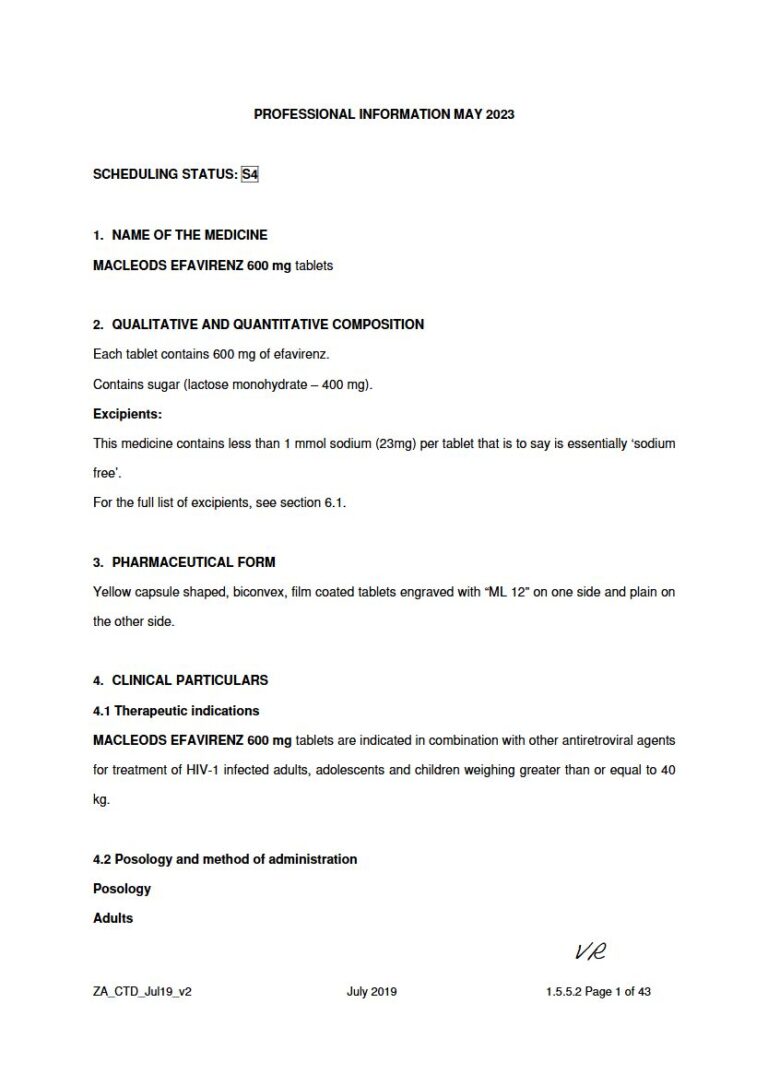
MACLEODS EFAVIRENZ 600 mg tablets are indicated in combination with other antiretroviral agents for treatment of HIV-1 infected adults, adolescents and children weighing greater than or equal to 40 kg.
4.2 Posology and method of administration
Posology
Adults
The recommended dosage of MACLEODS EFAVIRENZ 600 mg in combination with a protease inhibitor and/or nucleoside analogue reverse transcriptase inhibitors (NRTIs) is 600 mg orally, once daily. It is recommended that MACLEODS EFAVIRENZ 600 mg be taken on an empty stomach, preferably at bedtime. A high fat meal may increase the absorption of MACLEODS EFAVIRENZ 600 mg and should be avoided.
Concomitant antiretroviral therapy
MACLEODS EFAVIRENZ 600 mg must be given in combination with other antiretroviral medications (see INTERACTIONS).
Adolescents and children (17 years and under)
The recommended dosage of MACLEODS EFAVIRENZ 600 mg in combination with a protease inhibitor and/or nucleoside analogue reverse transcriptase inhibitors (NRTIs) is 600 mg orally, once daily and can only be used in adults and children who weigh greater than or equal to 40 kg. MACLEODS EFAVIRENZ 600 mg should only be administered to children who are able to reliably swallow tablets.
Method of administration
Oral use
4.3 Contraindications
- MACLEODS EFAVIRENZ 600 mg is contra-indicated in patients with previously demonstrated clinically significant hypersensitivity to efavirenz or to any of the excipients of MACLEODS EFAVIRENZ 600 mg.
- Pregnancy and Lactation (see section 4.6).
- MACLEODS EFAVIRENZ 600 mg should not be administered concurrently with terfenadine, astemizole, cisapride, midazolam, triazolam, pimozide, bepridil or ergot derivatives because competition for CYP3A4 by efavirenz could result in inhibition of metabolism of these medicines and create the potential for serious and/or life-threatening adverse events [e.g. cardiac dysrhythmias, prolonged sedation or respiratory depression] and St Johnu2019s wort, as it may lead to loss of virologic response and possible resistance.
- Patients with severe hepatic impairment (Child Pugh Class C) see section 4.4
- Patients with a history of previous liver injury/failure with efavirenz-containing antiretroviral treatment (ART). (section 4.4)
- MACLEODS EFAVIRENZ 600 mg is contraindicated in adults and children who weigh less than 40 kg.
4.4 Special warnings and precautions for use
Resistant virus emerges rapidly when NNRTIs such as MACLEODS EFAVIRENZ 600 mg are administered as monotherapy. MACLEODS EFAVIRENZ 600 mg must therefore not be used as a single agent to treat HIV or added on as a sole agent to a failing regimen. The choice of new antiretroviral agents to be used in combination with efavirenz should take into consideration the potential for viral cross-resistance.
Co-administration of efavirenz with the fixed combination tablet containing efavirenz, emtricitabine and tenofovir disoproxil fumarate is not recommended unless needed for dose adjustment (for example with rifampicin).
Co-administration of sofosbuvir/velpatasvir with efavirenz is not recommended (see section 4.5)
Coadministration of velpatasvir sofosbuvir/voxilaprevir with efavirenz is not recommended (see section 4.5)
Coadministration of glecaprevir/pibrentasvir with efavirenz may significantly decrease plasma concentrations of glecaprevir and pibrentasvir, leading to reduced therapeutic effect. Coadministration of glecaprevir/pibrentasvir is not recommended (see section 4.5)
Concomitant use of Gingko biloba extract is not recommended (see section 4.5).
Serious nervous system and psychiatric symptoms have been reported (see Nervous system symptoms)
Lipodystrophy and metabolic abnormalities Combination antiretroviral therapy has been associated with the redistribution/accumulation of body fat, including central obesity, dorso-cervical fat, enlargement (buffalo hump), peripheral wasting, facial wasting, breast enlargement, and elevated serum lipid and glucose levels in HIV patients. Clinical examination should include evaluation for physical signs of fat redistribution. Patients with evidence of lipodystrophy should have a thorough cardiovascular risk assessment.
Immune Reconstitution Inflammatory Syndrome Immune reconstitution inflammatory syndrome (IRIS) is an immunopathological response resulting from the rapid restoration of pathogen-specific immune responses to pre-existing antigens combined with immune dysregulation, which occurs shortly after starting combination Anti-Retroviral Therapy (cART). Typically it presents by paradoxical deterioration of opportunistic infections being treated or with unmasking of an asymptomatic opportunistic disease, often with an atypical inflammatory presentation. IRIS usually develops within the first three months of initiation of ART and occurs more commonly in patients with low CD4 counts. Common examples of IRIS reactions to opportunistic diseases are tuberculosis, cytomegalovirus retinitis, and cryptococcal meningitis. Appropriate treatment of the opportunistic disease should be instituted or continued and ART continued. Inflammatory manifestations generally subside after a few weeks. Severe cases may respond to glucocorticoids, but there is only limited evidence for this in patients with tuberculosis IRIS. Autoimmune disorders (such as Graves' disease) have also been reported as IRIS reactions; however, the reported time to onset is more variable and these events can occur many months after initiation of treatment.
Osteonecrosis Although the aetiology is considered to be multifactorial (including corticosteroid use, alcohol consumption, severe immunosuppression, higher body mass index), cases of osteonecrosis have been reported, particularly in patients with advanced HIV-disease and/or long-term exposure to combination antiretroviral therapy (cART). Patients should be advised to seek medical advice if they experience joint aches and pain, joint stiffness or difficulty in movement.
Opportunistic infections Patients receiving MACLEODS EFAVIRENZ 600 mg should be advised that they may continue to develop opportunistic infections and other complications of HIV infection, and therefore they should remain under close observation by healthcare professionals experienced in the treatment of patients with associated HIV disease. Regular monitoring of viral load and CD4 counts needs to be done.
The risk of HIV transmission to others Patients should be advised that current antiretroviral therapy, including MACLEODS EFAVIRENZ 600 mg, does not prevent the risk of transmission of HIV to others through sexual contact or blood contamination. Appropriate precautions should continue to be employed.
MACLEODS EFAVIRENZ 600 mg must not be used as a single agent to treat HIV or added on as a sole agent to a failing regimen. When prescribing medications concomitantly with MACLEODS EFAVIRENZ 600 mg, medical practitioners should refer to the corresponding manufactureru2019s product package insert. If any antiretroviral medication in a combination regimen is interrupted because of suspected intolerance, serious consideration should be given to simultaneous discontinuation of all antiretroviral medications. The antiretroviral medications should be restarted at the same time upon resolution of the intolerance symptoms. Intermittent monotherapy and sequential reintroduction of antiretroviral agents is not advisable because of the increased potential for selection of drug-resistant mutant virus.
Skin Rash: Mild-to-moderate rash has been reported with MACLEODS EFAVIRENZ 600 mg and usually resolves with continued therapy. Appropriate antihistamines and/or corticosteroids may improve the tolerability and hasten the resolution of rash. Severe rash associated with blistering, moist desquamation or ulceration and erythema multiforme or Stevens-Johnson syndrome has been reported. MACLEODS EFAVIRENZ 600 mg should be discontinued in patients developing severe rash associated with blistering desquamation, mucosal involvement or fever. If therapy with MACLEODS EFAVIRENZ 600 mg is discontinued, consideration should also be given to interrupting therapy with other antiretroviral agents to avoid development of drug resistant virus (see SIDE EFFECTS).
Rash was reported in children treated with MACLEODS EFAVIRENZ 600 mg and was severe in some patients. Prophylaxis with appropriate antihistamines prior to initiating therapy with MACLEODS EFAVIRENZ 600 mg in children may be considered.
Nervous System Symptoms: Nervous system symptoms have been reported (see SIDE EFFECTS). In addition, there have been reports of psychosis-like reactions, such as delusions and inappropriate behaviour (including aggressive reactions) predominantly in patients with a history of mental illness or substance abuse. Severe acute depression (including suicidal ideation/attempts) has also been infrequently reported, particularly in patients with a previous history of depression. Patients should be advised that if they experience these symptoms they should contact their doctor immediately because discontinuation of MACLEODS EFAVIRENZ 600 mg may be required.
Psychiatric symptoms Psychiatric adverse reactions have been reported in patients treated with efavirenz. Patients with a prior history of psychiatric disorders appear to be at greater risk of these serious psychiatric adverse reactions. In particular, severe depression was more common in those with a history of depression. There have also been post-marketing reports of severe depression, death by suicide, delusions and psychosis-like behaviour and catatonia. Patients should be advised that if they experience symptoms such as severe depression, psychosis or suicidal ideation, they should contact their doctor immediately to assess the possibility that the symptoms may be related to the use of MACLEODS EFAVIRENZ600 mg, and if so, to determine whether the risks of continued therapy outweigh the benefits (see section 4.8).
Seizures Convulsions have been observed in adult and paediatric patients receiving efavirenz, generally in the presence of known medical history of seizures. Patients who are receiving concomitant anticonvulsant medicines primarily metabolised by the liver, such as phenytoin, carbamazepine and phenobarbital, may require periodic monitoring of plasma levels. In a drug interaction study, carbamazepine plasma concentrations were decreased when carbamazepine was co-administered with efavirenz (see section4.5). Caution must be taken in any patient with a history of seizures.
Effect of food The administration of efavirenz with food may increase efavirenz exposure (see section 5.2) and may lead to an increase in the frequency of adverse reactions (see section 4.8). It is recommended that efavirenz be taken on an empty stomach, preferably at bedtime.
Special Populations:
Hepatic impairment Because of the extensive cytochrome P450-mediated metabolism of MACLEODS EFAVIRENZ 600 mg and limited clinical experience in patients with chronic liver disease, caution should be exercised in administering MACLEODS EFAVIRENZ 600 mg to patients with liver disease. Patients with mild liver disease may be treated with their normally recommended dose of MACLEODS EFAVIRENZ 600 mg. Patients should be monitored carefully for dose-related adverse reactions, especially nervous system symptoms.
Efavirenz-induced liver injury (see section 4.3): There is some evidence that efavirenz is associated with three clinical pathological patterns of drug-induced liver failure in HIV positive patients of which the sub-massive necrosis histological pattern seems to be associated with a high morbidity/mortality risk and may present many months after therapy has been initiated or even stopped. Risk factors include younger age, CD4+ counts > 350 cells/u03bcL and female gender. Patients on MACLEODS EFAVIRENZ 600 mg or efavirenz-containing antiretroviral treatment (ART) should be regularly monitored for jaundice (including a laboratory bilirubin and liver enzymes) and bleeding tendencies. Early detection and treatment of the liver failure and the immediate discontinuation of MACLEODS EFAVIRENZ 600 mg or efavirenz-containing medicines should be stressed. Patients who discontinue treatment with MACLEODS EFAVIRENZ 600 mg should be followed up for symptoms/signs of liver failure for up to 12 months.
MACLEODS EFAVIRENZ 600 mg is not recommended in patients with moderate to severe hepatic impairment because there are insufficient data to determine whether dose adjustments are required.
Liver Enzymes: In patients with known or suspected history of Hepatitis C infection and in patients treated with other medications associated with liver toxicity, monitoring of liver enzymes is recommended. In patients with persistent elevations of serum transaminases to greater than 5 times the upper limit of the normal range, the benefit of continued therapy with MACLEODS EFAVIRENZ 600 mg needs to be weighed against the unknown risks of significant liver toxicity (see section 4.8)
The safety and efficacy of MACLEODS EFAVIRENZ 600 mg in patients with both HIV and hepatitis B virus infection have not been established.
Hepatic events: A few of the post-marketing reports of hepatic failure occurred in patients with no pre-existing hepatic disease or other identifiable risk factors (see section 4.8). Liver enzyme monitoring should be considered for patients without pre-existing hepatic dysfunction or other risk factors.
Hepatic failure: A few of the post-marketing reports of hepatic failure, including cases in patients with no pre-existing hepatic disease or other identifiable risk factors, were characterised by a fulminant course, progressing in some cases to transplantation or death.
The pharmacokinetics of MACLEODS EFAVIRENZ 600 mg have not been studied in patients with renal insufficiency: however, less than 1 % of a MACLEODS EFAVIRENZ 600 mg dose is excreted unchanged in the urine, so the impact of renal impairment on MACLEODS EFAVIRENZ 600 mg elimination should be minimal.
Insufficient numbers of elderly patients have been evaluated in clinical studies to determine whether they respond differently than younger patients.
QTc prolongation: QTc prolongation has been observed with the use of efavirenz (see sections 4.5 and 5.1). Consider alternatives to efavirenz when co-administered with a medicine with a known risk of Torsade de Pointes or when administered to patients at higher risk of Torsade de Pointes.
Weight and metabolic parameters: Weight and levels of blood lipids and glucose may increase during antiretroviral therapy. Such changes may in part be linked to disease control and lifestyle. For lipids, there is in some cases evidence for a treatment effect, while for weight gain there is no strong evidence relating this to any particular treatment. For monitoring of blood lipids and glucose, reference is made to established HIV treatment guidelines. Lipid disorders should be managed as clinically appropriate.
Elderly patients: Insufficient numbers of elderly patients have been evaluated in clinical studies to determine whether they respond differently than younger patients.
Lactose intolerance MACLEODS EFAVIRENZ 600 mg contains lactose. Patients with rare hereditary problems of galactose intolerance, total lactase deficiency or glucose-galactose malabsorption should not take MACLEODS EFAVIRENZ 600 mg.
Cholesterol: Monitoring of cholesterol should be considered in patients treated with MACLEODS EFAVIRENZ 600 mg.
Paediatric use MACLEODS EFAVIRENZ 600 mg has not been studied in paediatric patients below 3 years of age or who weigh less than 13 kg.
4.5 Interaction with other medicines and other forms of interaction
MACLEODS EFAVIRENZ 600 mg is an inducer of CYP3A4. The MACLEODS EFAVIRENZ 600 mg plasma concentrations may be altered by substrates, inhibitors, or inducers of CYP3A. MACLEODS EFAVIRENZ 600 mg in return may alter plasma concentrations of medicines metabolised by CYP3A.
QT Prolonging Drugs
Efavirenz is contraindicated with concomitant use of medicines (they may cause prolonged QTc interval and Torsade de Pointes) such as: antiarrhythmics of classes IA and III, neuroleptics and antidepressant agents, certain antibiotics including some medicines of the following classes: macrolides, fluoroquinolones, imidazole, and triazole antifungal medicines, certain non-sedating antihistaminics (terfenadine, astemizole), cisapride, flecainide, certain antimalarials and methadone (see section 4.3).
Contraindications of concomitant use
Efavirenz must not be administered concurrently with terfenadine, astemizole, cisapride, midazolam, triazolam, pimozide, bepridil, or ergot alkaloids (for example, ergotamine, dihydroergotamine, ergonovine, and methylergonovine), since inhibition of their metabolism may lead to serious, life-threatening events (see section 4.3).
Elbasvir/grazoprevir
Concomitant administration of efavirenz with elbasvir/grazoprevir is contraindicated because it may lead to loss of virologic response to elbasvir/grazoprevir. This loss is due to significant decreases in elbasvir and grazoprevir plasma concentrations caused by CYP3A4 induction. (see section 4.3).
Concurrent antiviral medicines
Indinavir Indinavir (800 mg every 8 hours) given with MACLEODS EFAVIRENZ 600 mg: the indinavir AUC and C max decrease by approximately 31% and 16%, respectively as a result of enzyme induction. Therefore, the dose of indinavir should be increased from 800 mg to 1000 mg every 8 hours when MACLEODS EFAVIRENZ 600 mg and indinavir are co-administered. No adjustment of the dose of MACLEODS EFAVIRENZ 600 mg is necessary when given with indinavir.
Ritonavir MACLEODS EFAVIRENZ 600 mg (given once daily at bedtime) and ritonavir 500 mg (given every 12 hours) is not well tolerated and is associated with a higher frequency of adverse clinical experiences (e.g., dizziness, nausea, paraesthesia) and laboratory abnormalities (elevated liver enzymes). Monitoring of liver enzymes is recommended when MACLEODS EFAVIRENZ 600 mg is used in combination with ritonavir.
Saquinavir Saquinavir (1200 mg given 3 times a day) given with MACLEODS EFAVIRENZ 600 mg: the saquinavir AUC and C max are decreased by 62% and 45 to 50% respectively. Use of MACLEODS EFAVIRENZ 600 mg in combination with saquinavir as the sole protease inhibitor is not recommended.
Rifamycins
Rifampicin reduces MACLEODS EFAVIRENZ 600 mg AUC by 26% and C max by 20%. The dose of MACLEODS EFAVIRENZ 600 mg should be increased to 800 mg/day when taken with rifampicin. No dose adjustment of rifampicin is recommended when given with MACLEODS EFAVIRENZ 600 mg.
Macrolide antibiotics
Clarithromycin Co-administration of MACLEODS EFAVIRENZ 600 mg once daily with clarithromycin results in a significant effect of efavirenz on the pharmacokinetics of clarithromycin. The AUC and C max of clarithromycin decrease by 39% and 26% respectively, while the AUC and C max of the clarithromycin hydroxymetabolite are increased 34% and 49% respectively, when used in combination with MACLEODS EFAVIRENZ 600 mg. The clinical significance of these changes in clarithromycin plasma levels is not known. No dose adjustment of MACLEODS EFAVIRENZ 600 mg is recommended when given with clarithromycin. Alternatives to clarithromycin should be considered.
Anticonvulsants
Carbamazepine: the effect on both carbamazepine and efavirenz may be decreased. There are insufficient data to make a dose recommendation for efavirenz. Alternative anticonvulsant treatment should be used.
Phenytoin/phenobarbital: There is a potential for reduction in the anticonvulsant and/or efavirenz plasma levels; periodic monitoring of anticonvulsant plasma levels should be conducted.
HMG-CoA reductase inhibitors
Atorvastatin, pravastatin, simvastatin: Plasma levels of atorvastatin, pravastatin, simvastatin may be decreased.
Oral contraceptives
The AUC following a single dose of ethinylestradiol is increased (37%) by MACLEODS EFAVIRENZ 600 mg. No significant changes are observed in C max of ethinylestradiol. The clinical significance of these effects is not known. No effect of a single dose of ethinylestradiol on MACLEODS EFAVIRENZ 600 mg C max, or AUC is observed. Because the potential interaction of MACLEODS EFAVIRENZ 600 mg with oral contraceptives has not been fully characterised, a reliable method of barrier contraception should be used in addition to oral contraceptives.
Methadone
Co-administration of MACLEODS EFAVIRENZ 600 mg with methadone results in decreased plasma levels of methadone and signs of opiate withdrawal. Patients should be monitored for signs of withdrawal and their methadone dose increased as required to alleviate withdrawal symptoms.
St. Johnu2019s wort (Hypericum perforatum)
Patients on MACLEODS EFAVIRENZ 600 mg should not use products containing St Johnu2019s wort (Hypericum perforatum) since it may reduce plasma concentrations of MACLEODS EFAVIRENZ 600 mg. This effect is due to an induction of CYP3A4 and may result in loss of therapeutic effect and development of resistance.
4.6 Fertility, pregnancy and lactation
Women of childbearing potential
Barrier contraception should always be used in combination with other methods of contraception (e.g. oral or other hormonal contraceptives) (see section 4.5). Women of childbearing potential should undergo pregnancy testing prior to initiation of MACLEODS EFAVIRENZ 600 mg (see section 4.3).
Because of the long half-life of efavirenz, use of adequate contraceptive measures for 12 weeks after discontinuation of efavirenz is recommended.
Pregnancy
MACLEODS EFAVIRENZ 600 mg may cause foetal harm when administered during the first trimester of pregnancy to a pregnant woman. Pregnancy should be avoided in women receiving MACLEODS EFAVIRENZ 600 mg.
Foetal neural tube defects There have been seven retrospective reports of findings consistent with neural tube defects, including meningomyelocele, all in mothers exposed to efavirenz-containing regimens (excluding any efavirenz-containing fixed-dose combination tablets) in the first trimester. Two additional cases (1 prospective and 1 retrospective) including events consistent with neural tube defects have been reported with the fixed-dose combination tablet containing efavirenz, emtricitabine, and tenofovir disoproxil fumarate. A causal relationship of these events to the use of efavirenz has not been established, and the denominator is unknown. As neural tube defects occur within the first 4 weeks of foetal development (at which time neural tubes are sealed), this potential risk would concern women exposed to efavirenz during the first trimester of pregnancy.
Breastfeeding
The safety of MACLEODS EFAVIRENZ 600 mg in lactation has not been established. Efavirenz may pass into breast milk. Mothers taking MACLEODS EFAVIRENZ 600 mg should not breastfeed their infants. HIV-infected women should not breastfeed their infants under any circumstances in order to avoid transmission of HIV.
4.7 Effects on ability to drive and use machines
MACLEODS EFAVIRENZ 600 mg may cause dizziness, impaired concentration, and/or drowsiness. Patients should be instructed that if they experience these symptoms they should avoid potentially hazardous tasks such as driving or operating machinery.
4.8 Undesirable effects
The most frequently reported treatment-related undesirable effects of at least moderate severity reported in at least 5% of patients were rash (11,6%), dizziness (8,5 %), nausea (8,0%), headache (5,7%), and fatigue (5,5%). The most notable undesirable effects associated with MACLEODS EFAVIRENZ 600 mg are rash and nervous system symptoms (see WARNINGS AND SPECIAL PRECAUTIONS).
Tabulated list of adverse reactions
MedDRA System organ class Frequency Adverse reactions
Immune system disorders Less frequent Hypersensitivity Frequency unknown Immuno-allergic liver injury/failure
Metabolism and nutrition disorders Frequent Hypertriglyceridaemia Less frequent Hypercholesterolaemia Frequency unknown Weight gain and weight loss
Psychiatric disorders Frequent Abnormal dreams, anxiety, depression, insomnia Less frequent Aggressive reactions, agitation, emotional lability, mania, paranoia, psychosis, euphoria, stupor, confusion, apathy, hallucinations, suicide ideation and attempt, nervousness. Frequency unknown delusions, neurosis, completed suicide.
Nervous system disorders Frequent Dizziness, impaired concentration, headache, somnolence. Less frequent Amnesia, ataxia, cerebellar coordination and balance disturbances, convulsions, hypoesthesia, paraesthesia, tremors, anorexia, agitation, increased appetite, impotence, decreased libido, neuralgia, speech disorder, vertigo Frequency unknown Neuropathy
Eye disorders Less frequent Abnormal vision
Ear and labyrinth disorders Less frequent Tinnitus, vertigo
Cardiac disorders Less frequent Flushing, palpitations and tachycardia
Respiratory, thoracic and mediastinal disorders Less frequent Asthma Frequency unknown Upper respiratory tract infections, sinusitis, dyspnoea.
Gastrointestinal disorders Frequent Nausea, vomiting, diarrhoea, dyspepsia, abdominal pain Less frequent Taste perversion, pancreatitis Frequency unknown Gastritis, gastroenteritis, gastro-oesophageal reflux, constipation and malabsorption.
Hepatobiliary disorders Less frequent Hepatitis Frequency unknown Increased hepatic enzymes and hepatic failure
Skin and subcutaneous disorders Frequent Rash, including erythema, diffuse maculopapular rash, dry desquamation, pruritus, increased sweating. Less frequent Rash, including vesiculation, moist desquamation, ulceration, erythema multiforme, Stevens-Johnson Syndrome, toxic epidermal necrolysis, necrosis requiring surgery, exfoliative dermatitis, eczema, alopecia, urticaria. Frequency unknown Acne, seborrhoea, photoallergic dermatitis, nail disorders
Less frequent Arthralgia, myalgia
Musculoskeletal, connective tissue and bone disorders Frequency unknown Myopathy
Reproductive system and breast disorders Less frequent Gynaecomastia Frequency unknown General disorders and administrative site conditions Frequent Fatigue, pain Less frequent Asthenia, malaise, syncope Frequency unknown Influenza-like symptoms, redistribution/accumulation of body fat.
Investigations Frequent ALT >5 ULN; AST >5 ULN; GGT > 5 x ULN; amylase > 2 x ULN, glucose > 250 mg/dl, neutrophils <750/mm 3 . Raised liver enzyme values. Less frequent Increased serum cholesterol and triglyceride concentrations.
The type and frequency of undesirable effects in children was generally similar to that of adult patients, with the exception that rash was reported more frequently in children and was more often of higher grade that in adults. Rashes are usually mild-to-moderate maculopapular skin eruptions that occur within the first two weeks of initiating therapy with MACLEODS EFAVIRENZ 600 mg. In most patients rash resolves with continuing therapy with MACLEODS EFAVIRENZ 600 mg within one month. MACLEODS EFAVIRENZ 600 mg can be reinitiated in patients interrupting therapy because of rash. Use of appropriate antihistamines and/or corticosteroids is recommended when MACLEODS EFAVIRENZ 600 mg is restarted (see section 4.3). Patients receiving MACLEODS EFAVIRENZ 600 mg should be alerted to the potential for additive central nervous system effects when MACLEODS EFAVIRENZ 600 mg is used concomitantly with alcohol or psychoactive medicines.
4.9 Overdose
Symptoms of overdose
Increased nervous system symptoms, involuntary muscle contractions (see section 4.8).
Treatment of overdose
Treatment of overdose with MACLEODS EFAVIRENZ 600 mg should consist of general supportive measures, including monitoring of vital signs and observation of the patientu2019s clinical status. Administration of activated charcoal may be used to aid removal of unabsorbed efavirenz. There is no specific antidote for overdose with MACLEODS EFAVIRENZ 600 mg. Since MACLEODS EFAVIRENZ 600 mg is highly protein bound, dialysis is unlikely to significantly remove efavirenz from the blood.
