
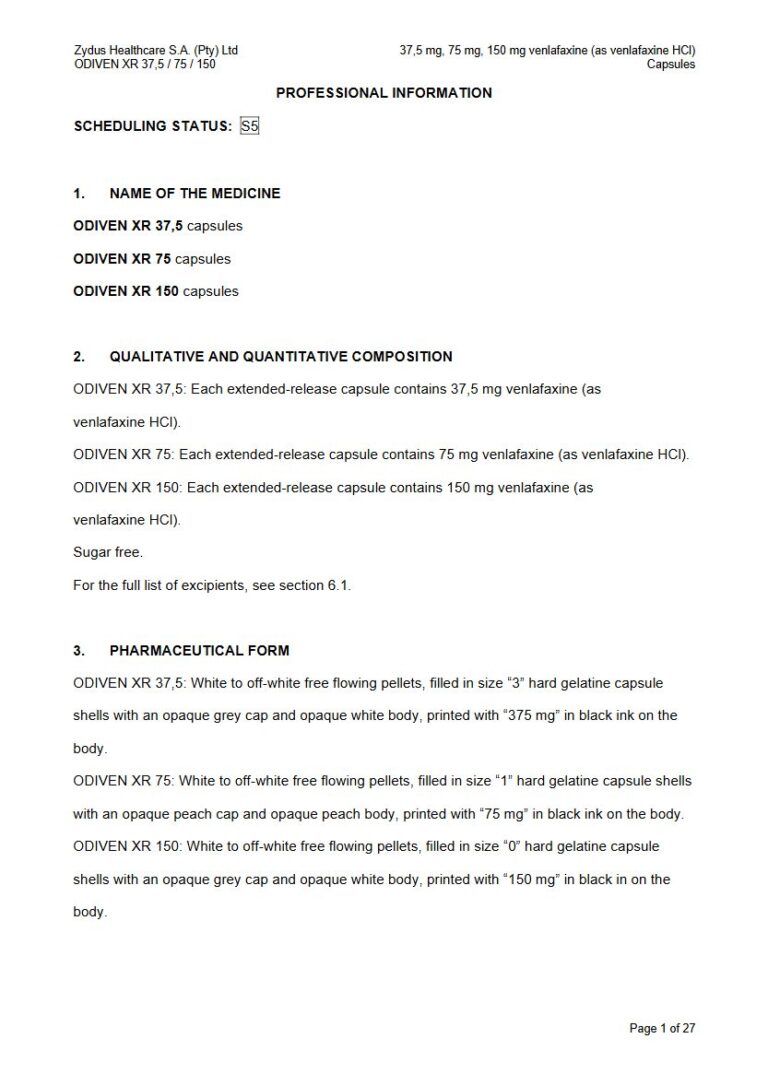
Odiven XR capsule
Clinical Summary
Quick overview from the medicine insert
Indication
Major depressive disorder, generalized anxiety disorder, social anxiety disorder, and panic disorder.
Dosage (summary)
Initial dose of 75 mg once daily, may be increased based on clinical response. Maximum dose is 375 mg per day.
Onset of Action / Duration
Initial response may be observed within 1-2 weeks; full therapeutic effect may take several weeks.
Special Populations
- Elderly patients
- Patients with renal impairment
- Patients with hepatic impairment
Pregnancy & Breastfeeding
Use during pregnancy only if the potential benefit justifies the potential risk to the fetus. Caution is advised during lactation as it is excreted in breast milk.
Key Drug Interactions
- Monoamine oxidase inhibitors (MAOIs)
- Serotonergic drugs
- CYP2D6 inhibitors
- Alcohol
Contraindications
- Hypersensitivity to venlafaxine or any component of the formulation
- Concurrent use of MAOIs
- Severe renal impairment
Common side effects
- Nausea
- Dizziness
- Dry mouth
- Sweating
- Insomnia
- Increased blood pressure
Counselling Points
- Take with food to reduce gastrointestinal side effects.
- Do not discontinue abruptly; tapering may be necessary.
- Monitor for worsening depression or suicidal thoughts.
- Report any unusual changes in mood or behavior.
Serious warnings
- Risk of serotonin syndrome, especially when combined with other serotonergic agents.
- Monitor blood pressure regularly due to potential increases.
- Caution in patients with a history of seizures.
Important Disclaimer
The Odiven XR capsule professional information leaflet below is the property of Zydus Healthcare Sa and is provided on Medinsert exactly as issued, with no.. alterations or editorial changes. We make every effort to keep content current by updating documents as soon as new versions become available. Medinsert serves as a trusted access point for healthcare professionals, but does not replace official sources or clinical judgement. For more details, please read our full disclaimer. read more>>
 Healthcare Professionals Only
This content is for registered healthcare professionals
Sign in or create a free account to read the full package insert.
Free for HPCSA-registered professionals. Powered by Medinsert.
Clinical Particulars
Section 4 of the official insert — extracted exactly as issued, no alterations
4.1 Therapeutic indications
ODIVEN XR is indicated for the following:
- The treatment of depression, including depression with associated anxiety.
- The prevention of relapses of an episode of depression in patients responding to an initial six to eight weeks of treatment.
- Prevention of recurrence in patients responding to six months of relapse prevention. Safety and efficacy of treatment beyond one year have not been established. When ODIVEN XR is used long term, it should periodically be re-evaluated for the usefulness of the medicine in the individual patient.
- The treatment of generalised anxiety disorder.
- Treatment of social anxiety disorder. The effectiveness of ODIVEN XR has not been demonstrated for longer than 12 weeks for this indication.
4.2 Posology and method of administration
Posology
The recommended daily dose for ODIVEN XR is 75 mg once daily. If after several weeks further clinical improvement is required, the dose may be increased to 150 mg once daily. This dose can be further increased to 225 mg once daily. Dose increments should be made at intervals of 2 weeks or more, but not less than 4 days. The dose for depressed patients may be further increased, if needed, up to 375 mg once daily. ODIVEN XR should be taken with food. Swallow the capsule whole, with fluid. Do not open, divide, crush, chew or place ODIVEN XR capsule in water. ODIVEN XR should be taken once daily at more or less the same time, either in the morning or in the evening. ODIVEN XR capsules contain pellets, which release the active ingredient into the digestive system over an extended period of time. The insoluble portion of these pellets is eliminated and may be seen in stools.
Depressed patients who are currently being treated at a therapeutic dose with ODIVEN, may be switched to ODIVEN XR at the nearest equivalent dose (mg/day). Individual dosage adjustments may, however, be necessary.
Special populations
Patients with renal impairment
A lower dose of ODIVEN XR is recommended in patients with renal impairment. In patients with renal impairment with a glomerular filtration rate (GFR) of 10 u2013 70 mL/min, the total daily dose of ODIVEN XR must be reduced by 25 u2013 50 %. In haemodialysis patients, the total daily dose of ODIVEN XR must be reduced by 50 %. Because of individual variability in clearance in these patients, individualisation of dosage may be desirable.
Patients with hepatic impairment
In patients with mild to moderate hepatic impairment, the total daily dose of ODIVEN XR must be reduced by 50 %. For some patients, reductions of more than 50 % may be appropriate.
Paediatric population
ODIVEN XR is not recommended for use in children and adolescents. The efficacy and safety of venlafaxine for other indications in children and adolescents under the age of 18 years have not been established (see sections 4.3, 4.4 and 4.8).
Elderly patients
No specific dosage adjustments of ODIVEN XR are recommended based on patient age.
Maintenance, continuation and extended treatment
Periodic re-assessment of the need for long-term therapy with ODIVEN XR is recommended. It is unknown if the dose of antidepressant needed to induce remission is the same as the dose needed to maintain and/or sustain euthymia.
Discontinuing ODIVEN XR
Dose tapering is recommended when discontinuation of ODIVEN XR therapy is indicated. If ODIVEN XR has been used for more than 6 weeks, tapering over at least a 2-week period is recommended. Successful tapering can be achieved by reducing the daily dose by 75 mg at 1-week intervals. The tapering period is influenced by the dose, duration of therapy and the individual patient. Patients should be advised to consult their medical practitioner before abruptly discontinuing ODIVEN XR (see section 4.4).
Method of administration
For oral use. It is recommended that ODIVEN XR be taken with food. Each capsule should be swallowed whole with fluid. Do not divide, crush, chew or place capsule in water.
4.3 Contraindications
- Hypersensitivity to venlafaxine or to any of the excipients listed in section 6.1.
- Concomitant treatment with irreversible monoamine oxidase inhibitors (MAOIs) is contraindicated due to the risk of serotonin syndrome with symptoms such as agitation, tremor and hyperthermia (see section 4.5). ODIVEN XR should not be initiated for at least 14 days after discontinuation of treatment with an irreversible MAOI. ODIVEN XR should be discontinued at least 7 days before starting treatment with an irreversible MAOI (see sections 4.4 and 4.5).
- Severe adverse reactions have been reported when ODIVEN XR treatment is initiated soon after discontinuation of an MAOI and when an MAOI is initiated soon after discontinuation of ODIVEN XR, including tremor, myoclonus, diaphoresis, nausea, vomiting, flushing, dizziness, hyperthermia with features resembling neuroleptic malignant syndrome (NMS), seizures and death (see section 4.5).
- Children under the age of 18 years (see section 4.4).
- Pregnancy and lactation (see section 4.6).
4.4 Special warnings and precautions for use
Suicide/suicidal thoughts or clinical worsening
Patients with major depressive disorder, both adults and children, may experience worsening of their depression and/or the emergence of suicidal ideation and behaviour, whether or not they are taking antidepressant medicines. The risk may persist until significant remission occurs. A causal role, however, for antidepressant medicine in inducing such behaviour has not been established. Patients being treated with ODIVEN XR should, nevertheless, be observed closely for clinical worsening and suicidality, especially at the beginning of a course of therapy or at any time of dose changes, either increases or decreases. Because of the possibility of co-morbidity between major depressive disorder and other psychiatric and non-psychiatric disorders, the same precautions observed when treating patients with major depressive disorders should be observed when treating patients with other psychiatric and non-psychiatric disorders. The following symptoms have been reported in patients being treated with antidepressants for major depressive disorder as well as for other indications, both psychiatric and non-psychiatric: anxiety, agitation, panic attacks, insomnia, irritability, hostility, aggressiveness, impulsivity, akathisia, hypomania and mania. Although a causal link between the emergence of suicidal impulses has not been established, consideration should be given to changing the therapeutic regimen, including possibly discontinuing ODIVEN XR, in patients for whom such symptoms are severe, abrupt in onset, or were not part of the patientu2019s presenting symptoms. If the decision is made to discontinue treatment, ODIVEN XR should be tapered (see section 4.2).
Paediatric population
ODIVEN XR should not be used in the treatment of children and adolescents under the age of 18 years. Safety and efficacy in children under 18 years of age have not been established. In clinical trials in major depressive disorder, there were increased reports of hostility (predominantly aggression, oppositional behaviour and anger) and suicide-related events, such as suicidal ideation and self-harm (see section 4.3). If, based on clinical need, a decision is made to nevertheless treat the patient, the patient should be carefully monitored for suicidal symptoms. Long-term safety data in children and adolescents concerning growth, maturation and cognitive and behavioural development are not available.
Serotonin syndrome
Serotonin syndrome, a potentially life-threatening condition, may occur with ODIVEN XR treatment, particularly with concomitant use of other medicines that may affect the serotonergic neurotransmitter system (including triptans, SSRIs, SNRIs, amphetamines, lithium, sibutramine, St Johnu2019s wort (Hypericum perforatum), fentanyl and its analogues, tramadol, dextromethorphan, tapentadol, pethidine, methadone and pentazocine), with medicines that impair metabolism of serotonin (such as MAOIS), with serotonin precursors (such as tryptophan supplements) or with antipsychotics or other dopamine antagonists (see sections 4.3 and 4.5). Symptoms of serotonin syndrome may include mental status changes (e.g. agitation, hallucinations, coma), autonomic instability (e.g. tachycardia, labile blood pressure, hyperthermia), neuromuscular aberrations (e.g. hyperreflexia, incoordination) and/or gastrointestinal symptoms (e.g. nausea, vomiting, diarrhoea). Serotonin syndrome can resemble neuroleptic malignant syndrome (NMS) in its most severe form, with symptoms including hyperthermia, muscle rigidity, autonomic instability with possible rapid fluctuation of vital signs and mental status changes. Careful observation of the patient is advised, particularly during treatment initiation and dose increases, where concomitant treatment with ODIVEN XR and other medicines that may affect the serotonergic and/or dopaminergic neurotransmitter systems is clinically warranted. Concomitant use of ODIVEN XR with serotonin precursors (such as tryptophan supplements) is not recommended.
Narrow-angle glaucoma
Patients with raised intraocular pressure or patients at risk for acute narrow-angle glaucoma should be closely monitored, as mydriasis may occur when using ODIVEN XR.
Blood pressure
Dose-related increase in blood pressure have commonly been reported with ODIVEN XR. Severely elevated blood pressure requiring immediate treatment has been reported in some cases in post-marketing experience. Before treatment is initiated all patients should be carefully screened for high blood pressure and pre-existing hypertension should be controlled. Caution should be exercised in patients whose underlying conditions might be compromised by increases in blood pressure, e.g. those with impaired cardiac function.
Heart rate
Caution should be exercised in patients whose underlying conditions might be compromised by increases in heart rate, as increases in heart rate can occur, particularly with higher doses.
Cardiac disease and risk of dysrhythmia
ODIVEN XR should be used with caution in patients with a recent history of myocardial infarction or unstable heart disease, as the use of ODIVEN XR has not been evaluated in these patients. Cases of QTc prolongation, torsade de pointes (TdP), ventricular tachycardia and fatal cardiac dysrhythmias have been reported with the use of venlafaxine (as in ODIVEN XR) in post-marketing experiences, especially in overdose or in patients with other risk factors for QTc prolongation/TdP. The balance of risks and benefits should be considered before prescribing ODIVEN XR to patients at high risk of serious cardiac dysrhythmia or QTc prolongation (see section 5.1).
Convulsions
Convulsions may occur with ODIVEN XR therapy. As with all antidepressants, ODIVEN XR should be introduced with caution in patients with history of convulsions, and concerned patients should be closely monitored. Treatment should be discontinued in any patient who develops seizures.
Hyponatraemia
Hyponatraemia and/or the syndrome of inappropriate antidiuretic hormone (SIADH) secretion may occur with the use of ODIVEN XR, most frequently in volume-depleted or dehydrated patients. Patients taking diuretics, elderly patients and patients who are otherwise volume-depleted may be at greater risk.
Abnormal bleeding
The use of serotonin uptake inhibitors (SSRIs and SNRIs) may lead to reduced platelet function. Bleeding events have ranged from ecchymoses, haematomas, epistaxis and petechia to gastrointestinal and life-threatening haemorrhages. SSRIs/SNRIs, including venlafaxine, may increase the risk of postpartum haemorrhage (see sections 4.6 and 4.8). There may be an increased risk of haemorrhage in patients taking ODIVEN XR. ODIVEN XR should be used with caution in patients predisposed to bleeding, including patients on anticoagulants and platelet inhibitors.
Serum cholesterol
Patients on ODIVEN XR treatment may have clinically relevant increases in serum cholesterol.
Co-administration with weight loss medicines
Co-administration of ODIVEN XR and weight loss medicines, including phentermine, is not recommended as safety and efficacy of combination therapy have not been established. ODIVEN XR is not indicated for weight loss alone or in combination with other medicines.
Mania/hypomania
A small number of patients who have received antidepressants, including ODIVEN XR, may present with mania/hypomania. ODIVEN XR should be used cautiously in patients with a history or family history of bipolar disorder.
Aggression
Aggression may occur in a small number of patients who have been treated with antidepressants, including ODIVEN XR. This has been reported with initiation, dose changes and discontinuation of treatment. ODIVEN XR should be used with caution in patients with a history of aggression.
Discontinuation of treatment
Discontinuation effects are well known to occur with antidepressants, and sometimes these effects can be protracted and severe. Suicide/suicidal thoughts and aggression have been observed in patients during changes in venlafaxine dosing regimen, including discontinuation. Therefore, patients should be closely monitored when the dose is reduced or during discontinuation (see above in section 4.4 u2013 Suicide/suicidal thoughts or clinical worsening, and Aggression). When treatment is discontinued, particularly if discontinuation is abrupt, withdrawal symptoms are common (see section 4.8). The risk of withdrawal symptoms depends on several factors, including the dose and duration of therapy as well as the rate of dose reduction. The most commonly reported reactions include dizziness, sleep disturbances (insomnia and intense dreams), sensory disturbances (paraesthesia), agitation, anxiety, nausea, vomiting, tremor and headache. These symptoms are generally mild to moderate, but may be severe in some patients. These symptoms usually occur within the first few days of discontinuing treatment, but there have been very rare reports of such symptoms in patients who have inadvertently missed a dose. These symptoms are generally self-limiting and usually resolve within 2 weeks, although it may be prolonged (2 u2013 3 months or more) in some individuals. Therefore, it is advised that ODIVEN XR should be gradually tapered when discontinuing treatment over a period of several weeks or months (see section 4.2). In some patients, discontinuation could take months or longer.
Sexual dysfunction
Serotonin-norepinephrine reuptake inhibitors (SNRIs) may cause symptoms of sexual dysfunction (see section 4.8). There have been reports on long-lasting sexual dysfunction where the symptoms have continued despite discontinuation of SNRIs.
Akathisia/psychomotor restlessness
ODIVEN XR use has been associated with the development of akathisia, most likely within the first few weeks of treatment. Akathisia is characterised by a subjective unpleasant or distressing restlessness, a need to move often and an inability to stand or sit still. Increasing the dose in patients who develop these symptoms, may be detrimental.
Dry mouth
ODIVEN XR can cause a dry mouth, which may increase the risk of caries. Patients should be advised on the importance of dental hygiene.
Diabetes
Treatment with ODIVEN XR or a SSRI may alter glycaemic control in patients with diabetes. Dosage adjustment may be needed for patients on insulin and/or oral antidiabetic treatment.
Laboratory test interactions
False-positive urine immunoassay screening tests have been reported for phencyclidine (PCP) and amphetamine in patients taking ODIVEN XR, due to lack of specificity of the screening tests. False-positive test results may be expected for several days following discontinuation of ODIVEN XR therapy. Confirmatory tests, such as gas chromatography/mass spectrometry, will distinguish venlafaxine from PCP and amphetamine.
Use in elderly patients
ODIVEN XR appears to pose no exceptional safety problems for healthy elderly patients.
Abuse and dependence
Clinical studies did not show evidence of drug-seeking behaviour, development of tolerance, or dose escalation over time. In vitro studies revealed that ODIVEN XR has virtually no affinity for opiate, benzodiazepine, phencyclidine (PCP) or N-methyl-D-aspartic acid (NMDA) receptors. ODIVEN XR was not found to have any significant CNS stimulant activity in rodents. In primate medicine discrimination studies, ODIVEN XR showed no significant stimulant or depressant abuse liability.
4.5 Interactions with other medicines
Monoamine oxidase inhibitors (MAOI)
Severe adverse reactions have been reported in patients who have recently discontinued an MAOI and started ODIVEN XR treatment, or have recently discontinued ODIVEN XR before initiating an MAOI. These adverse reactions included tremor, myoclonus, diaphoresis, nausea, vomiting, flushing, dizziness and hyperthermia with features resembling neuroleptic malignant syndrome (NMS), seizures and death.
Irreversible non-selective MAOIs
ODIVEN XR should not be used in combination with irreversible non-selective MAOIs and should also not be initiated for at least 14 days after discontinuation of treatment with an irreversible non-selective MAOI. ODIVEN XR should be discontinued for at least 7 days before starting treatment with an irreversible non-selective MAOI (see sections 4.3 and 4.4).
Reversible, selective MAOIs (moclobemide)
The combination of ODIVEN XR with a reversible selective MAOI (such as moclobemide), is not recommended, due to a risk of serotonin syndrome. A withdrawal period of shorter than 14 days may be required before initiating ODIVEN XR treatment. ODIVEN XR should be discontinued for at least 7 days before starting treatment with a reversible MAOI.
Reversible, non-selective MAOIs (linezolid)
The antibiotic, linezolid, is a weak reversible and non-selective MAOI. Linezolid should not be given to patients of ODIVEN XR treatment.
Serotonin syndrome
Serotonin syndrome, a potential life-threatening condition, may occur with ODIVEN XR treatment, particularly with concomitant use with other medicines that may affect the serotonergic neurotransmitter system (SSRIs, SNRIs, amphetamines, lithium, sibutramine, St Johnu2019s wort (Hypericum perforatum), fentanyl and its analogues, tramadol, dextromethorphan, tapentadol, pethidine, methadone and pentazocine), with medicines that impair serotonin metabolism (MOAIs), with serotonin precursors (tryptophan supplements) or with antipsychotics or other dopamine antagonists (see sections 4.3 and 4.4). Where concomitant treatment with ODIVEN XR and an SSRI, an SNRI or a serotonin receptor agonist (triptan) is clinically warranted, patients should be carefully observed, especially during initiation of treatment and with dosage increases. Concomitant use of serotonin precursors (such as tryptophan supplements) with ODIVEN XR is not recommended (see section 4.4).
Central nervous system (CNS) active medicines
Caution is advised when ODIVEN XR is taken in combination with other CNS active medicines, as the risk has not been systematically evaluated.
Ethanol
ODIVEN XR may not increase the impairment of mental and motor skills caused by ethanol. However, patients should be advised to avoid alcohol consumption while taking ODIVEN XR.
Medicines that prolong the QT interval
The risk of QTc prolongation and/or ventricular dysrhythmias (e.g. TdP) is increased with concomitant use of other medicines which prolong the QTc interval. Co-administration with such medicines should be avoided (see section 4.4).
Relevant classes include:
- Class Ia and III antidysrhythmics (e.g. amiodarone, quinidine, sotalol).
- Some antipsychotics (e.g. thioridazine).
- Some macrolides (e.g. erythromycin).
- Some antihistamines.
- Some quinolone antibiotics (e.g. moxifloxacin).
Other medicines known to significantly increase the QT interval should also be avoided.
Cimetidine
The first pass metabolism of ODIVEN XR is inhibited by cimetidine at steady-state, but it had no apparent effect on the pharmacokinetics of O-desmethylvenlafaxine (ODV). The overall pharmacological activity of venlafaxine plus ODV is expected to increase only slightly in most patients. In the elderly and in patients with hepatic or renal dysfunction this interaction may be more pronounced.
Ketoconazole (CYP3A4 inhibitor)
Concomitant use of CYP3A4 inhibitors (e.g. atazanavir, clarithromycin, indinavir, itraconazole, voriconazole, posaconazole, ketoconazole, nelfinavir, ritonavir, saquinavir, telithromycin) and venlafaxine may increase levels of venlafaxine and ODV. Therefore, caution is advised when combining ODIVEN XR with a CYP3A4 inhibitor.
Lithium
Serotonin syndrome may occur with the concomitant use of ODIVEN XR and lithium.
Diazepam
ODIVEN XR has no effects on the pharmacokinetics and pharmacodynamics of diazepam and its active metabolite, desmethyldiazepam. Diazepam does not appear to affect the pharmacokinetics of either venlafaxine or ODV.
Imipramine
Venlafaxine did not affect the pharmacokinetics of imipramine and 2-OH-imipramine. There was a dose-dependent increase of 2-OH-desipramine AUC by 2,5 to 4,5-fold when venlafaxine 75 mg to 150 mg daily was administered. Imipramine did not affect the pharmacokinetics of venlafaxine and ODV. Caution should be exercised with co-administration of ODIVEN XR and imipramine.
Haloperidol
Changes in the pharmacokinetics of oral haloperidol include a possible decrease of 42 % in total oral clearance, a 70 % increase in AUC, and an 88 % increase in the C max. The half-life is not affected. This should be considered in the co-administration of haloperidol and ODIVEN XR.
Risperidone
Venlafaxine increased the risperidone AUC by 50 % but does not significantly alter the pharmacokinetic profile of the total active moiety (risperidone plus 9-hydroxyrisperidone).
Metoprolol
Concomitant administration of venlafaxine and metoprolol resulted in an increase in plasma concentrations of metoprolol by approximately 30 u2013 40 % without altering the plasma concentrations of its active metabolite, u03b1-hydroxymetoprolol. ODIVEN XR appeared to reduce the blood pressure-lowering effect of metoprolol. The clinical relevance of this finding in hypertensive patients is unknown. Metoprolol did not alter the pharmacokinetic profile of ODIVEN XR or its active metabolite, O-desmethylvenlafaxine. Caution should be exercised with co-administration of ODIVEN XR and metoprolol.
Indinavir
A pharmacokinetic study with indinavir shows a decrease of 28 % in the AUC and a decrease of 36 % in C max for indinavir. The pharmacokinetics of ODIVEN XR and ODV are not affected by indinavir. The clinical significance of this interaction is unknown.
Medicines highly bound to plasma proteins
ODIVEN XR is not highly bound to plasma proteins (27 % bound); therefore, administration of ODIVEN XR with other highly protein bound medicines is not expected to result in increased free concentration of the other medicines.
Medicines metabolised by cytochrome P450 isoenzymes
In vivo studies indicate that ODIVEN XR is a relatively weak inhibitor of CYP2D6. ODIVEN XR did not inhibit CYP3A4 (alprazolam and carbamazepine), CYP1A2 (caffeine), CYP2C9 (tolbutamide) or CYP2C19 (diazepam) in vivo.
Oral contraceptives
In post-marketing experience, unintended pregnancies have been reported in subjects taking oral contraceptives while on ODIVEN XR. There is no clear evidence that these pregnancies were a result of medicine interactions with ODIVEN XR. No interaction study with hormonal contraceptives has been performed.
4.6 Fertility, pregnancy and lactation
Patients falling pregnant or planning a pregnancy during ODIVEN XR therapy should inform their health care professional.
Pregnancy
The safety of ODIVEN XR during pregnancy has not been established. Discontinuation symptoms may occur in newborns if ODIVEN XR is used until or shortly before birth, as with other serotonin reuptake inhibitors (SSRIs/SNRIs). Some neonates exposed to ODIVEN XR late in the third trimester have developed complications requiring tube-feeding, respiratory support or prolonged hospitalisation. Such complications can arise immediately upon delivery. Observational data indicate an increased risk (less than 2-fold) of postpartum haemorrhage following SSRIs/SNRIs exposure within the month prior to birth (see sections 4.4 and 4.8). Epidemiological data have suggested that the use of SSRIs in pregnancy, particularly in late pregnancy, may increase the risk of persistent pulmonary hypertension in the newborn (PPHN). Although no studies have investigated an association of PPHN to SNRI treatment, this potential risk cannot be ruled out with ODIVEN XR, taking into account the related mechanism of action (inhibition of the re-uptake of serotonin). The following symptoms may be observed in neonates if the mother has used an SSRI/SNRI late in pregnancy: irritability, tremor, hypotonia, persistent crying and difficulty in suckling or sleeping. These symptoms may be due to either serotonergic effects or exposure symptoms. In most cases, these complications are observed immediately or within 24 hours postpartum.
Breastfeeding
The safety of ODIVEN XR during breastfeeding has not been established. Both venlafaxine and O-desmethylvenlafaxine are excreted in breast milk. There have been post-marketing reports of breastfed infants who experienced crying, irritability and abnormal sleep patterns. Symptoms consistent with ODIVEN XR discontinuation have also been reported after stopping breastfeeding. A decision should be made as to whether ODIVEN XR should be discontinued, or whether the patient should stop breastfeeding.
Fertility
Reduced fertility was observed in a study in which both female and male rats were exposed to the major metabolite, O-desmethylvenlafaxine. The human relevance of this finding is unknown.
4.7 Effects on ability to drive and use machines
ODIVEN XR may impair judgement, thinking and motor skills. Therefore, patients should be cautioned about operating hazardous machinery, including motor vehicles, until they are reasonably certain that ODIVEN XR does not affect them adversely.
4.8 Undesirable effects
Blood and lymphatic system disorders
Less frequent: agranulocytosis, aplastic anaemia, pancytopenia, neutropenia, thrombocytopenia
Immune system disorders
Frequency unknown: anaphylactic reaction, angioedema
Endocrine disorders
Less frequent: inappropriate antidiuretic hormone secretion, hyperprolactinaemia
Metabolism and nutrition disorders
Frequent: increased serum cholesterol (possibly dose related and after prolonged use), decreased body mass, decreased appetite
Less frequent: hyponatraemia, weight gain
Psychiatric disorders
Frequent: confusional state, depersonalisation, abnormal dreams, nervousness, agitation, insomnia, decreased libido
Less frequent: mania, hypomania, hallucinations, derealisation, bruxism, apathy, delirium
Frequency unknown: suicidal ideation, suicidal behaviour, aggression
Nervous system disorders
Frequent: headache, dizziness, sedation, akathisia, tremor, paraesthesia, dysgeusia
Less frequent: syncope, myoclonus, balance disorder, abnormal coordination, dyskinesia, neuroleptic malignant syndrome (NMS), serotonin syndrome, convulsions, dystonia, tardive dyskinesia
Eye disorders
Frequent: visual impairment, accommodation disorder, blurred vision, mydriasis
Less frequent: angle closure glaucoma
Ear and labyrinth disorders
Frequent: tinnitus
Frequency unknown: vertigo
Cardiac disorders
Frequent: tachycardia, palpitations, chest pain, hypertension
Less frequent: torsade de pointes, ventricular tachycardia, ventricular fibrillation, electrocardiogram QT prolongation
Frequency unknown: stress cardiomyopathy (takotsubo cardiomyopathy)
Vascular disorders
Frequent: hypertension, vasodilation (mostly hot flushes)
Less frequent: orthostatic hypotension, hypotension
Respiratory, thoracic and mediastinal disorders
Frequent: yawning, dyspnoea
Less frequent: interstitial lung disease, pulmonary eosinophilia
Gastrointestinal disorders
Frequent: nausea, dry mouth, constipation, diarrhoea, vomiting, decreased appetite, abdominal pain
Less frequent: gastrointestinal haemorrhage, pancreatitis, altered taste sensation
Hepatobiliary disorders
Less frequent: abnormal liver function test, hepatitis
Skin and subcutaneous tissue disorders
Frequent: hyperhidrosis (including night sweats), rash, pruritus
Less frequent: urticaria, alopecia, ecchymosis, angioedema, photosensitivity reaction, Stevens-Johnson syndrome, toxic epidermal necrolysis, erythema multiforme
Musculoskeletal and connective tissue disorders
Frequent: hypertonia, back pain
Less frequent: rhabdomyolysis
Renal and urinary disorders
Frequent: urinary hesitation, urinary retention, pollakiuria, impaired urination (mostly hesitancy)
Less frequent: urinary incontinence
Reproductive system and breast disorders
Frequent: menorrhagia, metrorrhagia, erectile dysfunction, ejaculation disorder, abnormal ejaculation/orgasm (males), anorgasmia, decreased libido
Less frequent: abnormal orgasm (females)
Frequency unknown: postpartum haemorrhage
General disorders and administration site conditions
Frequent: fatigue, asthenia, chills, pain
Less frequent: mucosal haemorrhage
Investigations
Frequent: weight decreased, weight increased, blood cholesterol increased
Less frequent: prolonged bleeding time.
Description of selected adverse reactions
Discontinuation of treatment
Discontinuation of ODIVEN XR (particularly when abrupt) commonly leads to withdrawal symptoms. Dizziness, sensory disturbances (including paraesthesia), sleep disturbances (including insomnia and intense dreams), agitation or anxiety, nausea and/or vomiting, tremor, vertigo, headache and flu syndrome are the most commonly reported reactions. Generally, these events are mild to moderate and are self-limiting, however, in some patients, they may be severe and/or prolonged. It is therefore advised that when ODIVEN XR treatment is no longer required, gradual discontinuation by dose tapering should be carried out (see sections 4.2 and 4.4). However, in some patients, severe aggression and suicidal ideation occurred when the dose was reduced or during discontinuation (see section 4.4).
Reporting of suspected adverse reactions
Reporting suspected adverse reactions after authorisation of ODIVEN XR is important. It allows continued monitoring of the benefit/risk balance of ODIVEN XR. Health care providers are asked to report any suspected adverse reactions to SAHPRA via the Safety APP (Medsafety X SAHPRA) and eReporting platform (who-umc.org) found on SAHPRA website.
4.9 Overdose
Symptoms
The most commonly reported symptoms are tachycardia, changes in the level of consciousness (ranging from somnolence to coma), mydriasis, convulsions and vomiting. Other events include electrocardiographic changes (e.g. prolongation of QT interval, bundle branch block, QRS prolongation), ventricular tachycardia, bradycardia, hypotension, vertigo and death (see section 4.8).
Treatment
The recommended treatment of an overdose should be supportive and symptomatic, including the monitoring of vital signs and cardiac rhythm. When there is a risk of aspiration, induction of emesis is not recommended. Administration of activated charcoal may also limit medicine absorption. Forced diuresis, dialysis, haemoperfusion and exchange transfusion are unlikely to be beneficial. There are no known specific antidotes for ODIVEN XR.
