
Thromboreductin 0,5 mg Capsules
PDF Leaflet Revision Date: 3 January 2024
Clinical Summary
Quick overview from the medicine insert
Indication
Treatment of essential thrombocythaemia to reduce platelet count.
Dosage (summary)
Start with 0.5 mg daily, increase weekly by 0.5 mg; usual maintenance 1.5-3 mg daily.
Onset of Action / Duration
Onset: 2 weeks, Duration: up to 5 mg daily.
Special Populations
- Elderly
- Renal impairment
- Hepatic impairment
Pregnancy & Breastfeeding
Contraindicated in pregnancy; unknown if excreted in breast milk.
Key Drug Interactions
- Aspirin (increased bleeding risk)
- CYP1A2 inhibitors
- QTc prolonging agents
Contraindications
- Hypersensitivity to anagrelide
- Severe renal insufficiency
- Moderate to severe hepatic insufficiency
- Cardiovascular disease grade 3 or 4
Common side effects
- Headaches
- Palpitations
- Oedema
- Nausea
- Diarrhoea
Counselling Points
- Monitor platelet counts regularly
- Avoid abrupt treatment discontinuation
- Report signs of thrombotic events
Serious warnings
- Risk of thrombotic complications upon treatment discontinuation
- Serious cardiovascular events reported
Important Disclaimer
The Thromboreductin 0,5 mg Capsules professional information leaflet below is the property of Key Oncologics and is provided on Medinsert exactly as issued, with no.. alterations or editorial changes. We make every effort to keep content current by updating documents as soon as new versions become available. Medinsert serves as a trusted access point for healthcare professionals, but does not replace official sources or clinical judgement. For more details, please read our full disclaimer. read more>>
 Healthcare Professionals Only
This content is for registered healthcare professionals
Sign in or create a free account to read the full package insert.
Free for HPCSA-registered professionals. Powered by Medinsert.
Clinical Particulars
Section 4 of the official insert — extracted exactly as issued, no alterations
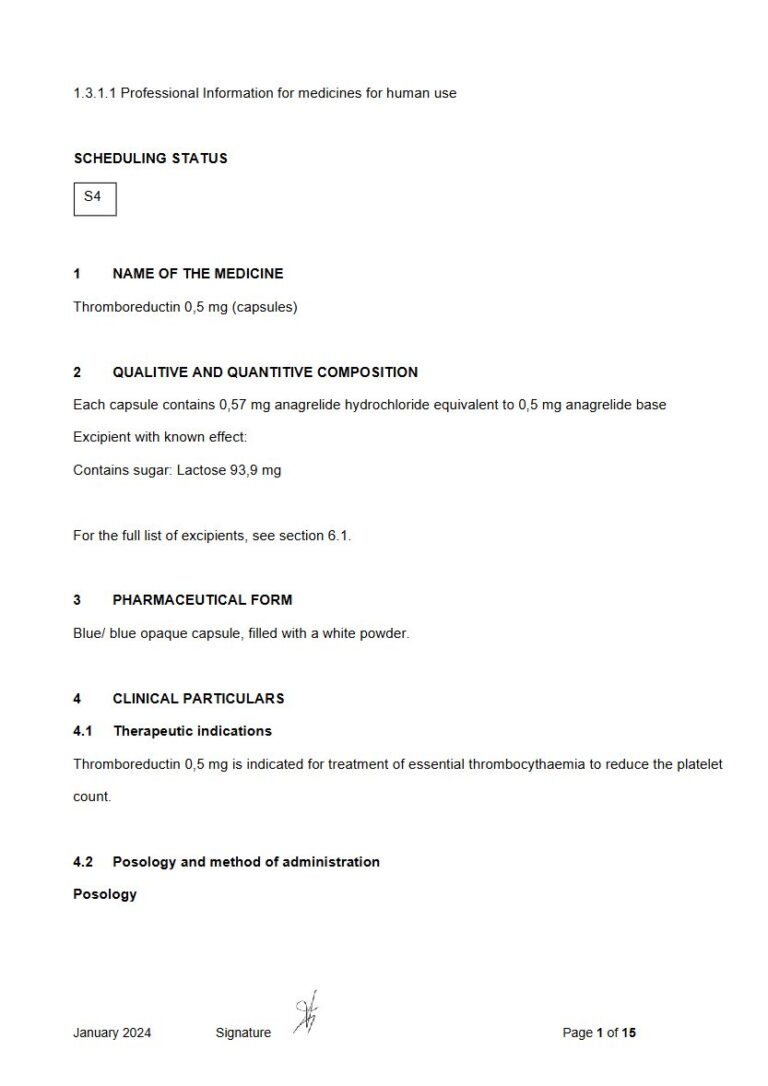
4.1 Therapeutic indications
Thromboreductin 0,5 mg is indicated for treatment of essential thrombocythaemia to reduce the platelet count.
4.2 Posology and method of administration
Posology S4 Doctors with experience in treatment of patients with essential thrombocythaemia should initiate treatment with Thromboreductin 0,5 mg. Thromboreductin 0,5 mg has to be dosed individually for each patient. Treatment should be started with 0,5 mg per day for at least one week and then the dose should be increased weekly by 0,5 mg per day until the desired therapeutic effect is achieved. Normally a therapeutic response is seen within 2 weeks in a dose range of 1 to 3 mg/d. The total daily dose should be administered twice daily (every 12 hours) or three times a day (every 8 hours). The usual maintenance dose is 1,5 mg to 3mg daily. The total daily dose should not exceed 5 mg per day or as a single-dose 2,5 mg. The therapeutic response should be controlled regularly. Upon treatment initiation platelet counts should be measured every 2 days for the first week and thereafter at least weekly until the optimal response is reached (normalisation of platelet count or a reduction to < 600,000/ u03bc l or a decrease by 50 %), afterwards platelet counts should be controlled in regular intervals according to the doctoru2019s discretion. Changing a previous therapy (e.g. hydroxyurea or interferon u03b1) to Thromboreductin 0,5 mg or to a combination therapy with Thromboreductin 0,5 mg should be done in an overlapping manner. Thromboreductin 0,5 mg is indicated for continuous use. Upon stopping a relapse of platelet counts to pre-therapy values will occur within several days. In case of therapeutic resistance to Thromboreductin 0,5 mg other therapies should be considered. During therapy platelet counts should be measured regularly. Caution is indicated in patients with cardiovascular diseases (see section 4.3 and section 4.4). Limited data are available for patients with renal and liver disease; therefore, Thromboreductin 0,5 mg cannot be recommended for these patients. Special populations Elderly population A limited number of elderly patients have been treated with Thromboreductin 0,5 mg. Caution is advised when treating elderly patients with cardiovascular diseases. Paediatric population The safety and efficacy of Thromboreductin 0,5 mg in patients have not been established. Method of administration For oral use.
4.3 Contraindications
- Patients with known hypersensitivity to anagrelide hydrochloride or any of the excipients of Thromboreductin 0,5 mg.
- Lactose intolerance has to be considered in patients (see section 4.4).
- Cardiovascular disease grade 3 with a negative benefit/risk assessment or grade 4 (South West Oncology Group).
- Severe renal insufficiency (creatinine clearance < 30 ml/min).
- Moderate to severe hepatic insufficiency.
4.4 Special warnings and precautions for use
General Thromboreductin 0,5 mg requires close clinical supervision of the patient including a complete blood count (haemoglobin, white blood cell and platelet counts) and tests regarding liver function (e.g. ALT and AST), renal function (serum creatinine and urea) and electrolytes (potassium, magnesium and calcium). Treatment discontinuation and thrombotic risk In the event of dosage interruption or treatment withdrawal, the rebound in platelet count is variable, but the platelet count will start to increase within 4 days of stopping treatment with Thromboreductin 0,5 mg and will return to pre-treatment levels within 10 to 14 days, possibly rebounding above baseline values. Therefore, platelets should be monitored frequently (see section 4.2). Abrupt treatment discontinuation should be avoided due to the risk of sudden increase in platelet counts, which may lead to potentially fatal thrombotic complications, such as cerebral infarction. Patients should be advised how to recognize early signs and symptoms suggestive of thrombotic complications, such as cerebral or myocardial infarction, and if symptoms occur to seek medical assistance. Haematological parameters (in particular haematocrit and leukocyte count) should be controlled in regular intervals during the use of Thromboreductin 0,5 mg. Cardiovascular effects Serious cardiovascular adverse events, including cases of torsade de pointes, ventricular tachycardia, cardiomyopathy, cardiomegaly and congestive heart failure have been reported (see section 4.8). Caution should be taken when using Thromboreductin 0,5 mg, in patients with known risk factors for prolongation of the QT interval, such as congenital long QT syndrome, a known history of acquired QTc prolongation, medicinal products that can prolong the QTc interval and hypokalaemia. Close monitoring for an effect on the QTc interval is advisable. Care should also be taken in populations that may have a higher maximum plasma concentration (C max) of anagrelide or its active metabolite, 3-hydroxy-anagrelide, e.g. in case of hepatic impairment or use with CYP1A2 inhibitors (see section 4.5). A pre-treatment cardiovascular examination, including a baseline ECG and an echocardiography is recommended prior to initiating therapy with anagrelide. Patients should be monitored during treatment for evidence of cardiovascular effects that may require further cardiovascular examination and investigation. Hypokalaemia or hypomagnesaemia must be corrected prior to Thromboreductin 0,5 mg administration and should be monitored periodically during therapy. Anagrelide, as contained in Thromboreductin 0,5 mg, is an inhibitor of cyclic AMP phosphodiesterase III (PDE III) and because of its positive inotropic and chronotropic effects, anagrelide, as contained in Thromboreductin 0,5 mg should be used with caution in patients of any age with known or suspected heart disease. Moreover, serious cardiovascular adverse events have also occurred in patients without suspected heart disease and with normal pre-treatment cardiovascular examination. Palpitations and headaches were often observed mainly at the beginning of the therapy (see section 4.8). These undesired effects can be reduced by a slow increase of the dosage with a starting dose of 0,5 to 1,0 mg per day and normally abate within few weeks. Pulmonary hypertension Cases of pulmonary hypertension have been reported in patients treated with Thromboreductin 0,5 mg. Patients should be evaluated for signs and symptoms of underlying cardiopulmonary disease prior to initiating and during Thromboreductin 0,5 mg therapy. Hepatic impairment (see sections 4.2 and 4.3) In patients with hepatic impairment, frequent liver function tests, especially at the beginning of the therapy, are necessary. Renal impairment (see sections 4.2 and 4.3) In patients with renal impairment, frequent kidney function tests especially at the beginning of the therapy are necessary. Lactose warning: Thromboreductin 0,5 mg contains lactose which may have an effect on the glycaemic control of patients with diabetes mellitus. Patients with the rare hereditary conditions of galactose intolerance e.g. galactosaemia, Lapp lactase deficiency, glucose-galactose malabsorption or fructose intolerance should not take Thromboreductin 0,5 mg.
4.5 Interaction with other medicines and other forms of interaction
Limited pharmacokinetic and/or pharmacodynamic studies investigating possible interactions between anagrelide, as contained in Thromboreductin 0,5 mg and other medicines have been conducted. The following medicines were used concomitantly with Thromboreductin 0,5 mg: aspirin, hydroxyurea, allopurinol, furosemide, paracetamol, digoxin, ranitidine, acetaminophen/paracetamol, B-blockers, ACE-inhibitors, clopidogrel, coumarin, folic acid, amlodipine, carbamazepine, hydrochlorothiazide, indapamide, iron, isosorbide mononitrate, levothyroxine-Na, simvastatin and ticlopidine. With exception of aspirin (elevated risk of bleeding), no significant interactions occurred. Effects of other substances on Thromboreductin 0,5 mg: Anagrelide, as contained in Thromboreductin 0,5 mg, is primarily metabolised by CYP1A2. CYP1A2 is inhibited by several medicines, including fluvoxamine, enoxacin, and such medicines could theoretically adversely influence the clearance of anagrelide. CYP1A2 inducers, such as omeprazole, could decrease the exposure of anagrelide. In vivo interaction studies in humans have demonstrated that digoxin and warfarin do not affect the pharmacokinetic properties of anagrelide as contained in Thromboreductin 0,5 mg. Caution should be taken when using Thromboreductin 0,5 mg in patients with medicines that can prolong the QTc interval and hypokalaemia. Effects of Thromboreductin 0,5 mg on other substances: Anagrelide as contained in Thromboreductin 0,5 mg demonstrates a somewhat limited inhibitory activity towards CYP1A2, which may present a potential for interaction with other co-administered medicines sharing this clearance mechanism e.g. theophylline. Anagrelide as contained in Thromboreductin 0,5 mg is an inhibitor of PDE III. The effects of medicines with similar properties such as the inotropes milrinone, enoximone, amrinone, olprinone and cilostazol may be exacerbated by Thromboreductin 0,5 mg. An in vitro study in human whole blood demonstrated that the anti-aggregatory effects of acetylsalicylic acid were additively, but not synergistically increased by the presence of anagrelide as contained in Thromboreductin 0,5 mg. At the doses recommended for use in the treatment of essential thrombocythaemia, Thromboreductin 0,5 mg may theoretically potentiate the effects of other medicinal products that inhibit or modify platelet function, e.g. acetylsalicylic acid. Co-administration of repeat-dose Thromboreductin 0,5 mg and acetylsalicylic acid may enhance the anti-platelet aggregation effects of each product compared with administration of acetylsalicylic acid alone. In some ET patients concomitantly treated with acetylsalicylic acid and anagrelide formulations, major haemorrhages occurred. Therefore, due to the lack of data in ET patients, the potential risks of the simultaneous use of Thromboreductin 0,5 mg with acetylsalicylic acid should be assessed before treatment is initiated, particularly in patients with a high-risk profile for haemorrhage. Thromboreductin 0,5 mg may cause intestinal disturbance in some patients and compromise the absorption of hormonal oral contraceptives. Food interactions: Food delays the absorption of anagrelide as contained in Thromboreductin 0,5 mg but does not significantly alter systemic exposure. The effects of food on bioavailability are not considered clinically relevant to the use of Thromboreductin 0,5 mg. It has been demonstrated that grapefruit juice inhibits CYP1A2 and thus may reduce the clearance of anagrelide as contained in Thromboreductin 0,5 mg.
4.6 Fertility, pregnancy and lactation
Women of childbearing potential/ Contraception in males and females Women of childbearing age should use adequate contraception. Pregnancy Thromboreductin 0,5 mg has been shown to be embryotoxic and fetotoxic in animal studies. Thromboreductin 0,5 mg is contraindicated for use in pregnancy. Breastfeeding It is unknown whether Thromboreductin 0,5 mg is excreted in human milk and should therefore not be administered to breast feeding women. Fertility No human data on the effect of anagrelide on fertility are available. In male rats, there was no effect on fertility or reproductive performance with anagrelide. In female rats, using doses in excess of the therapeutic range, anagrelide disrupted implantation.
4.7 Effects on ability to drive and use machines
Thromboreductin 0,5 mg may cause dizziness and headache and have a minor influence on mental and/or physical abilities to perform or execute tasks or activities requiring mental alertness, judgment and/or sound coordination and vision.
4.8 Undesirable effects
a. Summary of the safety profile The most frequent side effects of anagrelide, which were mostly slight in intensity and decreased during the course of the therapy, were: headaches, palpitations, oedemas, nausea and diarrhoea. These side effects are to be expected due to the pharmacologic effect of anagrelide (inhibition of phosphodiesterase III). By slowly increasing of the dosage with a starting dose of 0,5 to 1,0 mg per day these effects can be reduced. The following undesirable effects are ranked according to system organ class and to their frequency: Frequencies are defined as: very common (> 1/10), common (> 1/100, 1/1000, < 1/100), rare (< 1/1000). Tabulated list of adverse reactions Body System Undesirable effect Very common Common Uncommon Rare Blood and the lymphatic system disorders: anaemia, ecchymosis, lymphadenoma thrombocytopenia, bleeding, haematoma Metabolism and nutrition disorders: oedema weight gain Nervous system disorders: headache, vertigo, paraesthesia, insomnia, depression, nervousness, xerostomia, migraine, hypoaesthesia cerebral infarction* Eye disorders: vision anomalies conjunctivitis Ear and labyrinth disorders: tinnitus Cardiac disorders: haemorrhage, vasodilatation, palpitations, tachycardia, hypertension cardiac insufficiency, congestive heart failure, dysrhythmia supraventricular tachycardia, syncope atrial fibrillation, angina pectoris, orthostatic hypotension, myocardial infarction *, Prinzmetal angina, Torsade de pointes (frequency not known) Respiratory, thoracic and mediastinal disorders: epistaxis dyspnoea, pulmonary hypertension, respiratory infection Pleura effusion, pneumonia, asthma pulmonary fibrosis (frequency not known) Gastrointestinal disorders: anorexia nausea, diarrhoea, dyspepsia vomiting, flatulence, abdominal pain, obstipation, abdominal pain gastritis, loss of appetite Skin and subcutaneous tissue disorders: eczema alopecia, pruritus skin rash Musculoskeletal, connective tissue and bone disorders: backaches arthralgia, myalgia Renal and urinary disorders: renal insufficiency, infection of the urinary tract nycturia tubulointerstitial nephritis (frequency not known) Hepato-biliary disorders: liver enzyme values increased General disorders and administrative site conditions: fatigue pain, weakness malaise, influenza like symptoms, ague *Cerebral infarction, myocardial infarction (See section 4.4 Treatment discontinuation and thrombotic risk)
4.9 Overdose
At higher than recommended dosages anagrelide produces a reduction in blood pressure, which may cause hypotension as well as tachycardia. A single dose of 5 mg anagrelide can reduce blood pressure usually accompanied by vertigo. There have been a small number of reports of overdose with anagrelide. Reported symptoms include sinus tachycardia and vomiting. Symptoms improved with conservative management. A specific antidote for anagrelide has not been identified. In case of overdose close clinical observation of the patient is necessary. This includes monitoring of the platelet count with regard to thrombocytopenia. If required, the dose should be decreased or administration discontinued until the platelet count returns to the normal range.
