
Zatelanz 300 mg & 400mg Tablet
PDF Leaflet Revision Date: 03 May 2022
Clinical Summary
Quick overview from the medicine insert
Indication
Treatment of HIV-1 infected adults over 18 years who are stabilized on a similar antiretroviral regimen.
Dosage (summary)
One tablet daily on an empty stomach.
Special Populations
- Elderly
- Renal impairment
- Hepatic impairment
Pregnancy & Breastfeeding
Contraindicated in pregnancy and breastfeeding; use barrier contraception.
Key Drug Interactions
- St. John's wort
- CYP3A4 inducers
- Trimethoprim
Contraindications
- Hypersensitivity to components
- Severe hepatic impairment
- Moderate to severe renal impairment
Common side effects
- Dizziness
- Nausea
- Diarrhea
- Rash
Counselling Points
- Take on an empty stomach
- Monitor for liver function
- Avoid alcohol
Serious warnings
- Lactic acidosis
- Severe hepatotoxicity
- Immune reconstitution inflammatory syndrome
Important Disclaimer
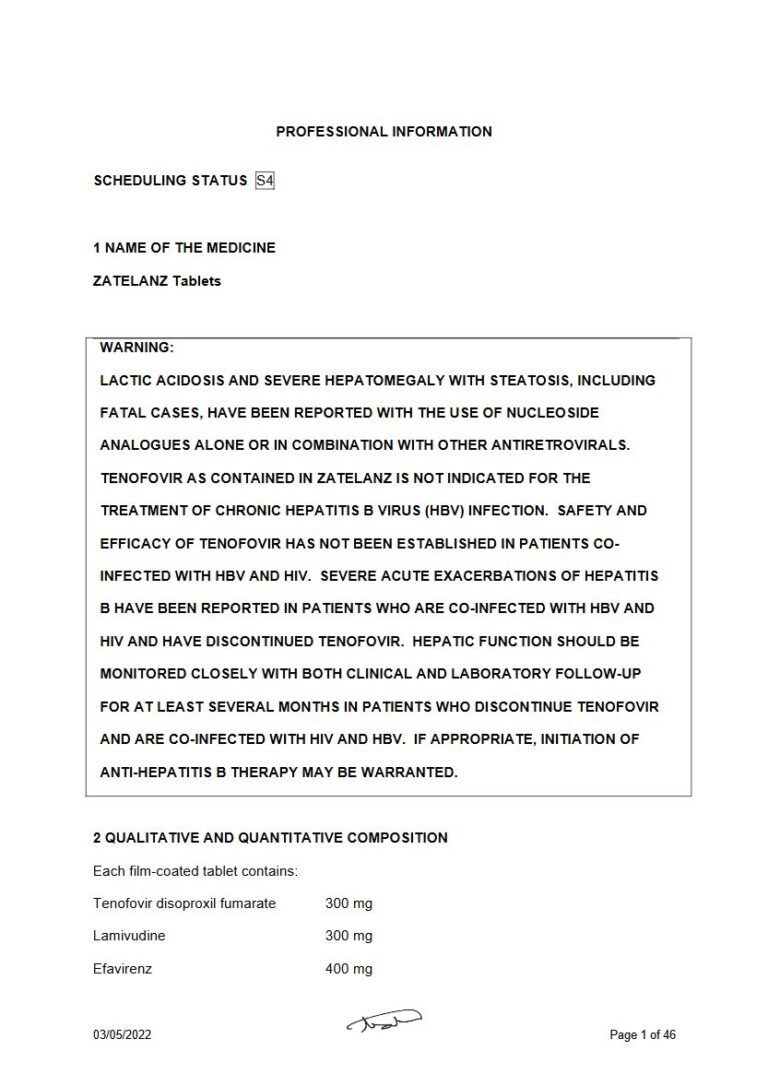
The Zatelanz 300 mg & 400mg Tablet professional information leaflet below is the property of Mylan and is provided on Medinsert exactly as issued, with no.. alterations or editorial changes. We make every effort to keep content current by updating documents as soon as new versions become available. Medinsert serves as a trusted access point for healthcare professionals, but does not replace official sources or clinical judgement. For more details, please read our full disclaimer. read more>>
 Healthcare Professionals Only
This content is for registered healthcare professionals
Sign in or create a free account to read the full package insert.
Free for HPCSA-registered professionals. Powered by Medinsert.
Clinical Particulars
Section 4 of the official insert — extracted exactly as issued, no alterations
4.1 Therapeutic indications
ZATELANZ is indicated for the treatment of HIV-1 infected adults over 18 years of age, who have been treated and stabilised on a combination of the three antiretrovirals contained in ZATELANZ administered as separate formulations in similar dosages as contained in ZATELANZ.
4.2 Posology and method of administration
Posology: Therapy should be initiated by a medical practitioner experienced in the management of HIV infection. In exceptional circumstances in patients having difficulty in swallowing, ZATELANZ can be administered following disintegration of the tablet in at least 100 ml of water, orange juice or grape juice.
Adults: The recommended dose is one ZATELANZ tablet once daily taken orally on an empty stomach. It is recommended that Efavirenz be taken on an empty stomach. The increased efavirenz concentrations observed following administration of Efavirenz with food may lead to an increase in frequency of adverse events. In order to improve the tolerability of nervous system undesirable effects, bedtime dosing is recommended.
Special populations
- Children and adolescents: The safety and efficacy of tenofovir disoproxil fumarate in patients under the age of 18 years have not been established. Tenofovir disoproxil fumarate must not be administered to children or adolescents until further data become available describing the safety and efficacy of tenofovir disoproxil fumarate in patients under the age of 18 years. So, ZATELANZ tablets are not recommended in children and adolescents.
- Elderly: No data are available on which to make a dose recommendation for patients over the age of 65 years.
- Adolescents, Children and Infants less than three months of age: ZATELANZ is a fixed medicine combination tablet and the dose cannot be adjusted, therefore ZATELANZ is not for use in patients less than 18 years of age.
- Renal insufficiency: ZATELANZ is contraindicated in renal impairment with creatinine clearance < 50 ml/min.
- Hepatic impairment: Tenofovir disoproxil fumarate No dose adjustment is required in patients with hepatic impairment for tenofovir. However, ZATELANZ should not be used in patients with severe hepatic impairment (see 4.3).
- Lamivudine Data obtained in patients with moderate to severe hepatic impairment shows that lamivudine pharmacokinetics are not significantly affected by hepatic dysfunction. Based on these data, no dose adjustment is necessary in patients with moderate or severe hepatic impairment unless accompanied by renal impairment. However, ZATELANZ should not be used in patients with severe hepatic impairment (see 4.3).
- Efavirenz Patients with mild to moderate liver disease may be treated with their normally recommended dose of efavirenz. Patients should be monitored carefully for dose-related adverse events, especially nervous system symptoms. Efavirenz should not be used in patients with severe hepatic impairment and therefore ZATELANZ should not be used in these patients (see 4.3).
Method of administration Oral use.
4.3 Contraindications
- ZATELANZ tablets are contraindicated in patients with known hypersensitivity to tenofovir, lamivudine or efavirenz, or any of the excipients.
- A history of previous liver injury/failure with efavirenz containing antiretroviral treatment.
- Severe hepatic impairment (Child-Pugh Class C)
- Moderate to severe renal impairment (CrCl < 50 mL/min). Uncontrolled renal failure.
- Pregnancy and lactation
- Concurrent administration with terfenadine, astemizole, cisapride, midazolam, triazolam, pimozide, bepridil, ergot alkaloids, St Johnu2019s wort (hypericum perforatum), zalcitabine or with elbasvir/grazoprevir.
4.4 Special warnings and precautions for use
ZATELANZ should not be taken with any other medicinal products containing tenofovir disoproxil fumarate, lamivudine or efavirenz.
Lipodystrophy and metabolic abnormalities Combination antiretroviral therapy has been associated with the redistribution/accumulation of body fat, including central obesity, dorso-cervical fat enlargement (buffalo hump), peripheral wasting, facial wasting, breast enlargement, and elevated serum lipid and glucose levels in HIV patients. Clinical examination should include evaluation for physical signs of fat redistribution. Patients with evidence of lipodystrophy should have a thorough cardiovascular risk assessment.
Immune Reconstitution Inflammatory Syndrome Immune reconstitution inflammatory syndrome (IRIS) is an immunopathological response resulting from the rapid restoration of pathogen-specific immune responses to pre-existing antigens combined with immune dysregulation, which occurs shortly after starting combination Anti-Retroviral Therapy (cART). Typically such reaction presents by paradoxical deterioration of opportunistic infections being treated or with unmasking of an asymptomatic opportunistic disease, often with an atypical inflammatory presentation. IRIS usually develops within the first three months of initiation of ART and occurs more commonly in patients with low CD4 count. Common examples of IRIS reactions to opportunistic diseases are tuberculosis, cytomegalovirus retinitis, and cryptococcal meningitis. Appropriate treatment of the opportunistic disease should be instituted or continued and ART continued. Inflammatory manifestations generally subside after a few weeks. Severe cases may respond to glucocorticoids, but there is only limited evidence for this in patients with tuberculosis IRIS.
Autoimmune disorders (such as Graves' disease) have also been reported as IRIS reactions; however, the reported time to onset is more variable and these events can occur many months after initiation of treatment.
Osteonecrosis Although the aetiology is considered to be multifactorial (including corticosteroid use, alcohol consumption, severe immunosuppression, higher body mass index), cases of osteonecrosis have been reported, particularly in patients with advanced HIV-disease and/or long-term exposure to combination antiretroviral therapy (cART). Patients should be advised to seek medical advice if they experience joint aches and pain, joint stiffness or difficulty in movement.
Opportunistic infections Patients receiving ZATELANZ should be advised that they may continue to develop opportunistic infections and other complications of HIV infection, and therefore they should remain under close observation by healthcare professionals experienced in the treatment of patients with associated HIV disease. Regular monitoring of viral load and CD4 counts needs to be done.
The risk of HIV transmission to others Patients should be advised that current antiretroviral therapy, including ZATELANZ, does not prevent the risk of transmission of HIV to others through sexual contact or blood contamination. Appropriate precautions should continue to be employed.
Lactic acidosis / hyperlactataemia Use of ZATELANZ can result in potentially fatal lactic acidosis as a consequence of mitochondrial dysfunction. Clinical features are non-specific, and include nausea, vomiting, abdominal pain, dyspnoea, fatigue and weight loss. In patients with suspicious symptoms or biochemistry, measure the venous lactate level (normal < 2 mmol/u2113) and the serum bicarbonate and respond as follows:
- Lactate 2 - 5 mmol/u2113 with minimum symptoms: switch to medicines that are less likely to cause lactic acidosis.
- Lactate 5 - 10 mmol/u2113 with symptoms and/or with reduced standard bicarbonate: Stop NRTIs and change treatment option. Once lactate has settled, use medicines that are less likely to cause lactic acidosis. Exclude other causes, (e.g. sepsis, uraemia, diabetic ketoacidosis, thyrotoxicosis and hyperthyroidism.
- Lactate > 10 mmol/u2113: STOP all therapy (80 % mortality).
The above lactate values may not be applicable to paediatric patients. Caution should be exercised when administering ZATELANZ to patients with known risk factors for liver disease. Treatment with ZATELANZ should be suspended in any patient who develops clinical or laboratory findings suggestive of lactic acidosis or hepatotoxicity.
Mitochondrial dysfunction Nucleoside and nucleotide analogues have been demonstrated in vitro and in vivo to cause a variable degree of mitochondrial damage. There have been reports of mitochondrial dysfunction in HIV negative infants exposed in utero and/or post-natally to nucleoside analogues. Apart from lactic acidosis/hyperlactataemia (see above) other manifestations of mitochondrial dysfunction include haematological disorders (anaemia, neutropenia), and peripheral neuropathy. Some late-onset neurological disorders have been reported (hypertonia, convulsion, abnormal behaviour). It is not known whether the neurological disorders are transient or permanent. Any foetus exposed in utero to nucleoside and nucleotide analogues, even HIV negative infants/children, should have clinical and laboratory follow-up and should be fully investigated for possible mitochondrial dysfunction in case of relevant sign and symptoms.
Pancreatitis Pancreatitis has been observed in some patients receiving ZATELANZ. Pancreatitis must be considered whenever a patient develops abdominal pain, nausea, vomiting or elevated biochemical markers. Discontinue use of ZATELANZ until diagnosis of pancreatitis is excluded.
Patients with moderate to severe renal impairment In patients with moderate to severe renal impairment, the terminal half-life of ZATELANZ is increased due to decreased clearance. ZATELANZ is not for use in patients with a CrCl of < 50 mL/min (see 4.3).
Liver disease ZATELANZ should not be used in patients with severe hepatic impairment (Child-Pugh Class C) (see 4.3). Use of ZATELANZ can result in hepatomegaly due to non-alcoholic fatty liver disease (hepatic steatosis). The safety and efficacy of ZATELANZ has not been established in patients with significant underlying liver disorders/diseases. In case of concomitant antiviral therapy for hepatitis B or C, please also consult the relevant package inserts for these medicines. Patients with pre-existing liver dysfunction including chronic active hepatitis have an increased frequency of liver function abnormalities during combination antiretroviral therapy and should be monitored. If there is evidence of worsening liver disease in such patients, temporary or permanent discontinuation of treatment must be considered.
Patients with HIV and hepatitis B or C virus co-infection Patients with chronic hepatitis B or C and treated with antiretroviral therapy are at an increased risk for severe and potentially fatal hepatic adverse reactions. Medical practitioners should refer to current HIV treatment guidelines for the optimal management of HIV infection in patients co-infected with hepatitis B virus (HBV). In case of concomitant antiviral therapy for hepatitis B or C, please refer also to the relevant package inserts for these medicines. Patients co-infected with HIV and HBV who discontinue ZATELANZ should be closely monitored with both clinical and laboratory follow-up after stopping treatment. In patients with advanced liver disease or cirrhosis, treatment discontinuation is not recommended since post-treatment exacerbation of hepatitis may lead to hepatic decompensation. Discontinuation of ZATELANZ therapy in patients co-infected with HIV and HBV may be associated with severe, acute exacerbations of hepatitis.
Efavirenz Liver failure: There is some evidence that efavirenz is associated with three clinical pathological patterns of drug induced liver failure in HIV positive patients of which the sub massive necrosis histological pattern seems to be associated with a high morbidity/mortality risk and may present many months after therapy has been initiated or even stopped. Risk factors include younger age, CD4+ counts u2265 350 cells/u03bc1 and female gender. Patients on ZATELANZ or efavirenz containing antiretroviral treatment (ART) should be regularly monitored for jaundice (including a laboratory bilirubin and liver enzymes) and bleeding tendencies. Early detection and treatment of the liver failure and the immediate discontinuation of ZATELANZ or efavirenz containing medicines should be stressed. Patients who discontinued treatment with ZATELANZ should be followed up for symptoms/signs of liver failure for up to 12 months.
ZATELANZ is not recommended in patients with moderate to severe hepatic impairment because there are insufficient data to determine whether dose adjustments are required (see 4.3). The safety and efficacy of ZATELANZ in patients with both HIV and hepatitis B virus infection have not been established.
Rash: Mild to moderate rash has been reported in clinical studies with efavirenz and usually resolves with continued therapy. Appropriate antihistamines and/or corticosteroids may improve the tolerability and hasten the resolution of rash. Severe rash associated with blistering, moist desquamation or ulceration has been reported in less than 1 % of patients treated with efavirenz. The incidence of erythema multiforme or Stevens-Johnson syndrome was 0.14 %. Efavirenz must be discontinued in patients developing severe rash associated with blistering, desquamation, mucosal involvement or fever. If therapy with efavirenz is discontinued, consideration should also be given to interrupting therapy with other antiretroviral agents to avoid development of resistant virus. Rash was reported in 26 of 57 children (46 %) treated with efavirenz and was severe in three patients (5 %). Prophylaxis with appropriate antihistamines prior to initiating therapy with efavirenz in children may be considered.
Nervous system symptoms: Nervous system symptoms have been reported in clinical studies with efavirenz. In addition, there have been reports of psychosis-like reactions, such as delusions and inappropriate behavior (including aggressive reactions), predominantly in patients with a history of mental illness or substance abuse. Severe acute depression (including suicidal ideation/attempts) has also been infrequently reported in both efavirenz-treated and control-treated patients, particularly in patients with a previous history of depression. Patients should be advised that if they experience these symptoms they should contact their doctor immediately because discontinuation of efavirenz may be required.
Lactose ZATELANZ contains lactose. Patients with rare hereditary problems of galactose intolerance e.g. galactosaemia, total lactase deficiency, glucose-galactose malabsorption should not take ZATELANZ.
4.5 Interaction with other medicines and other forms of interaction
Tenofovir disoproxil fumarate Based on the results of in vitro experiments and the known elimination pathway of tenofovir, the potential for CYP450 mediated interactions involving tenofovir with other medicinal products is low. Tenofovir is excreted renally, both by filtration and active secretion via the anionic transporter (hOAT1). Co-administration of tenofovir disoproxil fumarate with other medicines that are also actively secreted via the anionic transporter (e.g. cidofovir may result in increased concentrations of tenofovir or of the co-administered medicine.
Concomitant antiretroviral medicinal products: Emtricitabine, lamivudine, indinavir, efavirenz, nelfinavir, and saquinavir (ritonavir boosted): Co-administration with tenofovir disoproxil fumarate did not result in any clinically relevant interaction. When tenofovir disoproxil fumarate was administered with lopinavir/ritonavir, no changes were observed in the pharmacokinetics of lopinavir and ritonavir. Tenofovir AUC was increased by approximately 30 % when tenofovir disoproxil fumarate was administered with lopinavir/ritonavir.
Other interactions: Co-administration of tenofovir disoproxil fumarate, methadone, ribavirin, adefovir dipivoxil or the hormonal contraceptive norgestimate/ethinyl estradiol did not result in any pharmacokinetic interaction. Tenofovir disoproxil fumarate must be taken with food, as food enhances the bioavailability of tenofovir. Co-administration of zidovudine results in a 13 % increase in zidovudine exposure and a 28 % increase in peak plasma levels. This is not considered to be of significance to patient safety and therefore no dosage adjustments are necessary.
Lamivudine Interaction studies have only been performed in adults. An interaction with trimethoprim, a constituent of co-trimoxazole, causes a 40 % increase in lamivudine exposure at therapeutic doses. This does not require dose adjustment unless the patient also has renal impairment. Administration of co-trimoxazole with lamivudine in patients with renal impairment should be carefully assessed. Lamivudine may inhibit the intracellular phosphorylation of zalcitabine when the two medicinal products are used concurrently. Lamivudine is therefore not recommended to be used in combination with zalcitabine. Co-administration of lamivudine with intravenous ganciclovir or foscarnet is not recommended. The likelihood of metabolic interactions is low due to limited metabolism and plasma protein binding and almost complete renal clearance. Administration of trimethoprim/sulfamethoxazole 160 mg/800 mg results in a 40 % increase in lamivudine exposure, because of the trimethoprim component the sulfamethoxazole component did not interact. However, unless the patient has renal impairment, no dosage adjustment of lamivudine is necessary. Lamivudine has no effect on the pharmacokinetics of trimethoprim or sulfamethoxazole. When concomitant administration is warranted, patients should be monitored clinically. Co-administration of lamivudine with high doses of co-trimoxazole for the treatment of Pneumocystis carinii pneumonia (PCP) and toxoplasmosis should be avoided. The possibility of interactions with other medicines administered concurrently should be considered, particularly when the main route of elimination is active renal secretion via the organic cationic transport system e.g. trimethoprim. Other medicines (e.g. ranitidine, cimetidine) are eliminated only in part by this mechanism and were shown not to interact with lamivudine. The nucleoside analogues (e.g. didanosine and zalcitabine) like zidovudine are not eliminated by this mechanism and are unlikely to interact with lamivudine. A modest increase in C max (28 %) was observed for zidovudine when administered with lamivudine, however overall exposure (AUC is not significantly altered. Zidovudine has no effect on the pharmacokinetics of lamivudine. Lamivudine metabolism does not involve CYP3A, making interactions with medicines metabolised by this system (e.g. PIs) unlikely.
Efavirenz Efavirenz is an inducer of CYP3A4 and an inhibitor of some CYP isoenzymes including CYP3A4. Other compounds that are substrates of CYP3A4 may have decreased plasma concentrations when co-administered with efavirenz. Efavirenz exposure may also be altered when given with medicines or food (for example, grapefruit juice) which affect CYP3A4 activity. Efavirenz must not be administered concurrently with terfenadine, astemizole, cisapride, midazolam, triazolam, pimozide, bepridil, or ergot alkaloids (for example ergotamine, dihydroergotamine, ergonovine, and methyl ergonovine) since inhibition of their metabolism may lead to serious, life-threatening events.
Concomitant antiretroviral medicines Protease Inhibitors Amprenavir: No dosage adjustment is necessary if efavirenz is given in combination with amprenavir (600 mg twice daily) and ritonavir (100 or 200 mg twice daily). Further, if efavirenz is given in combination with amprenavir and nelfinavir, no dosage adjustment is necessary for any of the medicinal products. Treatment with efavirenz in combination with amprenavir and saquinavir is not recommended, as the exposure to both PIs is expected to be significantly decreased. No dose recommendation can be given for the co-administration of amprenavir with another PI and efavirenz in children and patients with renal impairment. Such combinations should be avoided in patients with hepatic impairment. Atazanavir: Co-administration of efavirenz and atazanavir in combination with ritonavir may lead to increases in efavirenz exposure which may worsen the tolerability profile of efavirenz. Co-administration of efavirenz 600 mg with atazanavir in combination with low-dose ritonavir resulted in substantial decreases in atazanavir exposure, necessitating dosage adjustment of atazanavir. Indinavir: No adjustment of the dose of efavirenz is necessary when given with indinavir or indinavir/ritonavir. Lopinavir/ritonavir: When co-administered with efavirenz, an increase of the lopinavir/ritonavir doses by 33 % should be considered (4 capsules/~6.5 ml twice daily instead of 3 capsules/5 ml twice daily). Caution is warranted since this dosage adjustment might be insufficient in some patients. Nelfinavir: No dose adjustment is necessary when nelfinavir is administered in combination with efavirenz. Ritonavir: When efavirenz was given with ritonavir 500 mg or 600 mg twice daily, the combination was not well tolerated (for example, dizziness, nausea, paraesthesia and elevated liver enzymes occurred). Saquinavir: Use of efavirenz in combination with saquinavir as the sole PI is not recommended. Saquinavir/ritonavir: No data are available on the potential interactions of efavirenz with the combination of saquinavir and ritonavir. NRTIs: Clinically significant interactions would not be expected since the NRTIs are metabolised via a different route than efavirenz and would be unlikely to compete for the same metabolic enzymes and elimination pathways. NNRTIs: No studies have been performed with efavirenz in combination with other NNRTIs and the potential for pharmacokinetic or pharmacodynamic interactions is unknown. Antimicrobial medicines: Rifamycins: Rifampicin reduced efavirenz AUC by 26 % and C max by 20 % in uninfected volunteers. The dose of efavirenz must be increased to 800 mg/day when taken with rifampicin. No dose adjustment of rifampicin is recommended when given with efavirenz. In one study in uninfected volunteers, efavirenz induced a reduction in rifabutin C max and AUC by 32 % and 38 % respectively. Rifabutin had no significant effect on the pharmacokinetics of efavirenz. These data suggest that the daily dose of rifabutin should be increased by 50 % when administered with efavirenz and that the rifabutin dose may be doubled for regimens in which rifabutin is given two or three times a week in combination with efavirenz.
4.6 Fertility, pregnancy and lactation
Pregnancy ZATELANZ is contraindicated during pregnancy (see 4.3). Barrier contraception should always be used in combination with other methods of contraception (for example, oral or other hormonal contraceptives). Women of childbearing potential should undergo pregnancy testing before initiation of ZATELANZ due to the efavirenz component.
Tenofovir disoproxil fumarate No clinical data on exposed pregnancies are available for tenofovir disoproxil fumarate. Animal studies do not indicate direct or indirect harmful effects of tenofovir disoproxil fumarate with respect to pregnancy, foetal development, parturition or postnatal development. However, given that the potential risks to developing human foetuses are unknown, the use of tenofovir disoproxil fumarate is not recommended in women of childbearing potential.
Lamivudine The safety of lamivudine in human pregnancy has not been established. Reproductive studies in animals have not shown evidence of teratogenicity and showed no effect on male or female fertility. Lamivudine induces early embryonic death when administered to pregnant rabbits at exposure levels comparable to those achieved in man. In humans, consistent with passive transmission of lamivudine across the placenta, lamivudine concentrations in infant serum at birth were similar to those in maternal and cord serum at delivery.
Efavirenz Pregnancy should be avoided in women treated with efavirenz. Barrier contraception should always be used in combination with other methods of contraception (for example, oral or other hormonal contraceptives). Women of childbearing potential should undergo pregnancy testing before initiation of efavirenz. Efavirenz should not be used during pregnancy. There are no adequate and well-controlled studies of efavirenz in pregnant women. In post marketing experience through an antiretroviral pregnancy registry, more than 200 pregnancies with first-trimester exposure to efavirenz as part of a combination antiretroviral regimen have been reported with no specific malformation pattern. Retrospectively in this registry, a small number of cases of neural tube defects, including meningomyelocele, have been reported but causality has not been established. Studies in animals have shown reproductive toxicity including marked teratogenic effects.
Breastfeeding ZATELANZ is contraindicated during breastfeeding (see 4.3). Tenofovir disoproxil fumarate In animal studies it has been shown that tenofovir is excreted into milk. It is not known whether tenofovir is excreted in human milk. Therefore, it is recommended that mothers being treated with tenofovir disoproxil fumarate do not breast-feed their infants. As a general rule, it is recommended that HIV infected women do not breast-feed their infants in order to avoid transmission of HIV to the infant.
Lamivudine Following oral administration lamivudine was excreted in breast milk at similar concentrations to those found in serum. Since lamivudine and the virus pass into breast milk, it is recommended that mothers taking Lamivudine Tablets do not breast-feed their infants. It is recommended that HIV infected women do not breast-feed their infants under any circumstances in order to avoid transmission of HIV.
Efavirenz Studies in rats have demonstrated that efavirenz is excreted in milk reaching concentrations much higher than those in maternal plasma. It is not known whether efavirenz is excreted in human milk. Since animal data suggest that the substance may be passed into breast milk, it is recommended that mothers taking efavirenz do not breast-feed their infants. It is recommended that HIV infected women do not breast-feed their infants under any circumstances in order to avoid transmission of HIV.
4.7 Effects on ability to drive and use machines
Patients should be informed that dizziness has been reported during treatment with tenofovir disoproxil fumarate. Efavirenz may cause dizziness, impaired concentration, and/or somnolence. Patients should be instructed that if they experience these symptoms they should avoid potentially hazardous tasks such as driving or operating machinery.
4.8 Undesirable effects
Tenofovir disoproxil fumarate Assessment of adverse reactions is based on post-marketing experience and experience in two studies in 653 treatment-experienced patients receiving treatment with tenofovir disoproxil fumarate (n = 443) or placebo (n = 210) in combination with other antiretroviral medicinal products for 24 weeks and also in a double-blind comparative controlled study in which 600 treatment-nau00efve patients received treatment with tenofovir disoproxil 245 mg (as fumarate) (n = 299) or stavudine (n = 301) in combination with lamivudine and efavirenz for 144 weeks. Approximately one third of patients can be expected to experience adverse reactions following treatment with tenofovir disoproxil fumarate in combination with other antiretroviral agents. These reactions are usually mild to moderate gastrointestinal events. The adverse reactions with suspected (at least possible) relationship to treatment are listed below by body system organ class and absolute frequency.
Metabolism and nutrition disorders: Frequent: hypophosphataemia Less frequent: lactic acidosis
Nervous system disorders: Frequent: dizziness
Respiratory, thoracic and mediastinal disorders: Less frequent: dyspnoea
Gastrointestinal disorders: Frequent: diarrhoea, nausea, vomiting, flatulence Less frequent: pancreatitis
Hepatobiliary disorders: Less frequent: increased transaminases, hepatitis
Skin and subcutaneous tissue disorders: Less frequent: rash
Musculoskeletal and connective tissue disorders: Frequency not known: myopathy, osteomalacia (both associated with proximal renal tubulopathy)
Renal and urinary disorders: Less frequent: renal failure, acute renal failure, proximal tubulopathy (including Fanconi syndrome), increased creatinine, acute tubular necrosis Frequency not known: nephritis (including acute interstitial nephritis), nephrogenic diabetes insipidus.
General disorders and administration site conditions: Less frequent: asthenia Approximately 1 % of tenofovir disoproxil fumarate treated patients discontinued treatment due to the gastrointestinal events. Combination antiretroviral therapy has been associated with metabolic abnormalities such as hypertriglyceridaemia, hypercholesterolaemia, insulin resistance, hyperglycaemia and hyperlactataemia. Combination antiretroviral therapy has been associated with redistribution of body fat (lipodystrophy) in HIV patients including the loss of peripheral and facial subcutaneous fat, increased intra-abdominal and visceral fat, breast hypertrophy and dorsocervical fat accumulation (buffalo hump).
In a 144-week controlled clinical study in antiretroviral-nau00efve patients that compared tenofovir disoproxil fumarate with stavudine in combination with lamivudine and efavirenz, patients who received tenofovir disoproxil had a significantly lower incidence of lipodystrophy compared with patients who received stavudine. The tenofovir disoproxil fumarate arm also had significantly smaller mean increases in fasting triglycerides and total cholesterol than the comparator arm.
Lamivudine The following adverse reactions have been reported during therapy for HIV disease with lamivudine. The adverse reactions considered at least possibly related to the treatment are listed below by body system, organ class and absolute frequency.
Blood and lymphatic systems disorders Less frequent: Neutropenia and anaemia (both occasionally severe), thrombocytopenia, pure red cell aplasia
Nervous system disorders Frequent: Headache, insomnia Less frequent: Peripheral neuropathy (or paraesthesia)
Respiratory, thoracic and mediastinal disorders Frequent: Cough, nasal symptoms
Gastrointestinal disorders Frequent: Nausea, vomiting, abdominal pain or cramps, diarrhoea Less frequent: Pancreatitis. Elevations in serum amylase.
Hepatobiliary disorders Less frequent: Transient elevations in liver enzymes (AST, ALT), hepatitis
Skin and subcutaneous tissue disorders Frequent: Rash, alopecia
Musculoskeletal and connective tissue disorders Frequent: Arthralgia, muscle disorders Less frequent: Rhabdomyolysis
General disorders and administration site conditions Frequent: Fatigue, malaise, fever. Cases of lactic acidosis, sometimes fatal, usually associated with severe hepatomegaly and hepatic steatosis, have been reported with the use of nucleoside analogues. Combination antiretroviral therapy has been associated with redistribution of body fat (lipodystrophy) in HIV patients including the loss of peripheral and facial subcutaneous fat, increased intra-abdominal and visceral fat, breast hypertrophy and dorsocervical fat accumulation (buffalo hump).
Combination antiretroviral therapy has been associated with metabolic abnormalities such as hypertriglyceridaemia, hypercholesterolaemia, insulin resistance, hyperglycaemia and hyperlactataemia. In HIV-infected patients with severe immune deficiency at the time of initiation of combination antiretroviral therapy (CART), an inflammatory reaction to asymptomatic or residual opportunistic infections may arise. Cases of osteonecrosis have been reported, particularly in patients with generally acknowledged risk factors, advanced HIV disease or long-term combined antiretroviral exposure (CART). The frequency of which is unknown.
Efavirenz Adverse reactions of moderate or greater severity with at least possible relationship to treatment regimen (based on investigator attribution) reported in clinical trials of efavirenz at the recommended dose in combination therapy (n = 1,008) are listed below.
Immune system disorders Less frequent: Hypersensitivity Frequency unknown: Immuno-allergic liver injury/failure
Psychiatric disorders Frequent: Anxiety, depression Less frequent: Affect lability, aggression, euphoric mood, hallucination, mania, paranoia, suicide attempt, suicide ideation
Nervous system disorders Frequent: Abnormal dreams, disturbance in attention, dizziness, headache, insomnia, somnolence Less frequent: Agitation, amnesia, ataxia, abnormal coordination, confusional state, convulsions, abnormal thinking
Eye disorders Less frequent: Blurred vision
Ear and labyrinth disorders Less frequent: Vertigo
Gastrointestinal disorders Frequent: Abdominal pain, diarrhoea, nausea, vomiting Less frequent: Acute pancreatitis
Hepatobiliary disorders Less frequent: Acute hepatitis
Skin and subcutaneous tissue disorders Frequent: Rash, pruritus Less frequent: Erythema multiforme
General disorders and administration site conditions Frequent: Fatigue
Reproductive system and breast disorders Less frequent: Gynaecomastia
Immune Reactivation Syndrome In HIV infected patients with severe immune deficiency at the time of initiation of combination antiretroviral therapy (CART), an inflammatory reaction to asymptomatic or residual opportunistic infections may arise. Lipodystrophy and metabolic abnormalities Combination antiretroviral therapy has been associated with redistribution of body fat (lipodystrophy) in HIV patients including the loss of peripheral and facial subcutaneous fat, increased intra-abdominal and visceral fat, breast hypertrophy and dorsocervical fat accumulation (buffalo hump). Combination antiretroviral therapy has been associated with metabolic abnormalities such as hypertriglyceridaemia, hypercholesterolaemia, insulin resistance, hyperglycaemia and hyperlactataemia. Osteonecrosis Cases of osteonecrosis have been reported, particularly in patients with generally acknowledged risk factors, advanced HIV disease or long-term exposure to combination antiretroviral therapy (CART). The frequency of this is unknown. Laboratory test abnormalities Liver enzymes Elevations of aspartate aminotransferase (AST) and alanine aminotransferase (ALT) to greater than five times the upper limit of the normal range (ULN) were seen in 3 % of 1,008 patients treated with 600 mg of efavirenz (5 - 8 % after long-term treatment in study 006). Similar elevations were seen in patients treated with control regimens (5 % after long-term treatment). Elevations of gamma glutamyltransferase (GGT) to greater than five times ULN were observed in 4 % of all patients treated with 600 mg of efavirenz and 1.5 - 2 % of patients treated with control regimens (7 % of efavirenz-treated patients and 3 % of control-treated patients after long-term treatment). Isolated elevations of GGT in patients receiving efavirenz may reflect enzyme induction. In the long-term study (006), 1 % of patients in each treatment arm discontinued because of liver or biliary system disorders. In the long-term data set from study 006, 137 patients treated with efavirenz-containing regimens (median duration of therapy, 68 weeks) and 84 treated with a control regimen (median duration, 56 weeks) were seropositive at screening for hepatitis B (surface antigen positive) and/or C (hepatitis C antibody positive). Among these co-infected patients, elevations in AST to greater than five times ULN developed in 13 % of patients in the efavirenz arms and 7 % of those in the control arm, and elevations in ALT to greater than five times ULN developed in 20 % of patients in the efavirenz arms and 7 % of the patients in the control arm. Among co-infected patients, 3 % of those treated with efavirenz-containing regimens and 2 % in the control arm discontinued from the study because of liver or biliary system disorders. Reasons for discontinuation among co-infected recipients of efavirenz included abnormalities in hepatic enzymes; there were no discontinuations reported in this study for cholestatic hepatitis, hepatic failure, or fatty liver. Amylase In the clinical trial subset of 1,008 patients, asymptomatic increases in serum amylase levels greater than 1.5 times the upper limit of normal were seen in 10 % of patients treated with efavirenz and 6 % of patients treated with control regimens. The clinical significance of asymptomatic increases in serum amylase is unknown. Lipids Increases in total cholesterol of 10 - 20 % have been observed in some uninfected volunteers receiving efavirenz. In clinical trials of various efavirenz-containing regimens in treatment naive patients, total cholesterol, HDL-cholesterol, and triglycerides increased over 48 weeks of treatment (21 - 31 %, 23 - 34 %, and 23 - 49 %, respectively). The proportion of patients with a total cholesterol/HDL-cholesterol ratio greater than 5 was unchanged. The magnitude of changes in lipid levels may be influenced by factors such as duration of therapy and other components of the antiretroviral regimen. Cannabinoid test interaction Efavirenz does not bind to cannabinoid receptors. False positive urine cannabinoid test results have been reported in uninfected volunteers who received efavirenz. False positive test results have only been observed with the CEDIA DAU Multi Level THC assay, which is used for screening, and have not been observed with other cannabinoid assays tested including tests used for confirmation of positive results. Post marketing experience with efavirenz has shown the following additional adverse events to occur in association with efavirenz-containing antiretroviral treatment regimens: delusion, gynaecomastia, hepatic failure, neurosis, photo allergic dermatitis, psychosis and completed suicide.
4.9 Overdose
Tenofovir disoproxil fumarate If overdose occurs the patient must be monitored for evidence of toxicity and standard supportive treatment applied as necessary. Tenofovir can be removed by haemodialysis; the median haemodialysis clearance of tenofovir is 134 ml/min. The elimination of tenofovir by peritoneal dialysis has not been studied.
Lamivudine Administration of lamivudine at very high dose levels in acute animal studies did not result in any organ toxicity. Limited data are available on the consequences of ingestion of acute overdoses in humans. No fatalities occurred, and the patients recovered. No specific signs or symptoms have been identified following such overdose. If overdosage occurs the patient should be monitored, and standard supportive treatment applied as required. Since lamivudine is dialysable, continuous haemodialysis could be used in the treatment of overdosage, although this has not been studied.
Efavirenz Some patients accidentally taking 600 mg twice daily have reported increased nervous system symptoms. One patient experienced involuntary muscle contractions. Treatment of overdose with efavirenz should consist of general supportive measures, including monitoring of vital signs and observation of the patient's clinical status. Administration of activated charcoal may be used to aid removal of unabsorbed efavirenz. There is no specific antidote for overdose with efavirenz. Since efavirenz is highly protein bound, dialysis is unlikely to remove significant quantities of it from blood.
