
Endoxan 50 mg Tablets
PDF Leaflet Revision Date: 14 October 2022
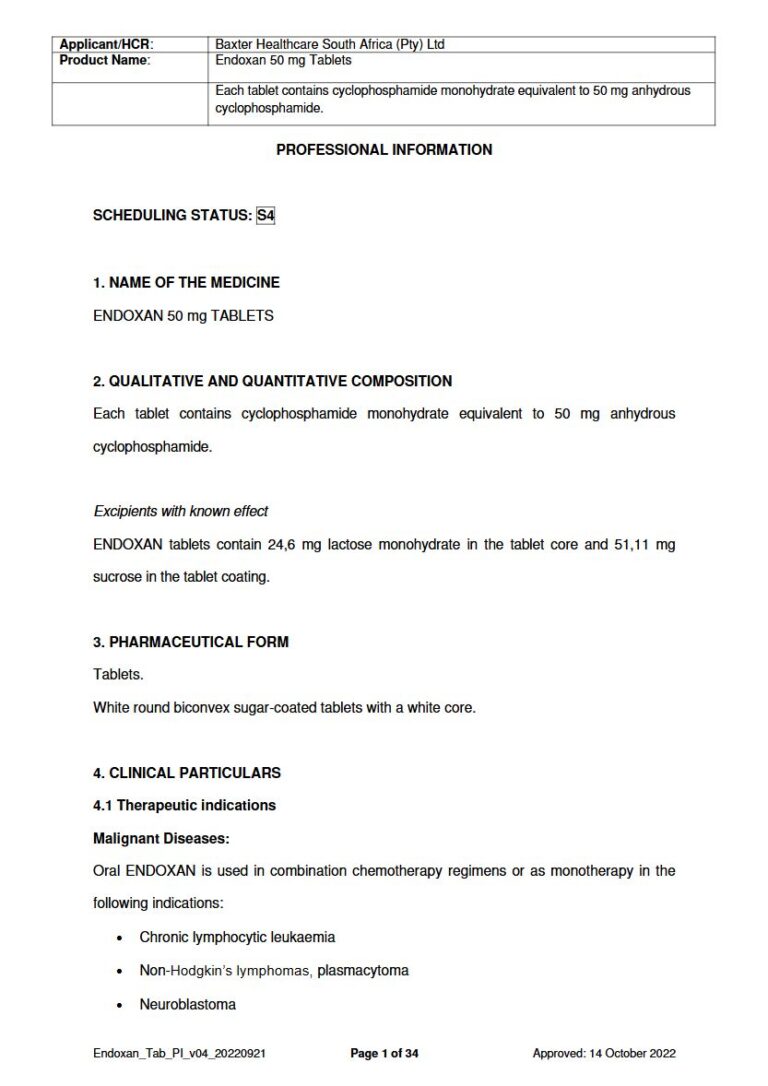
Clinical Summary
Quick overview from the medicine insert
Indication
Used in malignant diseases and severe active lupus nephritis.
Dosage (summary)
1-4 tablets (50-200 mg) daily; adjust based on patient condition.
Special Populations
- Elderly
- Renal impairment
- Hepatic impairment
Pregnancy & Breastfeeding
Contraindicated in pregnancy and lactation; may cause congenital abnormalities.
Key Drug Interactions
- Aprepitant
- Bupropion
- Busulfan
- Ciprofloxacin
- Chloramphenicol
- Fluconazole
- Protease inhibitors
Contraindications
- Hypersensitivity to cyclophosphamide
- Severely impaired bone marrow function
- Cystitis
- Urinary outflow obstructions
- Active urinary tract infections
- Pregnancy and lactation
Common side effects
- Nausea
- Vomiting
- Alopecia
- Myelosuppression
- Infections
Counselling Points
- Ensure adequate hydration during treatment.
- Monitor for signs of infection.
- Avoid live vaccines.
- Discuss fertility preservation options.
Serious warnings
- Anaphylactic reactions
- Myelosuppression
- Urotoxicity
- Cardiotoxicity
- Pulmonary toxicity
Important Disclaimer
The Endoxan 50 mg Tablets professional information leaflet below is the property of Baxter Healthcare South Africa and is provided on Medinsert exactly as issued, with no.. alterations or editorial changes. We make every effort to keep content current by updating documents as soon as new versions become available. Medinsert serves as a trusted access point for healthcare professionals, but does not replace official sources or clinical judgement. For more details, please read our full disclaimer. read more>>
 Healthcare Professionals Only
This content is for registered healthcare professionals
Sign in or create a free account to read the full package insert.
Free for HPCSA-registered professionals. Powered by Medinsert.
Clinical Particulars
Section 4 of the official insert — extracted exactly as issued, no alterations
4.1 Therapeutic indications
Malignant Diseases: Oral ENDOXAN is used in combination chemotherapy regimens or as monotherapy in the following indications:
- Chronic lymphocytic leukaemia
- Non- Hodgkinu2019s lymphomas, plasmacytoma
- Neuroblastoma
- Primary and metastatic breast cancer
- Severe active forms of lupus nephritis, Wegeneru2019s granulomatosis
4.2 Posology and method of administration
Posology ENDOXAN should only be prescribed by medical practitioners experienced with this medicine. The dosage must be adapted to each patient individually. Duration of therapy and intervals will depend on the indication, the applied combination chemotherapy schedule, the patientu2019s general state of health, the laboratory parameters and the recovery of the blood cell counts. Unless otherwise prescribed the following dosages are recommended: For continuous therapy 1 - 4 tablets (50 u2013 200 mg) daily; if necessary, more tablets may be taken. The dose recommendations given mainly apply to the treatment with cyclophosphamide as a monotherapy. In combination with other cytostatics of similar toxicity a dose reduction or extension of the therapy-free intervals may be necessary.
Recommendations for dose reduction in patients with myelosuppression:
- Leucocyte count (per u03bcl) Platelet count (per u03bcl) Dosage
- > 4 000 > 100 000 100 % of the planned dose
- 4 000 u2013 2 500 100 000 u2013 50 000 50 % of the planned dose
- < 2 500 < 50 000 Adjustment until values normalise or specific decision is made
Recommendations for dose adjustment in patients with hepatic and renal insufficiency: Severe hepatic or renal insufficiency requires a dose reduction. A dose reduction of 25 % for serum bilirubin from 3,1 to 5 mg/100 ml and of 50 % for a glomerular filtration rate below 10 ml/minute is recommended. ENDOXAN and its metabolites are dialysable, although there may be differences in clearance, depending upon the dialysis system being used. In patients requiring dialysis, use of a consistent interval between ENDOXAN administration and dialysis should be considered (see section 4.4). Elderly: In elderly patients, monitoring for toxicities and the need for dose adjustment, often reduction, should reflect the higher frequency of decreased hepatic, renal, cardiac, or other organ function, and concomitant diseases or other medicine therapies in this population.
Method of administration ENDOXAN should be administered in the morning. During or immediately after the administration, adequate amounts of fluid should be ingested. It is important to ensure that the patient empties his/her bladder at regular intervals. The coating of the tablets prevents direct contact of persons handling the tablets with the active substance. To prevent inadvertent exposure of third persons to the active substance, the tablets should not be divided or crushed.
4.3 Contraindications
ENDOXAN should not be used in patients with:
- Known hypersensitivity to cyclophosphamide and/or any of its metabolites and/or excipients.
- Severely impaired bone-marrow function (particularly in patients who have been pre-treated with cytotoxic agents and/or radiotherapy).
- Inflammation of the bladder (cystitis).
- Urinary outflow obstructions.
- Active urinary tract infections.
- Pregnancy and lactation. For use during pregnancy and lactation refer to section 4.6.
- Use of live vaccines may lead to vaccine-induced infection.
- Acute urothelial toxicity from cytotoxic chemotherapy or radiation therapy.
- ENDOXAN should not be used in the management of non-malignant disease, except for immunosuppression in life-threatening situations.
4.4 Special warnings and precautions for use
Anaphylactic reactions, cross-sensitivity with other alkylating agents
- Anaphylactic reactions including those with fatal outcomes have been reported in association with ENDOXAN.
- Possible cross-sensitivity with other alkylating agents has been reported.
Weakened or elderly patients ENDOXAN should be used with care in weakened or elderly patients and in patients who have had previous radiotherapy. Patients with a weakened immune system, e.g. those with diabetes mellitus, chronic hepatic or renal impairments, also require close observation.
Myelosuppression, immunosuppression, infections
- Treatment with ENDOXAN may cause myelosuppression, including leukopenia, neutropenia, thrombocytopenia (associated with a higher risk of bleeding events), and anaemia.
- Treatment with ENDOXAN can cause severe immunosuppression, which may lead to serious and fatal infections. Sepsis and septic shock have also been reported. Infections reported with cyclophosphamide include pneumonias, as well as other bacterial, fungal, viral, protozoal, and parasitic infections.
- Latent infections can be reactivated. Reactivation has been reported for various bacterial, fungal, viral, protozoal, and parasitic infections.
- ENDOXAN should not be used in patients with severe impairment of bone marrow function and in patients with severe immunosuppression (see section 4.3).
- Unless essential, ENDOXAN should not be administered to patients with a leukocyte count below 2500 cells/microliter (cells/mm3) and/or a platelet count below 50000 cells/microliter (cells/mm3).
- ENDOXAN treatment may not be indicated, or should be interrupted, or the dose reduced, in patients who have or who develop a serious infection.
- In principle, the fall in the peripheral blood cell and thrombocyte count and the time taken to recover may increase with increasing doses of ENDOXAN.
- The nadirs of the reduction in leukocyte count and thrombocyte count are usually reached in weeks 1 and 2 of treatment. The bone marrow recovers relatively quickly, and the levels of peripheral blood cell counts normalize, as a rule, after approximately 20 days. Anaemia will usually not develop until after several treatment cycles.
- Severe myelosuppression must be expected particularly in patients pre-treated with and/or receiving concomitant chemotherapy and/or radiation therapy and in patients with renal impairment.
- A combination treatment with other myelosuppressive agents may require dose adjustments. Please refer to the relevant tables on dose adjustment of cytotoxic medicines to the blood counts at the beginning of the cycle and the nadir-adjusted dosage of cytostatic agents (see section 4.2).
- Close haematological monitoring is required for all patients during treatment.
Urinary tract and renal toxicity
- After their excretion in the urine, metabolites of ENDOXAN cause changes in the efferent urinary tract and especially in the bladder, such as haemorrhagic cystitis, pyelitis, ureteritis, and haematuria.
- Bladder ulceration/necrosis, fibrosis/contracture and secondary bladder cancer may develop.
- Urotoxicity may mandate interruption of treatment.
- Cystectomy may become necessary due to fibrosis, bleeding, or secondary malignancy.
- Cases of urotoxicity with fatal outcomes have been reported.
- Urotoxicity can occur with short-term and long-term use of ENDOXAN. Haemorrhagic cystitis after single doses of cyclophosphamide has been reported.
- Past or concomitant radiation or busulfan treatment may increase the risk for cyclophosphamide-induced haemorrhagic cystitis.
- ENDOXAN induced cystitis is initially abacterial. Secondary bacterial infection may follow.
- Before starting treatment, it is necessary to exclude or correct any urinary tract obstructions (see section 4.3).
- Urinary sediment should also be checked regularly for the presence of erythrocytes and other signs of uro/nephrotoxicity.
- Treatment with mesna or strong hydration can reduce the frequency and severity of these urotoxic side effects. It is important to ensure that patients empty the bladder at regular intervals.
- Haematuria may resolve in a few days after ENDOXAN treatment is stopped, but it may persist.
- It is usually necessary to discontinue ENDOXAN therapy in instances of severe haemorrhagic cystitis.
- ENDOXAN has also been associated with nephrotoxicity, including renal tubular necrosis.
- Hyponatraemia associated with increased total body water, acute water intoxication, and a syndrome resembling SIADH (syndrome of inappropriate secretion of antidiuretic hormone) have been reported in association with ENDOXAN administration. Fatal outcomes have been reported.
Cardiotoxicity, use in patients with cardiac disease
- Myocarditis and myopericarditis, which may be accompanied by significant pericardial effusion and cardiac tamponade, have been reported with ENDOXAN therapy and have led to severe, sometimes fatal congestive heart failure.
- Histopathologic examination has primarily shown haemorrhagic myocarditis. Haemopericardium has occurred secondary to haemorrhagic myocarditis and myocardial necrosis.
- Acute cardiac toxicity has been reported with a single dose of less than 20 mg/kg ENDOXAN.
- Following exposure to treatment regimens that included ENDOXAN, supraventricular dysrrhythmias (including atrial fibrillation and flutter) as well as ventricular dysrrhythmias (including severe QT prolongation associated with ventricular tachydysrrhythmia) have been reported in patients with and without other signs of cardiotoxicity.
- The risk of ENDOXAN cardiotoxicity is increased in patients with advanced age, and in patients with previous radiation treatment of the cardiac region and/or previous or concomitant treatment with other cardiotoxic medicines (see section 4.5). In this context, bear in mind that regular electrolyte controls are necessary.
- Particular caution is necessary in patients with risk factors for cardiotoxicity and in patients with pre-existing cardiac disease.
Pulmonary toxicity
- Interstitial pneumonitis and pulmonary fibrosis have been reported during and following treatment with ENDOXAN. Pulmonary veno-occlusive disease and other forms of pulmonary toxicity have also been reported. Pulmonary toxicity leading to respiratory failure has been reported.
- Late onset of pneumonitis (greater than 6 months after start of ENDOXAN) appears to be associated with a particularly high mortality. Pneumonitis may develop even years after treatment with ENDOXAN.
- Acute pulmonary toxicity has been reported after a single ENDOXAN dose.
Secondary malignancies
- Treatment with ENDOXAN involves the risk of secondary tumours and their precursors as late sequelae.
- The risk of developing urinary tract cancer as well as myelodysplastic alterations, partly progressing to acute leukaemias, is increased. Other malignancies reported after use of ENDOXAN or regimens with ENDOXAN include lymphoma, thyroid cancer, and sarcomas.
- In some cases, the second malignancy developed several years after cyclophosphamide treatment had been discontinued. Malignancy has also been reported in children after in utero exposure.
- The risk of bladder cancer may be reduced by prevention of haemorrhagic cystitis.
Veno-occlusive liver disease
- Veno-occlusive liver disease (VOLD) has been reported in patients receiving ENDOXAN.
- A cytoreductive regimen in preparation for bone marrow transplantation that consists of cyclophosphamide in combination with whole-body irradiation, busulfan, or other medicines has been identified (see section 4.5) as a major risk factor for the development of VOLD. After cytoreductive therapy, typically VOLD develops 1 to 2 weeks after transplantation and is characterised by sudden weight gain, painful hepatomegaly, ascites, and hyperbilirubinaemia/jaundice.
- However, VOLD has also been reported to develop gradually in patients receiving long-term low-dose immunosuppressive doses of cyclophosphamide.
- As a complication of VOLD, hepatorenal syndrome and multi-organ failure may develop. Fatal outcome of cyclophosphamide-associated VOLD has been reported.
- Risk factors predisposing a patient to the development of VOLD with high-dose cytoreductive therapy include:
- pre-existing disturbances of hepatic function,
- previous radiation therapy of the abdomen, and
- a low ECOG performance score.
Genotoxicity ENDOXAN is genotoxic and mutagenic, both in somatic and in male and female germ cells (see Section 4.6).
Impairment of wound healing ENDOXAN may interfere with normal wound healing.
Alopecia Alopecia has been reported and may occur more commonly with increasing doses. Alopecia may progress to baldness. The hair may grow back after treatment with ENDOXAN or even during continued ENDOXAN treatment, though it may be different in texture or colour.
Nausea and vomiting Administration of ENDOXAN may cause nausea and vomiting. The use of antiemetics for prevention and amelioration of nausea and vomiting should be considered. Attention should be paid to timely administration of antiemetics and to meticulous oral hygiene. Alcohol consumption may increase ENDOXAN-induced vomiting and nausea.
Stomatitis Administration of ENDOXAN may cause stomatitis (oral mucositis). Measures for prevention and amelioration of stomatitis should be considered.
Use in patients with renal impairment In patients with renal impairment, particularly in patients with severe renal impairment, decreased renal excretion may result in increased plasma levels of ENDOXAN and its metabolites. This may result in increased toxicity and should be considered when determining the dosage in such patients (see section 4.2).
Use in patients with hepatic impairment Severe hepatic impairment may be associated with decreased activation of cyclophosphamide. This may alter the effectiveness of ENDOXAN treatment and should be considered when selecting the dose and interpreting response to the dose selected.
Use in adrenalectomised patients Patients with adrenal insufficiency may require an increased dose of corticosteroid substitution when exposed to stress from toxicity due to cytostatics, including ENDOXAN.
Lactose and Sucrose ENDOXAN tablets contain lactose monohydrate in the tablet core and sucrose in the tablet coating. Patients with rare hereditary conditions of galactose intolerance e.g. galactosaemia, Lapp lactase deficiency, glucose-galactose malabsorption, fructose intolerance or sucrose-isomaltase should not take ENDOXAN.
4.5 Interaction with other medicines and other forms of interaction
Interactions Affecting the Pharmacokinetics of Cyclophosphamide and its Metabolites
- Reduced activation of cyclophosphamide may alter the effectiveness of cyclophosphamide treatment. Substances that delay activation of cyclophosphamide include:
- Aprepitant.
- Bupropion.
- Busulfan: ENDOXAN clearance has been reported to be reduced and half-life prolonged in patients who receive high-dose cyclophosphamide less than 24 hours after high-dose busulfan.
- Ciprofloxacin: When given prior to the treatment with cyclophosphamide (used for conditioning prior to bone marrow transplantation), ciprofloxacin has been reported to result in a relapse of the underlying disease (e.g. Leukaemia).
- Chloramphenicol.
- Fluconazole.
- Itraconazole.
- Prasugrel.
- Sulfonamides.
- Thiotepa: A strong inhibition of ENDOXAN bioactivation by thiotepa in high-dose chemotherapy regimens has been reported when thiotepa was administered 1 hour prior to cyclophosphamide.
- An increase of the concentration of cytotoxic metabolites may occur with:
- Allopurinol.
- Chloral hydrate.
- Cimetidine.
- Disulfiram.
- Inducers of human hepatic and extrahepatic microsomal enzymes (e.g., cytochrome P450 enzymes): The potential for hepatic and extrahepatic microsomal enzyme induction must be considered in case of prior or concomitant treatment with substances known to induce an increased activity of such enzymes such as rifampicin, phenobarbitone, carbamazepine, phenytoin, benzodiazepines, chloral hydrate, St. Johnu2019s Wort and corticosteroids.
- Protease inhibitors: Concomitant use of protease inhibitors, used in the treatment of HIV, such as atazanivir, indinivair, lopinavir, ritonavir, nelfinavir may increase the concentration of cytotoxic metabolites. Use of protease inhibitor-based regimens was found to be associated with a higher incidence of infections and neutropenia in patients receiving cyclophosphamide, doxorubicin, and etoposide (CDE) than use of an NNRTI-based regimen.
- Ondansetron: There have been reports of a pharmacokinetic interaction between ondansetron and high-dose ENDOXAN resulting in decreased cyclophosphamide AUC.
Pharmacodynamic interactions and interactions of unknown mechanism affecting the use of ENDOXAN
- Combined or sequential use of ENDOXAN and other medicines with similar toxicities can cause combined (increased) toxic effects.
- Increased haematotoxicity and/or immunosuppression may result from a combined effect of ENDOXAN and, for example:
- ACE inhibitors: ACE inhibitors can cause leukopenia.
- Alternate agents which also affect the renin angiotension system such as ARBs and direct renin inhibitors have not been associated with leukopenia.
- Natalizumab.
- Paclitaxel: Increased haematotoxicity has been reported when cyclophosphamide was administered after paclitaxel infusion.
- Zidovudine.
- Increased cardiotoxicity may result from a combined effect of ENDOXAN and:
- Anthracyclines.
- Cytarabine.
- Pentostatin.
- Radiation therapy of the cardiac region.
- Trastuzumab.
- Increased pulmonary toxicity may result from a combined effect of ENDOXAN and:
- Amiodarone
- G-CSF, GM-CSF (granulocyte colony-stimulating factor, granulocyte macrophage colony-stimulating factor): Reports suggest an increased risk of pulmonary toxicity in patients treated with cytotoxic chemotherapy that includes cyclophosphamide and G-CSF or GMCSF.
- Increased nephrotoxicity may result from a combined effect of ENDOXAN and:
- Amphotericin B.
- Indomethacin: Acute water intoxication has been reported with concomitant use of indomethacin.
- Increase in other toxicities:
- Azathioprine: Increased risk of hepatotoxicity (liver necrosis).
- Busulfan: Increased incidence of hepatic veno-occlusive disease and mucositis has been reported.
- Protease inhibitors: Increased incidence of mucositis.
- Other interactions:
- Alcohol A reduced antitumour activity was observed in tumour-bearing animals during ethanol (alcohol) consumption and concomitant oral low-dose cyclophosphamide medication. Alcohol may increase ENDOXAN-induced vomiting and nausea. Patients receiving treatment with ENDOXAN should abstain from drinking alcoholic beverages.
- Etanercept In patients with Wegeneru2019s granulomatosis, the addition of etanercept to standard treatment, including ENDOXAN, was associated with a higher incidence of non-cutaneous solid malignancies.
- Metronidazole Acute encephalopathy has been reported in a patient receiving ENDOXAN and metronidazole. Causal association is unclear. In an animal study, the combination of ENDOXAN with metronidazole was associated with increased ENDOXAN toxicity.
- Tamoxifen Concomitant use of tamoxifen and chemotherapy may increase the risk of thromboembolic complications.
- Bupropion ENDOXAN metabolism by CYP2B6 may inhibit bupropion metabolism.
- Warfarin Both increased and decreased warfarin effect have been reported in patients receiving warfarin and cyclophosphamide. Patients receiving warfarin should have more frequent monitoring of INR.
- Ciclosporin Lower serum concentrations of ciclosporin have been observed in patients receiving a combination of ENDOXAN and ciclosporin, than in patients receiving only ciclosporin. This interaction may result in an increased incidence of graft-versus-host disease.
- Depolarising muscle relaxants ENDOXAN treatment causes a marked and persistent inhibition of cholinesterase activity. Prolonged apnoea may occur with concurrent depolarising muscle relaxants (e.g. succinylcholine). If a patient has been treated with ENDOXAN within 10 days of general anaesthesia, the anaesthesiologist should be alerted.
- Digoxin Cytotoxic treatment has been reported to impair intestinal absorption of digoxin and u03b2 - acetyldigoxin tablets.
- Vaccines The immunosuppressive effects of ENDOXAN can be expected to reduce the response to vaccination. Use of live vaccines may lead to vaccine-induced infection (see Section 4.3).
- Verapamil ENDOXAN has been reported to impair intestinal absorption of orally administered verapamil. The blood glucose-lowering effect of sulfonylureas may be intensified. Because grapefruit contains a compound that may impair the activation of ENDOXAN and thereby its efficacy, the patient must not eat any grapefruit or drink grapefruit juice.
Interactions affecting the pharmacokinetics and/or actions of other medicines
4.6 Fertility, pregnancy and lactation
The use of ENDOXAN is contraindicated in Pregnancy and lactation. Treatment with ENDOXAN can cause congenital abnormalities in offsprings
Pregnancy Cyclophosphamide crosses the placental barrier. Treatment with ENDOXAN may cause congenital abnormalities in their offspring when administered to pregnant women. Malformations have been reported in children born to mothers treated with ENDOXAN. Exposure to ENDOXAN in utero may cause miscarriage, foetal growth retardation, and fetotoxic effects manifesting in the new-born, including leukopenia, anaemia, pancytopenia, severe bone marrow hypoplasia and gastroenteritis.
Genotoxicity
- ENDOXAN is genotoxic and mutagenic, both in somatic and in male and female germ cells. Therefore, women should not become pregnant and men should not father a child during therapy with ENDOXAN.
- Men should not father a child for up to 6 months after the end of therapy.
- Animal data indicate that exposure of oocytes during follicular development may result in a decreased rate of implantations and viable pregnancies, and in an increased risk of malformations. This effect should be considered in case of intended fertilisation or pregnancy after discontinuation of ENDOXAN therapy. The exact duration of follicular development in humans is not known, but may be longer than 12 months.
- Sexually active women and men should use effective methods of contraception during these periods of time.
Women of Childbearing Potential
- Women should not become pregnant during treatment. Should they still conceive during treatment, they should seek counselling (see Genotoxicity).
Breastfeeding
As ENDOXAN passes into breast milk, mothers must not breast feed their infants during treatment. Neutropenia, thrombocytopenia, low haemoglobin and diarrhoea have been reported in children breast fed by women treated with ENDOXAN.
Fertility Effects on Fertility
- ENDOXAN interferes with oogenesis and spermatogenesis. It may cause sterility in both sexes.
- Men to be treated with ENDOXAN should be informed about sperm preservation before treatment.
- The duration of contraception in men and women, on completion of chemotherapy, depends on the prognosis of the primary disease and the intensity of the parentu2019s desire for a child.
- Development of sterility appears to depend on the dose of ENDOXAN, duration of therapy, and the state of gonadal function at the time of treatment.
- ENDOXAN-induced sterility may be irreversible.
Female patients
- Amenorrhoea, transient or permanent, associated with decreased oestrogen and increased gonadotropin secretion develops in a significant proportion of women treated with ENDOXAN.
- For older women, in particular, amenorrhoea may be permanent.
- Oligomenorrhoea has also been reported in association with ENDOXAN treatment.
- Girls treated with ENDOXAN who have retained ovarian function after completing treatment, are at increased risk of developing premature menopause (cessation of menses before age of 40 years).
- Animal data suggest that an increased risk of failed pregnancy and malformations may persist after discontinuation of ENDOXAN as long as oocytes/follicles exist that were exposed to cyclophosphamide during any of their maturation phases which may be after 12 months.
Male patients
- Men treated with ENDOXAN may develop oligospermia or azoospermia, which are usually associated with increased gonadotropin, but normal testosterone secretion.
- Boys treated with ENDOXAN during prepubescence may have oligospermia or azoospermia.
- Testicular atrophy may occur.
- ENDOXAN-induced azoospermia may be reversible, though the reversibility may not occur for several years after cessation of therapy.
- Men temporarily rendered sterile by ENDOXAN have subsequently fathered children.
In a vital indication during pregnancy a medical consultation regarding termination of pregnancy is absolutely necessary.
4.7 Effects on ability to drive and use machines
Patients undergoing treatment with ENDOXAN may experience undesirable effects (including e.g. dizziness, blurred vision, visual impairment), which could affect the ability to drive or use machines. The decision to drive or operate machinery should be made on an individual basis.
4.8 Undesirable effects
Patients on ENDOXAN therapy may experience the following dose-dependent side effects. Side effects are presented according to system organ class and the frequency is defined as very common (u2265 1/10); common (u2265 1/100, < 1/10); uncommon (u2265 1/1000, < 1/100), rare (u2265 1/10000, < 1/1000) or very rare (< 1/10000).
Primary SOC Very common u2265 1/ 10 Common u2265 1/ 100 - < 1/ 10 Uncommon u2265 1/ 1 000 - < 1/ 100 Rare u2265 1/ 10 000 - < 1/ 1 000 Very rare < 1/ 10 000, incl. isolated reports
Infections and infestations Infections Pneumonia Sepsis Septic shock Neoplasm benign and malignant (incl. cysts and polyps) Secondary tumours Bladder cancer Myelo-dysplastic alterations Urinary tract cancer Acute leukaemia Tumour lysis syndrome Blood and lymphatic system disorders Myelo-suppression Leukopenia Neutropenia Neutropenic fever Thrombo-cytopenia Anaemia Haemolytic uremic syndrome Disseminated intravascular coagulation Immune system disorders Immuno-suppression Anaphylactoid reactions Hyper-sensitivity reactions Anaphylactic shock Endocrine disorders Ovulation disorders Reduced levels of female sex hormones Irreversible ovulation disturbances SIADH (Syndrome of inadequate ADH secretion) Metabolism and nutrition disorders Anorexia Dehydration Water retention Hypo-natraemia Psychiatric disorders Confusion Nervous system disorders Dizziness Convulsions Paraesthesia Taste impairment Hepatic encephalopathy Eye disorders Blurred vision Visual impairment Conjunctivitis and eye oedema in conjunction with hyper-sensitivity Cardiac disorders Cardio-myopathy Cardiac failure Tachycardia QT prolongation which may result in ventricular tachycardia Dysrrhythmia Ventricular dysrhythmia Supra-ventricular dysrhythmia Atrial fibrillation Ventricular fibrillation Angina pectoris Myocardial infarction Cardiac arrest Myocarditis Pericarditis Vascular disorders Bleeding Thrombo-embolism Changes in blood pressure Respiratory Broncho-spasm Dyspnoea Cough Interstitial pneumonia Pneumonitis Chronic interstitial pulmonary fibrosis Toxic pulmonary oedema Pleural effusion Respiratory failure Acute respiratory distress syndrome (ARDS) Unspecific lung disorders Hypoxia Gastro-intestinal disorders Nausea Vomiting Diarrhoea Stomatitis Constipation Abdominal pain Ascites Ulceration Haemorrhagic colitis Acute pancreatitis Hepatobiliary disorders Liver function disorders Hepatitis Veno-occlusive liver disease Hepatomegaly Jaundice Activation of virus hepatitis Skin and sub-cutaneous tissue disorders Alopecia Baldness Rash Dermatitis Inflammation of skin Stevens Johnson Syndrome Epidermal necrolysis Severe skin reactions Discolouration of the palms, fingernails, soles Inflammatory itching Erythema in the irradiated field Musculo-skeletal and connective tissue disorders Rhabdo-myolysis Cramp Renal and urinary disorders Cystitis Haematuria Haemorrhagic cystitis Suburethral bleeding Oedema of the bladder wall Interstitial inflammation, fibrosis and sclerosis of bladder Renal failure Renal impairment Reproductive system and breast disorders Impairment of spermato-genesis Persistent: Oligospermia Amenorrhoea Azoospermia General disorders and administration site conditions Fever Chills Asthenic conditions Fatigue Weakness Malaise Mucositis Chest pain Headache Pain Multi-organ failure Investigations ECG changes Decreased LVEF Increased LDH Increased C-reactive protein Increase in liver enzymes Increase in: SGOT SGPT gamma-GT ALP Bilirubin Weight gain Drop in blood pressure Increase in creatinine values Injury poisoning and procedural complications Radiation recall dermatitis Post-marketing reported side effects
4.9 Overdose
Serious consequences of overdosage include manifestations of dose dependent toxicities such as myelosuppression, urotoxicity, cardiotoxicity (including cardiac failure), veno-occlusive hepatic disease and stomatitis (see Section 4.4)
Patients who received an overdose should be closely monitored for the development of toxicities and haematotoxicity in particular
No specific antidote for ENDOXAN is known.
ENDOXAN and its metabolites are dialysable. Therefore, rapid haemodialysis is indicated when treating any suicidal or accidental overdose or intoxication. A dialysis clearance of 78 ml/min was calculated from the concentration of non-metabolised ENDOXAN in the dialysate (normal renal clearance is around 5 - 11 ml/min). A second working group reported a value of 194 ml/min. After 6 hours of dialysis, 72 % of the dose of ENDOXAN administered was found in the dialysate.
Overdosage should be managed with supportive measures should it occur. The severity and duration of the myelosuppression depends on the extent of the overdose. Frequent checks of the blood count and monitoring of the patient are necessary. If neutropenia develops, infection prophylaxis must be given and infections must be treated adequately with antibiotics. If thrombocytopenia develops, thrombocyte replacement should be ensured according to need.
Cystitis prophylaxis with mesna may be helpful in preventing or limiting urotoxic effects with ENDOXAN overdose.
