
Cyclocord 500 Mg/1 G Solution
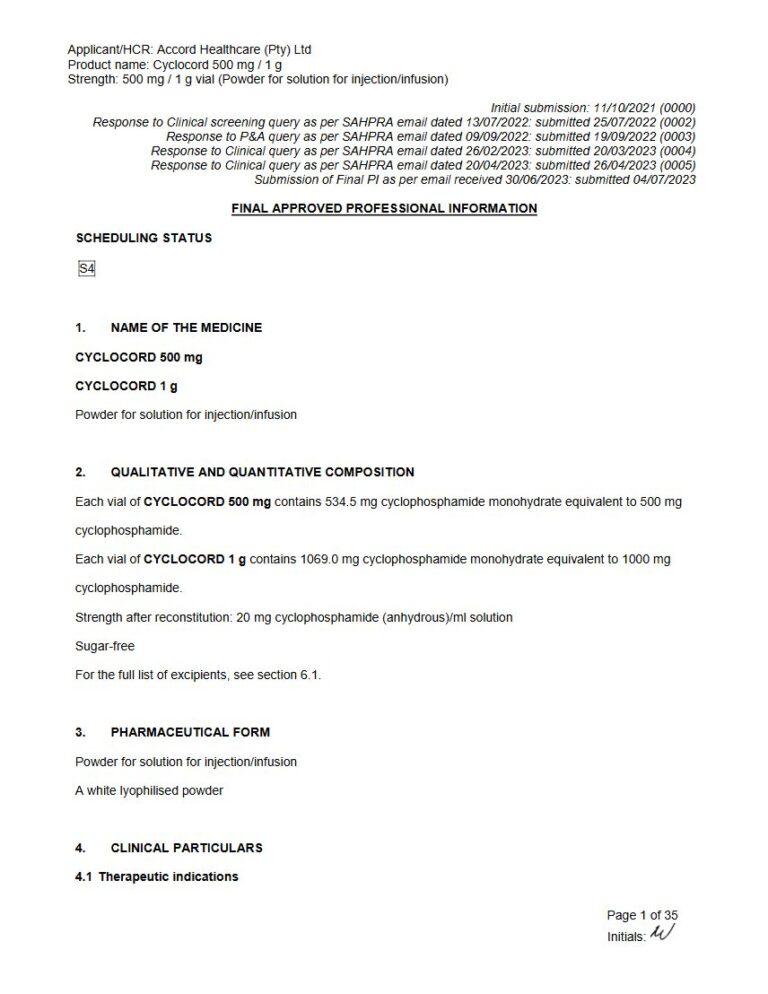
PDF Leaflet Revision Date: 09 May 2023
Clinical Summary
Quick overview from the medicine insert
Indication
Active treatment of neoplastic diseases and progressive autoimmune diseases.
Dosage (summary)
Administered by experienced oncologists; max 50 mg/kg body mass; adjust based on patient response.
Special Populations
- Hepatic impairment
- Renal impairment
Pregnancy & Breastfeeding
Contraindicated in first trimester; avoid breastfeeding during treatment.
Key Drug Interactions
- Aprepitant
- Busulfan
- Ciprofloxacin
- Azole-antimycotics
- Warfarin
Contraindications
- Hypersensitivity to cyclophosphamide
- Severe bone marrow suppression
- Cystitis
- Infections
Common side effects
- Myelosuppression
- Nausea
- Vomiting
- Alopecia
- Infections
Counselling Points
- Avoid pregnancy during treatment
- Use effective contraception
- Monitor for infections
- Stay hydrated
Serious warnings
- Anaphylactic reactions
- Myelosuppression
- Urotoxicity
- Cardiotoxicity
- Pulmonary toxicity
Important Disclaimer
The Cyclocord 500 Mg/1 G Solution professional information leaflet below is the property of Accord Healthcare and is provided on Medinsert exactly as issued, with no.. alterations or editorial changes. We make every effort to keep content current by updating documents as soon as new versions become available. Medinsert serves as a trusted access point for healthcare professionals, but does not replace official sources or clinical judgement. For more details, please read our full disclaimer. read more>>
 Healthcare Professionals Only
This content is for registered healthcare professionals
Sign in or create a free account to read the full package insert.
Free for HPCSA-registered professionals. Powered by Medinsert.
Clinical Particulars
Section 4 of the official insert — extracted exactly as issued, no alterations
4.1 Therapeutic indications
1. Active treatment of all neoplastic diseases of the reticulo-endothelial system e.g. lymphomas, lymphosarcomas, reticulo-sarcomas, Hodgkinu2019s disease, chronic lymphatic leukaemias, multiple myelomas.
2. In combination with other cytostatics for various forms of carcinoma
3. Adjuvant therapy in surgery and/or radiotherapy for cancer
4. Palliation of inoperable malignancies
5. Progressive autoimmune diseases eg. systemic lupus erythematous, Wegeneru2019s granulomatosis
It is recommended that cancer surgery is conducted under protection of chemotherapy with CYCLOCORD to help prevent acute dissemination of malignant cells during surgery and thus to stop subsequent metastases.
4.2 Posology and method of administration
Posology
CYCLOCORD is to be administered by experienced oncologists only. Duration of therapy and intervals will depend on the indication, the applied combination chemotherapy schedule, the patientu2019s general state of health, the laboratory parameters and the recovery of blood cell counts. Attention should be paid to adequate hydration as well as to the administration of mesna, but be aware of mesna-related hypersensitivity. The injection should be given intravenously, although intramuscular, intrapleural or intraperitoneal routes may also be used. Dosage has to be adjusted to each patient individually. It has been found that the cytotoxic effect largely depends on an effective concentration of CYCLOCORD in the tissues. The highest tolerated dosage should therefore be given intravenously.
1. Active treatment
The individually adjusted dose is given intravenously as rapidly as possible as a bolus. Regular leucocyte counts are necessary. If the leucocyte count does not drop below 2 000 per mm3, a larger dose can be used. When the leucocytes have recovered, usually after ten to fourteen days, the next dose, if possible, even higher, is given. This form of treatment is continued until remission is clinically complete. Thereafter, massive dosage CYCLOCORD therapy should be discontinued and the patientu2019s condition closely observed. In cases of recurrence a second full course of CYCLOCORD should be given without delay. If the malignancy is resistant to CYCLOCORD, this will become apparent after three to six weeks treatment. In this event CYCLOCORD therapy should be discontinued.
2. In combination therapy
Smaller dosages, depending on the other medicines used.
3. Adjuvant therapy
In surgery: A single high dose (see u201cActive treatmentu201d) should be given ten to 14 days prior to surgery and a full course of CYCLOCORD after the operation. In radiotherapy: Treatment should be given as outlined above, in consultation with the radiotherapist.
4. Palliative therapy (inoperable malignancies)
This should be conducted on the same principles as the active therapy but often a more moderate dosage might be indicated. In cases of good response, surgical intervention may again become possible.
5. Maintenance therapy
After an objective remission has been achieved, maintenance therapy should be instituted by prolonging the time interval between injections to two or even four weeks but without reducing the individual dosages. Also, during maintenance therapy, it is necessary to check the patientu2019s leucocyte count at frequent intervals. In patients with bone-marrow lesions, a more moderate dosage regimen is indicated.
Recommendations for dose reduction in patients with myelosuppression
- Leucocyte count (u03bcl) Platelet count (u03bcl) Dosage
- > 4000 > 100 000 100 % of the planned dose
- 4000 u2013 2500 100 000 u2013 50 000 50 % of the planned dose
- < 2500 < 50 000 Adjustment until values normalise or specific decision is made
Special populations
Use in patients with hepatic and renal insufficiency
Severe hepatic or renal insufficiency requires a dose reduction. A dose reduction of 25 % for serum bilirubin from 3,1 to 5 mg/100 ml and of 50 % for a glomerular filtration rate below 10 ml/minute is recommended. CYCLOCORD is dialysable.
Method of administration
For intravenous injection or infusion. For instructions on reconstitution and dilution of CYCLOCORD before administration, see section 6.6.
4.3 Contraindications
- Hypersensitivity to cyclophosphamide or to any of the other ingredients listed in section 6.1
- Contra-indicated in the first trimester of pregnancy (see section 4.6)
- Lactation
- Severe bone marrow suppression
- Severely impaired bone-marrow function (particularly in patients who have been pre-treated with cytotoxic medicines and/or radiotherapy).
- Inflammation of the bladder (cystitis).
- Urinary outflow obstructions
- Infections
4.4 Special warnings and precautions for use
Anaphylactic Reactions, Interaction with Other Alkylating Medicines
Anaphylactic reactions including those with fatal outcomes have been reported in association with cyclophosphamide as in CYCLOCORD. Possible interaction with other alkylating medicines has been reported.
Myelosuppression, Immunosuppression, Infections
Treatment with cyclophosphamide as in CYCLOCORD may cause myelosuppression (anaemia, leukopenia, neutropenia and thrombocytopenia) and significant suppression of immune responses, which may result in severe, sometimes fatal, infections, sepsis and septic shock. Infections reported with the use of cyclophosphamide include pneumonias, as well as different bacterial, fungal, viral, protozoal, and parasitic infections. Latent infections can be reactivated. Reactivation has been reported for various bacterial, fungal, viral, protozoal, and parasitic infections. Infections occurring during treatment with cyclophosphamide, including neutropenic fever, must be treated appropriately. Antimicrobial prophylaxis may be indicated in certain cases of neutropenia at the decision of the treating medical practitioner. In case of neutropenic fever, antibiotics and/or antimycotics must be prescribed. Precaution should be applied when considering usefulness of concomitant use of cyclophosphamide in patients with severe functional impairment of bone marrow and patients with severe immunosuppression. Close haematological monitoring is required for all patients during treatment. Haematological parameters must be checked prior to each administration and regularly during treatment. More frequent monitoring may be required if leukocyte counts drop below 3000 cells/microlitre (cells/mmu00b3). Dose adjustment due to myelosuppression is recommended (see section 4.2). Unless essential, cyclophosphamide as in CYCLOCORD should not be administered to patients with a leukocyte count below 2500 cells/microlitre (cells/mmu00b3) and/or a platelet count below 50,000 cells/microlitre (cells/mmu00b3). Intensity of the fall in the peripheral blood cell and thrombocyte count and the time taken to recover may increase with increasing doses of cyclophosphamide.
The nadirs of the reduction in leukocyte count and thrombocyte count are reached in weeks 1 and 2 of treatment. The bone marrow recovers relatively quickly, and the levels of peripheral blood cell counts normalise, as a rule, after approximately 20 days. Cyclophosphamide treatment as in CYCLOCORD may not be recommended, or should be interrupted, or the dose reduced, in patients who develop a serious infection. Severe myelosuppression must be expected, particularly in patients pre-treated with and/or receiving concomitant chemotherapy and/or radiation therapy.
Urinary Tract and Renal Toxicity
Haemorrhagic cystitis, pyelitis, urethritis, and haematuria have been reported with cyclophosphamide therapy. Bladder ulceration/necrosis, fibrosis/contracture and secondary cancer may develop. Urotoxicity may mandate interruption of treatment. Cases of urotoxicity with fatal outcomes have been reported. Urotoxicity can occur with short-term and long-term use of cyclophosphamide. Haemorrhagic cystitis after single doses of cyclophosphamide has been reported. Cystectomy may become necessary due to fibrosis, bleeding, or secondary malignancy. Past or concomitant radiation or busulfan treatment may increase the risk for development of cyclophosphamide-induced haemorrhagic cystitis. Cystitis is, in general, initially bacterial. Secondary bacterial colonisation may follow. Before starting treatment, it is necessary to exclude or correct any urinary tract obstructions (see section 4.3). Urinary sediment should be checked regularly for the presence of erythrocytes and any other signs of uro/nephrotoxicity. Appropriate treatment with mesna and/or strong hydration with a forced diuresis can markedly reduce the frequency and severity of bladder toxicity. It is important to ensure that the patient empties the bladder at regular intervals. Haematuria usually resolves in a few days after cyclophosphamide treatment is stopped, but it may persist. Severe haemorrhagic cystitis usually requires a discontinuation of the cyclophosphamide treatment. Cyclophosphamide treatment has also been associated with nephrotoxicity, including renal tubular necrosis. Hyponatremia associated with increased total body water, acute water intoxication, and a syndrome of inappropriate secretion of antidiuretic hormone (SIADH) have been reported in association with cyclophosphamide administration. Fatal outcomes have been reported.
Cardiotoxicity, Use in Patients with Cardiac Disease
Myocarditis and myopericarditis accompanied by pericardial effusion and cardiac tamponade, have been reported with cyclophosphamide therapy and have led to severe, sometimes fatal congestive heart failure. Histopathologic examination has primarily shown haemorrhagic myocarditis. Haemopericardium has been developed secondary as a consequence of haemorrhagic myocarditis and myocardial necrosis. Acute cardiac toxicity has been reported with single doses as low as 20 mg/kg of cyclophosphamide. Following exposure to treatment regimens with different medicines that included cyclophosphamide, supraventricular dysrhythmias (including atrial fibrillation and flutter) as well as ventricular dysrhythmias (including severe QT prolongation associated with ventricular tachyarrhythmia) have been reported in patients with and without other signs of cardiotoxicity. The risk of cyclophosphamide cardiotoxicity may be increased following high doses of cyclophosphamide in patients with advanced age or in patients with a previous exposure to radiation treatment of the cardiac region or concomitant treatment with other cardiotoxic agents (see section 4.5). Particular caution is required in patients with risk factors for cardiotoxicity and in patients with a pre-existing cardiac disease.
Pulmonary Toxicity
Pneumonitis and pulmonary fibrosis have been reported following treatment with cyclophosphamide. Pulmonary veno-occlusive disease and other forms of pulmonary toxicity have also been reported. Pulmonary toxicity leading to respiratory failure has been reported. Although the incidence of cyclophosphamide-induced pulmonary toxicity is relatively low, prognosis for affected patients is poor. Late onset of pneumonitis (greater than 6 months after start of cyclophosphamide administration as in CYCLOCORD) appears to be associated with a particularly high mortality. Pneumonitis may develop even several years after treatment with cyclophosphamide. Acute pulmonary toxicity has been reported after a single cyclophosphamide dose.
Secondary Malignancies
Treatment with cyclophosphamide as in CYCLOCORD is associated with the risk of secondary tumours and their precursors as sequelae. Increased risk of urinary tract cancer as well as the risk of acute leukaemia caused by Myelodysplastic alterations exist. Other malignancies reported after use of cyclophosphamide or regimens involving cyclophosphamide include lymphomas, thyroid cancer, and sarcomas. In some cases, the secondary malignancy developed several years after cyclophosphamide treatment had been discontinued. Malignancy has also been reported after in utero exposure. The risk of bladder cancer can be markedly reduced by hemorrhagic cystitis prophylaxis.
Veno-occlusive liver disease (VOLD)
Veno-occlusive liver disease has been reported in patients receiving cyclophosphamide as in CYCLOCORD. The most important factor in case of veno-occlusive disease appears to be cytoreductive therapy which is used in preparation for bone marrow transplantation and which includes the combination of cyclophosphamide with whole-body irradiation, busulfan, or other medicines (see section 4.5). After cytoreductive therapy, the clinical syndrome develops in 1 to 2 weeks after transplantation and is characterized by sudden weight gain, painful hepatomegaly, ascites, and hyperbilirubinemia/jaundice. However, gradual development of VOLD has also been reported in patients receiving long-term low-dose immunosuppressive doses of cyclophosphamide. As a complication of VOLD, hepatorenal syndrome or multiorgan failure may develop. Fatal outcome of cyclophosphamide-induced VOLD has been reported. Risk factors predisposing a patient to the development of VOLD include pre-existing disturbances of hepatic function, previous radiation therapy of the abdomen, and a low performance score. VOLD incidence has been reported to reduce, if a time interval of at least 24 hours is observed between the last administration of busulfan and the first administration of cyclophosphamide (see section 4.2 and 4.5).
Genotoxicity
Cyclophosphamide as in CYCLOCORD is genotoxic and mutagenic, both in somatic and in male and female germ cells. Therefore, women should not become pregnant and men should not father a child during therapy with cyclophosphamide. Women should not become pregnant during the treatment and for a period of 12 months following discontinuation of the therapy. Men should not father a child for a period of 6 months following discontinuation of the therapy. Animal studies show that exposure of oocytes during follicular development phase may result in a decreased rate of implantations and alter viable pregnancies, and increase the risk of malformations. This effect should be considered when considering fertilisation or pregnancy after discontinuation of cyclophosphamide therapy. The duration of follicular development in humans is not known, but it may be longer than 12 months. Sexually active women and men should use effective methods of contraception during these periods of time (see section 4.6).
Fertility
Cyclophosphamide as in CYCLOCORD interferes with oogenesis and spermatogenesis. It may cause sterility in both sexes. Men treated with cyclophosphamide should be informed about sperm preservation prior to treatment (see section 4.6).
Impairment of Wound Healing
Cyclophosphamide as in CYCLOCORD may interfere with normal wound healing.
Alopecia
Alopecia has been reported, and its incidence increases with increasing doses. Alopecia may progress to baldness. The hair can be expected to grow back after treatment or even during continued drug treatment, though it may be different in texture or colour.
4.5 Interactions with other medicines
Cyclophosphamide as in CYCLOCORD is inactive, but is metabolised in the liver, mainly by CYP2A6, 2B6, 2C9, 2C19 and 3A4, into two active metabolites. Planned co-administration or sequential administration of other medicines or treatments with cyclophosphamide that could increase the likelihood or severity of toxic effects (by means of pharmacodynamic or pharmacokinetic interactions) requires careful individual assessment of expected risks and the benefit. Patients receiving such combinations must be monitored closely to permit timely intervention if any symptoms of toxicity appear. Patients being treated with cyclophosphamide and medicines that reduce its activity should be monitored for a potential reduction of therapeutic effectiveness, and, if needed, the dose should be adjusted.
Interactions affecting the pharmacokinetics of cyclophosphamide and its metabolites
- Reduced activation of cyclophosphamide may alter the effectiveness of cyclophosphamide treatment. Substances that delay activation of cyclophosphamide include:
- Aprepitant
- Bupropion
- Busulfan: decreased clearance of cyclophosphamide and prolonged elimination half-life has been reported in patients who received high-dose cyclophosphamide less than 24 hours after administration of high-dose busulfan. Increased incidence of hepatic veno-occlusive disease and mucositis has been reported with concomitant administration (see section 4.2 and 4.4)
- Ciprofloxacin: regression of the underlying disease has been reported after administration of ciprofloxacin, when this medicine has been used before the administration of cyclophosphamide (for the correction of the condition prior to bone marrow transplantation)
- Chloramphenicol
- Azole-antimycotics (Fluconazole, Itraconazole): Azole-antimycotics are known to inhibit cytochrome P450 enzymes. Increased amounts of toxic degradation products of cyclophosphamide have been reported in combination with itraconazole
- CYP2B6 and CYP3A4 inhibitors (Nevirapine, Ritonavir): co-administration may reduce the efficacy of cyclophosphamide
- Prasugrel
- Sulfonamides, e.g. sulfadiazine, sulfamethoxazole and sulfapyridine
- Thiotepa: a strong inhibition of cyclophosphamide bioactivation in case of chemotherapy including high-dose thiotepa, when thiotepa was administered 1 hour prior to cyclophosphamide.
- Ondansetron: There have been reports of a pharmacokinetic interaction between ondansetron and high-dose cyclophosphamide resulting in decreased cyclophosphamide AUC
- Grapefruit (fruit or juice), Rifampicin, St. Johns worth: Co-administration with CYP3A4 inhibitors or inducers can reduce the efficacy or increase the toxicity of cyclophosphamide
An increase of the concentration of cytotoxic metabolites may occur with:
- Allopurinol: an increase of bone marrow suppression was reported.
- Azathioprine: increased risk of hepatotoxicity (liver necrosis)
- Chloral hydrate
- Cimetidine
- Disulfiram
- Glyceraldehyde
Interactions Affecting the Pharmacokinetics and/or Actions of Other Medicines
- Bupropion: Cyclophosphamide metabolism by CYP2B6 may inhibit bupropion metabolism
- Warfarin: Both increased and decreased warfarin effects have been reported in patients receiving cyclophosphamide and warfarin.
- Ciclosporin: Lower serum concentrations of ciclosporin have been observed in patients receiving a combination of cyclophosphamide and ciclosporin than in patients receiving only ciclosporin. This interaction may stimulate the development of graft versus host disease (GVHD)
- Depolarising muscle relaxants: Cyclophosphamide treatment causes a marked and persistent inhibition of cholinesterase activity. Prolonged apnoea may occur with concurrent depolarising muscle relaxants (e.g. succinylcholine, suxamethonium) as a result of a decreased pseudo cholinesterase level. If a patient has been treated with cyclophosphamide within 10 days of general anaesthesia, the anaesthesiologist should be alerted
- Digoxin, u03b2-acetyldigoxin: Cytotoxic treatment is reported to impair absorption of digoxin and u03b2-acetyldigoxin tablets
- Vaccines: Since cyclophosphamide has an immunosuppressive activity, reduced response to vaccines can be expected; vaccine-induced infection is possible when live virus vaccines are administered
- Verapamil: Cytotoxic treatment is reported to impair the intestinal absorption of orally administered verapamil
- Sulfonylurea derivatives: Blood sugar level may drop, if cyclophosphamide and sulfonylurea derivatives are used concomitantly
4.6 Fertility, pregnancy and lactation
Women of childbearing potential
Women should not become pregnant during treatment. Should they still conceive during treatment, they should seek genetic consultation.
Contraception in males and females
Treatment with CYCLOCORD can cause genotype anomalies in men and women.
Pregnancy
In a vital indication during the first trimester of pregnancy a medical consultation regarding termination of pregnancy is absolutely necessary. After the 1st trimester of pregnancy, if therapy cannot be delayed and the patient wishes to continue with her pregnancy, chemotherapy may be undertaken after informing the patient of the risk of teratogenic effects.
Breast-feeding
As CYCLOCORD passes into breast milk, mothers must not breast-feed during treatment.
Fertility
Men to be treated with CYCLOCORD should be informed about sperm preservation before treatment.
4.7 Effects on ability to drive and use machines
Patients may experience undesirable effects during treatment with CYCLOCORD (including nausea, vomiting, dizziness, blurred vision, visual impairment) which could affect the ability to drive or use machines. The decision if the patient is allowed to drive or operate machinery should be made by the doctor on an individual basis.
4.8 Undesirable effects
Table 1: Undesirable effects as per System Organ Class
SYSTEM ORGAN CLASS INCIDENCE ADVERSE REACTION
Infections and infestations Frequent Infections
Less frequent Pneumonia, sepsis
Neoplasms, benign and malignant and unspecified Less frequent Acute leukemia, myelodysplastic syndrome, secondary malignancies, bladder cancer, ureteric cancer, tumour lysis syndrome
Frequency unknown Non-Hodgkin's lymphoma, sarcoma, renal cell carcinoma, renal pelvis cancer, thyroid cancer
Blood and lymphatic system disorders Frequent Myelosuppression, leukopenia, neutropenia, febrile neutropenia
Less frequent Disseminated intravascular coagulation, haemolytic uremic syndrome
Frequency unknown Agranulocytosis, lymphopenia, haemoglobin decreased, thrombocytopenia, anaemia, leukocytopenia
Immune system disorders Frequent Immunosuppression
Less frequent Anaphylactic / Anaphylactoid reaction, hypersensitivity reaction, anaphylactic shock
Endocrine disorders Less frequent SIADH (syndrome of inappropriate antidiuretic hormone secretion)
Metabolism and nutrition disorders Less frequent Anorexia, dehydration, hyponatraemia
Frequency unknown Blood glucose increased, blood glucose decreased
Psychiatric disorders Less frequent Confusional state
Nervous system disorders Less frequent Peripheral neuropathy, polyneuropathy, neuralgia, convulsion, dizziness, dysgeusia, hypogeusia, paraesthesia
Frequency unknown Neurotoxicity, Reversible posterior leukoencephalopathy syndrome, encephalopathy
Eye disorders Less frequent Blurred vision, visual impairment, conjunctivitis, eye oedema
Frequency unknown Lacrimation increased
Ear and labyrinth disorders Less frequent Deafness
Frequency unknown Tinnitus
Cardiac disorders Less frequent Heart failure, cardiomyopathy, myocarditis, tachycardia, ventricular dysrhythmia, supraventricular dysrhythmia, ventricular fibrillation, angina, pericarditis, atrial fibrillation
Frequency unknown Ventricular tachycardia, cardiogenic shock, pericardial effusion, palpitations, bradycardia, electrocardiogram QT prolonged, myocardial infarction
Vascular disorders Less frequent Flushing, haemorrhage, thromboembolism, hypertension, hypotension
Frequency unknown Pulmonary embolism, venous thrombosis, vasculitis, peripheral ischaemia
Respiratory, thoracic and mediastinal disorders Less frequent Acute respiratory distress syndrome (ARDS), chronic pulmonary interstitial fibrosis, pulmonary oedema, bronchospasm, dyspnoea, hypoxia, cough
Frequency unknown Pulmonary veno-occlusive disease, alveolitis allergic, pneumonitis, nasal congestion, oropharyngeal pain, rhinorrhoea, sneezing, obliterative bronchiolitis, pleural effusion
Gastrointestinal disorders Frequent Mucosal inflammation
Less frequent Haemorrhagic enterocolitis, acute pancreatitis, ascites, stomatitis, diarrhoea, vomiting, constipation, nausea
Frequency unknown Gastrointestinal haemorrhage, cecitis, colitis, enteritis, abdominal pain, inflammation of parotid salivary glands
Hepato-biliary disorders Frequent Hepatic function abnormal
Less frequent Hepatitis, veno-occlusive liver disease, hepatomegaly, jaundice
Frequency unknown Cholestatic hepatitis, hepatotoxicity, increased ALT, AST, gamma-GT, alkaline phosphatase and bilirubin
Skin and subcutaneous tissue disorders Frequent Alopecia
Less frequent Rash, dermatitis, nail discolouration, skin discolouration, Stevens-Johnson syndrome, toxic epidermal necrolysis, radiation erythema, pruritus (including inflammatory itching)
Frequency unknown Erythema multiforme, palmar-plantar erythrodysesthesia syndrome (hand-foot syndrome), urticaria, erythema, facial swelling, hyperhidrosis
Musculo-skeletal and connective tissue disorders Less frequent Rhabdomyolysis, cramps
Frequency unknown Scleroderma, muscle spasms, myalgia, arthralgia
Renal and urinary tract disorders Frequent Cystitis, microhaematuria, haemorrhagic cystitis, macrohematuria
Less frequent Sub urethral haemorrhage, bladder wall oedema, bladder fibrosis and sclerosis, renal impairment, blood creatinine increased, renal tubular necrosis.
Frequency unknown Renal tubular disorder, nephropathy toxic, haemorrhagic urethritis, bladder contracture, nephrogenic diabetes insipidus, atypical urinary bladder epithelial cells, blood urea nitrogen increased
Pregnancy, puerperium and perinatal conditions Frequency unknown Premature labour
Reproductive system and breast disorders Frequent Impairment of spermatogenesis
Less frequent Ovulation disorder (rarely irreversible), amenorrhea, azoospermia/asperima, oligospermia
Frequency unknown Infertility, ovarian failure, oligomenorrhea, testicular atrophy
Congenital, familial and genetic disorders Frequency unknown Intra-uterine death, foetal malformation, foetal growth retardation, foetal toxicity, carcinogenic effect on offspring
General disorders and administrative site conditions Frequent Fever, chills, asthenia, malaise
Less frequent Chest pain, headache, pain, multiorgan failure, injection/infusion site reactions (thrombosis, necrosis, phlebitis, inflammation, pain, swelling, erythema)
Investigations Less frequent Blood lactate dehydrogenase increased, C-reactive protein increased, ECG changes, decreased left ventricle ejection fraction (LVEF), lower levels of female sex hormones, weight gain
Frequency unknown Blood estrogen level decreased, Blood gonadotropin level increased
1 An increased risk for and severity of pneumonias (including fatal outcomes), other bacterial, fungal, viral, protozoal, and parasitic infections; reactivation of latent infections, including viral hepatitis, tuberculosis, JC virus with progressive multifocal leukoencephalopathy (including fatal outcomes), pneumocystis jiroveci, herpes zoster, strongyloides, sepsis and septic shock (including fatal outcomes).
2 including fatal outcomes
3 including acute myeloid leukemia, acute promyelocytic leukemia
4 manifested as Bone marrow failure, Pancytopenia, Neutropenia, Agranulocytosis, Granulocytopenia, Thrombocytopenia (complicated by bleeding), Leukopenia, Anaemia
5 manifested as myelopathy, peripheral neuropathy, polyneuropathy, neuralgia, dysaesthesia, hypoesthesia, paraesthesia, tremor, dysgeusia, hypogeusia, parosmia.
6 manifested as headache, altered mental functioning, seizures and abnormal vision from blurriness to vision loss
7 Observed in connection with an allergic reaction
8 Including fatal outcomes
9 While the incidence of cyclophosphamide-associated pulmonary toxicity is low, prognosis for affected patients is poor.
10 Hepatic failure, Hepatic encephalopathy, Ascites, Hepatomegaly, Jaundice, Blood bilirubin increased, Hepatic enzymes increased (ASAT, ALAT, ALP, gamma-GT)
11 May progress to baldness
12 Of the palms and heels
13 Persistent
Certain complications such as thromboembolisms, disseminated intravascular coagulation, and haemolytic uremic syndrome may occur as a result of the underlying disorders, but the frequency of these complications may increase due to chemotherapy with CYCLOCORD.
4.9 Overdose
Since no specific antidote for CYCLOCORD is known, great caution is advised each time it is used. CYCLOCORD can be dialysed, therefore, rapid haemodialysis is indicated when treating any suicidal or accidental overdose or intoxication. In the case of overdose, myelosuppression, mostly leukocytopenia, is to be expected, among other reactions. The severity and duration of the myelosuppression depends on the extent of the overdose. Frequent checks of the blood count and monitoring of the patient are necessary. If neutropenia develops, infection prophylaxis must be given and infections must be treated adequately with antibiotics. If thrombocytopenia develops, thrombocyte replacement should be ensured according to need. It is essential that cystitis prophylaxis with mesna be undertaken to avoid any urotoxic effects. Remark: If a CYCLOCORD solution is inadvertently administered by paravenous injection, there is usually no danger of cytostatic tissue damage since such damage is not expected before CYCLOCORD has been bioactivated in the liver. If paravasation should occur, nevertheless stop the infusion immediately and aspirate the paravasate with the cannula in place, irrigate the area with saline solution and immobilise the extremity.
