
Forxiga 5 mg, 10 mg FC tablets
PDF Leaflet Revision Date: 08 October 2023
Clinical Summary
Quick overview from the medicine insert
Indication
For type 2 diabetes mellitus, heart failure, and chronic kidney disease.
Dosage (summary)
10 mg once daily for adults; no adjustment for elderly or renal impairment.
Special Populations
- Renal impairment
- Hepatic impairment
- Elderly
Pregnancy & Breastfeeding
Contraindicated in pregnancy and breastfeeding.
Key Drug Interactions
- Insulin
- Sulphonylureas
Contraindications
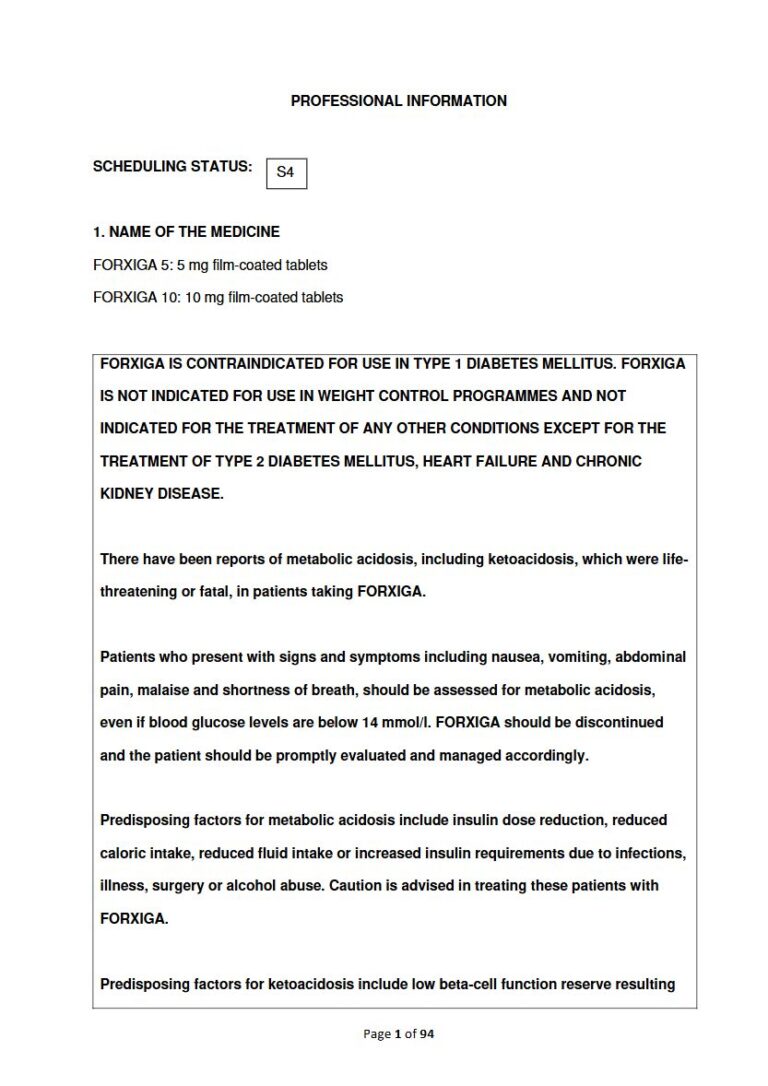
- Type 1 diabetes mellitus
- Hypersensitivity to dapagliflozin
- History of pancreatitis
Common side effects
- Genital infections
- Urinary tract infections
- Hypoglycaemia
Counselling Points
- Stay hydrated
- Report signs of ketoacidosis
- Monitor blood glucose regularly
Serious warnings
- Risk of ketoacidosis
- Monitor renal function
Important Disclaimer
The Forxiga 5 mg, 10 mg FC tablets professional information leaflet below is the property of Astrazeneca Pharmaceuticals and is provided on Medinsert exactly as issued, with no.. alterations or editorial changes. We make every effort to keep content current by updating documents as soon as new versions become available. Medinsert serves as a trusted access point for healthcare professionals, but does not replace official sources or clinical judgement. For more details, please read our full disclaimer. read more>>
 Healthcare Professionals Only
This content is for registered healthcare professionals
Sign in or create a free account to read the full package insert.
Free for HPCSA-registered professionals. Powered by Medinsert.
Clinical Particulars
Section 4 of the official insert — extracted exactly as issued, no alterations
4.1 Therapeutic indications
Type 2 diabetes mellitus
FORXIGA is indicated in adults aged 18 years and older with type 2 diabetes mellitus:
- as monotherapy as an adjunct to diet and exercise to improve glycaemic control.
- as add-on combination therapy, with glucose-lowering medicines, including metformin, a thiazolidinedione, a sulphonylurea, a DPP4 inhibitor, or insulin, when these, together with diet and exercise, do not provide adequate glycaemic control.
- to reduce the risk of developing new or worsening existing heart failure or cardiovascular death in patients with established cardiovascular (CV) disease or multiple CV risk factors.
Heart failure
FORXIGA is indicated in adults to reduce the risk of worsening heart failure or cardiovascular death, in patients with heart failure (NYHA class II-IV), and with a left ventricular ejection fraction (LVEF) u2264 40 %.
Chronic kidney disease
FORXIGA is indicated for the treatment of chronic kidney disease.
4.2 Posology and method of administration
Posology
Type 2 diabetes mellitus
Monotherapy and add-on combination therapy
The recommended dose is 10 mg FORXIGA once daily for monotherapy and add-on combination therapy with other glucose-lowering medicines, including metformin, a thiazolidinedione, a sulphonylurea, a DPP4 inhibitor, or insulin.
The recommended starting doses of FORXIGA and metformin when used as initial combination therapy are 10 mg FORXIGA plus 500 mg metformin once daily. Patients with inadequate glycaemic control on this starting dose should have their metformin dose increased according to approved metformin Product Information.
Use with medications known to cause hypoglycaemia
When FORXIGA is used in combination with insulin or an insulin secretagogue, such as a sulphonylurea, a lower dose of insulin or insulin secretagogue may be considered to reduce the risk of hypoglycaemia.
Heart failure
The recommended dose of FORXIGA is 10 mg taken orally once daily at any time of the day regardless of meals. FORXIGA can be used in conjunction with other heart failure therapies.
Chronic kidney disease
The recommended dose of FORXIGA is 10 mg taken orally once daily at any time of the day regardless of meals. In the DAPA-CKD study, dapagliflozin was administered in conjunction with other chronic kidney disease related therapies (see section 5.1).
Special Populations
Patients with Renal impairment
No dosage adjustment is required based on renal function. In patients with diabetes mellitus, the glucose lowering efficacy of FORXIGA is reduced in patients with eGFR < 45 mL/min/1,73 mu00b2 (see sections 4.4). Therefore, if eGFR falls below 45 mL/min/1,73 mu00b2, additional glucose lowering treatment should be considered in patients with type 2 diabetes mellitus if further glycaemic control is needed. Treatment with dapagliflozin should be continued for the management of renal and cardiovascular comorbidities.
Hepatic impairment
No dosage adjustment for FORXIGA is necessary for patients with mild CHILD-PUGH class A or moderate CHILD-PUGH class B hepatic impairment. FORXIGA is not recommended for patients with severe hepatic CHILD-PUGH class C impairment as efficacy has not been established (see section 5.2).
Elderly
No dosage adjustment for FORXIGA is required based on age (see section 4.4).
Paediatric population
Safety and effectiveness of FORXIGA in paediatric and adolescent patients have not been established. No data are available.
4.3 Contraindications
- Hypersensitivity to dapagliflozin or to any of the excipients of FORXIGA.
- Diabetes Mellitus Type 1.
- Pregnant women or women who are breast-feeding their infants (see section 4.6).
- Patients with history of pancreatitis or pancreatic surgery (see 4.4 Special warnings and precautions for use).
4.4 Special warnings and precautions for use
General
FORXIGA may cause a decrease in systolic blood pressure and diastolic blood pressure.
FORXIGA should not be used for the treatment of diabetic ketoacidosis.
Metabolic acidosis including ketoacidosis in patients with diabetes mellitus
There have been reports of ketoacidosis, including diabetic ketoacidosis, in patients with type 2 diabetes mellitus taking FORXIGA. FORXIGA is contraindicated for the treatment of patients with type1 diabetes mellitus (see section 4.3).
Patients treated with FORXIGA who present with signs and symptoms consistent with ketoacidosis, including nausea, vomiting, abdominal pain, malaise and shortness of breath, should be assessed for ketoacidosis, even if blood glucose levels are below 14 mmol/L (250 mg/dL). If ketoacidosis is suspected, FORXIGA should be discontinued, and the patient should be promptly evaluated.
Predisposing factors for ketoacidosis include low beta-cell function reserve resulting from pancreatic disorders, e.g. history of pancreatitis or pancreatic surgery. FORXIGA is not indicated in these patients.
Impairment of renal function
There is limited experience with initiating treatment with FORXIGA in patients with eGFR < 25 mL/min/1,73 mu00b2. FORXIGA is not recommended for the treatment of type 2 diabetes mellitus to improve glycaemic control when eGFR is persistently below 45 mL/min/1,73 mu00b2 as the glycaemic efficacy of dapagliflozin is dependent on renal function (see section 4.2 Posology and method of administration). However, treatment with FORXIGA should be continued for the management of renal and cardiovascular comorbidities and additional glucose lowering treatment should be considered if further glycaemic control is needed.
Urinary tract and genital infections
SGLT2 inhibitors such as FORXIGA have been associated with an increased risk of urinary tract infection and/or genital infection in both males and females caused by bacteria and/or fungi. Genital and fungal infections appear to be more common in females. Balanoposthitis in males may result in phimosis.
Temporary interruption of dapagliflozin should be considered when treating pyelonephritis or urosepsis.
Discontinuation of dapagliflozin may be considered in cases of recurrent urinary tract infections, see section 4.8 Undesirable effects.
The renal function should be monitored as follows:
- prior to initiation of FORXIGA and at least yearly thereafter.
- prior to initiation of concomitant medicines that may reduce renal function and periodically thereafter.
- for renal function approaching eGFR 45 mL/min/1,73 mu00b2, at least 2 to 4 times per year.
If the renal function falls persistently below eGFR u02c2 45 mL/min/1,73 mu00b2, treatment with FORXIGA should be discontinued (see section 4.3 Contraindications).
Use with medicines known to cause hypoglycaemia
Insulin and insulin secretagogues, such as sulphonylureas, cause hypoglycaemia. Therefore, a lower dose of insulin or an insulin secretagogue may be required to reduce the risk of hypoglycaemia when used in combination with FORXIGA (see section 4.8).
Paediatric use
Safety and efficacy of FORXIGA in paediatric patients has not been established.
Other populations
Patients with severe renal impairment (eGFR < 20 mL/min/1.73mu00b2) or End Stage Renal Disease or with recent (< 2 months) cardiovascular event or who are breast-feeding or are pregnant, have been excluded from clinical studies.
Lactose
FORXIGA contains lactose anhydrous. Patients with rare hereditary problems of galactose intolerance, e.g. galactosaemia, the Lapp lactase deficiency, or glucose-galactose malabsorption should not take FORXIGA.
4.5 Interaction with other medicines and other forms of interaction
The metabolism of dapagliflozin is primarily mediated by UGT1A9- dependent glucuronide conjugation. The major metabolite, dapagliflozin 3-O-glucuronide, is not an SGLT2 inhibitor.
In in-vitro studies, dapagliflozin and dapagliflozin 3-O-glucuronide neither inhibited CYP 1A2, 2C9, 2C19, 2D6, 3A4, nor induced CYP1A2, 2B6 or 3A4. Dapagliflozin is a weak substrate of the P-glycoprotein (P-gp) active transporter and dapagliflozin 3-O-glucuronide is a substrate for the OAT3 active transporter. Dapagliflozin or dapagliflozin 3-O-glucuronide did not meaningfully inhibit P-gp, OCT2, OAT1, or OAT3 active transporters.
The dependence of dapagliflozin elimination on dapagliflozin 3-O-glucuronide formation in humans also suggests the possibility of interactions mediated by UGT1A9. Ketoconazole is an in vitro inhibitor of dapagliflozin 3-O-glucuronide formation by UGT1A9 (IC50 = 32 u03bcM).
Effects of other medicines on FORXIGA
In interaction studies conducted in healthy subjects, using mainly single dose design, the pharmacokinetics of FORXIGA were not altered by metformin (a human OCT-1 and hOCT-2 substrate), pioglitazone (a CYP2C8 [major] and CYP3A4 [minor] substrate), sitagliptin (a human OAT-3 substrate and P-glycoprotein substrate), glimepiride (a CYP2C9 substrate), hydrochlorothiazide, bumetanide, valsartan, or simvastatin (a CYP3A4 substrate). Therefore, meaningful interaction of dapagliflozin with other substrates of hOCT-1, hOCT-2, hOAT-3, P-gp, CYP2C8, CYP2C9, CYP3A4, and other alpha-glucosidase inhibitor would not be expected.
A 22 % decrease in dapagliflozin systemic exposure following co-administration with rifampicin was considered not to be large enough to warrant a dose adjustment.
Coadministration of dapagliflozin and bumetanide did not meaningfully change the pharmacodynamic effect of dapagliflozin to increase urinary glucose excretion in healthy subjects.
Effect of FORXIGA on other medicines
In interaction studies conducted in healthy subjects, using mainly single dose design, FORXIGA did not alter the pharmacokinetics of metformin (an hOCT 1 and hOCT 2 substrate), pioglitazone (a CYP2C8 [major] and CYP3A4 [minor] substrate), sitagliptin (a hOAT 3 substrate and P-glycoprotein substrate), glimepiride (a CYP2C9 substrate), hydrochlorothiazide, bumetanide, valsartan, simvastatin (a CYP3A4 substrate), digoxin (a P-gp substrate) or warfarin (S warfarin, a CYP2C19 substrate, R warfarin or the anticoagulatory effects of warfarin as measured by the prothrombin time [International Normalised Ratio (INR)]). Therefore, dapagliflozin is not a clinical meaningful inhibitor of hOCT-1, hOCT-2, hOAT-3, P-gp transporter pathway, and CYP2C8, CYP2C9, CYP2C19 and CYP3A4 mediated metabolism.
Co-administration of dapagliflozin and bumetanide did not meaningfully alter the steady-state pharmacodynamic responses (urinary sodium excretion, urine volume) to bumetanide in healthy subjects.
Dapagliflozin did not affect the anticoagulant activity of warfarin as measured by the prothrombin time (International Normalized Ratio [INR]).
Other interactions
The effects of smoking, diet, herbal products and alcohol use on the pharmacokinetics of FORXIGA have not been studied.
Interference with 1,5-anhydroglucitol (1,5.AG) Assay
Monitoring glycaemic control with 1,5-AG assay should not be used, as measurements of 1,5-AG are unreliable in assessing glycaemic control in patients taking SGLT2 inhibitors, including FORXIGA. Use alternative methods to monitor glycaemic control.
4.6 Fertility, pregnancy and lactation
Pregnancy
FORXIGA is contraindicated in pregnancy. Maternal exposure to FORXIGA in rat studies was associated with increased incidence and/or severity of renal pelvic and tubular dilatations in progeny. When pregnancy is detected, FORXIGA should be discontinued (see section 4.3).
Breastfeeding
Mothers on FORXIGA should not breast-feed their infants. Alternatively, mothers breastfeeding their infants must not use FORXIGA. Studies in rats have shown excretion of FORXIGA in milk. Exposure to FORXIGA must be avoided during the first 2 years of life (see section 4.3).
Fertility
The effect of dapagliflozin on fertility in humans has not been studied.
4.7 Effects on ability to drive and use machines
Patients must bear in mind the possibility of hypoglycaemia and its effects on their motor skills.
4.8 Undesirable effects
a. Summary of the safety profile
More than 30 000 patients with type 2 diabetes mellitus, heart failure and chronic kidney disease were randomised, including 15 000 patients treated for type 2 diabetes mellitus, more than 2 000 subjects treated for heart failure and more than 2 000 subjects treated for chronic kidney disease with FORXIGA in 24 double-blind, controlled, clinical safety and efficacy studies conducted to evaluate the effects of FORXIGA. FORXIGA 10 mg was evaluated in 13 of these studies.
The incidence of adverse reactions was determined using a pre-specified pool of patients from 13 short-term (mean duration 22 weeks), placebo-controlled studies in type 2 diabetes mellitus. Across these 13 studies, 2 360 patients were treated once daily with FORXIGA 10 mg and 2 295 were treated with placebo (either as monotherapy or in combination with other antidiabetic therapies). Additionally, FORXIGA 5 mg was evaluated in a 12-study, short-term, placebo-controlled pool of type 2 diabetes mellitus patients that included 1 145 patients treated with FORXIGA 5 mg (mean exposure = 22 weeks) and 1 393 patients treated with placebo (mean exposure = 21 weeks), either as monotherapy or in combination with other antidiabetic therapies. In the dedicated cardiovascular (CV) outcomes study in patients with type 2 diabetes mellitus (DECLARE), 8 574 patients received FORXIGA 10 mg and 8 569 received placebo for a median exposure time of 48 months. In total, there were 30 623 patient-years of exposure to FORXIGA. In the dapagliflozin cardiovascular outcome study in patients with heart failure with reduced ejection fraction (DAPA-HF), 2 368 patients were treated with dapagliflozin 10 mg and 2 368 patients with placebo for a median exposure time of 18 months. The patient population included patients with type 2 diabetes mellitus and without diabetes, and patients with eGFR u2265 30 mL/min/mu00b2. In the dapagliflozin renal outcome study in patients with chronic kidney disease (DAPA-CKD), 2 149 patients were treated with dapagliflozin 10 mg and 2 149 patients with placebo for a median exposure time of 27 months. The patient population included patients with type 2 diabetes mellitus and without diabetes mellitus, with eGFR u2265 25 to u2264 75 mL/min/1,73 mu00b2, and albuminuria (urine albumin eGFR creatinine ratio [UACR] u2265 200 and u2264 5000 mg/g. Treatment was continued if eGFR fell to levels below 25 mL/min/1,73 mu00b2.
The safety profile of dapagliflozin was overall consistent across the studied indications. DKA was observed only in patients with diabetes mellitus.
b. Tabulated list of adverse reactions
Table 1 Adverse reactions (Regardless of Investigator Assessment of Causality) in Placebo-Controlled Studies a reported in u2265 2 % of patients treated with FORXIGA 10 mg and u2265 1 % more frequently than in patients treated with placebo.
System organ class
Very common
Common *
Uncommon **
Rare
Infections and infestations
Vulvo-vaginitis, balanitis and related genital infections b,c
Urinary tract infection b,e, including pyelo-nephritis, cystitis.
Metabolism and nutrition disorders
Hypo-glycaemia (when used with SU or insulin) b
Volume depletion, dehydration, hypovolaemia, hypotension,
Thirst **
Diabetic ketoacidosis b
Gastrointestinal disorders
Constipation
Skin and subcutaneous tissue disorders
Rash h
Hyperhidrosis
Musculoskeletal and connective tissue disorders
Back pain
Renal and urinary disorders
Glucosuria
Dysuria
Polyuria d
Nocturia
Reproductive system and breast disorders
Vulvovaginal pruritus
Investigations
Dyslipidaemia f
Haematocrit increased g
Blood urea increased
a The table shows up to 24-week (short-term) data regardless of glycaemic rescue.
b See corresponding subsection below for additional information.
c Genital infection includes the preferred terms: Vulvovaginitis, balanitis and related genital infections includes, e.g. the predefined preferred terms: vulvovaginal mycotic infection, vaginal infection, balanitis, genital infection fungal, vulvovaginal candidiasis, vulvovaginitis, balanitis candida, genital candidiasis, genital infection, genital infection male, penile infection, vulvitis, vaginitis bacterial, vulval abscess, balanoposthitis, genitourinary tract infection, penile abscess, posthitis.
d Polyuria includes the preferred terms: pollakiuria, polyuria, increased urine output, osmotic diuresis.
e Urinary tract infection includes the preferred terms: Escherichia urinary tract infection, genitourinary tract infection, trigonitis, urethritis, kidney infection, and prostatitis.
f Mean percent change from baseline for dapagliflozin 10 mg versus placebo, respectively, was: total cholesterol 2,5 % versus 0,0 %; HDL cholesterol 6,0 % versus 2,7 %; LDL cholesterol 2,9 % versus -1,0 %; triglycerides -2,7 % versus -0,7 %.
g Mean changes from baseline in haematocrit were 2,30 % for dapagliflozin 10 mg versus u2013 0,33 % for placebo. Haematocrit values > 55 % were reported in 1,3 % of the subjects treated with dapagliflozin 10 mg versus 0,4 % of placebo subjects.
h Adverse reaction was identified through post-marketing surveillance. Rash includes the following preferred terms, listed in order of frequency in clinical studies: rash, rash generalised, rash pruritic, rash macular, rash maculo-papular, rash pustular, rash vesicular, and rash erythematous. In active- and placebo-controlled clinical studies (dapagliflozin, N = 5 936, all control, N = 3 403), the frequency of rash was similar for dapagliflozin (1, 4 %) and all control (1,4 %), respectively (see u201cPost-marketing adverse eventsu201d).
* Reported in u2265 2 % of subjects and u2265 1 % more and at least 3 more subjects treated with dapagliflozin 10 mg compared to placebo/comparator.
** Reported by the investigator as possibly related, probably related or related to study treatment and reported in u2265 0,2 % of subjects and u2265 0,1 % more and at least 3 more subjects treated with dapagliflozin 10 mg compared to placebo.
4.9 Overdose
In overdose, side effects may be elicited or exacerbated. Appropriate symptomatic and supportive treatment should be initiated as dictated by the patientu2019s clinical status. The removal of FORXIGA by haemodialysis has not been studied.
