
Dexamethasone 4 Mg/1 Ml Solution
PDF Leaflet Revision Date: 13 December 2022
Clinical Summary
Quick overview from the medicine insert
Indication
Used as an anti-inflammatory or immunosuppressant in corticosteroid therapy.
Dosage (summary)
Usual adult dosage ranges from 0.5 mg to 20 mg daily, depending on severity.
Special Populations
- Elderly
- Renal impairment
- Hepatic impairment
- Diabetes mellitus
- Heart failure
Pregnancy & Breastfeeding
May cause fetal adrenal suppression; safety in lactation not established.
Key Drug Interactions
- CYP3A inhibitors may increase side effects
- Barbiturates and rifampicin may reduce effectiveness
- Potassium-depleting diuretics may cause hypokalaemia
Contraindications
- Hypersensitivity to corticosteroids
- Acute infections uncontrolled by antibiotics
- Acute psychosis
- Ocular herpes simplex
- Primary glaucoma
- Osteoporosis
- Peptic ulceration
Common side effects
- Increased susceptibility to infections
- Cushingoid symptoms
- Psychiatric disturbances
- Gastrointestinal issues
- Ocular changes
Counselling Points
- Monitor for signs of infection
- Avoid live vaccines during treatment
- Gradual dosage reduction is essential
- Report any psychiatric symptoms immediately
Serious warnings
- Risk of anaphylactoid reactions
- Cardiovascular collapse with rapid injection
- Adrenal insufficiency upon withdrawal
- Increased risk of infections
Important Disclaimer
The Dexamethasone 4 Mg/1 Ml Solution professional information leaflet below is the property of Fresenius Kabi Manufacturing Sa and is provided on Medinsert exactly as issued, with no.. alterations or editorial changes. We make every effort to keep content current by updating documents as soon as new versions become available. Medinsert serves as a trusted access point for healthcare professionals, but does not replace official sources or clinical judgement. For more details, please read our full disclaimer. read more>>
 Healthcare Professionals Only
This content is for registered healthcare professionals
Sign in or create a free account to read the full package insert.
Free for HPCSA-registered professionals. Powered by Medinsert.
Clinical Particulars
Section 4 of the official insert — extracted exactly as issued, no alterations
4.1 Therapeutic indications
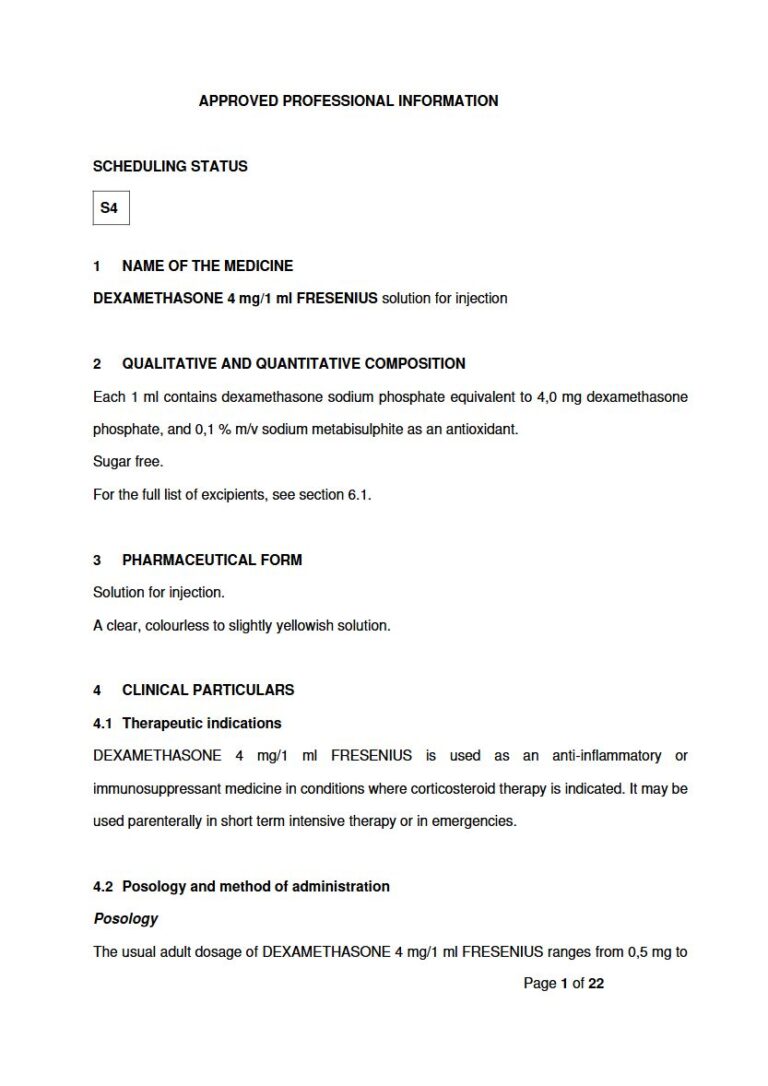
DEXAMETHASONE 4 mg/1 ml FRESENIUS is used as an anti-inflammatory or immunosuppressant medicine in conditions where corticosteroid therapy is indicated. It may be used parenterally in short term intensive therapy or in emergencies.
4.2 Posology and method of administration
Posology
The usual adult dosage of DEXAMETHASONE 4 mg/1 ml FRESENIUS ranges from 0,5 mg to 20 mg daily. The dose is dependent on the severity of the disorder.
Method of administration
Parenteral administration is used in intensive therapy or in emergencies and is given intravenously or intramuscularly. DEXAMETHASONE 4 mg/1 ml FRESENIUS may be given by intra-articular, intralesional, intramuscular or soft-tissue injection in a dose of 0,8 mg to 4 mg, depending on the size of the joint.
4.3 Contraindications
DEXAMETHASONE 4 mg/1 ml FRESENIUS is contraindicated in the following conditions:
- Hypersensitivity to corticosteroids, dexamethasone, or any of the excipients of DEXAMETHASONE 4 mg/1 ml FRESENIUS listed in section 6.1.
- Acute infections uncontrolled by appropriate antimicrobial chemotherapy.
- Acute psychosis and psychoneurosis.
- Ocular herpes simplex.
- Primary glaucoma.
- Osteoporosis.
- Peptic ulceration.
4.4 Special warnings and precautions for use
Because instances of anaphylactoid reactions have occurred in patients receiving parenteral corticosteroid therapy, appropriate precautionary measures should be taken prior to administration, especially when the patient has a history of allergy to any medicine. DEXAMETHASONE 4 mg/1 ml FRESENIUS injection should not be administered intrathecally or subconjunctivally.
Rapid intravenous injection of massive doses may sometimes cause cardiovascular collapse and injections should therefore be given slowly or by infusion. Pheochromocytoma crisis, which can be fatal, has been reported after administration of systemic corticosteroids. DEXAMETHASONE 4 mg/1 ml FRESENIUS should only be administered to patients with suspected or identified pheochromocytoma after an appropriate risk/benefit evaluation.
Sudden withdrawal or reduction in dosage, or an increase in corticosteroid requirement may precipitate acute adrenocortical insufficiency. Withdrawal after high-dose or prolonged therapy should be gradual, depending on the individual patientu2019s response, the dose, the disease being treated, and the duration of therapy. During withdrawal the adrenal function should be monitored and symptoms attributable to over-rapid withdrawal should be countered by resuming a higher dose and continuing the reduction at a slower rate. Prolonged treatment with a high dose of DEXAMETHASONE 4 mg/1 ml FRESENIUS is not recommended.
Frequent intra-articular injections over a prolonged period may lead to joint destruction with bone necrosis. Intra-articular injection of corticosteroid may produce systemic adverse reactions including adrenal suppression. Undesirable effects may be minimised by using the lowest effective dose for minimum period. Frequent patient review is required to appropriately titrate the dose against disease activity. When reduction in dosage is possible, the reduction should be gradual.
Live vaccines should not be given to patients receiving high-dose systemic DEXAMETHASONE 4 mg/1 ml FRESENIUS therapy as it may precipitate a serious illness. A killed vaccine or toxoid may be given although the response may be attenuated. Patients receiving DEXAMETHASONE 4 mg/1 ml FRESENIUS therapy are more susceptible to infection, the symptoms of which may be masked until an advanced stage has been reached. Suppression of the inflammatory response and immune function increases the susceptibility to infections and their severity. The clinical presentation may often be atypical and serious infections such as septicaemia and tuberculosis may be masked and reach an advanced stage before being recognised. There may be decreased resistance and inability to localise infection.
Patients with active or doubtfully quiescent tuberculosis should not be given DEXAMETHASONE 4 mg/1 ml FRESENIUS except, very rarely, as adjuncts to treatment with antitubercular medicines. Patients with quiescent tuberculosis should be observed closely and should receive chemoprophylaxis if DEXAMETHASONE 4 mg/1 ml FRESENIUS therapy is prolonged. Children may require prophylaxis and immunoglobulin as they are at an increased risk of infection. Infections should be treated as an emergency.
Corticosteroids may exacerbate systemic fungal infections. Moreover, there have been cases reported in which, concomitant use of amphotericin and hydrocortisone, was followed by cardiac enlargement and congestive failure. The use of corticosteroids in cerebral malaria is associated with a prolonged coma and an increased incidence of pneumonia and gastrointestinal bleeding. Chickenpox is of particular concern since this normally minor illness may be fatal in immunosuppressed patients. Patients (or parents of children) without a definite history of chickenpox should be advised to avoid close personal contact with chickenpox or herpes zoster and if exposed they should seek urgent medical attention. Passive immunisation with varicella/zoster immunoglobulin (VZIG) is needed by exposed non-immune patients who are receiving systemic corticosteroids or who have used them within the previous three months; this should be given within ten days of exposure to chickenpox. If a diagnosis of chickenpox is confirmed, the illness warrants specialist care and urgent treatment. DEXAMETHASONE 4 mg/1 ml FRESENIUS should not be stopped, and the dose may need to be increased.
Measles can have a more serious or even fatal course in immunosuppressed patients. In such children or adults particular care should be taken to avoid exposure to measles. If exposed, prophylaxis with intramuscular pooled immunoglobulin (IG) may be indicated. Exposed patients should be advised to seek medical advice without delay.
Corticosteroids may activate latent amoebiasis or strongyloidiasis or exacerbate active disease. Therefore, it is recommended that latent or active amoebiasis and strongyloidiasis be ruled out, before initiating DEXAMETHASONE 4 mg/1 ml FRESENIUS therapy in any patient at risk of or with symptoms of either condition.
Prolonged use of DEXAMETHASONE 4 mg/1 ml FRESENIUS may produce posterior subcapsular cataracts, glaucoma with possible damage to the optic nerves and may enhance the establishment of secondary ocular infections due to fungi or viruses. DEXAMETHASONE 4 mg/1 ml FRESENIUS may increase or decrease motility and number of spermatozoa.
Co-treatment with CYP3A inhibitors, including cobicistat-containing products, is expected to increase the risk of systemic side effects. Patients should be monitored for systemic corticosteroid side effects. DEXAMETHASONE 4 mg/1 ml FRESENIUS should only be used with great caution in the presence of heart failure, recent myocardial infarction, or hypertension, in patients with diabetes mellitus or with a family history of diabetes, epilepsy (excluding infantile seizures), previous steroid myopathy, glaucoma or family history of glaucoma, myasthenia gravis, diverticulitis, fresh intestinal anastomoses, hypothyroidism, infectious diseases, hepatic failure, existing or previous history of psychoses (especially previous steroid psychosis) or severe affective disorders, renal impairment, chronic renal failure, uraemia and in elderly patients.
Signs of peritoneal irritation, following gastrointestinal perforation in patients receiving large doses of corticosteroids, may be minimal or absent. Fat embolism has been reported as a possible complication of hypercortisonism. Tumour lysis syndrome (TLS) has been reported in patients with haematological malignancies following the use of DEXAMETHASONE 4 mg/1 ml FRESENIUS alone or in combination with other chemotherapeutic medicines. Patients at high risk of TLS, such as patients with high proliferative rate, high tumour burden, and high sensitivity to cytotoxic medicines, should be monitored closely and appropriate precaution taken.
Patients/and or carers should be warned that potentially severe psychiatric adverse reactions may occur with DEXAMETHASONE 4 mg/1 ml FRESENIUS (see section 4.8). Symptoms typically emerge within a few days or weeks of starting the treatment. Risks may be higher with high doses/systemic exposure, although dose levels do not allow prediction of the onset, type, severity, or duration of reactions. Most reactions recover after either dose reduction or withdrawal, although specific treatment may be necessary.
Patients/carers should be encouraged to seek medical advice if worrying psychological symptoms develop, especially if depressed mood or suicidal ideation is suspected. Patients/carers should also be alert to possible psychiatric disturbances that may occur either during or immediately after dose tapering/withdrawal of systemic steroids, although such reactions have been reported infrequently. Particular care is required when considering the use of DEXAMETHASONE 4 mg/1 ml FRESENIUS in patients with existing or previous history of severe affective disorders in themselves or in their first-degree relatives. These would include depressive or manic-depressive illness and previous steroid psychosis.
There is an enhanced effect of corticosteroids in patients with hypothyroidism and in those with cirrhosis. Local steroid injection should be undertaken in an aseptic environment to reduce the particular risk of bacterial infection, injection of a steroid into an infected site should be avoided. Appropriate examination of joint fluids is necessary to exclude a septic process. A marked increase in pain accompanied by local swelling, further restriction of joint motion, fever and malaise are suggestive of septic arthritis. If this complication occurs and the diagnosis of sepsis is confirmed, appropriate antimicrobial therapy should be instituted. Patients should understand the great importance of not over-using joints that are still diseased, despite symptomatic improvement.
Corticosteroids should not be injected into unstable joints. Frequent intra-articular injections have been reported to cause development of Charcot-like arthropathies. During a prolonged course of DEXAMETHASONE 4 mg/1 ml FRESENIUS therapy, patients should be monitored regularly for hypertension, glycosuria, hypokalaemia, gastric discomfort, and mental changes. Sodium intake may need to be reduced, and calcium and potassium supplements may be necessary. Monitoring of the fluid intake and output, and daily weight records may give early warning of fluid retention. Back pain may signify osteoporosis. Children are at special risk from raised intracranial pressure.
Average and large doses of hydrocortisone or cortisone can cause elevation of blood pressure, retention of salt and water and increased excretion of potassium, but these effects are less likely to occur with synthetic derivatives, except when used in large doses. Dietary salt restrictions and potassium supplementation may be necessary. All corticosteroids increase calcium excretion. The slower rate of absorption by intramuscular administration should be recognised. In patients on DEXAMETHASONE 4 mg/1 ml FRESENIUS therapy subjected to unusual stress (e.g., intercurrent illness, trauma or surgical procedures), dosage should be increased before, during and after the stressful situation. Drug-induced secondary adrenocortical insufficiency may result from too rapid withdrawal of DEXAMETHASONE 4 mg/1 ml FRESENIUS and may be minimised by gradual dosage reduction, being tapered off over weeks and months, depending on the dose and duration of treatment, but may persist for up to a year after discontinuation of therapy. In any stressful situation during that period, therefore, DEXAMETHASONE 4 mg/1 ml FRESENIUS therapy should be reinstated. If the patient is already receiving DEXAMETHASONE 4 mg/1 ml FRESENIUS, the current dosage may have to be temporarily increased. Salt and/or a mineralocorticoid should be given concurrently since mineralocorticoid secretion may be impaired.
Stopping DEXAMETHASONE 4 mg/1 ml FRESENIUS after prolonged therapy may cause withdrawal symptoms, including fever, myalgia, arthralgia, and malaise. This may occur in patients even without evidence of adrenal insufficiency. In patients who have received more than physiological doses of DEXAMETHASONE 4 mg/1 ml FRESENIUS for greater than three weeks, withdrawal should not be abrupt. How dose reduction should be carried out depends largely on whether the disease is likely to relapse as the dose of DEXAMETHASONE 4 mg/1 ml FRESENIUS is reduced. Clinical assessment of disease activity may be needed during withdrawal. If the disease is unlikely to relapse on withdrawal of DEXAMETHASONE 4 mg/1 ml FRESENIUS but there is uncertainty about hypothalamic-pituitary adrenal (HPA) suppression, the dose of DEXAMETHASONE 4 mg/1 ml FRESENIUS may be reduced rapidly to physiological doses. Abrupt withdrawal of DEXAMETHASONE 4 mg/1 ml FRESENIUS treatment, which has continued up to three weeks is appropriate if it is considered that the disease is unlikely to relapse. In the following patient groups, gradual withdrawal of systemic corticosteroid therapy should be considered even after courses lasting three weeks or less:
- patients who have had repeated courses of systemic corticosteroids, particularly if taken for greater than three weeks
- when a short course has been prescribed within one year of cessation of long-term therapy (months or years)
- patients who may have reasons for adrenocortical insufficiency other than exogenous corticosteroid therapy
- patients receiving high doses of DEXAMETHASONE 4 mg/1 ml FRESENIUS
- patients repeatedly taking doses in the evening.
There is an apparent association between use of corticosteroids and left ventricular free wall rupture after a recent myocardial infarction; therefore, therapy with DEXAMETHASONE 4 mg/1 ml FRESENIUS should be used with great caution in these patients. Patients should carry cards (and preferably also wear bracelets) giving full details of their corticosteroid therapy; they and their relatives should be fully conversant with the implications of their therapy and the precautions to be taken.
DEXAMETHASONE 4 mg/1 ml FRESENIUS contains sodium DEXAMETHASONE 4 mg/1 ml FRESENIUS contains less than 1 mmol sodium (23 mg) per 1 ml, that is to say essentially sodium-free.
Paediatric population
Hypertrophic cardiomyopathy may occur after systemic administration of corticosteroids, including DEXAMETHASONE 4 mg/1 ml FRESENIUS, to prematurely born infants. In the majority of cases, this is reversible on withdrawal of treatment. In preterm infants treated with DEXAMETHASONE 4 mg/1 ml FRESENIUS diagnostic evaluation and monitoring of cardiac function and structure should be performed. DEXAMETHASONE 4 mg/1 ml FRESENIUS causes growth retardation in infancy, childhood, and adolescence, which may be irreversible. Treatment should be limited to the minimum dosage for the shortest possible time, in order to minimise suppression of the hypothalamo-pituitary-adrenal axis and growth retardation. Growth and development of infants and children on prolonged corticosteroid therapy should be carefully monitored. Children may require prophylaxis and immunoglobulin as they are at an increased risk of infection. Infections should be treated as an emergency.
4.5 Interaction with other medicines and other forms of interaction
Concurrent administration of barbiturates, ephedrine, rifabutin, aminoglutethimide, carbamazepine, phenytoin, primidone, or rifampicin may enhance the metabolism and reduce the blood levels and effects of DEXAMETHASONE 4 mg/1 ml FRESENIUS. The dosage of DEXAMETHASONE 4 mg/1 ml FRESENIUS may have to be adjusted. These interactions interfere with DEXAMETHASONE 4 mg/1 ml FRESENIUS suppression tests which should be interpreted with caution during administration of these medicines. False-negative results in the dexamethasone suppression test in patients being treated with indomethacin have been reported. Oral contraceptives or ritonavir may increase the plasma concentration of DEXAMETHASONE 4 mg/1 ml FRESENIUS. Concurrent administration with potassium-depleting diuretics, such as thiazides and furosemide, may cause excessive potassium loss. There is also an increased risk of hypokalaemia with concurrent amphotericin B or bronchodilator therapy with xanthines and beta 2 agonists. There may be an increased incidence of gastrointestinal bleeding and ulceration when given with non-steroidal anti-inflammatory medicines.
Response to anticoagulants may be altered by DEXAMETHASONE 4 mg/1 ml FRESENIUS and the requirements of antidiabetic medicines and antihypertensives may be increased. The efficacy of coumarin anticoagulants may be changed by concurrent DEXAMETHASONE 4 mg/1 ml FRESENIUS treatment. The prothrombin time should be checked frequently in patients who are receiving DEXAMETHASONE 4 mg/1 ml FRESENIUS and coumarin anticoagulants at the same time, in order to avoid spontaneous bleeding. The desired effects of hypoglycaemic medicines (including insulin) are antagonised by DEXAMETHASONE 4 mg/1 ml FRESENIUS. DEXAMETHASONE 4 mg/1 ml FRESENIUS may decrease serum concentrations of salicylates and may decrease the effect of antimuscarinics in myasthenia gravis. Aspirin should be used cautiously in conjunction with corticosteroids in hypoprothrombinaemia. The renal clearance of salicylates is increased by corticosteroids and therefore salicylate dosage should be reduced along with steroid withdrawal. DEXAMETHASONE 4 mg/1 ml FRESENIUS may interfere with or alter the results of assays for some endogenous substances or other medicines. DEXAMETHASONE 4 mg/1 ml FRESENIUS may affect the nitroblue tetrazolium test for bacterial infection and produce false-negative results. Antiretroviral protease inhibitors (ritonavir, darunavir, indinavir, lopinavir, saquinavir and efavirenz) are metabolised by CYP3A. Medicines that induce CYP3A activity, such as DEXAMETHASONE 4 mg/1 ml FRESENIUS, may increase the clearance of medicines metabolised by CYP3A, resulting in lowered plasma concentrations. Certain antiretroviral protease inhibitors (ritonavir, indinavir) may also be inhibitors of CYP3A themselves and as a result may increase the plasma concentration of DEXAMETHASONE 4 mg/1 ml FRESENIUS. Co-treatment with CYP3A inhibitors, including cobicistat-containing products, is expected to increase the risk of systemic side effects. Patients should be monitored for systemic corticosteroid side effects.
4.6 Fertility, pregnancy and lactation
Pregnancy
DEXAMETHASONE 4 mg/1 ml FRESENIUS readily crosses the placenta. DEXAMETHASONE 4 mg/1 ml FRESENIUS administered in high doses during pregnancy may cause foetal or neonatal adrenal suppression. There is an increased risk of neonatal hypoglycaemia following antenatal administration of a short course of corticosteroids, including DEXAMETHASONE 4 mg/1 ml FRESENIUS, to women at risk for late preterm delivery. Administration of corticosteroids to pregnant animals can cause abnormalities of foetal development including cleft palate, intra-uterine growth retardation and effects on brain growth and development. There is no evidence that corticosteroids result in an increased incidence of congenital abnormalities, such as cleft palate/lip, in man. However, when administered for prolonged periods or repeatedly during pregnancy, DEXAMETHASONE 4 mg/1 ml FRESENIUS may increase the risk of intrauterine growth retardation. Hypoadrenalism may, in theory, occur in the neonate following prenatal exposure to DEXAMETHASONE 4 mg/1 ml FRESENIUS but usually resolves spontaneously following birth.
Breastfeeding
The safety of this medicine in lactating women has not been established. Corticosteroids may pass into breast milk, although no data are available for dexamethasone. Infants of mothers taking high doses of systemic corticosteroids for prolonged periods may have a degree of adrenal suppression.
4.7 Effects on ability to drive and use machines
DEXAMETHASONE 4 mg/1 ml FRESENIUS can cause side effects. Patients should see how DEXAMETHASONE 4 mg/1 ml FRESENIUS affects them and then judge if it is safe to drive or operate machinery.
4.8 Undesirable effects
The incidence of predictable undesirable effects, including hypothalamic-pituitary-adrenal suppression, correlates with the relative potency of the medicine, dosage, timing of administration and the duration of treatment. The following side effects have been reported and the frequencies are unknown (cannot be established from the available data):
Infections and infestations
Impaired tissue repair and immune function caused by DEXAMETHASONE 4 mg/1 ml FRESENIUS can lead to delayed wound healing and increased susceptibility to infection. These infections include septicaemia, tuberculosis, fungal and viral infections. The symptoms of infections may also be masked.
Blood and lymphatic system disorders
An increase in the coagulability of the blood may lead to thromboembolic complications. Leucocytosis, thrombo-embolism.
Immune system disorders
Hypersensitivity, including anaphylaxis.
Endocrine disorders
DEXAMETHASONE 4 mg/1 ml FRESENIUS may cause Cushingoid symptoms typical of hyperactivity of the adrenal cortex, with moon-face, sometimes with hirsutism, buffalo hump, flushing, increased bruising, ecchymosis, striae, and acne. This may lead to fully developed Cushingu2019s Syndrome. Suppression of growth in children and adolescents. Acute adrenal insufficiency may occur following sudden withdrawal or reduction in dosage, or an increase in corticosteroid requirement associated with the stress of infection or an accidental or surgical trauma. Secondary adrenocortical and pituitary unresponsiveness (particularly in times of stress as in trauma, surgery, or illness), decreased carbohydrate tolerance, manifestation of latent diabetes mellitus, increased requirements for insulin or oral hypoglycaemic medicines in diabetes, hirsutism.
Metabolism and nutrition disorders
Adverse metabolic effects lead to mobilisation of calcium (increased calcium excretion) and phosphorus, with osteoporosis and spontaneous fractures; muscle atrophy and nitrogen depletion. Back pain may signify osteoporosis. Hyperglycaemia with accentuation or precipitation of the diabetic state. The insulin requirements of diabetic patients are increased. Increased appetite is often reported. Weight gain. Sodium retention, fluid retention.
Psychiatric disorders
Mental and neurological disturbances may occur. A wide range of psychiatric reactions including affective disorders (such as irritable, euphoric, depressed, and labile mood, and suicidal thoughts), psychotic reactions (including mania, delusions, hallucinations, and aggravation of schizophrenia), behavioural disturbances, irritability, anxiety, sleep disturbances, and cognitive dysfunction including confusion and amnesia have been reported. Reactions may occur in both adults and children. Psychological effects have also been reported on withdrawal of corticosteroids.
Nervous system disorders
Benign intracranial hypertension. Convulsions increased intracranial pressure with papilloedema (pseudotumour cerebri) usually after treatment, vertigo, headache, cerebral palsy in pre-term infants.
Eye disorders
Ocular changes including development of glaucoma and cataracts may occur. Posterior subcapsular cataracts, increased intraocular pressure, papilloedema, corneal or scleral thinning, exacerbation of ophthalmic viral disease, glaucoma exophthalmos, rare instances of blindness associated with intralesional therapy around the face and head, retinopathy of prematurity, chorioretinopathy.
Cardiac disorders
There may be an increase in the excretion of potassium with the possibility of hypokalaemic alkalosis occurring as well as oedema and hypertension. This may induce cardiac failure. Cardiovascular collapse may occur following the rapid administration of a large intravenous dose. Myocardial rupture following recent myocardial infarction, hypertrophic cardiomyopathy in prematurely born infants (see section 4.4).
Gastrointestinal disorders
Acute pancreatitis and peptic ulceration, with possible perforation and haemorrhage, perforation of the small and large bowel, particularly in patients with inflammatory bowel disease, pancreatitis, abdominal distension, ulcerative oesophagitis, dyspepsia, oesophageal candidiasis. Nausea, hiccups.
Skin and subcutaneous tissue disorders
Hyperhidrosis and skin thinning. Impaired wound healing, thin fragile skin, petechiae and ecchymoses, erythema, striae, telangiectasia, acne, possible suppression of skin tests, burning or tingling especially in the perineal area (after intravenous injection), other cutaneous reactions such as allergic dermatitis, urticaria, angioneurotic oedema and hypo- or hyper pigmentation. Sterile abscess.
Musculoskeletal and connective tissue disorders
Weakness and wasting of the muscles occur. Steroid myopathy, osteoporosis (especially in post-menopausal females), vertebral compression fractures, aseptic necrosis of femoral and humeral heads, pathological fracture of long bones, tendon rupture and post-injection flare (following intraarticular use).
Reproductive system and breast disorders
Menstrual irregularities and amenorrhoea. An increase or decrease in motility and number of spermatozoa.
General disorders and administrative site conditions
Malaise.
Other
Multiple myeloma patients treated with lenalidomide or thalidomide in combination with dexamethasone have an increased risk of thromboembolic events including deep vein thrombosis and pulmonary embolism.
4.9 Overdose
See section 4.8. Treatment is symptomatic and supportive. Anaphylactic and hypersensitivity reactions may be treated with adrenaline, positive-pressure artificial respiration and aminophylline. The patient should be kept warm and quiet.
