
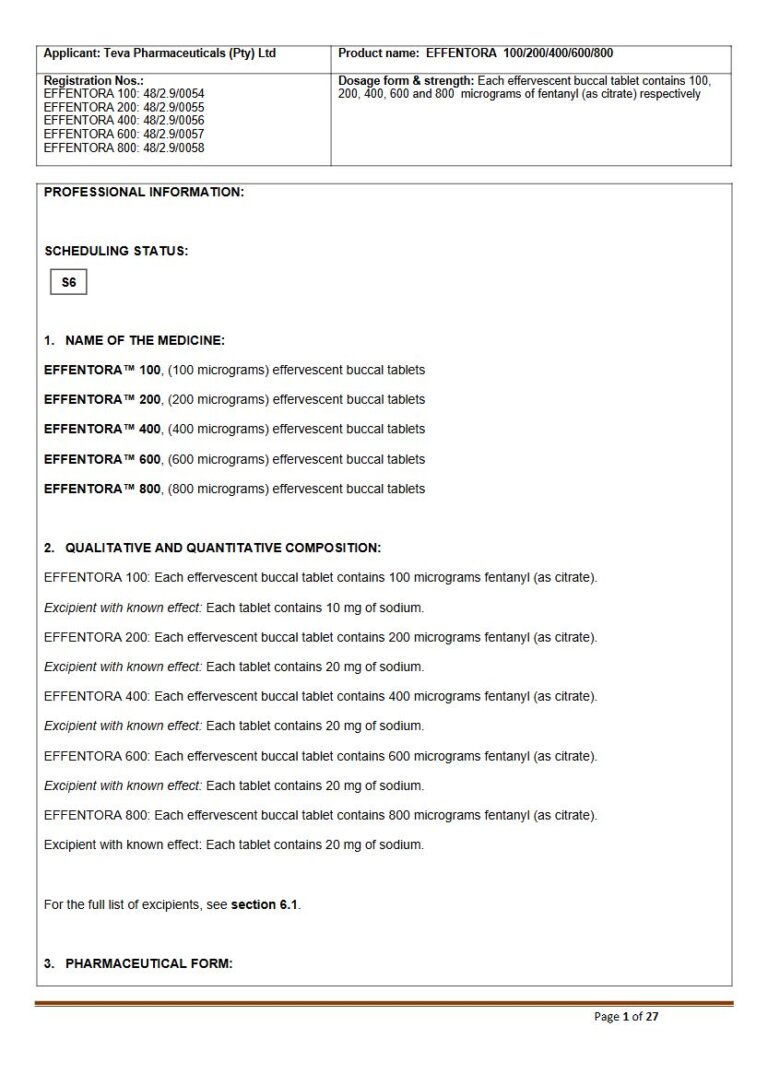
Effentora 100 mg/200 mg/400 mg/600 mg/800 mg Tablets
PDF Leaflet Revision Date: 18 February 2025
Clinical Summary
Quick overview from the medicine insert
Indication
Treatment of breakthrough pain in adults with cancer on maintenance opioid therapy.
Dosage (summary)
Initial dose: 100 mcg, titrate as needed; max 800 mcg.
Onset of Action / Duration
Onset: 30 mins, Duration: Not specified.
Special Populations
- Elderly
- Hepatic impairment
- Renal impairment
Pregnancy & Breastfeeding
Not recommended during pregnancy or breastfeeding due to risks of respiratory depression in the fetus/infant.
Key Drug Interactions
- CYP3A4 inhibitors
- CYP3A4 inducers
- Benzodiazepines
- Alcohol
Contraindications
- Hypersensitivity to fentanyl
- Severe respiratory depression
- Patients without maintenance opioid therapy
- Breastfeeding
Common side effects
- Respiratory depression
- Nausea
- Constipation
- Dizziness
Counselling Points
- Do not use with other fentanyl products.
- Store out of reach of children.
- Monitor for signs of respiratory depression.
Serious warnings
- Risk of respiratory depression
- Potential for abuse and dependence
- Accidental exposure can be fatal
Important Disclaimer
The Effentora 100 mg/200 mg/400 mg/600 mg/800 mg Tablets professional information leaflet below is the property of Teva Pharmaceuticals and is provided on Medinsert exactly as issued, with no.. alterations or editorial changes. We make every effort to keep content current by updating documents as soon as new versions become available. Medinsert serves as a trusted access point for healthcare professionals, but does not replace official sources or clinical judgement. For more details, please read our full disclaimer. read more>>
 Healthcare Professionals Only
This content is for registered healthcare professionals
Sign in or create a free account to read the full package insert.
Free for HPCSA-registered professionals. Powered by Medinsert.
Clinical Particulars
Section 4 of the official insert — extracted exactly as issued, no alterations
4.1 Therapeutic indications
EFFENTORA is indicated for the treatment of breakthrough pain (BTP) in adults with cancer who are already receiving maintenance opioid therapy for chronic cancer pain. BTP is a transitory exacerbation of pain that occurs on a background of otherwise controlled persistent pain. Patients receiving maintenance opioid therapy are those who are taking at least 60 mg of oral morphine daily, at least 25 micrograms of transdermal fentanyl per hour, at least 30 mg of oxycodone daily, at least 8 mg of oral hydromorphone daily or an equianalgesic dose of another opioid for a week or longer.
4.2 Posology and method of administration
Treatment should be initiated by and remain under the guidance of a medical practitioner experienced in the management of opioid therapy in cancer patients. Medical practitioners should keep in mind the potential of abuse of fentanyl. Patients should be instructed not to use two different formulations of fentanyl concurrently for the treatment of breakthrough pain, and to dispose of any fentanyl product prescribed for BTP when switching to EFFENTORA.
Posology:
Dose titration: EFFENTORA should be individually titrated to an effective dose that provides adequate analgesia and minimises adverse reactions. In clinical studies, the effective dose of EFFENTORA for BTP was not predictable from the daily maintenance dose of opioid. Patients should be carefully monitored until an effective dose is reached.
Titration in patients not switching from other fentanyl containing products: The initial dose of EFFENTORA should be 100 micrograms, titrating upwards as necessary through the range of available tablets strengths (100, 200, 400, 600, 800 micrograms).
Titration in patients switching from other fentanyl containing products: Due to different absorption profiles, switching must not be done at a 1:1 ratio. If switching from another oral fentanyl citrate product, independent dose titration with EFFENTORA is required as bioavailability between products differs significantly. However, in these patients, a starting dose higher than 100 micrograms may be considered.
Method of titration: During titration, if adequate analgesia is not obtained within 30 minutes after the start of administration of a single tablet, a second EFFENTORA tablet of the same strength may be used. If treatment of a BTP episode requires more than one tablet, an increase in dose to the next higher available strength should be considered to treat the next BTP episode. During titration, multiple tablets may be used: up to four 100 micrograms or up to four 200 microgram tablets may be used to treat a single episode of BTP during dose titration according to the following schedule:
- If the initial 100 microgram tablet is not efficacious, the patient can be instructed to treat the next episode of BTP with two 100 microgram tablets. It is recommended that one tablet should be placed in each side of the mouth. If this dose is considered to be the effective dose, treatment of successive episodes of BTP may be continued with a single 200 microgram tablet of EFFENTORA.
- If a single 200 microgram tablet of EFFENTORA (or two 100 microgram tablets) is not considered to be efficacious the patient can be instructed to use two 200 microgram tablets (or four 100 microgram tablets) to treat the next episode of BTP. It is recommended that two tablets should be placed in each side of the mouth. If this dose is considered to be the effective dose, treatment of successive episodes of BTP may be continued with a single 400 microgram tablet of EFFENTORA.
- For titration to 600 micrograms and 800 micrograms, tablets of 200 micrograms should be used.
- Doses above 800 micrograms were not evaluated in clinical studies.
No more than two tablets should be used to treat any individual BTP episode, except when titrating using up to four tablets as described above. Patients should wait at least 4 hours before treating another BTP episode with EFFENTORA during titration.
Maintenance therapy: Once an effective dose has been established during titration, patients should continue to take this dose as a single tablet of that given strength. Breakthrough pain episodes may vary in intensity and the required EFFENTORA dose might increase over time due to progression of the underlying cancer disease. In these cases, a second tablet of the same strength may be used. If a second tablet of EFFENTORA was required for several consecutive times, the usual maintenance dose is to be readjusted (see below).
Patients should wait at least 4 hours before treating another BTP episode with EFFENTORA during maintenance therapy.
Dose readjustment: The maintenance dose of EFFENTORA should be increased when a patient requires more than one tablet per BTP episode for several consecutive BTP episodes. For dose-readjustment the same principles apply as outlined for dose titration (see above).
Dose readjustment of the background opioid therapy may be required if patients consistently present with more than four BTP episodes per 24 hours. In absence of adequate pain control, the possibility of hyperalgesia, tolerance and progression of underlying disease should be considered (see section 4.4).
Discontinuation of therapy: EFFENTORA should be discontinued immediately if the patient no longer experiences breakthrough pain episodes. The treatment for the persistent background pain should be kept as prescribed. If discontinuation of all opioid therapy is required, the patient must be closely followed by the doctor in order to manage the risk of abrupt withdrawal effects.
Hepatic or renal impairment: EFFENTORA should be administered with caution to patients with moderate or severe hepatic or renal impairment (see section 4.4).
Patients with xerostomia: Patients experiencing xerostomia are advised to drink water to moisten the buccal cavity prior to administration of EFFENTORA. If this recommendation does not result in an appropriate effervescence, then a switch of therapy may be advised.
Use in the elderly (older than 65 years): In clinical studies patients older than 65 years tended to titrate to a lower effective dose than younger patients. It is recommended that increased caution should be exercised in titrating the dose of EFFENTORA in elderly patients.
Paediatric population: The safety and efficacy of EFFENTORA in children aged 0 to 18 years have not been established. No data are available.
4.3 Contraindications
- Hypersensitivity to fentanyl or to any of the excipients listed in section 6.1.
- Patients without maintenance opioid therapy as there is an increased risk of respiratory depression.
- Severe respiratory depression or severe obstructive lung conditions.
- Treatment of acute pain other than breakthrough pain.
- Patients being treated with medicinal products containing sodium oxybate.
- Breastfeeding.
4.4 Special warnings and precautions for use
Because of the risks, including fatal outcome, associated with accidental exposure, misuse, and abuse, patients and their carers must be advised to keep EFFENTORA in a safe and secure place, not accessible by others.
Accidental use in children: Patients and their carers must be instructed that EFFENTORA contains an active substance in an amount that can be fatal, especially to a child. Therefore, they must keep all tablets out of the sight and reach of children.
Monitoring: In order to minimise the risks of opioid-related undesirable effects and to identify the effective dose, it is imperative that patients be monitored closely by health professionals during the titration process.
Treatment duration and goals: Before initiating treatment with EFFENTORA, a treatment strategy including treatment duration and treatment goals, and a plan for end of treatment, should be agreed together with the patient, in accordance with pain management guidelines. During treatment, there should be frequent contact between the physician and the patient to evaluate the need for continued treatment, consider discontinuation and to adjust dosages if needed. In absence of adequate pain control, the possibility of hyperalgesia, tolerance and progression of underlying disease should be considered (see section 4.4). EFFENTORA should not be used longer than necessary.
Maintenance opioid treatment: It is important that the maintenance opioid treatment used to treat the patient's persistent pain has been stabilised before EFFENTORA therapy begins and that the patient continues to be treated with the maintenance opioid treatment whilst taking EFFENTORA. EFFENTORA must not be given to patients without maintenance opioid therapy as there is an increased risk of respiratory depression and death.
Respiratory depression: There is a risk of clinically significant respiratory depression associated with the use of EFFENTORA. Improper patient selection (e.g., use in patients without maintenance opioid therapy) and/or improper dosing have resulted in fatal outcome with EFFENTORA as well as with other fentanyl products. EFFENTORA should only be used for conditions specified in section 4.1.
Chronic obstructive pulmonary disease: Particular caution should be used when titrating EFFENTORA in patients with non-severe chronic obstructive pulmonary disease or other medical conditions predisposing them to respiratory depression, as even normally therapeutic doses of EFFENTORA may further decrease respiratory drive to the point of respiratory failure.
Sleep-related breathing disorders: Opioids can cause sleep-related breathing disorders including central sleep apnoea (CSA) and sleep-related hypoxemia. Opioid use increases the risk of CSA in a dose-dependent fashion. In patients who present with CSA, consider decreasing the total opioid dosage.
Alcohol: The concomitant use of alcohol with EFFENTORA can produce increased depressant effects which may result in a fatal outcome (see section 4.5).
Risks of concomitant administration with benzodiazepines or related medicines: Concomitant use of opioids, including EFFENTORA, with benzodiazepines or related medicines may result in profound sedation, respiratory depression, coma and death. Because of these risks, concomitant prescribing of opioids and benzodiazepines or related medicines should be made only in patients for whom alternative treatment options are inadequate. If a decision is made to prescribe EFFENTORA concomitantly with benzodiazepines or related medicines, the lowest effective dosages and minimum durations of concomitant use should be chosen. Patients should be closely monitored for signs and symptoms of respiratory depression and sedation (see section 4.5).
Increased intracranial pressure, impaired consciousness: EFFENTORA should only be administered with extreme caution in patients who may be particularly susceptible to the intracranial effects of CO2 retention, such as those with evidence of increased intracranial pressure or impaired consciousness. Opioids may obscure the clinical course of a patient with a head injury and should be used only if clinically warranted.
Bradydysrhythmias: EFFENTORA may produce bradycardia. Fentanyl (e.g. EFFENTORA) should be used with caution in patients with previous or pre-existing bradydysrythmias.
Hepatic or renal impairment: In addition, EFFENTORA should be administered with caution to patients with hepatic or renal impairment. The influence of hepatic and renal impairment on the pharmacokinetics of the medicinal product have not been evaluated, however, when administered intravenously the clearance of fentanyl has been shown to be altered in hepatic and renal impairment due to alterations in metabolic clearance and plasma proteins.
After administration of EFFENTORA, impaired hepatic and renal function may both increase the bioavailability of swallowed fentanyl and decrease its systemic clearance, which could lead to increased and prolonged opioid effects. Therefore, special care should be taken during the titration process in patients with moderate or severe hepatic or renal impairment.
Careful consideration should be given to patients with hypovolaemia and hypotension.
Serotonin Syndrome: Caution is advised when EFFENTORA is co-administered with drugs that affect the serotoninergic neurotransmitter systems. The development of a potentially life-threatening serotonin syndrome may occur with the concomitant use of serotonergic medicines such as Selective Serotonin Re-uptake Inhibitors (SSRIs) and Serotonin Norepinephrine Re- uptake Inhibitors (SNRIs), and with medicines which impair metabolism of serotonin (including Monoamine Oxidase Inhibitors [MAOIs]). This may occur within the recommended dose. Serotonin syndrome may include mental-status changes (e.g., agitation, hallucinations, coma), autonomic instability (e.g., tachycardia, labile blood pressure, hyperthermia), neuromuscular abnormalities (e.g., hyperreflexia, incoordination, rigidity), and/or gastrointestinal symptoms (e.g., nausea, vomiting, diarrhoea). If serotonin syndrome is suspected, treatment with EFFENTORA should be discontinued.
Tolerance and opioid use disorder (abuse and dependence): Tolerance and physical and/or psychological dependence may develop upon repeated administration of opioids such as fentanyl. Fentanyl as contained in EFFENTORA can be abused in a manner similar to other opioids and all patients treated with opioids require monitoring for signs of abuse and addiction. Patients at increased risk of opioid abuse may still be appropriately treated with opioids; however, these patients will require additional monitoring for signs of misuse, abuse, or addiction. Repeated use of EFFENTORA may lead to Opioid Use Disorder (OUD). A higher dose and longer duration of opioid treatment can increase the risk of developing OUD. Abuse or intentional misuse of EFFENTORA may result in overdose and/or death. The risk of developing OUD is increased in patients with a personal or a family history (parents or siblings) of substance use disorders (including alcohol use disorder), in current tobacco users or in patients with a personal history of other mental health disorders (e.g. major depression, anxiety and personality disorders). Before initiating treatment with EFFENTORA and during the treatment, treatment goals and a discontinuation plan should be agreed with the patient (see section 4.2). Before and during treatment the patient should also be informed about the risks and signs of OUD. Patients should be advised to contact their physician if these signs occur. Patients will require monitoring for signs of drug-seeking behavior (e.g. too early requests for refills). This includes the review of concomitant opioids and psycho-active medicines (like benzodiazepines). For patients with signs and symptoms of OUD, consultation with an addiction specialist should be considered.
Endocrine effects: Opioids may influence the hypothalamic-pituitary-adrenal or gonadal axes. Some changes that can be seen include an increase in serum prolactin and decrease in plasma cortisol and testosterone. Clinical signs and symptoms may manifest from these hormonal changes.
Hyperalgesia: In case of insufficient pain control in response to an increased dose of fentanyl, the possibility of opioid-induced hyperalgesia should be considered. An EFFENTORA dose reduction or discontinuation of EFFENTORA treatment or treatment review may be indicated.
Anaphylaxis and hypersensitivity: Anaphylaxis and hypersensitivity have been reported in association with the use of oral transmucosal fentanyl products (see section 4.8).
Controlled sodium diet: EFFENTORA 100 microgram buccal tablets contain 10 mg sodium per tablet. EFFENTORA 200, 400, 600 and 800 microgram buccal tablets contain 20 mg sodium per tablet. To be taken into consideration by patients on a controlled sodium diet.
4.5 Interaction with other medicines and other forms of interaction
Medicines that affect CYP3A4 activity: Fentanyl is metabolised mainly via the human cytochrome P450 3A4 isoenzyme system (CYP3A4), therefore potential interactions may occur when EFFENTORA is given concurrently with medicines that affect CYP3A4 activity.
CYP3A4 inducers: Co-administration with medicines that induce 3A4 activity may reduce the efficacy of EFFENTORA.
CYP3A4 inhibitors: The concomitant use of EFFENTORA with strong CYP3A4 inhibitors (e.g., ritonavir, ketoconazole, itraconazole, troleandomycin, clarithromycin, and nelfinavir) or moderate CYP3A4 inhibitors (e.g., amprenavir, aprepitant, diltiazem, erythromycin, fluconazole, fosamprenavir, grapefruit juice, and verapamil) may result in increased fentanyl plasma concentrations, potentially causing serious adverse drug reactions including fatal respiratory depression. Patients receiving EFFENTORA concomitantly with moderate or strong CYP3A4 inhibitors should be carefully monitored for an extended period of time. Dosage increase should be done with caution.
Medicines that can increase CNS depressant effects: Co-administration of fentanyl with other central nervous system depressants, including other opioids, sedatives or hypnotics, (including benzodiazepines), general anaesthetics, phenothiazines, tranquillisers, skeletal muscle relaxants, sedating antihistamines, gabapentinoids (gabapentin and pregabalin) and alcohol can produce additive depressant effects which may result in respiratory depression, hypotension, profound sedation, coma or a fatal outcome (see section 4.4).
Sedative medicines such as benzodiazepines or related medicines: The concomitant use of opioids with sedative medicines such as benzodiazepines or related medicines increase the risk of sedation, respiratory depression, coma and death because of additive CNS depressant effect. The dose and duration of concomitant use should be limited (see section 4.4).
Partial opioid agonists/antagonists: The concomitant use of partial opioid agonists/antagonists (e.g. buprenorphine, nalbuphine, pentazocine) is not recommended. They have high affinity to opioid receptors with relatively low intrinsic activity and therefore partially antagonise the analgesic effect of fentanyl and may induce withdrawal symptoms in opioid dependant patients.
Serotoninergic medicines: Co-administration of fentanyl with a serotoninergic agent, such as a Selective Serotonin Re-uptake Inhibitor (SSRI) or a Serotonin Norepinephrine Re-uptake Inhibitor (SNRI) or a Monoamine Oxidase Inhibitor (MAOI), may increase the risk of serotonin syndrome, a potentially life-threatening condition. EFFENTORA is not recommended for use in patients who have received MAOIs within 14 days because severe and unpredictable potentiation by MAOIs has been reported with opioid analgesics.
Sodium oxybate: Concomitant use of medicinal products containing sodium oxybate and fentanyl is contraindicated (see section 4.3). The treatment with sodium oxybate should be discontinued before start of treatment with EFFENTORA.
4.6 Fertility, pregnancy and lactation
Pregnancy: There are no adequate data from the use of fentanyl in pregnant women. Studies in animals have shown reproductive toxicity (see section 5.3). The potential risk for humans is unknown. With long-term use of EFFENTORA during pregnancy, there is a risk of neonatal opioid withdrawal syndrome which may be life-threatening if not recognised and treated, and requires management according to protocols developed by neonatology experts. If opioid use is required for a prolonged period in a pregnant woman, advise the patient of the risk of neonatal opioid withdrawal syndrome and ensure that appropriate treatment will be available (see section 4.8). It is advised not to use EFFENTORA during labour and delivery (including caesarean section) because EFFENTORA passes through the placenta and may cause respiratory depression in the foetus. If EFFENTORA is administered, an antidote for the child should be readily available.
Breastfeeding: EFFENTORA passes into breast milk and may cause sedation and respiratory depression in the breast-fed child. EFFENTORA should not be used by breastfeeding women and breastfeeding should not be restarted until at least days after the last administration of EFFENTORA.
Fertility: There are no human data on fertility available. In animal studies, male fertility was impaired (see section 5.3).
4.7 Effects on ability to drive and use machines
No studies of the effects on the ability to drive and use machines have been performed. However, opioid analgesics impair the mental and/or physical ability required for the performance of potentially dangerous tasks (e.g., driving a car or operating machinery). Patients should be advised not to drive or operate machinery if they experience somnolence, dizziness or visual disturbance while taking EFFENTORA and not to drive or operate machinery until they know how they react.
4.8 Undesirable effects
a. Summary of the safety profile: Typical opioid adverse reactions are to be expected with EFFENTORA. Frequently, these will cease or decrease in intensity with continued use of the medicinal product, as the patient is titrated to the most appropriate dose. However, the most serious adverse reactions are respiratory depression (potentially leading to apnoea or respiratory arrest), circulatory depression, hypotension and shock and all patients should be closely monitored for these. The clinical studies of EFFENTORA were designed to evaluate safety and efficacy in treating BTP and all patients were also taking concomitant opioids, such as sustained-release morphine or transdermal fentanyl, for their persistent pain. Therefore, it is not possible to definitively separate the effects of EFFENTORA alone.
The following adverse reactions have been reported with EFFENTORA during clinical studies and post marketing experience. Adverse reactions are listed below as MedDRA preferred term by system organ class and frequency (frequencies are defined as: very common u22651/10, common u22651/100 to <1/10, uncommon u2265 1/1 000 to <1/100, rare (u22651/10 000 to <1/1 000), not known (cannot be estimated from the available data); within each frequency group, undesirable effects are presented in order of decreasing seriousness:
b. Tabulated summary of adverse reactions:
Very common:
Common:
Uncommon:
Rare:
Not known:
Infections and infestations: Oral candidiasis, Pharyngitis
Oral pustule
Blood and lymphatic system disorders: Anaemia, neutropenia
Thrombocytopenia
Immune system disorders: Hypersensitivity*
Endocrine disorders: Hypo-gonadism, Adrenal insufficiency, androgen deficiency
Metabolism and nutrition disorders: Anorexia
Psychiatric disorders: Depression, anxiety, confusional state, insomnia, Euphoric mood, nervousness, hallucination, visual hallucination, mental status changes, medicine dependence (addiction), disorientation, Drug dependence (addiction)*, drug abuse, delirium
Nervous system disorders: Dizziness, headache, Dysgeusia, somnolence, lethargy, tremor, sedation, hypoaesthesia, migraine, Depressed level of consciousness, disturbance in attention, balance disorder, dysarthria, Cognitive disorder, motor dysfunction, Loss of consciousness*, convulsion
Eye disorders: Visual disturbance, ocular hyperaemia, blurred vision, visual acuity reduced, Abnormal sensation in eye, photopsia.
Ear and labyrinth disorders: Vertigo, tinnitus, ear discomfort
Cardiac disorders: Tachycardia, Bradycardia
Vascular disorders: Hypotension, hypertension, Flushing, hot flush
Respiratory, thoracic and mediastinal disorders: Dyspnoea, pharyngolaryngeal pain, Respiratory depression, sleep apnoea syndrome, Respiratory arrest
Gastrointestinal disorders: Nausea, vomiting, Constipation, stomatitis, dry mouth, diarrhoea, abdominal pain, gastro-oesophageal reflux disease, stomach discomfort, dyspepsia, toothache, Ileus, mouth ulceration, oral hypoaesthesia, oral discomfort, oral mucosal discolouration, oral soft tissue disorder, glossodynia, tongue blistering, gingival pain, Oral mucosal blistering, dry lip, tongue ulceration, tongue disorder, oesophagitis, chapped lips, tooth disorder
Hepato-biliary disorders: Biliary dilatation
Skin and subcutaneous tissue disorders: Pruritus, hyperhidrosis, rash, Cold sweat, facial swelling, generalised pruritus, alopecia
Musculoskeletal and connective tissue disorders: Myalgia, back pain, Muscle twitching, muscular weakness
Renal and urinary disorders: Urinary retention
General disorders and administration site conditions: Application site reactions including bleeding, pain, ulcer, irritation, paraesthesia, anaesthesia, erythema, oedema, swelling and vesicles, Peripheral oedema, fatigue, asthenia, medicine withdrawal syndrome, chills, Malaise, sluggishness, chest discomfort, feeling abnormal, feeling jittery, thirst, feeling cold, feeling hot, Pyrexia, neonatal withdrawal syndrome (see section 4.6), drug tolerance
Investigations: Weight decreased, Platelet count decreased, heart rate increased, haematocrit decreased, haemoglobin decreased
Injury, poisoning and procedural complications: Fall
* See section Description of selected adverse reactions.
c. Description of selected adverse reactions: Tolerance, physical and/or psychological dependence may develop upon repeated administration of opioids such as fentanyl (see section 4.4). Tolerance: Tolerance can develop on repeated use. Drug dependence: Repeated use of EFFENTORA can lead to drug dependence, even at therapeutic doses. The risk of drug dependence may vary depending on a patientu2019s individual risk factors, dosage, and duration of opioid treatment (see section 4.4). Opioid withdrawal symptoms such as nausea, vomiting, diarrhoea, anxiety, chills, tremor and sweating have been observed with transmucosal fentanyl. Loss of consciousness and respiratory arrest have been observed in the context of overdose (see section 4.9). Hypersensitivity reactions have been reported in post-marketing experience, including rash, erythema, lip and face swelling, and urticaria (see section 4.4). Post marketing experience states as a rare side effect that increased risk of abdominal pain, including pancreatitis has been reported.
4.9 Overdose
Symptoms: The symptoms of EFFENTORA overdose are expected to be similar in nature to those of intravenous fentanyl and other opioids, and are an extension of its pharmacological actions, with the most serious significant effects being altered mental status, loss of consciousness, coma, hypotension, respiratory depression, respiratory distress, and respiratory failure, which have resulted in death. Cases of Cheyne Stokes respiration have been observed in case of fentanyl overdose, particularly in patients with history of heart failure. Toxic leukoencephalopathy has also been observed with fentanyl overdose.
Management: Immediate management of opioid overdose includes removal of the EFFENTORA buccal tablet, if still in the mouth, ensuring a patent airway, physical and verbal stimulation of the patient, assessment of the level of consciousness, ventilatory and circulatory status, and assisted ventilation (ventilatory support) if necessary.
Overdose (accidental ingestion) in the opioid-naive person: For treatment of overdose (accidental ingestion) in the opioid-naive person, intravenous access should be obtained and naloxone or other opioid antagonists should be employed as clinically indicated. The duration of respiratory depression following overdose may be longer than the effects of the opioid antagonist's action (e.g., the half-life of naloxone ranges from 30 to 81 minutes) and repeated administration may be necessary. Consult the Professional Information of the individual opioid antagonist for details about such use.
Overdose in opioid-maintained patients: For treatment of overdose in opioid-maintained patients, intravenous access should be obtained. The judicious use of naloxone or another opioid antagonist may be warranted in some instances, but it is associated with the risk of precipitating an acute withdrawal syndrome. Although muscle rigidity interfering with respiration has not been seen following the use of EFFENTORA, this is possible with fentanyl and other opioids. If it occurs, it should be managed by the use of assisted ventilation, by an opioid antagonist, and as a final alternative, by a neuromuscular blocking medicine.
