
Novynette FC Tablets 0.02 mg/0.15 mg FC tablets
PDF Leaflet Revision Date: 19 April 2021
Clinical Summary
Quick overview from the medicine insert
Indication
Prevention of pregnancy (oral contraception).
Dosage (summary)
One tablet daily for 21 days, followed by a 7-day tablet-free interval.
Special Populations
- Lactating women
- Women over 35
- Smokers
Pregnancy & Breastfeeding
Contraindicated during pregnancy; not advised during breastfeeding.
Key Drug Interactions
- Rifampicin
- Barbiturates
- Phenytoin
- St. John's Wort
Contraindications
- Hypersensitivity
- Pregnancy
- Liver impairment
- Thromboembolic disorders
Common side effects
- Nausea
- Headache
- Breast tenderness
- Mood changes
Counselling Points
- Take at the same time daily
- Use additional contraception if missed doses
- Report mood changes
Serious warnings
- Increased risk of thromboembolic events
- Monitor for depression
Important Disclaimer
The Novynette FC Tablets 0.02 mg/0.15 mg FC tablets professional information leaflet below is the property of Acino Pharma and is provided on Medinsert exactly as issued, with no.. alterations or editorial changes. We make every effort to keep content current by updating documents as soon as new versions become available. Medinsert serves as a trusted access point for healthcare professionals, but does not replace official sources or clinical judgement. For more details, please read our full disclaimer. read more>>
 Healthcare Professionals Only
This content is for registered healthcare professionals
Sign in or create a free account to read the full package insert.
Free for HPCSA-registered professionals. Powered by Medinsert.
Clinical Particulars
Section 4 of the official insert — extracted exactly as issued, no alterations
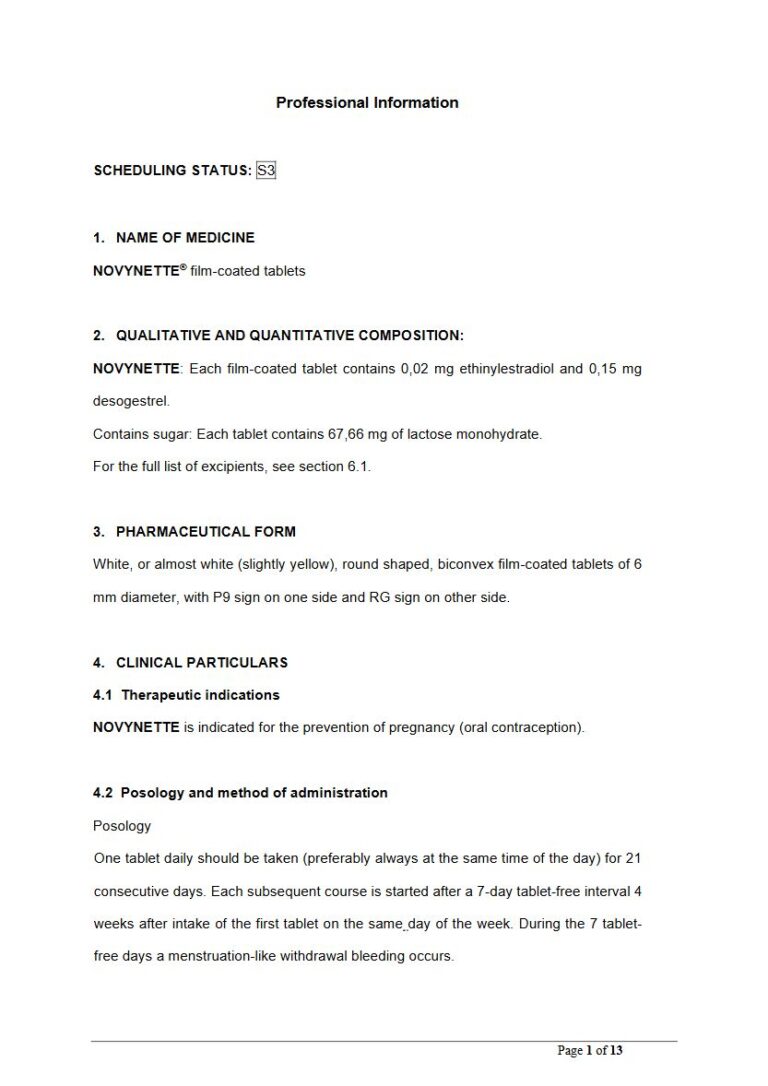
4.1 Therapeutic indications
NOVYNETTE is indicated for the prevention of pregnancy (oral contraception).
4.2 Posology and method of administration
Posology One tablet daily should be taken (preferably always at the same time of the day) for 21 consecutive days. Each subsequent course is started after a 7-day tablet-free interval 4 weeks after intake of the first tablet on the same day of the week. During the 7 tablet-free days a menstruation-like withdrawal bleeding occurs.
Taking NOVYNETTE for the first time The first tablet should be started on the first day of the menstrual cycle. Changing from another combined oral contraceptive The first tablet of NOVYNETTE should be taken on the first day of the withdrawal bleeding after the end of the previous oral contraceptive course. Changing from a Progestogen-only-Pill (POP) or mini-pill, injection, implant From mini-pills it can be changed to NOVYNETTE on any day of the menstrual cycle, from implant on the day after its removal, from injection when the next one ought to be given. In these cases additional contraceptive precautions are required for the first 7 days of tablet taking. After abortion in the 1st trimester After abortion in the 1st trimester oral contraception may be started immediately. Additional contraceptive precautions are not required. After delivery or abortion in the 2nd trimester Oral contraception can be started by non-lactating women 21-28 days after a vaginal delivery or abortion in the 2nd trimester. If oral contraception is started later, one of the barrier methods as additional contraceptive precaution is also required for the first 7 days. For use in lactation - see section 4.6. If intercourse has already taken place, pregnancy should be excluded before tablet intake is started, or it should be delayed until the first menstrual bleeding. Forgotten tablets If a tablet is delayed it should be taken as soon as possible and if it is taken within 12 hours of the correct time, contraceptive protection is not reduced and additional contraceptive precautions are not required. Further tablets should then be taken at the usual time. If the delay exceeds 12 hours, contraceptive protection can be reduced. In this case the user should not take the forgotten tablet(s), but continue to take the tablets at the usual time. Additional contraceptive precautions are required for the next 7 days of tablet taking. If these seven days run beyond the end of the present pack, the next pack should be started at once without leaving a gap between the packs. This means that menstruation-like withdrawal bleeding will not occur until the end of the second pack, but spotting and break-through bleeding may occur on tablet taking days. If no withdrawal bleeding occurs after finishing the second pack, the possibility of pregnancy should be excluded before continuing tablet intake from the next pack. Measures to be taken in case of vomiting If vomiting occurs within 3-4 hours after tablet intake, the tablet may not be absorbed completely. In this case the precautions concerning forgotten tablets as described above should be applied. If the woman does not want to change her usual tablet intake, she has to take the necessary extra tablet(s) from another pack. Inducing or postponing a period In order to induce the menstrual bleeding on an earlier day of the week than the usual with the present tablet intake, it is advised to shorten the forthcoming tablet-free interval by the desired number of days. The shorter the interval, the higher the risk that withdrawal bleeding will not occur, and break-through bleeding or spotting will be experienced while taking the tablets from the second pack (like in case of postponement of menstrual bleeding). In order to postpone the menstrual bleeding, a new pack of NOVYNETTE should be started on the day after finishing the current pack, without leaving a gap between them. Postponement of menstrual bleeding may continue as long as required until the end of the second pack. During the use of the second pack break-through bleeding or spotting may occur. Regular intake of NOVYNETTE can be restored after the usual 7 tablet-free days.
Method of administration For oral administration.
4.3 Contraindications
- Hypersensitivity to any of the components of NOVYNETTE.
- Pregnancy, known or suspected.
- Acute or chronic liver impairment, current or previous history of liver tumours, recurrent cholestatic jaundice or severe pruritis during a previous pregnancy.
- Current or previous history of known or suspected sex steroid dependent neoplasias (e.g. existing or treated breast cancer or cancer of the endometrium).
- Vaginal bleeding of unknown origin.
- Current or previous history of arterial or venous thrombotic or embolic processes and conditions which predispose to them (e.g. coagulation defects, myocardial infarction, cerebrovascular insufficiency, angina pectoris, hypertension, severe migraine).
- Disorders in lipid metabolism.
- Sickle cell anaemia.
- Diabetes mellitus with vascular complications.
- History of herpes gestationis.
- Deterioration of otosclerosis during pregnancy.
- Depression not well controlled with treatment.
- A history of depression with the use of hormonal contraceptives.
4.4 Special warnings and precautions for use
Circulatory disorders The use of NOVYNETTE and other combined oral contraceptives may be associated with an increased risk of venous and arterial thrombotic and thromboembolic diseases e.g. myocardial infarction, deep venous thrombosis, pulmonary embolism and stroke (ischaemic and haemorrhagic). Thrombosis has been reported to occur in other blood vessels, e.g. mesenteric, hepatic, renal or retinal veins and arteries. The use of NOVYNETTE should be stopped immediately if symptoms indicating the development of thrombosis appear. Symptoms of venous or arterial thrombosis can include: unilateral leg pain and/or swelling, sudden severe chest pain, which may reach to the left arm, sudden shortness of breath, sudden onset of coughing, any unusual, severe, prolonged headache, sudden partial or complete loss of vision, diplopia, slurred speech or aphasia, vertigo, collapse with or without focal seizure, weakness or very marked numbness suddenly affecting one side or one part of the body, motor disturbances. The risk is higher with age, amongst smokers (especially in women over the age of 35) with other underlying risk factors of coronary disorders, e.g. hypertension, valvular heart disease, atrial fibrillation, hypercholesterolaemia, pathological obesity and diabetes mellitus, systemic lupus erythematosus, haemolytic uraemic syndrome, chronic inflammatory bowel disease (Crohnu2019s disease), sickle cell disease, prolonged immobilisation, major surgery, surgery to the legs or major trauma. In these cases it is advisable to discontinue the use of NOVYNETTE (4 weeks prior in the case of elective surgery) and not resume until two weeks after complete remobilisation.
Tumours An increased risk of cervical cancer has been reported in long-term users of combined oral contraceptives. The relative risk of breast cancer is slightly higher in women taking combined oral contraceptives. Benign hepatic adenomas and rarely malignant hepatic tumours are related to the use of contraceptive pills.
Other conditions u2022 Occurrence of retinal thrombosis during the use of contraceptive pills has rarely been reported. NOVYNETTE should be discontinued if inexplicable partial or complete loss of vision, appearance of exophthalmus or diplopia, papilloedema or retinal vascular injuries occurs. u2022 Increases in blood pressure may occur. Where hypertension is clinically significant, NOVYNETTE should be withdrawn and the hypertension should be treated. NOVYNETTE can be resumed once the blood pressure has been stabilised to normal values. u2022 Should acute or chronic disturbances of hepatic function occur, it may be necessary to discontinue NOVYNETTE until liver function markers return to normal values. Recurrence of cholestatic jaundice which occurred first during pregnancy or previous use of sex hormones may require that NOVYNETTE be discontinued. u2022 Conditions e.g. jaundice and/or pruritus related to cholestasis, gallstone formation, porphyria, systemic lupus erythematosus, haemolytic uraemic syndrome, Sydenhamu2019s chorea, herpes gestationis and otosclerosis - related hearing loss may occur or deteriorate during the use of NOVYNETTE. u2022 Ulcerative colitis and Crohnu2019s disease have been associated with the use of combined oral contraceptives. u2022 Asthma may be worsened in women using combined oral contraceptives. u2022 In women with a history of chloasma gravidarum, chloasma may occur occasionally. Women with this tendency should avoid ultraviolet radiation and exposure to the sun. u2022 Occurrence or worsening of migraine or development of headache with a new pattern, which is recurrent, constant or serious, requires discontinuation of NOVYNETTE. u2022 NOVYNETTE should be stopped immediately in case of itching of the whole body or epileptic seizures.
Effects on carbohydrate and lipid metabolism u2022 Combined oral contraceptives may have an effect on peripheral insulin resistance and glucose tolerance. Although there is no evidence for dosage adjustments in diabetics, diabetic women should be closely monitored when taking combined oral contraceptives. u2022 Women with hypertriglyceridaemia, or a family history thereof, may be at an increased risk of pancreatitis when using NOVYNETTE. Bleeding disturbances u2022 Irregular bleeding (spotting or break-through bleeding) may occur during tablet taking, especially during the first three months. If irregular uterine bleeding is persistent or it occurs after regular menstrual cycles have developed, treatment should be stopped and the cause of the bleeding ascertained. Women should be advised that oral contraceptives do not protect against HIV infections (AIDS) and other sexually transmissible diseases. The efficacy of combined oral contraceptives may be reduced in the event of missed tablets, vomiting or concomitant medication which may interact with combined oral contraceptives. Mood changes and depression are side effects reported with the use of hormonal contraceptives including NOVYNETTE. There is some evidence that hormonal contraceptive use may be associated with severe depression and a higher risk of suicidal thoughts/behavior (e.g. talking about suicide, withdrawing from social contact, having mood swings, being preoccupied with death or violence, feeling hopeless about a situation, increasing use of alcohol/drugs, doing self-destructive things, personality changes) and suicide. Prescribers should inform their patients to contact their doctor for advice if they experience mood changes and depression whilst on treatment with NOVYNETTE. Contains lactose. Patients with the rare hereditary conditions of galactose intolerance e.g. galactosaemia, Lapp lactase deficiency, glucose-galactose malabsorption or fructose intolerance should not take NOVYNETTE.
4.5 Interaction with other medicines and other forms of interaction
Interaction with other medicines Reduced contraceptive protection and an increased incidence of break-through bleeding and bleeding disturbances have been related with the concomitant use of rifampicin. It is advisable that non-hormonal methods of contraception (condoms and spermicides) in addition to the oral contraceptive be used (for duration of treatment and for 7 days afterwards) with the concurrent use of NOVYNETTE and barbiturates, phenylbutazone, phenytoin, griseofulvin, ampicillin and tetracyclines. Interaction during metabolism Interaction may occur with medicines inducing microsomal enzymes thus reducing ethinylestradiol concentrations (e.g. rifampicin, barbiturates, phenylbutazone, phenytoin, griseofulvin, topiramate). Interaction may also occur with medicines inhibiting microsomal enzymes (e.g. itraconazole, fluconazole), thus increasing ethinylestradiol concentrations. The herbal preparation St. Johnu2019s Wort should not be taken concomitantly with NOVYNETTE as this can decrease the contraceptive effect of NOVYNETTE. Effect on enterohepatic circulation Some clinical reports indicate that enterohepatic circulation of oestrogen may be reduced by certain antibiotics, which may reduce ethinylestradiol concentrations (e.g. ampicillin, tetracycline).
Changes in laboratory tests The use of NOVYNETTE may influence the results of certain laboratory tests e.g. the liver, thyroid, adrenal and renal functions, plasma levels of lipoproteins and carrier proteins, parameters of carbohydrate metabolism, coagulation and fibrinolysis. Changes generally remain within the normal laboratory range.
4.6 Fertility, pregnancy and lactation
NOVYNETTE is contra-indicated during pregnancy. Oral contraceptives may reduce the production of breast milk and their use is not advised during breast-feeding.
4.7 Effects on ability to drive and use machines
NOVYNETTE can cause dizziness and visual disturbances, which may impair the ability to drive or operate machines.
4.8 Undesirable effects
MedDRA System Organ Class Frequency Frequent Less frequent Frequency unknown Gastrointestinal disorders Abdominal pain, cramping or bloating, constipation, dyspepsia, flatulence, nausea. Mild diarrhoea, gastroenteritis, vomiting. Reproductive system and breast disorders Breast pain or tenderness, enlargement of breasts, dysmenorrhoea, leucorrhoea, vaginitis and fungal vaginosis. Amenorrhea, break-through bleeding, menorrhagia, spotting, vaginal haemorrhage, candidal infection, dyspareunia, decreased / increased libido, vaginal discharge. Fibrocystic breast changes, change in cervical ectropion / secretion, galactorrhoea, premenstrual like syndrome. Neoplasms benign and malignant Cysts Breast tumours Increase in size of uterine leiomyomata, endometrial hyperplasia or endometrial cancer, breast cancer, ovarian cancer. Blood and lymphatic system disorders Hypertension Haemorrhagic eruption, stroke, thromboembolic disorders, thrombophlebitis, venous thrombosis, aggravation of porphyria. Immune system disorders Hypersensitivity reactions. Erythema multiforme, exacerbation of lupus erythematosus. Endocrine disorders Hirsutism Metabolism and nutritional disorders Anorexia, weight increase. Sodium retention, changes in appetite, reduced glucose tolerance, increased blood sugar levels, increased triglycerides, weight decrease. Psychiatric disorders Anxiety, depression Emotional disturbance. Dementia Nervous system disorders Exacerbation of epilepsy, asthenia, mild dizziness, insomnia, headache, migraine. Hypoesthesia Neuritis, chorea, irritability, nervousness. Eye disorders Intolerance to contact lenses. Neuro-ocular lesions including optic neuritis or thrombosis, steepening of corneal curvature, visual disturbances. Cardiac disorders Peripheral oedema Myocardial infarction, coronary thrombosis, palpitations. Respiratory, thoracic and mediastinal disorders Bronchitis, nasopharyngitis, pharyngitis, rhinitis, sinus congestion, sinusitis, upper respiratory tract infection. Pleural infection, increased cough, nasal congestion. Exacerbation of asthma, pulmonary embolism. Hepato-biliary disorders Gallbladder obstruction, hepatitis, pancreatitis. Cholestatic jaundice, enlargement of hepatic haemangioma, asymptomatic impaired liver function. Skin and subcutaneous tissue disorders Pruritus, rash, skin irritation and redness. Acne Erythema nodosum, chloasma or melasma, loss of hair. Musculoskeletal, connective tissue and bone disorders Muscle spasms or cramps, osteoarthritis. Leg cramps Renal and urinary disorders Fluid retention, urinary tract infection. Bladder infection, dysuria. Cystitis Other Back pain, flu syndrome, neck pain, pain. Chest pain, fatigue and candidiasis.
Post marketing reported side effects The following side effects have been reported with the post marketing use of hormonal contraceptives: Severe depression with a higher risk of suicidal thoughts/behaviour and suicide.
4.9 Overdose
See section 4.8 There is no known antidote and treatment should be symptomatic and supportive.
