
Contrave 8 mg/90 mg Prolonged-release tablet.
PDF Leaflet Revision Date: 25 April 2023
Clinical Summary
Quick overview from the medicine insert
Indication
Management of weight in adults with obesity or overweight with comorbidities.
Dosage (summary)
Initial dose escalated over 4 weeks; max 32 mg naltrexone/360 mg bupropion daily.
Special Populations
- Elderly patients
- Renal impairment
- Hepatic impairment
Pregnancy & Breastfeeding
Not recommended during pregnancy or breastfeeding due to unknown risks.
Key Drug Interactions
- Monoamine oxidase inhibitors (MAOI)
- Opioid analgesics
- CYP2D6 substrates
Contraindications
- Hypersensitivity
- Uncontrolled hypertension
- Seizure disorder
- CNS tumors
- Acute alcohol withdrawal
- Bipolar disorder
- Eating disorders
- Chronic opioid dependence
Common side effects
- Nausea
- Constipation
- Dizziness
- Dry mouth
- Headache
Counselling Points
- Monitor for mood changes or suicidal thoughts.
- Avoid alcohol consumption.
- Take with food to enhance absorption.
Serious warnings
- Risk of seizures
- Suicidal behavior
- Increased blood pressure
- Hepatotoxicity
Important Disclaimer
The Contrave 8 mg/90 mg Prolonged-release tablet. professional information leaflet below is the property of Acino Pharma and is provided on Medinsert exactly as issued, with no.. alterations or editorial changes. We make every effort to keep content current by updating documents as soon as new versions become available. Medinsert serves as a trusted access point for healthcare professionals, but does not replace official sources or clinical judgement. For more details, please read our full disclaimer. read more>>
 Healthcare Professionals Only
This content is for registered healthcare professionals
Sign in or create a free account to read the full package insert.
Free for HPCSA-registered professionals. Powered by Medinsert.
Clinical Particulars
Section 4 of the official insert — extracted exactly as issued, no alterations
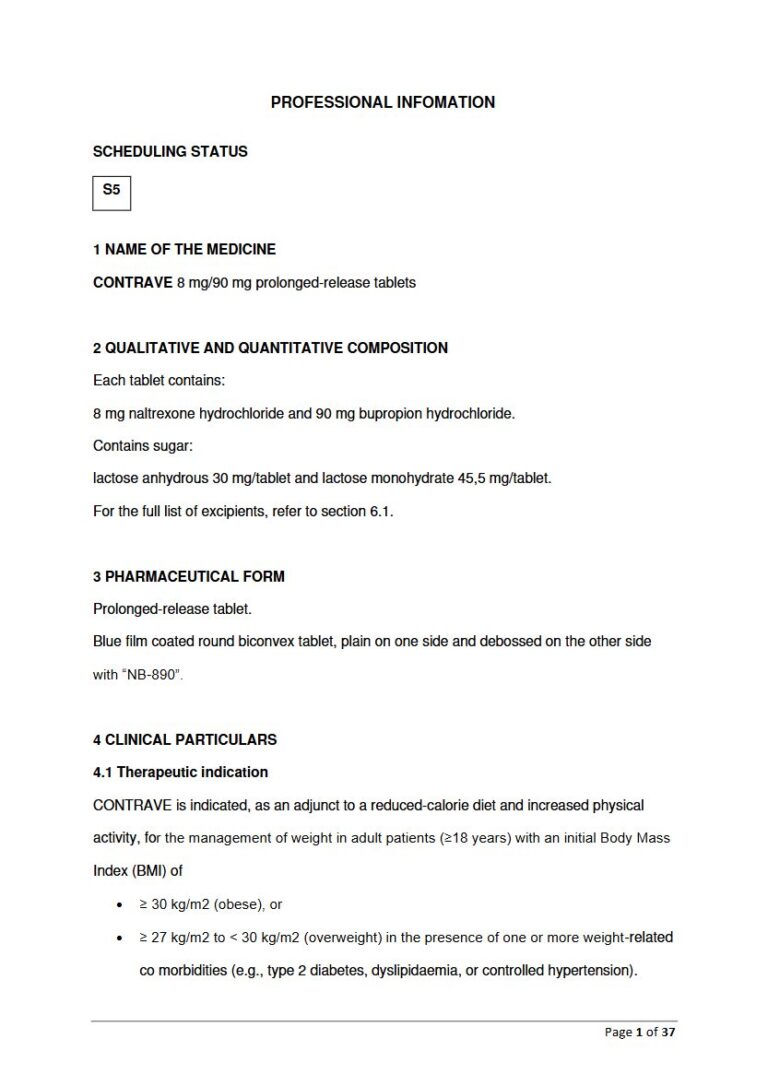
4.1 Therapeutic indication
CONTRAVE is indicated, as an adjunct to a reduced-calorie diet and increased physical activity, for the management of weight in adult patients (u226518 years) with an initial Body Mass Index (BMI) of
- u2265 30 kg/m2 (obese), or
- u2265 27 kg/m2 to < 30 kg/m2 (overweight) in the presence of one or more weight-related comorbidities (e.g., type 2 diabetes, dyslipidaemia, or controlled hypertension).
Treatment with CONTRAVE should be discontinued after 16 weeks if patients have not lost at least 5% of their initial body weight (see Section 5.1).
4.2 Posology and method of administration
Posology
Adults
Upon initiating treatment, the dose should be escalated over a 4 week period as follows:
- Week 1: One tablet in the morning.
- Week 2: One tablet in the morning and one tablet in the evening.
- Week 3: Two tablets in the morning and one tablet in the evening.
- Week 4 and onwards: Two tablets in the morning and two tablets in the evening.
The maximum recommended daily dose of CONTRAVE is two tablets taken twice daily for a total dose of 32 mg naltrexone hydrochloride and 360 mg bupropion hydrochloride. The need for continued treatment should be evaluated after 16 weeks (see section 4.1) and re-evaluated annually. If a dose is missed, patients should not take an additional dose, but take the prescribed next dose at the usual time.
Special populations
Elderly patients (over 65 years)
CONTRAVE should be used with caution in patients over 65 years of age and is not recommended in patients over 75 years of age (see sections 4.4, 4.8 and 5.2).
Patients with renal impairment
CONTRAVE is contraindicated in patients with end-stage renal failure (see section 4.3). In patients with moderate or severe renal impairment, the maximum recommended daily dose for CONTRAVE is two tablets (one tablet in the morning and one tablet in the evening) (see sections 4.4, 4.8 and 5.2). Dose reduction is not necessary in patients with mild renal impairment. For individuals who are at elevated risk for renal impairment, in particular patients with diabetes or elderly individuals, estimated glomerular filtration rate (eGFR) should be assessed prior to initiating therapy with CONTRAVE.
Patients with hepatic impairment
CONTRAVE is contraindicated in patients with severe hepatic impairment (see sections 4.3, 4.4 and 5.2). CONTRAVE is not recommended in patients with mild or moderate hepatic impairment.
Paediatric population
The safety and efficacy of CONTRAVE in children and adolescents below 18 have not yet been established. Therefore, CONTRAVE should not be used in children and adolescents below 18 (see section 4.3).
Method of administration
Oral use. The tablets should be swallowed whole with some water. The tablets should preferably be taken with food (see section 5.2). The tablets should not be cut, chewed, or crushed.
4.3 Contraindications
- Hypersensitivity to the active substance(s) or to any of the excipients listed in section 6.1;
- Patients with uncontrolled hypertension (see section 4.4);
- Patients with a current seizure disorder or a history of seizures (see section 4.4);
- Patients with a known central nervous system tumour;
- Patients undergoing acute alcohol or benzodiazepine withdrawal;
- Patients with a history of bipolar disorder;
- Patients receiving any concomitant treatment containing bupropion or naltrexone;
- Patients with a current or previous diagnosis of bulimia or anorexia nervosa;
- Patients currently dependent on chronic opioids (see sections 4.4 and 4.5) or opiate agonists (e.g., methadone), or patients in acute opiate withdrawal;
- Patients receiving concomitant administration of monoamine oxidase inhibitors (MAOI). At least 14 days should elapse between discontinuation of MAOI and initiation of treatment with CONTRAVE (see section 4.5);
- Patients with severe hepatic impairment (see sections 4.2 and 5.2);
- Patients with end-stage renal failure (see sections 4.2 and 5.2);
- Children under 18 years of age.
4.4 Special warnings and precautions for use
The safety and tolerability of CONTRAVE should be assessed at regular intervals. The treatment should be discontinued if there are concerns with the safety or tolerability of ongoing treatment, including concerns about increased blood pressure (see Section 4.8).
Suicide and suicidal behaviour
CONTRAVE contains bupropion. A meta analysis of placebo controlled clinical trials of antidepressants in adult subjects with psychiatric disorders showed an increased risk of suicidal behaviour with antidepressants compared to placebo in subjects less than 25 years old. Although in placebo controlled clinical trials with CONTRAVE for the treatment of obesity in adult subjects, no suicides or suicide attempts were reported in studies up to 56 weeks duration with CONTRAVE, suicidality events (including suicidal ideation) have been reported in subjects of all ages treated with naltrexone or bupropion post-marketing. Close supervision of patients, particularly those at high risk, should accompany therapy with CONTRAVE especially in early treatment and following dose changes. Patients (and caregivers of patients) should be alerted about the need to monitor for any clinical worsening, suicidal behaviour or thoughts and unusual changes in behaviour and to seek medical advice immediately if these symptoms present.
Seizures
Bupropion is associated with a dose related risk of seizures, with bupropion sustained release (SR) 300 mg yielding an estimated seizure incidence of 0,1 %. Plasma concentrations of bupropion and metabolites of bupropion following single dose administration of 180 mg of bupropion as CONTRAVE tablets are comparable to concentrations observed after single dose administration of bupropion SR 150 mg; however, no study has been conducted that determined the concentrations of bupropion and metabolites of bupropion after repeated dosing of CONTRAVE tablets compared to bupropion SR tablets. As it is unknown whether the risk for seizure with bupropion is related to bupropion or a metabolite of bupropion, and there are no data demonstrating comparability of plasma concentrations with repeated dosing, there is uncertainty whether repeated dose administration CONTRAVE may be associated with a similar rate of seizures as bupropion SR 300 mg. The incidence of seizure in subjects receiving CONTRAVE in clinical trials was approximately 0,06% (2/3239 subjects) vs. 0,0 % (0/1515 subjects) on placebo. This incidence of seizure, along with incidence of seizure in subjects who received CONTRAVE in a large cardiovascular outcome trial (CVOT), was no higher than the seizure rate with bupropion as a single agent at approved doses. The risk of seizures is also related to patient factors, clinical situations, and concomitant medicinal products, which must be considered in the selection of patients treated with CONTRAVE. CONTRAVE should be discontinued and not restarted in patients who experience a seizure while being treated with the medicinal product. Caution should be used when prescribing CONTRAVE to patients with predisposing factors that may increase the risk of seizure including:
- history of head trauma;
- excessive use of alcohol or addiction to cocaine or stimulants;
- as treatment with CONTRAVE may result in lowered glucose in patients with diabetes, the dose of insulin and/or oral diabetic medicinal products should be assessed to minimise the risk of hypoglycaemia, which could predispose patients to seizure;
- concomitant administration of medicinal products that may lower the seizure threshold, including antipsychotics, antidepressants, antimalarials, tramadol, theophylline, systemic steroids, quinolones and sedating antihistamines.
CONTRAVE is contraindicated in patients with central nervous system tumour, severe hepatic impairment, current or previous diagnosis of bulimia or anorexia nervosa, or withdrawal from sedatives (see section 4.3).
The consumption of alcohol during CONTRAVE treatment should be minimised or avoided.
Patients receiving opioid analgesics
CONTRAVE must not be administered to patients receiving chronic opiate therapy (see section 4.3). If chronic opiate therapy is required, CONTRAVE treatment must be stopped. In patients requiring intermittent opiate treatment, CONTRAVE therapy should be temporarily discontinued, and opiate dose should not be increased above the standard dose. During CONTRAVE clinical studies, the use of concomitant opioid or opioid like medicinal products, including analgesics or antitussives were excluded. However, approximately 12 % of subjects took a concomitant opioid or opioid like medicinal product while enrolled in the CONTRAVE clinical studies, the majority of whom continued study treatment without interruption of CONTRAVE dose, without untoward consequences.
Attempt to overcome blockade: The attempt to overcome any naltrexone opioid blockade by administering large amounts of exogenous opioids is very dangerous and may lead to a fatal overdose or life endangering opioid intoxication (e.g., respiratory arrest, circulatory collapse). Patients should be aware that they may be more sensitive to lower doses of opioids after treatment with CONTRAVE is discontinued.
Allergic reactions
Anaphylactoid/anaphylactic reactions characterized by symptoms such as pruritus, urticaria, angioedema, and dyspnoea requiring medical treatment have been reported in clinical trials with bupropion. In addition, there have been rare spontaneous post-marketing reports of erythema multiforme, Stevens Johnson syndrome, and anaphylactic shock associated with bupropion. A patient should stop taking CONTRAVE and consult a doctor if experiencing allergic or anaphylactoid/anaphylactic reactions (e.g., skin rash, pruritus, hives, chest pain, oedema, and shortness of breath) during treatment.
Arthralgia, myalgia, and fever with rash and other symptoms suggestive of delayed hypersensitivity have been reported in association with bupropion. These symptoms may resemble serum sickness. Patients should be advised to notify their prescribing physician if they experience these symptoms. If serum sickness is suspected, CONTRAVE should be discontinued.
Elevation of blood pressure
Early, transient mean increases from baseline in systolic and diastolic blood pressure of up to 1 mmHg were observed in CONTRAVE Phase 3 clinical trials. In a cardiovascular outcome trial (CVOT) of patients at increased risk of a cardiovascular event, mean increases from baseline in systolic and diastolic blood pressure of approximately 1 mmHg compared to placebo were also observed. In clinical practice with other bupropion containing products, hypertension, in some cases severe and requiring acute treatment, has been reported. Blood pressure and pulse should be measured prior to initiation of therapy with CONTRAVE and should be assessed at regular intervals consistent with usual clinical practice. If patients experience clinically relevant and sustained increases in blood pressure or pulse rate as a result of CONTRAVE treatment, it should be discontinued. CONTRAVE should be given with caution to those patients with controlled hypertension and must not be given to patients with uncontrolled hypertension (see section 4.3).
Cardiovascular disease
There is no clinical experience establishing the safety of CONTRAVE in patients with a recent history of myocardial infarction, unstable heart disease or NYHA class III or IV congestive heart failure. CONTRAVE should be used with caution in patients with active coronary artery disease (e.g., ongoing angina or recent history of myocardial infarction) or history of cerebrovascular disease.
Brugada syndrome
Bupropion may unmask Brugada syndrome, a rare hereditary disease of the cardiac sodium channel with characteristic ECG changes (right bundle branch block and ST segment elevation in right precordial leads), which may lead to cardiac arrest or sudden death. Caution is advised in patients with Brugada syndrome or a family history of cardiac arrest or sudden death.
Hepatotoxicity
In CONTRAVE completed clinical studies, where naltrexone hydrochloride daily doses ranged from 16 mg to 48 mg, drug-induced liver injury (DILI) was reported. There have also been cases of elevated liver enzymes from post-marketing reporting. A patient with suspected DILI should stop taking CONTRAVE.
Elderly patients
Clinical studies of CONTRAVE did not include sufficient numbers of subjects aged 65 and over to determine whether they respond differently than younger subjects. Elderly patients may be more sensitive to the central nervous system adverse reactions of CONTRAVE. Naltrexone and bupropion are known to be substantially excreted by the kidney, and the risk of adverse reactions to CONTRAVE may be greater in patients with impaired renal function, a condition that is more common in elderly individuals. Due to these reasons, CONTRAVE should be used with caution in patients over 65 years of age and is not recommended in patients over 75 years of age.
Renal impairment
CONTRAVE has not been extensively evaluated in subjects with renal insufficiency. CONTRAVE is contraindicated in patients with end stage renal failure. In patients with moderate or severe renal impairment, the maximum recommended daily dose for CONTRAVE should be reduced, as these patients may have higher drug concentrations which could result in an increase in adverse drug reactions (see sections 4.2, 4.8, and 5.2). For individuals who are at elevated risk for renal impairment, in particular, individuals with diabetes or elderly individuals, estimated glomerular filtration rate (eGFR) should be assessed prior to initiating therapy with CONTRAVE.
Hepatic impairment
CONTRAVE has not been evaluated in subjects with hepatic impairment. CONTRAVE is contraindicated in patients with severe hepatic impairment, and not recommended in patients with mild or moderate hepatic impairment (see sections 4.2, 4.8, and 5.2). In patients with mild hepatic impairment, the maximum recommended daily dose for CONTRAVE should be reduced, as these patients may have higher drug concentrations which could result in an increase in adverse drug reactions (see sections 4.2 and 5.2).
Serotonin Syndrome
There have been post-marketing reports of serotonin syndrome, a potentially life-threatening condition, when naltrexone/bupropion was co-administered with a serotonergic agent, such as Selective Serotonin Reuptake Inhibitors (SSRIs) or Serotonin Norepinephrine Re-uptake Inhibitors (SNRIs) (see section 4.5 and 4.8). If concomitant treatment with other serotonergic agents is clinically warranted, careful observation of the patient is advised, particularly during treatment initiation and dose increases. Serotonin syndrome may include mental-status changes (e.g. agitation, hallucinations, coma), autonomic instability (e.g. tachycardia, labile blood pressure, hyperthermia), neuromuscular abnormalities (e.g. hyperreflexia, incoordination, rigidity), and/or gastrointestinal symptoms (e.g nausea, vomiting, diarrhoea). If serotonin syndrome is suspected, a discontinuation of therapy should be considered.
Neuropsychiatric symptoms and activation of mania
Activation of mania and hypomania have been reported in patients with mood disorders who were treated with other similar medicinal products for major depressive disorder. No activation of mania or hypomania was reported in the clinical trials evaluating effects of CONTRAVE in obese subjects, which excluded subjects receiving antidepressants. CONTRAVE should be used cautiously in patients with a history of mania. Panic attacks, particularly in patients with a history of psychiatric disorders, have been reported with naletrexone/bupropion. The cases occurred mostly during the initial titration phase and following dose changes. Naltrexone/bupropion should be used with caution in patients with a history of psychiatric disorders. Data in animals suggest a potential for abuse of bupropion. However, studies on abuse liability in humans and extensive clinical experience show that bupropion has low abuse potential.
4.5 Interaction with other medicinal products and other forms of interaction
Monoamine oxidase inhibitors (MAOI)
Since monoamine oxidase A and B inhibitors also enhance the catecholaminergic pathways, by a different mechanism from bupropion, CONTRAVE must not be used with MAOI (see section 4.3).
Opioid analgesics
CONTRAVE is contraindicated in patients currently dependent on chronic opioid or opiate agonist therapy (e.g., methadone), or patients in acute opiate withdrawal (see section 4.3). Due to the antagonistic effect of naltrexone at the opioid receptor, patients taking CONTRAVE may not fully benefit from treatment with opioid containing medicinal products, such as cough and cold remedies, antidiarrhoeal preparations and opioid analgesics. In patients requiring intermittent opiate treatment, CONTRAVE therapy should be temporarily discontinued and opiate dose should not be increased above the standard dose (see section 4.4). If chronic opiate therapy is required, CONTRAVE treatment must be stopped. CONTRAVE may be used with caution after chronic opioid use has been stopped for 7 to 10 days in order to prevent precipitation of withdrawal.
Drugs metabolised by cytochrome P450 (CYP) enzymes
Bupropion is metabolised to its major active metabolite hydroxybupropion primarily by the cytochrome P450 CYP2B6; thus, the potential exists for interaction when administered with medicinal products that induce or inhibit CYP2B6. Although not metabolised by the CYP2D6 isoenzyme, bupropion and its main metabolite, hydroxybupropion, inhibit the CYP2D6 pathway and the potential exists to affect medicinal products metabolised by CYP2D6.
CYP2D6 substrates
In a clinical study, CONTRAVE (32 mg naltrexone hydrochloride /360 mg bupropion hydrochloride daily) was co administered with a 50 mg dose of metoprolol (a CYP2D6 substrate). CONTRAVE increased metoprolol AUC and Cmax by approximately 4 and 2-fold, respectively, relative to metoprolol alone. Similar clinical drug interactions resulting in increased pharmacokinetic exposure of CYP2D6 substrates have also been observed with bupropion as a single medicinal product with desipramine and venlafaxine. Co administration of bupropion with drugs that are metabolised by CYP2D6 isozyme including certain antidepressants (SSRIs and many tricyclic antidepressants, e.g. desipramine, imipramine, paroxetine), antipsychotics (e.g., haloperidol, risperidone and thioridazine), beta blockers (e.g., metoprolol) and Type 1C antiarrhythmics (e.g., propafenone and flecainide), should be approached with caution and should be initiated at the lower end of the dose range of the concomitant medicinal product. Although citalopram is not primarily metabolised by CYP2D6, in one study, bupropion increased the Cmax and AUC of citalopram by 30 % and 40 %, respectively.
There have been post-marketing reports of serotonin syndrome, a potentially life-threatening condition, when naltrexone/bupropion was co-administered with a serotonergic agent, such as Selective Serotonin Reuptake Inhibitors (SSRI) or Serotonin Norepinephrine Re-uptake Inhibitors (SNRIs) (see section 4.4 and 4.8). Drugs which require metabolic activation by CYP2D6 in order to be effective (e.g., tamoxifen), may have reduced efficacy when administered concomitantly with inhibitors of CYP2D6 such as bupropion. If CONTRAVE is added to the treatment regimen of a patient already receiving a drug metabolised by CYP2D6, the need to decrease the dose of the original medicinal product should be considered, particularly for those concomitant medicinal products with a narrow therapeutic index. When feasible, the option of therapeutic drug monitoring should be considered for medicinal products with a narrow therapeutic index, such as tricyclic antidepressants.
CYP2B6 inducers, inhibitors and substrates
Bupropion is metabolised to its major active metabolite hydroxybupropion primarily by the CYP2B6 isozyme. The potential exists for a drug interaction between CONTRAVE and drugs that induce or are substrates of the CYP2B6 isozyme. Since bupropion is extensively metabolised, caution is advised when CONTRAVE is co administered with medicinal products known to induce CYP2B6 (e.g., carbamazepine, phenytoin, ritonavir, efavirenz) as these may affect the clinical efficacy of CONTRAVE. In a series of studies in healthy volunteers, ritonavir (100 mg twice daily or 600 mg twice daily) or ritonavir 100 mg plus lopinavir 400 mg twice daily reduced the exposure of bupropion and its major metabolites in a dose dependent manner by 20 to 80%. Similarly, efavirenz 600 mg once daily for two weeks reduced the exposure of bupropion by approximately 55% in healthy volunteers. Co administration of medicinal products that may inhibit the metabolism of bupropion via CYP2B6 isoenzyme (e.g., CYP2B6 substrates: cyclophosphamide, ifosfamide, and CYP2B6 inhibitors: orphenadrine, ticlopidine, clopidogrel), may result in increased bupropion plasma levels and lower levels of active metabolite hydroxybupropion. The clinical consequences of the inhibition of the metabolism of bupropion via CYP2B6 enzyme and the consequent changes in the bupropion hydroxybupropion ratio are currently unknown, but could potentially lead to reduced efficacy of naltrexone / bupropion.
OCT2 substrates
Bupropion and its metabolites competitively inhibit the OCT2 in the basolateral membrane of the renal tubule responsible for creatinine secretion, in a manner similar to the OCT2 substrate cimetidine. Therefore, mild increases in creatinine observed after long term treatment with CONTRAVE are likely due to inhibition of OCT2 and not indicative of changes in creatinine clearance. Use of CONTRAVE with other OCT2 substrates (e.g., metformin) in clinical trials did not indicate the need for dose adjustment or other precautions.
Other interactions
Although clinical data do not identify a pharmacokinetic interaction between bupropion and alcohol, there have been rare reports of adverse neuropsychiatric events or reduced alcohol tolerance in patients drinking alcohol during bupropion treatment. There are no known pharmacokinetic interactions between naltrexone and alcohol. The consumption of alcohol during CONTRAVE treatment should be minimised or avoided.
Caution should be used when prescribing CONTRAVE to patients with predisposing factors that may increase the risk of seizure including:
- as treatment with CONTRAVE may result in lowered glucose in patients with diabetes, the dose of insulin and/or oral diabetic medicinal products should be assessed to minimise the risk of hypoglycaemia, which could predispose patients to seizure;
- concomitant administration of medicinal products that may lower the seizure threshold, including antipsychotics, antidepressants, antimalarials, tramadol, theophylline, systemic steroids, quinolones and sedating antihistamines.
CONTRAVE is contraindicated in patients receiving concomitant treatment with monoamine oxidase inhibitors, bupropion or naltrexone, patients undergoing acute alcohol or benzodiazepine withdrawal, patients currently dependent on chronic opioids, or opiate agonists (see Section 4.3). Administration of CONTRAVE to patients receiving either levodopa or amantadine concurrently should be undertaken with caution. Limited clinical data suggest a higher incidence of adverse reactions (e.g., nausea, vomiting, and neuropsychiatric adverse reactions u2013 see section 4.8) in patients receiving bupropion concurrently with either levodopa or amantadine. Administration of CONTRAVE with inhibitors or inducers of UGT 1A2 and 2B7 should be undertaken with caution as these may alter the exposure of naltrexone. Coadministration of naltrexone/bupropion with digoxin may decrease plasma digoxin levels. Monitor plasma digoxin levels in patients treated concomitantly with naltrexone/bupropion and digoxin. Clinicians should be aware that digoxin levels may rise on discontinuation of naltrexone/bupropion and the patient should be monitored for possible digoxin toxicity. CONTRAVE has not been studied in conjunction with alpha adrenergic blockers or clonidine. Since bupropion is extensively metabolised, caution is advised when CONTRAVE is co administered with medicinal products known to inhibit metabolism (e.g. valproate), as these may affect its clinical efficacy and safety. CONTRAVE should preferably be taken with food, as it is known that both naltrexone and bupropion plasma concentrations are increased with food and the safety and efficacy data from clinical trials is based on dosing with food.
4.6 Fertility, pregnancy and lactation
Pregnancy
There are no or limited amounts of data from the use CONTRAVE in pregnant women. The combination has not been tested in reproductive toxicity studies. Studies with naltrexone in animals have shown reproductive toxicity (see section 5.3); animal studies with bupropion show no clear evidence of reproductive harm. The potential risk for humans is unknown. CONTRAVE should not be used during pregnancy or in women currently attempting to become pregnant.
Breast feeding
Naltrexone and bupropion and their metabolites are excreted in human milk. Since there is limited information on the systemic exposure to naltrexone and bupropion in infants/newborns being breast fed, a risk to the newborns/infants cannot be excluded. CONTRAVE should not be used during breast feeding.
Fertility
There are no data on fertility from the combined use of naltrexone and bupropion. No effect on fertility in reproductive toxicity studies have been observed with bupropion. Naltrexone administered orally to rats caused a significant increase in pseudopregnancy and a decrease in pregnancy rates at approximately 30 times the naltrexone dose provided by CONTRAVE. The relevance of these observations to human fertility is not known (see section 5.3).
4.7 Effects on ability to drive and use machines
CONTRAVE has an influence on the ability to drive and use machines. When driving vehicles or using machines, it should be taken into account that dizziness, somnolence, loss of consciousness and seizure may occur during treatment. Patients should be cautioned about driving or operating hazardous machinery in case CONTRAVE may affect their ability to engage in such activities (see sections 4.4 and 4.8).
4.8 Undesirable effects
Summary of the safety profile
CONTRAVE was evaluated for safety in five double blind placebo controlled studies in 4754 overweight or obese subjects (3239 subjects treated with CONTRAVE and 1515 subjects treated with placebo) for a treatment period up to 56 weeks. In clinical studies, 23,8 % of subjects receiving CONTRAVE and 11,9 % of subjects receiving placebo discontinued treatment due to an adverse event. The most frequent adverse reactions for CONTRAVE are nausea, constipation, vomiting, dizziness, and dry mouth. The most frequent adverse reactions leading to discontinuation with CONTRAVE were nausea, headache, dizziness and vomiting.
Tabulated summary of adverse reactions
The safety profile of CONTRAVE (NB) presented below is based on clinical studies performed with the fixed dose combination (adverse reactions at an incidence of at least 0.1% and twice that of placebo) and/or post marketing data sources. Certain expected side effects. The frequencies of adverse reactions are ranked according to the following: Very common (u2265 1/10), Common (u2265 1/100 to < 1/10), Uncommon (u2265 1/1,000 to 1/10,000, < 1/1,000); very rare (< 1/10,000); not known (cannot be estimated from the available data).
4.9 Overdose
Human overdose experience
There is no clinical experience with overdose with combined use of bupropion and naltrexone. The maximum daily dose of combined use of bupropion and naltrexone administered in clinical trials contained 50 mg naltrexone hydrochloride and 400 mg bupropion hydrochloride. The most serious clinical implications of combined use of bupropion and naltrexone overdose are likely related to bupropion.
Bupropion
Acute ingestion of doses in excess of 10 times the maximum therapeutic dose of bupropion (equivalent to approximately in excess of 8 times the recommended daily dose of naltrexone / bupropion) has been reported. Seizure was reported in approximately one third of these overdose cases. Other serious reactions reported with overdoses of bupropion alone included hallucinations, loss of consciousness, sinus tachycardia, and ECG changes such as conduction disturbances (including QRS prolongation) or arrhythmias. Fever, muscle rigidity, rhabdomyolysis, hypotension, stupor, coma, and respiratory failure have been reported mainly when bupropion was part of multiple drug overdoses. Although most subjects recovered without sequelae, deaths associated with overdoses of bupropion alone have been reported in subjects ingesting large doses of the drug. Serotonin syndrome has also been reported.
Naltrexone
There is limited experience with overdose of naltrexone monotherapy in humans. In one study, subjects received 800 mg naltrexone hydrochloride daily (equivalent to 25 times the recommended daily dose CONTRAVE) for up to one week showing no evidence of toxicity.
Overdose management
An adequate airway, oxygenation, and ventilation should be ensured. Cardiac rhythm and vital signs should be monitored. EEG monitoring is also recommended for the first 48 hours post ingestion. General supportive and symptomatic measures are also recommended. Induction of emesis is not recommended. Activated charcoal should be administered. There is no experience with the use of forced diuresis, dialysis, hemoperfusion, or exchange transfusion in the management of combined use of bupropion and naltrexone overdoses. No specific antidotes for combined use of bupropion and naltrexone are known. Due to the dose related risk of seizures with bupropion, hospitalisation following suspected overdose with CONTRAVE should be considered. Based on studies in animals, it is recommended that seizures be treated with intravenous benzodiazepine administration and other supportive measures, as appropriate.
