
Acnetane 10 & 20 mg Capsules
Clinical Summary
Quick overview from the medicine insert
Indication
Severe acne vulgaris unresponsive to conventional therapy.
Dosage (summary)
Initial dose is typically 0.5 mg/kg/day, which may be adjusted based on response and tolerance. The total cumulative dose should be at least 120-150 mg/kg.
Onset of Action / Duration
Improvement may be seen within 4-6 weeks, with maximum effects typically observed after 16-24 weeks of treatment.
Special Populations
- Patients with hepatic impairment
- Patients with renal impairment
- Pediatric patients
- Elderly patients
Pregnancy & Breastfeeding
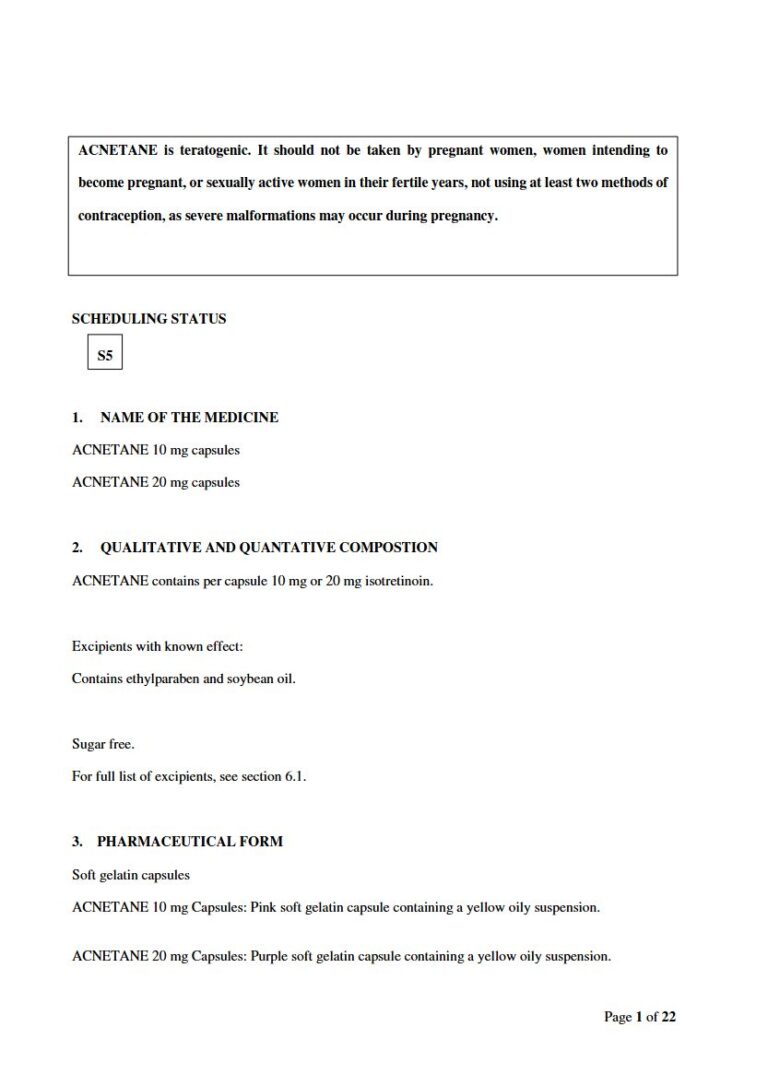
Isotretinoin is contraindicated in pregnancy due to high risk of teratogenic effects. Women of childbearing potential must use effective contraception during treatment and for at least one month after discontinuation. It is not recommended during lactation.
Key Drug Interactions
- Tetracyclines may increase the risk of intracranial hypertension.
- Vitamin A supplements may increase the risk of hypervitaminosis A.
- St. John's Wort may reduce the effectiveness of isotretinoin.
Contraindications
- Pregnancy
- Hypersensitivity to isotretinoin or any component of the formulation
- Severe hepatic impairment
- Hypervitaminosis A
Common side effects
- Dry skin and mucous membranes
- Chapped lips
- Nosebleeds
- Photosensitivity
- Muscle and joint pain
- Elevated liver enzymes
Counselling Points
- Advise patients to avoid sun exposure and use sunscreen.
- Instruct on the importance of adhering to contraception measures if of childbearing potential.
- Inform about potential side effects and the need for regular follow-up appointments.
- Encourage hydration and use of moisturizers to alleviate dryness.
Serious warnings
- Monitor for signs of depression or mood changes.
- Regular blood tests may be required to monitor liver function and lipid levels.
- Avoid donating blood during treatment and for at least one month after discontinuation.
Important Disclaimer
The Acnetane 10 & 20 mg Capsules professional information leaflet below is the property of Adcock Ingram and is provided on Medinsert exactly as issued, with no.. alterations or editorial changes. We make every effort to keep content current by updating documents as soon as new versions become available. Medinsert serves as a trusted access point for healthcare professionals, but does not replace official sources or clinical judgement. For more details, please read our full disclaimer. read more>>
 Healthcare Professionals Only
This content is for registered healthcare professionals
Sign in or create a free account to read the full package insert.
Free for HPCSA-registered professionals. Powered by Medinsert.
Clinical Particulars
Section 4 of the official insert — extracted exactly as issued, no alterations
4.1 Therapeutic indications
Severe recalcitrant nodular acne: ACNETANE is indicated for the treatment of severe recalcitrant nodular acne. Nodules are inflamed lesions with a diameter of 5 mm or greater. The nodules may become suppurative or haemorrhagic. u201cSevereu201d, by definition, means u201cmanyu201d as opposed to u201cfew or severalu201d nodules. Because of significant adverse effects associated with its use, ACNETANE should only be considered in patients with severe nodular acne who are unresponsive to conventional therapy, including systemic antibiotics. Many patients may experience complete and prolonged remission of disease after a single course of therapy. In patients who require a second course of therapy, at least 8 weeks should elapse after the first course is completed before reinitiating therapy. This is because improvement of the condition may continue even after termination of therapy.
4.2 Posology and method of administration
The initial diagnosis and prescription of ACNETANE should be performed by a dermatologist with expertise in the use of systemic retinoids for the treatment of severe acne and a full understanding of the risks of isotretinoin therapy and monitoring requirements. The therapeutic response to ACNETANE and its adverse events are dose-related, and vary between patients. This necessitates individual dosage adjustment during therapy.
Posology
Standard dosage
Therapy should be started at a dose of 0,5 mg/kg daily. For most patients the dose ranges from 0,5 - 1,0 mg/kg per day. Patients with very severe disease, or with truncal acne may require higher daily doses up to 2,0 mg/kg. A cumulative treatment dose of 120 - 150 mg/kg has been documented to increase remission rates and prevent relapse. The therapy duration in individual patients therefore varies as a function of the daily dose. Complete remission of the acne is often achieved by a therapy course of 16 - 24 weeks. In patients who show a severe intolerance to the recommended dose, treatment may be continued at a lower dose, with consequent increase in therapy duration. In the majority of patients, complete clearing of the acne is obtained with a single treatment course. In the case of a definite relapse, a renewed course of ACNETANE therapy should be given with the same daily dose as previously. Since further improvement of the acne can be observed up to 8 weeks after discontinuation of treatment, re-treatment should not be initiated until after this period.
Method of administration
The capsules should be taken with meals once or twice daily. Concurrent topical therapy: Concurrent administration of other keratolytic or exfoliative anti-acne agents is not indicated. Nor is concurrent radiation therapy with ultraviolet light indicated. Patients should avoid exposure to the sun. Adjuvant therapy with mild topical medicines may be given, as required.
4.3 Contraindications
Pregnancy and lactation: ACNETANE must not be used during breastfeeding, as isotretinoin is highly lipophilic and the passage of the drug in human milk is very likely. ACNETANE is contraindicated in pregnant women and those women who may become pregnant during treatment. It is also contraindicated in all women of childbearing potential, unless at least two reliable forms of contraception are being used simultaneously without any interruption for one month before initiation of treatment, during treatment and for at least one month after termination of therapy. This also applies to women with a history of infertility (except in the case of hysterectomy) or who claim sexual abstinence. Documented foetal malformations with ACNETANE use, include abnormalities of the external ear (micropinna, small or absent external auditory canals), microphthalmia, hydrocephalus, microcephalus, cardiovascular abnormalities, thymus gland abnormalities, facial dysmorphia, parathyroid gland abnormalities with parathyroid hormone deficiency and cerebellar malformations. There is also evidence of an increased risk of spontaneous abortion. All female patients should confirm a negative pregnancy test result within 11 days prior to commencement of therapy. It has not been established whether hormonal contraceptives differ in their efficacy when used with ACNETANE, thus stressing the importance of using two effective methods of contraception simultaneously. Mini-pills (micro-dosed progesterone preparations) may be an insufficient contraceptive method. All female patients prescribed ACNETANE must adhere to the following conditions: - Capability of understanding the instructions and precautions associated with ACNETANE therapy, and her reliability and willingness to comply with effective contraceptive measures. - The patient must be warned of the possibility of the failure of contraceptive measures. It is strongly recommended that monthly pregnancy testing during ACNETANE therapy is undertaken. - ACNETANE therapy should be commenced on the 2nd or 3rd day of the menstrual cycle. - An effective contraceptive method should be used continuously, for 1 month before starting ACNETANE treatment, during treatment and for 1 month following discontinuation of treatment. - In the case of a relapse in treatment, the same contraceptive measures and pregnancy evaluations should be adhered to. - The effectiveness of the chosen method of contraception should be carefully considered in each individual patient especially in the first cycle of hormonal contraception. - In the event of pregnancy occurring despite the outlined precautions, during treatment with, or one month after discontinuation of ACNETANE, the risk of severe malformation of the foetus (involving in particular, the central nervous system, the heart and the large blood vessels), is extremely high, even after exposure for short periods only. The manufacturer provides the following supportive material: 1. Patient Information Brochure 2. Brochure on Birth Control 3. Female Patient Information and Consent Form 4. Physicianu2019s Guide to Prescription 5. Physicianu2019s Checklist for Prescription to Females The pregnancy prevention information should be given to patients both orally and in writing. The Patient Information Brochure must be provided to all patients. In addition, all female patients must receive the Brochure on Birth Control and the Female Patient Information and Consent Form. - Hypersensitivity to isotretinoin, including retinol (Vitamin A) and their derivatives, as well as any of the other ingredients in the formulation. ACNETANE contains soybean oil. If you are allergic to peanut or soya, do not use ACNETANE. - Hepatic insufficiency - Hyperlipidaemias - Patients with pre-existing hypervitaminosis A; concurrent use of Vitamin A and other retinoids (see section 4.5) - Concurrent use of tetracyclines (see section 4.5)
4.4 Special warnings and precautions for use
ACNETANE is a prescription medicine intended only for use by patients for whom it is specifically prescribed. It is a criminal offence to give this medication to any person for whom it has not been prescribed. The prescribing of ACNETANE should be done by physicians who are experienced in systemic retinoid use and the associated teratogenic risks thereof. A copy of the Patient Information Leaflet must be provided to all patients prescribed ACNETANE. Patients should be made aware that during the initial period of therapy, transient exacerbation of acne has been observed. In the event of severe allergic reactions, therapy should be interrupted and carefully monitored. There have been serious cases of allergic vasculitis, often with purpura (bruises and red patches) of the extremities and extracutaneous involvement. There have been rare reports of anaphylactic reactions in cases where there has been prior exposure to retinoids. There have also been rare reports of allergic cutaneous reactions. Patients receiving ACNETANE therapy should not donate blood during, or for one month after cessation of therapy. Excessive exposure to UV rays or sunlight should be avoided. Due to the possibility of scarring, skin resurfacing procedures (such as laser, dermabrasion) and wax depilation should be avoided during and for at least 6 months after cessation of ACNETANE therapy (see section 4.8). There have been reports of severe skin reactions (e.g., erythema multiforme, Stevens-Johnson syndrome, and toxic epidermal necrolysis) associated with Isotretinoin use (see section 4.8). These events may be serious and result in death, life threatening events, hospitalisation or disability. Patients should be monitored closely for severe skin reactions and ACNETANE should be discontinued if these occur. Reduced tolerance to contact lenses during and after therapy may be experienced. Particularly in patients undertaking vigorous physical activity, there have been isolated cases of elevated CPK values. Arthralgia and myalgia may present in patients on ACNETANE therapy, which may result in reduced tolerance to vigorous exercise (see section 4.8). Hepatotoxicity: Liver function tests (LFTu2019s) should be conducted prior to onset of therapy and one month after commencement of treatment. Thereafter LFTu2019s should be conducted at three monthly intervals. In high - risk patients these tests should be performed more frequently. Liver transaminases may increase within the normal range, returning to baseline levels during therapy. This may be a transitory and reversible occurrence. However, should hepatitis be suspected or if the transaminase levels are above expected values without returning to normal limits, ACNETANE therapy should be terminated. Benign intracranial hypertension: There have been reported cases of benign intracranial hypertension (pseudotumour cerebri) and in some patients concurrently using tetracyclines (see section 4.5). Visual disturbances, papilloedema, headache, nausea and vomiting are early signs and symptoms of benign intracranial hypertension. Patients should be screened for papilloedema in the event of presenting with any of the above symptoms, in which case ACNETANE therapy should be immediately terminated and the patient referred for further diagnosis to a neurologist. Psychiatric disorders: ACNETANE may lead to psychosis, depression and infrequently suicidal behaviour (see section 4.8). All patients should be monitored for signs of depression, with particular care needed in those patients with a history of depression. If necessary, such patients should be referred for appropriate treatment. Lipids: Isotretinoin may increase plasma triglycerides, decrease HDL and increase total cholesterol levels. However, the effects are reversible upon discontinuation of treatment or reduction of dose. The lipid profile should therefore be monitored prior to the start of treatment, one month after commencement and at the end of therapy. Serum triglyceride levels exceeding 8,0 g/l should be controlled as this may be associated with acute pancreatitis, in which case ACNETANE therapy should be discontinued. Visual impairment: Visual disturbances include corneal opacities, dry eyes, keratitis and decreased night vision; these are usually reversible after termination of treatment. Patients with dry eyes should be carefully monitored due to the potential occurrence of keratitis. The onset of decreased night vision may be sudden, and in rare cases may persist after termination of treatment, therefore patients should exercise caution when driving or operating any vehicle at night. ACNETANE therapy should be discontinued and an ophthalmologic examination is advised should patients experience visual difficulties. Inflammatory Bowel Disease: ACNETANE therapy should be immediately terminated in patients experiencing abdominal pain, severe diarrhoea or rectal bleeding, even in patients without a prior history of intestinal disorders, as isotretinoin has been associated with inflammatory bowel disease (including regional ileitis). Skeletal: Hyperostosis: An ossification disorder resembling diffuse skeletal hyperostosis, with myalgia, arthralgia, and stiffness was first reported in patients who had taken large doses of isotretinoin for prolonged periods. Premature epiphyseal closure: Premature closure of the epiphyses in a child treated with isotretinoin has also been described. Renal insufficiency: Renal insufficiency and renal failure do not affect the pharmacokinetics of ACNETANE. Therefore, ACNETANE can be given to patients with renal insufficiency. However, it is recommended that patients are started on a low dose and titrated up to the maximum tolerated dose.
4.5 Interactions with other medicines and other forms of interaction
Concomitant treatment with tetracyclines is contraindicated as cases of benign intracranial hypertension have been reported. Concomitant use of Vitamin A, including dietary supplements is not recommended due to their additive toxic effects which may result in hypervitaminosis A.
4.6 Fertility, pregnancy and lactation
Pregnancy is an absolute contraindication to treatment with ACNETANE. Should pregnancy occur despite the detailed precautions during treatment with ACNETANE or in the month following treatment, there is a great risk of very severe and serious malformation of the foetus. (See section 4.3).
4.7 Effects on ability to drive and use machines
u2022 ACNETANE could potentially have an influence on the ability to drive and use machines. Less frequent side effects such as drowsiness and visual disturbances have been reported (see section 4.8). Patients should be warned that if they experience these effects, they should not drive, operate machinery or take part in any other activities where the symptoms could put either themselves or others at risk.
u2022 ACNETANE can affect night time vision. Patients should be warned that ACNETANE may impair their ability to drive and use machines at night.
4.8 Undesirable effects
a) Summary of the safety profile All patients prescribed ACNETANE should be made aware of the possible side effects; the majority of which are dose-related. (see section 4.4)
b) Tabulated summary of adverse reactions
MedDRA System Organ Class Frequency Adverse Reaction Blood and lymphatic system disorders Frequent Anaemia, increased red blood cell sedimentation rate, thrombocytopenia, Neutropenia Less frequent Lymphadenopathy Immune system disorders Less frequent Allergic skin reaction, anaphylactic reactions, hypersensitivity Metabolism and nutrition disorders Less frequent Diabetes mellitus, hyperuricaemia Psychiatric disorders Less frequent Depression, aggravated depression, aggressive tendencies, anxiety, mood alterations Abnormal behaviour, psychotic disorder, suicidal ideation, suicide attempt, suicide Nervous system disorders Frequent Headache Less frequent Benign intracranial hypertension, convulsions, drowsiness Eye disorders Frequent Blepharitis, conjunctivitis, dry eye, eye irritation Less frequent Blurred vision, cataract, colour blindness (colour vision deficiencies), contact lens intolerance, corneal opacity, decreased night vision, keratitis, papilloedema (as sign of benign intracranial hypertension), photophobia Ear and labyrinth disorders Less frequent Impaired hearing Vascular disorders Less frequent Vasculitis (e.g., Wegeneru2019s (eosinophilic) granulomatosis, allergic vasculitis) Respiratory, thoracic and Frequent Epistaxis, nasal dryness, nasopharyngitis mediastinal disorders Less frequent Bronchospasm (particularly in patients with asthma), hoarseness Gastrointestinal disorders Less frequent Colitis, ileitis, dry throat, gastrointestinal haemorrhage, haemorrhagic diarrhoea and inflammatory bowel disease, nausea, pancreatitis Hepatobiliary disorders Frequent Increased transaminase Less frequent Hepatitis Skin and subcutaneous tissues disorders Frequent Cheilitis, dermatitis, dry skin, localised exfoliation, pruritus, erythematous rash, skin fragility (risk of frictional trauma) Less frequent Alopecia, Acne fulminans, aggravated acne (acne flare), erythema (facial), exanthema, hair disorders, hirsutism, nail dystrophy, paronychia, photosensitivity reaction, pyogenic granuloma, skin hyperpigmentation, increased sweating Frequency not known Erythema multiforme, Stevens-Johnson syndrome, toxic epidermal necrolysis Musculo-skeletal and connective tissue disorders Frequent Arthralgia, myalgia, back pain (particularly adolescent patients) Less frequent Arthritis, calcinosis (calcification of ligaments and tendons), epiphyses premature fusion, exostosis, (hyperostotis), reduced bone density, tendonitis Frequency not known Rhabdomyolysis Renal and urinary disorders Less frequent Glomerulonephritis General disorders and administration site conditions Less frequent Increased formation of granulation tissue, malaise Investigations Frequent Increased blood triglycerides, decreased high density lipoprotein Increased blood cholesterol, increased blood glucose, haematuria, proteinuria Less frequent Increased blood creatine phosphokinase Infections Less frequent Gram positive (mucocutaneous) bacterial infection Reporting of suspected adverse reactions Reporting suspected adverse reactions after authorisation of the medicine is important. It allows continued monitoring of the benefit/risk balance of the medicine. Healthcare providers are asked to report any suspected adverse reactions to SAHPRA via the u201c6.04 Adverse Drug Reactions Reporting Formu201d, found online under SAHPRAu2019s publications: https://www.sahpra.org.za/Publications/Index/8 . Additionally, suspected adverse reactions can be reported to the Holder of Certificate of Registration via [email protected].
4.9 Overdose
Treatment is usually supportive and symptomatic. Although the acute toxicity of ACNETANE is low, signs of hypervitaminosis A could appear in cases of accidental overdose.
