
Vyvanse Capsules
PDF Leaflet Revision Date: 14 November 2023
Clinical Summary
Quick overview from the medicine insert
Indication
Treatment of Attention Deficit Hyperactivity Disorder (ADHD) in patients > 13 years.
Dosage (summary)
Starting dose: 30 mg once daily; max dose: 70 mg/day.
Onset of Action / Duration
Onset: 1-2 hours, Duration: up to 14 hours.
Special Populations
- Renal impairment
- Hepatic impairment
- Elderly patients > 55 years
Pregnancy & Breastfeeding
Not recommended in pregnancy; contraindicated in breastfeeding.
Key Drug Interactions
- MAOIs
- Serotonergic medications
- Antihypertensives
Contraindications
- Hypersensitivity to sympathomimetics
- Cardiovascular disease
- Glaucoma
- Severe depression
Common side effects
- Insomnia
- Decreased appetite
- Dry mouth
- Headache
- Irritability
Counselling Points
- Take in the morning
- Monitor for weight loss
- Avoid afternoon doses to prevent insomnia
Serious warnings
- Potential for abuse and dependence
- Cardiovascular events
- Psychiatric symptoms
Important Disclaimer
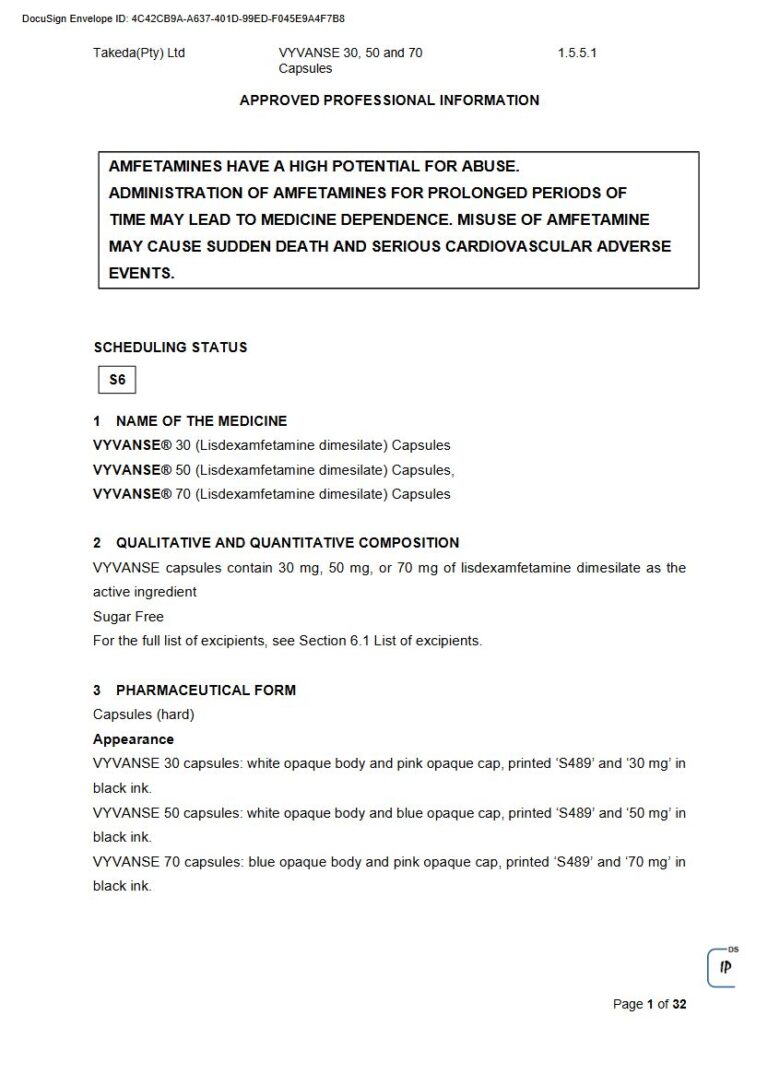
The Vyvanse Capsules professional information leaflet below is the property of Takeda and is provided on Medinsert exactly as issued, with no.. alterations or editorial changes. We make every effort to keep content current by updating documents as soon as new versions become available. Medinsert serves as a trusted access point for healthcare professionals, but does not replace official sources or clinical judgement. For more details, please read our full disclaimer. read more>>
 Healthcare Professionals Only
This content is for registered healthcare professionals
Sign in or create a free account to read the full package insert.
Free for HPCSA-registered professionals. Powered by Medinsert.
Clinical Particulars
Section 4 of the official insert — extracted exactly as issued, no alterations
4.1 Therapeutic indications
Attention Deficit Hyperactivity Disorder (ADHD) VYVANSE is indicated for the treatment of Attention Deficit Hyperactivity Disorder. Diagnosed according to the most recent DSM diagnostic criteria for ADHD in patients > 13 years of age up to 55 years of age when treatment with methylphenidate and atomoxetine has failed. Treatment with VYVANSE should be part of a comprehensive treatment program for ADHD.
Long term use: The need for continuation of treatment with VYVANSE should be re-assessed every 6 months.
4.2 Posology and method of administration
Treatment should be initiated and supervised by a medical practitioner experienced in treatment of patients with ADHD. Patients should be reviewed at least every 6 months to assess if there is an on-going need for treatment with VYVANSE. Blood pressure and cardiovascular status should also be regularly reviewed.
Dosage should be individualised according to the therapeutic needs and response of the patient. Careful dose titration is necessary at the start of treatment with VYVANSE.
VYVANSE should be administered orally at the lowest possible dosage and should then be slowly adjusted to the lowest effective dose for each individual.
VYVANSE should be taken in the morning with or without food; avoid afternoon doses because of the potential for insomnia. VYVANSE capsules may be taken whole, or the capsule may be opened and the entire contents emptied and mixed with a soft food such as yogurt or in a glass of water or orange juice. If the contents of the capsule include any compacted powder, a spoon may be used to break apart the powder in the soft food or liquid. The contents should be mixed until completely dispersed. The patient should consume the entire mixture of soft food or liquid immediately; it should not be stored. The active ingredient dissolves completely once dispersed; however, a film containing the inactive ingredients may remain in the glass or container once the mixture is consumed. The patient should not take anything less than one capsule per day and a single capsule should not be divided.
The maximum recommended dose is 70 mg/day; doses greater than 70 mg/day of VYVANSE have not been studied. The effectiveness of VYVANSE has not been established in adults over 55 years of age. Due to reduced clearance in patients with severe renal insufficiency (GFR 15 to <30 mL/min/1,73 m2) the maximum daily dose should not exceed 50 mg. Further dosage reduction should be considered in patients undergoing dialysis (See Section 5.2 Pharmacokinetic properties, Special populations and Section 4.4 Special Warnings and Precautions For Use). Lisdexamfetamine and dexamfetamine are not dialysable. VYVANSE should not be used in children under the age of 13 years as the available formulations are not appropriate for up or down titration to find an optimal dose in children aged 6-12 years. Safety and efficacy in children under the age of 6 years have not been established.
Treatment of ADHD In patients who are either starting treatment for the first time or switching from another medication, 30 mg once daily in the morning is the recommended starting dose. If the decision is made to increase the dose beyond 30 mg/day, daily dosage may be adjusted in increments of 20 mg at weekly intervals. VYVANSE should be administered orally at the lowest possible dosage. VYVANSE has not been studied in children under 6 years of age and up or down titration in children 6 to 12 years of age to optimise the dose needed cannot be achieved with the current available formulations.
4.3 Contraindications
VYVANSE is contraindicated in patients with:
- Known hypersensitivity to sympathomimetic amines or any of the excipients listed in Section 6.1.
- Advanced arteriosclerosis
- Symptomatic cardiovascular disease including cardiac dysrhythmias, ischaemic heart disease and other structural and/or functional cardiac disorders. Moderate to severe hypertension
- Hyperthyroidism or thyrotoxicosis
- Glaucoma
- Agitated states
- Concomitant use of monoamine oxidase inhibitors (MAOIs) or within 14 days after MAOIs treatment including MAOIs such as linezolid or intravenous methylene blue (risk of hypertensive crisis).
- Phaeochromatocytoma
- Tics, Touretteu2019s syndrome
- Patients with severe depression, anorexia nervosa, psychotic symptoms or suicidal tendency
- Patients with known drug dependence or alcohol abuse
- Pregnancy and lactation (see Section 4.6 Pregnancy, Lactation and Fertility)
4.4 Special Warnings and Precautions For Use
VYVANSE has a potential for abuse, misuse, dependence, or diversion for non-therapeutic uses. Medical practitioners should assess the risk of abuse prior to prescribing and monitor for signs of abuse and dependence while on therapy. VYVANSE should be prescribed cautiously to patients with a history of substance abuse or dependence. Careful supervision is required during withdrawal from abusive use since severe depression may occur. Withdrawal following chronic therapeutic use may unmask symptoms of the underlying disorder that may require follow-up.
Stimulants including VYVANSE have a potential for abuse, misuse, or diversion that medical practitioners should consider when prescribing VYVANSE. The risk of misuse may be greater in adults (especially young adults) than in paediatric use. Stimulants should be prescribed cautiously to patients with a history of substance abuse or dependence.
Patients should be cautioned against increasing the recommended dosage. Should psychological and/or physical dependence occur, gradual withdrawal of the medication is recommended. Abrupt cessation following prolonged high dosage results in extreme fatigue and mental depression; changes have also been noted on the sleep electro-encephalogram (EEG).
Manifestations of chronic intoxication with amfetamines include severe dermatoses, marked insomnia, irritability, hyperactivity and personality changes. The most severe manifestation of chronic intoxication is psychosis, often clinically indistinguishable from schizophrenia.
Pre-treatment assessment Before starting treatment with VYVANSE, it is important to consider the patient's personal and family cardiac and psychiatric history. In patients with identified or potential cardiovascular or psychiatric risk factors, further investigation or specialist review may be considered. Children, adolescents, or adults who are being considered for treatment with stimulant medications should have a careful history (including assessment for a family history of sudden death or ventricular dysrhythmias) and physical examination to assess for the presence of cardiac disease, and should receive further cardiac evaluation if findings suggest such disease (e.g. electrocardiogram and echocardiogram). Patients who develop symptoms such as exertional chest pain, unexplained syncope, or other symptoms suggestive of cardiac disease during stimulant treatment should undergo a prompt cardiac evaluation.
Cardiovascular disease Serious cardiovascular events have been reported with the use of sympathomimetic medicines, including VYVANSE, in the ADHD population. Sudden death and pre-existing structural cardiac abnormalities or other serious heart problems Children and Adolescents: Sudden death has been reported in children and adolescents taking CNS stimulants at usual doses, including those with structural cardiac abnormalities or other serious heart problems. Although some serious heart problems alone carry an increased risk of sudden death, stimulant products generally should not be used in children or adolescents with known serious structural cardiac abnormalities, cardiomyopathy, serious heart rhythm abnormalities, or other serious cardiac problems that may place them at increased vulnerability to the sympathomimetic effects of a stimulant medicine. Adults: Sudden deaths, stroke, and myocardial infarction have been reported in adults taking stimulant medicines at usual doses for ADHD. Although the role of stimulants in these adult cases is also unknown, adults have a greater likelihood than children of having serious structural cardiac abnormalities, cardiomyopathy, serious heart rhythm abnormalities, coronary artery disease, or other serious cardiac problems. Adults with such abnormalities should also generally not be treated with stimulant medicines.
Hypertension and other cardiovascular conditions Stimulant medications cause a modest increase in average mean blood pressure (about 2-4 mm Hg) and mean heart rate (about 3-6 bpm), and individuals may have larger increases. Patients should be monitored for larger changes in heart rate and blood pressure. Caution is indicated in treating patients whose underlying medical conditions might be compromised by increases in blood pressure or heart rate, e.g. those with pre-existing hypertension, heart failure, recent myocardial infarction, or ventricular dysrhythmias.
Lisdexamfetamine has shown to prolong the QTc interval in some patients. It should be used with caution in patients with prolongation of the QTc interval, in patients treated with drugs affecting the QTc interval, or in patients with relevant pre-existing cardiac disease or electrolyte disturbances.
Psychiatric disorders Pre-existing psychosis Administration of stimulants may exacerbate symptoms of behaviour disturbance and thought disorder in patients with pre-existing psychotic disorder. Bipolar illness Particular care should be taken in using stimulants to treat ADHD patients with comorbid bipolar disorder because of concern for possible induction of mixed/manic episode in such patients. Prior to initiating treatment with a stimulant, patients with comorbid depressive symptoms should be adequately screened to determine if they are at risk for bipolar disorder; such screening should include a detailed psychiatric history, including a family history of suicide, bipolar disorder, and depression.
Emergence of new psychotic or manic symptoms Treatment emergent psychotic or manic symptoms, e.g., hallucinations, delusional thinking, or mania in children and adolescents without prior history of psychotic illness or mania can be caused by stimulants at usual doses. If such symptoms occur, consideration should be given to a possible causal role of the stimulant, and discontinuation of treatment may be appropriate.
Aggression Aggressive behaviour or hostility is often observed in children and adolescents with ADHD, and has been reported in clinical trials and the post-marketing experience of some medications indicated for the treatment of ADHD, including VYVANSE. Stimulants may cause aggressive behaviour or hostility. Patients beginning treatment for ADHD should be monitored for the appearance of or worsening of aggressive behaviour or hostility.
Seizures Stimulants may lower the convulsive threshold in patients with prior history of seizure, in patients with prior EEG abnormalities without previous seizures, and in patients without a history of seizures and no prior EEG evidence of seizures. In the presence of seizures, VYVANSE should be discontinued.
Visual disturbance Difficulties with accommodation and blurring of vision have been reported with stimulant treatment such as with VYVANSE.
Tics Stimulants have been reported to exacerbate motor and phonic tics and Touretteu2019s syndrome. Therefore, clinical evaluation for tics and Touretteu2019s syndrome in children and their families should precede the use of stimulant medications. (see Section 4.3 Contraindications)
Long-term suppression of growth (height and weight) VYVANSE was associated with dose-related reductions in weight in children, adolescents and adults in short-term studies. Although a causal relationship has not been established, suppression of growth (i.e. weight and/or height) has been reported with the long-term use of stimulants in children. Therefore, patients requiring long-term therapy should be carefully monitored. Patients who are not growing or gaining weight as expected should have their treatment interrupted.
Peripheral vasculopathy, including Raynaudu2019s Phenomenon Stimulants, including Vyvanse, used to treat ADHD are associated with peripheral vasculopathy, including Raynaudu2019s phenomenon. Signs and symptoms are usually intermittent and mild; however, very rare sequelae include digital ulceration and/or soft tissue breakdown. Effects of peripheral vasculopathy, including Raynaudu2019s phenomenon, have been observed in post-marketing reports at different times and at therapeutic doses in all age groups throughout the course of treatment. Signs and symptoms generally improve after reduction in dose or discontinuation of the medicine. Careful observation for digital changes is necessary during treatment with ADHD stimulants. Further clinical evaluation (e.g. rheumatology referral) may be appropriate for certain patients.
Prescribing and dispensing The least amount of VYVANSE feasible should be prescribed or dispensed at one time in order to minimise the possibility of overdosage. Consideration should be given when using VYVANSE in patients who use other sympathomimetic medicines.
Paediatric use ADHD VYVANSE should not be used in children under the age of 13 years. Current available formulation do not allow optimisation of the dose requirements (best benefit risk balance) for children 6 -12 years. Safety and efficacy of VYVANSE in children under the age of 6 years have not been established.
Adult patients aged over 55 years VYVANSE safety and efficacy have not been established in adult patients over the age of 55 years.
Use in hepatic impairment No studies have been conducted in patients with hepatic impairment.
Use in renal impairment Due to reduced clearance in patients with severe renal impairment (GFR 15 to <30 mL/min/1,73 m2) the maximum VYVANSE daily dose should not exceed 50 mg. Further dosage reduction should be considered in patients undergoing dialysis. See Section 5 PHARMACOLOGICAL PROPERTIES, Special populations.
Lisdexamfetamine and dexamfetamine are not dialysable.
Effects on laboratory tests Amfetamines, such as VYVANSE can cause a significant elevation in plasma corticosteroid levels. This increase is greatest in the evening. Amfetamine may interfere with urinary steroid determinations.
Use with other sympathomimetic drugs VYVANSE should be used with caution in patients who use other sympathomimetic drugs (see section 4.5).
Excipients This medicine contains less than 1 mmol sodium (23 mg) per capsule, that is to say essentially u2018sodium-freeu2019.
4.5 Interaction with Other Medicines and Other Forms of Interaction
In vitro enzyme inhibition VYVANSE was not an in vitro inhibitor of the major human CYP450 isoforms (CYP1A2, CYP2A6, CYP2B6, CYP2C8, CYP2C9, CYP2C19, CYP2D6, and CYP3A4) in human hepatic microsomal suspensions, nor was it an in vitro inducer of CYP1A2, CYP2B6 or CYP3A4/5 in cultured fresh human hepatocytes. VYVANSE was not an in vitro substrate for P-gp in MDCKII cells nor an in vitro inhibitor of P-gp in Caco-2 cells and is therefore unlikely to be involved in clinical interactions with drugs transported by the P-gp pump.
Medicines whose blood levels may be impacted by VYVANSE Extended release guanfacine: In a drug interaction study, administration of an extended release guanfacine in combination with VYVANSE induced a 19 % increase in guanfacine maximum plasma concentrations, whereas, exposure (area under the curve; AUC) was increased by 7 %. These small changes are not expected to be clinically meaningful. In this study, no effect on dexamfetamine exposure was observed following co-administration of extended release guanfacine and VYVANSE.
Extended release venlafaxine: In a drug interaction study, administration of 225 mg extended release venlafaxine, a CYP2D6 substrate, in combination with 70 mg VYVANSE induced a 9 % decrease in the Cmax and 17 % decrease in the AUC for the primary active metabolite o-desmetylvenlafaxine and a 10 % increase in Cmax and 13 % increase in AUC for venlafaxine. VYVANSE may be a weak inhibitor of CYP2D6. Lisdexamfetamine has no effect on the AUC and Cmax of the composite of venlafaxine and o-desmetylvenlafaxine. These small changes are not expected to be clinically meaningful. In this study, no effect on dexamfetamine exposure was observed following co-administration of extended release venlafaxine and VYVANSE.
Medicines and conditions that alter urinary pH and impact the urinary excretion and half-life of amfetamine Ascorbic acid and other medicines or conditions that acidify urine increase urinary excretion and decrease the half-life of amfetamine. Sodium bicarbonate and other medicines or conditions that alkalinise urine decrease urinary excretion and extend the half-life of amfetamine.
Monoamine oxidase inhibitors Do not administer VYVANSE concomitantly with MAOIs or within 14 days after discontinuing MAOIs treatment. Concomitant use of MAOIs and CNS stimulants, such as VYVANSE, can cause hypertensive crisis. Severe outcomes including death may occur (See Section 4.3 Contraindications).
Serotonergic medicines Serotonin syndrome can occur in association with the use of amfetamines such as VYVANSE, when given in conjunction with serotonergic medicines, including selective serotonin reuptake inhibitors (SSRIs), serotonin and norepinephrine (noradrenaline) reuptake inhibitors (SNRIs). It has also been reported in association with overdose of amfetamines, including VYVANSE (See Section 4.9 Overdosage).
Medicines whose effects may be reduced by amfetamines Anti-hypertensives: Amfetamines may decrease the effectiveness of antihypertensive medications.
Medicines whose effects may be potentiated by amfetamines Amfetamines, such as VYVANSE potentiate the analgesic effect of narcotic analgesics.
Medicines that may reduce the effects of amfetamines Chlorpromazine: Chlorpromazine blocks dopamine and norepinephrine (noradrenaline) receptors, thus inhibiting the central stimulant effects of amfetamines.
Haloperidol: Haloperidol blocks dopamine receptors, thus inhibiting the central stimulant effects of amfetamines.
Lithium Carbonate: The anorectic and stimulatory effects of amfetamines may be inhibited by lithium carbonate.
Use with alcohol There are limited data on the possible interaction with alcohol.
4.6 Pregnancy, Lactation and Fertility
Pregnancy VYVANSE should not be used in pregnancy as harm to the foetus cannot be excluded. Dexamfetamine, the active metabolite of lisdexamfetamine, crosses the placenta. Amfetamines such as VYVANSE cause vasoconstriction and may decrease placental perfusion which may affect the developing foetus. It also stimulates uterine contractions increasing the risk of premature delivery and low birth weight babies. There is some evidence, although inconclusive, that amfetamine use in early pregnancy, may be associated with an increased risk of pre-eclampsia.
Women of childbearing age being treated with VYVANSE should be advised not to become pregnant.
Effects on infants Infants born to mothers taking amfetamines should be monitored for symptoms of withdrawal such as feeding difficulties, irritability, agitation and excessive drowsiness.
Effects on embryo-foetal development In animal reproduction studies, VYVANSE had no apparent effects on embryo foetal development or survival when administered orally to pregnant rats and rabbits throughout the period of organogenesis at doses of up to 40 and 120 mg/kg/day respectively. These doses resulted in respective plasma dexamfetamine AUC values which were 5 and 2 fold the AUC expected in adults at the maximum recommended dose of 70 mg, and respective plasma lisdexamfetamine AUC values which were 12 and 40 fold the AUC expected in adults at the maximum recommended dose.
A study of VYVANSE has not been conducted in rats treated throughout gestation and lactation. Amfetamine sulphate (d- to l- enantiomer ratio of 3:1), when given orally to rats from early gestation through to weaning at doses of 2, 6 and 10 mg total amfetamine base/kg/day, reduced the number of live born pups and pup viability during lactation. Body weight gain of offspring was reduced during lactation and after weaning, development was delayed, and increases in locomotor activity were observed. The reproductive performance of the offspring was also reduced. Some effects were observed at the 2 mg/kg/day dose, which was associated with a plasma amfetamine AUC about half that expected in adults at the maximum recommended dose of 70 mg.
4.7 Effects on Ability to Drive and Use Machines
VYVANSE may affect the ability of patients to drive or use machinery. Patients should not drive or use machinery until they know how treatment with VYVANSE affects them. VYVANSE can cause dizziness, drowsiness and visual disturbances including difficulties with accommodation, diplopia and blurred vision.
4.8 Undesirable Effects
Tables 1 - 3 present common adverse drug reactions (ADRs) reported in parallel-group, controlled clinical trials of children, adolescents and adults meeting DSM criteria for ADHD who received VYVANSE. Table 4 presents common ADRs reported in long-term, open-label clinical trials in children, adolescents and adults meeting DSM criteria for ADHD who received VYVANSE.
Adverse Reactions Associated with Discontinuation of Treatment in ADHD Clinical Trials: In patients aged 6 to 12 years, 8 % of VYVANSE-treated patients discontinued due to adverse reactions compared to 0 % of placebo-treated patients. The most frequently reported adverse reactions were ECG criteria for left ventricular hypertrophy, tics, vomiting, psychomotor hyperactivity, insomnia, decreased appetite and rash. Less frequently reported adverse reactions included upper abdominal pain, dry mouth, decreased weight, dizziness, somnolence, logorrhoea, chest pain, anger and hypertension.
In patients aged 13 to 17 years, 3 % of VYVANSE-treated patients discontinued due to adverse reactions compared to 1% of placebo-treated patients. The most frequently reported adverse reactions were decreased appetite (1 %), and insomnia (1 %). Less frequently reported adverse reactions included irritability, dermatillomania, mood swings, and dyspnoea.
In the controlled adult trial, 6 % of VYVANSE-treated patients discontinued due to adverse reactions compared to 2 % of placebo-treated patients. The most frequently reported adverse reactions were insomnia (2 %), tachycardia (1 %), irritability (1 %), hypertension (1 %), headache (1 %), anxiety (1 %), and dyspnoea (1 %). Less frequently reported adverse reactions included palpitations, diarrhoea, nausea, decreased appetite, dizziness, agitation, depression, paranoia and restlessness.
Table 1: Adverse Drug Reactions Occurring in u2265 2 % of Children meeting DSM criteria for ADHD who Received VYVANSE in Short-term, Parallel-group, Controlled Studies NRP104.301 (forced dose; 4 weeks) SPD489-325 (dose optimisation; 7 weeks) System Organ Class Preferred Term VYVANSE N=218 (n [%]) Placebo N=72 (n [%]) VYVANSE N=77 (n [%]) Placebo N=79 (n [%]) Gastrointestinal disorders Abdominal discomfort/pain 2 (0,9) 2 (2,8) 6 (7,8) 4 (5,1) Abdominal pain upper 25 (11,5) 4 (5,6) 6 (7,8) 5 (6,3) Diarrhoea 1 (0,5) 2 (2,8) 4 (5,2) 1 (1,3) Dry mouth 10 (4,6) 0 (0,0) Nause 13 (6,0) 2 (2,8) 8 (10,4) 2 (2,5) Toothache 0 2 (2,5) Vomiting 19 (8,7) 3 (4,2) 3 (3,9) 1 (1,3) General disorders and administration site conditions Fatigue 3 (3,9) 2 (2,5) Irritability 21 (9,6) 0 3 (3,9) 0 Pyrexia 5 (2,3) 1 (1,4) 3 (3.9) 0 Investigations ECG QT prolongation 2 (2.6) 1 (1,3) Weight decreased 19 (8,7) 2 (2,8) 10 (13,0) 0 Infections and Infestations Nasopharyngitis 4 (5,2) 5 (6,3) Rhinitis 2 (2,60) 2 (2,5) Upper respiratory tract infections 1 (1,3) 2 (2,5)
4.9 Overdose
Manifestations of acute overdosage with amfetamines include restlessness, tremor, hyperreflexia, rapid respiration, confusion, aggression, hallucinations, panic states, hyperpyrexia, rhabdomyolysis and other features of serotonin syndrome. Fatigue and depression usually follow the central nervous system stimulation. Cardiovascular effects include dysrhythmias, hypertension or hypotension, and circulatory collapse. Gastrointestinal symptoms include nausea, vomiting, diarrhoea, and abdominal cramps. Fatal poisoning is usually preceded by convulsions and coma.
There is no specific antidote to amfetamine overdose. Management of acute amfetamine intoxication is largely symptomatic and supportive which includes administration of activated charcoal (during the first hour of intoxication if the patient is conscious), administration of a cathartic and sedation. Lisdexamfetamine and dexamfetamine are not dialysable. In case of amfetamine overdose, consult a poison control centre for guidance or treat as clinically indicated. The prolonged release of VYVANSE in the body should be considered when treating patients with overdose.
