
Vimovo 500 mg/20 mg FC Tablet
PDF Leaflet Revision Date: 21 July 2022
Clinical Summary
Quick overview from the medicine insert
Indication
Symptomatic relief in rheumatoid arthritis, osteoarthritis, and ankylosing spondylitis.
Dosage (summary)
1 tablet twice daily for adults.
Onset of Action / Duration
Onset: 30 mins, Duration: 6-8 hours
Special Populations
- Renal impairment
- Hepatic impairment
- Elderly (> 65 years)
Pregnancy & Breastfeeding
Contraindicated in third trimester; not recommended during breastfeeding.
Key Drug Interactions
- Clopidogrel
- Warfarin
- Aspirin
- Diuretics
Contraindications
- Hypersensitivity to naproxen or esomeprazole
- Severe hepatic impairment
- Third trimester of pregnancy
Common side effects
- Diarrhoea
- Upper abdominal pain
- Constipation
- Dizziness
Counselling Points
- Take at least 30 mins before food.
- Monitor for gastrointestinal symptoms.
- Avoid use in pregnancy and breastfeeding.
Serious warnings
- Risk of gastrointestinal bleeding
- Cardiovascular thrombotic events
- Renal toxicity
Important Disclaimer
The Vimovo 500 mg/20 mg FC Tablet professional information leaflet below is the property of Astrazeneca Pharmaceuticals and is provided on Medinsert exactly as issued, with no.. alterations or editorial changes. We make every effort to keep content current by updating documents as soon as new versions become available. Medinsert serves as a trusted access point for healthcare professionals, but does not replace official sources or clinical judgement. For more details, please read our full disclaimer. read more>>
 Healthcare Professionals Only
This content is for registered healthcare professionals
Sign in or create a free account to read the full package insert.
Free for HPCSA-registered professionals. Powered by Medinsert.
Clinical Particulars
Section 4 of the official insert — extracted exactly as issued, no alterations
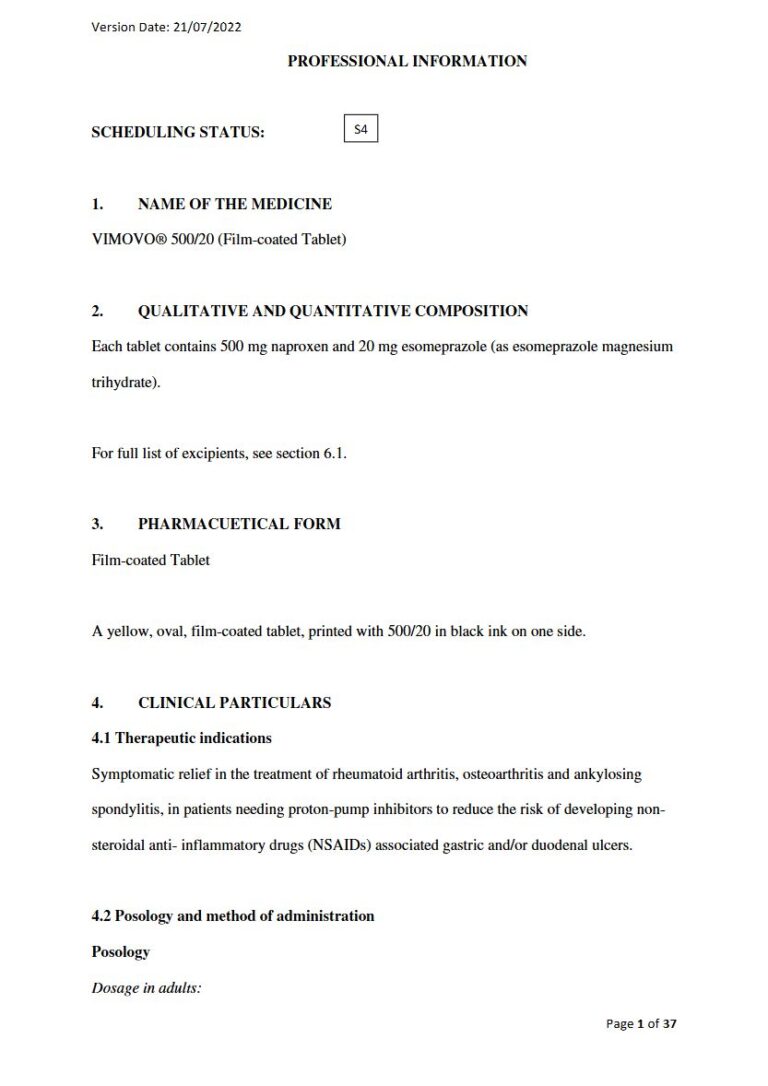
4.1 Therapeutic indications
Symptomatic relief in the treatment of rheumatoid arthritis, osteoarthritis and ankylosing spondylitis, in patients needing proton-pump inhibitors to reduce the risk of developing non-steroidal anti-inflammatory drugs (NSAIDs) associated gastric and/or duodenal ulcers.
4.2 Posology and method of administration
Posology
Dosage in adults:
The dose is 1 tablet twice daily.
Special Populations
Patients with renal impairment: In patients with mild to moderate renal impairment VIMOVO should be use cautiously and renal function should be monitored closely. A reduction in the total daily naproxen dose should be considered (see sections 4.4 and 4.5). VIMOVO is not recommended in patients with severe renal impairment (creatinine clearance < 30 ml/minute) because accumulation of naproxen metabolites has been seen in patients with severe renal failure and in those on dialysis (see section 4.4).
Patients with hepatic impairment: In patients with mild to moderate hepatic impairment VIMOVO should be used cautiously and hepatic function should be monitored closely. A reduction in the total daily naproxen dose should be considered (see section 5.2). VIMOVO is contraindicated in patients with severe hepatic impairment because these patients should not receive more than 20 mg esomeprazole per day (see sections 4.3 and 5.2).
Elderly (> 65 years): The elderly are at an increased risk of the serious consequences of adverse reactions (see 4.4 and 5.2).
Children (u2264 18 years): VIMOVO is not recommended for use in children, due to lack of data on safety and efficacy.
Method of administration
VIMOVO tablets must be swallowed whole with water, and not split, chewed or crushed. It is recommended that VIMOVO tablets are taken at least 30 minutes prior to food intake (see section 5.2).
4.3 Contraindications
- Known hypersensitivity to naproxen, esomeprazole, substituted benzimidazoles, or to any of the excipients.
- History of asthma, urticaria or allergic-type reactions induced by administration of aspirin or other NSAIDs (see section 4.4)
- Third trimester of pregnancy and lactation (see section 4.6)
- Severe hepatic impairment (e.g. Childs-Pugh C)
4.4 Special warnings and precautions for use
Elderly: Naproxen: The elderly have an increased frequency of adverse reactions to NSAIDs especially gastrointestinal bleeding; ulceration and perforation, which may be fatal (see sections 4.2 and 5.2)
Gastrointestinal effects: Naproxen: Gastrointestinal bleeding, ulceration or perforation, which can be fatal, has been reported with all NSAIDs at any time during treatment, with or without warning symptoms or a previous history of serious gastrointestinal events. VIMOVO has been formulated with esomeprazole to decrease the incidence of gastrointestinal side-effects, including ulceration, from naproxen. While VIMOVO has been shown to significantly decrease the occurrence of gastric ulcers compared to Naproxen alone, ulceration and associated complications can still occur (see section 5.1).
The risk of gastrointestinal bleeding, ulceration or perforation with NSAIDs is higher with increasing doses, in patients with a history of ulcer, particularly if complicated with haemorrhage or perforation, and in the elderly. These patients should begin treatment on the lowest dose available.
Patients with a history of gastrointestinal toxicity, particularly when elderly, should report any unusual abdominal symptoms (especially gastrointestinal bleeding) particularly in the initial stages of treatment.
Caution should be advised in patients receiving NSAIDs with concomitant medications which could increase the risk of ulceration or bleeding, such as oral corticosteroids, anticoagulants such as warfarin, selective serotonin-reuptake inhibitors or anti-platelet agents such as aspirin (for information on use of VIMOVO with low-dose aspirin (see section 4.5).
When gastrointestinal bleeding or ulceration occurs in patients receiving VIMOVO, the treatment should be withdrawn.
NSAIDs should be given with care to patients with a history of gastrointestinal disease (ulcerative colitis, Crohnu2019s disease) as these conditions may be exacerbated (see section 4.8).
Esomeprazole: In the presence of any alarm symptom (e.g. significant unintentional weight loss, recurrent vomiting, dysphagia, haematemesis or melaena) and when gastric ulcer is suspected or present, malignancy should be excluded, as treatment with esomeprazole magnesium may alleviate symptoms and delay diagnosis.
Cardiovascular and cerebrovascular effects: Naproxen: Appropriate monitoring and advice are required for patients with a history of hypertension and/or congestive heart failure as fluid retention and oedema have been reported in association with NSAID therapy. NSAIDs may be associated with an increased risk of serious cardiovascular (CV) thrombotic events, including myocardial infarction, and stroke. This risk may occur as early as the first weeks of treatment. The increase in CV thrombotic risk has been observed most consistently at higher doses. Patients with established cardiovascular diseases (e.g. uncontrolled hypertension, congestive heart failure, ischaemic heart disease, risk factors for cardiovascular events (e.g. hypertension, hyperlipidaemia, diabetes mellitus, and smoking) should only be treated with naproxen after careful consideration.
Renal effects: Naproxen: Long-term administration of NSAIDs e.g. naproxen has resulted in renal papillary necrosis and other renal injury. Renal toxicity has also been seen in patients in whom renal prostaglandins have a compensatory role in the maintenance of renal perfusion. In these patients, administration of a NSAID e.g. naproxen may cause a dose-dependent reduction in prostaglandin formation and, secondarily, in renal blood flow, which may precipitate overt renal decompensation. Patients at greatest risk of this reaction are those with impaired renal function, hypovolaemia, heart failure, liver dysfunction, salt depletion, those taking diuretics, ACE or angiotensin II receptor antagonists, inhibitors, and the elderly. Discontinuation of NSAID e.g. naproxen therapy is usually followed by recovery to the pre-treatment state (see also below, and sections 4.2 and 4.5).
Use in patients with impaired renal function: As naproxen is eliminated to a large extent (95 %) by urinary excretion via glomerular filtration, it should be used with great caution in patients with impaired renal function and the monitoring of serum creatinine and/or creatinine clearance is advised in these patients. VIMOVO is not recommended in patients having a baseline creatinine clearance of less than 30 ml/minute. Haemodialysis does not decrease the plasma concentration of naproxen because of the high degree of protein binding. Certain patients, specifically those whose renal blood flow is compromised, because of extracellular volume depletion, cirrhosis of the liver, sodium restriction, congestive heart failure, and pre-existing renal disease, should have renal function assessed before and during VIMOVO therapy. Some elderly patients, in whom impaired renal function may be expected, as well as patients using diuretics, ACE-inhibitors or angiotensin II receptor antagonist also fall within this category. A reduction in daily dosage should be considered to avoid the possibility of excessive accumulation of naproxen metabolites in these patients.
Haematological: Naproxen: Patients who have coagulation disorders or are receiving therapy that interferes with haemostasis should be carefully observed if naproxen-containing products are administered. Patients at high risk of bleeding and those on full anti-coagulation therapy (e.g. dicoumarol derivates) may be at increased risk of bleeding if given naproxen-containing products concurrently (see section 4.5)
Naproxen decreases platelet aggregation and prolongs bleeding time. This effect should be kept in mind when bleeding times are determined. When active and clinically significant bleeding from any source occurs in patients receiving VIMOVO, the treatment should be withdrawn.
Dermatological effects: Naproxen: Serious skin reactions, some of them fatal, including exfoliative dermatitis, Stevens-Johnson syndrome, and toxic epidermal necrolysis, have been reported very rarely in association with the use of NSAIDs (see section 4.8). Patients appear to be at highest risk of these reactions early in the course of therapy, the onset of the reaction occurring within the first month of treatment in the majority of cases. VIMOVO should be discontinued at the first appearance of skin rash, mucosal lesions, or any other sign of hypersensitivity.
Drug Reaction with Eosinophillia and Systemic Symptoms (DRESS) has been reported in patients taking NSAIDs such as VIMOVO. Some of these events have been fatal or life-threatening. DRESS typically, although not exclusively, presents with fever, rash, lymphadenopathy, and/or facial swelling. Other clinical manifestations may include hepatitis, nephritis, haematological abnormalities, myocarditis, or myositis. Sometimes symptoms of DRESS may resemble an acute viral infection. Eosinophillia is often present. Because this disorder is variable in its presentation, other organ systems not noted here may be involved. It is important to note that early manifestations of hypersensitivity, such as fever or lymphadenopathy, may be present even though rash is not evident. If such signs or symptoms are present, discontinue VIMOVO and evaluate the patient immediately.
Anaphylactic (anaphylactoid) reactions: Naproxen: Hypersensitivity reactions may occur in susceptible individuals. Anaphylactic (anaphylactoid) reactions may occur, both in patients with and without a history of hypersensitivity or exposure to aspirin, other NSAIDs or naproxen containing products. They may also occur in individuals with a history of angio-oedema, bronchospastic reactivity (e.g. asthma), rhinitis and nasal polyps.
Pre-existing asthma: Naproxen: The use of aspirin in patients with aspirin-sensitive asthma has been associated with severe bronchospasm, which can be fatal. Since cross reactivity, including bronchospasm, between aspirin and other NSAIDs has been reported in such aspirin-sensitive patients, VIMOVO should not be administered to patients with this form of aspirin sensitivity (see section 4.3) and should be used with caution in patients with pre-existing asthma.
Inflammation: Naproxen: The anti-pyretic and anti-inflammatory activities of naproxen may reduce fever and other signs of inflammation, thereby diminishing their utility as diagnostic signs.
Combination with other medicinal products: The combination of VIMOVO and non-aspirin NSAIDs including cyclo-oxygenase 2 selective inhibitors is not recommended, because of the cumulative risks of inducing serious NSAID-related adverse events. Esomeprazole: Concomitant administration with esomeprazole and medicines such as atazanavir and nelfinavir is not recommended (see section 4.5).
4.5 Interactions with other medicines
Concomitant use not recommended:
Antiretroviral agents: Omeprazole, the racemate of esomeprazole, has been reported to interact with some antiretroviral medicines. The clinical importance and the mechanisms behind these interactions are not always known. Increased gastric pH during omeprazole treatment may change the absorption of the antiretroviral medicine. Other possible interaction mechanisms are via CYP2C19. For some antiretroviral medicines, such as atazanavir and nelfinavir, decreased serum levels have been reported when given together with omeprazole. Concomitant administration with omeprazole and medicines such as atazanavir and is therefore not recommended. For other antiretroviral medicines, such as saquinavir, increased serum levels have been reported. There are also some antiretroviral medicines of which unchanged serum levels have been reported when given with omeprazole.
Clopidogrel: Results from studies in healthy subjects have shown a pharmacokinetic/pharmacodynamic interaction between clopidogrel (300 mg loading dose/75 mg daily maintenance dose) and esomeprazole (40 mg daily) resulting in decreased exposure to the active metabolite of clopidogrel by an average of 40 % and resulting in decreased maximum inhibition of (adenosine diphosphate induced) platelet aggregation by an average of 14 %. It is, however, uncertain to what extent this interaction is clinically important. One prospective, randomised (but incomplete) study (in over 3 760 patients comparing placebo with omeprazole 20 mg in patients treated with clopidogrel and acetylsalicylic acid) and non-randomised, post-hoc analyses of data from large, prospective, randomized clinical outcome studies (in over 47 000 patients) did not show any evidence of an increased risk for adverse cardiovascular outcome when clopidogrel and proton pump inhibitors, including esomeprazole, were given concomitantly. Results from a number of observational studies are inconsistent with regard to increased risk or no increased risk for cardiovascular thromboembolic events when clopidogrel is given together with a proton pump inhibitor.
When clopidogrel was given together with a fixed dose combination of esomeprazole 20 mg and acetylsalicylic acid compared to clopidogrel alone in a study in healthy subjects there was a decreased exposure by almost 40 % of the active metabolite of clopidogrel. However, the maximum levels of inhibition of (adenosine diphosphate induced) platelet aggregation in these subjects were the same in the clopidogrel and the clopidogrel and the combined (esomeprazole and acetylsalicylic acid) product groups, likely due to the concomitant administration of low dose acetylsalicylic acid).
No clinical studies on the interaction between clopidogrel and the fixed dose combination of naproxen and esomeprazole (VIMOVO) have been performed.
Concomitant use with precaution:
Aspirin: VIMOVO can be administered with low-dose aspirin (u2264 325 mg/day) therapy. In clinical trials, patients taking VIMOVO in combination with low-dose aspirin did not have an increased occurrence of gastric ulcers compared to patients taking VIMOVO alone (see section 5.1). However, the concurrent use of aspirin and VIMOVO may still increase the risk of serious adverse events (see sections 4.4 and 4.8). Clinical pharmacodynamic data suggest that concomitant naproxen usage for more than one day consecutively may inhibit the effect of low-dose aspirin on platelet activity and this inhibition may persist for up to several days after stopping naproxen therapy. The clinical relevance of this interaction is not known. When naproxen is administered with high doses of aspirin, its protein binding is reduced, although the clearance of free naproxen is not altered. The clinical significance of this interaction is not known.
Diuretics: Clinical studies, as well as post-marketing observations, have shown that NSAIDs can reduce the natriuretic effect of furosemide and thiazides in some patients. This response has been attributed to inhibition of renal prostaglandin synthesis. During concomitant therapy with NSAIDs, the patient should be observed closely for signs of renal failure, as well as to assure diuretic efficacy (see section 4.4).
Selective Serotonin Reuptake Inhibitors (SSRIs): Epidemiological studies, both of the case-control and cohort design, have demonstrated an association between use of psychotropic medicines that interfere with serotonin reuptake and the occurrence of upper gastrointestinal bleeding. In 2 studies, concurrent use of an NSAID or aspirin potentiated the risk of bleeding. Although these studies focused on upper gastrointestinal bleeding, there is reason to believe that bleeding at other sites may be similarly potentiated. Therefore, caution should be used when NSAIDs, including COX 2 selective inhibitors, are administered concomitantly with SSRIs (see section 4.4).
ACE-inhibitors/Angiotensin II receptor antagonists: Reports suggest that NSAIDs may diminish the antihypertensive effect of ACE-inhibitors and angiotensin II receptor antagonists. NSAIDs may also increase the risk of renal impairment associated with the use of ACE-inhibitors or angiotensin II receptor antagonists. The combination of NSAIDs and ACE-inhibitors or angiotensin II receptor antagonists should be given with caution in patients who are elderly, volume-depleted, or with impaired renal function (see section 4.4).
Lithium: NSAIDs have produced an elevation of plasma lithium levels and a reduction in renal lithium clearance. The mean minimum lithium concentration increased 15 % and the renal clearance was decreased by approximately 20 %. These effects have been attributed to inhibition of renal prostaglandin synthesis by the NSAID. Thus, when NSAIDs and lithium are administered concurrently, subjects should be observed carefully for signs of lithium toxicity.
Methotrexate: NSAIDs have been reported to competitively inhibit methotrexate accumulation in rabbit kidney slices. NSAIDs have been reported to reduce the tubular secretion of methotrexate in an animal model. This may indicate that they could enhance the toxicity of methotrexate. Caution should be used when NSAIDs are administered concomitantly with methotrexate.
Sulphonylureas, Hydantoins: Naproxen is highly bound to plasma albumin; it thus has a theoretical potential for interaction with other albumin-bound medicines such as sulphonylureas, and hydantoins. Patients simultaneously receiving naproxen and a hydantoin, sulfonamide or sulphonylurea should be observed for adjustment of dose if required.
Warfarin: The effects of warfarin and NSAIDs on gastrointestinal bleeding are synergistic, such that users of both medicines together have a risk of serious gastrointestinal bleeding higher than users of either medicine alone. No significant interactions have been observed in clinical studies with naproxen and coumarin-type anticoagulants. However, caution is advised since interactions have been seen with other non-steroidal agents of this class. The free fraction of warfarin may increase substantially in some subjects and naproxen interferes with platelet function (see section 4.4).
Concomitant administration of 40 mg esomeprazole to warfarin-treated patients showed that, despite a slight elevation in the trough plasma concentration of the less potent R-isomer of warfarin, the coagulation times were within the accepted range. However, from post marketing use, cases of elevated INR of clinical significance have been reported during concomitant treatment with warfarin. Close monitoring is recommended when initiating and ending treatment with warfarin or other coumarine derivatives.
Beta receptor-blockers: Naproxen and other NSAIDs can reduce the antihypertensive effect of propranolol and other beta-blockers.
Ciclosporin: As with all NSAIDs caution is advised when ciclosporin is co-administered because of the increased risk of nephrotoxicity.
Tacrolimus: Concomitant administration of esomeprazole has been reported to increase the serum levels of tacrolimus. As with all NSAIDs caution is advised when Tacrolimus is co-administered because of the increased risk of nephrotoxicity.
Probenecid: Probenecid given concurrently increases naproxen anion plasma levels and extends its plasma half-life significantly.
Medicines with gastric pH-dependent absorption: The decreased intragastric acidity during treatment with esomeprazole might increase or decrease the absorption of medicines if the mechanism of absorption is influenced by gastric acidity. In common with the use of other inhibitors of acid secretion or antacids, the absorption of ketoconazole and itraconazole can decrease during treatment with esomeprazole.
Other information concerning interactions: Studies evaluating concomitant administration of esomeprazole and either naproxen or rofecoxib (COX-2-selective NSAID) did not identify any clinically relevant interaction. Concomitant administration of cholestyramine can delay the absorption of naproxen. Esomeprazole inhibits CYP2C19, the major esomeprazole metabolizing enzyme. Esomeprazole is also metabolised by CYP3A4. The following have been observed in relation to these enzymes:
- Concomitant administration of 30 mg esomeprazole resulted in a 45 % decrease in clearance of the CYP2C19 substrate diazepam. This interaction is unlikely to be of clinical relevance.
- Concomitant administration of 40 mg esomeprazole resulted in a 13 % increase in trough plasma levels of phenytoin in epileptic patients.
- Concomitant administration of esomeprazole and a combined inhibitor of CYP2C19 and CYP3A4, such as voriconazole, may result in more than doubling of the esomeprazole exposure.
- Concomitant administration of esomeprazole and a CYP3A4 inhibitor, clarithromycin (500 mg twice daily), resulted in a doubling of the exposure (AUC) to esomeprazole.
- Dose adjustment of esomeprazole is not required in any of these cases.
4.6 Fertility, pregnancy and lactation
There are no data on the use of VIMOVO in pregnant women.
Pregnancy
Naproxen: In humans, data from epidemiological studies suggest that there may be an increased risk of miscarriage after use of NSAIDs in early pregnancy. Congenital abnormalities have been reported in association with NSAID administration in humans. Use of naproxen in the last trimester of pregnancy is contraindicated (see section 4.3) because of possibility of early closure of the foetal ductus arteriosus and the pulmonary hypertension. Use of NSAIDs may cause foetal renal dysfunction leading to oligohydramnios and, in some cases, neonatal renal impairment. VIMOVO should not be used in women attempting to conceive or during the first 2 trimesters of pregnancy. If VIMOVO is used, the dose should be kept as low and the duration of treatment as short as possible. VIMOVO is not recommended in labour and delivery because, through its prostaglandin synthesis inhibitory effect, VIMOVO may adversely affect foetal circulation and inhibit contractions with an increased bleeding tendency in both mother and child.
Esomeprazole: Safety during pregnancy has not been established.
Breastfeeding
Naproxen is excreted in human milk. VIMOVO should not be used during breastfeeding. It is unknown whether esomeprazole is excreted in human milk, since no studies in lactating women have been performed.
Fertility
The use of NSAIDs like naproxen may impair female fertility. Animal studies indicate that NSAIDs like naproxen can suppress ovulation. Reports of women with infertility, who were taking NSAIDs like naproxen, suggest reversal of the infertility upon discontinuation of the NSAID. A benefit-risk assessment should be performed before treatment with VIMOVO in women attempting to conceive (see also Pregnancy section above).
4.7 Effects on ability to drive and use machines
When driving vehicles or operating machines it should be taken into account that some of the adverse effects (e.g. dizziness) reported following the use of VIMOVO may reduce the ability to react.
4.8 Undesirable effects
a) Summary of the safety profile
VIMOVO contains both naproxen and esomeprazole and the same pattern of undesirable effects as reported for both of these individual active substances may occur. In placebo-controlled clinical studies, adverse events reported more frequently for VIMOVO (n = 490) compared to placebo (n = 246) were diarrhoea, upper abdominal pain, constipation, dizziness and peripheral oedema.
b) Tabulated summary of adverse reactions
Adverse reactions are classified according to frequency and System Organ Class. Frequency categories are defined according to the following convention: Very common (u2265 1/10), Common ( u2265 1/100 to < 1/10), Uncommon (u2265 1/1 000 to < 1/100), Rare (u2265 1/10 000 to < 1/1 00), Very rare (< 1/10 000), Not known (cannot be estimated from the available data).
Naproxen: The following adverse experiences have been reported in patients taking naproxen during clinical trials and through post-marketing reports.
Table 1
Common Uncommon/ Rare Not Known
Investigations Abnormal liver function tests, increased bleeding time, raised serum creatinine
Cardiac disorders Palpitations
Dysrhythmia, congestive heart failure, myocardial infarction, tachycardia
Blood and lymphatic system disorders Agranulocytosis, aplastic anaemia, eosinophilia, granulocytopenia, haemolytic anaemia, leucopenia, lymphadenopathy, pancytopenia, thrombocytopenia
Nervous system disorders Dizziness, drowsiness, headache, light-headedness, vertigo
Cognitive dysfunction, coma, convulsions, inability to concentrate, optic neuritis, paraesthesia, syncope, tremor
Eye disorders Visual disturbances
Blurred vision, conjunctivitis, corneal opacity, papilloedema
Ear and labyrinth disorders Tinnitus, hearing disturbances
Hearing impairment
Respiratory, thoracic and mediastinal disorders Dyspnoea
Asthma, bronchospasm, eosinophilic pneumonitis, pneumonia, pulmonary oedema, respiratory depression
Gastrointestinal disorders Dyspepsia, abdominal pain, nausea, vomiting, diarrhoea, constipation, heartburn, peptic ulcers, stomatitis
Dry mouth, oesophagitis, gastric ulcers, gastritis, glossitis, eructation, flatulence, gastric/duodenal ulcers, gastrointestinal bleeding and/or perforation, melaena, haematemesis, pancreatitis, colitis, exacerbation of inflammatory bowel disease (ulcerative colitis, Crohnu2019s disease), non-peptic gastrointestinal ulceration, rectal bleeding, ulcerative stomatitis
Renal and urinary disorders Glomerulonephritis, haematuria, interstitial nephritis, nephrotic syndrome, oliguria/polyuria, proteinuria, renal failure, renal papillary necrosis, tubular necrosis
Skin and subcutaneous tissue disorders Pruritus, ecchymoses, purpura, skin rashes
Alopecia, exanthema, urticaria, toxic epidermal necrolysis, erythema multiforme, erythema nodosum, fixed drug eruption, lichen planus, systemic lupus erythematoses, Stevens-Johnson syndrome, photosensitive dermatitis, photosensitivity reactions, including cases resembling porphyria cutanea tarda (pseudoporphyria), exfoliative dermatitis, angioneurotic oedema
Musculoskeletal and connective tissue disorders Muscle weakness, myalgia
Metabolism and nutrition disorders Appetite disorder, fluid retention, hyperglycaemia, hyperkalaemia, hyperuricaemia, hypoglycaemia, weight changes
Infections and infestations Diverticulitis
Aseptic meningitis, infection, sepsis
Vascular disorders Hypertension, hypotension, vasculitis
General disorders and administration site disorders Fatigue, oedema, sweating, thirst
Asthenia, malaise, pyrexia
Immune system disorders Anaphylactic reactions, anaphylactoid reactions, hypersensitivity reactions
Hepatobiliary disorders Cholestasis, hepatitis, jaundice, liver failure
Reproductive system and breast disorders Infertility, menstrual disorder
Psychiatric disorders Depression, insomnia
Agitation, anxiety, confusion, dream abnormalities, hallucinations, nervousness
Esomeprazole: The following adverse reactions have been identified or suspected in the clinical trials programme for enteric-coated esomeprazole. None were found to be dose-related.
Table 2
Common Uncommon Rare Very Rare
Blood and lymphatic system disorders Leukopenia, thrombocytopenia
Nervous system disorders Headache
Dizziness, paraesthesia, somnolence
Taste disturbance
Eye disorders Blurred vision
Ear and labyrinth disorders Vertigo
Respiratory, thoracic and mediastinal disorders Bronchospasm
Gastrointestinal disorders Abdominal pain, diarrhoea, flatulence, nausea/vomiting, constipation
Dry mouth
Stomatitis, gastrointestinal candidiasis
Skin and subcutaneous tissue disorders Dermatitis, pruritus, urticaria, rash
Alopecia, photosensitivity
Musculoskeletal and connective tissue disorders Arthralgia, myalgia
Metabolism and nutrition disorders Peripheral oedema
Hyponatraemia
Severe hypomagnesaemia may result in hypocalcaemia. Hypomagnesaemia may also result in hypokalaemia.
General disorders and administration site disorders Malaise, hyperhidrosis
Immune system disorders Hypersensitivity reactions e.g. angioedema and anaphylactic reaction/shock
Hepatobiliary disorders Increased liver enzymes
Hepatitis with or without jaundice
Hepatic encephalopathy
Reproductive system and breast disorders Gynaecomastia
Psychiatric disorders Insomnia
Agitation, confusion, depression
Aggression, hallucination
Post-marketing experience: The events listed above for clinical trials have also been reported from marketing experience for enteric-coated esomeprazole. In addition, the following adverse events have been reported during post marketed use.
Table 3
Blood and lymphatic system disorders Agranulocytosis, pancytopenia
Renal and urinary disorders Interstitial nephritis
Skin and subcutaneous tissue disorders Erythema multiforme, Stevens-Johnson syndrome, toxic epidermal necrolysis (TEN), acute generalised exanthematous pustulosis (AGEP), drug rash with eosinophilia and systemic symptoms (DRESS)
Musculoskeletal and connective tissue disorders Muscular weakness
Hepatobiliary disorders Hepatic failure
Reporting of suspected adverse reactions
Reporting suspected adverse reactions after authorisation of the medicine is important. It allows continued monitoring of the benefit/risk balance of the medicine. Health care providers are asked to report any suspected adverse reactions to SAHPRA via the u201c6.04 Adverse Drug Reactions Reporting Formu201d, found online under SAHPRAu2019s publications: https://www.sahpra.org.za/Publications/Index/8
4.9 Overdose
There is no clinical data on overdose with VIMOVO. Any effects of an overdose with VIMOVO would be expected to primarily reflect the effects of an overdose with naproxen.
Symptoms: Related to naproxen overdose: Significant naproxen overdosage may be characterised by lethargy, dizziness, drowsiness, epigastric pain, abdominal discomfort, heartburn, indigestion, nausea, transient alterations in liver function, hypoprothrombinemia, renal dysfunction, metabolic acidosis, apnea, disorientation or vomiting. Gastrointestinal bleeding can occur. Hypertension, acute renal failure, respiratory depression, and coma may occur, but are rare. Anaphylactoid reactions have been reported with therapeutic ingestion of NSAIDs, and may occur following an overdose. A few patients have experienced convulsions, but it is not clear whether or not these were medicine-related. It is not known what dose of the medicine would be life threatening.
Related to esomeprazole overdose: The symptoms described in connection with deliberate esomeprazole overdose (limited experience of doses in excess of 240 mg/day) are transient. Single doses of 80 mg esomeprazole were uneventful.
Management of overdose: Related to naproxen: Patients should be managed by symptomatic and supportive care following a NSAID overdose, particularly with respect to gastrointestinal effects and renal damage. There are no specific antidotes. Haemodialysis does not decrease the plasma concentration of naproxen because of the high degree of its protein binding. Emesis and/or activated charcoal (60-100 g in adults, 1-2 g/kg in children) and/or osmotic cathartic may be indicated in patients seen within 4 hours of ingestion with symptoms or following a large overdose. Forced diuresis, alkalinisation of urine or hemoperfusion may not be useful due to high protein binding.
Related to esomeprazole: No specific antidote is known. Esomeprazole is extensively plasma protein bound and is therefore not readily dialyzable. As in any case of overdose, treatment should be symptomatic and general supportive measures should be utilised.
