
Ent Nasal 25 ml Drops
PDF Leaflet Revision Date: 28 February 2019
Clinical Summary
Quick overview from the medicine insert
Indication
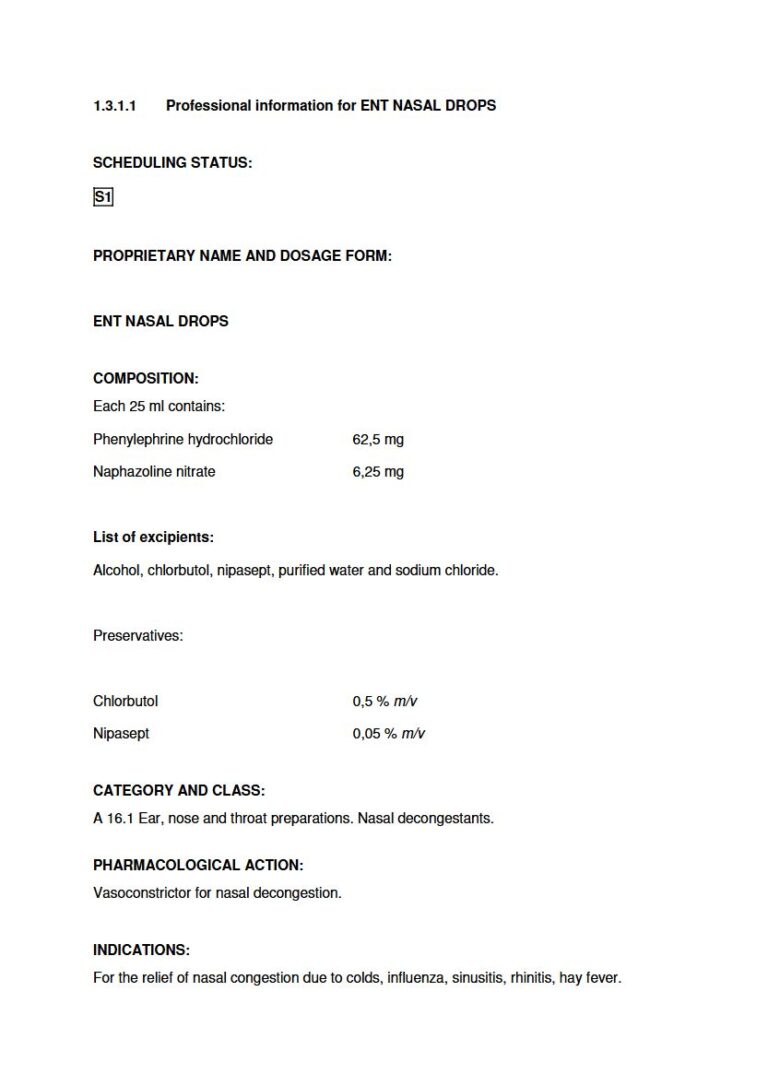
Relief of nasal congestion due to colds, influenza, sinusitis, rhinitis, hay fever.
Dosage (summary)
Adults: 2-3 drops per nostril; Children (3-12 years): 1-2 drops per nostril.
Onset of Action / Duration
Onset: 5-10 mins, Duration: up to 4 hours
Special Populations
- Children under 2 years
- Patients with cardiovascular disease
- Patients with hyperthyroidism
Pregnancy & Breastfeeding
Not recommended during pregnancy.
Key Drug Interactions
- Tricyclic antidepressants
- Guanethidine
- Reserpine
- Methyldopa
Contraindications
- Severe coronary disease
- Hypertension
- Cardiovascular disease
- Hyperthyroidism
- Sensitivity to components
Common side effects
- Anxiety
- Restlessness
- Tremor
- Nausea
- Vomiting
- Transient irritation
- Headache
Counselling Points
- Tilt head back during administration
- Maintain position for 30 seconds
- Do not exceed three times daily
Serious warnings
- Caution in sympathomimetic susceptible patients
- Risk of rebound congestion
- Use with caution in children
Important Disclaimer
The Ent Nasal 25 ml Drops professional information leaflet below is the property of Adcock Ingram and is provided on Medinsert exactly as issued, with no.. alterations or editorial changes. We make every effort to keep content current by updating documents as soon as new versions become available. Medinsert serves as a trusted access point for healthcare professionals, but does not replace official sources or clinical judgement. For more details, please read our full disclaimer. read more>>
 Healthcare Professionals Only
This content is for registered healthcare professionals
Sign in or create a free account to read the full package insert.
Free for HPCSA-registered professionals. Powered by Medinsert.
Clinical Particulars
Section 4 of the official insert — extracted exactly as issued, no alterations
4.1 Therapeutic indications
For the relief of nasal congestion due to colds, influenza, sinusitis, rhinitis, hay fever.
4.2 Posology and method of administration
Adults: 2 to 3 drops to each nostril.
Children: (3 to 12 years) 1 to 2 drops to each nostril. Tilt the head back and instil the drops into each nostril. Then throw the head forward and down and maintain this position for at least 30 seconds. The first instillation prepares the way for deeper penetration by the second, which should be administered 2 to 3 minutes later. The effects will then last up to four hours, then the treatment may be repeated if necessary, but not more than three times daily.
4.3 Contraindications
Severe coronary disease, hypertension, cardiovascular disease or hyperthyroidism. Patients being treated with monoamine oxidase inhibitors or within 14 days of stopping such treatment. Pregnancy. Sensitivity to any of the components.
4.4 Special warnings and precautions for use
Not recommended for children under the age of two years. Phenylephrine hydrochloride should be avoided or only used with great caution in patients susceptible to sympathomimetic effects particularly those with hyperthyroidism, cardiovascular disease such as ischaemic heart disease, arrhythmia or tachycardia, occlusive vascular disorders including arteriosclerosis, hypertension or aneurysms. Excessive use can lead to rebound congestion as well as ventricular arrhythmias. Naphazoline nitrate should be used with special caution in children. If used for more than a few days severe rebound congestion and rhinorrhoea may occur.
4.5 Interactions with other medicines
Phenylephrine hydrochloride should be avoided in patients receiving tricyclic antidepressants. Patients receiving guanethidine and similar adrenergic neurone blocking agents are extremely sensitive to the hypersensitive (and mydriatic) effects of phenylephrine. Phenylephrine may also markedly reverse the hypotensive effects of reserpine and methyldopa.
4.8 Undesirable effects
Phenylephrine hydrochloride: May produce anxiety, restlessness, tremor, irritability and nausea and vomiting. Undesirably high blood pressure leading to cerebral haemorrhage may occur. Also reflex bradycardia, tachycardia, cardiac arrhythmias, anginal pain, palpitation and cardiac arrest; hypotension with dizziness, fainting and flushing.
Naphazoline nitrate: Transient irritation, nausea and headache may occur.
4.9 Overdose
Naphazoline nitrate: Overdosage or accidental administration by mouth may cause depression of the central nervous system with marked reduction of body temperature and symptoms of bradycardia, sweating, drowsiness and coma, particularly in children. Hypertension may be followed by rebound hypotension. High blood pressure and tachycardia can also occur. Treatment is symptomatic and supportive. Consult a doctor or take the patient to the nearest hospital immediately.
