
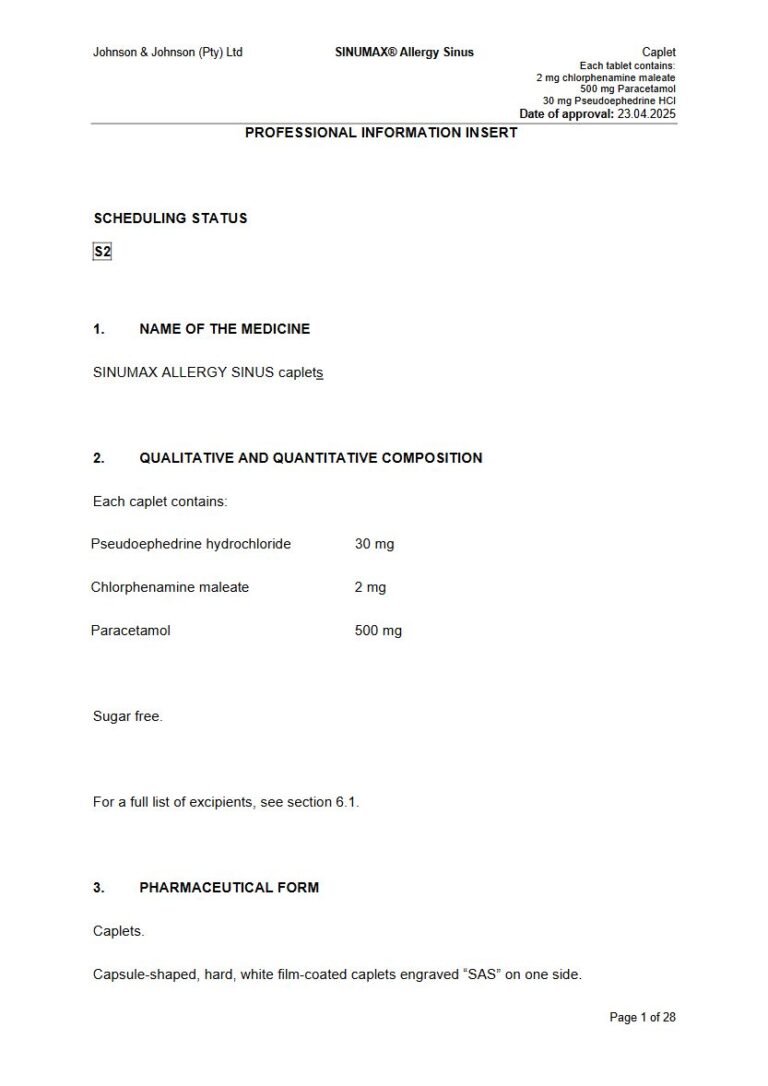
Sinumax Allergy Sinus 30 mg Caplets.
PDF Leaflet Revision Date: 23 April 2025
Clinical Summary
Quick overview from the medicine insert
Indication
Short term relief of cold and allergy symptoms.
Dosage (summary)
Adults and children over 12 years: 2 tablets every 6-8 hours, max 8 tablets/24 hours.
Special Populations
- Elderly
- Renal impairment
- Hepatic impairment
Pregnancy & Breastfeeding
Safety in pregnancy and lactation not established.
Key Drug Interactions
- MAOIs
- CNS depressants
- Warfarin
Contraindications
- Hypersensitivity
- Children under 12
- Severe liver disease
- Severe renal disease
Common side effects
- Drowsiness
- Dry mouth
- Dizziness
Counselling Points
- Avoid alcohol
- Do not exceed recommended dosage
- Consult doctor if symptoms persist
Serious warnings
- Risk of overdose with paracetamol
- Severe skin reactions possible
- Caution in cardiovascular disease
Important Disclaimer
The Sinumax Allergy Sinus 30 mg Caplets. professional information leaflet below is the property of Johnson & Johnson and is provided on Medinsert exactly as issued, with no.. alterations or editorial changes. We make every effort to keep content current by updating documents as soon as new versions become available. Medinsert serves as a trusted access point for healthcare professionals, but does not replace official sources or clinical judgement. For more details, please read our full disclaimer. read more>>
 Healthcare Professionals Only
This content is for registered healthcare professionals
Sign in or create a free account to read the full package insert.
Free for HPCSA-registered professionals. Powered by Medinsert.
Clinical Particulars
Section 4 of the official insert — extracted exactly as issued, no alterations
4.1 Therapeutic indications
Short term relief of symptoms of the common cold, hay fever or other nasal allergies such as minor aches and pains, headache and fever, nasal stuffiness, runny nose, sneezing, itchy and watery eyes.
4.2 Posology and method of administration
Posology:
Adults and children over 12 years: Two tablets every six to eight hours. Do not exceed eight tablets in 24 hours. Not to be used in children below the age of 12 years. DO NOT EXCEED THE RECOMMENDED DOSAGE.
4.3 Contraindications
- Hypersensitivity to chlorphenamine maleate, paracetamol, pseudoephedrine, or to any of the ingredients (see section 4.8).
- Contraindicated in children under 12 years of age.
- Paracetamol should not be used in patients with severe liver and renal disease.
- Pseudoephedrine should be avoided in patients undergoing inhalation anaesthesia.
- Pseudoephedrine should be avoided in patients with severe, acute or chronic kidney disease/renal failure.
- SINUMAX Allergy Sinus should not be given concurrently with any monoamine oxidase inhibitor (MAOI) for depression or within 14 days of stopping such treatment. The concomitant use of these medicines may cause a rise in blood pressure and/or hypertensive crisis.
- Contraindicated in most types of cardiovascular disease, including angina and severe hypertension or uncontrolled hypertension, and in hyperthyroidism, phaeochromocytoma, closed angle glaucoma and diabetes mellitus.
- Concomitant administration with any sympathomimetic or other paracetamol-containing medicines.
4.4 Special warnings and precautions for use
SINUMAX Allergy Sinus contains paracetamol which may be fatal in overdose. In the event of overdosage or suspected overdosage and notwithstanding the fact that the person may be asymptomatic, the nearest doctor, hospital or Poison Centre must be contacted immediately. Do not use continuously for more than seven days. If symptoms persist or get worse, or if new symptoms occur, irrespective of therapy used, patients should stop use and consult your doctor. Dosages in excess of those recommended may cause severe liver, or kidney damage. Consult your doctor if no relief is obtained with the recommended dosage.
Patients with a persistent respiratory condition such as emphysema, chronic bronchitis, bronchial asthma, or where cough is accompanied by excessive secretions should be advised to consult a doctor before using SINUMAX Allergy Sinus. While taking SINUMAX Allergy Sinus, avoid alcoholic beverages and consult a doctor prior to taking with central nervous system depressants (see section 4.5).
Paracetamol Patients with impaired kidney or liver function should take paracetamol under medical supervision only. Severe cutaneous adverse reactions (SCARs) such as toxic epidermal necrolysis (TEN), Steven-Johnson syndrome (SJS), acute generalised exanthematous pustulosis (AGEP), drug rash with eosinophilia and systemic symptoms (DRESS) or drug-induced hypersensitivity syndrome (DIHS) and fixed drug eruptions (FDE) have been reported in patients treated with paracetamol containing medicines. If a patient develops SCARs, treatment with SINUMAX u00ae Allergy Sinus must immediately be discontinued and appropriate treatment instituted. Patients should be informed about the signs of serious skin reactions and use of SINUMAX u00ae Allergy Sinus should be discontinued at the first appearance of skin rash or any other sign of hypersensitivity. Chronic alcohol users should ask their doctor whether they should take paracetamol or other pain relievers or fever reducers.
Caution is advised if paracetamol is administered concomitantly with flucloxacillin due to increased risk of high anion gap metabolic acidosis (HAGMA), particularly in patients with severe renal impairment, sepsis, malnutrition and other sources of glutathione deficiency (e.g. chronic alcoholism), as well as those using maximum daily doses of paracetamol. Close monitoring, including measurement of urinary 5-oxoproline, is recommended.
Chlorphenamine maleate: Chlorphenamine should be given with care to patients with glaucoma, urinary retention, prostatic hypertrophy or pyloroduodenal obstruction. Caution is advised in patients with epilepsy and severe cardiovascular disorders. Elderly patients are more susceptible to the central nervous system depressant and lowering of blood pressure effects even at dose quantities effective for treatment. The warning signs of damage caused by ototoxic medicines may be masked by chlorphenamine. Chlorphenamine may cause drowsiness. Chlorphenamine may enhance the sedative effect of central nervous system depressants including alcohol, barbiturates, hypnotics, analgesics, sedatives and tranquillisers. Care should be taken when taking medicines containing tricyclic anti-depressants or atropine together.
Pseudoephedrine hydrochloride SINUMAX u00ae Allergy Sinus should not be used by patients with cardiovascular disease in particular those with coronary heart disease and hypertension, hyperthyroidism, liver disease, renal disease, difficulty in urination and/or enlargement of the prostate, glaucoma or diabetes. (See section 4.3) SINUMAX u00ae Allergy Sinus should be discontinued and medical advice sought if sudden abdominal pain, rectal bleeding or other symptoms of ischaemic colitis develop. Severe skin reactions such as acute generalised exanthematous pustulosis (AGEP) have been reported with pseudoephedrine-containing medicines, such as SINUMAX u00ae Allergy Sinus. This acute pustular eruption may occur within the first 2 days of treatment, with fever, and numerous, small, mostly non-follicular pustules arising on a widespread oedematous erythema and mainly localised on the skin folds, body, and upper extremities. Patients should be carefully monitored. If signs and symptoms such as formation of small pustules occur, with or without pyrexia or erythema, then treatment with pseudoephedrine should be discontinued and a doctor should be consulted. Cases of posterior reversible encephalopathy syndrome (PRES) and reversible cerebral vasoconstriction syndrome (RCVS) have been reported with the use of pseudoephedrine-containing products (see section 4.8). The risk is increased in patients with severe or uncontrolled hypertension, or with severe acute or chronic kidney disease/renal failure (see section 4.3). Pseudoephedrine should be discontinued and immediate medical assistance sought if the following symptoms occur: sudden severe headache or thunderclap headache, nausea, vomiting, confusion, seizures and/or visual disturbances. Most reported cases of PRES and RCVS resolved following discontinuation and appropriate treatment.
4.5 Interaction with other medicines and other forms of interaction
Combinations containing any of the following medicines, depending on the amount, may also interact with SINUMAX u00ae Allergy Sinus. Chlorphenamine may enhance the effects of central nervous system depressants including alcohol, barbiturates, hypnotics, opioid analgesics, anxiolytic sedatives and antipsychotics, and other medicines with anti-cholinergic properties such as tricyclic anti-depressants. Cardiac dysrhythmias may occur when pseudoephedrine is used prior to anaesthesia with inhalation anaesthetics such as chloroform, cyclopropane, enflurane, halothane, isoflurane, methoxyflurane, and trichloroethylene or concurrently with digitalis glycosides. Anticholinergic effects may be potentiated when SINUMAX u00ae Allergy Sinus is used concurrently with anticholinergics or other medicines with anticholinergic activity. Concurrent use with SINUMAX u00ae Allergy Sinus may also potentiate the cardiovascular effects of sympathomimetic amines. Pseudoephedrine may reverse the action of cardiovascular medicines and therefore special care is advisable in patients receiving such therapy. Antihypertensive effects may be reduced when these medicines are used concurrently with sympathomimetic amines. Concurrent use of beta-adrenergic blocking agents with sympathomimetic amines may result in significant hypertension and excessive bradycardia with possible heart block. CNS stimulants used concurrently with pseudoephedrine may result in additive CNS stimulation to excessive levels, which may cause unwanted effects, such as nervousness, irritability insomnia, or possibly convulsions or cardiac dysrhythmias.
Doxapram used concurrently with SINUMAX u00ae Allergy Sinus may increase the pressor effects of either doxapram or sympathomimetic amines. Monoamine oxidase inhibitors used concurrently with antihistamines may prolong and intensify the anticholinergic and CNS depressant effects of SINUMAX u00ae Allergy Sinus. Concurrent use of MAOIs with sympathomimetic amines may prolong and intensify the cardiac stimulant and vasopressor effects of pseudoephedrine. These medicines should not be administered during or within 14 days following the administration of a MAO inhibitor, including moclobemide, as there is a risk of hypertensive crisis (see section 4.3). The risk of hepatotoxicity with single toxic doses or prolonged use of high doses of paracetamol may be increased in alcoholics or in patients regularly taking other hepatotoxic medicines or hepatic enzyme inducers. The speed of absorption of paracetamol, as contained in SINUMAX u00ae Allergy Sinus, may be increased when used with metoclopramide or domperidone, and the absorption reduced by cholestyramine. Prolonged concurrent use of paracetamol with other NSAIDs may also increase the risk of adverse renal effects. Paracetamol may competitively inhibit the hepatic glucuronidation and decrease the clearance of zidovudine; zidovudine may also inhibit the hepatic glucuronidation of paracetamol. Aluminium-hydroxide containing preparations may increase the absorption rate of pseudoephedrine hydrochloride. Warfarin-Like Compounds For most patients, occasional use of paracetamol generally has little or no effect on the international normalised ratio (INR) in patients on chronic warfarin therapy; however, there has been controversy regarding the possibility of paracetamol potentiating the anticoagulant effects of warfarin and other coumarin derivatives. Patients should be instructed to ask a doctor or pharmacist before use if they are taking [ the blood thinning medicine ] warfarin or other coumarin derivatives. Flucloxacillin Caution should be taken when paracetamol, as contained in SINUMAX Allergy Sinus, is used concomitantly with flucloxacillin as concurrent intake has been associated with high anion gap metabolic acidosis, especially in patients with risks factors (see section 4.4).
4.6 Fertility, pregnancy and lactation
Safety in pregnancy and lactation has not been established.
4.7 Effects on ability to drive and use machines
SINUMAX Allergy Sinus may cause drowsiness and impaired concentration which may be aggravated by the simultaneous intake of alcohol or other central nervous system depressant agents. Patients should be warned not to drive a motor vehicle, operate dangerous machinery, or climb dangerous heights, as impaired decision making could lead to accidents.
4.8 Undesirable effects
Paracetamol:
Blood and lymphatic system disorders
Less frequent: neutropenia, pancytopenia, leucopenia, thrombocytopenia
Immune system disorders
Less frequent: sensitivity/allergic reactions resulting in skin rash, laryngeal oedema, angioedema and anaphylaxis
Skin and subcutaneous tissue disorders
Less frequent: erythematous rash, urticarial rash
Gastrointestinal disorders
Less frequent: mucosal lesions, pancreatitis
Chlorphenamine maleate:
Blood and lymphatic system disorders
Less frequent: agranulocytosis, leucopenia, haemolytic anaemia and thrombocytopenia
Immune system disorders
Less frequent: hypersensitivity reactions such as pruritus or rash
Psychiatric disorders
Less frequent: nervousness, euphoria, irritability, nightmares, hallucinations
Nervous system disorders
Frequent: sedation, varying from slight drowsiness to deep sleep, including lassitude, dizziness and incoordination
Less frequent: insomnia, tremors, convulsions, headache, blurred vision, paraesthesias, extrapyramidal effects
Ear and labyrinth disorders
Less frequent: tinnitus
Vascular disorders
Less frequent: hypertension, hypotension
Respiratory, thoracic and mediastinal disorders
Less frequent: thickened respiratory-tract secretions and tightness of the chest
Gastrointestinal disorders
Less frequent: nausea, vomiting, dry mouth, constipation, gastric reflux, diarrhoea, epigastric pain
Musculoskeletal and connective tissue disorders
Less frequent: myalgia
Renal and urinary disorders
Less frequent: urinary difficulty and retention
General disorders and administration site conditions
Less frequent: Sweating, hair loss
Pseudoephedrine hydrochloride:
Metabolism and nutrition disorders
Less frequent: decreased appetite, hypokalaemia, altered metabolism
Psychiatric disorders
Frequent: fear, anxiety, insomnia, confusion, irritability, psychotic states
Nervous system disorders
Frequent: restlessness, tremor, dizziness
Less frequent: cerebral haemorrhage, headache
Cardiac disorders
Less frequent: pulmonary oedema, cardiac dysrhythmias, anginal pain, palpitations, and cardiac arrest.
Vascular disorders
Less frequent: hypertension, reflex bradycardia, tachycardia, hypotension, fainting
Respiratory, thoracic and mediastinal disorders
Less frequent: dyspnoea
Gastrointestinal disorders
Less frequent: nausea, vomiting, hypersalivation
Renal and urinary disorders
Less frequent: difficulty in micturition, urinary retention
General disorders and administration site conditions
Frequent: weakness, sweating, tolerance with dependence
Investigations
Less frequent: changes in blood sugar levels
Chlorphenamine/Pseudoephedrine/Paracetamol combination
Nervous system disorders: Frequent: Dizziness, somnolence
Gastrointestinal disorders: Frequent: Dry mouth
General disorders and administration site conditions: Frequent: Asthenia
Post-marketing experience
The following adverse drug reactions were identified during post-marketing experience with chlorphenamine, paracetamol, pseudoephedrine by frequency category estimated from clinical trials or epidemiology studies:
Immune system disorders: Frequency unknown: Anaphylactic reaction, hypersensitivity.
Psychiatric disorders: Frequency unknown: Anxiety, euphoric mood, hallucination, visual hallucination, restlessness.
Nervous system disorders: Frequency unknown: Cerebrovascular accident, headache, paraesthesia, posterior reversible encephalopathy syndrome (PRES) (see section 4.4), psychomotor hyperactivity, reversible cerebral vasoconstriction syndrome (RCVS) (see section 4.4), tremor.
Cardiac disorders: Frequency unknown: Dysrhythmia, myocardial infarction, palpitations, tachycardia.
Gastrointestinal disorders: Frequency unknown: Abdominal pain, colitis ischaemic, diarrhoea, vomiting.
Skin and subcutaneous tissue disorders: Frequency unknown: Severe cutaneous adverse reactions (SCARs) such as toxic epidermal necrolysis (TEN), Stevens-Johnson syndrome (SJS), acute generalised exanthematous pustulosis (AGEP), drug rash with eosinophilia and systemic symptoms (DRESS) or drug-induced hypersensitivity syndrome (DIHS) and fixed drug eruptions (FDE) (see section 4.4), angioedema, pruritus, rash, pruritic rash, urticaria.
Renal and urinary disorders: Frequency unknown: Dysuria, urinary retention.
Investigations: Frequency unknown: Increased blood pressure, increased transaminases.
4.9 Overdose
See section 4.4 and 4.8.
Paracetamol: Nausea, vomiting and anorexia. Liver damage, which may be fatal, may only appear after a few days. Acute intoxication may cause kidney failure. Prompt treatment is essential. In the event of an overdosage, consult a doctor immediately or take the person to a hospital directly. A delay in starting treatment may mean that antidote is given too late to be effective. Evidence of liver damage is often delayed until after the time for effective treatment has lapsed.
Susceptibility to paracetamol toxicity is increased in patients who have taken repeated high doses (greater than 5 -10 g/day) of paracetamol for several days, in chronic alcoholism, chronic liver disease, AIDS, malnutrition, and with the use of medicines that induce liver microsomal oxidation such as barbiturates, isoniazid, rifampicin, phenytoin and carbamazepine. Symptoms of paracetamol overdosage in the first 24 hours include pallor, nausea, vomiting, anorexia and possibly abdominal pain. Mild symptoms during the first two days of acute poisoning, do not reflect the potential seriousness of the overdosage. Liver damage may become apparent 12 to 48 hours, or later after ingestion, initially by elevation of the serum transaminase and lactic dehydrogenase activity, increased serum bilirubin concentration and prolongation of the prothrombin time. Liver damage may lead to encephalopathy, coma and death. Acute renal failure with acute tubular necrosis may develop even in the absence of severe liver damage. Abnormalities of glucose metabolism and metabolic acidosis may occur. Cardiac dysrhythmias have been reported.
Treatment of paracetamol overdosage: N-acetylcysteine should be administered to all cases of suspected overdose as soon as possible preferably within eight hours of overdosage, although treatment up to 36 hours after ingestion may still be of benefit, especially if more than 150 mg/kg of paracetamol was taken.
An initial dose of 150 mg/kg N-acetylcysteine in 200 ml dextrose injection given intravenously over 15 minutes, followed by an infusion of 50 mg/kg in 500 ml dextrose injection over the next four hours, and then 100 mg/kg in 1000 ml dextrose injection over the next sixteen hours. The volume of intravenous fluid should be modified for children. Although the oral formulation is not the treatment of choice, 140 mg/kg dissolved in water may be administered initially, followed by 70 mg/kg every four hours for seventeen doses. A plasma paracetamol level should be determined four hours after ingestion in all cases of suspected overdosage. Levels done before four hours, unless high, may be misleading. Patients at risk of liver damage, and hence requiring continued treatment with N-acetylcysteine, can be identified according to their plasma paracetamol level. The plasma paracetamol level can be plotted against time since ingestion in the nomogram below. Source: Goodman & Gilmanu2019s The Pharmacological Basis of Therapeutics, 11 th Ed. Those whose plasma paracetamol levels are above the u201cnormal treatment lineu201d, should continue N-acetylcysteine treatment with 100 mg/kg IV over sixteen hours repeatedly until recovery. Patients with increased susceptibility to liver damage as identified above, should continue treatment if concentrations are above the u201chigh risk treatment lineu201d. Prothrombin index correlates best with survival. Monitor all patients with significant ingestions for at least ninety-six hours.
Chlorphenamine maleate: Chlorphenamine overdosage may be fatal especially in infants and children. The main symptoms being central nervous system stimulation and antimuscarinic effects, including ataxia, excitement, hallucinations, muscle tremor, convulsions, dilated pupils, dry mouth, flushed face and hyperpyrexia. Deepening coma, cardiorespiratory collapse, and death may occur within 18 hours. The usual symptoms in adults are central nervous system depression with drowsiness, coma, and convulsions. Hypotension may also occur.
Pseudoephedrine hydrochloride: Convulsions and hyperpyrexia in children due to cerebral stimulation. In adults, symptoms of stimulation include insomnia, nervousness, tachycardia, tremors, muscle twitching and convulsions. Severe cardiovascular repercussions include hypertension, angina, dysrhythmias, myocardial infarction and cerebral haemorrhage.
Treatment of overdose: To enhance elimination: Forced diuresis will increase elimination of pseudoephedrine provided renal function is adequate; however, diuresis is not recommended for severe overdosage. Specific treatment: For delirium or convulsions, intravenous diazepam may be administered. The cardiac state should be monitored and serum electrolytes measured. If there are signs of cardiac toxicity, intravenous propranolol may be indicated. Hypokalaemia may be treated, if necessary, with a slow infusion of a dilute potassium chloride solution; serum potassium concentration should be monitored during and for several hours after administration of potassium chloride. Consult a doctor or take the patient to the nearest hospital immediately. Specialised treatment is essential as soon as possible. The latest information regarding the treatment of overdosage can be obtained from the nearest poison centre.
