
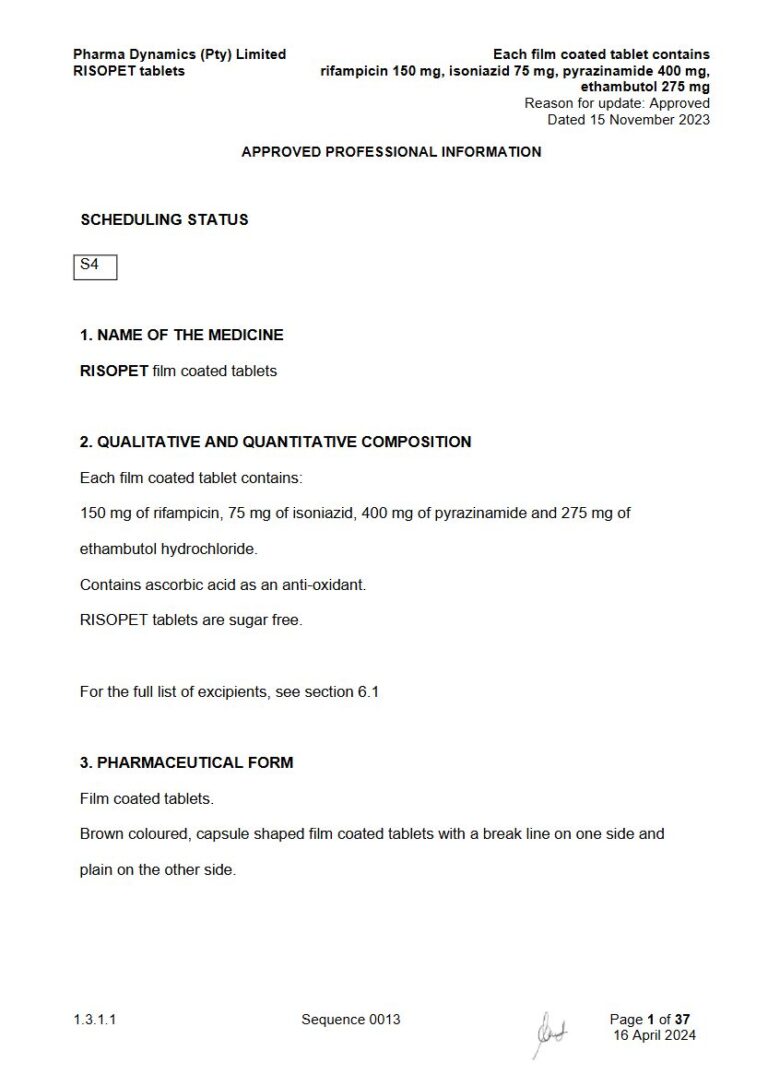
Risopet 150 mg , 75 mg , 400 mg and 275 mg FC tablets
PDF Leaflet Revision Date: 15 November 2023
Clinical Summary
Quick overview from the medicine insert
Indication
Initial phase treatment of pulmonary and extra-pulmonary tuberculosis.
Dosage (summary)
Adults: 2-5 tablets daily based on body weight.
Special Populations
- Hepatic impairment
- Renal impairment
- Elderly
Pregnancy & Breastfeeding
Not established; may cause post-natal hemorrhages. Excreted in breast milk.
Key Drug Interactions
- Antacids reduce bioavailability
- Rifampicin induces CYP450 enzymes
- Isoniazid may increase warfarin levels
Contraindications
- Hypersensitivity to components
- Active hepatic disease
- Severe renal impairment
- Optic neuritis
- Pregnancy and lactation
- Children under 13 years
Common side effects
- Nausea
- Vomiting
- Dizziness
- Visual disturbances
- Hepatotoxicity
Counselling Points
- Take with a full glass of water
- Avoid soft contact lenses
- Report any signs of liver dysfunction or severe skin reactions
Serious warnings
- Risk of severe liver dysfunction
- Monitor for hypersensitivity reactions
- Potential for serious skin reactions
Important Disclaimer
The Risopet 150 mg , 75 mg , 400 mg and 275 mg FC tablets professional information leaflet below is the property of Pharma Dynamics and is provided on Medinsert exactly as issued, with no.. alterations or editorial changes. We make every effort to keep content current by updating documents as soon as new versions become available. Medinsert serves as a trusted access point for healthcare professionals, but does not replace official sources or clinical judgement. For more details, please read our full disclaimer. read more>>
 Healthcare Professionals Only
This content is for registered healthcare professionals
Sign in or create a free account to read the full package insert.
Free for HPCSA-registered professionals. Powered by Medinsert.
Clinical Particulars
Section 4 of the official insert — extracted exactly as issued, no alterations
4.1 Therapeutic indications
RISOPET is indicated for the initial phase treatment of pulmonary and extra-pulmonary tuberculosis in new adult patients and re-treatment of adult cases.
4.2 Posology and method of administration
The recommended treatment dosages, based on the patient's body weight, given daily for the 2 month initial-phase treatment in adults and children older than 13 years of age are as follows:
- 30 - 37 kg 2 tablets
- 38 - 54 kg 3 tablets
- 55 - 70 kg 4 tablets
- 71 kg and over 5 tablets
Special populations
Use in patients with body weight less than 30 kg
RISOPET is not a suitable dosage form for use in the treatment of patients with a body weight of less than 30 kg (see section 4.4).
Elderly
No special dosage regimen is necessary, but concurrent hepatic and/or renal insufficiency should be taken into account. Supplementation of pyridoxine (vitamin B 6 ) may be useful.
Hepatic insufficiency
RISOPET should be used with caution and under strict medical supervision in impaired liver function (see section 4.4) and is contraindicated in patients with a history of medicine induced hepatitis as well as in patients with acute liver diseases (see section 4.3).
Renal insufficiency
RISOPET should be used with caution in patients with moderate renal impairment (creatinine clearance 30 u2013 60 ml/min, see section 4.4). RISOPET is contraindicated in patients with severe renal impairment (creatinine clearance < 30 ml/min, see section 4.3).
Paediatric population
RISOPET is not a suitable dosage form for use in the treatment of children with a body weight of less than 30 kg and is not recommended in children under 13 years of age because of risk of aspiration and possible difficulties in evaluation of changes of visual acuity (see sections 4.3 and 4.4).
Method of administration
RISOPET tablets should be taken with a full glass of water 1 hour before, or 2 hours after a meal. If RISOPET tablets result in gastrointestinal irritation, it may be taken with food. If aluminium-containing antacids are taken, RISOPET tablets should be administered one hour after the antacid tablet dose.
Missed dose: Doctors should advise patients who forget to take RISOPET to take a dose as soon as possible and then continue with the normal dose. Patients should not take a double dose to compensate for the missed dose.
4.3 Contraindications
RISOPET tablets are contraindicated in:
- hypersensitivity to rifampicin, isoniazid, pyrazinamide, ethambutol, any other chemically related medication, or to any of the ingredients of RISOPET
- patients with jaundice or active hepatic disease
- patients with severe renal function impairment (creatinine clearance < 30 ml/min)
- patients with optic neuritis
- pregnancy and lactation (see section 4.6)
- children younger than 13 years of age
- concomitant use with voriconazole and the combination of saquinavir / ritonavir, protease inhibitors except ritonavir when given at full dose or 600 mg twice daily (see section 4.5)
- porphyria.
Rifampicin very markedly reduces ketoconazole levels. Rifampicin levels are halved by ketoconazole (see section 4.5).
4.4 Special warnings and precautions for use
Liver function should be assessed before and regularly during treatment as each active ingredient contained in RISOPET has been associated with liver dysfunction.
In cases of known acetylation phenotypes, patients with extremely fast or extremely slow acetylating capability should receive the four components of RISOPET separately in order to facilitate dose adjustment of isoniazid.
Hypersensitivity
Treatment should be discontinued permanently should shock, renal failure, haemolytic anaemia, dyspnoea and asthma-like attacks, thrombocytopenia or purpura occur as these are side effects that rifampicin may provoke in exceptional cases. Patients developing such reactions must never again be treated with rifampicin. Patients should be advised against interrupting treatment. Use of RISOPET after interruption has been associated with increased risk of serious adverse effects. Treatment with RISOPET tablets should be stopped immediately and the patient evaluated should rash and fever occur.
Stevens - Johnson syndrome (SJS) and toxic epidermal necrolysis (TEN)
Cases of severe cutaneous reactions including Stevens-Johnson syndrome (SJS) and toxic epidermal necrolysis (TEN), some with a fatal outcome, have been reported with the use of isoniazid (see section 4.8). Patients should be advised of the signs and symptoms and monitored closely for skin reactions. If signs or symptoms of SJS or TEN (e.g. progressive skin rash often with blisters or mucosal lesions) develop, the patient should be advised to consult their doctor immediately. RISOPET should be permanently discontinued if an alternative aetiology for the signs and symptoms cannot be established.
Impaired liver function, undernourishment, alcoholism
Rifampicin, isoniazid, pyrazinamide and ethambutol are metabolised in the liver. Elevated transaminase levels, above the upper limit of normal (ULN), commonly occur. Liver dysfunction that may occur in the first few weeks of treatment usually returns to the normal range spontaneously, without interruption of treatment, and usually by the third month of treatment. Patients with impaired liver function should only be given rifampicin in cases of necessity and then with caution and under strict medical supervision. In these patients, careful monitoring of liver function, especially serum alanine aminotransferase (ALT) and serum aspartate aminotransferase (AST) should be carried out prior to therapy and then every 2 to 4 weeks during therapy. If signs of hepatocellular damage occur, rifampicin should be withdrawn. In some cases, hyperbilirubinaemia resulting from competition between rifampicin and bilirubin for excretory pathways of the liver at cell level can occur in the early days of treatment.
A moderate rise in bilirubin and/or transaminase levels is not in itself an indication for interrupting treatment; rather, the decision should be made after repeating these liver function tests, noting trends in the levels, and considering them in conjunction with the patient's clinical condition.
Use of isoniazid should be carefully monitored in patients with current chronic liver disease or severe renal dysfunction. Severe and sometimes fatal hepatitis associated with isoniazid therapy may occur and may develop even after months of treatment. The risk of developing hepatitis is age related. Therefore, patients should be monitored for the prodromal symptoms of hepatitis, such as fatigue, weakness, malaise, anorexia, nausea or vomiting. Treatment with RISOPET tablets should be stopped immediately and the patient evaluated in the following cases: jaundice or elevated liver enzymes associated with the clinical signs of hepatitis since continued use of the medicine in these cases has been reported to cause a more severe form of liver damage. Special care should be exercised in alcoholic patients, the elderly (patients of 50 years and older have the highest incidence of hepatitis with the use of isoniazid) or those with pre-existing hepatic disease.
Risk of neuropathy or pyridoxine deficiency, including those who are alcoholic, malnourished, diabetic, uremic, HIV infected or pregnant, supplementation with pyridoxine (in a 10 mg to 50 mg daily dose) is usually required under these circumstances.
Medicine reaction with eosinophilia and systemic symptoms (u201cDRESSu201d)
Severe, systemic hypersensitivity reactions, including fatal cases, such as medicine reaction with eosinophilia and systemic symptoms (DRESS) syndrome have been observed during treatment with anti-tuberculosis therapy (see section 4.8). It is important to note that early manifestations of hypersensitivity, such as fever, lymphadenopathy or biological abnormalities (including eosinophilia, liver abnormalities) may be present even though rash is not evident. If such signs or symptoms are present, the patient should be advised to consult their doctor immediately. RISOPET should be discontinued if an alternative aetiology for the signs and symptoms cannot be established.
Impaired renal function
Impaired kidney function: dosage adjustment may be necessary according to the ethambutol serum concentration. In severe renal insufficiency, the elimination of isoniazid, pyrazinamide and ethambutol can be delayed leading to a higher systemic exposure, which can result in an increase in adverse events. RISOPET should be used with caution in patients with moderate renal impairment (creatinine clearance 30 - 60 ml/min).
Gout
In patients with a history of gout, regular monitoring of serum uric acid should be undertaken. RISOPET treatment should be stopped in gouty arthritis.
Haematology
Full blood count should be monitored during prolonged treatment and in patients with hepatic disorders. Rifampicin should be withdrawn permanently if thrombocytopenia or purpura occur. The possibility of pyrazinamide having an undesirable effect on blood clotting time or vascular integrity should be borne in mind in patients with haemoptysis.
Diabetes mellitus
Pyrazinamide may interfere with the measurement of urine ketone levels (see section 4.5). Increased difficulty has been reported in controlling diabetes mellitus when such patients are given isoniazid.
Epilepsy/psychosis
Caution should be observed with the use of RISOPET in patients with:
- Epilepsy, as convulsions may be triggered
- History of psychosis
Visual defects
Should visual disturbances arise during treatment with RISOPET tablets (especially in the elderly, and in children in whom evaluation of changes in visual acuity may be difficult), it must be reported immediately, and the medicine discontinued pending visual evaluation. Periodic eye examinations during treatment are suggested.
Contraception
The efficacy of oral contraceptives may be affected by rifampicin; patients should be advised to change to non-hormonal methods for effective birth control (see section 4.5).
Antacids
The absorption of rifampicin may be reduced by antacids, but this interaction can be overcome by giving RISOPET an hour before any antacid. Similarly, RISOPET and preparations containing bentonite (e.g. some amino-salicylic acid preparations) should be given 8 hours apart (see section 4.5).
Discolouration of teeth, body fluids and contact lenses
Treatment with RISOPET tablets may lead to reddish-orange colouration of faeces, saliva, sputum, urine, tears and sweat. Soft contact lenses may be stained irreversibly. Avoid the wearing of soft contact lenses during treatment.
4.5 Interactions with other medicines
Influence of other medicines on RISOPET
Antacids reduce the bioavailability of rifampicin, isoniazid and ethambutol. To avoid this interaction, RISOPET should be taken at least 1 hour before antacids (see section 4.4).
Glucocorticosteroids may increase hepatic metabolism and/or excretion of isoniazid.
Influence of RISOPET on other medicines
Rifampicin and isoniazid
Cytochrome P - 450 enzyme interaction
Rifampicin induces and isoniazid inhibits certain cytochrome P-450 enzymes. Care should be taken when RISOPET tablets are prescribed with medicines metabolised by cytochrome P-450. To maintain optimum therapeutic plasma levels, the dosages of medicines metabolised by cytochrome P-450 enzymes may require adjustment when initiating or stopping concomitant administration of RISOPET tablets.
Some medicines are affected in the opposite direction by rifampicin and isoniazid, e.g. phenytoin, warfarin and theophylline. The net effect cannot be predicted and may change over time.
Plasma concentrations of morphine may be reduced by rifampicin. The analgesic effect of morphine should be monitored and doses of morphine adjusted during and after treatment with rifampicin.
Medicines that are eliminated by metabolism should only be used concomitantly with RISOPET if the plasma concentrations or clinical response/undesirable effects can be monitored and the dose can be adequately adjusted. Monitoring should be performed regularly during RISOPET therapy and for 2 - 3 weeks after discontinuation of the therapy.
The enzyme inducing effects of rifampicin reach a peak within 10 days and gradually decrease over a period of 2 or more weeks after discontinuation of rifampicin treatment, factors that must be taken into account if the dose of other medicinal products is increased during treatment with RISOPET.
Rifampicin
Combinations contraindicated
Enzyme induction
When RISOPET is given concurrently with the combination saquinavir/ritonavir, the potential for hepatotoxicity is increased. Concomitant use with voriconazole and saquinavir/ritonavir, protease inhibitors, except ritonavir when given at full dose or 600 mg twice daily is contraindicated (see section 4.3).
Combinations not recommended
Use of the following medicines concomitantly with RISOPET is not recommended: nevirapine, simvastatin, oral contraceptives and ritonavir (when given in low doses as a booster a marked reduction of plasma concentration might occur) (see section 4.4). When rifampicin is given concomitantly with either halothane or isoniazid, the potential for hepatotoxicity is increased. The concomitant use of rifampicin and halothane should be avoided. Patients receiving both rifampicin and isoniazid should be monitored closely for hepatotoxicity.
Combinations requiring precaution
Rifampicin increases the rate of metabolism of certain medicines by inducing microsomal enzymes, resulting in decreases in the plasma levels of such medicines. Examples of medicines metabolised by cytochrome P-450 enzymes include analgesics (e.g. methadone, narcotic analgesics, morphine, etoricoxib, rofecoxib), antidysrhythmics (e.g. disopyramide, mexiletine, quinidine, propafenone, tocainide, verapamil), antibacterials (e.g. chloramphenicol, clarithromycin, dapsone, doxycycline, fluoroquinolones, telithromycin, linezolid, p-aminosalicylic acid) anticoagulants (e.g. warfarin), anticonvulsants (e.g. phenytoin, tiagabine, carbamazepine), antiestrogens (e.g. tamoxifen, toremifene, gestrinone), antifungals (e.g. fluconazole, itraconazole, ketoconazole, voriconazole, terbinafine), antipsychotics (e.g. haloperidol, clozapine, aripiprazole), antiretrovirals (e.g. zidovudine, delavidine, saquinavir, indinavir, efavirenz and protease inhibitors), atovaquone, barbiturates (e.g. hexobarbitone), beta-blockers, benzodiazepines (e.g. diazepam), benzodiazepine-related medicines (e.g. zopiclone, zolpidem), calcium channel blockers (e.g. diltiazem, nifedipine, verapamil, nimodipine, isradipine, nicardipine, nisoldipine, amlodipine), cardiac glycosides (e.g. digoxin), cimetidine, clofibrate, clofazimine, co-trimoxazole, cytotoxics (e.g. imatinib, geftinib, irinotecan), diuretics (e.g. eplerenone), systemic hormonal contraceptives, corticosteroids, estrogens, fexofenadine, oral hypoglycaemic agents (sulfonylureas), immunosuppressive agents (e.g. azathioprine, cyclosporine, tacrolimus), irinotecan, levothyroxine, losartan, imidapril, enalapril, praziquantel, progestins, quinine, riluzole, selective 5-HT 3 receptor antagonists (e.g. ondansetron), statins metabolised by CYP 3A4, fluvastatin, sulphasalazine, thiazolidinediones (e.g. rosiglitazone), theophylline, thyroid hormone (e.g. levothyroxine), tricyclic antidepressants (e.g. amitriptyline). It may be necessary to adjust the dosages of these medicines if they are given concurrently with rifampicin. The effectiveness of estrogen-containing oral preparations is reduced. Patients using systemic hormonal contraceptives should be advised to use additional precautions or to switch to non-hormonal methods of contraception during rifampicin therapy (see section 4.4). Concurrent use of alcohol, isoniazid, paracetamol, and other hepatotoxic medicines may increase the incidence of rifampicin-induced hepatotoxicity.
Concurrent use of enalapril has resulted in decreased concentrations of enalaprilat, the active metabolite of enalapril. Dosage adjustments should be made if indicated by the patientu2019s clinical condition.
Interference with laboratory and diagnostic tests
Therapeutic levels of rifampicin have been shown to inhibit standard microbiological assays for serum folate and vitamin B12. Thus, alternative assay methods should be considered. Transient elevation of serum bilirubin has also been observed. RISOPET tablets may impair biliary excretion of contrast media used for visualisation of the gallbladder, due to competition for biliary excretion. Therefore, these tests should be performed before the morning dose of rifampicin.
Isoniazid
Combinations requiring precaution
Chronic use of isoniazid may decrease the plasma clearance and prolong the duration of action of alfentanil, benzodiazepines (diazepam, triazolam), carbamazepine, chlorzoxazone, coumarin anticoagulants, ethosuximide, primidone, theophylline, disulfiram and phenytoin. Appropriate adjustment of the anticonvulsant dose may be required. Isoniazid has been associated with increased concentrations or toxicity of cycloserine and warfarin.
Concurrent use of alcohol, paracetamol, rifampicin and other hepatotoxic agents, may increase the potential for isoniazid-induced hepatotoxicity. Aluminium-containing antacids may delay absorption and decrease serum concentrations of isoniazid. Glucocorticosteroids may increase hepatic metabolism and/or excretion of isoniazid. Para-Aminosalicylic acid may increase the plasma concentration and elimination half-life of isoniazid. Concurrent use of ciclosporin, disulfiram, cycloserine and other neurotoxic medicines may increase the potential for CNS toxicity. Isoniazid may increase the formation of potentially nephrotoxic inorganic fluoride metabolites when used concomitantly with enflurane. Interactions with miconazole and ketoconazole have been reported. Copper sulphate urine glucose tests may show false positive reactions.
Consumption of red wine, cured meat, beer and certain types of cheese e.g. Swiss or Cheshire (tyramine-containing foods), or foods containing histamine e.g. fish such as tuna, skipjack, other tropical fish, salmon, mackerel may result in chills or headache, sweating, flushing, hypotension, itching of the skin and a rapid or pounding heart. Tyramine-and histamine-containing foods should be avoided by patients on RISOPET therapy.
Pyrazinamide
Combinations requiring precaution
Pyrazinamide may decrease the efficacy of medicines used in the treatment of gout (e.g. allopurinol, colchicine, probenecid or sulphinpyrazone). Dosage adjustments of these medicines may be necessary. The dosage of pyrazinamide may be decreased by zidovudine. Pyrazinamide may interfere with the measurement of urine ketone levels in patients with diabetes (see section 4.4).
Ethambutol
Combinations requiring precaution
Concurrent use of ethambutol with neurotoxic medicines may potentiate neurotoxic effects such as optic and peripheral neuritis.
4.6 Fertility, pregnancy and lactation
Pregnancy
The safety of RISOPET tablets in pregnancy has not been established. Rifampicin has been reported to cross the placental barrier. When administered during the last weeks of pregnancy, rifampicin can cause post-natal haemorrhages in the mother and infant, for which treatment with vitamin K may be indicated.
Breastfeeding
All components of RISOPET tablets are excreted in breast milk. The safety of RISOPET tablets in breast feeding has not been established.
4.7 Effects on ability to drive and use machines
RISOPET can cause side-effects such as confusion, disorientation, dizziness or drowsiness and visual disturbances. RISOPET may impair your ability to drive and use machinery. Patients should be advised to not drive, operate machinery, or do anything else that could be dangerous until they know how RISOPET affects them.
4.8 Undesirable effects
Tabulated summary of adverse reactions
Side effects associated with rifampicin
System Organ Class Frequency Side effects
Infections and Infestations Less frequent Fungal overgrowth (sore mouth or tongue)
Blood and lymphatic system disorders Frequent Less frequent Frequency unknown Thrombocytopenia, purpura Leucopenia, blood dyscrasias (sore throat, unusual bleeding or bruising), eosinophilia, haemolytic anaemia, agranulocytosis, oedema, haemolysis
Immune system disorders Less frequent Frequency unknown Anaphylaxis, shock Lupus-like syndrome, 12-hour u201cfluu201d syndrome, chills, fever, malaise, bone pain, wheezing, shortness of breath
Endocrine disorders Less frequent Induction of crisis in Addison patients, pancreatitis
Metabolism and nutrition disorders Frequency unknown Decreased appetite
Psychiatric disorders Less frequent Mental confusion, psychosis
Nervous system disorders Frequent Frequency unknown Headache, numbness, tiredness, drowsiness, light-headedness, dizziness, ataxia
Generalised numbness, cerebral haemorrhage and fatalities have been reported when rifampicin administration has been continued or resumed after the appearance of purpura
Eye disorders Frequent Frequency unknown Eye irritation, visual disturbances (blurred vision), exudative conjunctivitis
Permanent discolouration of soft contact lenses, tear discolouration
Vascular disorders Frequency unknown Disseminated intravascular coagulation, decrease in blood pressure, shock, flushing, vasculitis
Respiratory, thoracic and mediastinal disorders Less frequent Frequency unknown Shortness of breath, wheezing Dyspnoea, discoloured sputum
Gastrointestinal disorders Frequent Frequency unknown nausea, vomiting, diarrhoea Gastrointestinal disorder, abdominal discomfort, epigastric distress (which may be alleviated by administration with food), tooth discolouration
Hepatobiliary disorders Frequency unknown Prodromal symptoms of hepatitis, transient abnormalities in liver function, hepatotoxicity, hyperbilirubinemia
Skin and subcutaneous tissue disorders Less frequent Frequency unknown Cutaneous syndrome, flushing, itching with or without skin rash, urticaria Pemphigoid reactions, toxic epidermal necrolysis, vasculitis and erythema multiforme, including Stevens-Johnson syndrome, toxic epidermal necrolysis, exfoliative dermatitis, fixed-medicine eruptions, acute generalised exanthematous pustulosis, sweat discolouration
Musculoskeletal, connective tissue and bone disorders Frequency unknown Muscular weakness and myopathy, bone pain, myalgia
Renal and urinary disorders Frequency unknown Alteration in kidney function, interstitial nephritis (bloody or cloudy urine, greatly decreased frequency of urination or amount of urine), renal failure
Pregnancy, puerperium and perinatal conditions Frequency unknown Post-partum haemorrhage, foetal- maternal haemorrhage
Reproductive system and breast disorders Frequency unknown Menstrual disturbances
Congenital and familial/genetic disorders Frequency unknown Porphyria exacerbation
General disorders and administrative site conditions Frequent Frequency unknown Reddish-orange discoloration of urine, faeces, saliva, sputum, sweat and tears, pyrexia, chills
Collapse, shock, oedema
Investigations Frequent Frequency unknown Increased blood bilirubin, increased aspartate aminotransferase (AST), increased alanine aminotransferase (ALT) Decreased blood pressure, increased blood creatinine, increased hepatic enzyme
Side effects associated with isoniazid
System Organ Class Frequency Side effects
Blood and lymphatic system disorders Frequency unknown Blood dyscrasias, including various anaemias (aplastic anaemia, sideroblastic anaemia, haemolytic anaemia), agranulocytosis, eosinophilia, thrombocytopenia and neutropenia
Immune system disorders Less frequent Frequency unknown Hypersensitivity reactions, systemic lupus erythematosus-like syndrome Anaphylactic reactions
Endocrine disorders Less frequent Frequency unknown Pancreatitis
Menstrual disturbances, Cushing syndrome, pubertas praecox, and difficult controllable diabetes
Metabolism and nutrition disorders Frequency unknown Pellagra, hyperglycaemia, metabolic acidosis
Psychiatric disorders Frequency unknown Psychotic reactions, convulsions, toxic psychosis, memory impairment and toxic encephalopathy, increased seizure frequency in epileptics, hyperactivity, euphoria, insomnia, delusions, hallucinations, ataxia, cerebellar toxicity, stupor
Nervous system disorders Frequent Less frequent Polyneuritis, paraesthesia, neurotoxicity, peripheral neuropathy Dizziness, light-headedness, headache, toxic encephalopathy, high doses may increase seizure frequency
Eye disorders Frequency unknown Optic neuritis and atrophy
Ear and labyrinth disorders Frequency unknown Vertigo, tinnitus
Vascular disorders Frequency unknown Vasculitis
Gastrointestinal disorders Frequent Frequency unknown Diarrhoea, constipation, dry mouth Nausea and vomiting, epigastric distress
Hepatobiliary disorders Frequent Less frequent Raised liver enzymes Hepatitis, severe hepatitis, fulminant hepatitis, hepatotoxicity
Skin and subcutaneous tissue disorders Frequency unknown Acne, rash, Stevens-Johnson syndrome, pemphigus, exfoliative dermatitis medicine reaction with eosinophilia and systemic symptoms (DRESS) syndrome, toxic epidermal necrolysis (TEN), lupus-like reactions, erythema multiforme, vasculitis, urticaria, purpura
Musculoskeletal, connective tissue and bone disorders Frequency unknown Rheumatoid syndrome, loss of tendon reflexes, muscle weakness, hyperreflexia, muscle twitching, arthritic symptoms, arthralgia
Renal and urinary disorders Frequency unknown Urinary retention
Reproductive system and breast disorders Frequency unknown Gynecomastia
General disorders and administrative site conditions Frequency unknown Lymphadenopathy, fever
Side effects associated with pyrazinamide
System Organ Class Frequency Side effects
Blood and lymphatic system disorders Frequency unknown Sideroblastic anaemia, thrombocytopenia, undesirable effects on blood clotting mechanisms, splenomegaly
Immune system disorders Less frequent Allergic reactions
Metabolism and nutrition disorders Frequency unknown Anorexia
Gastrointestinal disorders Frequency unknown Nausea, vomiting, anorexia, abdominal pain aggravation of peptic ulcer
Hepatobiliary disorders Frequency unknown Hepatotoxicity (frequency appears to be dose-related), increases in liver enzymes hepatomegaly, jaundice, porphyria
Skin and subcutaneous tissue disorders Less frequent Frequency unknown Angioedema Itching, skin rash, photosensitivity, pellagra, urticaria, pruritus, acne, medicine reaction with eosinophilia and systemic symptoms (DRESS) syndrome
Musculoskeletal, connective tissue and bone disorders Frequent Frequency unknown Arthralgia, myalgia
Renal and urinary disorders Frequency unknown Dysuria
General disorders and administrative site conditions Frequent Fever, malaise
Side effects associated with ethambutol
System Organ Class Frequency Side effects
Blood and lymphatic system disorders Less frequent Frequency unknown Thrombocytopenia Eosinophilia, leucopenia, neutropenia
Immune system disorders Less frequent Frequency unknown Hypersensitivity reactions, anaphylactic reactions
Metabolism and nutrition disorders Frequency unknown Hyperuricaemia
Psychiatric disorders Less frequent Hallucinations, disorientation, confusion
Nervous system disorders Less frequent Frequency unknown Headache, dizziness, malaise Peripheral neuritis
Eye disorders Frequency unknown Retrobulbar optic neuritis with a reduction in visual acuity, constriction of visual field, central or peripheral scotoma, green-red colour blindness, retinal haemorrhage.
Respiratory, thoracic and mediastinal disorders Less frequent Pulmonary infiltrates
Gastrointestinal disorders Frequent Gastrointestinal disturbances including metallic taste, anorexia, loss of appetite, abdominal pain, nausea, vomiting
Hepatobiliary disorders Frequency unknown Jaundice, transient liver dysfunction
Skin and subcutaneous tissue disorders Frequency unknown Skin rash, pruritus, urticaria, toxic epidermal necrolysis, lichenoid and erythema multiforme eruptions, Stevens-Johnson syndrome, dermatitis, medicine reaction with eosinophilia and systemic symptoms (DRESS) syndrome
Musculoskeletal, connective tissue and bone disorders Less frequent Frequency unknown Gout (acute), arthritic joint pains Arthralgia
Renal and urinary disorders Frequency unknown Renal clearance of urate may be reduced, interstitial nephritis, acute renal failure
General disorders and administrative site conditions Frequency unknown Fever, malaise
The adverse effects for each of the active ingredients as listed above are possible side effects when taking the combination tablet RISOPET.
Reporting of suspected adverse reactions
Reporting suspected adverse reactions after authorisation of the medicine is important. It allows continued monitoring of the benefit/risk balance of the medicine. Healthcare professionals are asked to report any suspected adverse reactions to SAHPRA via the online service for adverse drug reaction reporting by following the link: https://www.sahpra.org.za/Publications/Index/8 . An email can be sent directly to the company, [email protected] to ensure safety of the product.
4.9 Overdose
Signs and symptoms: The symptoms of an overdose with RISOPET are unknown, but may include diarrhoea, nausea, vomiting, abdominal cramps, anorexia, reddish-orange discolouration of secretions, myopathy, muscle weakness, oedema, peripheral neuropathy, constipation, dry mouth, arthralgia and hyperuricaemia, jaundice, rash and fever, elevated liver enzymes with the clinical signs of hepatitis, visual impairment.
Rifampicin
Nausea, vomiting, abdominal pain, pruritus, headache and increasing lethargy will probably occur within a short time after acute ingestion; unconsciousness may occur when there is severe hepatic disease. Transient increases in liver enzymes and/or bilirubin may occur. Brownish-red or orange discolouration of the skin, urine, sweat, saliva, tears and faeces will occur and its intensity is proportional to the amount ingested. Facial or periorbital oedema has also been reported in paediatric patients. Hypotension, sinus tachycardia, ventricular dysrhythmias, seizures and cardiac arrest were reported in some fatal cases. Nonfatal acute overdoses in adults have been reported with doses ranging from 9 g to 12 g rifampicin. Fatal acute overdoses in adults have been reported with doses ranging from 14 g to 60 g. Non-fatal overdoses in paediatric patients ages 1 to 4 years old of 100 mg/kg for one or two doses have been reported.
Isoniazid
Isoniazid overdosage produces signs and symptoms within 30 minutes to 3 hours after ingestion. Nausea, vomiting, dizziness, slurring of speech, blurring of vision and visual hallucinations are among the early manifestations. With marked overdosage, respiratory distress and CNS depression, progressing rapidly from stupor to profound coma are to be expected, along with severe, intractable seizures. Severe metabolic acidosis, acetonuria and hyperglycaemia are typical laboratory findings.
Pyrazinamide
There is limited information related to pyrazinamide overdosage. Liver toxicity and hyperuricaemia may occur with overdosage.
Ethambutol
There is limited information related to ethambutol overdose. Loss of appetite, gastrointestinal disturbances, fever, headache, dizziness, confusion and hallucinations may occur.
Management of overdose: Symptomatic and supportive therapy is required. Intensive support measures should be instituted, including airway patency and individual symptoms treated as they arise.
