
Risabex 1 Mg Oral Solution
PDF Leaflet Revision Date: 13 June 2023
Clinical Summary
Quick overview from the medicine insert
Indication
Treatment of schizophrenia, mania in bipolar disorder, and conduct disorders in children.
Dosage (summary)
Adults: Start at 2 mg/day, increase to 4 mg/day on day 2; maintain 4-8 mg/day. Elderly/Renal/Hepatic: Start at 0.5 mg twice daily.
Special Populations
- Elderly
- Renal impairment
- Hepatic impairment
Pregnancy & Breastfeeding
Use only if benefits outweigh risks; contraindicated in breastfeeding.
Key Drug Interactions
- CYP2D6 inhibitors
- CYP3A4 inhibitors
- Centrally acting substances
Contraindications
- Hypersensitivity to risperidone
- Children under 5 years
- Parkinsonu2019s disease
Common side effects
- Sedation
- Parkinsonism
- Weight gain
- Hyperprolactinaemia
Counselling Points
- Monitor for sedation
- Avoid alcohol
- Regular weight checks
- Report signs of hyperglycaemia
Serious warnings
- Increased mortality in elderly with dementia
- Neuroleptic malignant syndrome
- Cerebrovascular adverse events
Important Disclaimer
The Risabex 1 Mg Oral Solution professional information leaflet below is the property of Abex Pharmaceutica and is provided on Medinsert exactly as issued, with no.. alterations or editorial changes. We make every effort to keep content current by updating documents as soon as new versions become available. Medinsert serves as a trusted access point for healthcare professionals, but does not replace official sources or clinical judgement. For more details, please read our full disclaimer. read more>>
 Healthcare Professionals Only
This content is for registered healthcare professionals
Sign in or create a free account to read the full package insert.
Free for HPCSA-registered professionals. Powered by Medinsert.
Clinical Particulars
Section 4 of the official insert — extracted exactly as issued, no alterations
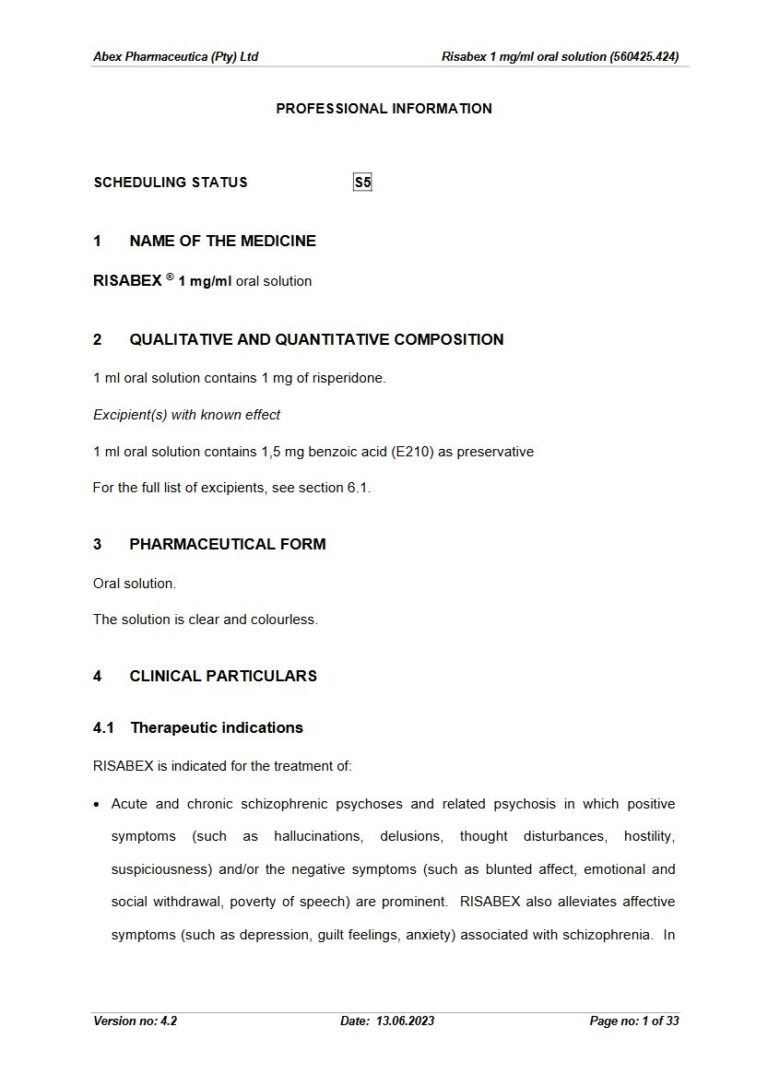
4.1 Therapeutic indications
RISABEX is indicated for the treatment of:
- Acute and chronic schizophrenic psychoses and related psychosis in which positive symptoms (such as hallucinations, delusions, thought disturbances, hostility, suspiciousness) and/or the negative symptoms (such as blunted affect, emotional and social withdrawal, poverty of speech) are prominent. RISABEX also alleviates affective symptoms (such as depression, guilt feelings, anxiety) associated with schizophrenia. In patients who have shown an initial treatment response, RISABEX is also effective in maintaining the clinical improvement.
- Mania in bipolar disorder. These episodes are characterised by symptoms such as elevated, expansive, or irritable mood, inflated self-esteem, decreased need for sleep, pressured speech, racing thoughts, distractibility, or poor judgment, including disruptive or aggressive behaviours.
- Conduct and other disruptive behaviour disorders in children (aged 5 to 12 years), with subaverage intellectual functioning or mental retardation in whom destructive behaviours (e.g. aggression, impulsivity and self-injurious behaviours) are prominent.
4.2 Posology and method of administration
Posology
Schizophrenia
Switching from other antipsychotics to RISABEX: When medically appropriate, gradual discontinuation of the previous treatment, while RISABEX therapy is initiated, is recommended. Also, if medically appropriate, when switching patients from depot antipsychotics, initiate RISABEX therapy in place of the next scheduled injection. The need for continuing existing anti-Parkinson medications should be re-evaluated periodically.
Adults
RISABEX may be given once or twice daily. Patients should start with 2 mg/day RISABEX. The dosage may be increased on the second day to 4 mg/day. From then on, the dosage can be maintained unchanged, or further individualised, if needed. Most patients will benefit from daily doses of between 4 mg/day and 8 mg/day. Doses above 6 mg/day (when administered twice daily) were associated with more extrapyramidal symptoms and other adverse effects and are not generally recommended. In some patients, particularly with first episode acute psychosis, a slower titration phase and a lower starting and maintenance dose may be appropriate. Doses above 10 mg/day have not been shown to be superior in efficacy to lower doses and may cause an increased incidence of side effects such as extrapyramidal symptoms. Dosages above 10 mg/day should only be considered if the benefits outweigh the risk. The maximum total daily dose is 16 mg/day. A benzodiazepine may be added to RISABEX if additional sedation is required.
Elderly patients and patients with renal and hepatic impairment
A starting dose of 0,5 mg twice daily is recommended. This dosage can be individually adjusted with 0,5 mg twice daily increments to 1 to 2 mg twice daily.
Children
Not for children under 15 years as efficacy and safety in children under the age of 15 years have not been demonstrated in schizophrenia.
Mania in bipolar disorders
RISABEX should be administered on a once daily schedule, starting with 2 or 3 mg. Dosage adjustments, if indicated, should occur at intervals of not less than 24 hours and in dosage increments of 1 mg per day. Efficacy was demonstrated in flexible doses over a range of 1 to 6 mg per day.
The continued use of RISABEX must be evaluated and justified on an ongoing basis. Experience is lacking in bipolar mania in children and adolescents less than 18 years of age.
Conduct and other disruptive behaviour disorders (DBD) in children 5 to 12 years of age
Subjects < 50 kg
A starting dose of 0,01 mg/kg once daily is recommended. This dosage can be individually adjusted by increments of 0,01 mg/kg once daily not more frequently than every other day, if needed. The recommended maintenance dose is 0,02 to 0,04 mg/kg once daily. The mean dose is 0,03 mg/kg once daily. The continued use of RISABEX must be evaluated and justified on an ongoing basis. Experience is lacking in children aged less than 5 years.
Renal and liver impairment
Patients with renal impairment have less ability to eliminate the active antipsychotic fraction than normal adults. Patients with impaired hepatic function have increases in plasma concentration of the free fraction of risperidone. Irrespective of the indication, starting and consecutive dosing should be halved, and dose titration should be slower for patients with renal or hepatic impairment. RISABEX should be used with caution in these groups of patients.
Method of administration
RISABEX is for oral use. Directions for opening the bottle and using the pipette: The solution comes with a pipette (syringe). This should be used to help you to measure the exact amount of medicine you need. To open the bottle and use the pipette:
- The bottle comes with a child resistant cap and should be opened as follows: push the plastic screw cap down while turning it counterclockwise (Figure 1). Remove the unscrewed cap.
- Insert the pipette into the bottle (Figure 2).
- While holding the bottom ring, pull the top ring up to the mark that corresponds to the number of millilitres or milligram you need to give / take (Figure 3).
- Holding the bottom ring, remove the entire pipette from the bottle (Figure 4).
- Empty the pipette into any non-alcoholic drink, except for tea, by sliding the upper ring down.
- Close the bottle.
- Rinse the pipette with some water.
4.3 Contraindications
- Hypersensitivity to risperidone or to any of the excipients of RISABEX listed in section 6.1.
- Conduct and other disruptive behaviour disorders in children: RISABEX is contra- indicated in children under 5 years of age as efficacy and safety in these children have not been demonstrated.
- Parkinsonu2019s disease and Lewy Body dementia (see section 4.4).
4.4 Special warnings and precautions for use
Elderly patients with dementia (see section 4.5)
Before prescribing, medical practitioners are advised to carefully assess the risks and benefits of the use of atypical antipsychotics in elderly patients with dementia, taking into account risk predictions for stroke in the individual patient (e.g. hypertension, diabetes, current smoking, atrial fibrillation, and age > 80 years). Where the use of antipsychotics in the elderly is considered essential, the lowest effective dose should be used. These patients should be carefully monitored to avoid or reduce hypotension, gait disturbances, oversedation and complications associated with hyperglycaemia.
Risperidone is not indicated in elderly patients with dementia exhibiting behavioural disturbances.
Increased mortality in elderly people with dementia
Elderly patients with dementia treated with atypical antipsychotic medicines have an increased mortality compared to placebo in a meta-analysis of 17 controlled trials of atypical antipsychotic medicines, including risperidone. In placebo-controlled trials with oral risperidone in this population, the incidence of mortality was 4,0 % for risperidone-treated patients compared to 3,1 % for placebo-treated patients. The mean age (range) of patients who died was 86 years (range 67 to 100).
Concomitant use with furosemide (see section 4.5)
In risperidone placebo-controlled trials in elderly patients with dementia, a higher incidence of mortality was observed in patients treated with furosemide and risperidone (7,3 %; mean age 89 years, range 75 to 97) when compared to patients treated with risperidone alone (3,1 %; mean age 84 years, range 70 to 96) or furosemide alone (4,1 %; mean age 80 years, range 67 to 90). The increase in mortality in patients treated with furosemide plus risperidone was observed in two of the four clinical trials. No pathophysiological mechanism has been identified to explain this finding, and no consistent pattern for cause of death observed. Nevertheless, caution should be exercised, and the risks and benefits of this combination should be considered prior to the decision to use. There was no increased incidence of mortality among patients taking other diuretics as concomitant medicine with risperidone. Irrespective of treatment, dehydration was an overall risk factor for mortality and should therefore be carefully avoided in elderly patients with dementia.
Cerebrovascular adverse events (CAE)
In placebo-controlled clinical trials in elderly patients with dementia, there was a higher incidence of cerebrovascular adverse events (cerebrovascular accidents and transient ischaemic attacks), including fatalities, in patients treated with risperidone compared to patients receiving placebo (mean age 85 years; range 73 to 97 years).
Orthostatic hypotension
Due to the alpha-blocking activity of risperidone, (orthostatic) hypotension can occur, especially during the initial dose titration period. Risperidone as in RISABEX should be used with caution in patients with known cardiovascular disease, and the dosage should be gradually titrated as recommended. A dose reduction should be considered if hypotension occurs.
Leukopenia, neutropenia, and agranulocytosis
Events of leukopenia, neutropenia and agranulocytosis have been reported with risperidone as in RISABEX. Agranulocytosis has been reported during post-marketing surveillance. Patients with a history of a clinically significant low white blood cell count (WBC) or a medicine-induced leukopenia/neutropenia should be monitored during therapy and discontinuation of RISABEX should be considered at the first sign of a clinically significant decline in WBC in the absence of other causative factors. Patients with clinically significant neutropenia should be carefully monitored for fever or other symptoms or signs of infection and treated promptly if such symptoms or signs occur. Patients with severe neutropenia (absolute neutrophil count < 1 X 10 9 /L) should discontinue RISABEX and have their WBC followed until recovery.
Venous thromboembolism
Cases of venous thromboembolism (VTE) have been reported with risperidone. Since patients treated with antipsychotics often present with acquired risk factors for VTE, all possible risk factors for VTE should be identified before and during treatment with risperidone as in RISABEX and preventive measures undertaken.
Tardive dyskinesia/ extrapyramidal symptoms (TD/EPS)
Risperidone as in RISABEX has been associated with the induction of tardive dyskinesia (TD) characterised by potentially irreversible rhythmical involuntary movements, predominantly of the tongue and/or face. It has been reported that the occurrence of extrapyramidal symptoms is a risk factor for the development of tardive dyskinesia. TD appears to be most prominent in the elderly especially elderly females. If signs and symptoms of tardive dyskinesia appear, the discontinuation of RISABEX should be considered.
Neuroleptic malignant syndrome (NMS)
Neuroleptic malignant syndrome, a potentially fatal symptom complex, characterised by hyperthermia, muscle rigidity, autonomic instability, altered consciousness and elevated serum creatine phosphokinase levels has been reported to occur in association with risperidone as in RISABEX. Additional signs may include elevated creatine phosphokinase levels, myoglobinuria (rhabdomyolysis) and acute renal failure. In this event, RISABEX should be discontinued.
Parkinsonu2019s disease/Lewy Body dementia and NMS
Patients with Parkinsonu2019s disease or dementia with Lewy Bodies (DLB) have an increased risk of neuroleptic malignant syndrome (NMS) as well as having an increased sensitivity to antipsychotic medicines (see section 4.3). Manifestation of this increased sensitivity can include confusion, obtundation and postural instability with frequent falls, in addition to extrapyramidal symptoms. In addition, in clinical trials, elderly patients have a higher mortality than placebo-treated elderly patients (see section 4.3).
Hyperglycaemia and diabetes mellitus
Hyperglycaemia, in some cases extreme and associated with ketoacidosis or hyperosmolar coma or death, has been reported in patients treated with risperidone as in RISABEX. Patients with an established diagnosis of diabetes mellitus who are starting on risperidone as in RISABEX should be monitored regularly for worsening of glucose control. Patients with risk factors for diabetes mellitus (e.g. obesity, family history of diabetes) who are starting treatment with RISABEX should be monitored for symptoms of hyperglycaemia including polydipsia, polyuria, polyphagia, and weakness. Patients who develop symptoms of hyperglycaemia during treatment with RISABEX should undergo fasting blood glucose testing.
In some cases, hyperglycaemia has resolved when risperidone was discontinued; however, some patients required continuation of anti-diabetic treatment despite discontinuation of risperidone.
Weight gain
Significant weight gain has been reported. Monitoring weight gain is advisable when RISABEX is being used. Patients may be advised to refrain from excessive eating in view of the possibility of weight gain.
Hyperprolactinaemia
Hyperprolactinaemia is a common side effect of treatment with risperidone as in RISABEX. Evaluation of the prolactin plasma level is recommended in patients with evidence of possible prolactin-related side effects (e.g., gynaecomastia, menstrual disorders, anovulation, fertility disorder, decreased libido, erectile dysfunction, and galactorrhoea). Tissue culture studies suggest that cell growth in human breast tumours may be stimulated by prolactin. Although no clear association with the administration of antipsychotics has so far been demonstrated in clinical and epidemiological studies, caution is recommended in patients with relevant medical history. RISABEX should be used with caution in patients with pre-existing hyperprolactinaemia and in patients with possible prolactin-dependent tumours.
QT-interval
Caution should be exercised when RISABEX is prescribed in patients with a history of cardiac dysrhythmias, in patients with congenital long QT syndrome, and in concomitant use with medicines known to prolong the QT-interval.
Priapism
Medicines with alpha-adrenergic blocking effects have been reported to induce priapism. Priapism has been reported with risperidone as in RISABEX during post-marketing surveillance (see section 4.8).
Body temperature regulation
Disruption of the bodyu2019s ability to reduce core body temperature may occur. Appropriate care is advised when prescribing RISABEX to patients who will be experiencing conditions which may contribute to an elevation in core body temperature, e.g. exercising strenuously, exposure to extreme heat, receiving concomitant medicines with anticholinergic activity, or being subject to dehydration.
Antiemetic effect
An antiemetic effect was observed in preclinical studies with risperidone as in RISABEX. This effect, if it occurs in humans, may mask the signs and symptoms of overdosage with certain medicines or of conditions such as intestinal obstruction, Reyeu2019s syndrome, and brain tumour.
Renal and hepatic impairment
Patients with renal impairment have less ability to eliminate the active antipsychotic fraction than adults with normal renal function. Patients with impaired hepatic function have increases in plasma concentration of the free fraction of risperidone (see section 4.2).
Intraoperative floppy iris syndrome
Intraoperative floppy iris syndrome (IFIS) has been observed during cataract surgery in patients treated with medicines with alpha1a-adrenergic antagonist effect, including risperidone as in RISABEX. IFIS may increase the risk of eye complications during and after the operation. Current or past use of RISABEX should be made known to the ophthalmic surgeon in advance of surgery. The potential benefit of stopping RISABEX prior to cataract surgery has not been established and should be weighed against the risk of stopping RISABEX therapy.
Seizures
RISABEX should be used cautiously in patients with a history of seizures or other conditions that potentially lower the seizure threshold.
Paediatric population
Before risperidone as in RISABEX is prescribed to a child or adolescent with conduct disorder they should be fully assessed for physical and social causes of the aggressive behaviour such as pain or inappropriate environmental demands. The sedative effect of risperidone as in RISABEX should be closely monitored in this population because of possible consequences on learning ability. A change in the time of administration of RISABEX could improve the impact of the sedation on attention faculties of children and adolescents. Risperidone as in RISABEX was associated with mean increases in body weight and body mass index (BMI). Baseline weight measurement prior to treatment and regular weight monitoring are recommended. Changes in height in the long-term open-label extension studies were within expected age-appropriate norms. The effect of long-term risperidone treatment on sexual maturation and height has not been adequately studied. Because of the potential effects of prolonged hyperprolactinemia on growth and sexual maturation in children and adolescents, regular clinical evaluation of endocrinological status should be considered, including measurements of height, weight, sexual maturation, monitoring of menstrual functioning, and other potential prolactin-related effects.
Results from a small post-marketing observational study showed that risperidone-exposed subjects between the ages of 8 to 16 years were on average approximately 3,0 to 4,8 cm taller than those who received other atypical antipsychotic medicines. This study was not adequate to determine whether exposure to risperidone had any impact on final adult height, or whether the result was due to a direct effect of risperidone on bone growth, or the effect of the underlying disease itself on bone growth, or the result of better control of the underlying disease with resulting increase in linear growth. During treatment with risperidone as in RISABEX regular examination for extrapyramidal symptoms and other movement disorders should also be conducted. RISABEX contains 1,5 mg benzoic acid per 1 ml solution. An increase in bilirubinaemia following its displacement from albumin may increase neonatal jaundice which may develop into kernicterus (non-conjugated bilirubin deposits in the brain tissue).
4.5 Interactions with other medicines
The risk of using risperidone as in RISABEX in combination with other medicines has not been systematically evaluated.
Pharmacodynamic-related interactions
Medicines known to prolong the QT interval
Caution is advised when prescribing risperidone with medicines known to prolong the QT- interval, such as antidysrhythmics (e.g., quinidine, dysopiramide, procainamide, propafenone, amiodarone, sotalol), tricyclic antidepressant (i.e., amitriptyline), tetracyclic antidepressants (i.e., maprotiline), some antihistamines, other antipsychotics, some antimalarials (i.e., quinine and mefloquine), and with medicines causing electrolyte imbalance (hypokalaemia, hypomagnesaemia), bradycardia, or those which inhibit the hepatic metabolism of risperidone. This list is indicative and not exhaustive.
Centrally acting medicines and alcohol
Risperidone as in RISABEX should be used with caution in combination with other centrally acting substances notably including alcohol, opiates, antihistamines, and benzodiazepines due to the increased risk of sedation.
Levodopa and dopamine agonists
Risperidone as in RISABEX may antagonise the effect of levodopa and other dopamine agonists. If this combination is deemed necessary, particularly in end-stage Parkinson's disease, the lowest effective dose of each treatment should be prescribed.
Psychostimulants
The combined use of psychostimulants (e.g. methylphenidate) with risperidone as in RISABEX can lead to extrapyramidal symptoms upon change of either or both treatments (see section 4.4).
Medicines with hypotensive effect
Clinically significant hypotension has been observed post-marketing with concomitant use of risperidone as in RISABEX and antihypertensive treatment.
Paliperidone
Concomitant use of oral risperidone as in RISABEX with paliperidone is not recommended as paliperidone is the active metabolite of risperidone and the combination of the two may lead to additive active antipsychotic fraction exposure.
Pharmacokinetic-related interactions
Food does not affect the absorption of risperidone. Risperidone is mainly metabolised through CYP2D6, and to a lesser extent through CYP3A4. Both risperidone and its active metabolite 9-hydroxyrisperidone are substrates of P-glycoprotein (P-gp). Substances that modify CYP2D6 activity, or substances strongly inhibiting or inducing CYP3A4 and/or P-gp activity, may influence the pharmacokinetics of the risperidone active antipsychotic fraction.
Strong CYP2D6 inhibitors
Co-administration of risperidone as in RISABEX with a strong CYP2D6 inhibitor may increase the plasma concentrations of risperidone, but less so of the active antipsychotic fraction. Higher doses of a strong CYP2D6 inhibitor may elevate concentrations of the risperidone active antipsychotic fraction (e.g., paroxetine, see below). It is expected that other CYP2D6 inhibitors, such as quinidine, may affect the plasma concentrations of risperidone in a similar way. When concomitant paroxetine, quinidine, or another strong CYP2D6 inhibitor, especially at higher doses, is initiated or discontinued, the medical practitioner should re-evaluate the dosing of RISABEX.
CYP3A4 and/or P-gp inhibitors
Co-administration of risperidone as in RISABEX with a strong CYP3A4 and/or P-gp inhibitor may substantially elevate plasma concentrations of the risperidone active antipsychotic fraction. When concomitant itraconazole or another strong CYP3A4 and/or P-gp inhibitor is initiated or discontinued, the medical practitioner should re-evaluate the dosing of RISABEX.
CYP3A4 and/or P-gp inducers
Co-administration of risperidone with a strong CYP3A4 and/or P-gp inducer may decrease the plasma concentrations of the risperidone active antipsychotic fraction. When concomitant carbamazepine or another strong CYP3A4 and/or P-gp inducer is initiated or discontinued, the medical practitioner should re-evaluate the dosing of RISABEX. CYP3A4 inducers exert their effect in a time-dependent manner and may take at least 2 weeks to reach maximal effect after introduction. Conversely, on discontinuation, CYP3A4 induction may take at least 2 weeks to decline.
Highly protein-bound medicines
When risperidone as in RISABEX is taken together with highly protein-bound medicines, there is no clinically relevant displacement of either medicine from the plasma proteins. When using concomitant medicines, the corresponding label should be consulted for information on the route of metabolism and the possible need to adjust dosage.
Paediatric population
Interaction studies have only been performed in adults. The relevance of the results from these studies in paediatric patients is unknown. The combined use of psychostimulants (e.g., methylphenidate) with risperidone as in RISABEX in children and adolescents did not alter the pharmacokinetics and efficacy of risperidone.
Effect of other medicines on the pharmacokinetics of risperidone
Antibacterials:
- Erythromycin, a moderate CYP3A4 inhibitor and P-gp inhibitor, does not change the pharmacokinetics of risperidone as in RISABEX and the active antipsychotic fraction.
- Rifampicin, a strong CYP3A4 inducer and a P-gp inducer, decreased the plasma concentrations of the active antipsychotic fraction.
Anticholinesterases:
- Donepezil and galantamine, both CYP2D6 and CYP3A4 substrates, do not show a clinically relevant effect on the pharmacokinetics of risperidone and the active antipsychotic fraction.
Antiepileptics:
- Carbamazepine, a strong CYP3A4 inducer and a P-gp inducer, has been shown to decrease the plasma concentrations of the active antipsychotic fraction of risperidone. Similar effects may be observed with e.g. phenytoin and phenobarbital (phenobarbitone), which also induce CYP3A4 hepatic enzyme, as well as P-glycoprotein.
- Topiramate modestly reduced the bioavailability of risperidone, but not that of the active antipsychotic fraction. Therefore, this interaction is unlikely to be of clinical significance.
Antifungals:
- Itraconazole, a strong CYP3A4 inhibitor and a P-gp inhibitor, at a dosage of 200 mg/day increased the plasma concentrations of the active antipsychotic fraction by about 70 %, at risperidone doses of 2 to 8 mg/day.
- Ketoconazole, a strong CYP3A4 inhibitor and a P-gp inhibitor, at a dosage of 200 mg/day increased the plasma concentrations of risperidone and decreased the plasma concentrations of 9-hydroxyrisperidone.
Antipsychotics:
Phenothiazines may increase the plasma concentrations of risperidone but not those of the active antipsychotic fraction.
Antivirals:
Protease inhibitors: No formal study data are available; however, since ritonavir is a strong CYP3A4 inhibitor and a weak CYP2D6 inhibitor, ritonavir and ritonavir-boosted protease inhibitors potentially raise concentrations of the risperidone active antipsychotic fraction.
Beta blockers:
Some beta-blockers may increase the plasma concentrations of risperidone but not those of the active antipsychotic fraction.
Calcium channel blockers:
Verapamil, a moderate inhibitor of CYP3A4 and an inhibitor of P-gp, increases the plasma concentration of risperidone and the active antipsychotic fraction.
Gastrointestinal medicines:
H 2 -receptor antagonists: Cimetidine and ranitidine, both weak inhibitors of CYP2D6 and CYP3A4, increased the bioavailability of risperidone, but only marginally that of the active antipsychotic fraction.
SSRIs and Tricyclic antidepressants:
- Fluoxetine, a strong CYP2D6 inhibitor, increases the plasma concentration of risperidone, but less so of the active antipsychotic fraction.
- Paroxetine, a strong CYP2D6 inhibitor, increases the plasma concentrations of risperidone, but, at dosages up to 20 mg/day, less so of the active antipsychotic fraction. However, higher doses of paroxetine may elevate concentrations of the risperidone active antipsychotic fraction.
- Venlafaxine administered under steady state conditions at 150 mg/day inhibited the CYP2D6-mediated metabolism of risperidone (administered as a single 1 mg oral dose) to its active metabolite, 9-hydroxyrisperidone, resulting in an approximate 32 % increase in risperidone AUC. However, venlafaxine co-administration did not significantly alter the pharmacokinetic profile of the total active antipsychotic fraction.
- Tricyclic antidepressants may increase the plasma concentrations of risperidone but not those of the active antipsychotic fraction. Amitriptyline does not affect the pharmacokinetics of risperidone or the active antipsychotic fraction.
- Sertraline, a weak inhibitor of CYP2D6, and fluvoxamine, a weak inhibitor of CYP3A4, at dosages up to 100 mg/day are not associated with clinically significant changes in concentrations of the risperidone active antipsychotic fraction. However, doses higher than 100 mg/day of sertraline or fluvoxamine may elevate concentrations of the risperidone active antipsychotic fraction.
Effect of risperidone on the pharmacokinetics of other medicines
Antiepileptics: Risperidone does not show a clinically relevant effect on the pharmacokinetics of valproate or topiramate.
Antipsychotics: Aripiprazole, a CYP2D6 and CYP3A4 substrate: Risperidone tablets or injections did not affect the pharmacokinetics of the sum of aripiprazole and its active metabolite, dehydroaripiprazole.
Digoxin: Risperidone does not show a clinically relevant effect on the pharmacokinetics of digoxin.
Lithium: Risperidone does not show a clinically relevant effect on the pharmacokinetics of lithium.
Concomitant use of RISABEX with furosemide
There is increased mortality in elderly patients with dementia concomitantly receiving furosemide and risperidone as in RISABEX. (see section 4.4)
4.6 Fertility, pregnancy and lactation
The safety of risperidone as in RISABEX in pregnancy and breastfeeding women has not been established.
Pregnancy
Although, in experimental animals, risperidone did not show direct reproductive toxicity, some indirect, prolactin- and CNS-mediated effects were observed. No teratogenic effect of risperidone was noted in any study. Neonates exposed to antipsychotic medicines (including risperidone) during the third trimester of pregnancy are at risk for extrapyramidal and/or withdrawal symptoms that may vary in severity following delivery. These symptoms in the neonates may include agitation, hypertonia, hypotonia, tremor, somnolence, respiratory distress, or feeding disorder. Therefore, RISABEX should only be used during pregnancy if the benefits outweigh the risks.
Breastfeeding
In animal studies risperidone and 9-hydroxy-risperidone are excreted in the milk. It has been demonstrated that risperidone and 9-hydroxy-risperidone are also excreted in human breast milk. Therefore, women receiving RISABEX should not breastfeed.
Fertility
Risperidone elevates prolactin levels. Hyperprolactinaemia may suppress hypothalamic GnRH, resulting in reduced pituitary gonadotropin secretion. This, in turn, may inhibit reproductive function by impairing gonadal steroidogenesis in both female and male patients.
4.7 Effects on ability to drive and use machines
RISABEX may impair mental alertness. Patients should therefore be advised not to drive or operate machinery until their individual susceptibility is known.
4.8 Undesirable effects
Summary of the safety profile
The most frequently reported adverse drug reactions (ADRs) are parkinsonism, sedation/somnolence, headache, and insomnia. The ADRs that appeared to be dose-related included parkinsonism and akathisia.
Tabulated summary of adverse reactions
System Organ Class
| Frequent | Less frequent |
|---|---|
| Infections and infestations | pneumonia, influenza, bronchitis, upper respiratory tract infection, urinary tract infection, sinusitis, ear infection |
| Blood and lymphatic system disorders | anaemia, neutropenia, granulocytopenia, white blood cell count decreased, thrombocytopenia, haematocrit decreased, eosinophil count increased, agranulocytosis |
| Immune system disorders | hypersensitivity, anaphylactic reaction, angioedema |
| Endocrine disorders | Hyperprolactinaemia (which can in some cases lead to gynaecomastia, menstrual disturbances, amenorrhoea, anovulation, galactorrhoea, fertility disorder, decreased libido, erectile dysfunction) |
| Metabolism and nutrition disorders | weight increased, increased appetite, decreased appetite |
| Psychiatric disorders | insomnia, sleep disorder, agitation, depression, anxiety |
| Nervous system disorders | Sedation/somnolence, parkinsonism, headache, akathisia, dizziness, dyskinesia, tremor |
| Eye disorders | vision blurred, conjunctivitis |
| Cardiac disorders | tachycardia |
| Vascular disorders | hypertension |
| Respiratory, thoracic and mediastinal disorders | dyspnoea |
| Gastrointestinal disorders | abdominal pain, abdominal discomfort, vomiting, nausea, constipation, diarrhoea, dyspepsia, dry mouth |
| Skin and subcutaneous tissue disorders | rash, erythema, urticaria, pruritus |
| Musculoskeletal and connective tissue disorders | muscle spasms, musculoskeletal pain, back pain |
| Renal and urinary disorders | urinary incontinence |
| Pregnancy, puerperium, and neonatal conditions | neonatal medicine withdrawal syndrome |
| Reproductive system and breast disorders | erectile dysfunction, ejaculation disorder, amenorrhoea, menstrual disorder, gynaecomastia, galactorrhoea, sexual dysfunction |
| General disorders and administration site conditions | oedema, pyrexia, chest pain, asthenia, fatigue, pain |
| Hepatobiliary disorders | transaminases increased, gamma-glutamyltransferase increased, hepatic enzyme increased, jaundice |
| Injury, poisoning and procedural complications | fall |
4.9 Overdose
Symptoms
Reported signs and symptoms have been those resulting from an exaggeration of the medicine's known pharmacological effects. Symptoms of acute overdosage include drowsiness, sedation, hypotension, tachycardia, and extrapyramidal symptoms. In overdose, QT-prolongation and convulsions have been reported. Torsade de pointes has been reported in association with combined overdose of oral risperidone as in RISABEX and paroxetine.
Treatment
Establish and maintain a clear airway and ensure adequate oxygenation and ventilation. Administration of activated charcoal together with a laxative should be considered. Cardiovascular monitoring should commence immediately and should include continuous electrocardiographic monitoring to detect possible dysrhythmias. Since there is no known antidote if accidental poisoning or overdosage is suspected, appropriate supportive measures should be instituted. Hypotension and circulatory collapse should be treated with appropriate measures such as intravenous fluids and/or sympathomimetic medicines. In case of severe extrapyramidal symptoms, anticholinergic medicine should be administered. Close medical supervision and monitoring should continue until the patient recovers.
