
Suxamethonium Chloride 100 Mg/2 Ml Solution
PDF Leaflet Revision Date: 13 May 2025
Clinical Summary
Quick overview from the medicine insert
Indication
Facilitates endotracheal intubation and provides short-term muscle relaxation.
Dosage (summary)
1-2 mg/kg IV after induction of general anaesthesia.
Onset of Action / Duration
Onset: <1 min, Duration: 2-3 mins.
Special Populations
- Children
- Elderly
- Patients with renal impairment
- Patients with neuromuscular disorders
Pregnancy & Breastfeeding
Safety not established; may cause prolonged neuromuscular blockade in pregnant patients.
Key Drug Interactions
- Organophosphorus insecticides
- Cyclophosphamide
- Phenelzine
- Digoxin
- Opioids
Contraindications
- Hypersensitivity to suxamethonium
- Malignant hyperthermia history
- Muscular dystrophies
- Severe burns or trauma
- Pre-existing hyperkalaemia
Common side effects
- Bradycardia
- Hypotension
- Muscle fasciculations
- Increased intraocular pressure
- Skin rash
Counselling Points
- Monitor for bradycardia and hypotension.
- Caution in patients with neuromuscular disorders.
- Ensure facilities for ventilation and intubation are available.
- Avoid mixing with other medications.
Serious warnings
- Risk of malignant hyperpyrexia
- Prolonged neuromuscular blockade in low cholinesterase activity
- Cardiac dysrhythmias
- Respiratory muscle paralysis
Important Disclaimer
The Suxamethonium Chloride 100 Mg/2 Ml Solution professional information leaflet below is the property of Fresenius Kabi Manufacturing Sa and is provided on Medinsert exactly as issued, with no.. alterations or editorial changes. We make every effort to keep content current by updating documents as soon as new versions become available. Medinsert serves as a trusted access point for healthcare professionals, but does not replace official sources or clinical judgement. For more details, please read our full disclaimer. read more>>
 Healthcare Professionals Only
This content is for registered healthcare professionals
Sign in or create a free account to read the full package insert.
Free for HPCSA-registered professionals. Powered by Medinsert.
Clinical Particulars
Section 4 of the official insert — extracted exactly as issued, no alterations
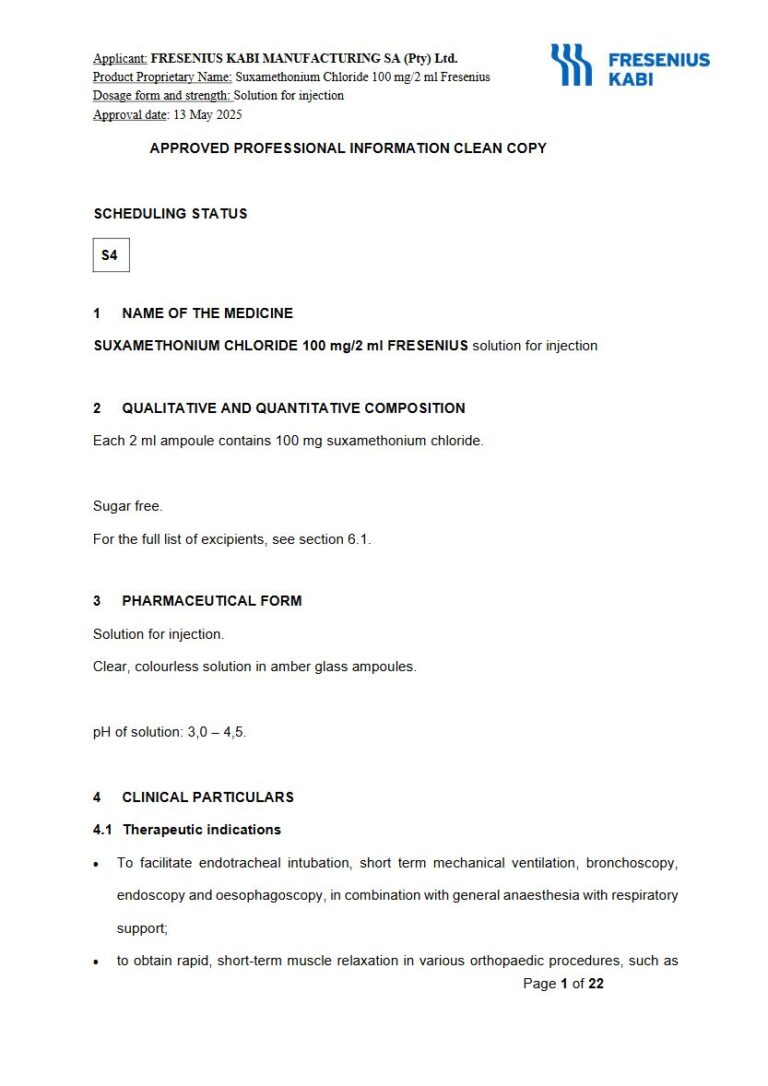
4.1 Therapeutic indications
u2022 To facilitate endotracheal intubation, short term mechanical ventilation, bronchoscopy, endoscopy and oesophagoscopy, in combination with general anaesthesia with respiratory support;
u2022 to obtain rapid, short-term muscle relaxation in various orthopaedic procedures, such as the correction of dislocations and the alignment of fractures, with respiratory support;
u2022 as an adjuvant in surgical anaesthesia to obtain relaxation of skeletal muscle, particularly of the abdominal wall, so that operative manipulations are facilitated;
u2022 to reduce the intensity of muscular contraction associated with electrically induced convulsion therapy (ECT).
4.2 Posology and method of administration
Posology
Atropine could be considered before administration of SUXAMETHONIUM CHLORIDE FRESENIUS to prevent excessive bradycardia, bronchial secretion, or other muscarine effects. The recommended dose is 1 u2013 2 mg/kg intravenously.
Method of administration
SUXAMETHONIUM CHLORIDE FRESENIUS should be given after induction of general anaesthesia because paralysis is usually preceded by painful muscle fasciculations. Controlled ventilatory support is necessary. See section 6.6 for instructions to open the ampoule.
4.3 Contraindications
u2022 Patients with a history of hypersensitivity to suxamethonium chloride or to any of the components of SUXAMETHONIUM CHLORIDE FRESENIUS listed in section 6.1.
u2022 SUXAMETHONIUM CHLORIDE FRESENIUS is contraindicated in patients with a personal or family history of malignant hyperthermia. Malignant hyperthermia is associated with the King Denborough syndrome, central core disease and some muscle dystrophies (see section 4.4).
u2022 Patients with muscular dystrophies, such as Duchenne muscular dystrophy and Becker dystrophy, are at risk of an acute severe rhabdomyolysis syndrome with severe prolonged hyperkalaemia leading to cardiac arrest. SUXAMETHONIUM CHLORIDE FRESENIUS should not be used in such patients (see section 4.4).
u2022 Patients with major trauma or severe burns; the period of greatest risk of hyperkalaemia is from about 24 hours to 90 days after the injury and may be further prolonged to 2 years, if there is delayed healing.
u2022 Patients with pre-existing hyperkalaemia. In the absence of hyperkalaemia and neuropathy, renal failure is not a contraindication to the administration of a normal single dose of SUXAMETHONIUM CHLORIDE FRESENIUS, but multiple or large doses may cause clinically significant rises in serum potassium and should not be used. Patients with renal impairment with a severely raised plasma-potassium concentration (above 6,5 mmol/l). Patients with severe long-lasting sepsis are at risk of hyperkalaemia with SUXAMETHONIUM CHLORIDE FRESENIUS.
u2022 Acute neurological impairment including hemiplegia, paraplegia, and acute neuromuscular denervation of both upper and lower motor neuron types. The potential for potassium release occurs from 24 hours to 6 months or longer after the acute onset of the neurological deficit and correlates with the degree and extent of muscle paralysis. Also, patients who have been immobilised for prolonged periods of time may be at similar risk, e.g. I.C.U patients on ventilators.
u2022 SUXAMETHONIUM CHLORIDE FRESENIUS should not be used in patients with a personal or family history of congenital myotonic diseases or muscle rigidity syndromes such as myotonia congenita and dystrophia myotonica since its administration may on occasion be associated with severe myotonic spasms and rigidity.
4.4 Special warnings and precautions for use
SUXAMETHONIUM CHLORIDE FRESENIUS paralyses the respiratory muscles as well as other skeletal muscles but has no effect on consciousness. SUXAMETHONIUM CHLORIDE FRESENIUS should be administered only by or under close supervision of a medical practitioner familiar with its action, characteristics, and hazards, who is skilled in the management of artificial ventilation and only where there are adequate facilities for immediate endotracheal intubation with administration of oxygen by intermittent positive pressure ventilation.
High rates of cross-sensitivity (greater than 50 %) between neuromuscular blocking medicines have been reported. Therefore, where possible, before administering SUXAMETHONIUM CHLORIDE FRESENIUS, a history of hypersensitivity to other neuromuscular blocking medicines should be obtained. Patients who experience a hypersensitivity reaction under general anaesthesia should be tested subsequently for hypersensitivity to other neuromuscular blockers. Hypersensitivity reactions to neuromuscular blockers are more common in women than in men, in atopic patients and those who have a history of asthma or allergy, and in patients who have had a previous reaction to anaesthetic medicines. Circulatory collapse, flushing, rash, urticaria, and bronchospasm have occurred in hypersensitivity reactions associated with suxamethonium. Deaths have been reported.
SUXAMETHONIUM CHLORIDE FRESENIUS should not be mixed with any other medicine prior to its administration. SUXAMETHONIUM CHLORIDE FRESENIUS is acidic and should not be mixed with highly alkaline solutions, e.g., barbiturates. It is not good practice to give neuromuscular blockers such as SUXAMETHONIUM CHLORIDE FRESENIUS in the same syringe, or simultaneously through the same needle, as other medicine intended for injection.
Individuals with decreased plasma cholinesterase activity exhibit a prolonged response to SUXAMETHONIUM CHLORIDE FRESENIUS. Approximately 0,05 % of the population has an inherited cause of reduced cholinesterase activity. In those patients, the duration of paralysis will be considerably prolonged.
Prolonged and intensified neuromuscular blockade following treatment with SUXAMETHONIUM CHLORIDE FRESENIUS may occur secondary to reduced plasma cholinesterase activity in the following states or pathological conditions:
- liver disease
- physiological variation as in pregnancy and the puerperium
- genetically determined abnormal plasma cholinesterase
- severe generalised tetanus, tuberculosis, other severe or chronic infections
- following severe burns
- severe dehydration
- chronic debilitating disease, malignancy (cancer), chronic or severe anaemia and malnutrition
- end stage hepatic failure, acute or chronic renal failure
- myocardial infarctions
- autoimmune diseases: myxoedema, collagen diseases
- in persons exposed to organophosphate insecticides or weed killers
- iatrogenic: following plasma exchange, plasmapheresis, cardiopulmonary bypass, and as a result of concomitant medicine therapy.
During prolonged administration of SUXAMETHONIUM CHLORIDE FRESENIUS, it is recommended that the patient is fully monitored with a peripheral nerve stimulator in order to avoid overdosage. If an excessive dose of SUXAMETHONIUM CHLORIDE FRESENIUS is given, or it is administered over a prolonged period, the characteristic depolarising neuromuscular (or Phase I) block may change to one with characteristics of a non-depolarising (or Phase II) block. Although the characteristics of a developing Phase II block resemble those of a true non-depolarising block, the former cannot always be fully or permanently reversed by anticholinesterase medicines and the use of such medicines is not recommended. Tachyphylaxis occurs after repeated administration of SUXAMETHONIUM CHLORIDE FRESENIUS and may be an indicator of an evolving phase II block.
Muscle pains are frequently experienced after administration of suxamethonium and most commonly occur in ambulatory patients undergoing short surgical procedures under general anaesthesia. There appears to be no direct connection between the degree of visible muscle fasciculation after SUXAMETHONIUM CHLORIDE FRESENIUS administration and the incidence or severity of pain.
An acute transient rise in serum potassium often occurs following the administration of SUXAMETHONIUM CHLORIDE FRESENIUS in normal individuals; the magnitude of this rise is of the order of 0,5 mmol/. In certain pathological states or conditions this increase in serum potassium following SUXAMETHONIUM CHLORIDE FRESENIUS administration may be excessive and cause serious cardiac dysrhythmias and cardiac arrest (see section 4.3).
Caution should be used when administering SUXAMETHONIUM CHLORIDE FRESENIUS to patients with myasthenia gravis and should be avoided in advanced cases. Although these patients are resistant to suxamethonium they develop a state of Phase II block which can result in delayed recovery. Patients with myasthenic Eaton-Lambert syndrome are more sensitive than normal to SUXAMETHONIUM CHLORIDE FRESENIUS, necessitating a reduction in dose.
Caution is required when SUXAMETHONIUM CHLORIDE FRESENIUS is given to patients with cardiac or respiratory disease or to those that have shown hypersensitivity to any neuromuscular blocker. Hypothermia may enhance the neuromuscular blocking effects of SUXAMETHONIUM CHLORIDE FRESENIUS and an increase in body temperature may reduce them.
Caution is advised in patients with glaucoma, penetrating wounds of eye or while the globe is open, or after initial surgery in massively traumatised patients. Suxamethonium causes a significant rise in intraocular pressure and should therefore be used with caution in the presence of open eye injuries or where an increase in intraocular pressure is undesirable.
Children may be at special risk from cardiac arrest associated with hyperkalaemia. Caution should be exercised when using SUXAMETHONIUM CHLORIDE FRESENIUS in children, since paediatric patients are more likely to have an undiagnosed myopathy or an unknown predisposition to malignant hyperthermia and rhabdomyolysis, which places them at increased risk of serious adverse events following administration of SUXAMETHONIUM CHLORIDE FRESENIUS. Should hyperkalaemic cardiac arrest occur, cardiopulmonary resuscitation should be immediately instituted accompanied by an appropriate dose of intravenous calcium chloride. Patients with muscular dystrophies such as Duchenne muscular dystrophy and Becker Dystrophy are particularly at risk and SUXAMETHONIUM CHLORIDE FRESENIUS should not be used in such patients (see section 4.3).
In adults, SUXAMETHONIUM CHLORIDE FRESENIUS may cause slowing of the heart rate on initial administration. Bradycardias are more commonly observed in children and on repeated administration of SUXAMETHONIUM CHLORIDE FRESENIUS in both children and adults. Pre-treatment with intravenous atropine or glycopyrrolate significantly reduces the incidence and severity of suxamethonium related bradycardia. A repeat dose of SUXAMETHONIUM CHLORIDE FRESENIUS within a short time (of the initial dose) may precipitate a vagal cardiac arrest. A rapidly acting anticholinergic agent (atropine) should be administered.
Ventricular dysrhythmias have been reported following SUXAMETHONIUM CHLORIDE FRESENIUS administration. Patients taking digoxin are more susceptible to such dysrhythmias. The action of SUXAMETHONIUM CHLORIDE FRESENIUS on the heart may cause changes in cardiac rhythm including cardiac arrest.
Malignant hyperpyrexia may occur. SUXAMETHONIUM CHLORIDE FRESENIUS is a trigger agent for this accelerated hypermetabolic syndrome; it occurs in subjects with musculoskeletal disorders and also in apparently healthy individuals who are genetically predisposed to this syndrome, e.g., King Denborough syndrome, central core disease and some muscular dystrophy syndromes. The symptoms are an increased respiratory carbon dioxide output, tissue hypoxia, usually but not necessarily an increasing body temperature with or without muscular hypertonicity, often fatal cardiovascular complications, severe acidosis, hyperkalaemia, and haemoglobinuria or myoglobinuria. Immediate treatment is required. Administer dantrolene sodium intravenously and treat the symptoms. The dose of dantrolene sodium is 2,5 mg/kg and repeat as necessary up to a maximum of 10 mg/kg.
4.5 Interaction with other medicines and other forms of interaction
Many medicines may interact with SUXAMETHONIUM CHLORIDE FRESENIUS. Certain medication or chemicals are known to reduce normal plasma cholinesterase activity and may therefore prolong the neuromuscular blocking effects of SUXAMETHONIUM CHLORIDE FRESENIUS. The mechanism of action may be due to a direct effect on neuromuscular transmission or an alteration of enzyme activity. These medicines include:
- Organophosphorus insecticides and metrifonate.
- Cytotoxic compounds: cyclophosphamide, mechlorethamine, triethylene-melamine and thiotepa. Since enzyme activity may be reduced by up to 70 % for several days to several weeks, it was suggested that the use of SUXAMETHONIUM CHLORIDE FRESENIUS should be avoided, if possible, in patients receiving cyclophosphamide. Other alkylating agents also reported to reduce plasma cholinesterase activity include chlormethine, tretamine.
- Psychiatric medicine: phenelzine, promazine and chlorpromazine.
- Anaesthetic medications: ketamine, morphine and morphine antagonists, pethidine, pancuronium.
- Selective serotonin reuptake inhibitors (SSRI).
- Other medicines with potentially deleterious effects on plasma cholinesterase activity include diphenhydramine, promethazine, oestrogens, oxytocin, high-dose steroids, and oral contraceptives, terbutaline and metoclopramide.
Prolonged neuromuscular blockade has been reported in patients given neuromuscular blockers and trimethaphan. Severe bradycardia and asystole have occurred when used in anaesthetic regimens with propofol and opioids such as fentanyl. There are conflicting reports of the effects of histamine H2-antagonists on neuromuscular blockade. Cimetidine has been variously reported to prolong SUXAMETHONIUM CHLORIDE FRESENIUS-induced paralysis or to have no effect. Famotidine and ranitidine have been reported not to interact with SUXAMETHONIUM CHLORIDE FRESENIUS. Reduction of plasma cholinesterase activity by phenelzine has been reported to cause significant prolongation of suxamethonium paralysis. Enzyme activity may be reduced to 10 % of normal and recovery can take up to a month. The dosage of SUXAMETHONIUM CHLORIDE FRESENIUS may need to be substantially reduced or a competitive neuromuscular blocker used.
Oestrogens and oestrogen-containing oral contraceptives reduce plasma cholinesterase activity possibly due to suppression of hepatic synthesis of the enzyme, but little prolongation of SUXAMETHONIUM CHLORIDE FRESENIUS paralysis may be expected since activity is reduced by only about 20 %.
Bambuterol can inhibit plasma cholinesterase activity and so prolong the activity of SUXAMETHONIUM CHLORIDE FRESENIUS. Phase II block has been reported in some patients with abnormal plasma cholinesterase. Following reports of apnoea, caution has been advised when aprotinin and neuromuscular blockers such as SUXAMETHONIUM CHLORIDE FRESENIUS are used concomitantly. Bradycardia due to SUXAMETHONIUM CHLORIDE FRESENIUS may be enhanced by inhalation agents such as halothane. Administration of SUXAMETHONIUM CHLORIDE FRESENIUS before or after the use of non-polarising relaxants may cause a mixed block. Procaine and cocaine may competitively enhance the neuromuscular blocking activity of SUXAMETHONIUM CHLORIDE FRESENIUS. The depolarising effects of SUXAMETHONIUM CHLORIDE FRESENIUS may also be enhanced by neostigmine, pyridostigmine, physostigmine, edrophonium, tacrine hydrochloride and other anticholinesterases; it has been recommended that eye drops containing echothiophate, a long-acting anticholinesterase should be discontinued at least 2 weeks before the administration of SUXAMETHONIUM CHLORIDE FRESENIUS. The effects of digoxin may be enhanced by SUXAMETHONIUM CHLORIDE FRESENIUS, leading to cardiac dysrhythmias. There have been reports of prolonged neuromuscular blockade following the use of SUXAMETHONIUM CHLORIDE FRESENIUS in patients receiving lithium. Certain medicines or substances may enhance or prolong the neuromuscular effects of SUXAMETHONIUM CHLORIDE FRESENIUS by mechanisms unrelated to plasma cholinesterase activity. These medicines include:
- Magnesium sulphate
- Azathioprine
- Quinine and chloroquine
- Antibiotics such as the aminoglycosides (gentamycin, clindamycin, lincomycin, amikacin, tobramycin), tetracyclines and polymyxins
- Antidysrhythmic medicines: quinidine, procainamide, verapamil, beta-blockers, lidocaine and procaine
- Volatile inhalation anaesthetic medicines: halothane, enflurane, desflurane, isoflurane, sevoflurane and methoxyflurane have little effect on the Phase I block of SUXAMETHONIUM CHLORIDE FRESENIUS injection but will accelerate the onset and enhance the intensity of a Phase II suxamethonium induced block.
Patients receiving digoxin are more susceptible to the effects of suxamethonium exacerbated hyperkalaemia.
4.6 Fertility, pregnancy and lactation
Pregnancy
The safety of SUXAMETHONIUM CHLORIDE FRESENIUS has not been established in pregnancy and lactation. SUXAMETHONIUM CHLORIDE FRESENIUS has no direct action on the uterus or other smooth muscle structures. In normal therapeutic doses it does not cross the placental barrier in sufficient amounts to affect the respiration of the infant. The benefits of the use of SUXAMETHONIUM CHLORIDE FRESENIUS as part of a rapid sequence induction for general anaesthesia normally outweigh the possible risk to the foetus. Plasma cholinesterase levels fall during the first trimester of pregnancy to about 70 to 80 % of their pre-pregnancy values; a further fall to about 60 to 70 % of the pre-pregnancy levels occurs within 2 to 4 days after delivery. Plasma cholinesterase levels then increase to reach normal over the next 6 weeks. Consequently, a high proportion of pregnant and puerperal patients may exhibit prolonged neuromuscular blockade following SUXAMETHONIUM CHLORIDE FRESENIUS administration.
Breastfeeding
It is not known whether suxamethonium or its metabolites are excreted in human milk.
Fertility
No data available.
4.7 Effects on ability to drive and use machines
This precaution is not relevant to the use of SUXAMETHONIUM CHLORIDE FRESENIUS. SUXAMETHONIUM CHLORIDE FRESENIUS will always be used in combination with a general anaesthetic and therefore the usual precautions relating to performance of tasks following general anaesthesia apply.
4.8 Undesirable effects
See section 4.4 for further data on the below side effects.
Immune system disorders
Less frequent: Reactions and anaphylactic reactions to SUXAMETHONIUM CHLORIDE FRESENIUS have been reported and bronchospasm has occurred.
Nervous system disorders
Less frequent: Prolonged neuromuscular blockade and apnoea may occur in patients with low serum concentrations of plasma cholinesterase and in those with an atypical plasma cholinesterase. The same conditions could result when excessive amounts of SUXAMETHONIUM CHLORIDE FRESENIUS accumulate at the neuromuscular junction, for example following high or repeated doses. The nature of the block may change to one with characteristics similar to competitive block. This is known as phase II block.
Eye disorders
Frequent: SUXAMETHONIUM CHLORIDE FRESENIUS may cause a rise in intra-ocular pressure.
Cardiac disorders
Frequent: Stimulation of the vagus nerve and parasympathetic ganglia by SUXAMETHONIUM CHLORIDE FRESENIUS may be followed by bradycardia, other dysrhythmias, and hypotension. This may be exacerbated by the raised plasma-potassium concentration. Tachycardia and an increase in blood pressure due to stimulation of sympathetic ganglia has also been reported. Tachyphylaxis may occur with repeated doses.
Less frequent: Dysrhythmias (including ventricular dysrhythmias), cardiac arrest has been reported. There are case reports of hyperkalaemia related cardiac arrests following the administration of SUXAMETHONIUM CHLORIDE FRESENIUS to patients with congenital cerebral palsy, tetanus, Duchenne muscular dystrophy, other muscular dystrophies and closed head injury. Such events have also been reported in children with hitherto undiagnosed muscular disorders.
Vascular disorders
Frequent: Skin flushing. Frequency unknown: Hypertension and hypotension have also been reported.
Respiratory, thoracic and mediastinal disorders
Less frequent: Bronchospasm, prolonged respiratory depression*.
There may be some increase in bronchial secretions due to the muscarinic action of SUXAMETHONIUM CHLORIDE FRESENIUS. Prolonged apnoea* occurs in patients with low serum concentrations of plasma cholinesterase and in those with an atypical plasma cholinesterase. * Individuals with decreased plasma cholinesterase activity exhibit a prolonged response to SUXAMETHONIUM CHLORIDE FRESENIUS. Approximately 0,05 % of the population has an inherited cause of reduced cholinesterase activity (See section 4.4).
Gastrointestinal disorders
Frequent: A rise in intra-gastric pressure may occur secondary to abdominal muscle fasciculation. There may be some increase in bowel movements and in gastric and salivary secretions due to the muscarinic action of SUXAMETHONIUM CHLORIDE FRESENIUS. Salivary gland enlargement.
Skin and subcutaneous tissue disorders
Frequent: Rash.
Musculoskeletal and connective tissue disorders
Frequent: The administration of SUXAMETHONIUM CHLORIDE FRESENIUS results in fasciculations during the onset of depolarising block. Rhabdomyolysis, myoglobinaemia and myoglobinuria have been reported and may be associated with muscle damage following fasciculations.
Muscular pain similar to that following strenuous exercise may occur in the immediate postoperative period, particularly in patients who are ambulant. Plasma cholinesterase concentrations also fall during pregnancy and the puerperium and therefore maternal paralysis may be mildly prolonged.
Less frequent: Trismus.
General disorders and administration site conditions
Less frequent: Depolarisation of skeletal muscle produces an immediate increase in plasma-potassium concentration, and this can have serious consequences in some patients (see section 4.3). Direct release of histamine from mast cells occurs and flushing, skin rash, bronchospasm and shock have been reported. Malignant hyperpyrexia (See section 4.4).
Reporting of suspected adverse reactions: Reporting suspected adverse reactions after authorisation of the medicine is important. It allows continued monitoring of the benefit/risk balance of the medicine. Health care providers are requested to report any suspected adverse drug reactions to SAHPRA via the Med Safety APP (Medsafety X SAHPRA) and eReporting platform (who-umc.org) found on SAHPRA website. Healthcare providers are asked to report any suspected adverse drug reactions to the Holder of the Certificate of Registration at the following email address: [email protected] and to the relevant medicineu2019s regulatory authority in the country where the product is marketed.
4.9 Overdose
See above for symptoms. Apnoea and prolonged muscle paralysis are the main serious effects of overdosage and should be treated until spontaneous respiration is fully restored. A synthetic cholinesterase may be given to remove SUXAMETHONIUM CHLORIDE FRESENIUS. Neostigmine has been used to reverse a Phase II SUXAMETHONIUM CHLORIDE FRESENIUS induced block but is not recommended treatment. Valuable information may be gained by monitoring neuromuscular function. When the action of SUXAMETHONIUM CHLORIDE FRESENIUS is prolonged, the myoneural block may cease to be depolarising in type (Phase I) and may acquire some features of the paralysis produced by non-depolarising (Phase II) muscle relaxant agent. In these cases, controlled ventilation with appropriate sedation, should be continued until spontaneous respiration is fully restored. A nerve stimulator response showing full recovery of neuromuscular function is needed before allowing spontaneous ventilation.
