
Bactrim 80 mg/400mg Solution
Clinical Summary
Quick overview from the medicine insert
Indication
Treatment of bacterial infections including urinary tract infections, respiratory tract infections, and certain gastrointestinal infections.
Dosage (summary)
The usual dosage for adults is 8 to 12 mg/kg/day of trimethoprim and 40 to 60 mg/kg/day of sulfamethoxazole, administered in divided doses.
Onset of Action / Duration
Onset of action typically occurs within 1 to 2 hours, with duration of action lasting approximately 12 hours.
Special Populations
- Renal impairment
- Hepatic impairment
- Elderly patients
- Children under 2 months of age
Pregnancy & Breastfeeding
Use during pregnancy is not recommended, particularly in the first trimester. Caution is advised during lactation as both components are excreted in breast milk.
Key Drug Interactions
- May enhance the effects of anticoagulants such as warfarin.
- Concurrent use with methotrexate may increase the risk of toxicity.
- May reduce the efficacy of oral contraceptives.
Contraindications
- Hypersensitivity to sulfonamides or trimethoprim.
- Severe liver disease.
- Severe renal impairment.
- Pregnancy (especially during the first trimester).
Common side effects
- Nausea and vomiting
- Rash
- Fever
- Hematological reactions (e.g., leukopenia, thrombocytopenia)
- Elevated liver enzymes
Counselling Points
- Take the medication as prescribed and complete the full course.
- Stay hydrated to help prevent kidney complications.
- Report any signs of rash, fever, or unusual bleeding to a healthcare provider immediately.
- Avoid excessive sun exposure and use sunscreen due to increased sensitivity.
Serious warnings
- Use with caution in patients with a history of asthma or allergies.
- Monitor for signs of blood dyscrasias.
- Risk of Stevens-Johnson syndrome and toxic epidermal necrolysis.
Important Disclaimer
The Bactrim 80 mg/400mg Solution professional information leaflet below is the property of Lebasi Pharmaceuticals and is provided on Medinsert exactly as issued, with no.. alterations or editorial changes. We make every effort to keep content current by updating documents as soon as new versions become available. Medinsert serves as a trusted access point for healthcare professionals, but does not replace official sources or clinical judgement. For more details, please read our full disclaimer. read more>>
 Healthcare Professionals Only
This content is for registered healthcare professionals
Sign in or create a free account to read the full package insert.
Free for HPCSA-registered professionals. Powered by Medinsert.
Clinical Particulars
Section 4 of the official insert — extracted exactly as issued, no alterations
4.1 Therapeutic indications
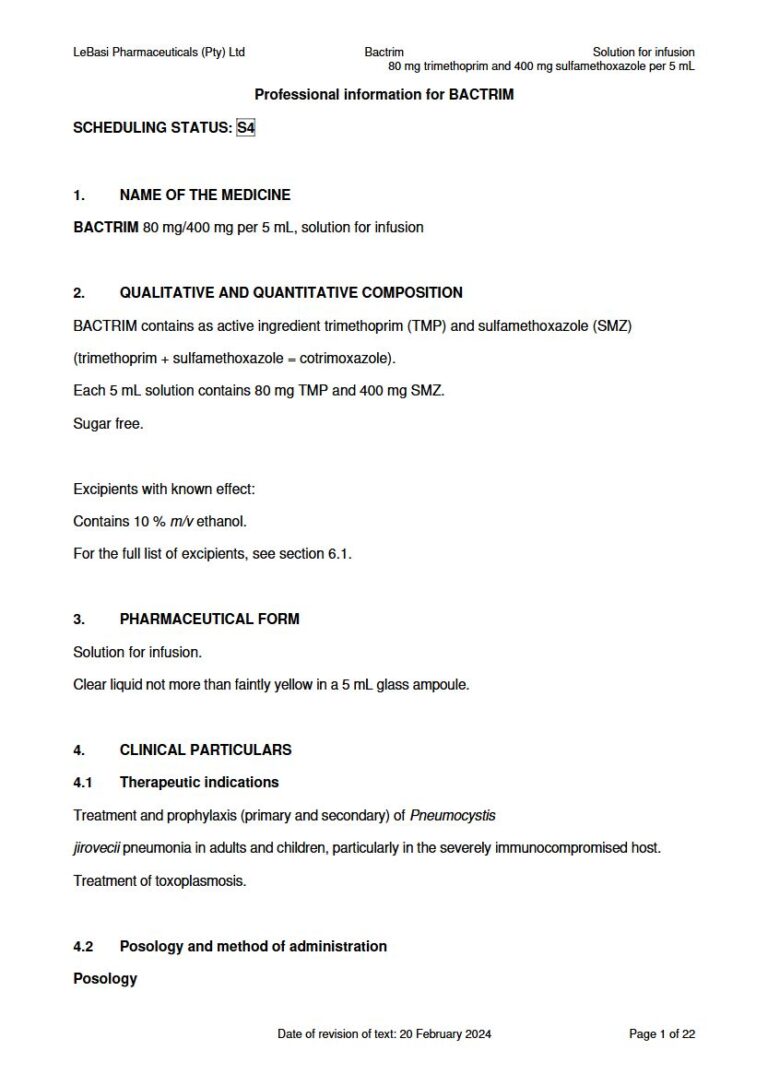
Treatment and prophylaxis (primary and secondary) of Pneumocystis jirovecii pneumonia in adults and children, particularly in the severely immunocompromised host. Treatment of toxoplasmosis.
4.2 Posology and method of administration
Posology
Intravenous infusion
If oral administration is impossible, or not indicated, the ampoule for IV infusion can only be used following dilution with the appropriate infusion solutions. Standard dosage for adults and children over 12 years of age: 2 x 5 mL ampoules twice a day (10 mL twice a day), after appropriate dilution, in the morning and in the evening. High dosage (for particularly severe cases): 3 x 5 mL ampoules twice daily (15 mL twice a day), after appropriate dilution, in the morning and in the evening. Duration of treatment: As a general rule, the BACTRIM parenteral formulation should be given only during the period that oral treatment is not possible; the standard dosage for not longer than 5 consecutive days, and the high dose for not more than 3 consecutive days. Pneumocystis jirovecii pneumonia: The recommended dosage for patients with Pneumocystis jirovecii pneumonia is up to 20 mg TMP per kg and up to 100 mg SMZ per kg per 24 hours, given in equal divided doses, every 6 hours for 14 days. Intravenous infusion Standard dosage in children up to 12 years of age: The average dosage is approximately 2 mL/5 kg body weight daily, divided into 2 equal doses, and given in the morning and in the evening. Thus, the recommended basis for dosage in children is 6 mg TMP plus 30 mg SMZ per kg body weight daily.
4.3 Contraindications
BACTRIM is contraindicated in pregnancy and lactation as safety and efficacy have not been established (see section 4.6). Blood dyscrasias, sulfonamide or trimethoprim hypersensitivity (including allergy to sulfonylurea anti-diabetics and saluretic sulfonamide derivatives should also be considered). Patients with marked liver parenchymal damage and severe renal insufficiency (CrCl < 15 mL/min). BACTRIM should not be given to patients with megaloblastic anaemia, or patients with other serious haematological disorders. It must not be given to infants during the first six weeks of life. It should be avoided in the presence of vitamin B12 and folic acid deficiency states. It should not be used in patients who suffer from porphyria. BACTRIM must not be given in combination with dofetilide (see section 4.5).
4.4 Special warnings and precautions for use
In order to minimise the risk of undesirable reactions, the duration of treatment with BACTRIM should be as short as possible, particularly in elderly patients. Serious adverse reactions Fatal outcome, though rare, has been reported in connection with adverse reactions such as blood dyscrasias, major exudative erythema multiforme (Stevens-Johnson syndrome), toxic epidermal necrolysis (Lyellu2019s syndrome) drug rash with eosinophilia and systemic symptoms (DRESS) and fulminant liver necrosis. Hypersensitivity and allergic reactions Treatment should be discontinued immediately at the first appearance of skin rash or any other serious adverse reaction. BACTRIM should be administered with caution to patients with a history of severe allergy and bronchial asthma. Pulmonary infiltrates reported in the context of eosinophilic or allergic alveolitis may manifest through symptoms such as cough or shortness of breath. Should such symptoms appear or unexpectedly worsen, the patient should be re-evaluated and discontinuation of BACTRIM therapy considered. Renal effects Sulfonamides, including BACTRIM, may induce diuresis, particularly in patients with oedema of cardiac origin. Close monitoring of serum potassium and renal function is warranted in patients receiving high-dose BACTRIM, as used in patients with Pneumocystis jirovecii pneumonia, or in patients receiving standard-dose BACTRIM with underlying disorders of potassium metabolism or renal insufficiency, or who are receiving medicines which induce hyperkalaemia (see section 4.5). Special populations There is an increased risk of severe adverse reactions in elderly patients or when complicating conditions exist, e.g. impaired kidney and/or liver function, or concomitant use of other medicines (in which case the risk may be related to the dosage and duration of treatment). In the event of renal impairment, dosage should be adjusted according to the special dosage instructions. Patients with severe renal impairment (i.e. with creatinine clearance 15 u2013 30 mL/min) who are receiving BACTRIM should be closely monitored for symptoms and signs of toxicity such as nausea, vomiting and hyperkalaemia. Other than in exceptional cases, BACTRIM should not be given to patients with serious haematological disorders. Cases of pancytopenia have been reported in patients taking the combination of TMP and methotrexate. In elderly patients, or in patients with pre-existing folic acid deficiency or kidney failure, haematological changes indicative of folic acid deficiency may occur. These are reversible by folinic acid therapy. Owing to the possibility of haemolysis, BACTRIM should not be given to patients with a glucose-6-phosphate dehydrogenase (G6PD) deficiency unless absolutely essential, and then only in minimal doses. As with all medicines containing sulfonamides, caution is advisable in patients with thyroid dysfunction. Patients who are slow acetylators may be more prone to idiosyncratic reactions to sulfonamides, such as BACTRIM. Long-term treatment If BACTRIM is given over a prolonged period, regular blood counts are required. If a significant reduction in count of any formed blood element is noted, BACTRIM should be discontinued. Urinalysis and renal function tests should be performed regularly in patients undergoing long-term treatment with BACTRIM (particularly patients with kidney failure). During treatment, adequate fluid intake and urinary output should be ensured to prevent crystalluria.
4.5 Interactions with other medicines
Pharmacokinetic interactions Trimethoprim is an inhibitor of the organic cation transporter 2 (OCT2), and a weak inhibitor of CYP2C8. Sulfamethoxazole is a weak inhibitor of CYP2C9. Systemic exposure to medicines transported by OCT2 may increase when co-administered with BACTRIM. Examples include dofetilide, amantadine, memantine and lamivudine. BACTRIM must not be given in combination with dofetilide (see section 4.3). There is evidence that TMP inhibits renal excretion of dofetilide. Trimethoprim 160 mg in combination with sulfamethoxazole 800 mg co-administered twice daily with dofetilide 500 u03bcg twice daily for four days resulted in a 103 % increase in the dofetilide area under the concentration-time curve (AUC), and a 93 % increase in the maximum concentration (C max). Dofetilide can cause serious ventricular arrhythmias associated with QT interval prolongation, including torsades de pointes, which are directly related to the dofetilide plasma concentration. Patients receiving amantadine or memantine may be at increased risk of neurological adverse events such as delirium and myoclonus. Systemic exposure to medicines metabolised primarily by CYP2C8 may increase when co-administered with BACTRIM. Examples include paclitaxel, amiodarone, dapsone, repaglinide, rosiglitazone and pioglitazone. Paclitaxel and amiodarone have a narrow therapeutic index. Therefore, concomitant administration with BACTRIM is not recommended. Both dapsone and BACTRIM can cause methaemoglobinaemia, and there is therefore potential for both pharmacokinetic and pharmacodynamic interactions. Patients receiving both dapsone and BACTRIM should be monitored for methaemoglobinaemia. Alternative therapies should be considered if possible. Patients receiving repaglinide, rosiglitazone or pioglitazone should be monitored regularly for hypoglycaemia. Increased digoxin blood levels can occur with concomitant BACTRIM therapy, especially in elderly patients. Serum digoxin levels should be monitored. Systemic exposure to medicines metabolised primarily by CYP2C9 may increase when co-administered with BACTRIM. Examples include coumarins (warfarin, acenocoumarol, phenprocoumon), phenytoin, and sulfonylurea derivatives (glibenclamide, gliclazide, glipizide, chlorpropamide, and tolbutamide). In such cases the prothrombin time/international normalised ration (PT/INR) coagulation time should be regularly monitored. A 39 % increase in half-life and a 27 % decrease in clearance rate of phenytoin have been observed following administration of standard doses of BACTRIM. Patients receiving phenytoin should be monitored for signs of phenytoin toxicity. Patients receiving sulfonylurea derivatives (including glibenclamide, gliclazide, glipizide, chlorpropamide and tolbutamide), should be monitored regularly for hypoglycaemia. Pharmacodynamic interactions and interactions of undefined mechanism Incidence rate and severity of myelotoxic and nephrotoxic adverse reactions may be increased when BACTRIM is administered concomitantly with other medicines known to be myelosuppressive or associated with renal impairment, such as nucleoside analogues, tacrolimus, azathioprine or mercaptopurine. Patients receiving BACTRIM concomitantly with such medicines should be monitored for haematological and/or renal toxicity. Co-administration with clozapine, a medicine known to have a substantial potential for causing agranulocytosis, should be avoided. An increased incidence of thrombocytopenia has been observed in elderly patients concurrently receiving certain diuretics, primarily thiazides. Platelets should be monitored regularly in patients receiving diuretics. Reversible deterioration of renal function has been observed in patients treated with BACTRIM and ciclosporin following renal transplantation. Sulfonamides, including SMZ, can compete with protein binding and also with the renal transport of methotrexate, thus increasing the free methotrexate fraction and the systemic exposure to methotrexate. Cases of pancytopenia have been reported in patients taking the combination of TMP and methotrexate. TMP has a low affinity for human dihydrofolate reductase but may increase toxicity of methotrexate, especially in the presence of risk factors such as old age, hypoalbuminaemia, impaired renal function, and decreased bone marrow reserve, and in patients receiving high doses of methotrexate. At-risk patients should be treated with folic acid or calcium folinate to counteract the effects of methotrexate on haematopoiesis. Reports suggest that patients receiving pyrimethamine as malaria prophylaxis in doses exceeding 25 mg weekly, may develop megaloblastic anaemia if BACTRIM is prescribed concurrently. Due to the potassium-sparing effects of BACTRIM, caution should be used when BACTRIM is co-administered with other medicines that increase serum potassium, such as angiotensin-converting enzyme inhibitors and angiotensin receptor blockers, potassium-sparing diuretics and prednisolone.
4.6 Fertility, pregnancy and lactation
Pregnancy BACTRIM is contraindicated in pregnancy and lactation as safety has not been demonstrated. The risk of birth malformations has not been consistently demonstrated with cotrimoxazole therapy in women during early pregnancy. Two large observational studies have suggested a 2 to 3,5-fold increased risk of spontaneous abortion in women treated with TMP alone and in combination with SMZ during the first trimester compared to either no exposure to antibiotics or to exposure to penicillins. Animal studies have shown that very high doses of cotrimoxazole produced fetal malformations typical of folic acid antagonism. Both TMP and SMZ cross the placental barrier and may interfere with folic acid metabolism. Lactation Both TMP and SMZ pass into the breast milk. Due to the known risks to the infant (kernicterus, hypersensitivity) mothers receiving BACTRIM should not breastfeed their infants (see section 5.2 u2013 Distribution).
4.7 Effects on ability to drive and use machines
It is not always possible to predict to what extent BACTRIM may interfere with the daily activities of a patient. BACTRIM can cause hallucinations (see section 4.8). Patients should ensure that they do not engage in the above activities until they are aware of the measure to which BACTRIM affects them.
4.8 Undesirable effects
At the recommended dosages, BACTRIM is usually well tolerated. The most common side effects are skin rashes and gastrointestinal disturbances. The following standard categories for frequency are used below: Very common u2265 1/10; common u2265 1/100 and < 1/10; uncommon u2265 1/1 000 and < 1/100; rare u2265 1/10 000 and < 1/1 000 and very rare < 1/10 000. Not known (cannot be estimated from the available data). Adverse events reported in the general patient population treated with TMP-SMZ System organ class Common Uncommon Rare Very rare Not known Infections and infestations Fungal infections, such as candidiasis Blood and lymphatic system disorders Leucopenia, Granulocytopenia, Thrombocytopenia, Anaemia (megaloblastic, haemolytic/ autoimmune, aplastic) Methemoglobinaemia, Agranulocytosis, Pancytopenia Immune system disorders Hypersensitivity/Allergic reactions (fever, angioedema, anaphylactoid reactions, serum sickness) Metabolism and nutrition disorders Hypoglycaemia Psychiatric disorders Hallucinations Nervous system disorders Convulsions Neuropathy (including peripheral neuritis and paraesthesia) Ataxia, Aseptic meningitis/ meningitis-like symptoms Cerebral vasculitis Eye disorders Uveitis Retinal vasculitis Ear and labyrinth disorders Tinnitus, Vertigo Cardiac disorders Allergic myocarditis Vascular disorders Purpura, Henoch-Schu00f6nlein purpura Vasculitis, Necrotising vasculitis, Granulomatosis with polyangiitis, Polyarteritis nodosa Respiratory, thoracic and mediastinal disorders Pulmonary infiltrates Pulmonary vasculitis Gastrointestinal disorders Nausea, Vomiting Diarrhoea Glossitis, Stomatitis Acute pancreatitis Hepato-biliary disorders Elevated transaminases Elevated bilirubin, Hepatitis Cholestasis Liver necrosis Vanishing bile duct syndrome Skin and subcutaneous tissue disorders Fixed drug eruption, Exfoliative dermatitis, Rash, Maculopapular rash, Morbilliform rash, Erythema, Pruritus Urticaria Erythema multiforme, Photosensitivity, Stevens-Johnson syndrome, Toxic epidermal necrolysis, Drug rash with eosinophilia and systemic symptoms Skin and subcutaneous tissue disorders Musculoskeletal and connective tissue disorders Rhabdomyolysis Arthralgia, Myalgia Renal and urinary disorders Elevated blood urea nitrogen, Elevated serum creatinine Impaired renal function Crystalluria Interstitial nephritis, Increased diuresis Pregnancy, puerperium and perinatal conditions Spontaneous abortion General disorders and administration site conditions Venous pain and phlebitis Investigations Hyperkalaemia, Hyponatraemia Description of selected adverse events Most of the haematological changes observed have been mild, asymptomatic and reversible on withdrawal of therapy. As with any other medicine, allergic reactions may occur in patients who are hypersensitive to the medicine ingredients. The most common skin reactions observed with BACTRIM have been generally mild and quickly reversible after withdrawal of the medicine. Pulmonary infiltrates reported in the context of eosinophilic or allergic alveolitis may manifest through symptoms such as cough of shortness of breath (see section 4.4). High-dose TMP, as used in patients with Pneumocystis jirovecii pneumonia, induces a progressive but reversible increase of serum potassium concentrations in a substantial number of patients. Even at recommended doses TMP may cause hyperkalaemia when administered to patients with underlying disorders of potassium metabolism or renal insufficiency, or who are receiving medicine which induce hyperkalaemia (see section 4.4). Cases of hypoglycaemia have been reported in non-diabetic patients treated with TMP-SMZ, usually after a few days of therapy (see section 4.5). Patients with impaired renal function, liver disease or malnutrition or receiving high doses of TMP-SMZ are particularly at risk. Several of the patients with acute pancreatitis had serious illnesses, including acquired immunodeficiency syndrome (AIDS). Safety of BACTRIM in human immunodeficiency virus (HIV)-infected patients The HIV patient population is similar to the general patient population in terms of the spectrum of adverse events that may occur. However, some adverse events may occur with a higher frequency and a difference in the clinical picture. These differences concern the following system organ classes: System organ class Very common Uncommon Blood and lymphatic system disorders Leucopenia, Granulocytopenia, Thrombocytopenia Metabolism and nutrition disorders Hypoglycaemia Gastrointestinal disorders Anorexia, nausea, vomiting, diarrhoea Hepatobiliary disorders Elevated transaminases Skin and subcutaneous tissue disorders Maculopapular rash, Pruritus General disorders and administration site conditions Fever (usually in conjunction with maculopapular rash) Investigations Hyperkalaemia Hyponatraemia Reporting of suspected adverse reactions Reporting suspected adverse reactions after authorisation of BACTRIM is important. It allows continued monitoring of the benefit/risk balance of the medicine. Health care providers are asked to report any suspected adverse reactions to the SAHPRA via the 6.04 Adverse Drug Reaction Reporting Form, found online under SAHPRAu2019s publications: https://www.sahpra.org.za/Publications/Index/8
4.9 Overdose
Symptoms of acute overdosage may include: nausea, vomiting, diarrhoea, headache, vertigo, dizziness, mental and visual disturbances; crystalluria, haematuria and anuria may occur in severe cases. In chronic overdosage, bone marrow depression, manifested as thrombocytopenia or leukopenia, and other blood dyscrasias due to folinic acid deficiency may occur. The following treatment measures may be considered depending on the symptoms: promotion of renal excretion by forced diuresis (alkalinisation of urine increases sulfamethoxazole elimination), haemodialysis (note: peritoneal dialysis is not effective), monitoring of blood count and electrolytes. If significant blood dyscrasia or jaundice occurs, specific therapy should be instituted for these complications. Calcium folinate, 3 to 6 mg intramuscularly, for 5 to 7 days, may be given to counteract the effects of trimethoprim on haematopoiesis.
