
Lert 135 mg Ampoule
PDF Leaflet Revision Date: 03 November 2022
Clinical Summary
Quick overview from the medicine insert
Indication
To help maintain wakefulness and increased mental activity.
Dosage (summary)
Adults: 1-2 tablets, then 1 tablet every 3 hours if needed.
Special Populations
- Caution in hyperacidity
- Peptic ulcer history
- Porphyria
- Hyperthyroidism
- Hypertension
- Cardiac arrhythmias
Pregnancy & Breastfeeding
Safety in pregnancy/lactation not established; caffeine appears in breast milk.
Key Drug Interactions
- Allopurinol
- Cimetidine
- Oral contraceptives
- Ritonavir
- Rifampicin
Contraindications
- Hypersensitivity to caffeine
- Cardiac disease
- Kidney disease
- Epilepsy
Common side effects
- Insomnia
- Headache
- Nervousness
- Tachycardia
- Nausea
Counselling Points
- Avoid use in children under 12
- Monitor for irritability in infants if breastfeeding
- Report adverse reactions
Serious warnings
- Caution advised when driving or operating machinery
- Potential for tolerance and dependency
Important Disclaimer
The Lert 135 mg Ampoule professional information leaflet below is the property of Lebasi Pharmaceuticals and is provided on Medinsert exactly as issued, with no.. alterations or editorial changes. We make every effort to keep content current by updating documents as soon as new versions become available. Medinsert serves as a trusted access point for healthcare professionals, but does not replace official sources or clinical judgement. For more details, please read our full disclaimer. read more>>
 Healthcare Professionals Only
This content is for registered healthcare professionals
Sign in or create a free account to read the full package insert.
Free for HPCSA-registered professionals. Powered by Medinsert.
Clinical Particulars
Section 4 of the official insert — extracted exactly as issued, no alterations
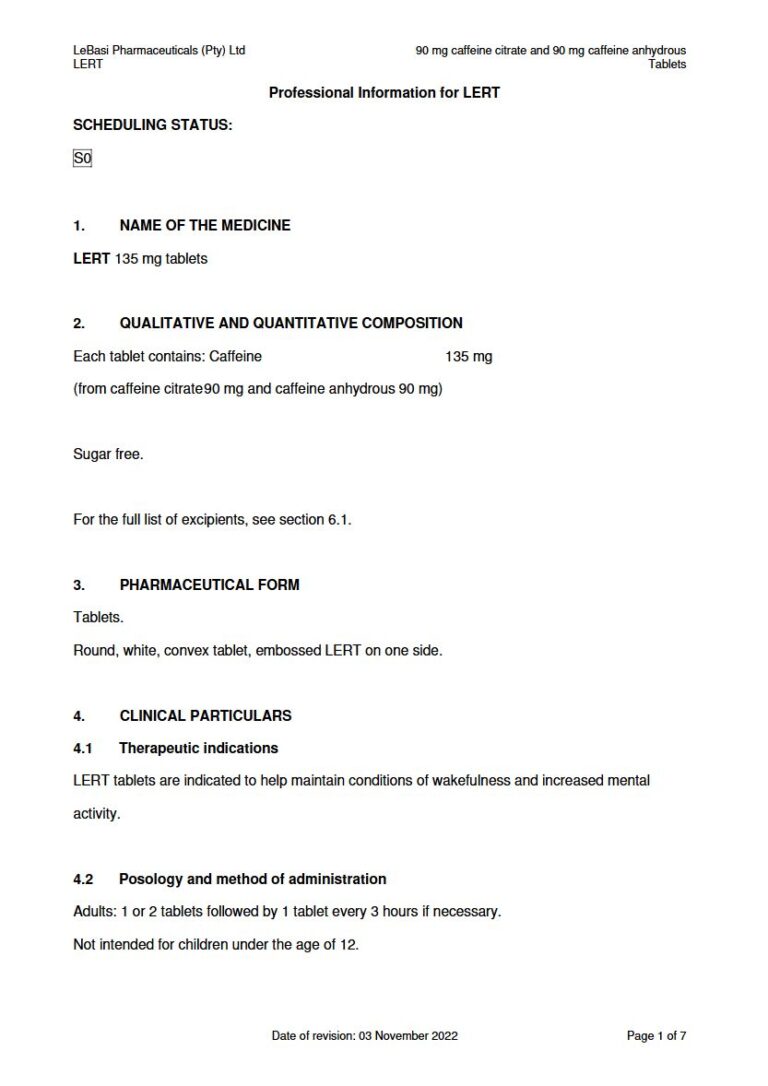
4.1 Therapeutic indications
LERT tablets are indicated to help maintain conditions of wakefulness and increased mental activity.
4.2 Posology and method of administration
Adults: 1 or 2 tablets followed by 1 tablet every 3 hours if necessary. Not intended for children under the age of 12.
4.3 Contraindications
- Hypersensitivity to caffeine citrate, caffeine anhydrous or to any of the excipients listed in section 6.1.
- History of cardiac disease, kidney disease, epilepsy and all convulsive states.
4.4 Special warnings and precautions for use
LERT tablets must be used with caution in patients with a tendency for hyperacidity. It should be given with care to patients with a history of peptic ulceration. With prolonged use some degree of tolerance and psychic dependency may occur. LERT tablets should be given with caution to patients with porphyria, hyperthyroidism, hypertension and cardiac arrhythmias.
4.5 Interaction with other medicines and other forms of interaction
Caffeine, as in LERT, undergoes extensive metabolism by hepatic cytochrome P450 isoenzyme CYP1A2, and is subject to many interactions with medicines that may enhance or reduce its metabolic clearance.
Sympathomimetics: LERT acts synergistically towards the hypertensive and tachycardic effects of sympathomimetics.
Medicines that may reduce caffeine clearance:
- Allopurinol.
- Some antiarrhythmics.
- Cimetidine.
- Disulfiram.
- Fluvoxamine.
- Interferon alfa.
- Macrolide antibacterials and quinolones.
- Oral contraceptives.
- Thiabendazole.
- Viloxazine.
The LERT dose might need to be reduced with concomitant administration.
Medicines that may increase caffeine clearance:
- Ritonavir.
- Rifampicin.
- Sulfinpyrazone.
Concomitant administration might require an increase in the dose or frequency of LERT tablets.
4.6 Fertility, pregnancy and lactation
Safety in pregnancy and lactation has not been established. Caffeine appears in breast milk. Irritability and poor sleeping pattern in the infant have been reported.
4.7 Effects on ability to drive and use machines
LERT can cause side effects, such as vertigo and can affect the ability to drive a vehicle and use machines. Caution is advised when driving a vehicle or operating machinery until the effects of LERT are known.
4.8 Undesirable effects
Psychiatric disorders: Frequency unknown: insomnia
Nervous system disorders: Frequency unknown: convulsions, headache, restlessness, anxiety, excitement, sensory disturbances, muscle tremor
Ear and labyrinth disorders: Frequency unknown: tinnitus, vertigo
Cardiac disorders: Frequency unknown: tachycardia, palpitations
Gastrointestinal disorders: Frequency unknown: nausea, vomiting, abdominal pain, diarrhoea
Renal and urinary disorders: Frequency unknown: diuresis
Reporting of suspected adverse reactions Reporting suspected adverse reactions after authorisation of LERT is important. It allows continued monitoring of the benefit/risk balance of LERT. Healthcare providers are asked to report any suspected adverse reactions to SAHPRA via the u201c6.04 Adverse Drug Reaction Reporting Formu201d, found online under SAHPRAu2019s publications: https://www.sahpra.org.za/Publications/Index/8
4.9 Overdose
Symptoms: Common features include central nervous system (CNS) stimulation, anxiety, nervousness, restlessness, insomnia, excitement, muscle twitching, confusion, convulsions. Cardiac symptoms include tachycardia, cardiac arrhythmia. Gastric symptoms include abdominal or stomach pains. Other symptoms of overdosage, associated with the caffeine component, include diuresis and facial flushing.
Treatment: Treatment of caffeine overdose is primarily symptomatic and supportive. Diuresis should be treated by maintaining fluid and electrolyte balance and CNS symptoms can be controlled by intravenous administration of diazepam. In cases of overdosage short-acting barbiturates may be given under the direction of a healthcare provider.
