
Disprin Extra Strength 300 / 500mg Tablet
PDF Leaflet Revision Date: 20 October 1980
Clinical Summary
Quick overview from the medicine insert
Indication
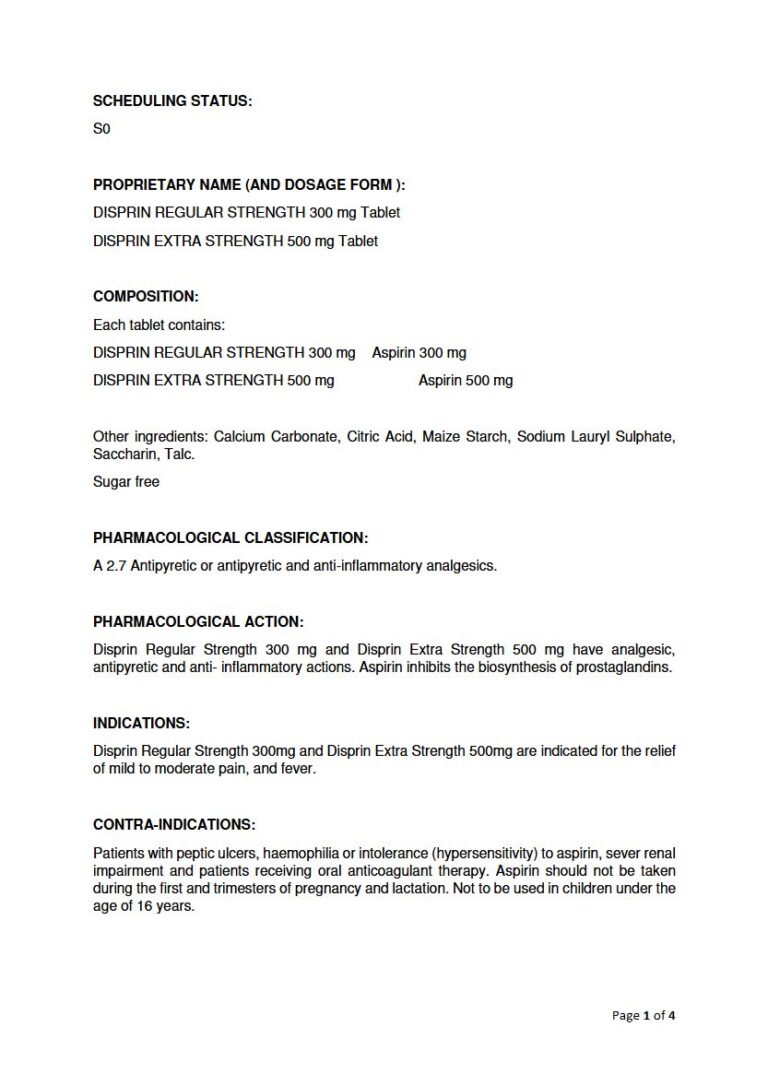
Relief of mild to moderate pain and fever.
Dosage (summary)
Adults: 1-3 tablets every 4 hours, max 12/day. Children 16+: 1-2 tablets, max 10/day.
Special Populations
- Renal impairment
- Hepatic impairment
Pregnancy & Breastfeeding
Contraindicated in first and third trimesters of pregnancy and lactation.
Key Drug Interactions
- Enhances anticoagulants
- Diminishes anti-gout medications
- May mask respiratory symptoms of overdose
Contraindications
- Peptic ulcers
- Haemophilia
- Hypersensitivity to aspirin
- Severe renal impairment
- Oral anticoagulant therapy
- Children under 16 years
Common side effects
- Dizziness
- Gastric irritation
- Dyspepsia
- Haematemesis
- Melaena
Counselling Points
- Take with food to minimize gastric irritation.
- Consult doctor if symptoms persist.
- Do not exceed recommended dosage.
Serious warnings
- Do not use continuously for more than 10 days without consulting a doctor.
- Risk of Reye's syndrome in children.
Important Disclaimer
The Disprin Extra Strength 300 / 500mg Tablet professional information leaflet below is the property of Reckitt Benckiser Pharmaceuticals and is provided on Medinsert exactly as issued, with no.. alterations or editorial changes. We make every effort to keep content current by updating documents as soon as new versions become available. Medinsert serves as a trusted access point for healthcare professionals, but does not replace official sources or clinical judgement. For more details, please read our full disclaimer. read more>>
 Healthcare Professionals Only
This content is for registered healthcare professionals
Sign in or create a free account to read the full package insert.
Free for HPCSA-registered professionals. Powered by Medinsert.
Clinical Particulars
Section 4 of the official insert — extracted exactly as issued, no alterations
4.1 Therapeutic indications
Disprin Regular Strength 300mg and Disprin Extra Strength 500mg are indicated for the relief of mild to moderate pain, and fever.
4.2 Posology and method of administration
Disprin Regular Strength 300 mg: Adults: 1-3 tablets. Repeat 4 hourly if necessary but not more than 12 tablets during any 24- hour period. Children 16 years and over: 1-2 tablets not more than four times a day, to a maximum of 10 tablets in 24 hours. Disprin Regular Strength 300 mg can be dissolved in water, or if preferred, on the tongue.
Disprin Extra Strength 500 mg: Adult: 1-2 tablets Children over 16 years: 1 tablet Repeat 4 hourly if necessary but not more than 8 tablets during 24 hour period, but if symptoms persist consult your doctor. In chronic Rheumatic disease, 1-2 tablets every 4 hours over long period. In acute rheumatism, 2-4 tablets four times daily. Disprin Extra Strength 500 mg should be dissolved in water before being taken. If symptoms persist consult your doctor. Do not use continuously for more than 10 days without consulting your doctor.
4.3 Contraindications
Patients with peptic ulcers, haemophilia or intolerance (hypersensitivity) to aspirin, sever renal impairment and patients receiving oral anticoagulant therapy. Aspirin should not be taken during the first and trimesters of pregnancy and lactation. Not to be used in children under the age of 16 years.
4.4 Special warnings and precautions for use
DO NOT USE CONTINUOUSLY FOR MORE THAN 10 DAYS WITHOUT CONSULTING YOUR DOCTOR. There is a possible association between aspirin and Reye's syndrome when given to children. Reyeu2019s syndrome is a very rare disease which affects the brain and liver and can be fatal. For this reason, aspirin should not be given to children under the age of 16 years unless specifically indicated by a doctor or pharmacist.
Dizziness, Irritation of the gastric mucosa and resultant dyspepsia, haematemesis and melaena may occur in some cases. Concomitant therapy with other gastric irritants, such as non-steroidal anti-inflammatory agents may increase the risk of gastric irritation. Disprin Regular Strength 300 mg and Disprin Extra Strength 500 mg should be withdrawn one week before surgery because of the possibility of increasing the bleeding times. Aspirin may cause allergic reactions, more commonly in asthmatics. Some persons, especially asthmatics, exhibit notable sensitivity to aspirin which may provoke various hypersensitivity reactions which may include skin eruptions, paroxysmal bronchospasm and dyspnoea. Aspirin should be administered with caution to patients with impaired renal function, dyspepsia, anaemia and when the patient is dehydrated.
4.5 Interactions with other medicines
Aspirin may enhance the activity of coumarin anticoagulants, methotrexate and oral anti-diabetic preparations and sulphonamides. Aspirin diminishes the effect of anti-gout preparations such as probenecid and sulphinpyrazone. Barbiturates and other sedatives may mask the respiratory symptoms of aspirin overdosage and have been reported to enhance its toxicity. Prolonged use of high doses may lead to anaemia, blood dyscrasias, gastro-intestinal haemorrhage, peptic ulceration and renal papillary necrosis. Interference with laboratory tests: Salicylates may produce falsely increased results for blood creatinine, urate (low dose aspirin) and urea. Falsely decreased results may be obtained for blood thyroxine and urate (>4g/day aspirin) and for urinary 5-HIAA (with nitrosoonaphthol method). Urinary VMA (HMMA) levels may be falsely increased or decreased depending on the method of analysis. Urinary glucose oxidase: Aspirin may cause a false negative test in the presence of glycosuria.
4.6 Fertility, pregnancy and lactation
Aspirin should not be taken during the first and trimesters of pregnancy and lactation.
4.7 Effects on ability to drive and use machines
Not specified in the provided text.
4.8 Undesirable effects
Dizziness, Irritation of the gastric mucosa and resultant dyspepsia, haematemesis and melaena may occur in some cases. Aspirin may cause allergic reactions, more commonly in asthmatics. Some persons, especially asthmatics, exhibit notable sensitivity to aspirin which may provoke various hypersensitivity reactions which may include skin eruptions, paroxysmal bronchospasm and dyspnoea.
4.9 Overdose
These include dizziness, tinnitus, sweating, nausea, vomiting, altered glucose metabolism, mental confusion, hyperventilation, respiratory alkalosis, metabolic acidosis, ketosis, and fluid and electrolyte losses. Depression of the central nervous system may lead to coma Cardiovascular collapse and respiratory failure. In children, serious signs of overdosage may develop rapidly. In cases of overdosage, consult a doctor immediately. Treatment is symptomatic and supportive: the serum salicylate levels should be closely monitored and forced alkaline diuresis instituted if appropriate. Gastric lavage, restoration of fluid, electrolyte and acid balance, dialysis and supportive therapy may be required.
