
Ginette 2,0 mg/ 0,035 mg FC tablets
PDF Leaflet Revision Date: 10 November 2022
Clinical Summary
Quick overview from the medicine insert
Indication
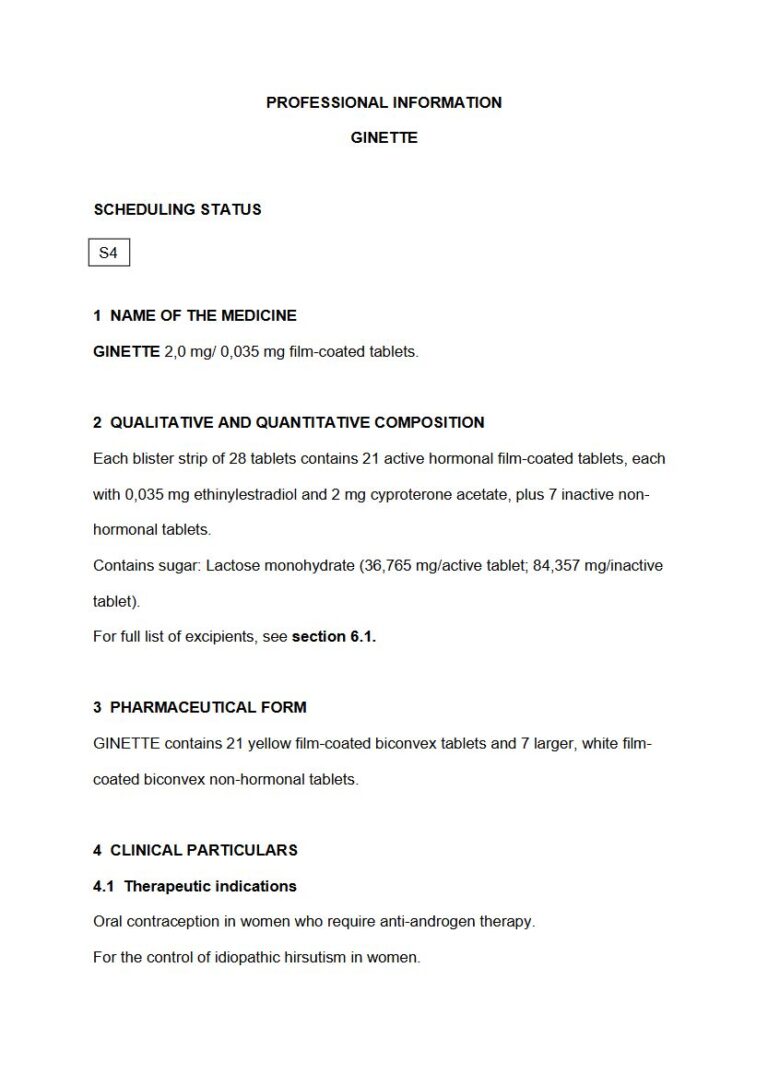
Oral contraception and anti-androgen therapy in women.
Dosage (summary)
One tablet daily, starting on the first day of the menstrual cycle.
Special Populations
- Hepatic impairment
- Renal impairment
Pregnancy & Breastfeeding
Contraindicated in pregnancy; may reduce milk production during lactation.
Key Drug Interactions
- Hepatic enzyme inducers
- Anticonvulsants
- Antibiotics
Contraindications
- Pregnancy
- Breast cancer
- Severe hepatic disease
- Thrombo-embolic disorders
Common side effects
- Headache
- Depressed mood
- Breast tenderness
Counselling Points
- Take at the same time daily
- Use additional contraception if missed dose
- Monitor for mood changes
Serious warnings
- Increased risk of thromboembolism
- Not for use in smokers over 35
Important Disclaimer
The Ginette 2,0 mg/ 0,035 mg FC tablets professional information leaflet below is the property of Cipla Medpro and is provided on Medinsert exactly as issued, with no.. alterations or editorial changes. We make every effort to keep content current by updating documents as soon as new versions become available. Medinsert serves as a trusted access point for healthcare professionals, but does not replace official sources or clinical judgement. For more details, please read our full disclaimer. read more>>
 Healthcare Professionals Only
This content is for registered healthcare professionals
Sign in or create a free account to read the full package insert.
Free for HPCSA-registered professionals. Powered by Medinsert.
Clinical Particulars
Section 4 of the official insert — extracted exactly as issued, no alterations
4.1 Therapeutic indications
Oral contraception in women who require anti-androgen therapy. For the control of idiopathic hirsutism in women. S4
For the treatment of severe acne, especially androgen-dependent acne accompanied by inflammation, seborrhoea or the formation of nodes.
4.2 Posology and method of administration
Posology
Before commencing with GINETTE, a thorough gynaecological examination should be done, and the patientu2019s medical history carefully evaluated. Regular medical examinations are recommended during use. Pregnancy should be excluded. Disorders of the clotting system and family history of thrombo-embolic diseases, especially at a young age, should be excluded. Androgen-producing tumours or an adrenal enzyme defect should be ruled out before prescribing GINETTE for the treatment of hirsutism. Additional contraceptive precautions should be taken for the first 14 days of the first cycle or if a tablet is accidentally missed. Spotting may occur but will usually stop spontaneously. The patient is advised to consult her doctor if prolonged and persistent bleeding occurs. The tablet should be taken roughly at the same time every day, not exceeding 24 hours, for maximum effectiveness. The tablet may be taken with a meal to reduce nausea. Missed doses: Take as soon as possible, that is within the next 12 hours at the latest, but not when it is nearly time for the next dose. Do not double dose. Take the next tablet at the usual time to prevent withdrawal bleeding. Additional non-hormonal contraceptive precaution should be taken. In the case of diarrhoea or vomiting, additional non-hormonal contraception should be employed in order to prevent pregnancy.
First cycle: The patient should take the first tablet on the first day of the cycle (The first day of the menstrual bleeding). Thereafter, one tablet should be taken daily, following the sequence of the arrows, at the same time, until all the tablets have been taken. The first tablet should be taken from the silver section (of the calendar pack), commencing with the appropriate day as indicated on the strip.
Subsequent cycles: A new pack should be started the very next day after completing the previous pack, once again starting from the appropriate day within the silver section of the strip. This method should be followed as long as the contraception is desired.
Length of use: The length of use depends on the severity of the clinical picture. Treatment should generally be carried out over several months. It is recommended that GINETTE be taken for at least another 3 to 4 cycles after the signs have subsided. The need to continue treatment should be evaluated periodically by the treating physician.
For the treatment of androgen-dependent acne: Dosage as for contraception.
Special populations
Children and adolescents GINETTE is only indicated after menarche. Geriatric patients Not applicable. GINETTE is not indicated after menopause. Patients with hepatic impairment Ginette is contraindicated in women with severe hepatic disease as long as liver function values have not returned to normal (see section 4.3). Patients with renal impairment GINETTE has not been specifically studied in renally impaired patients. Available data do not suggest a change in treatment in this patient population.
Method of administration GINETTE tablets are to be taken orally.
4.3 Contraindications
- Hypersensitivity to any of the ingredients of GINETTE.
- GINETTE must not be used during known or suspected pregnancy as it may cause severe harm to the foetus.
- GINETTE should not be prescribed after a recent evacuation of a hydatidiform mole until urine and plasma gonadotropin concentrations have returned to normal.
- Lactation.
- Known or suspected breast cancer.
- Concomitant use with another hormonal contraceptive.
- Patients with liver diseases or malignant or wasting diseases.
- It should not be given to patients with a history of arterial or venous thrombo-embolic disorders. This may include myocardial infarction, pulmonary embolism, venous thrombosis and stroke.
- Contraindicated in patients with severe chronic depression and sickle-cell anaemia.
- Depression not well controlled with treatment.
- A history of depression with the use of hormonal contraceptives.
- GINETTE is contraindicated in patients with oestrogen-dependent neoplasms, functional ovarian cysts, the Dubin-Johnson or Rotor syndromes, disorders of lipid metabolism, markedly impaired liver function, cerebrovascular insufficiency, coronary artery disease, thrombophlebitis, deteriorating otosclerosis, a history of pruritus during previous pregnancy, undiagnosed vaginal bleeding, herpes, recurrent cholestatic jaundice or porphyria.
- Patients with classical migraine should not use GINETTE.
- Relative contraindications (these patients would require medical supervision): Diabetes mellitus, tetany, hypertension, epilepsy, chorea, multiple sclerosis, renal dysfunction, asthma, mental depression, varicose veins, cardiac dysfunction, gallbladder disease, patients who wear contact lenses and obese patients, or other conditions influenced by fluid retention. The risk benefits should be considered in patients with endometriosis and uterine fibroids.
It is advised that the use of GINETTE be discontinued if any of the following symptoms occur:
- The onset of migraine or severe headache in a new patient or more frequent occurrence of unusually severe headaches.
- When there is a gradual or sudden loss of vision or hearing or other sudden perceptual disorders.
- At the first signs of thrombo-embolic disorders, e.g., pulmonary embolism, cerebrovascular insufficiency, thrombophlebitis, cerebral haemorrhage, retinal thrombosis, coronary or mesenteric thrombosis.
- Surgery or prolonged bed rest as this may increase the risk of thrombo-embolic episodes. It is recommended that oral contraceptives be discontinued 4 to 6 weeks before major surgery.
- GINETTE should be discontinued if persistent upper abdominal pain, hepatitis or jaundice develops.
- If the blood pressure rises markedly, GINETTE should be discontinued.
- Onset of severe depression.
- Severe upper abdominal pain or liver enlargement.
- Pregnancy.
4.4 Special warnings and precautions for use
Women who use oral contraceptives should be strongly advised not to smoke as it increases the risk of myocardial infarction. Women smoking more than 15 cigarettes per day have at least a 20% increased risk of serious cardiovascular side-effects. This risk also increases with age and is quite marked in women over 35 years of age.
Not to be used in children and men. GINETTE is prescribed, the patient should undergo an appropriate medical examination and her medical history should be carefully evaluated. Regular medical examinations should be done during the use of GINETTE. The possibility of pregnancy should be excluded before initiating treatment. Undiagnosed vaginal bleeding that is suspicious for underlying conditions should be investigated.
GINETTE does not protect against HIV infections (Aids) and other sexually transmitted diseases.
Conditions which require strict medical supervision
The benefits of the use of GINETTE should be weighed against the possible risks for each individual woman and discussed with the woman before she decides to start using GINETTE, if any of the conditions/ risk factors mentioned below is present. In the event of aggravation, exacerbation or first appearance of any of these conditions or risk factors, the woman should contact her medical practitioner.
- Diabetes mellitus, with mild vascular disease or mild nephropathy, retinopathy or neuropathy.
- Hypertension that is adequately controlled i.e., systolic > 140 to 159 mm Hg or diastolic > 90 to 95 mm Hg.
- Porphyria.
- Clinical depression.
- Obesity.
- Migraine.
- Cardiovascular disease.
- Chloasma.
Patients with a history of depression or any condition mentioned above should be monitored during treatment with GINETTE. Depressed mood and depression are well-known undesirable effects of hormonal contraceptive use (see section 4.8). Depression can be serious and is a well-known risk factor for suicidal behaviour and suicide. Women should be advised to contact their medical practitioner in case of mood changes and depressive symptoms, including shortly after initiating the treatment.
Circulatory disorders
In women using combined oral contraceptives, such as GINETTE, the incidence of circulatory system diseases is significantly higher than those of controls, and the mortality is slightly increased. Cerebrovascular accidents, coronary thrombosis and venous thrombosis are more likely to occur in women over 35 years of age, particularly if they have used contraceptives for 5 years or longer or are cigarette smokers. The incidence is also increased in women who are obese, or if they suffer from hypertension.
The incidence of circulatory system diseases is also higher in women suffering from diabetes, hyper cholesterolaemia and familial hyperlipoproteinaemia. Thrombosis may be more common in women with blood groups A,B or AB.
There is an increased risk of venous thromboembolism (VTE) with the use of GINETTE, compared with no use. The additional risk of VTE is highest during the first year of use or when restarting or switching after a pill free interval of at least a month. 1 to 2 % of cases of venous thromboembolism are fatal.
Patients that may have an inherently increased cardiovascular risk such as that associated with polycystic ovarian syndrome, are probable in the user group of GINETTE.
An increased risk for arterial (myocardial infarction, transient ischaemic attack) thromboembolism associated with the use of hormonal contraceptive have been shown by studies.
Thrombosis has been reported to occur in other blood vessels of hormonal contraceptive users, e.g., hepatic, mesenteric, renal, cerebral or renal veins and arteries.
Symptoms of venous or arterial thrombosis or of a cerebrovascular accident can include: sudden severe pain in the chest, whether or not it radiates to the left arm, unusual unilateral leg pain and / or swelling, sudden onset of coughing or breathlessness, any unusual, severe, prolonged headache, diplopia, sudden partial or complete loss of vision, aphasia or slurred speech, vertigo, collapse with or without focal seizure, weakness or very marked numbness suddenly affecting one side or one part of the body, motor disturbances and acute abdomen.
The risk of venous thromboembolic events increases with:
- Increasing age.
- Smoking (women over 35 years of age should be strongly advised not to smoke if they wish to use GINETTE. Heavier smoking and increased age increased the risk further, especially in woman over 35 years or age).
- A positive family history (i.e., venous thromboembolism ever in a parent at a relatively early age or a sibling).
- Major surgery, an extended period of immobilisation, any surgery to the legs or major trauma. It is recommended that use is discontinued (in the case of elective surgery at least four weeks in advance) and not to resume until two weeks after remobilisation is completed. If it is not possible to discontinue the use of GINETTE in advance, antithrombotic treatment should be considered.
- Obesity (body mass index over 30 kg/m2).
There is no consensus about the possible role of varicose veins and superficial thrombophlebitis in venous thromboembolism.
The risk of a cerebrovascular accident increases or arterial thromboembolic complications with:
- Increasing age.
- Smoking (Women over 35 years of age should be strongly advised not to smoke if they wish to use GINETTE. Heavier smoking and increased age increase the risk further, especially in women over 35 years of age).
- Atrial fibrillation.
- Dyslipoproteinemia.
- Hypertension.
- Migraine.
- Obesity (body mass index over 30 kg/m2).
- Valvular heart disease.
- A positive family history (arterial thrombosis ever in a parent at a relatively early age or sibling). The woman should be referred to a specialist for advice before deciding about any hormonal contraceptive use, if a genetic predisposition is suspected.
Other medical conditions, which have been associated with adverse circulatory events, include diabetes mellitus, systemic lupus erythematosus, haemolytic uraemic syndrome, chronic inflammatory bowel disease (e.g., Crohnu2019s disease or ulcerative colitis) and sickle cell disease.
The increased risk of thromboembolism in the puerperium must be considered. Immediate discontinuation of the use of GINETTE should be considered in case of an increase in frequency or severity of migraine (which may be prodromal of a cerebrovascular event). GINETTE should be discontinued if thrombosis is suspected or confirmed. Due to the teratogenicity of anti-coagulant therapy (coumarins), adequate contraception should be initiated.
Other factors affecting circulatory events
The user group of GINETTE as a treatment for acne or moderately severe hirsutism is likely to include patients that may have an inherently increased cardiovascular risk such as that associated with polycystic ovarian syndrome. Biochemical factors that may suggest hereditary or acquired predisposition for venous or arterial thrombosis may include Activated Protein C (APC) resistance, hyperhomocysteinaemia, antithrombin-III deficiency, protein C deficiency, protein S deficiency, antiphospholipid antibodies (anticardiolipin antibodies, lupus anticoagulant).
Tumours
Breast cancer Studies have reported that there is an increase in relative risk (RR = 1.24) of having breast cancer diagnosed in women who are currently using oestrogen containing combined oral contraceptives, such as GINETTE.
Cervical cancer An increased risk of cervical cancer is reported although other factors may be involved.
Liver cancer There is an increased incidence of benign liver tumours. Malignant liver tumours have also been reported. In cases of severe upper abdominal pain, liver enlargement or intra-abdominal haemorrhage, a liver tumour should be excluded.
Other conditions Deterioration of certain chronic diseases are possible during the use of GINETTE.
Known hyperlipidaemias The risk of pancreatitis may be increased in woman with hypertriglyceridemia, or a family history thereof, when using COCs such as GINETTE. Hyperlipidaemias increase the risk of arterial disease. However, routine screening of women on COCs such as GINETTE is not appropriate.
Hypertension Hypertension may occur. Regular blood pressure checks, including a pre-treatment check, are advised. Antihypertensive treatment should normally be initiated at a level of 160/100 mm Hg in uncomplicated patients or at 140/90 mm Hg in those with target organ damage, established cardiovascular disease, diabetes or with increased cardiovascular risk factors, if sustained hypertension develops during the use of GINETTE. Decisions about the continued use of GINETTE, should be made at lower BP levels, and alternative contraception may be advised.
Conditions which deteriorate with pregnancy or during previous COC or GINETTE use. Deterioration of the following conditions with both pregnancy and use of a COC or oestrogen/progestogen combinations like GINETTE have been reported. If any of the following occur during use, consideration should be given to stopping GINETTE:
- Jaundice and/or pruritis related to cholestasis.
- The risk of gallstone formation may be increased by COCu2019s or GINETTE and may exacerbate existing disease.
- Systemic lupus erythematosus.
- Herpes gestationis.
- Otosclerosis-related hearing loss.
- Sickle cell anaemia.
- Renal dysfunction.
- Hereditary angiodema.
- Epilepsy.
- Any other condition an individual woman has experienced worsening of during pregnancy or previous use of COCs or GINETTE.
Deterioration of liver function Liver functions may be impaired. It may be necessary to discontinue the use of GINETTE as a result of acute or chronic disturbances of liver function until markers of liver function return to normal.
Diabetes (without vascular involvement) GINETTE can be used by insulin dependent diabetics without vascular disease. The use of GINETTE in diabetic patients with existing vascular disease is contraindicated (see section 4.3). As an increased risk of arterial disease exists for all diabetics, this should be considered when prescribing GINETTE. Although oestrogen/progestogen combinations like GINETTE may have an effect on peripheral insulin resistance and glucose tolerance, no evidence exists for a need to change the therapeutic regimen in diabetics using low dose (containing < 0,05 mg ethinylestradiol). Diabetic women should however be carefully monitored while taking GINETTE.
Chloasma Chloasma may occur, especially in women with a history of chloasma gravidarum. Women prone to chloasma should avoid ultraviolet radiation and exposure to the sun or whilst taking GINETTE.
Menstrual changes Reduction of menstrual flow: This is normal, and it is to be expected in some patients. It may be beneficial where heavy periods were previously experienced. Missed menstruation: On occasion, withdrawal bleeding may not occur at all. Pregnancy is unlikely on account that the tablets have been taken correctly. Should bleeding fail to occur during the tablet-free interval the possibility of pregnancy must be excluded before the next pack is started. Prolonged amenorrhoea following the use of oral contraceptives may occur. The incidence is in the order of 1% of users. Intermenstrual bleeding: During the first monthu2019s irregular bleeding (spotting or breakthrough bleeding) is not unusual. The assessment of any irregular bleeding is therefore only meaningful after an adaptation interval of about three cycles. Non-hormonal causes should be considered if spotting or breakthrough bleeding continue or occur after previously regular cycles, adequate diagnostic measures are indicated to exclude malignancy or pregnancy. This may include curettage. Women should be advised that it is possible to experience amenorrhoea or oligomenorrhoea after discontinuation of GINETTE, especially if these conditions existed prior to use. Under no circumstances should the oral contraception be stopped without having adopted alternative contraception.
Lactose GINETTE contains lactose. Patients with rare hereditary problems of galactose intolerance, the Lapp lactase deficiency, fructose intolerance or glucose-galactose malabsorption should not take GINETTE.
4.5 Interaction with other medicines and other forms of interaction
Hepatic enzyme inducers
The metabolism of contraceptive steroids is increased by medicines which induce hepatic enzymes (especially cytochrome P450 3A4). As a result, breakthrough bleeding and pregnancy may occur. For women receiving long-term therapy with hepatic enzyme inducers, another method of contraception should be used. Breakthrough bleeding or spotting are possible signs of diminished contraceptive effectiveness.
Clinically relevant interactions with COSs and oestrogen/progestogen combinations like GINETTE have been shown for:
Antiretroviral agents
- Ritonavir.
- Nelfinavir.
- Nevirapine.
Anticonvulsants
- Barbiturates (including phenobarbitone).
- Primidone.
- Phenytoin.
- Carbamazepine.
- Oxcarbazepine.
- Topiramate.
Antibiotics/antifungals
- Griseofulvin.
- Rifampicin.
- Aminopenicillins (e.g., Ampicillin, amoxicillin).
- Tetracyclines.
Note: There are other antiretroviral agents that may increase plasma concentration of sex hormones.
Herbal remedies
- St Johnu2019s wort (Hypericum perforatum).
Effects on other medicines
There is evidence that the overall effect of a large supplement of Vitamin C is to convert a low-dose oestrogen oral contraceptive to a high-dose oral contraceptive. Breakthrough bleeding may occur with the withdrawal of high doses of Vitamin C. The effectiveness of some anticoagulants, antidepressants and antidiabetics may be reduced and the plasma concentration of ciclosporin may be increased with concomitant use. The effectiveness of anti-hypertensives, beta blockers and diuretics may also be reduced, and the plasma concentrations of theophylline may be increased during concomitant use.
Laboratory tests
Some laboratory tests may be changed, in particular hormone tests, blood coagulation, thyroid function, glucose tolerance, liver function tests and serum triglycerides.
4.6 Fertility, pregnancy and lactation
Pregnancy
GINETTE is contraindicated during pregnancy (see section 4.3). If pregnancy occurs during treatment with GINETTE, further intake must be stopped. Animal studies have shown that feminisation of male foetuses may occur if cyproterone acetate is administered during the phase of embryogenesis at which differentiation of the external genitalia occurs. The possibility must be considered that administration of GINETTE to women after the 45th day of pregnancy could cause feminisation of male foetuses.
Breastfeeding
The use of GINETTE during lactation may lead to a reduction in the volume of milk produced and to change in its composition. Minute amounts of active substances are excreted with the milk. These amounts may affect the child particularly in the first 6 weeks post-partum. Mothers who are breastfeeding should be advised not to take GINETTE until the nursing mother has weaned her child off breast milk.
Fertility
There are no data available on fertility.
4.7 Effects on ability to drive and use machines
None known.
4.8 Undesirable effects
Infections and Infestations
Frequency unknown: Vaginal candidiasis.
Neoplasms benign, malignant and unspecified (including cysts and polyps) Frequency unknown Increased incidence of benign liver tumours.
Blood and lymphatic system disorders Anaemia. Frequency unknown: Immune system disorders Less frequent: Hypersensitivity.
Metabolism and nutrition disorders Less frequent: Fluid retention. Frequency unknown: Swelling of the limbs.
Psychiatric disorders Frequent: Depressed mood, altered mood. Less frequent: Increased or decreased libido.
Nervous system disorders Frequent: Headache. Less frequent: Migraine. Frequency unknown: Dizziness.
Eye disorders Less frequent: Intolerance to contact lenses has been reported and vision may deteriorate in myopic patients.
Vascular disorders Less frequent: Thromboembolism. Frequency unknown: Peripheral oedema.
Nausea, abdominal pain. Vomiting, diarrhoea. Bloating, gastrointestinal irritation.
Gastrointestinal disorders Frequent: Less frequent: Frequency unknown: Hepatobiliary disorders Frequency unknown: Gallbladder obstruction or hepatitis may occur.
Skin and subcutaneous disorders Less frequent: Rash, urticaria, erythema nodosum and erythema multiforme. Frequency unknown: Chloasma, skin pigmentation, alterations in hair pattern and skin reactions.
Reproductive system and breast disorders Frequent: Breast pain and breast tenderness. Less frequent: Breast hypertrophy, vaginal discharge and breast discharge. Frequency unknown: Breast changes, changes in menstrual flow (spotting, breakthrough bleeding, amenorrhoea) and temporary intermenstrual bleeding.
Investigations Frequent: Weight increase. Less frequent: Weight decrease.
Post marketing The following side effects have been reported with the post marketing use of hormonal contraceptives: Severe depression with a higher risk of suicidal thoughts/behaviour and suicide.
Immune system disorders Frequency unknown: Exacerbation of hereditary angiodema.
Metabolism and nutrition disorders Frequency unknown: Hypertriglyceridemia.
Nervous system disorders Frequency unknown: Exacerbation of chorea.
Vascular disorders Frequency unknown: Increase in blood pressure.
Gastrointestinal disorders Frequency unknown: Crohnu2019s disease, ulcerative colitis.
Hepatobiliary disorders Frequency unknown: Liver function disturbances.
Skin and subcutaneous tissue disorders Frequency unknown: Chloasma.
Reproductive system and breast disorders Frequency unknown: Reduced menstrual flow, spotting, breakthrough bleeding and missed withdrawal bleeding, post-pill amenorrhoea.
Reporting of suspected adverse reactions Reporting suspected adverse reactions after authorisation of the medicine is important. It allows continued monitoring of the benefit/risk balance of the medicine. Health care providers are asked to report any suspected adverse reactions to SAHPRA via the u201c6.04 Adverse Drug Reactions Reporting Formu201d, found online under SAHPRAu2019s publications: https://www.sahpra.org.za/Publications/Index/8 and to Cipla Medpro (Pty) Ltd., at [email protected] or telephone 080 222 6662 (toll free).
4.9 Overdose
Overdose may cause nausea, vomiting and, in females, withdrawal bleeding. Treatment is symptomatic and supportive.
