
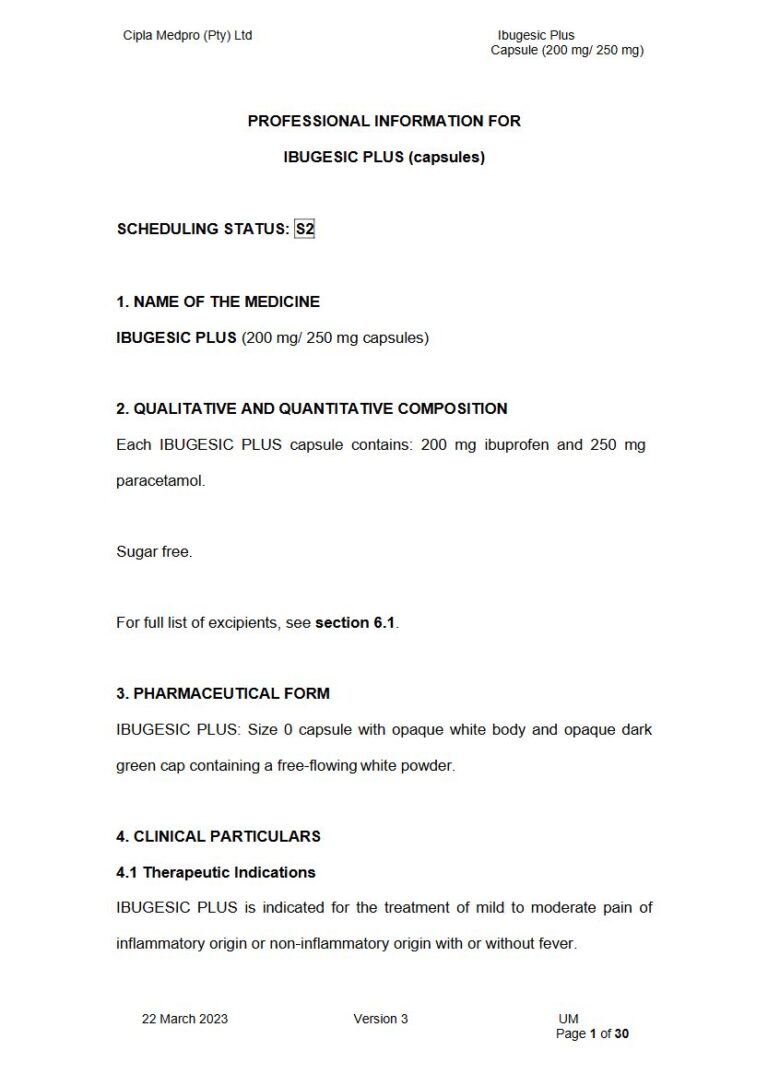
Ibugesic Plus 200 mg/ 250 mg Capsule
PDF Leaflet Revision Date: 09 March 2023
Clinical Summary
Quick overview from the medicine insert
Indication
Mild to moderate pain relief with or without fever.
Dosage (summary)
Adults and children over 12 years: 2 capsules every 4 hours as needed, max 6 capsules/24 hours.
Onset of Action / Duration
Onset: 30 mins, Duration: 4-6 hours for pain, 6-8 hours for fever.
Special Populations
- Elderly
- Renal impairment
- Hepatic impairment
Pregnancy & Breastfeeding
Contraindicated in pregnancy and breastfeeding due to risks of fetal renal dysfunction.
Key Drug Interactions
- Anticoagulants
- Other NSAIDs
- Alcohol
- Antihypertensives
Contraindications
- Hypersensitivity to ibuprofen or paracetamol
- Active peptic ulcer
- Severe liver impairment
- Severe renal impairment
Common side effects
- Gastrointestinal discomfort
- Dizziness
- Nausea
- Headache
Counselling Points
- Take with food to reduce GI upset
- Do not exceed recommended dose
- Consult doctor if symptoms persist beyond 7 days
Serious warnings
- Risk of severe liver damage in overdose
- May cause gastrointestinal bleeding
- Caution in patients with cardiovascular disease
Important Disclaimer
The Ibugesic Plus 200 mg/ 250 mg Capsule professional information leaflet below is the property of Cipla Medpro and is provided on Medinsert exactly as issued, with no.. alterations or editorial changes. We make every effort to keep content current by updating documents as soon as new versions become available. Medinsert serves as a trusted access point for healthcare professionals, but does not replace official sources or clinical judgement. For more details, please read our full disclaimer. read more>>
 Healthcare Professionals Only
This content is for registered healthcare professionals
Sign in or create a free account to read the full package insert.
Free for HPCSA-registered professionals. Powered by Medinsert.
Clinical Particulars
Section 4 of the official insert — extracted exactly as issued, no alterations
4.1 Therapeutic Indications
IBUGESIC PLUS is indicated for the treatment of mild to moderate pain of inflammatory origin or non-inflammatory origin with or without fever.
4.2 Posology and method of administration
For oral administration and short term use only. The lowest effective dose should be used for the shortest duration necessary to relieve symptoms (see section 4.4). DO NOT EXCEED THE RECOMMENDED DOSE. Not recommended for children under 12 years of age. Adults and children over 12 years: 2 capsules every 4 hours when necessary. Do not exceed 6 capsules in 24 hours. IBUGESIC PLUS should be taken with or after food. If taking IBUGESIC PLUS for pain and the pain persists for longer than 7 days, or if taking IBUGESIC PLUS for fever and the fever persists for longer than 3 days or if the condition deteriorates or new symptoms develop, a re-evaluation of the condition is required by the doctor.
4.3 Contraindications
Hypersensitivity to ibuprofen or paracetamol or to any of the excipients of IBUGESIC PLUS in section 6.1.
- History of gastrointestinal Perforation, Ulceration or bleeding (PUBs) related to previous NSAIDs, including IBUGESIC PLUS.
- Patients who have previously shown hypersensitivity reactions (e.g. asthma, rhinitis, angioedema, or urticaria) in response to aspirin or other non-steroidal anti-inflammatory medicines.
- Active or history of recurrent peptic ulcer/haemorrhage/perforations (two or more distinct episodes of proven ulceration or bleeding).
- Heart failure (NYHA Class IV).
- Uncontrolled asthma or bronchospasm.
- Nasal polyps associated with aspirin-induced bronchospasm.
- Patients with bleeding disorders.
- Cardiovascular diseases.
- Severe liver impairment.
- Renal impairment.
- Lactation (see section 4.6).
- Pregnancy - risk of foetal renal dysfunction (see section 4.4 and 4.6).
- Patients who are receiving coumarin-anticoagulants.
4.4 Special warnings and precautions for use
This product contains paracetamol which may be fatal in overdose. In the event of overdosage or suspected overdose and notwithstanding the fact that the person may be asymptomatic, the nearest doctor, hospital or poison centre must be contacted immediately.
Dosages of paracetamol in excess of those recommended may cause severe liver damage. IBUGESIC PLUS is for short term use only. The use of IBUGESIC PLUS with concomitant NSAIDs including cyclooxygenase-2 selective inhibitors should be avoided. Patients should be warned not to take other medicines containing paracetamol concurrently due to the risk of severe liver damage in case of overdose (see section 4.9).
Diabetic patients may experience false results with blood glucose tests. Surgery u2013 possible enhanced bleeding if surgery is required. Elderly These patients are more likely to develop adverse hepatic or renal effects and if gastrointestinal ulceration or bleeding occurs, it is more likely to cause serious consequences. The antipyretic, analgesic and anti-inflammatory action of ibuprofen may mask symptoms of the occurrence or worsening of infection. This has been observed in bacterial community acquired pneumonia and bacterial complications to varicella. When IBUGESIC PLUS is administered for fever or pain relief in relation to infection, monitoring of infection is advised. In non-hospital settings, the patient should consult a doctor if symptoms persist or worsen.
Respiratory disorders Bronchospasm may be precipitated in patients suffering from or with a previous history of bronchial asthma or allergic disease. Asthma u2013 may be exacerbated.
Cardiovascular, renal and hepatic impairment The administration of an NSAID may cause a dose dependent reduction in prostaglandin formation and precipitate renal failure. Alcoholism or impaired liver function u2013 increased risk of hepatotoxicity, especially in alcoholics with high doses and prolonged use. Alcohol should not be used during the treatment with paracetamol. Renal function impairment u2013 increased risk of adverse effects with prolonged use of high doses, occasional use is acceptable. Renal function impairment u2013 renal failure may be provoked, especially in patients with pre-existing renal impairment. Treatment should be stopped in those patients who develop severe renal failure (see section 4.3).
Hepatic function impairment u2013 increased risk of hepatotoxicity. Dose reduction is recommended in patients showing signs of worsening hepatic function. Treatment should be stopped in those patients who develop severe liver failure (see section 4.3).
Cardiovascular and cerebrovascular effects Conditions predisposing to and exacerbated by fluid retention such as compromised cardiac function, congestive heart disease, pre-existing oedema, hypertension and renal function impairment u2013 ibuprofen may cause fluid retention and oedema. The use of ibuprofen, particularly at a high dose (2400 mg/day) may be associated with a small increased risk of arterial thrombotic events (for example myocardial infarction or stroke). Overall, epidemiological studies do not suggest that low dose ibuprofen (e.g. u2264 1200 mg/day) is associated with an increased risk of arterial thrombotic events. Careful consideration should also be exercised before initiating long-term treatment of patients with risk factors for cardiovascular events (e.g. hypertension, hyperlipidaemia, diabetes mellitus, smoking), particularly if high doses of ibuprofen (2400 mg/day) are required.
Gastrointestinal effects Inflammatory or ulcerative disease of the upper or lower gastrointestinal tract which can be fatal, has been reported with all NSAIDs at any time during treatment, with or without warning symptoms or a previous history of serious Gastrointestinal (GI) events. The risk of gastrointestinal perforation, ulceration or bleeding (PUBs) is higher with increasing doses of IBUGESIC PLUS, in patients with a history of ulcer, particularly if complicated with haemorrhage or perforation (see section 4.3), and the elderly. These patients should commence treatment on the lowest dose available. Combination therapy with protective agents (e.g. misoprostol or proton pump inhibitors) should be considered for these patients, and also for patients requiring concomitant low dose aspirin, or other medicines likely to increase gastrointestinal risk (see below and section 4.5). Patients with a history of GI toxicity, particularly when elderly, should report any unusual abdominal symptoms (especially GI bleeding) particularly in the initial stages of treatment. Caution should be advised in patients receiving concomitant medications which could increase the risk of ulceration or bleeding, such as oral corticosteroids, selective serotonin-reuptake inhibitors or anti-platelet agents such as aspirin (see section 4.5). When gastrointestinal bleeding or ulceration occurs in patients receiving IBUGESIC PLUS, treatment with IBUGESIC PLUS should be stopped.
IBUGESIC PLUS should be given with caution to patients with a history of gastrointestinal disease (e.g. ulcerative colitis, Crohnu2019s disease, hiatus hernia, gastro-oesophageal reflux disease, angiodysplasia) as the condition may be exacerbated (see section 4.8).
Dermatological effects Allergic conditions u2013 possibility of cross sensitivity. Serious skin reactions, some of them fatal, including exfoliative dermatitis, Stevens-Johnson syndrome and toxic epidermal necrolysis have been reported very rarely in association with the use of NSAIDs (see section 4.8). Patients appear to be at highest risk of these reactions early in the course of therapy, the onset of the reaction occurring in the majority of cases within the first month of treatment. Acute Generalised Exanthematous Pustulosis (AGEP) has been reported in relation to ibuprofen-containing products. IBUGESIC PLUS should be discontinued at the first appearance of skin rash, mucosal lesions or any other sign of hypersensitivity.
SLE and mixed connective tissue disease In patients with Systemic Lupus Erythematosus (SLE) and mixed connective tissue disorders there may be an increased risk of aseptic meningitis (see section 4.8).
Haematological effects Ibuprofen, like other NSAIDs, can interfere with platelet aggregation and prolong bleeding time in normal subjects. Bleeding disorders u2013 increased risk of bleeding. Anaemia u2013 may be exacerbated.
Paediatric population There is a risk of renal impairment in dehydrated children and adolescents. Regular use of NSAIDs such as IBUGESIC PLUS during the third trimester of pregnancy, may result in premature closure of the foetal ductus arteriosus in utero, and possibly, in persistent pulmonary hypertension of the newborn. The onset of labour may be delayed and its duration increased. During 20 weeks gestation or later in pregnancy may cause a rare but serious foetal renal dysfunction leading to oligohydramnios and, in some cases, neonatal renal impairment. Complications of prolonged oligohydramnios include limb contractures and delayed lung maturation, which may require invasive procedures such as exchange transfusion or dialysis, in some cases.
4.5 Interaction with other medicines and other forms of interaction
Ibuprofen and paracetamol Other analgesics including cyclooxygenase-2 selective inhibitors IBUGESIC PLUS should not be taken with other medicines containing paracetamol, ibuprofen, acetylsalicylic acid, salicylates or with any other anti-inflammatory drugs (NSAIDs) unless under a doctoru2019s instruction.
Ibuprofen Acetylsalicylic acid Concomitant administration of ibuprofen and acetylsalicylic acid is not generally recommended because of the potential of increased adverse effects. Experimental data suggest that ibuprofen may competitively inhibit the effect of low dose acetylsalicylic acid on platelet aggregation when they are dosed concomitantly. Although there are uncertainties regarding extrapolation of these data to the clinical situation, the possibility that regular, long-term use of ibuprofen may reduce the cardioprotective effect of low-dose acetylsalicylic acid cannot be excluded. No clinically relevant effect is considered to be likely for occasional ibuprofen use (see section 5.1).
Other NSAIDs including cyclooxygenase-2 selective inhibitors The use of two or more NSAIDs concomitantly could result in an increase in side effects (see section 4.4).
Anticoagulants IBUGESIC PLUS may enhance the effects of anticoagulants, such as warfarin. This may increase the risk of severe bleeding and sometimes fatal haemorrhage, especially from the gastrointestinal tract (see section 4.3).
Anti-platelet agents and selective serotonin reuptake inhibitors (SSRIs) Increased risk of gastrointestinal bleeding with NSAIDs (see section 4.4).
Antihypertensives or diuretics IBUGESIC PLUS may reduce the antihypertensive effect of ACE inhibitors, beta-blockers and diuretics, and may cause natriuresis and hyperkalemia. Diuretics can increase the risk of nephrotoxicity of NSAIDs.
Alcohol, corticosteroids, clopidogrel, ticlopidine, bisphosphonates, oxpentifylline Increased risk of gastrointestinal perforation, bleeding and ulceration (PUBs) (see section 4.4).
Cardiac glycosides NSAIDs may exacerbate cardiac failure, reduce GFR and increase plasma glycoside levels.
Lithium Increase in the steady-state concentration of lithium.
Methotrexate Increased and prolonged methotrexate plasma concentration and an increased risk of methotrexate toxicity.
Nephrotoxic medicines e.g. ciclosporin Increased risk of nephrotoxicity.
Tacrolimus Possible increased risk of nephrotoxicity when NSAIDs are given with tacrolimus.
Zidovudine Increased risk of haematological toxicity when NSAIDs are given with zidovudine. There is evidence of an increased risk of haemarthroses and haematoma in HIV(+) haemophiliacs receiving concurrent treatment with zidovudine and ibuprofen.
Quinolones antibiotics Animal data indicate that NSAIDs can increase the risk of convulsions associated with quinolone antibiotics. Patients taking NSAIDs and quinolones may have an increased risk of developing convulsions.
Mifepristone IBUGESIC PLUS should not be used for 8 to 12 days after mifepristone administration as NSAIDs can reduce the effect of mifepristone.
Probenecid IBUGESIC PLUS may interact with probenecid.
Phenytoin IBUGESIC PLUS may interact with phenytoin.
Sulphonylureas IBUGESIC PLUS may interact with sulphonylureas.
Antidiabetic medicines Hypoglycaemic effects of these medicines may be increased.
Bone marrow depressants The leucopenic and/or thrombocytopenic effects of these medicines may be increased.
Paracetamol Hepatotoxic medicines Hepatotoxic substances may increase the possibility of paracetamol accumulation and overdose. The risk of hepatotoxicity of paracetamol may be increased by medicines which induce liver microsomal enzymes such as anticonvulsants and alcohol.
Anticoagulants The anticoagulant effect of warfarin and other coumarins may be enhanced by prolonged regular use of paracetamol, with increased risk of bleeding; occasional doses have no significant effect (see section 4.3).
Metoclopramide and domperidone Absorption of paracetamol may be accelerated.
Cholestyramine Absorption of paracetamol is reduced if given within one hour of cholestyramine.
Probenecid Paracetamol excretion may be affected and plasma concentrations altered when given with probenecid.
Medicines which decrease gastric emptying Paracetamol absorption is decreased by substances that decrease gastric emptying, e.g. propantheline, antidepressants with anticholinergic properties, and narcotic analgesics.
Chloramphenicol Paracetamol may increase chloramphenicol plasma concentrations.
Isoniazid and medicines for tuberculosis Severe hepatotoxicity at therapeutic doses or moderate overdoses of paracetamol has been reported in patients receiving isoniazid alone or with other medicines for tuberculosis.
Zidovudine and co-trimoxazole Severe hepatotoxicity has occurred after use of paracetamol in a patient taking zidovudine and co-trimoxazole.
Enzyme inducing medicines Increased risk of hepatotoxicity. Possible decrease in therapeutic effects of paracetamol.
Digoxin Increase in serum digoxin concentrations.
4.6 Fertility, pregnancy and lactation
Safety and efficacy in pregnancy and lactation have not been established.
Pregnancy During the second or third trimester of pregnancy, NSAIDs including celecoxib/ibuprofen may cause foetal renal dysfunction which may result in reduction of amniotic fluid volume or oligohydramnios in severe cases. Non-steroidal anti-inflammatories are not recommended during pregnancy and is contraindicated in the second and third trimesters because of possible adverse effects on the foetus, such as premature closure of the ductus arteriosus in utero, and possibly, in persistent pulmonary hypertension. The onset of labour may be delayed and duration of labour increased, with increased bleeding tendency in both mother and child. IBUGESIC PLUS is contraindicated during pregnancy (see section 4.3).
Breastfeeding IBUGESIC PLUS should not be used during breastfeeding (see section 4.3).
Fertility The use of IBUGESIC PLUS may impair female fertility and is not recommended in women attempting to conceive. In women who have difficulties conceiving or who are undergoing investigation of infertility, withdrawal of IBUGESIC PLUS should be considered.
4.7 Effects on ability to drive and use machines
IBUGESIC PLUS may impair the ability to drive and use machinery. No studies on the effect of ability to drive or use machines have been performed. Undesirable effects such as dizziness, fatigue and visual disturbances are possible after taking NSAIDs. If affected, patients should not drive or operate machinery.
4.8 Undesirable effects
Ibuprofen: Infections and infestations: Less frequent: Meningitis aseptic. Aseptic meningitis (especially in patients with existing autoimmune disorders, such as systemic lupus erythematosus and mixed connective tissue disease) with symptoms of stiff neck, headache, nausea, vomiting, fever or disorientation (see section 4.4).
Blood and lymphatic system disorders: Less frequent: Haematopoietic disorders (anaemia, haemolytic anaemia, aplastic anaemia) leukopenia, pancytopenia, agranulocytosis, thrombocytopenia, bleeding episodes (e.g. epistaxis, menorrhagia).
Immune system disorders: Less frequent: Hypersensitivity reactions including skin rashes, urticaria and pruritus as well as asthmatic attacks. Severe hypersensitivity reactions where symptoms can include: facial, tongue and larynx swelling, dyspnoea, tachycardia, hypotension up to life-threatening shock. Exacerbation of asthma and bronchospasm. Serum sickness, lupus erythematosus syndrome, Henoch-Schu00f6nlein vasculitis, angioedema.
Metabolic and nutrition disorders: Less frequent: Gynaecomastia, hypoglycaemic reaction.
Psychiatric disorders: Frequent: Nervousness. Less frequent: Depression, confusion, emotional lability, hallucinations, dream abnormalities.
Nervous system disorders: Frequent: Dizziness, headache. Less frequent: Paraesthesias, drowsiness, insomnia, somnolence, paradoxical stimulation, optic neuritis, psychomotor impairment, extrapyramidal effects, tremor and convulsions.
Eye disorders: Less frequent: Visual impairment, blurred vision and other ocular reactions.
Ear and labyrinth disorders: Less frequent: Tinnitus, vertigo.
Cardiac disorders: Less frequent: Heart failure may be precipitated in compromised patients, angina pectoris, cardiac arrhythmias, palpitations.
Vascular disorders: Less frequent: Hypertension.
Respiratory, thoracic and mediastinal disorder: Less frequent: Asthma, bronchospasm, dyspnoea, wheezing, thickened respiratory tract secretions.
Gastrointestinal disorders: Frequent: Dyspepsia, nausea, vomiting, diarrhoea, abdominal cramps and pain, bloating, constipation. Less frequent: Peptic ulceration, gastrointestinal bleeding and perforation with symptoms of melaena, haematemesis sometimes fatal, particularly in the elderly. Ulcerative stomatitis, exacerbation of colitis and Crohn's disease (see section 4.4), gastritis, pancreatitis, flatulence. Decreased appetite. The most commonly observed adverse events are gastrointestinal in nature.
Hepatobiliary disorders: Less frequent: Liver function tests abnormal, hepatic damage, particularly in long-term therapy, acute hepatitis, jaundice.
Skin and subcutaneous tissue disorders: Less frequent: Skin rash, pruritus, exfoliative dermatoses and bullous reaction including Stevens-Johnson syndrome and toxic epidermal necrolysis. Not known: Drug Reaction with Eosinophilia and Systemic Symptoms (DRESS syndrome). Acute Generalised Exanthematous Pustulosis (AGEP).
Renal and urinary disorders: Less frequent: Nephrotic syndrome; interstitial nephritis that may be accompanied by acute renal insufficiency; renal tissue damage (papillary necrosis) with increased serum urea, oedema, haematuria, tubulointerstitial nephritis, nephritic syndrome, proteinuria, urinary retention.
Kidney/Genitourinary: Less frequent: Impairment of renal function, acute reversible renal failure, oedema.
Liver/Hepatobiliary: Less frequent: Abnormalities of liver function tests.
Paracetamol: Blood and lymphatic system disorders: Less frequent: Agranulocytosis, thrombocytopenia, leucopenia, pancytopenia, neutropenia.
Immune system disorders: Less frequent: Hypersensitivity, angioedema, anaphylactic reaction. Very rare cases of serious skin reactions have been reported (including medicine-induced Stevens-Johnson Syndrome (SJS), Toxic Epidermal Necrolysis (TEN), and Acute Generalised Exanthematous Pustulosis (AGEP)).
Respiratory, thoracic and mediastinal disorders: Less frequent: Bronchospasm*. *There have been cases of bronchospasm with paracetamol, but these are more likely in asthmatics sensitive to aspirin or other NSAIDs.
Hepatobiliary disorders: Less frequent: Hepatitis, hepatic dysfunction.
Skin and subcutaneous tissue disorders: Less frequent: Sensitivity reactions resulting in reversible skin rash (which may be accompanied by fever and mucosal lesions), or blood disorders.
Renal and urinary disorders: Less frequent: Renal colic, renal failure.
Investigations: Frequent: Liver function tests abnormal.
Reporting of suspected adverse reactions Reporting suspected adverse reactions after authorisation of the medicine is important. It allows continued monitoring of the benefit/risk balance of the medicine. Health care providers are asked to report any suspected adverse reactions to SAHPRA via the u201c6.04 Adverse Drug Reactions Reporting Formu201d, found online under SAHPRAu2019s publications: https://www.sahpra.org.za/Publications/Index/8 and to Cipla Medpro (Pty) Ltd at [email protected] or telephone 080 222 6662 (toll free).
4.9 Overdose
Prompt treatment is essential. In the event of an overdosage, consult a doctor immediately, or take the person to a hospital directly. A delay in starting treatment may mean that the antidote is given too late to be effective. Evidence of liver damage is often delayed until after the time for effective treatment has lapsed. Susceptibility to paracetamol toxicity is increased in patients who have taken repeated high doses (greater than 5 to 10 g/day) of paracetamol for several days, in chronic alcoholism, chronic liver disease, AIDS, malnutrition, and with the use of medicines that induce liver microsomal oxidation such as barbiturates, isoniazid, rifampicin, phenytoin and carbamazepine.
Symptoms of paracetamol overdose: In the first 24 hours these symptoms include pallor, nausea, vomiting, anorexia and possibly abdominal pain. Mild symptoms during the first two days of acute poisoning do not reflect the potential seriousness of the overdosage. Symptoms of ibuprofen overdose: Most patients who have ingested clinically important amounts of NSAIDs will develop no more than gastrointestinal symptoms (e.g. abdominal pain, nausea, vomiting, or more rarely diarrhoea). Tinnitus, headache and gastrointestinal bleeding are also possible. In more serious poisoning, toxicity is seen in the central nervous system, manifesting as vertigo, headache, respiratory depression, dyspnoea, lethargy, drowsiness, occasionally excitation and disorientation, or coma. Occasionally patients develop convulsions. In serious poisoning, hypotension, hyperkalaemia, and metabolic acidosis may occur and the prothrombin time/ INR may be prolonged, probably due to interference with the actions of circulating clotting factors. Acute renal failure and liver damage may occur. Exacerbation of asthma is possible in asthmatics. Liver damage may become apparent 12 to 48 hours, or later after ingestion of paracetamol, initially by elevation of the serum transaminase and lactic dehydrogenase activity, increased serum bilirubin concentrations and prolongation of the prothrombin time. Liver damage may lead to encephalopathy, coma and death. Acute renal failure with acute tubular necrosis may develop even in the absence of severe liver damage. Abnormalities of glucose metabolism and metabolic acidosis may occur. Cardiac arrhythmias have been reported. Cerebral oedema and non-specific myocardial depression have occurred.
Treatment of overdose: Although evidence is limited, it is recommended that an adult who has ingested 5 to 10 g or more of paracetamol (or a child who has had more than 140 mg/kg) within the preceding 4 hours, should have the stomach emptied by lavage (emesis may be adequate for children) and a single dose of 50 g activated charcoal given via the lavage tube. Ingestion of amounts of paracetamol smaller than this may require treatment in patients susceptible to paracetamol poisoning (see above). In patients who are stuporous or comatose, endotracheal intubation should precede gastric lavage in order to avoid aspiration.
N-acetylcysteine should be administered to all cases of suspected overdose as soon as possible, preferably within 8 hours of overdosage, although treatment up to 36 hours after ingestion may still be of benefit, especially if more than 150 mg/kg of paracetamol was taken. An initial dose of 150 mg/kg N-acetylcysteine in 200 mL dextrose injection given intravenously over 15 minutes, followed by an infusion of 50 mg/kg in 500 mL dextrose injection over the next 4 hours, and then 100 mg/kg in 1000 mL dextrose injection over the next 16 hours. The volume of intravenous fluid should be modified for children. Although the oral formulation is not the treatment of choice, 140 mg/kg dissolved in water as a 5% solution may be administered initially, followed by 70 mg/kg every 4 hours for seventeen doses. If activated charcoal is used then it should be removed by gastric lavage as it may interfere with absorption of orally administered N-acetylcysteine and decrease its efficacy. A plasma paracetamol level should be determined 4 hours after ingestion in all cases of suspected overdosage. Levels done before 4 hours, unless high, may be misleading. Patients at risk of liver damage, and hence requiring continued treatment with N-acetylcysteine, can be identified according to their plasma paracetamol level. The plasma paracetamol level can be plotted against time since ingestion.
Adapted from Smilkstein et al., Ann. Emerg.Med., 1991, 20, 1059. Those whose plasma paracetamol levels are above the u201cnormal treatment lineu201d, should continue N-acetylcysteine treatment with 100 mg/kg IV over 16 hours repeatedly until recovery. Patients with increased susceptibility to liver damage as identified above, should continue treatment if concentrations are above the u201chigh risk treatment lineu201d. Prothrombin index correlates best with survival. Monitor all patients with significant ingestions for at least ninety-six hours. Management should be symptomatic and supportive and include the maintenance of a clear airway and monitoring of cardiac and vital signs until stable. Consider oral administration of activated charcoal if the patient presents within 1 hour of ingestion of a potentially toxic amount. If frequent or prolonged, convulsions should be treated with intravenous diazepam or lorazepam. Give bronchodilators for asthma.
