
Maintenance 000 ml Solution
PDF Leaflet Revision Date: 19 January 2022
Clinical Summary
Quick overview from the medicine insert
Indication
Source of electrolytes, energy, and water for adults and paediatric patients.
Dosage (summary)
Dosage directed by a doctor; adults: up to 40 mmol K+/L daily; paediatrics: 2-3 mmol/kg daily.
Special Populations
- Elderly
- Paediatric patients
- Renal impairment
Pregnancy & Breastfeeding
Safety not established; may cause fetal hyperglycaemia and metabolic acidosis.
Key Drug Interactions
- ACE inhibitors
- Potassium-sparing diuretics
- Corticosteroids
Contraindications
- Hyperkalaemia
- Severe renal insufficiency
- Uncontrolled diabetes
- Fluid overload
Common side effects
- Hypersensitivity reactions
- Hyperkalaemia
- Hyperglycaemia
- Hyponatraemia
Counselling Points
- Monitor blood glucose and electrolytes
- Infuse slowly to avoid irritation
- Consult pharmacist for additives
Serious warnings
- Risk of hyponatraemic encephalopathy
- Fluid overload
- Electrolyte disturbances
Important Disclaimer
The Maintenance 000 ml Solution professional information leaflet below is the property of Fresenius Kabi Manufacturing Sa and is provided on Medinsert exactly as issued, with no.. alterations or editorial changes. We make every effort to keep content current by updating documents as soon as new versions become available. Medinsert serves as a trusted access point for healthcare professionals, but does not replace official sources or clinical judgement. For more details, please read our full disclaimer. read more>>
 Healthcare Professionals Only
This content is for registered healthcare professionals
Sign in or create a free account to read the full package insert.
Free for HPCSA-registered professionals. Powered by Medinsert.
Clinical Particulars
Section 4 of the official insert — extracted exactly as issued, no alterations
4.1 Therapeutic indications
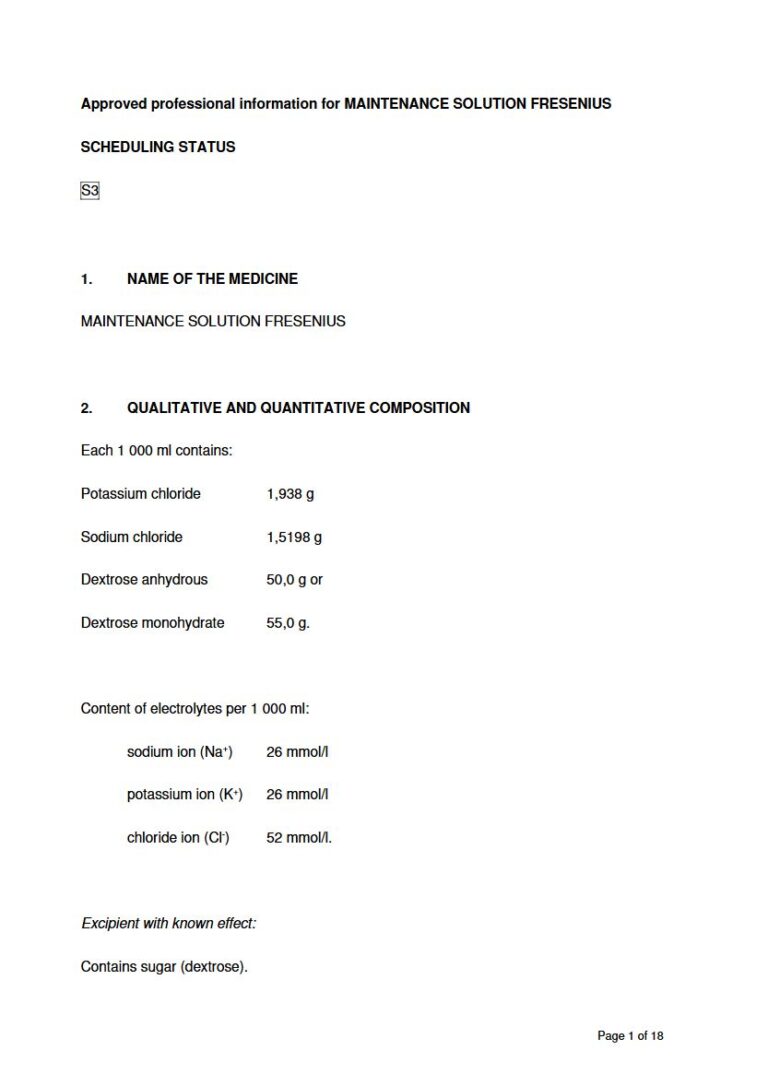
MAINTENANCE SOLUTION FRESENIUS is indicated for use in adults and paediatric patients as a source of electrolytes, energy and water.
4.2 Posology and method of administration
MAINTENANCE SOLUTION FRESENIUS is for intravenous use only. The dosage is to be directed by a medical doctor and is dependent upon age, body mass, clinical condition of the patient and laboratory determinations. Frequent laboratory determinations and clinical evaluations are essential to monitor changes in blood glucose and electrolyte concentrations, and fluid and electrolyte balance during prolonged parenteral therapy. When MAINTENANCE SOLUTION FRESENIUS is to be administered peripherally, it should be slowly infused through a small bore catheter, placed well within the lumen of a large vein to minimise venous irritation. Carefully avoid tissue infiltration.
Usually up to 40 mmol of potassium per litre daily is sufficient to replace normal loss in adults. Infusion rates should not exceed 10 mmol per hour or 120 mmol per day. Paediatric patients may require 2 to 3 mmol per kg of body mass daily. Fluid administration should be based on calculated maintenance or replacement fluid requirements for each patient. Some additives may be incompatible. A pharmacist should be consulted. When introducing additives, use aseptic techniques. Mix thoroughly. Do not store. MAINTENANCE SOLUTION FRESENIUS should be inspected visually for particulate matter and discolouration prior to administration, whenever solution and container permit.
4.3 Contraindications
MAINTENANCE SOLUTION FRESENIUS is contraindicated where the administration of sodium, potassium or chloride could be clinically detrimental, and in patients presenting with:
- Hyperkalaemia.
- Severe renal insufficiency (with oliguria/anuria).
- Uncompensated cardiac or pulmonary failure.
- Uncontrolled diabetes, other known glucose intolerances, hyperosmolar coma, hyperglycaemia and hyperlactataemia.
- Hypersensitivity to maize products.
- Disorders of fluid overload.
- Hypersensitivity to the active ingredients or to any of the excipients listed in section 6.1.
4.4 Special warnings and precautions for use
Fluid balance/renal function: Hyponatraemia Depending on the tonicity of the solution, the volume and rate of infusion and on a patient's underlying clinical condition and capability to metabolise glucose, intravenous administration of glucose can cause electrolyte disturbances, most importantly hypo- or hyperosmotic hyponatraemia. Treatment with intravenous fluids having a lower sodium concentration than the patient's serum sodium may cause hyponatraemia (see section 4.2). Children, patients with reduced cerebral compliance, patients with non-osmotic vasopressin release (e.g. in acute illness, pain, trauma, post-operative stress, infections, burns and central nervous system diseases), patients with heart, liver and kidney diseases and patients exposed to vasopressin agonists and other medicines that can lower serum sodium (see section 4.5) are at particular risk of acute hyponatraemia. Acute hyponatraemia can lead to acute hyponatraemic encephalopathy (brain oedema) characterised by headache, nausea, seizures, lethargy and vomiting. Patients with brain oedema are at particular risk of severe, irreversible and life-threatening brain injury. Children, women of childbearing age and patients with reduced cerebral compliance (e.g. meningitis, intracranial bleeding, and cerebral contusion) are at particular risk of the severe and life-threatening brain swelling caused by acute hyponatraemia.
Risk of fluid and/or solute overload and electrolyte disturbances The patient's clinical status and laboratory parameters (fluid balance, blood and urine electrolytes as well as acid-base balance) must be monitored during use of this solution. Depending on the volume and rate of infusion, intravenous administration of MAINTENANCE SOLUTION FRESENIUS can cause fluid and/or solute overload resulting in overhydration/hypervolaemia, therefore high volume infusion must be specifically monitored in patients with cardiac, pulmonary or renal failure.
Use in patients with hypervolaemia or overhydration, or conditions that cause sodium retention and oedema MAINTENANCE SOLUTION FRESENIUS should be used with great care in patients with hypertension, congestive heart failure, peripheral or pulmonary oedema, impaired renal function, severe renal insufficiency, pre-eclampsia, aldosteronism and in clinical states or other conditions in which there is sodium retention with oedema (also see section 4.5). MAINTENANCE SOLUTION FRESENIUS should be used with care in patients with hypervolaemia, renal insufficiency, urinary tract obstruction, or impending or obvious cardiac decompensation. Extraordinary electrolyte losses such as may occur during protracted nasogastric suction, vomiting, diarrhoea or gastrointestinal fistula drainage may necessitate additional electrolyte supplementation. Additional essential electrolytes, minerals and vitamins should be supplied as needed. Care should be exercised in administering MAINTENANCE SOLUTION FRESENIUS to patients with renal or cardiovascular insufficiency, with or without congestive heart failure, particularly if they are post-operative or elderly.
Use in patients with severe renal impairment In patients with diminished renal function, administration of MAINTENANCE SOLUTION FRESENIUS may result in sodium or potassium retention.
Electrolyte balance: Use in patients with or at risk for hyperkalaemia MAINTENANCE SOLUTION FRESENIUS should not be used in patients with hyperkalaemia, severe renal failure, and in conditions in which potassium retention is present. Potassium therapy should be guided primarily by serial electrocardiograms, especially in patients receiving digoxin. Serum potassium levels are not necessarily indicative of tissue potassium levels. MAINTENANCE SOLUTION FRESENIUS should be used with caution in the presence of cardiac disease, particularly when accompanied by renal disease. The plasma potassium level of the patient should be particularly closely monitored in patients at risk of hyperkalaemia. Solutions containing potassium salts should be administered with caution to patients with cardiac disease or conditions predisposing to hyperkalaemia such as renal or adrenocortical insufficiency, acute dehydration, or extensive tissue destruction as occurs with severe burns.
The following combinations are not recommended as they increase the concentration of potassium in the plasma and may lead to potentially fatal hyperkalaemia, notably in case of renal failure increasing the hyperkalaemic effects (see section 4.5):
- Angiotensin-converting enzyme (ACE) inhibitors and by extrapolation, angiotensin II receptor antagonists.
- Tacrolimus, ciclosporin.
Use in patients with hypocalcaemia MAINTENANCE SOLUTION FRESENIUS contains no calcium, and an increase in plasma pH due to its alkalinising effect may lower the concentration of ionised (not protein-bound) calcium. MAINTENANCE SOLUTION FRESENIUS should be administered with particular caution to patients with hypocalcaemia.
Other warnings: Hypersensitivity reactions Hypersensitivity/infusion reactions, including anaphylactoid reactions, have been reported. The infusion must be stopped immediately if any signs or symptoms of a suspected hypersensitivity reaction develop. Appropriate therapeutical counter measures must be instituted as clinically indicated. MAINTENANCE SOLUTION FRESENIUS should be used with caution in patients with known allergy to maize or maize products (see section 4.3).
Refeeding syndrome For patients who are severely malnourished or have undergone a long period of starvation, caution should be exercised initially when administering dextrose. The dose may be gradually increased as dextrose metabolism improves. During long-term parenteral treatment, another convenient nutritive supply must be given to the patient.
Use in patients with or at risk for hyperglycaemia MAINTENANCE SOLUTION FRESENIUS should be used with caution in patients with overt or known subclinical diabetes mellitus, or carbohydrate intolerance for any reason. In diabetic patients, the amount of infused dextrose must be taken into account and insulin requirements may be modified. If hyperglycaemia occurs, rate of infusion should be adjusted, or insulin administered. Due to the presence of dextrose, MAINTENANCE SOLUTION FRESENIUS is contraindicated in the first 24 hours following head trauma and blood glucose concentration should be closely monitored during intracranial hypertension episodes. Hyperglycaemia has been implicated in increasing cerebral ischaemic brain damage and impairing recovery after acute ischaemic strokes. Caution is recommended in using dextrose-containing solutions in such patients.
Osmolarity MAINTENANCE SOLUTION FRESENIUS for infusion is a hypertonic solution of electrolytes and dextrose (osmolarity: 382 mOsml/l). Administration of hypertonic solutions may cause venous irritation, including phlebitis. Hyperosmolar solutions should be administered with caution to patients with hyperosmolar states. However, in the body, glucose-containing fluids can become extremely physiologically hypotonic due to rapid glucose metabolisation (see section 4.2). To minimise the risk of possible incompatibilities arising from mixing this solution with other additives that may be prescribed, the final infusate should be inspected for cloudiness or precipitation immediately after mixing, prior to administration, and periodically during administration. If administration is controlled by a pumping device, care must be taken to discontinue pumping action before the container runs dry or air embolism may result. MAINTENANCE SOLUTION FRESENIUS is intended for intravenous administration using sterile equipment.
For patients receiving a potassium supplement at greater than maintenance rates, frequent monitoring of serum potassium levels and serial ECGs are recommended. If an adverse reaction does occur, discontinue the infusion, evaluate the patient, institute appropriate therapeutic countermeasures, and save the remainder of the fluid for examination if deemed necessary.
Use in paediatric patients Safety and effectiveness of MAINTENANCE SOLUTION FRESENIUS in children have not been established. The infusion rate and volume depend on the age, body mass, clinical and metabolic conditions of the patient and concomitant therapy, and should be determined by the consulting physician experienced in paediatric intravenous fluid therapy. Newborns, especially those born premature and with low birth weight, are at increased risk of developing hypo- or hyperglycaemia and therefore need close monitoring during treatment with intravenous dextrose solutions to ensure adequate glycaemic control in order to avoid potential long-term adverse effects. Hypoglycaemia in the newborn can cause prolonged seizures, coma and brain damage. Hyperglycaemia has been associated with intraventricular haemorrhage, late-onset bacterial and fungal infection, retinopathy of prematurity, necrotising enterocolitis, bronchopulmonary dysplasia, prolonged length of hospital stay and death. Plasma electrolyte concentrations should be closely monitored in the paediatric population as this population may have impaired ability to regulate fluids and electrolytes. The infusion of low sodium containing fluids together with the non-osmotic secretion of ADH may result in hyponatraemia. Hyponatraemia can lead to headache, nausea, seizures, lethargy, coma, cerebral oedema and death. Therefore, acute symptomatic hyponatraemic encephalopathy is considered a medical emergency.
Use in elderly In general, dose selection for an elderly patient should be cautious, usually starting at the low end of the dosing range, reflecting the greater frequency of decreased hepatic, renal, or cardiac function, and of concomitant disease or other medicinal therapy. These medicinal therapies are known to be substantially excreted by the kidney, and the risk of toxic reactions to these medicines may be greater in patients with impaired renal function. Because elderly patients are more likely to have decreased renal function, care should be taken in dose selection, and it may be useful to monitor renal function. See section 4.4.
4.5 Interactions with other medicines
Interaction with sodium: MAINTENANCE SOLUTION FRESENIUS should be administered with caution to patients receiving corticosteroids or corticotropin, or to patients with salt retaining disorders.
Interaction with potassium: Potassium-sparing diuretics (amiloride, spironolactone, triamterene, alone or in combination). Angiotensin-converting enzyme (ACE) inhibitors and angiotensin II receptor antagonists. Tacrolimus and ciclosporin increase the concentration of potassium in the plasma and the combination may lead to potentially fatal hyperkalaemia, notably in case of renal failure contributing to the hyperkalaemia.
Medicines leading to an increased vasopressin effect: The medicines listed below increase the vasopressin effect, leading to reduced renal electrolyte free water excretion and increase the risk of hospital-acquired hyponatraemia following inappropriately balanced treatment with IV fluids (see sections 4.2, 4.4 and 4.8):
- Medicines stimulating vasopressin release, such as chlorpropamide, clofibrate, carbamazepine, vincristine, selective serotonin reuptake inhibitors, 3,4-methylenedioxy-N-methamphentamine, ifosfamide, antipsychotics, narcotics.
- Medicines potentiating vasopressin action such as chlorpropamide, NSAIDs and cyclophosphamide.
- Vasopressin analogues such as desmopressin, oxytocin, vasopressin and terlipressin.
Other medicines increasing the risk of hyponatraemia also include diuretics in general and antiepileptics such as oxcarbazepine.
4.6 Fertility, pregnancy and lactation
Safety during pregnancy and lactation has not been established. When MAINTENANCE SOLUTION FRESENIUS is administrated to pregnant women during labour, particularly if administered in combination with oxytocin, there may be an increased risk for hyponatraemia (see section 4.4, 4.5 and 4.8). Intrapartum maternal intravenous infusion of MAINTENANCE SOLUTION FRESENIUS may result in fetal insulin production, with an associated risk of fetal hyperglycaemia and metabolic acidosis as well as rebound hypoglycaemia in the neonate.
4.7 Effects on ability to drive and use machines
There is no information of the effects of MAINTENANCE SOLUTION FRESENIUS on the ability to drive and use machines. Patients should be advised to take special care before performing tasks requiring their attention, until they know how MAINTENANCE SOLUTION FRESENIUS will affect them.
4.8 Undesirable effects
Immune system disorders: Frequency not known: Hypersensitivity/infusion reaction including anaphylactoid reaction.
Metabolism and nutrition disorders: Frequency not known: Hyperkalaemia, hyperglycaemia, hypervolaemia, hospital-acquired hyponatraemia, electrolyte disturbance.
Nervous system disorders: Frequency not known: Mental confusion, seizures, hyponatraemic encephalopathy.
Cardiac disorders: Frequency not known: Hypotension, cardiac dysrhythmias, heart block, electrocardiographic abnormalities and cardiac arrest.
Respiratory, thoracic and mediastinal disorders: Frequency not known: Respiratory paralysis.
Gastrointestinal disorders: Frequency not known: Nausea, vomiting, abdominal pain and diarrhoea, intestinal ileus and dilatation.
Musculoskeletal and connective tissue disorders: Frequency not known: Paraesthesia of the extremities, areflexia, respiratory or muscular paralysis, disruption of neuromuscular function and weakness.
General disorders and administration site conditions: Frequency not known: Infusion site adverse reactions which may occur because of MAINTENANCE SOLUTION FRESENIUS or the technique of administration include a burning sensation, a febrile response (pyrexia), infection, irritation and pain at the site of injection, venous thrombosis or thrombophlebitis extending from the site of injection, extravasation, and hypervolaemia. Too rapid rate of infusion of MAINTENANCE SOLUTION FRESENIUS may cause local pain and venous irritation. The rate of administration should be adjusted according to tolerance. Use of the largest peripheral vein and a small bore catheter is recommended. See section 4.2. Symptoms may result from an excess or deficit of one or more of the ions present in the solution; therefore, frequent monitoring of electrolyte levels is essential. Hypernatraemia may be associated with oedema and exacerbation of congestive heart failure due to the retention of water, resulting in an expanded extracellular fluid volume. If MAINTENANCE SOLUTION FRESENIUS is infused in large amounts, chloride ions may cause a loss of bicarbonate ions, resulting in an acidifying effect.
Reporting of suspected adverse reactions: Healthcare providers are asked to report any suspected adverse drug reactions to the Holder of the Certificate of Registration at the following email address: [email protected] and to the relevant medicineu2019s regulatory authority in the country where the product is marketed. Reporting suspected adverse reactions after authorisation of MAINTENANCE SOLUTION FRESENIUS is important. It allows continued monitoring of the benefit/risk balance of MAINTENANCE SOLUTION FRESENIUS. Healthcare providers are asked to report any suspected adverse reactions to SAHPRA via the u201c6.04 Adverse Drug Reactions Reporting Formu201d, found online under SAHPRAu2019s publications: https://www.sahpra.org.za/Publications/Index/8
4.9 Overdose
In the event of a fluid or solute overload during parenteral therapy, re-evaluate the patientu2019s condition and institute appropriate corrective treatment. Too fast an infusion rate may lead to water and sodium overload with a risk of oedema, particularly when there is a defective renal sodium excretion. In this case renal dialysis may be necessary. Excessive administration, rapid infusion or prolonged administration of glucose may lead to hyperglycaemia. In the event of overdosage with potassium-containing solutions, discontinue the infusion immediately and institute corrective therapy to reduce serum potassium levels. Excessive administration of potassium may lead to the development of hyperkalaemia, especially in patients with renal impairment. Symptoms include paraesthesia of the extremities, muscle weakness, paralysis, cardiac dysrhythmias, heart block, cardiac arrest, and mental confusion. Treatment of hyperkalaemia involves the administration of calcium, insulin (with glucose), sodium bicarbonate, exchange resins or dialysis. Excessive administration of chloride salts may cause a loss of bicarbonate with an acidifying effect. Acute treatment: The infusion should be interrupted immediately. Administration of diuretics and continuous monitoring of serum electrolytes, correction of electrolyte balance and acid-base balance. When assessing an overdose, any additives in the solution must also be considered. The effects of an overdose may require immediate medical attention and treatment.
