
Tensopyn 450 mg Tablets
PDF Leaflet Revision Date: 11 February 2025
Clinical Summary
Quick overview from the medicine insert
Indication
Mild to moderate pain associated with tension.
Dosage (summary)
Adults: 1-2 tablets every 4 hours, max 8 tablets daily.
Special Populations
- Elderly
- Renal impairment
- Hepatic impairment
Pregnancy & Breastfeeding
Safety not established; codeine may cause dependence in neonates.
Key Drug Interactions
- CNS depressants
- Alcohol
- MAOIs
Contraindications
- Hypersensitivity
- Severe liver or kidney impairment
- Acute intermittent porphyria
Common side effects
- Drowsiness
- Nausea
- Constipation
Counselling Points
- Avoid alcohol
- Do not exceed recommended dose
- Consult doctor if no relief
Serious warnings
- Risk of overdose
- Dependency potential
- Respiratory depression
Important Disclaimer
The Tensopyn 450 mg Tablets professional information leaflet below is the property of Cipla Medpro and is provided on Medinsert exactly as issued, with no.. alterations or editorial changes. We make every effort to keep content current by updating documents as soon as new versions become available. Medinsert serves as a trusted access point for healthcare professionals, but does not replace official sources or clinical judgement. For more details, please read our full disclaimer. read more>>
 Healthcare Professionals Only
This content is for registered healthcare professionals
Sign in or create a free account to read the full package insert.
Free for HPCSA-registered professionals. Powered by Medinsert.
Clinical Particulars
Section 4 of the official insert — extracted exactly as issued, no alterations
4.1 Therapeutic indications
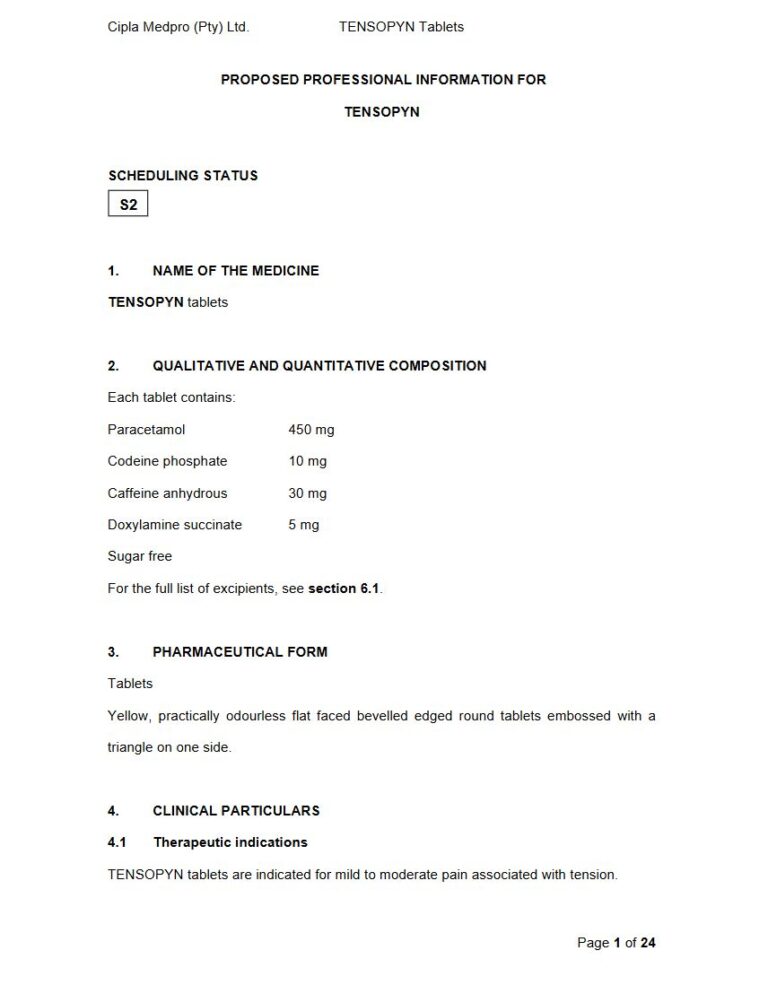
TENSOPYN tablets are indicated for mild to moderate pain associated with tension.
4.2 Posology and method of administration
Posology
Adults and children over 12 years: one to two tablets every 4 hours, with a maximum of 8 tablets daily. DO NOT EXCEED THE RECOMMENDED DOSE. Do not use continuously for longer than 5 days without consulting your doctor.
Special populations
Elderly population: Elderly patients may metabolise or eliminate opioid analgesics more slowly than younger adults, therefore dose reduction may be necessary (refer to section 4.4).
Renal & hepatic impairment: Patients suffering from liver or kidney disease should take paracetamol under medical supervision. The dosage in renal functional impairment must be reduced.
Paediatric population: The safety and efficacy of TENSOPYN in children under 12 years has not yet been established.
Method of administration
TENSOPYN should be taken orally.
4.3 Contraindications
TENSOPYN is contraindicated in the following:
u2022 in patients with a known hypersensitivity to paracetamol, codeine phosphate, caffeine and doxylamine succinate or to any of the excipients used in the formulation of TENSOPYN (see section 6.1).
u2022 severe liver or kidney function impairment.
u2022 acute intermittent porphyria.
u2022 respiratory depression especially in the presence of cyanosis and excessive bronchial secretion, after operation on the biliary tract, acute alcoholism.
u2022 head injuries and conditions in which intracranial pressure is raised.
u2022 it should not be given during an attack of bronchial asthma or in heart failure secondary to chronic lung disease.
u2022 in patients taking monoamine oxidase inhibitors or within 14 days of stopping such treatment.
u2022 after an operation on the biliary tract.
u2022 acute alcoholism (see section 4.4).
u2022 in patients for whom it is known that they are CYP2D6 ultra-rapid metabolisers (see section 4.4 and 4.6).
u2022 safety in pregnancy and lactation has not been established.
4.4 Special warnings and precautions for use
Do not take continuously for more than 5 days without consulting a doctor. Also consult your doctor if no relief is obtained with the recommended dosage. This product contains paracetamol which may be fatal in overdose. In the event of overdosage or suspected overdose and notwithstanding the fact that the person may be asymptomatic, the nearest doctor, hospital or Poison Centre must be contacted immediately.
Do not take concurrently with any other paracetamol or codeine containing medicine. TENSOPYN tablets may lead to drowsiness and impaired concentration, which may be aggravated by the simultaneous intake of alcohol or other central nervous system depressant agents. Patients should be warned against taking charge of vehicles or machinery or performing potentially hazardous tasks where loss of concentration may lead to accidents.
Dosage in excess of that recommended may cause severe liver damage. Care is advised in the administration of this preparation to patients with impaired kidney or liver function and in those with hypertension, hypothyroidism, adrenocortical insufficiency, prostatic hypertrophy, urinary retention, susceptibility to angle-closure glaucoma, shock, obstructive bowel disorders, acute abdominal conditions (e.g. peptic ulcer), recent gastrointestinal surgery, gallstones, myasthenia gravis, a history of cardiac arrhythmias or convulsions, hyperthyroidism, hepatic dysfunction, acute febrile illness, asthma, impaired kidney and liver function, hypotension, elderly, and in patients with a history of drug abuse or emotional instability.
Codeine may induce faecal impaction, producing incontinence, spurious diarrhoea, abdominal pain and rarely colonic obstruction. Elderly patients may metabolise or eliminate opioid analgesics more slowly than younger adults. The dosage in renal functional impairment must be reduced. Use with caution in renal disease. Should be taken with caution by asthmatics. Exceeding the prescribed dose, together with prolonged and continuous use of this medication, may lead to dependency and addiction.
It should be given with care to patients with alcohol dependence, chronic malnutrition, or dehydration. Administration of pethidine and possibly other opioid analgesics to patients taking a monoamine oxidase inhibitor (MAOI) has been associated with very severe and sometimes fatal reactions. See also section 4.3 regarding contraindication of taking TENSOPYN with MAOIs because of the doxylamine component.
Severe Cutaneous adverse reactions (SCARs)
Severe cutaneous adverse reactions (SCARs) such as toxic epidermal necrolysis (TEN), Steven-Johnson syndrome (SJS), acute generalized exanthematous pustulosis (AGEP), eosinophilia and systemic (DRESS)/Drug-induced hypersensitivity syndrome (DIHS) and fixed drug eruptions (FDE) have been reported in patients treated with paracetamol containing medicines. If a patient develops SCAR, treatment with TENSOPYN must be discontinued and appropriate treatment instituted.
Risks from concomitant use of opioids and benzodiazepines
Concomitant use of opioids, including codeine, and sedative medicines such as benzodiazepines or related drugs may result in sedation, respiratory depression, coma, and death. Because of these risks, concomitant prescribing of sedative medicines, such as benzodiazepines or related drugs, with opioids should be reserved for patients for whom alternative treatment options are not possible. If a decision is made to prescribe codeine concomitantly with sedative medicines such as benzodiazepines, the lowest effective dose should be used, and the duration of treatment should be as short as possible. The patients should be monitored closely for signs and symptoms of respiratory depression and sedation. In this respect, it is strongly recommended to inform patients and their close contacts to be aware of these symptoms (see section 4.5).
Risks from concomitant use of opioids and alcohol
Concomitant use of opioids, including codeine, with alcohol may result in sedation, respiratory depression, coma and death. Concomitant use with alcohol is not recommended (see section 4.5). The hazards of overdose are greater in those with non-cirrhotic alcoholic liver diseases.
CYP2D6 metabolism
Codeine is metabolised by the liver into morphine, its active metabolite. If a patient has a deficiency or is completely lacking this enzyme an adequate analgesic effect will not be obtained. However, if the patient is an extensive or ultra-rapid metaboliser there is an increased risk of developing side effects of opioid toxicity even at commonly prescribed doses. These patients convert codeine into morphine rapidly resulting in higher than expected serum morphine levels. General symptoms of opioid toxicity include confusion, somnolence, shallow breathing, small pupils, nausea, vomiting, constipation and lack of appetite. In severe cases this may include symptoms of circulatory and respiratory depression, which may be life-threatening and very rarely fatal.
Paediatric population
Not recommended for children under 12 years of age. Overdosage is very dangerous in young children.
4.5 Interaction with other medicinal products and other forms of interaction
The speed of absorption of paracetamol may be increased by metoclopramide, domperidone and absorption reduced by cholestyramine.
Antithrombotic agents
The anticoagulant effect of warfarin and other coumarins may be enhanced by prolonged regular daily use of paracetamol with increased risk of bleeding; occasional doses have no significant effect.
CNS depressants
TENSOPYN may enhance the sedative effects of CNS depressants such as alcohol, barbiturates, anaesthetics, hypnotics, other opioid analgesics, anxiolytic sedatives, antipsychotics, tricyclic antidepressants and phenothiazines, resulting in increased CNS depression. It may also have an additive antimuscarinic action with other drugs, such as atropine and some antidepressants.
Benzodiazepines
The concomitant use of opioids with sedative medicines such as benzodiazepines or related drugs increases the risk of sedation, respiratory depression, coma and death because of additive CNS depressant effect. The dosage and duration of concomitant use should be limited (see section 4.4).
Alcohol and opioids
The concomitant use of alcohol and opioids increases the risk of sedation, respiratory depression, coma, and death because of additive CNS depressant effect. Concomitant use with alcohol is not recommended (see section 4.4).
Diuretics and antihypertensives
The hypotensive actions of diuretics and anti-hypertensive agents may be potentiated when used concurrently with opioid analgesics. Concurrent use of hydroxyzine with codeine may result in increased analgesia as well as increased CNS depressant and hypotensive effects.
Neuromuscular blocking agents
The respiratory depressant effect caused by neuromuscular blocking agents may be additive to the central respiratory depressant effects of opioid analgesics. Quinidine can inhibit the analgesic effect of codeine.
Antidiarrhoeal agents
Concurrent use of codeine with antidiarrhoeal and antiperistaltic agents such as loperamide and kaolin may increase the risk of severe constipation. Concomitant use of antimuscarinics or medications with antimuscarinic action may result in an increased risk of severe constipation which may lead to paralytic ileus and/or urinary retention. Codeine may delay the absorption of mexiletine and thus reduce the antiarrhythmic effect of the latter. Codeine may antagonise the gastrointestinal effects of metoclopramide, cisapride and domperidone. Cimetidine inhibits the metabolism of opioid analgesics resulting in increased plasma concentrations. Naxolone antagonises the analgesic, CNS and respiratory depressant effects of opioid analgesics.
Doxylamine: Monamine oxidase inhibitors (MAOIs) or within 14 days of stopping treatment with these products as there is a risk of serotonin syndrome (see section 4.3 and 4.4). Concomitant administration of pethidine and possibly other opioid analgesics to patients taking MAOIs has been associated with very severe and sometimes fatal reactions such as severe CNS excitation or depression, including hypertension or hypotension. Although this has not been documented with codeine, it is possible that a similar interaction may occur and therefore the use of codeine should be avoided while the patient is taking MAOIs and for 2 weeks after MAOI discontinuation.
Incompatibilities
Codeine has been reported to be incompatible with phenobarbitone sodium forming a codeine-phenobarbitone complex, and with potassium-iodide, forming crystals of codeine periodide. Acetylation of codeine phosphate by aspirin has occurred in solid dosage forms containing the two medicines, even at low moisture levels.
Interference with laboratory tests
Opioid analgesics interfere with a number of laboratory tests including plasma amylase, lipase, bilirubin, alkaline phosphatase, lactate dehydrogenase, alanine aminotransferase and aspartate aminotransferase. Opioids may also interfere with gastric emptying studies as they delay gastric emptying and with hepatobiliary imaging using technetium Tc 99m disofenin as opioid treatment may cause constriction of the sphincter of Oddi and increase biliary tract pressure. The metabolism of paracetamol is possibly accelerated by carbamazepine, phenytoin, phenobarbital, primidone (there have also been isolated reports of hepatotoxicity).
4.6 Fertility, pregnancy and lactation
Pregnancy
Safety in pregnancy and lactation has not been established (see section 4.3). Reported epidemiological studies in human pregnancy have shown no ill effects due to paracetamol used in the recommended dosage, but patients should follow the advice of their doctor regarding its use. A large amount of data on pregnant women indicate neither malformative, nor feto/neonatal toxicity. Reported epidemiological studies on neurodevelopment in children exposed to paracetamol in utero show inconclusive results. Codeine crosses the placenta. There is no adequate evidence of safety in human pregnancy and a possible association with respiratory and cardiac malformations has been reported. Regular use during pregnancy may cause physical dependence in the foetus leading to withdrawal symptoms in the neonate. Use of opioid analgesia during labour may cause respiratory depression in the neonate, especially the premature neonate. These medicines should not be given during the delivery of a premature baby.
Breastfeeding
Paracetamol is excreted in breast milk but not in a clinically significant amount. Codeine should not be used during breastfeeding. At normal therapeutic doses codeine and its active metabolites may be present in breast milk at very low doses and is unlikely to adversely affect the breast fed infant. However, if the patient is an ultra-rapid metaboliser of CYP2D6, higher levels of the active metabolites may be present in breast milk and on very rare occasions may result in symptoms of opioid toxicity in the infant, which may be fatal (see section 4.3 and 4.4).
4.7 Effects on ability to drive and use machines
The use of TENSOPYN may lead to drowsiness and impaired concentration that may be aggravated by the simultaneous intake of alcohol or other central nervous system depressants. Patients should be advised, particularly at the initiation of therapy, against taking charge of vehicles or machinery or performing potentially hazardous tasks where loss of concentration could lead to accidents.
4.8 Undesirable effects
Tabulated summary of adverse reactions
The following adverse reactions have been classified according to the following categories, frequent, less frequent and frequency unknown.
MedDRA system organ Class Frequency Side effects
Blood and lymphatic system disorders Less frequent Haematological reactions including thrombocytopenia, leucopenia, pancytopenia, neutropenia, agranulocytosis, thrombocytopenic purpura, unusual bleeding or bruising, blood discrasias, including agranulocytosis, eosinophilia, and haemolytical anaemia.
Immune system disorders Less frequent Sensitivity reactions Frequency unknown Hypersensitivity, anaphylaxis, bronchospasms, angioedema.
Metabolism and nutrition disorders Frequency unknown Dry mouth
Endocrine disorders Frequency unknown Pancreatitis
Psychiatric disorders Frequent Drowsiness, confusion. Less frequent Excitement, feelings of unreality, mental depression, sedation, lassitude, deepening coma, irritability, nightmares, anorexia, nervousness. Frequency unknown Psychomotor impairment, extrapyramidal effects, sleep disturbances, insomnia, restlessness, changes in mood, euphoria, decreased libido, hallucinations.
Nervous system disorders Frequent CNS depression Less frequent Confusion, dry mouth, sweating, facial flushing, faintness, sedation, vertigo. Frequency unknown Slight drowsiness to deep sleep, lassitude, dizziness, incoordination (although paradoxical stimulation may occasionally occur, especially in children), headache, photosensitivity, convulsions, paraesthesias, tremor depression, CNS stimulation, anxiety, restlessness, tremor, raised intracranial pressure
Eye disorders Less frequent Scintillating scotoma, Frequency unknown Blurred vision, miosis.
Ear and labyrinth disorders Frequency unknown Tinnitus, vertigo.
Cardiac disorders Less frequent Fast, slow, or pounding heartbeat, extrasystole, angioedema. Frequency unknown Palpitations, arrhythmias, hypotension (including orthostatic hypotension), bradycardia, tachycardia.
Vascular disorders Less frequent Swelling of face, hypotension, hypertension, orthostatic hypotension, circulatory failure, hyperthermia, paraesthesia.
Respiratory, thoracic and mediastinal disorders Less frequent Increased sweating, irregular breathing, shortness of breath, wheezing or troubled breathing, respiratory depression, tightness of the chest, bronchospasm. Frequency unknown Thickened respiratory - tract secretions
Gastrointestinal disorders Frequent Constipation, nausea and vomiting Less frequent Diarrhoea, gastric ulceration, gastro-intestinal disturbances, colic, epigastric pain, bloody or black, tarry stools, sore throat, increased gastric reflux, abdominal pain.
Hepato-biliary disorders Less frequent Biliary spasms Frequency unknown Jaundice
Skin and subcutaneous tissue disorders Less frequent Rashes, skin eruptions, urticaria, pruritus, purpura, yellow eyes or skin, pinpoint red spots on skin, allergic reactions, hives or itching, sores, ulcers, or white spots on lips or in the mouth, skin rash. This rash is usually erythromatous or urticarial, but sometimes more serious and may be accompanied by drug fever and mucosal lesions. Redness or flushing of face. Frequency Unknown Risk of fixed drug eruptions (FDE) and Drug-induced hypersensitivity syndrome.
Musculoskeletal, connective tissue and bone disorders Less frequent Trembling or uncontrolled muscle movements or muscle rigidity, muscular weakness and incoordination, weakness of the hands. Frequency unknown Myalgia.
Renal and urinary disorders Less frequent Bloody or cloudy urine, sudden decrease in amount of urine, Frequency unknown Urinary difficulty or retention, difficult micturition, ureteric or biliary spasms, antidiuretic effect.
Reproductive system and breast disorders Frequency unknown Decreased potency.
General disorders and administrative site conditions Less frequent Unusual tiredness or weakness, headache, raised intracranial pressure Frequency unknown Fever, sweating, hair loss, facial flushing, hypothermia
Post-Marketing Experience
MedDRA system organ class Frequency Side Effects
Skin and subcutaneous tissue disorders. Frequency unknown Risk of fixed drug eruptions (FDE) and Drug-induced hypersensitivity syndrome.
Reporting of suspected adverse reactions
Reporting suspected adverse reactions after authorisation of the medicine is important. It allows continued monitoring of the benefit/risk balance of the medicine. Health care providers are requested to report any suspected adverse drug reactions to SAHPRA via the Med Safety APP (Medsafety X SAHPRA) and eReporting platform (who-umc.org) found on the SAHPRA website, or to Cipla Medpro (Pty) Ltd. by email: [email protected] or telephone: 080 222 6662 (toll free).
4.9 Overdose
Paracetamol: Prompt treatment is essential. In the event of an overdosage, consult a doctor immediately, or take the person to a hospital directly. A delay in starting treatment may mean that the antidote is given too late to be effective. Evidence of liver damage is often delayed until after the time for effective treatment has lapsed. Susceptibility to paracetamol toxicity is increased in patients who have taken repeated high doses (greater than 5 to 10 g/day) of paracetamol for several days, in chronic alcoholism, chronic liver disease, AIDS, malnutrition, and with the use of drugs that induce liver microsomal oxidation such as barbiturates, isoniazid, rifampicin, phenytoin and carbamazepine. Symptoms of paracetamol overdosage in the first 24 hours include pallor, nausea, vomiting, anorexia and possibly abdominal pain. Mild symptoms during the first two days of acute poisoning do not reflect the potential seriousness of the overdosage. Liver damage may become apparent 12 to 48 hours or later after ingestion, initially by elevation of the serum transaminase and lactic dehydrogenase activity, increased serum bilirubin concentration and prolongation of the prothrombin time. Liver damage may lead to encephalopathy, coma and death. Acute renal failure with acute tubular necrosis may develop even in the absence of severe liver damage. Abnormalities of glucose metabolism and metabolic acidosis may occur. Cardiac arrhythmias have been reported.
Treatment for paracetamol overdosage: N-acetylcysteine should be administered to all cases of suspected overdose as soon as possible preferably within eight hours of overdosage, although treatment up to 36 hours after ingestion may still be of benefit, especially if more than 150 mg/kg of paracetamol was taken. An initial dose of 150 mg/kg N-acetylcysteine in 200 mL dextrose injection given intravenously over 15 minutes, followed by an infusion of 50 mg/kg in 500 mL dextrose injection over the next four hours, and then 100 mg/kg in 1000 mL dextrose injection over the next sixteen hours. The volume of intravenous fluid should be modified for children.
Although the oral formulation is not the treatment of choice, 140 mg/kg dissolved in water may be administered initially, followed by 70 mg/kg every four hours for seventeen doses. A plasma paracetamol level should be determined four hours after ingestion in all cases of suspected overdosage. Levels done before four hours, unless high, may be misleading. Patients at risk of liver damage, and hence requiring continued treatment with N-acetylcysteine, can be identified according to their plasma paracetamol level. The plasma paracetamol level can be plotted against time since ingestion in the normogram below. The nomogram should be used only in relation to a single acute ingestion.
Codeine phosphate: Overdosage produces central stimulation with exhilaration, in children, convulsions, followed by vomiting, drowsiness, respiratory depression and cyanosis, and coma. Symptoms in decreasing order of frequency included somnolence, rash, miosis, vomiting, itching, ataxia, swelling of the skin and respiratory failure. Opioid toxicity may occur in adults after overdoses of codeine tablets. Get emergency help immediately if any of the following symptoms occur: Cold, clammy skin, confusion, convulsions, severe dizziness, low blood pressure, severe nervousness or restlessness, pinpoint pupils of eyes, slow heartbeat, slow or troubled breathing, severe weakness. In the event of overdosage, consult a doctor or take the patient to the nearest hospital immediately. Intensive supportive therapy may be necessary to correct respiratory failure and shock. The specific antagonist naloxone may be used to counteract severe respiratory depression.
Caffeine: Large doses may cause restlessness, excitement, muscle tremor, tinnitus, scintillating scotoma, tachycardia and extrasystoles.
Doxylamine succinate: Overdosage of doxylamine succinate causes sedation. Overdosage may be fatal, especially in infants and children in whom the main symptoms are central nervous system stimulation, and antimuscarinic effects, including ataxia, excitement, hallucinations, muscle tremors, convulsions, dilated pupils, dry mouth, flushed face and hyperpyrexia. Deepening coma, cardiorespiratory collapse and death may occur within 18 hours. In adults the usual symptoms are central nervous system depression with drowsiness, coma and convulsions. Hypotension may also occur. Treatment of antihistamine overdose is symptomatic and supportive. In the event of overdosage, consult a doctor or take the patient to the nearest hospital immediately. Respiratory depression will respond to naloxone administration. Specialised treatment is essential as soon as possible. The latest information regarding the treatment of overdosage can be obtained from the nearest Poison Centre.
