
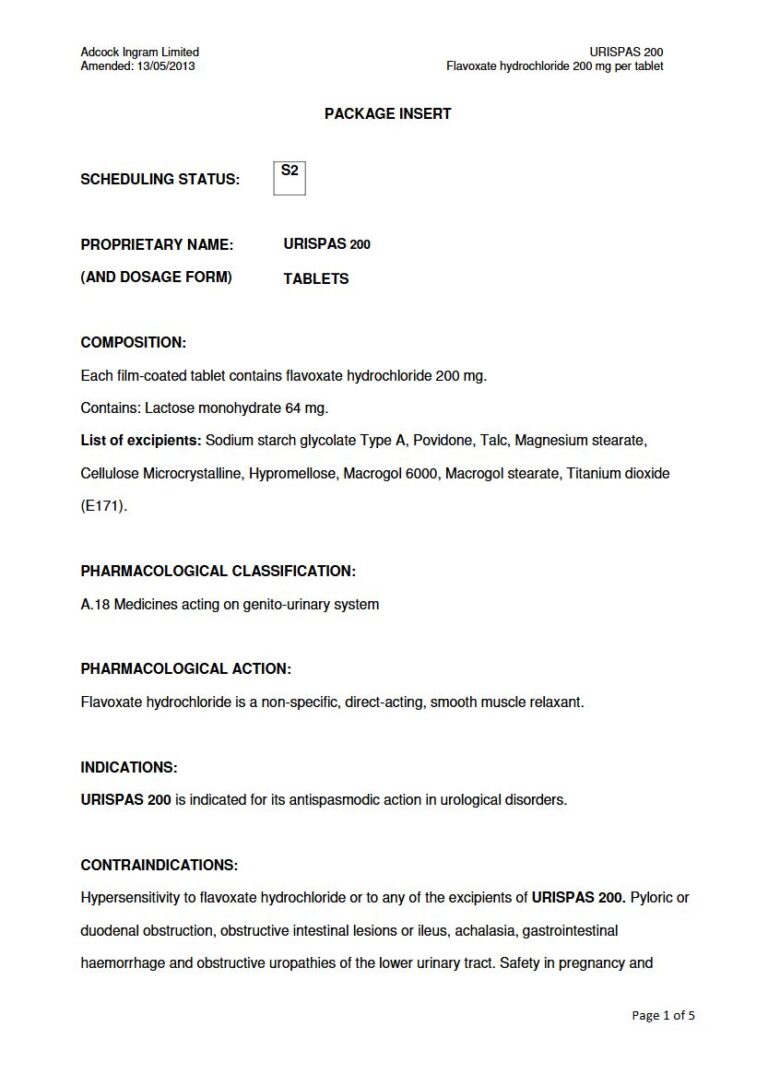
Urispas 200mg FC Tablet
PDF Leaflet Revision Date: 13 May 2013
Clinical Summary
Quick overview from the medicine insert
Indication
Antispasmodic action in urological disorders.
Dosage (summary)
Adults: One tablet three times a day.
Special Populations
- Elderly
- Children under 12
Pregnancy & Breastfeeding
Safety in pregnancy and lactation not established.
Contraindications
- Hypersensitivity to flavoxate hydrochloride
- Pyloric or duodenal obstruction
- Obstructive intestinal lesions
- Achalasia
- Gastrointestinal haemorrhage
- Obstructive uropathies
Common side effects
- Drowsiness
- Blurred vision
- Dry mouth
- Nausea
- Fatigue
Counselling Points
- Take with caution if experiencing drowsiness.
- Not recommended for children under 12.
Serious warnings
- Drowsiness, blurred vision, or vertigo may impair ability to drive or operate machinery.
- Caution in patients with glaucoma.
Important Disclaimer
The Urispas 200mg FC Tablet professional information leaflet below is the property of Adcock Ingram and is provided on Medinsert exactly as issued, with no.. alterations or editorial changes. We make every effort to keep content current by updating documents as soon as new versions become available. Medinsert serves as a trusted access point for healthcare professionals, but does not replace official sources or clinical judgement. For more details, please read our full disclaimer. read more>>
 Healthcare Professionals Only
This content is for registered healthcare professionals
Sign in or create a free account to read the full package insert.
Free for HPCSA-registered professionals. Powered by Medinsert.
Clinical Particulars
Section 4 of the official insert — extracted exactly as issued, no alterations
4.1 Therapeutic indications
URISPAS 200 is indicated for its antispasmodic action in urological disorders.
4.2 Posology and method of administration
Adults - One tablet three times a day (600 mg flavoxate hydrochloride) for as long as required.
4.3 Contraindications
Hypersensitivity to flavoxate hydrochloride or to any of the excipients of URISPAS 200. Pyloric or duodenal obstruction, obstructive intestinal lesions or ileus, achalasia, gastrointestinal haemorrhage and obstructive uropathies of the lower urinary tract. Safety in pregnancy and lactation has not been established. URISPAS 200 tablets are not recommended for use in children under 12 years of age.
4.4 Special warnings and precautions for use
In the event of drowsiness, blurred vision or vertigo, patients should not drive or operate a motor vehicle or machinery. Patients with the rare hereditary problems of galactose intolerance, the Lapp lactose deficiency or glucose-galactose malabsorption should not take URISPAS 200. URISPAS 200 tablets should be used with caution in patients with suspected glaucoma, especially narrow angle glaucoma and in patients with serious, uncontrolled, obstructive disorders of the lower urinary tract. In the case of drowsiness, the time between the administration of the doses should be extended.
4.5 Interactions with other medicines
Not specified in the provided text.
4.6 Fertility, pregnancy and lactation
Safety in pregnancy and lactation has not been established.
4.7 Effects on ability to drive and use machines
In the event of drowsiness, blurred vision or vertigo, patients should not drive or operate a motor vehicle or machinery.
4.8 Undesirable effects
Adverse reactions noted include:
Blood and lymphatic disorders: Less frequent: Eosinophilia and leukopenia.
Cardiac disorders: Less frequent: Palpitations and tachycardia.
Eye disorders: Less frequent: Blurred vision, disturbances in eye accommodation and increased ocular tension.
Gastrointestinal disorders: Less frequent: Diarrhoea, dry mouth, dyspepsia, dysphagia, nausea and vomiting.
General disorders: Less frequent: Fatigue and hyperpyrexia.
Immune system disorders: Less frequent: Angioedema.
Nervous system disorders: Less frequent: Drowsiness, dizziness, headache, mental confusion (especially in the elderly), nervousness, and vertigo.
Renal and urinary disorders: Less frequent: Dysuria.
Skin and subcutaneous tissue disorders: Less frequent: Urticaria and other dermatoses.
4.9 Overdose
The most likely symptoms of overdose are blurred vision, dry mouth, drowsiness and diarrhoea or constipation. Treatment of overdosage is symptomatic and supportive.
