
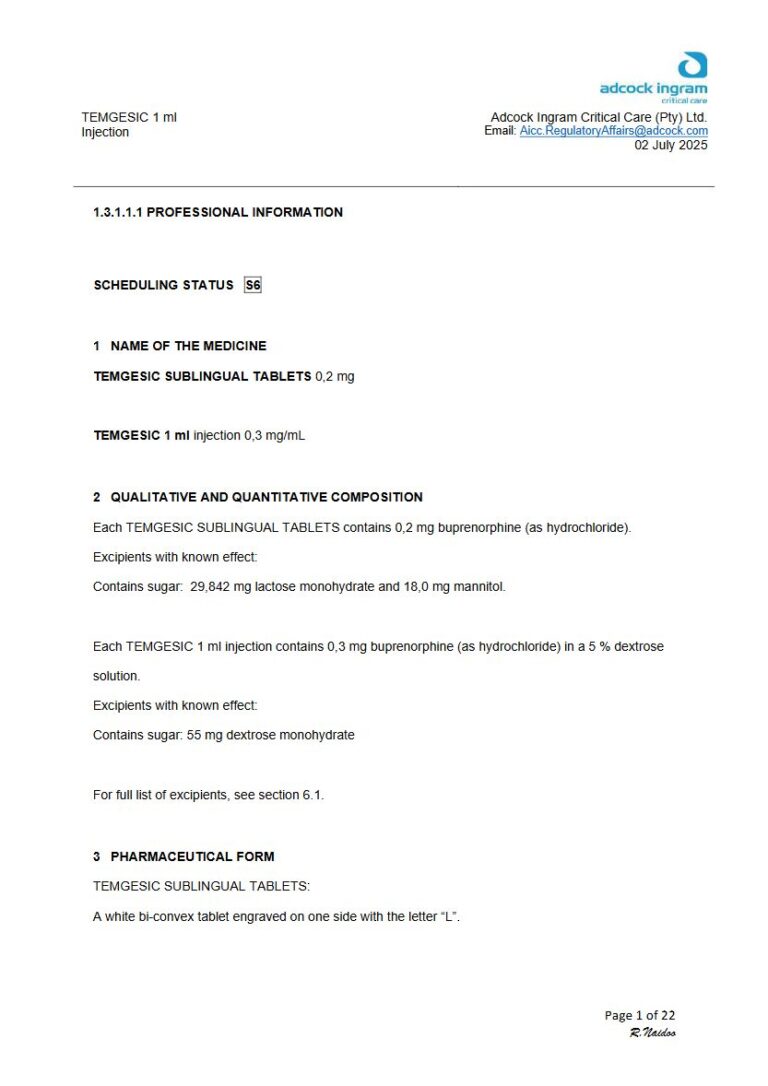
Temgesic 0.2 mg/1 ml Sublingual Tablets. Injection
PDF Leaflet Revision Date: 02 July 2025
Clinical Summary
Quick overview from the medicine insert
Indication
Moderate to severe pain management.
Dosage (summary)
0.3 to 0.6 mg every 6-8 hours for adults.
Special Populations
- Elderly
- Hepatic impairment
- Renal impairment
Pregnancy & Breastfeeding
Not recommended during pregnancy; may cause neonatal withdrawal syndrome. Not recommended for breastfeeding.
Key Drug Interactions
- Benzodiazepines
- Serotonergic medicines
- CNS depressants
Contraindications
- Hypersensitivity to buprenorphine
- Severe hepatic insufficiency
- Impaired respiratory function
- Acute asthma
Common side effects
- Sedation
- Dizziness
- Nausea
- Hypotension
Counselling Points
- Avoid alcohol
- Monitor for respiratory depression
- Discuss withdrawal strategy before treatment
Serious warnings
- Risk of respiratory depression
- Potential for drug dependence
- Serotonin syndrome risk
Important Disclaimer
The Temgesic 0.2 mg/1 ml Sublingual Tablets. Injection professional information leaflet below is the property of Adcock Ingram Critical Care and is provided on Medinsert exactly as issued, with no.. alterations or editorial changes. We make every effort to keep content current by updating documents as soon as new versions become available. Medinsert serves as a trusted access point for healthcare professionals, but does not replace official sources or clinical judgement. For more details, please read our full disclaimer. read more>>
 Healthcare Professionals Only
This content is for registered healthcare professionals
Sign in or create a free account to read the full package insert.
Free for HPCSA-registered professionals. Powered by Medinsert.
Clinical Particulars
Section 4 of the official insert — extracted exactly as issued, no alterations
4.1 Therapeutic indications
For short term use in patients suffering from moderate to severe pain.
4.2 Posology and method of administration
Prior to starting treatment with opioids, a discussion should be held with patients to put in place a strategy for ending treatment with buprenorphine as in TEMGESIC in order to minimise the risk of addiction and drug withdrawal syndrome (see section 4.4).
Posology
TEMGESIC SUBLINGUAL TABLETS
Adults: 1 to 2 TEMGESIC tablets (0,2 mg to 0,4 mg buprenorphine) to be dissolved under the tongue every 6 to 8 hours or as required. The tablet may require 5 to 10 minutes to dissolve. Where rapid pain relief is required this regimen should be preceded by an intramuscular or intravenous injection of TEMGESIC 1 ml injection (0,3 mg/ml buprenorphine). The recommended starting dose for moderate to severe pain of the type typically presenting in general practice is one tablet 8 hourly.
TEMGESIC 1 ml
Adults: The recommended dosage is 0,3 to 0,6 mg, repeated every 6 to 8 hours or as required.
Special populations
Elderly
Dosage adjustments of buprenorphine in patients over 65 years of age are generally unnecessary; however, with increasing age, increasing care should be taken when administering TEMGESIC.
Hepatic Impairment
As TEMGESIC pharmacokinetics may be altered in patients with hepatic impairment, lower initial doses and careful dose titration in patients with hepatic impairment may be required (see section 4.4).
Renal Impairment
Modification of the TEMGESIC dose is not generally required for patients with renal impairment. Caution is recommended when dosing patients with severe renal impairment (CLcr < 30 ml/min), which may require dose adjustment (see section 4.4).
Paediatric population
TEMGESIC SUBLINGUAL TABLETS and TEMGESIC 1 ml are not recommended for use in children.
Method of administration
TEMGESIC SUBLINGUAL TABLETS
Administration is sublingual. The tablet should not be chewed or swallowed.
TEMGESIC 1 ml
Administration is by intramuscular or slow intravenous injection.
4.3 Contraindications
Hypersensitivity to buprenorphine or to any of the excipients listed in section 6.1. TEMGESIC should not be used in patients with severe hepatic insufficiency, impaired respiratory function and should not be used in patients with acute asthma, or in patients who have shown hypersensitivity to this medication or to other centrally-acting analgesics. The use of TEMGESIC is not recommended during pregnancy. TEMGESIC should not be used during labour as it may cause irreversible respiratory depression in the newborn.
4.4 Special warnings and precautions for use
Special care must be exercised in the elderly where respiratory capacity may be reduced. TEMGESIC may cause severe respiratory depression which may not be completely reversed by opiate antagonists. Respiratory depression may occur within the recommended therapeutic dose range in patients receiving TEMGESIC. Therefore, TEMGESIC should be used with caution in patients with impaired respiratory function, those with acute asthmatic attack, chronic obstructive pulmonary disease cor pulmonale, decreased respiratory reserve or those with pre-existing respiratory depression, hypoxia or hypercapnia. Caution is also advised if TEMGESIC is administered to patients taking medicines with respiratory depressant effects. In patients with these physical and/or pharmacological risk factors, the dose should be reduced by approximately one half.
Risk from concomitant use of sedative medicines such as benzodiazepines or related medicines
Concomitant use of TEMGESIC and sedative medicines such as benzodiazepines or related medicines may result in sedation, respiratory depression, coma and death. Because of these risks, concomitant prescribing with these sedative medicines should be reserved for patients for whom alternative treatment options are not possible. If a decision is made to prescribe TEMGESIC concomitantly with sedative medicines, the lowest effective dose of the sedative medicines should be used, and the duration of treatment should be as short as possible. The patients should be followed closely for signs and symptoms of respiratory depression and sedation. In this respect, it is strongly recommended to inform patients and their caregivers to be aware of these symptoms (see section 4.5).
Serotonin syndrome
Concomitant administration of TEMGESIC and other serotonergic medicines, such as MAO inhibitors, selective serotonin re-uptake inhibitors (SSRIs), serotonin norepinephrine re-uptake inhibitors (SNRIs) or tricyclic antidepressants may result in serotonin syndrome, a potentially life-threatening condition (see section 4.5). If concomitant treatment with other serotonergic medicines is clinically warranted, careful observation of the patient is advised, particularly during treatment initiation and dose increases. Symptoms of serotonin syndrome may include mental-status changes, autonomic instability, neuromuscular abnormalities, and/or gastrointestinal symptoms. If serotonin syndrome is suspected, a dose reduction or discontinuation of therapy should be considered depending on the severity of the symptoms.
Seizures
Buprenorphine may lower the seizure threshold in patients with a history of seizure disorder.
Tolerance and opioid use disorder (abuse and dependence)
Tolerance, physical and psychological dependence, and opioid use disorder (OUD) may develop upon repeated administration of opioids such as TEMGESIC. Repeated use of TEMGESIC can lead to OUD. A higher dose and longer duration of opioid treatment can increase the risk of developing OUD. Abuse or intentional misuse of TEMGESIC may result in overdose and/or death. The risk of developing OUD is increased in patients with a personal or a family history (parents or siblings) of substance use disorders (including alcohol use disorder), in current tobacco users or in patients with a personal history of other mental health disorders (e.g. major depression, anxiety and personality disorders). Before initiating treatment with TEMGESIC and during the treatment, treatment goals and a discontinuation plan should be agreed with the patient (see section 4.2). Before and during treatment the patient should also be informed about the risks and signs of OUD. If these signs occur, patients should be advised to contact their physician. Patients will require monitoring for signs of drug-seeking behavior (e.g. too early requests for refills). This includes the review of concomitant opioids and psycho-active medicines (like benzodiazepines). For patients with signs and symptoms of OUD, consultation with an addiction specialist should be considered.
Use in opioid-dependent patients
Because TEMGESIC has narcotic antagonist properties, initial administration may precipitate withdrawal symptoms (similar to that associated with naloxone) in patients presenting with marked drug dependence on full opioid agonists such as methadone or heroin. For the same reason it should be given with caution to patients previously treated with other narcotic analgesics. TEMGESIC is not recommended for patients who have developed physical dependence to narcotics except when TEMGESIC is administered within a framework of medical, social and psychological treatment.
Drug withdrawal syndrome
Prior to starting treatment with any opioids, a discussion should be held with patients to put in place a withdrawal strategy for ending treatment with TEMGESIC. Drug withdrawal syndrome may occur upon abrupt cessation of therapy or dose reduction. When a patient no longer requires therapy, it is advisable to taper the dose gradually to minimise symptoms of withdrawal. Tapering from a high dose may take weeks to months. The opioid drug withdrawal syndrome is characterised by some or all of the following: restlessness, lacrimation, rhinorrhoea, yawning, perspiration, chills, myalgia, mydriasis and palpitations. Other symptoms may also develop including irritability, agitation, anxiety, hyperkinesia, tremor, weakness, insomnia, anorexia, abdominal cramps, nausea, vomiting, diarrhoea, increased blood pressure, increased respiratory rate or heart rate. If women take this medicine during pregnancy, there is a risk that their new-born infants will experience neonatal withdrawal syndrome.
Opioid-induced hyperalgesia (OIH) and allodynia
Opioid-induced hyperalgesia (OIH) occurs when an opioid analgesic paradoxically causes an increase in pain, or an increase in sensitivity to pain. This condition differs from tolerance, which is the need for increasing doses of opioids to maintain a defined effect [see Tolerance and opioid use disorder (abuse and dependence) (4.4)]. Symptoms of OIH include (but may not be limited to) increased levels of pain upon opioid dosage increase, decreased levels of pain upon opioid dosage decrease, or pain from ordinarily non-painful stimuli (allodynia). These symptoms may suggest OIH only if there is no evidence of underlying disease progression, opioid tolerance, opioid withdrawal, or addictive behavior. Cases of OIH have been reported, both with short-term and longer-term use of opioid analgesics. Though the mechanism of OIH is not fully understood, multiple biochemical pathways have been implicated. Medical literature suggests a strong biologic plausibility between opioid analgesics and OIH and allodynia. If a patient is suspected to be experiencing OIH, carefully consider appropriately decreasing the dose of the current opioid analgesic or opioid rotation (safely switching the patient to a different opioid moiety) see section 4.2 and 4.4.
Sleep-related breathing disorders
Opioids can cause sleep-related breathing disorders including central sleep apnoea (CSA) and sleep-related hypoxemia. Opioid use increases the risk of CSA in a dose-dependent fashion. In patients who present with CSA, consider decreasing the total opioid dosage.
Hepatic impairment
TEMGESIC is extensively metabolized by the liver and its clearance is related to hepatic blood flow. Decreased metabolism of TEMGESIC in patients with moderate and severe hepatic impairment may predispose such patients to an accentuation of drug effects at recommended therapeutic dosage, due to elevated plasma levels. Therefore, TEMGESIC should be administered with caution to patients with moderate to severe hepatic impairment and to those receiving other medicines (e.g., halothane) that decrease hepatic clearance. Patients should be monitored for signs and symptoms of toxicity or overdose caused by increased levels of TEMGESIC.
TEMGESIC has been shown to increase intracholedochal pressure to a similar degree as other opioid analgesics and therefore, TEMGESIC should be administered with caution to patients with biliary tract dysfunction.
Use in ambulatory patients
Caution and close patient observation are recommended when TEMGESIC is used in ambulatory patients. Since TEMGESIC may cause drowsiness or dizziness, and these could be potentiated by other centrally-acting agents, including alcohol, ambulant patients should be cautioned against engaging in activities requiring mental alertness, such as driving a car or operating machinery/appliances.
Interaction with other central nervous system depressants
Patients receiving TEMGESIC in the presence of other opioid analgesics, general anaesthetics, antihistamines, benzodiazepines, phenothiazines, other tranquilisers, sedative/hypnotics or other CNS depressants (including alcohol) may exhibit increased CNS depression. When such combined therapy is contemplated, it is particularly important that the dose of one or both agents be reduced.
Cardiovascular effects
TEMGESIC may cause a slight reduction in pulse rate and blood pressure in some patients. Like other opioids, TEMGESIC may produce orthostatic hypotension in ambulatory patients.
Head injury and increased intracranial pressure
TEMGESIC has the potential for elevating cerebrospinal fluid pressure. This effect, coupled with a respiratory depressant effect, may be markedly exaggerated in the presence of head injury, other intracranial lesions or when there is a pre-existing increase in cerebrospinal pressure. TEMGESIC can produce miosis and changes in the level of consciousness which may obscure the clinical course of patients with head injuries. Therefore, in such patients TEMGESIC should be used with caution.
Acute abdominal conditions
As with other mu-opioid receptor agonists, the administration of TEMGESIC may obscure the diagnosis or clinical course of patients with acute abdominal conditions.
Renal disease
Renal elimination plays a relatively small role (~ 30 %) in the overall clearance of buprenorphine; therefore, no dose modification based on renal function is generally required. Metabolites of buprenorphine accumulate in patients with renal failure. Caution is recommended when dosing patients with severe renal impairment (CLcr < 30 ml/min).
Other opioid class warnings
TEMGESIC should be administered with caution to elderly or debilitated patients and to those with severe impairment of renal function, myxoedema, or hypothyroidism, adrenal insufficiency (e.g., Addisonu2019s disease), central nervous system depression or coma, toxic psychoses, prostatic hypertrophy or urethral stricture, acute alcoholism, delirium tremens or kyphoscoliosis. TEMGESIC should be administered for the relief of pain and not in anticipation of pain.
Excipients
TEMGESIC SUBLINGUAL TABLETS contain lactose which may have an effect on the glycaemic control of patients with diabetes mellitus. Patients with rare hereditary problems of galactose intolerance, total lactase deficiency or glucose-galactose malabsorption should not take this medicine. TEMGESIC SUBLINGUAL TABLETS contain less than 1 mmol sodium (23 mg) per dosage unit, that is to say essentially u2018sodium-freeu2019. TEMGESIC 1mL injection contains dextrose monohydrate which may have an effect on the glycaemic control of patients with diabetes mellitus.
4.5 Interaction with other medicines and other forms of interaction
Alcohol
TEMGESIC should not be taken together with alcoholic drinks or medicines containing alcohol. Alcohol increases the sedative effect of TEMGESIC, which can make driving vehicles and operating machinery hazardous. (see section 4.4)
TEMGESIC should be used cautiously together with:
Serotonergic medicines
Such as MAO inhibitors, selective serotonin re-uptake inhibitors (SSRIs), serotonin norepinephrine re- uptake inhibitors (SNRIs) or tricyclic antidepressants as the risk of serotonin syndrome, a potentially life-threatening condition, is increased (see section 4.4).
Benzodiazepines
This combination may potentiate respiratory depression of central origin, with risk of death; therefore, dosages must be limited. The risk of drug abuse should also be considered as a number of deaths and cases of coma have occurred when addicts have intravenously misused TEMGESIC and benzodiazepines concomitantly. Respiratory and cardiovascular collapse has been reported in patients receiving therapeutic doses of diazepam and analgesic doses of TEMGESIC concomitantly; therefore, dosages must be limited and this combination must especially be avoided in cases where there is a risk of misuse. Patients must use benzodiazepines concurrently with this medicine only as prescribed (see section 4.4).
Other central nervous system depressants
Other opioid derivatives (analgesics and antitussives); certain antidepressants, sedative H1-receptor antagonists, barbiturates, benzodiazepines, anxiolytics other than benzodiazepines, neuroleptics, clonidine and related substances. This combination increases central nervous system depression and can make driving vehicles and operating machinery hazardous.
Interactions with gabapentinoids and anticholinergics
The concomitant use of TEMGESIC with gabapentinoids (gabapentin and pregabalin) may result in respiratory depression, hypotension, profound sedation, coma or death (see section 4.4). Concomitant administration of buprenorphine with anticholinergics or medicines with anticholinergic activity (e.g. tricyclic antidepressants, antihistamines, antipsychotics, muscle relaxants, anti-Parkinson medicines) may result in increased anticholinergic adverse effects.
Monoamine oxidase inhibitors (MAOI)
Possible exaggeration of the effects of opioids, based on experience with morphine.
Naltrexone
The opioid antagonist, naltrexone, may antagonize the pharmacologic effect of TEMGESIC. Patients treated with naltrexone may not receive the intended analgesic effects of TEMGESIC. Patients who have developed physical dependence to the effects of buprenorphine may experience a sudden onset of opioid withdrawal effects.
Other opioid analgesics
The analgesic effects of full agonist opioids may be competitively diminished by the partial agonist TEMGESIC. For patients who have developed a physiological dependence to full opioid agonists, administration of the partial agonist TEMGESIC may elicit withdrawal symptoms (see section 4.4).
CYP3A4 inhibitors
Since the metabolism of buprenorphine is mediated by the CYP3A4 isozyme, co-administration of medicines that inhibit CYP3A4 activity may result in increases in buprenorphine and norbuprenorphine concentrations. Thus, patients receiving TEMGESIC co-administered with inhibitors of CYP3A4 such as gestodene, macrolide antibiotics (e.g. erythromycin, troleandomycin), azole antifungal agents (e.g. ketoconazole), or HIV protease inhibitors (e.g. ritanovir, indinavir and saquinavir) should be carefully monitored. Caution is advised when administering TEMGESIC to patients receiving these medicines, and if necessary, dose adjustments should be considered.
CYP3A4 inducers
CYP450 inducers, such as phenobarbital, rifampicin, carbamazepine, and phenytoin, induce metabolism and may cause increased clearance of TEMGESIC. Caution is advised when administering TEMGESIC to patients receiving these medicines, and if necessary, dose adjustments should be considered.
Other
Halothane is known to decrease hepatic clearance. Since hepatic elimination plays a relatively large role (~ 70 %) in the overall clearance of TEMGESIC, lower initial doses and cautious titration of dosage may be required when used with halothane. To date, no notable interaction has been observed with cocaine. A suspected interaction between TEMGESIC and phenprocoumon resulting in purpura has been reported.
4.6 Fertility, pregnancy and lactation
Pregnancy
The use of TEMGESIC is not recommended during pregnancy. Regular use during pregnancy may cause drug dependence in the foetus, leading to withdrawal symptoms in the neonate. If opioid use is required for a prolonged period in a pregnant woman, advise the patient of the risk of neonatal opioid withdrawal syndrome and ensure that appropriate treatment will be available. Administration during labour may depress respiration in the neonate and an antidote for the child should be readily available.
Breastfeeding
Administration to nursing woman is not recommended as TEMGESIC may be secreted in breast milk and may cause respiratory depression in the infant.
Fertility
No data on male and female fertility is available.
4.7 Effects on ability to drive and use machines
Low dose TEMGESIC may cause drowsiness, particularly when taken together with alcohol or central nervous system depressants. Caution is advised when driving and using machines (see section 4.5).
4.8 Undesirable effects
a. Summary of the safety profile
Not applicable
b. Tabulated summary of adverse reactions
Clinical trial data: Table 1: Treatment u2013 Related Side-Effects Reported by Body System Very Common (u22651/10); Common (u22651/100 to < 1/10); Uncommon (u2265 1/1 000 to < 1/100); Rare (u22651/10 000 to < 1/1 000) System organ class Frequency Adverse Event Psychiatric disorders Uncommon Euphoria, Psychosis, Confusional state, Nervousness, Depression, Hallucination, Depersonalisation Frequency unknown Drug dependence (see section 4.4) Nervous system disorders Very Common Sedation, Dizziness/vertigo Common Headache Uncommon Weakness/fatigue, Slurred speech, Paraesthesis, Tinnitus, Coma, Tremor Rare Dysphoria, Agitation, Convulsions, Lack of muscle coordination Frequency unknown Seizures Eye disorders Common Miosis Uncommon Diplopia, Visual abnormalities, Conjunctivitis Vascular disorders Common Hypotension Uncommon Hypertension, Pallor, Tachycardia, Bradycardia, Cyanosis, 2nd degree AV (atrioventricular) block Respiratory, thoracic and mediastinal disorders Common Hypoventilation Uncommon Dry mouth, Dyspnoea, Apnoea Gastrointestinal disorders Very Common Nausea Common Vomiting Uncommon Constipation, Dyspepsia, Flatulence Rare Loss of appetite, Diarrhoea Skin and subcutaneous tissue disorders Common Sweating Uncommon Pruritus, Rash Rare Urticaria General disorders and administration site conditions Uncommon Urinary retention, Malaise, drug withdrawal syndrome Post-marketing Data: During use of TEMGESIC in treatment, the following adverse reactions have also been observed: Insomnia, drowsiness, fainting, orthostatic hypotension, respiratory depression, hepatic necrosis and hepatitis. The following is a list of the most commonly reported adverse drug reactions reported during post-marketing surveillance. Events occurring in at least 1 % of reports by healthcare professionals and considered expected, are included. Cases of bronchospasm, angioneurotic oedema and anaphylactic shock have also been reported and are included in Table 2. Table 2: Spontaneous adverse drug reactions reported by body system MedDRA System Organ Class Preferred Term Immune system disorders Anaphylactic shock* Psychiatric disorders Confusional state Drug dependence Hallucination Nervous system disorders Somnolence Dizziness Headache Vascular disorders Hypotension Respiratory, thoracic and mediastinal disorders Respiratory depression Bronchospasm* Gastrointestinal disorders Nausea Vomiting Acute Pancreatitis** Skin and subcutaneous tissue disorders Pruritus Rash Hyperhidrosis Angioneurotic oedema* General disorders and administration site conditions Drug ineffective Drug interaction Fatigue * frequency of reporting is less than 1 % of post-marketing reports, but these items are included in Table 2 based upon seriousness of occurrence.
c. Description of selected adverse reactions
Drug dependence Repeated use of TEMGESIC can lead to drug dependence, even at therapeutic doses. The risk of drug dependence may vary depending on a patient's individual risk factors, dosage, and duration of opioid treatment (see section 4.4).
Reporting of suspected adverse reactions
Reporting suspected adverse reactions after authorisation of the medicine is important. It allows continued monitoring of the benefit/risk balance of the medicine. Health care providers are asked to report any suspected adverse reactions to SAHPRA via Med Safety APP (Medsafety X SAHPRA) and eReporting platform (who-umc-org) found on SAHPRA website. For reporting of side effects directly to the HCR, contact +27 11 635 0134 or email [email protected].
4.9 Overdose
Patients should be informed of the signs and symptoms of overdose and to ensure that family and friends are also aware of these signs and to seek immediate medical help if they occur. Symptoms The expected symptoms of overdosage are drowsiness, nausea, vomiting and respiratory depression; marked miosis may occur. Therapeutic doses may produce clinically significant respiratory depression in certain circumstances. If tablets are swallowed, the absorbed active ingredient is metabolized by the liver more rapidly than if absorbed sublingually. In the event of overdose, general supportive measures should be instituted, including close monitoring of respiratory and cardiac status of the patient. The major symptom requiring intervention is respiratory depression, which could lead to respiratory arrest and death. If the patient vomits, care must be taken to prevent aspiration of the vomitus. Treatment Symptomatic treatment of respiratory depression, following standard intensive care measures, should be performed. A patent airway and assisted or controlled ventilation must be assured. The patient should be transferred to an environment within which full resuscitation facilities are available. Use of an opioid antagonist (i.e., naloxone) is recommended, despite the modest effect it may have in reversing the respiratory symptoms of buprenorphine compared with its effects on full agonist opioid medicines. If an opioid antagonist (i.e., naloxone) is used, the long duration of action of TEMGESIC should be taken into consideration.
