
Neofordex 40 mg Oral Solution
PDF Leaflet Revision Date: 19 May 2025
Clinical Summary
Quick overview from the medicine insert
Indication
Treatment of symptomatic multiple myeloma in adults.
Dosage (summary)
40 mg once daily; lower doses may be considered for elderly or frail patients.
Special Populations
- Elderly
- Hepatic impairment
- Renal insufficiency
Pregnancy & Breastfeeding
May cause congenital malformations; contraindicated in pregnancy and breastfeeding.
Key Drug Interactions
- Live attenuated vaccines
- Ciclosporin
- NSAIDs
- Hypokalaemic medicines
Contraindications
- Hypersensitivity to dexamethasone
- Active viral disease
- Uncontrolled psychoses
- Active tuberculosis
Common side effects
- Hyperglycaemia
- Insomnia
- Pneumonia
- Neutropenia
- Thrombocytopenia
Counselling Points
- Take in the morning to minimize insomnia
- Monitor for signs of infection
- Avoid contact with chickenpox or measles
- Report any psychiatric symptoms
Serious warnings
- Risk of serious infections
- Psychiatric disorders
- Tumour lysis syndrome
- Gastrointestinal disorders
Important Disclaimer
The Neofordex 40 mg Oral Solution professional information leaflet below is the property of Key Oncologics and is provided on Medinsert exactly as issued, with no.. alterations or editorial changes. We make every effort to keep content current by updating documents as soon as new versions become available. Medinsert serves as a trusted access point for healthcare professionals, but does not replace official sources or clinical judgement. For more details, please read our full disclaimer. read more>>
 Healthcare Professionals Only
This content is for registered healthcare professionals
Sign in or create a free account to read the full package insert.
Free for HPCSA-registered professionals. Powered by Medinsert.
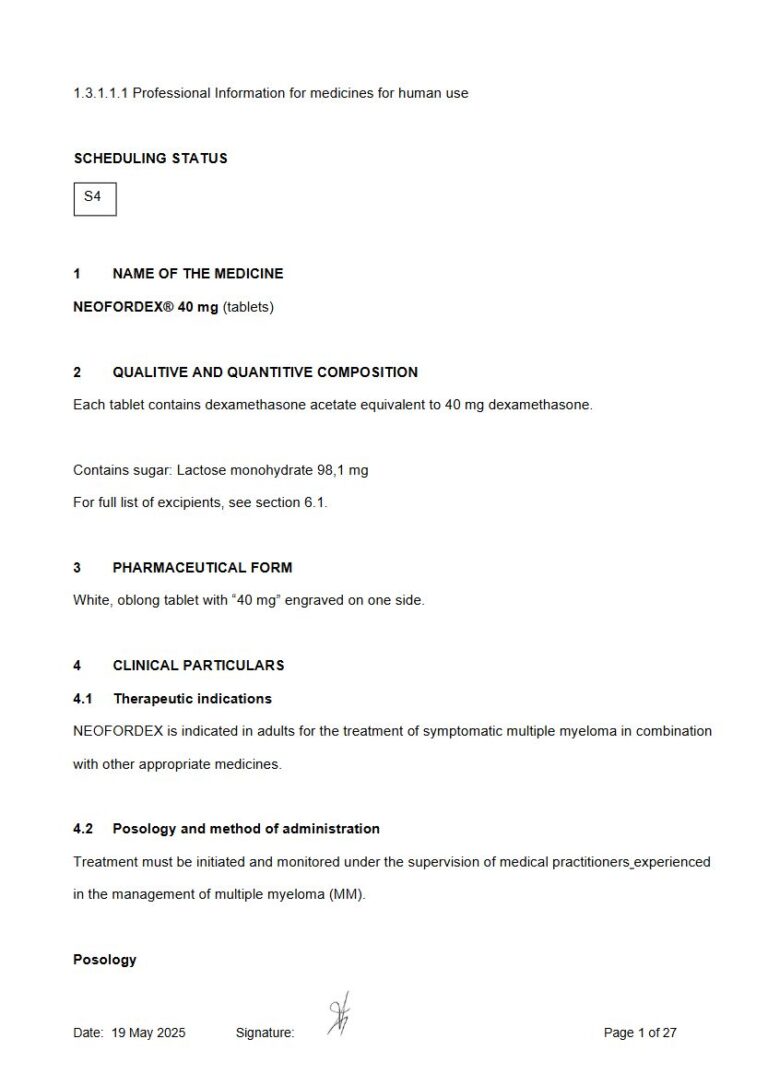
Clinical Particulars
Section 4 of the official insert — extracted exactly as issued, no alterations
4.1 Therapeutic indications
NEOFORDEX is indicated in adults for the treatment of symptomatic multiple myeloma in combination with other appropriate medicines.
4.2 Posology and method of administration
Treatment must be initiated and monitored under the supervision of medical practitioners experienced in the management of multiple myeloma (MM).
Posology
The dose and administration frequency varies with the therapeutic protocol and the associated treatment(s) used for MM. NEOFORDEX administration should follow the appropriate protocol. Prescribing medical practitioners should take into account the condition and disease status of the patient. The usual dose of NEOFORDEX is 40 mg once per day of administration.
Elderly
In elderly and/or frail patients, it can be decided to prescribe another product containing a lower dose of dexamethasone, according to the appropriate treatment regimen.
Hepatic impairment or renal insufficiency
Patients with hepatic impairment or renal insufficiency require appropriate monitoring; patients with hepatic impairment should be dosed with caution as there are no data (see section 4.4).
Paediatric population
There is no indication for paediatric population. NEOFORDEX should not be used in the paediatric population.
Method of administration
Oral use. In order to minimise insomnia, the tablet should preferably be taken in the morning. NEOFORDEX should be kept in the blister package until administration. Individual tablets in intact packaging should be separated from the blister using the perforation, e.g. for use in multi-compartment compliance aids.
4.3 Contraindications
- Hypersensitivity to dexamethasone or to any of the excipients listed in section 6.1.
- Active viral disease (especially viral hepatitis, herpes, varicella, shingles).
- Uncontrolled psychoses.
- Pregnancy and lactation (see section 4.6).
- Use with live attenuated vaccines (see section 4.4).
- NEOFORDEX should not be used in active tuberculosis (see section 4.4).
- Concomitant use of NEOFORDEX with ciclosporin is contraindicated (see section 4.4).
4.4 Special warnings and precautions for use
NEOFORDEX is a high-dose glucocorticoid. This should be taken into consideration in the monitoring of the patient. The benefit from NEOFORDEX treatment should be carefully and continuously weighed against actual and potential risks.
- Risk of infection Treatment with high-dose NEOFORDEX increases the risk of developing serious infections, in particular due to bacteria, yeasts and/or parasites. Such infections can also be caused by microorganisms that rarely cause disease under normal circumstances (opportunistic infections). Signs of a developing infection may be masked by NEOFORDEX therapy. Before the start of treatment, any source of infection should be removed. During treatment, patients should be closely monitored for the appearance of infections. In particular, pneumonia occurs commonly. Patients should be informed of the signs and symptoms of pneumonia and be advised to seek medical attention in case of their appearance. In case of active infectious disease, appropriate anti-infective treatment must be added to the treatment with NEOFORDEX. NEOFORDEX should not be used in patients with active tuberculosis (see section 4.3).
- Patients with quiescent/dormant tuberculosis should be observed closely and should receive chemoprophylaxis if treatment with NEOFORDEX is prolonged. In cases of prior tuberculosis with major radiological sequelae or if it is not certain that a full 6-month rifampicin treatment course has been followed, a prophylactic anti-tuberculosis treatment is required.
- There is a risk of severe strongyloidiasis. Patients from endemic areas (tropical and sub-tropical regions, southern Europe) should have a stool examination and if required an eradication of the parasite before initiating NEOFORDEX treatment.
- Certain viral diseases (varicella zoster, measles) can be aggravated in patients receiving glucocorticoid treatment or who have received glucocorticoid treatment within the previous 3 months. Patients must avoid contact with subjects with chickenpox or measles. Immunocompromised patients who have not previously had chickenpox or measles are particularly at risk. If such patients have been in contact with people with chickenpox or measles, a preventive treatment with intravenous normal immunoglobulin or passive immunisation with varicella zoster immunoglobulin (VZIG) must be started as appropriate. Exposed patients should be advised to seek medical attention without delay.
- Vaccinations NEOFORDEX should not be used with live attenuated vaccines. Vaccinations with inactivated vaccines are usually possible. However, the immune response and hence the effect of the vaccination can be diminished by high glucocorticoid doses.
- Interference with laboratory tests NEOFORDEX can suppress skin reaction to allergy testing. It can also affect the nitro blue tetrazolium (NBT) test for bacterial infections and cause false-negative results.
- Psychiatric disorders Patients and/or carers should be warned that potentially severe psychiatric adverse reactions may occur with use of NEOFORDEX. Symptoms typically emerge within a few days or weeks of starting the treatment. Most reactions recover after either dose reduction or withdrawal, although specific treatment may be necessary. Patients/carers should be encouraged to seek medical advice if worrying psychological symptoms develop, especially if depressed mood or suicidal ideation is suspected. Patients/carers should also be alert to possible psychiatric disturbances that may occur either during, or immediately after, dose tapering/withdrawal of systemic steroids, although such reactions have been reported infrequently. Particular care is required when considering the use of NEOFORDEX in patients with existing or previous history of severe affective disorders in themselves or in their first-degree relatives. These would include depressive or manic-depressive illness and previous steroid psychoses. Insomnia may be minimised by administering NEOFORDEX in the morning.
- Tumour lysis syndrome In post-marketing experience tumour lysis syndrome (TLS) has been reported in patients with haematological malignancies following the use of NEOFORDEX alone or in combination with other chemotherapeutic agents. Patients at high risk of TLS, such as patients with high proliferative rate, high tumour burden, and high sensitivity to cytotoxic agents, should be monitored closely and appropriate precaution taken.
- Gastrointestinal disorders Treatment for active gastric or duodenal ulceration should be commenced prior to initiation of NEOFORDEX. Appropriate prophylaxis should be considered for patients with a previous history of, or risk factors for, gastric or duodenal ulceration, haemorrhage or perforation. Patients should be monitored clinically, including by endoscopy.
- Eye disorders Systemic treatment with glucocorticoids can induce chorioretinopathy which may result in impaired vision including loss of vision. Prolonged use of corticosteroids may produce sub capsular cataracts, glaucoma with possible damage to the optic nerves, and may enhance the establishment of secondary ocular infections due to fungi or viruses. Particular care is needed when treating patients with glaucoma (or family history of glaucoma) as well as when treating patients with ocular herpes simplex, because of possible corneal perforation.
- Tendonitis Corticosteroids can favour the development of tendonitis and, in exceptional cases, rupture of the affected tendon. This risk is increased by concomitant use of fluoroquinolone antimicrobials and in patients undergoing dialysis with secondary hyperparathyroidism or after renal transplantation.
- Phaeochromocytoma crisis Phaeochromocytoma crisis, which can be fatal, has been reported after administration of systemic corticosteroids. Corticosteroids should only be administered to patients with suspected or identified phaeochromocytoma after an appropriate risk/benefit evaluation.
- Elderly The common adverse reactions to systemic corticosteroids may be associated with more serious consequences in old age, especially osteoporosis, hypertension, hypokalaemia, diabetes, susceptibility to infection and thinning of the skin. Close clinical supervision is required to avoid life-threatening reactions.
- Monitoring Use of corticosteroids requires appropriate monitoring in patients with ulcerative colitis (due to perforation risk), recent intestinal anastomoses, diverticulitis, recent myocardial infarction (risk of left ventricular free wall rupture), diabetes mellitus (or family history), renal insufficiency, hepatic impairment, osteoporosis and myasthenia gravis.
- Use with other medicines Concomitant use with medicines that carry a risk of Torsades de Pointes should be with care, due to increased risk of ventricular dysrhythmia. Any hypokalaemia should be corrected and patients should be monitored clinically, for electrolytes and by electrocardiography.
- Long-term treatment During treatment, a diet low in simple sugars and high in protein should be followed due to the hyperglycaemic effect of corticosteroids and their stimulation of protein catabolism with a negative nitrogen balance. Water and sodium retention are common and can lead to hypertension. Sodium intake should be reduced and blood pressure should be monitored. Particular care is needed when treating patients with renal impairment, hypertension or congestive heart failure. Potassium levels should be monitored during treatment. Potassium supplementation should be given particularly if there is a risk of cardiac arrhythmia or concurrent hypokalaemic medicinal products. Depending on the duration of treatment, calcium metabolism may be impaired. Calcium and vitamin D levels should be monitored. In patients not already prescribed bisphosphonates for multiple myeloma related bone disease, bisphosphonates should be considered, particularly if risk factors for osteoporosis are present.
- Glucocorticoid therapy may reduce the effect of anti-diabetic and antihypertensive treatment. The dose of insulin, oral anti-diabetics and anti-hypertensive medicines may have to be increased.
- Combination therapy When NEOFORDEX is used in combination with known teratogens (e.g. thalidomide, lenalidomide, pomalidomide, plerixafor), particular attention to pregnancy testing and prevention requirements is needed (see section 4.6).
- Venous and arterial thromboembolic events: In patients with multiple myeloma, the combination of NEOFORDEX with thalidomide and its analogues is associated with an increased risk of venous thromboembolism (predominantly deep vein thrombosis and pulmonary embolism) and arterial thromboembolism (predominantly myocardial infarction and cerebrovascular event) (see sections 4.5 and 4.8). Consequently, patients with known risk factors for thromboembolism (including prior thrombosis) should be closely monitored. Action should be taken to try to minimise all modifiable risk factors (e.g. smoking, hypertension, and hyperlipidaemia). Concomitant administration of erythropoietic medicinal products may also increase thrombotic risk in these patients. Therefore, erythropoietic medicinal products, or other medicinal products that may increase the risk of thrombosis, such as hormone replacement therapy, should be used with caution in multiple myeloma patients receiving dexamethasone with thalidomide and its analogues. A haemoglobin concentration above 12 g/dl should lead to discontinuation of erythropoietic medicines. Patients and doctors are advised to be observant for the signs and symptoms of thromboembolism. Patients should be instructed to seek medical care if they develop symptoms such as shortness of breath, chest pain, arm or leg swelling. Prophylactic antithrombotic treatment should be recommended, especially in patients with additional thrombotic risk factors. The decision to take antithrombotic prophylactic measures should be made after careful assessment of an individual patientu2019s underlying risk factors. If the patient experiences any thromboembolic events, treatment must be discontinued and standard anticoagulation therapy started. Once the patient has been stabilised on the anticoagulation treatment and any complications of the thromboembolic event have been managed, the treatment with NEOFORDEX and thalidomide or its analogues may be restarted at the original dose dependent upon a benefit risk assessment. The patient should continue anticoagulation therapy during the course of treatment with NEOFORDEX and thalidomide or its analogues.
- Neutropenia and thrombocytopenia: The combination of NEOFORDEX 40 mg with lenalidomide in multiple myeloma patients is associated with a higher incidence of grade 4 neutropenia (5,1 % in lenalidomide/dexamethasone-treated patients compared with 0,6 % in placebo/dexamethasone-treated patients). Grade 4 febrile neutropenia episodes were observed infrequently (0,6 % in lenalidomide/dexamethasone-treated patients compared to 0,0 % in placebo/dexamethasone treated patients). Neutropenia was the most frequently reported Grade 3 or 4 haematological adverse reaction in patients with relapsed/refractory multiple myeloma treated with the combination of NEOFORDEX 40 mg with pomalidomide. Patients should be monitored for haematological adverse reactions, especially neutropenia. Patients should be advised to promptly report febrile episodes. A dose reduction of lenalidomide or pomalidomide may be required. In case of neutropenia, the doctor should consider the use of growth factors in patient management. The combination of NEOFORDEX 40 mg with lenalidomide in multiple myeloma patients is associated with a higher incidence of grade 3 and grade 4 thrombocytopenia (9,9 % and 1,4 %, respectively, in lenalidomide/dexamethasone-treated patients compared to 2,3 % and 0,0 % in placebo/dexamethasone-treated patients). Thrombocytopenia was also reported very commonly by patients with relapsed/refractory multiple myeloma treated with the combination of dexamethasone with pomalidomide. Patients and doctors are advised to be observant for signs and symptoms of bleeding, including petechiae and epistaxes, especially in case of concomitant treatment susceptible to induce bleeding. A dose reduction of lenalidomide or pomalidomide may be required. A complete blood cell count, including white blood cell count with differential count, platelet count, haemoglobin, and haematocrit should be performed at baseline, every week for the first 8 weeks of dexamethasone/lenalidomide treatment and monthly thereafter to monitor for cytopenia.
- Lactose warning NEOFORDEX contains lactose, which may have an effect on the glycaemic control of patients with diabetes mellitus. Patients with the rare hereditary conditions of galactose intolerance e.g. galactosaemia, Lapp lactase deficiency, glucose-galactose malabsorption or fructose intolerance should not take NEOFORDEX.
4.5 Interaction with other medicines and other forms of Interaction
Pharmacodynamic interactions
The following combinations should be avoided due to safety concerns:
- With acetylsalicylic acid (aspirin), at doses u2265 1 g per dose or 3 g per day, due to an increased risk of bleeding. At doses u2265 500 mg per dose or < 3 g per day, precautions are required due to increased risk of haemorrhage, ulcerations and gastro-intestinal perforation.
- With live attenuated vaccines, due to risk of vaccine-related illness with risk of death (see section 4.3).
The following combinations require precautions due to safety concerns:
- With hypokalaemic medicinal products: hypokalaemic diuretics, single or in combination, laxatives, tetracosactide, intravenous amphotericin B, due to increased risk of hypokalaemia. Potassium levels should be monitored and corrected as necessary. In addition, amphotericin B carries a risk of cardiac enlargement and cardiac failure with concurrent use.
- With digitalis, as hypokalaemia enhances the toxic effects of digitalis. Any hypokalaemia should be corrected and patients should be monitored clinically, for electrolytes and by electrocardiography.
- With medicines that carry a risk of Torsades de Pointes, due to increased risk of ventricular dysrhythmia. Any hypokalaemia should be corrected and patients should be monitored clinically, for electrolytes and by electrocardiography.
- With erythropoietic medicines or other medicines that may increase the risk of thrombosis, such as hormone replacement therapy, in patients receiving thalidomide or its analogues with NEOFORDEX (see sections 4.4 and 4.8).
- With non-steroidal anti-inflammatory drugs (NSAIDs), due to an increased risk of gastrointestinal ulceration.
- With hypoglycaemic medicines, as NEOFORDEX can raise glycaemic levels and diminish glucose tolerance, with a possibility of ketoacidosis. Patients should be made aware of this risk and self-monitoring of blood and urine should be reinforced, especially during the initiation of treatment. The dose of anti-diabetic medicines may have to be adjusted during and after the treatment with NEOFORDEX.
- With anti-hypertensive medicines, due to a reduction of their effect (water and sodium retention). The dose of the anti-hypertensive treatment may have to be adjusted during the treatment with NEOFORDEX.
- With fluoroquinolone antimicrobials, due to possibly increased risk of tendonitis and, in rare cases, rupture of the affected tendon, particularly after long-term treatment.
- With methotrexate, due to an increased risk of haematological toxicity.
Pharmacokinetic interactions
Effects of other medicines on NEOFORDEX: Dexamethasone is metabolized via cytochrome P450 3A4 (CYP3A4), and transported by the P-glycoprotein (P-gp, also known as MDR1). Concomitant administration of NEOFORDEX with inducers or inhibitors of CYP3A4 or P-gp may lead to decreased or increased plasma concentrations of dexamethasone, respectively.
The following combinations require precautions due to changes in dexamethasone pharmacokinetics:
- Medicines that may reduce dexamethasone as contained in NEOFORDEX plasma concentration:
- Aminogluthetimide, due to a reduction of the efficacy of dexamethasone through an increase of its hepatic metabolism.
- Anticonvulsants that are hepatic enzyme inducers: carbamazepine, fosphenytoin, phenobarbital, phenytoin, primidone, due to the reduction of dexamethasone plasma levels and hence its efficacy.
- With rifampicin, due to reduction of dexamethasone plasma concentrations and efficacy by an increase of its hepatic metabolism.
- Topical gastro-intestinal medicines, antacids and activated carbon, as well as cholestyramine, due to reduction of the intestinal absorption of dexamethasone. The administration of such medicines and NEOFORDEX should be separated by at least two hours.
- Ephedrine, due to a reduction in dexamethasone plasma levels by increased metabolic clearance.
- Medicines that may increase dexamethasone plasma concentration:
- Aprepitant and fosaprepitant, due to an increase of dexamethasone plasma concentrations by a reduction of its hepatic metabolism.
- Clarithromycin, erythromycin, telithromycin, itraconazole, ketoconazole, posaconazole, voriconazole, nelfinavir, ritonavir: Increased dexamethasone plasma concentration due to reduction of its hepatic metabolism by these enzyme inhibitors.
- Oral contraceptives, as it cannot be excluded that the efficacy of oral contraceptives may be reduced during treatment. No interaction study has been performed with oral contraceptives. Effective measures to avoid pregnancy must be taken (see section 4.6).
- Efficacy of hormone replacement therapy may also be reduced.
- Oral anticoagulants, due to a possible impact of corticosteroids on the metabolism of the oral anticoagulant and on coagulation factors, as well as the haemorrhagic risk (mucosa of the digestive tract, vascular fragility) of dexamethasone therapy itself at high doses or treatment periods above 10 days. If the combination is required, increased monitoring should be instituted and coagulation parameters controlled after one week and then every other week of treatment as well as after the end of treatment.
- Docetaxel and cyclophosphamide, due to reduction of their plasma levels by induction of CYP3A and P-gp.
- Lapatinib, due to increased hepatotoxicity of lapatinib likely due to induction of CYP3A4 metabolism.
- Ciclosporin, due to a reduction of ciclosporin bioavailability and plasma levels. Ciclosporin may also increase the intracellular uptake of dexamethasone. In addition, convulsions have been reported with concurrent use of dexamethasone and ciclosporin. Concomitant use of NEOFORDEX and ciclosporine should be avoided.
- Midazolam, due a reduction in midazolam plasma levels by CYP3A4 induction. The efficacy of midazolam may be reduced.
- Ivermectin, due to a reduction of ivermectin plasma levels. Parasite eradication must be successfully resolved before dexamethasone use (see section 4.4).
- Rifabutin, due to reduced rifabutin plasma levels by induction of intestinal and hepatic CYP3A4.
- Indinavir, due to a strong reduction of indinavir plasma levels by intestinal CYP3A4 induction.
- Erythromycin, due to increased metabolism of erythromycin in non-carriers of the CYP3A5*1 allele after dexamethasone treatment.
- Isoniazid, as glucocorticoids may decrease isoniazid plasma concentrations, probably due to a stimulation of hepatic metabolism of isoniazid and a reduction of glucocorticoid metabolism.
- Praziquantel, due to the reduction of praziquantel plasma concentrations due to an increase of its hepatic metabolism by dexamethasone, with a risk of failure of treatment. The treatments with the two medicines should be separated by at least one week.
Effects of NEOFORDEX on other medicines: Dexamethasone is a moderate inducer of CYP3A4 and of P-gp. Concomitant administration of dexamethasone with substances that are metabolised via CYP3A4 or transported by P-gp could lead to increased clearance and decreased plasma concentrations of these substances:
Repeated, daily administration of dexamethasone also leads to reduced dexamethasone plasma levels due to the induction of CYP3A4 and P-gp. No dose adjustment is needed in the treatment of multiple myeloma. Dexamethasone has no clinically significant pharmacokinetic interaction with thalidomide, lenalidomide, pomalidomide, bortezomib, vincristine or doxorubicin.
4.6 Fertility, pregnancy and lactation
Women of childbearing potential
Women should avoid becoming pregnant during NEOFORDEX treatment. Dexamethasone as contained in NEOFORDEX may cause congenital malformations (see section 5.3). NEOFORDEX may be used with known teratogens (e.g. thalidomide, lenalidomide, pomalidomide, plerixafor), or with cytotoxic substances which are contraindicated in pregnancy. Patients receiving NEOFORDEX in combination with products containing thalidomide, lenalidomide or pomalidomide should adhere to the pregnancy prevention programmes of those products.
Contraception in males and females
Women of childbearing potential and their male partners should take appropriate contraceptive measures. In particular, the requirements of the pregnancy prevention programme for combination treatment with thalidomide or its analogues must be followed. The efficacy of oral contraceptives may be reduced during NEOFORDEX treatment (see section 4.5).
Pregnancy
Based on human experience, dexamethasone as contained in NEOFORDEX is may cause congenital malformations, particularly intra-uterine growth retardation and rarely neonatal adrenal insufficiency, when administered during pregnancy. Studies in animals have shown reproductive toxicity (see section 5.3). NEOFORDEX should not be used during pregnancy unless the clinical condition of the woman requires treatment with dexamethasone.
Combination therapy
When NEOFORDEX is used in combination with known teratogens (e.g. thalidomide, lenalidomide, pomalidomide, plerixafor) particular attention to pregnancy testing and prevention requirements is needed.
Breastfeeding
Women should not breastfeed their babies while taking NEOFORDEX. Glucocorticoids are excreted in human milk and effects have been shown in breastfed new-borns/infants of treated women.
Fertility
Studies in animals have shown reductions in female fertility (see section 5.3). No data on male fertility are available.
4.7 Effects on ability to drive and use machines
NEOFORDEX reduces the ability to drive and use machines. NEOFORDEX may cause confusional state, hallucinations, dizziness, somnolence, fatigue, syncope and blurred vision (see section 4.8). If any of these effects occur, patients should be instructed not to drive, use machines or perform hazardous tasks while being treated with NEOFORDEX.
4.8 Undesirable effects
a. Summary of the safety profile
Adverse reactions to NEOFORDEX correspond to the predictable safety profile of glucocorticoids. Hyperglycaemia, insomnia, muscle pain and weakness, asthenia, fatigue, oedema and weight increase occur very commonly. Less common but serious adverse reactions include: pneumonia and other infections and psychiatric disorders (see section 4.4). In combination with thalidomide or its analogues, the most serious adverse reactions were venous thromboembolic events, predominantly deep vein thrombosis and pulmonary embolism, and myelosuppression, particularly neutropenia and thrombocytopenia (see section 4.4). The incidence of predictable adverse reactions, including adrenal atrophy, correlates with dose, timing of administration and the duration of treatment (see section 4.4).
Tabulated list of adverse reactions
The adverse reactions observed in patients treated with dexamethasone as contained in NEOFORDEX are listed below by system organ class and frequency. Data are derived from historical experience and clinical studies in multiple myeloma patients in which dexamethasone was used as monotherapy or in combination with placebo. Frequencies are defined as: very common (u2265 1/10); common (u2265 1/100 to < 1/10); uncommon (u2265 1/1 000 to < 1/100); rare (u2265 1/10 000 to < 1/1 000); very rare (< 1/10 000 including isolated reports), not known (cannot be estimated from the available data).
4.9 Overdose
In overdose, side effects can be precipitated and/or be of increased severity (see section 4.8). Acute toxicity of dexamethasone is limited and toxic effects have rarely been observed after an acute overdose. No antidote exists and treatment is symptomatic.
