
Everzor 2.5 mg/5 mg/10 mg Tablets
PDF Leaflet Revision Date: 29 April 2022
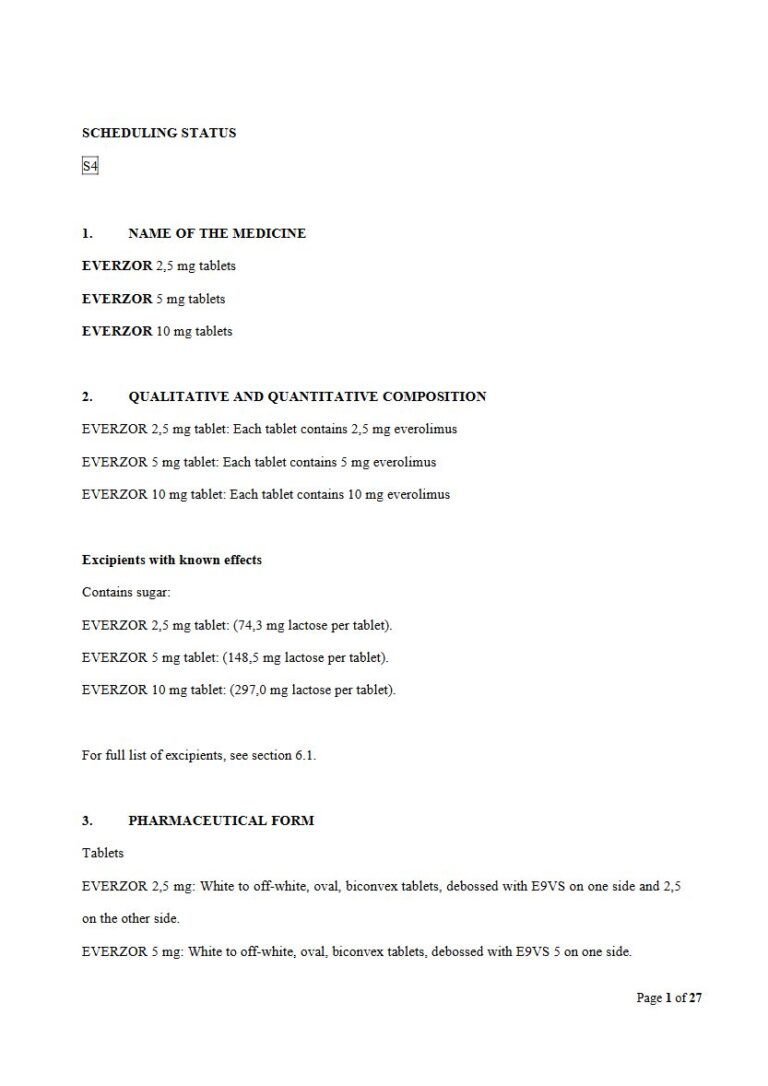
Clinical Summary
Quick overview from the medicine insert
Indication
Palliative treatment for advanced renal cell carcinoma, SEGA, advanced breast cancer, and TSC with renal angiomyolipoma.
Dosage (summary)
10 mg orally once daily; reduce to 5 mg if needed.
Special Populations
- Elderly
- Renal impairment
- Hepatic impairment
Pregnancy & Breastfeeding
Contraindicated in pregnancy; not recommended during breastfeeding.
Key Drug Interactions
- CYP3A4 inhibitors
- CYP3A4 inducers
- Live vaccines
Contraindications
- Hypersensitivity
- Concomitant use of live vaccines
Common side effects
- Stomatitis
- Pneumonitis
- Fatigue
- Dyspnoea
Counselling Points
- Monitor for respiratory symptoms
- Avoid live vaccines
- Use contraception during treatment
Serious warnings
- Non-infectious pneumonitis
- Increased risk of infections
- Renal failure events
Important Disclaimer
The Everzor 2.5 mg/5 mg/10 mg Tablets professional information leaflet below is the property of Adcock Ingram and is provided on Medinsert exactly as issued, with no.. alterations or editorial changes. We make every effort to keep content current by updating documents as soon as new versions become available. Medinsert serves as a trusted access point for healthcare professionals, but does not replace official sources or clinical judgement. For more details, please read our full disclaimer. read more>>
 Healthcare Professionals Only
This content is for registered healthcare professionals
Sign in or create a free account to read the full package insert.
Free for HPCSA-registered professionals. Powered by Medinsert.
Clinical Particulars
Section 4 of the official insert — extracted exactly as issued, no alterations
4.1 Therapeutic indications
EVERZOR is indicated for:
- The palliative treatment of patients with advanced renal cell carcinoma, who failed prior treatment with vascular endothelial growth factor receptor tyrosine kinase inhibitor (VEGFTR-TKI) therapy.
- The treatment of patients with subependymal giant cell astrocytoma (SEGA) associated with tuberous sclerosis (TS).
- In combination with exemestane for palliative treatment of postmenopausal women with oestrogen receptor-positive, HER2/neu negative advanced breast cancer with recurrence or progression after prior treatment with a non-steroidal aromatase inhibitor.
- Treatment of patients with tuberous sclerosis complex (TSC) who have renal angiomyolipoma not requiring immediate surgery.
4.2 Posology and method of administration
Treatment with EVERZOR should be initiated by a healthcare practitioner experienced in the use of anticancer therapies. Treatment should continue as long as clinical benefit is observed or until unacceptable toxicity occurs.
Posology
General target population: Adults
Dosing in advanced renal cell carcinoma, advanced breast cancer and tuberous sclerosis complex (TSC) with renal angiomyolipoma. The recommended dose of EVERZOR is 10 mg, orally to be taken once daily. Management of severe and/or intolerable suspected adverse reactions may require temporary dose reduction and/or interruption of EVERZOR therapy. If dose reduction is required, the suggested dose is 5 mg orally to be taken once daily.
Moderate CYP3A4 or PgP inhibitors: Use caution when administered in combination with moderate CYP3A4 or PgP inhibitors. If patients require co-administration of a moderate CYP3A4 or PgP inhibitor, the dose should be reduced to 5 mg daily. Further dose reduction to 5 mg every other day or 2,5 mg daily may be required to manage adverse reactions (see sections 4.4 and 4.5). If the moderate inhibitor is discontinued, a washout period of at least 2 to 3 days (average for most commonly used moderate inhibitors) should be allowed before the EVERZOR dose increase. The EVERZOR dose should be returned to the dose used prior to initiation of the moderate CYP3A4/PgP inhibitor (see sections 4.4 and 4.5).
Strong CYP3A4 inducers: Avoid the use of concomitant strong CYP3A4 inducers. If patients require co-administration of a strong CYP3A4 inducer, consider doubling the daily dose of EVERZOR based on pharmacokinetic data, using 5 mg increments or less. This dose of EVERZOR is predicted to adjust the AUC to the range observed without inducers. However, there are no clinical data with this dose adjustment in patients receiving strong CYP3A4 inducers. If the strong inducer is discontinued, consider a washout period of at least 3 to 5 days (reasonable time for significant enzyme de-induction), before EVERZOR dose is resumed to the dose used prior to initiation of the strong CYP3A4 inducer (see sections 4.4 and 4.5).
Dosing in subependymal giant cell astrocytoma (SEGA) associated with tuberous sclerosis (TS): Treatment with EVERZOR should be initiated by a healthcare practitioner experienced in the treatment of patients with TS and with access to EVERZOR therapeutic drug monitoring services. Therapeutic drug monitoring of EVERZOR blood concentrations is required for patients treated for SEGA (see u201cTherapeutic Drug Monitoringu201d in the text below). Titration may be required to obtain the optimal therapeutic effect. Doses that are tolerated and effective vary between patients. Concomitant antiepileptic therapy may affect the metabolism of everolimus, as in EVERZOR, and may contribute to this variance (see section 4.5).
Table 1: Recommended starting dose of EVERZOR for treatment of patients with SEGA:
Body surface area (BSA)
Starting daily dose
- u2264 1,2 m2 2,5 mg
- 1,3 u2013 2,1 m2 5 mg
- u2265 2,2 m2 7,5 mg
Everolimus whole blood trough concentrations should be assessed approximately 2 weeks after commencing treatment. Dosing should be titrated to attain trough concentrations of 5 u2013 15 ng/mL. If concentrations are below 5 ng/mL, the daily dose may be increased by 2,5 mg every 2 weeks, subject to tolerability (see section 5). SEGA volume should be evaluated approximately 3 months after commencing EVERZOR therapy, with subsequent dose adjustments taking into consideration changes in SEGA volume, corresponding trough concentration, and tolerability (see section 5). Responses have been observed at trough concentrations as low as 2 ng/mL, as such, once acceptable efficacy has been achieved, additional dose increase may not be necessary. Management of severe or intolerable adverse reactions may require temporary dose reduction and/or interruption of therapy (see section 4.4). If dose reduction is required for patients receiving 2,5 mg daily, alternate day dosing should be considered.
Moderate CYP3A4 or PgP inhibitors: Use caution when administered in combination with moderate CYP3A4 inhibitors or PgP inhibitors. If patients require co-administration of a moderate CYP3A4 or PgP inhibitor, reduce the daily dose by approximately 50%. Further dose reduction may be required to manage adverse reaction (see sections 4.4 and 4.5). Everolimus trough concentrations should be assessed approximately 2 weeks after the addition of a moderate CYP3A4 or PgP inhibitor. If the moderate inhibitor is discontinued, the EVERZOR dose should be returned to the dose used prior to initiation of the moderate CYP3A4 or PgP inhibitor and the everolimus trough concentration should be re-assessed approximately 2 weeks later (see sections 4.4 and 4.5).
Strong CYP3A4 inducers: Avoid the use of concomitant strong CYP3A4 inducers. Patients receiving concomitant strong CYP3A4 inducers (e.g. enzyme-inducing antiepileptic medicine) may require an increased EVERZOR dose to attain trough concentrations of 5 ng/mL to 15 ng/mL. If concentrations are below 5 ng/mL, the daily dose may be increased by 2,5 mg every 2 weeks, checking the trough level and assessing tolerability before increasing the dose. If the strong inducer is discontinued, the EVERZOR dose should be returned to the dose used prior to initiation of the strong CYP3A4 inducer and the everolimus trough concentrations should be assessed approximately 2 weeks later (see sections 4.4 and 4.5).
Therapeutic drug monitoring for patients treated for SEGA
Therapeutic drug monitoring of everolimus blood concentrations is required for patients treated for SEGA using a validated bioanalytical LC/MS method. Trough concentrations should be assessed approximately 2 weeks after the initial dose, after any change in dose, or after an initiation or change in co-administration of CYP3A4 inducers or inhibitors (see sections 4.4 and 4.5). Dosing should be titrated with the objective of attaining everolimus trough concentrations of 5 to 15 ng/mL, subject to tolerability (see section 5).
4.3 Contraindications
- Hypersensitivity to everolimus, other rapamycin derivatives, or any of the other ingredients of EVERZOR (see section 6.1).
- Concomitant use of live vaccines (see section 4.5).
- Pregnancy and lactation (see section 4.6).
4.4 Special warnings and precautions for use
Non-infectious pneumonitis
Non-infectious pneumonitis is a class effect of rapamycin derivatives, including everolimus. Non-infectious pneumonitis (including interstitial lung disease) has been frequently reported in patients taking EVERZOR (see section 4.8). Some cases were severe and a fatal outcome was observed. A diagnosis of non-infectious pneumonitis should be considered in patients presenting with non-specific respiratory signs and symptoms such as hypoxia, pleural effusion, cough or dyspnoea, and in whom infectious, neoplastic and other non-medicinal causes have been excluded by means of appropriate investigations. Opportunistic infections such as Pneumocystis jirovecii (carinii) pneumonia (PJP, PCP) should be ruled out in the differential diagnosis of non-infectious pneumonitis (see INFECTIONS). Patients should be advised to report promptly any new or worsening respiratory symptoms. Patients who develop radiological changes suggestive of non-infectious pneumonitis and have few or no symptoms may continue EVERZOR therapy without dose adjustments. If symptoms are moderate (Grade 2) or severe (Grade 3) the use of corticosteroids may be indicated until clinical symptoms resolve. For patients who require use of corticosteroids for treatment of non-infectious pneumonitis, prophylaxis for Pneumocystis jirovecii (carinii) pneumonia (PJP, PCP) may be considered. For cases of Grade 4 non-infectious interstitial pneumonitis, EVERZOR should be discontinued.
Infections
Everolimus, as in EVERZOR, has immunosuppressive properties and may predispose patients to bacterial, fungal, viral or protozoan infections, including infections with opportunistic pathogens (see section 4.8). Localised and systemic infections, including pneumonia, other bacterial infections, invasive fungal infections such as aspergillosis, candidiasis or Pneumocystis jirovecii (carinii) pneumonia (PJP/PCP) and viral infections including reactivation of hepatitis B virus, have been described in patients taking EVERZOR. Some of these infections have been severe (e.g. leading to sepsis, respiratory or hepatic failure) and occasionally fatal. Healthcare providers and patients should be aware of the increased risk of infection with EVERZOR. Pre-existing infections should be treated appropriately and should have resolved fully before starting treatment with EVERZOR. While taking EVERZOR, be vigilant for symptoms and signs of infection; if a diagnosis of infection is made, institute appropriate treatment promptly and consider interruption or discontinuation of EVERZOR. If a diagnosis of invasive systemic fungal infection is made, the EVERZOR treatment should be promptly and permanently discontinued, and the patient treated with appropriate antifungal therapy. Cases of pneumocystis jirovecii (carinii) pneumonia (PJP/PCP), some with fatal outcome, have been reported in patients who received everolimus. PJP/PCP may be associated with concomitant use of corticosteroids or other immunosuppressive medicines. Prophylaxis for PJP/PCP should be considered when concomitant use of corticosteroids or other immunosuppressive medicines are required.
Hypersensitivity reactions
Hypersensitivity reactions manifested by symptoms including, but not limited to, anaphylaxis, dyspnoea, flushing, chest pain or angioedema (e.g. swelling of the airways or tongue, with or without respiratory impairment) have been observed with everolimus (see section 4.3).
Concomitant use of angiotensin-converting enzyme (ACE) inhibitors
Patients taking concomitant ACE inhibitor (e.g. ramipril) therapy may be at increased risk for angioedema (e.g. swelling of the airways or tongue, with or without respiratory impairment) (see section 4.5).
Stomatitis
Stomatitis, including mouth ulcerations and oral mucositis, is the most commonly reported adverse reaction in patients treated with EVERZOR (see section 4.8). Stomatitis mostly occurs within the first 8 weeks of treatment. A single-arm study in postmenopausal breast cancer patients treated with EVERZOR plus exemestane suggested that an alcohol-free corticosteroid oral solution, administered as a mouthwash during the initial 8 weeks of treatment, may decrease the incidence and severity of stomatitis (see section 5.1). Management of stomatitis may therefore include prophylactic and/or therapeutic use of topical treatments, such as an alcohol-free corticosteroid oral solution as a mouthwash. However, products containing alcohol, hydrogen peroxide, iodine and thyme derivatives should be avoided as they may exacerbate the condition. Monitoring for and treatment of fungal infection is recommended, especially in patients being treated with steroid-based medications. Antifungal medicines should not be used unless fungal infection has been diagnosed (see section 4.5).
Renal failure events
Cases of renal failure (including acute renal failure), some with a fatal outcome, have been observed in patients treated with EVERZOR (see section 4.8). Renal function should be monitored particularly where patients have additional risk factors that may further impair renal function.
Laboratory tests and monitoring
Renal function: Elevations of serum creatinine, usually mild, and proteinuria have been reported (see section 4.8). Monitoring of renal function, including measurement of blood urea, urinary protein or serum creatinine, is recommended prior to the start of EVERZOR therapy and periodically thereafter. Blood glucose: Hyperglycaemia has been reported (see section 4.8). Monitoring of fasting serum glucose is recommended prior to the start of EVERZOR therapy and periodically thereafter. More frequent monitoring is recommended when EVERZOR is co-administered with other medicines that may induce hyperglycaemia. Optimal glycaemic control should be achieved before starting a patient on EVERZOR. Blood lipids: Dyslipidaemia (including hypercholesterolaemia and hypertriglyceridaemia) has been reported. Monitoring of blood cholesterol and triglycerides prior to the start of EVERZOR therapy and periodically thereafter, as well as management with appropriate medical therapy, is recommended. Haematological parameters: Decreased haemoglobin, lymphocytes, neutrophils and platelets have been reported (see section 4.8). Monitoring of complete blood count is recommended prior to the start of EVERZOR therapy and periodically thereafter.
Functional carcinoid tumours
The safety and efficacy of EVERZOR in patients with functional carcinoid tumours have not been established.
4.5 Interactions with other medicines
Co-administration with inhibitors and inducers of CYP3A4 and/or the multidrug efflux pump PgP should be avoided. If co-administration of a moderate CYP3A4 and/or PgP inhibitor or inducer cannot be avoided, dose adjustments of EVERZOR can be taken into consideration based on predicted AUC (see section 4.5). Concomitant treatment with potent CYP3A4 inhibitors results in dramatically increased plasma concentrations of everolimus, as in EVERZOR (see section 4.5). There are currently not sufficient data to allow dosing recommendations in this situation. Hence, concomitant treatment of EVERZOR and potent inhibitors is not recommended. Caution should be exercised when EVERZOR is taken in combination with orally administered CYP3A4 substrates with a narrow therapeutic index due to the potential for interactions. If EVERZOR is taken with orally administered CYP3A4 substrates with a narrow therapeutic index (e.g. pimozide, terfenadine, quinidine or ergot alkaloid derivatives), the patient should be monitored for undesirable effects described in the professional information of the orally administered CYP3A4 substrate (see section 4.5).
Hepatic impairment
Exposure to EVERZOR was increased in patients with mild (Child-Pugh A), moderate (Child-Pugh B) and severe (Child-Pugh C) hepatic impairment (see section 5.2). EVERZOR is not recommended for use in patients with severe hepatic impairment (Child-Pugh C) if the potential benefit outweighs the risk (see section 4.2). No clinical safety or efficacy data are currently available to support dose adjustment recommendations for the management of adverse reactions in patients with hepatic impairment.
Vaccinations
The use of live vaccines is contraindicated during treatment with EVERZOR and close contact with those who have received the live vaccinations should be avoided during treatment with EVERZOR (see section 4.5).
4.6 Fertility, pregnancy and lactation
Women of childbearing potential/Contraception in males and females
Women of childbearing potential must use a highly effective method of contraception (e.g. oral, injected, or implanted non-estrogen-containing hormonal method of birth control, progesterone-based contraceptives, hysterectomy, tubal ligation, complete abstinence, barrier methods, intrauterine device [IUD], and/or female/male sterilisation) while receiving EVERZOR, and for up to 8 weeks after ending treatment. Male patients should not be prohibited from attempting to father children.
Pregnancy
EVERZOR should not be given to pregnant women (see section 4.3). Studies in animals have shown reproductive toxicity effects including embryotoxicity and fetotoxicity. The potential risk for humans is unknown. EVERZOR is not recommended during pregnancy and in women of childbearing potential not using contraception.
Breastfeeding
It is not known whether EVERZOR is excreted in human breast milk. Animal studies indicated that everolimus, as in EVERZOR, and/or its metabolites readily pass into the milk. Therefore, women taking EVERZOR should not breastfeed during treatment and for 2 weeks after the last dose.
Fertility
Based on non-clinical findings, male and female fertility may be compromised by treatment with EVERZOR.
4.7 Effects on ability to drive and use machines
EVERZOR may have a minor or moderate influence on the ability to drive a vehicle and use machines. Patients should be advised to be cautious when performing tasks that require their attention, until they know how they will react to EVERZOR.
4.8 Undesirable effects
Infections and infestations
* Frequent: Pneumonia, urinary tract infection
Less frequent: Bronchitis, herpes zoster, sepsis, abscess, opportunistic infections [e.g. aspergillosis, candidiasis, Pneumocystis jirovecii (carinii) pneumonia (PJP, PCP), hepatitis B (see section 4.4)], viral myocarditis
Blood and lymphatic system disorders
Frequent: Anaemia, thrombocytopenia, neutropenia, leukopenia, lymphopenia
Less frequent: Pancytopenia, pure red cell aplasia
Immune system disorders
Less frequent: Hypersensitivity, angioedema
Metabolism and nutrition disorders
Frequent: Decreased appetite, hyperglycaemia, hypercholesterolaemia, hypertriglyceridaemia, hypophosphataemia, diabetes mellitus, hyperlipidaemia, hypokalaemia, dehydration, hypocalcaemia
Psychiatric disorders
Frequent: Insomnia
Nervous system disorders
Frequent: Dysgeusia, headache
Less frequent: Ageusia
Eye disorders
Frequent: Eyelid oedema
Less frequent: Conjunctivitis
Cardiac disorders
Less frequent: Congestive cardiac failure
Vascular disorders
Frequent: Haemorrhage, hypertension
Less frequent: Flushing, deep vein thrombosis
Respiratory, thoracic and mediastinal disorders
Frequent: Pneumonitis, interstitial lung disease, lung infiltration, epistaxis, cough, dyspnoea
Less frequent: Haemoptysis, pulmonary embolism, acute respiratory distress syndrome, pulmonary alveolar haemorrhage, pulmonary toxicity, alveolitis
Gastrointestinal disorders
Frequent: Stomatitis, aphthous stomatitis, mouth, tongue ulceration, diarrhoea, nausea, vomiting, dry mouth, abdominal pain, mucosal inflammation, oral pain, dyspepsia, dysphagia
Less frequent: Glossodynia, glossitis
Hepato-biliary disorders
Frequent: Increased aspartate aminotransferase, increased alanine aminotransferase
Skin and subcutaneous tissue disorders
Frequent: Rash, pruritus, dry skin, nail disorders, mild alopecia, acne, erythema, onchoclasis, palmar-plantar erythrodysaesthesia syndrome, skin exfoliation, skin lesion
Musculoskeletal, connective tissue and bone disorders
Frequent: Arthralgia
Renal and urinary disorders
Frequent: Proteinuria*, increased blood creatinine, renal failure*
Less frequent: Increased daytime urination, acute renal failure*
Reproductive system and breast disorders
Frequent: Irregular menstruation
Less frequent: Amenorrhoea
General disorders and administration site conditions
Frequent: Fatigue, asthenia, peripheral oedema
Less frequent: Pyrexia, non-cardiac chest pain, impaired wound healing
Investigations
Frequent: Decreased body mass
* See also subsection u201cDescription of selected side effectsu201d below.
a Includes different bleeding events from different sites not listed individually.
b Frequency based upon number of women from 10 to 55 years of age in the pooled data.
Description of selected side effects
EVERZOR may be associated with serious cases of hepatitis B reactivation, including fatal outcome. Reactivation of infection is an expected event during periods of immunosuppression. EVERZOR may be associated with renal failure events (including fatal outcome) and proteinuria. Monitoring of renal function is recommended (see section 4.4). EVERZOR may be associated with cases of amenorrhoea (secondary amenorrhoea and other menstrual irregularities). EVERZOR may be associated with cases of Pneumocystis jirovecii (carinii) pneumonia (PJP, PCP), some with fatal outcome (see section 4.4). Angioedema has been reported with and without concomitant use of EVERZOR in combination with ACE inhibitors (see section 4.4). Discontinuation of EVERZOR: Elderly patients (u2265 65 years of age) had more adverse reactions, leading to discontinuation of EVERZOR. The most frequently occurring side effects, leading to discontinuation of EVERZOR were pneumonitis (including interstitial lung disease), stomatitis, fatigue and dyspnoea.
4.9 Overdose
General asymptomatic and supportive measures should be initiated in all cases of overdose. In overdose, side effects can be precipitated and/or be of increased severity (see section 4.8).
