
Adco-Mirteron FC tablets
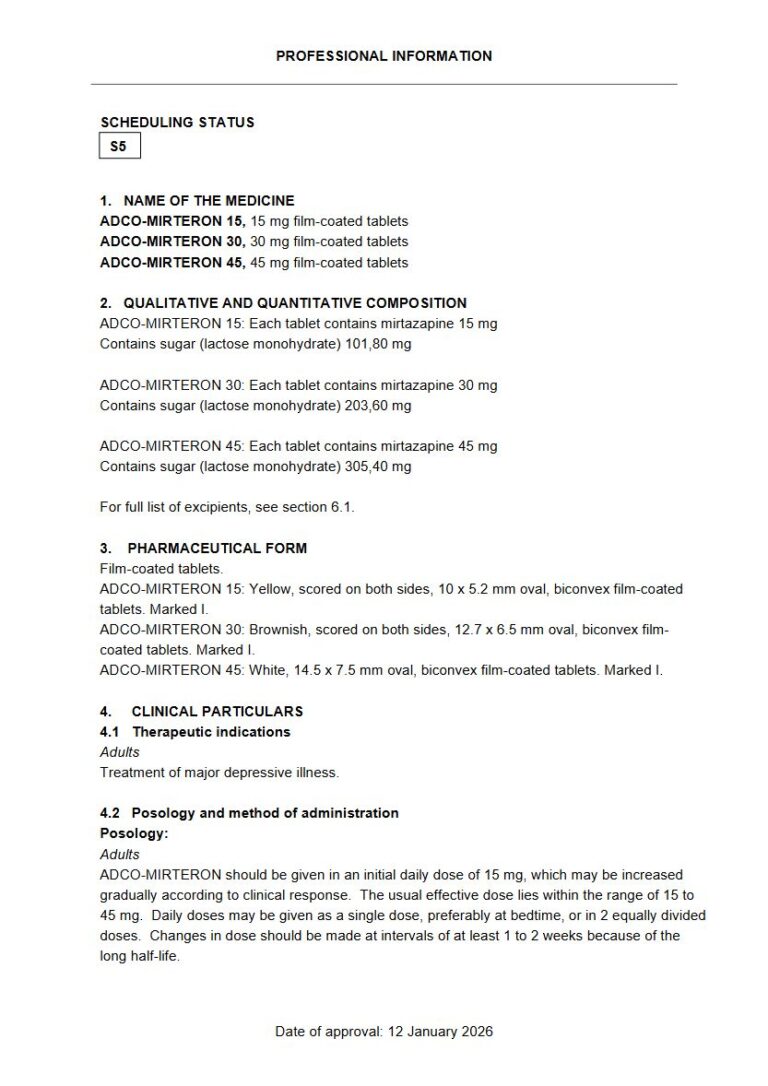
Clinical Summary
Quick overview from the medicine insert
Indication
Major depressive disorder
Dosage (summary)
Initial dose of 15 mg once daily, may be increased to 30 mg or 45 mg based on clinical response and tolerability.
Onset of Action / Duration
2 to 4 weeks for full therapeutic effect.
Special Populations
- Elderly patients
- Patients with hepatic impairment
- Patients with renal impairment
Pregnancy & Breastfeeding
Use during pregnancy only if the potential benefit justifies the potential risk to the fetus. Mirtazapine is excreted in breast milk; caution is advised when administered to nursing mothers.
Key Drug Interactions
- CNS depressants (e.g., alcohol, benzodiazepines) may enhance sedative effects.
- MAO inhibitors may increase the risk of serotonin syndrome.
- Other antidepressants may increase the risk of side effects.
Contraindications
- Hypersensitivity to mirtazapine or any of its excipients.
- Concurrent use with monoamine oxidase inhibitors (MAOIs).
Common side effects
- Drowsiness
- Increased appetite
- Weight gain
- Dry mouth
- Constipation
- Dizziness
Counselling Points
- Take at bedtime to minimize sedation.
- Avoid alcohol while taking this medication.
- Report any unusual changes in mood or behavior.
- Do not discontinue abruptly; consult a healthcare provider for tapering.
Serious warnings
- Risk of suicidal thoughts and behaviors in young adults.
- Monitor for signs of serotonin syndrome.
- Caution in patients with a history of seizures.
Important Disclaimer
The Adco-Mirteron FC tablets professional information leaflet below is the property of Adcock Ingram and is provided on Medinsert exactly as issued, with no.. alterations or editorial changes. We make every effort to keep content current by updating documents as soon as new versions become available. Medinsert serves as a trusted access point for healthcare professionals, but does not replace official sources or clinical judgement. For more details, please read our full disclaimer. read more>>
 Healthcare Professionals Only
This content is for registered healthcare professionals
Sign in or create a free account to read the full package insert.
Free for HPCSA-registered professionals. Powered by Medinsert.
Clinical Particulars
Section 4 of the official insert — extracted exactly as issued, no alterations
4.1 Therapeutic indications
Adults
Treatment of major depressive illness.
4.2 Posology and method of administration
Posology:
Adults
ADCO-MIRTERON should be given in an initial daily dose of 15 mg, which may be increased gradually according to clinical response. The usual effective dose lies within the range of 15 to 45 mg. Daily doses may be given as a single dose, preferably at bedtime, or in 2 equally divided doses. Changes in dose should be made at intervals of at least 1 to 2 weeks because of the long half-life.
For treatment of acute, depressive episodes, treatment should be continued for at least 6 months. ADCO-MIRTERON should be withdrawn gradually to reduce the risk of withdrawal symptoms.
Special populations: The clearance of mirtazapine may be decreased in elderly patients and in patients with renal or hepatic impairment. This should be taken into account when prescribing ADCO-MIRTERON to this category of patients.
Paediatric population
No information available.
Method of administration:
Tablets should be taken orally.
4.3 Contraindications
- Hypersensitivity to mirtazapine or to any of the excipients listed in section 6.1.
- Pregnancy and lactation, as there is insufficient clinical data available.
- Children and adolescents under the age of 18 years (see section 4.4).
- Concomitant monoamine oxidase inhibitors or within 14 days of discontinuation thereof (see section 4.5).
4.4 Special warnings and precautions for use
ADCO-MIRTERON should be used with caution in patients with epilepsy, hepatic or renal insufficiency.
ADCO-MIRTERON should not be used in the treatment of children and adolescents under the age of 18 years (see section 4.3). Suicide-related behaviours (suicide attempt and suicidal thoughts), and hostility (predominantly aggression, oppositional behaviour and anger) were more frequently observed in clinical trials among children and adolescents treated with antidepressants, such as mirtazapine as contained in ADCO MIRTERON, compared to those treated with placebo.
Bone marrow depression
Bone marrow depression, usually presenting as granulocytopenia or agranulocytosis, has been reported during treatment with ADCO-MIRTERON. Patients should be advised to report any of the following symptoms during treatment: fever, sore throat, stomatitis, or other signs of infection. These may be signs of bone marrow depression (neutropenia, agranulocytosis). Treatment should be stopped and a blood count performed.
Jaundice
Treatment should be stopped if jaundice develops.
Psychiatric disorders
Patients should be closely monitored during early therapy until improvement in depression is observed because suicide is an inherent risk in depressed patients. Patients with major depressive disorder, both adults and children, may experience worsening of their depression and / or the emergence of suicidal ideation and behaviour, whether or not they are taking antidepressant medicines. The risk may persist until significant remission occurs. A causal role, however, for antidepressant medicine in inducing such behaviour has not been established. Patients being treated with ADCO-MIRTERON should, nevertheless, be observed closely for clinical worsening and suicidality, especially at the beginning of a course of therapy or at any time of dose changes, either increases or decreases.
Because of the possibility of co-morbidity between major depressive disorder and other psychiatric and non-psychiatric disorders, the same precautions observed when treating patients with major depressive disorders should be observed when treating patients with other psychiatric and non-psychiatric disorders.
The following symptoms have been reported in patients being treated with antidepressants for major depressive disorder as well as for other indications, both psychiatric and non-psychiatric: anxiety, agitation, panic attacks, insomnia, irritability, hostility (aggressiveness, impulsivity, akathisia, hypomania, and mania). Although a causal link between the emergence of suicidal impulses has not been established, consideration should be given to changing the therapeutic regimen, including possibly discontinuing ADCO-MIRTERON, in patients for whom such symptoms are severe, abrupt in onset, or were not part of the patientu2019s presenting symptoms.
Suicide/suicidal thoughts or clinical worsening
Depression is associated with an increased risk of suicidal thoughts, self-harm and suicide (suicide-related events). This risk may persist until significant remission occurs. As improvement may not occur during the first few weeks or more of treatment, patients should be closely monitored until such improvement occurs. It is general clinical experience that the risk of suicide may increase in the early stages of recovery.
Patients with a history of suicide-related events or those exhibiting a significant degree of suicidal ideation prior to commencement of treatment are known to be at greater risk of suicidal thoughts or suicide attempts and should receive careful monitoring during treatment with ADCO-MIRTERON.
Clinical trials of antidepressants, such as mirtazapine as contained in ADCO MIRTERON, in adult patients with psychiatric disorders showed an increased risk of suicidal behaviour with antidepressants, such as ADCO-MIRTERON, compared to placebo in patients less than 25 years old.
Close supervision of patients and in particular those at high risk should accompany therapy with antidepressants, such as ADCO-MIRTERON, especially in early treatment and following dose changes. Patients (and caregivers of patients) should be alerted about the need to monitor for any clinical worsening, suicidal behaviour or thoughts and unusual changes in behaviour and to seek medical advice immediately if these symptoms present.
With regards to the change of suicide, in particular at the beginning of treatment, only a limited number of ADCO-MIRTERON tablets should be given to a patient.
Severe cutaneous adverse reactions
Severe cutaneous adverse reactions (SCARs) including Stevens-Johnson syndrome (SJS), toxic epidermal necrolysis (TEN), drug reaction with eosinophilia and systemic symptoms (DRESS), bullous dermatitis and erythema multiforme, which can be life-threatening or fatal, have been reported in association with ADCO-MIRTERON treatment. If signs and symptoms suggestive of these reactions appear, ADCO-MIRTERON should be withdrawn immediately. If the patient has developed one of these reactions with the use of ADCO-MIRTERON, treatment with ADCO-MIRTERON must be stopped and not restarted in this patient at any time.
Careful dosage as well as regular and careful monitoring is necessary in these patients. Caution should also be exercised in patients with diabetes mellitus, psychoses and those with a history of bipolar disorder.
Renal and urinary disorders
ADCO-MIRTERON has weak antimuscarinic activity, therefore caution should be exercised in patients with micturition disturbances.
Eye disorders
Closed angle glaucoma, and raised intraocular pressure.
Patients should be advised to report any of the following symptoms during treatment: Fever, sore throat, stomatitis, or other signs of infection. These may be signs of bone marrow depression (neutropenia, agranulocytosis). Treatment should be stopped and a blood count performed.
Epilepsy and organic brain symptoms
ADCO-MIRTERON should be introduced cautiously in patients who have a history of seizures. Treatment should be discontinued in any patient who develops seizures, or where there is an increase in seizure frequency.
Hepatic impairment
Following a single 15 mg oral dose of mirtazapine as contained in ADCO-MIRTERON 15, the clearance of mirtazapine was approximately 35 % decreased in mild to moderate hepatically impaired patients, compared to subjects with normal hepatic function. The average plasma concentration of mirtazapine as contained in ADCO-MIRTERON was about 55 % increased.
Renal impairment
Following a 15 mg oral dose of mirtazapine as contained in ADCO-MIRTERON, in patients with moderate (10 ml/min u2264 creatinine clearance < 40 ml/min) and severe (creatinine clearance < 10 ml/min) renal impairment the clearance of mirtazapine was about 30 % and 50 % decreased respectively, compared to normal subjects. The average plasma concentration of mirtazapine was about 55 % and 115 % increased, respectively. No significant differences were found in patients with mild renal impairment (40 ml/min u2264 creatinine clearance < 80 ml/min) as compared to the control group.
Cardiac disorders such as conduction disturbances, angina pectoris, and recent myocardial infarction, as well as in patients with hypotension, where normal precautions should be taken, and concomitant medicines carefully administered.
Diabetes mellitus
In patients with diabetes, antidepressants such as ADCO-MIRTERON may alter glycaemic control. Insulin and/or oral hypoglycaemic dosage may need to be adjusted and close monitoring is recommended.
The following should be taken into account: Worsening psychotic symptoms can occur when ADCO-MIRTERON is administered to patients with schizophrenia or other psychotic disturbances; paranoid thoughts can be intensified. When the depressive phase of bipolar disorder is being treated, it can transform into the manic phase. Patients with a history of mania/hypomania should be closely monitored. ADCO-MIRTERON should be discontinued in any patient entering a manic phase.
Post-marketing experience with mirtazapine as contained in ADCO-MIRTERON shows that abrupt termination of treatment after long term administration of ADCO-MIRTERON may result in withdrawal symptoms. The majority of withdrawal reactions are mild and self-limiting. Among the various reported withdrawal symptoms, dizziness, agitation, anxiety, headache and nausea were the most frequently reported. As advised in section 4.2 it is recommended to discontinue treatment with ADCO-MIRTERON gradually.
Akathisia/psychomotor restlessness
The use of ADCO-MIRTERON has been associated with the development of akathisia, characterized by a subjectively unpleasant or distressing restlessness and a need to move often, accompanied by an inability to sit or stand still. This is most likely to occur within the first few weeks of treatment. In patients who develop these symptoms, increasing the dose may be detrimental.
The effect of mirtazapine, such as contained in ADCO-MIRTERON, on QTc interval was assessed in a randomized, placebo and moxifloxacin controlled clinical trial involving 54 healthy volunteers using exposure response analysis. This trial revealed that both 45 mg (therapeutic) and 75 mg (supratherapeutic) doses of mirtazapine did not affect the QTc interval to a clinically meaningful extent. During the post-marketing use of mirtazapine, cases of QT prolongation, Torsades de Pointes, ventricular tachycardia and sudden death, have been reported. The majority of reports occurred in association with overdose or in patients with other risk factors for QT prolongation, including concomitant use of QTc prolonging medicines (see section 4.5). Caution should be exercised when ADCO-MIRTERON is prescribed in patients with known cardiovascular disease or family history of QT prolongation, and in concomitant use with other medicines thought to prolong the QTc interval.
Hyponatraemia
Hyponatraemia, probably due to inappropriate antidiuretic hormone secretion (SIADH), has been reported with the use of ADCO-MIRTERON. Caution should be exercised in patients at risk, such as elderly patients or patients concomitantly treated with medications known to cause hyponatraemia.
Serotonin syndrome
Interaction with serotonergic active substances: Serotonin syndrome may occur when ADCO-MIRTERON is used concomitantly with other serotonergic active substances (see section 4.5). Symptoms of serotonin syndrome may be hyperthermia, rigidity, myoclonus, autonomic instability with possible rapid fluctuations of vital signs, mental status changes that include confusion, irritability and extreme agitation progressing to delirium and coma.
Elderly patients
Elderly patients are often more sensitive, especially with regards to the undesirable effects of antidepressants, including ADCO-MIRTERON. During clinical research with mirtazapine as contained in ADCO-MIRTERON, undesirable effects have not been reported more often in elderly patients than in other age groups.
MAO-Inhibitors
In patients receiving ADCO-MIRTERON in combination with a monoamine oxidase inhibitor (MAOI) and in patients who have recently discontinued ADCO-MIRTERON and then are started on an MAOI, there have been reports of serious and sometimes fatal reactions e.g. including nausea, vomiting, flushing, dizziness, tremor, myoclonus, rigidity, diaphoresis, hyperthermia, autonomic instability with rapid fluctuations of vital signs, seizures and mental status changes ranging from agitation to coma. ADCO-MIRTERON should not be used in combination with an MAOI, or within 14 days of initiating or discontinuing therapy with an MAOI including linezolid (see sections 4.3 and 4.5).
If the decision is made to discontinue treatment, ADCO-MIRTERON should be tapered (See section 4.2).
ADCO-MIRTERON may decrease alertness, judgment, thinking and concentration. Therefore, operating machinery or driving a vehicle should be avoided during treatment.
4.5 Interactions with other medicines and other forms of interaction
Pharmacodynamic interactions
MAOI: ADCO-MIRTERON should not be used concomitantly with MAO inhibitors, including linezolid or within two weeks of discontinuing a MAOI (see section 4.3).
Alcohol: ADCO-MIRTERON may potentiate the central nervous depressant action of alcohol and patients should therefore be advised to avoid alcohol.
Anxiolytics and Hypnotics: Use of ADCO-MIRTERON may potentiate the sedative effects of benzodiazepines and other sedatives (including antipsychotics, antihistamine H1 antagonists, opioids. Caution should be taken when these medicines are prescribed together with ADCO-MIRTERON.
Co-administration with other serotonergic active substances (L-tryptophan, triptans, tramadol, linezolid, methylene blue, SSRIu2019s, venlafaxine, lithium and St. Johnu2019s Wort - Hypericum perforatum - preparations) may lead to an incidence of serotonin associated effects (serotonin syndrome: see section 4.4). Caution should be advised, and a closer clinical monitoring is required when these active substances are combined with ADCO-MIRTERON.
Mirtazapine such as contained in ADCO-MIRTERON dosed at 30 mg once daily caused a small, but statistically significant increase in the international normalised ratio (INR) in subjects treated with warfarin. As at a higher dose of ADCO-MIRTERON a more pronounced effect cannot be excluded. It is advisable to monitor the INR in case of concomitant treatment of warfarin with ADCO-MIRTERON.
The risk of QT prolongation and/or ventricular dysrhythmias (e.g. Torsades de Pointes) may be increased with concomitant use of medicines which prolong the QTc interval (e.g. some antipsychotics and antibiotics) and in case of ADCO-MIRTERON overdose.
Pharmacokinetic interactions
Carbamazepine and phenytoin, CYP3A4 inducers, increased mirtazapine, as contained in ADCO-MIRTERON, clearance about two-fold, resulting in a decrease in average plasma mirtazapine concentration of 60 % and 45 %, respectively. When carbamazepine or any other inducer of hepatic metabolism (such as rifampicin) is added to ADCO-MIRTERON therapy, the ADCO-MIRTERON dose may have to be increased. If treatment with such medicinal product is discontinued, it may be necessary to reduce the ADCO-MIRTERON dose.
Co-administration of the potent CYP3A4 inhibitor ketoconazole increased the peak plasma levels and the AUC of mirtazapine, as contained in ADCO-MIRTERON, by approximately 40 % and 50 % respectively. When cimetidine (weak inhibitor of CYP1A2, CYP2D6 and CYP3A4) is administered with ADCO-MIRTERON, the mean plasma concentration of mirtazapine may increase more than 50 %. Caution should be exercised, and the dose may have to be decreased when co-administering ADCO-MIRTERON with potent CYP3A4 inhibitors, HIV protease inhibitors, azole antifungals, erythromycin, cimetidine or nefazodone.
Interaction studies did not indicate any relevant pharmacokinetic effects on concurrent treatment of ADCO-MIRTERON with paroxetine, amitriptyline, risperidone or lithium. ADCO-MIRTERON should be used cautiously when co-administered with: Buprenorphine/opioids as the risk of serotonin syndrome, a potentially lifethreatening condition, is increased (see section 4.4).
4.6 Fertility, pregnancy and lactation
ADCO-MIRTERON is contraindicated in pregnancy and lactation (see section 4.3).
Pregnancy
Epidemiological data have suggested that the use of SSRIs in pregnancy, particularly in late pregnancy, may increase the risk of persistent pulmonary hypertension in the newborn (PPHN). Although no studies have investigated the association of PPHN to mirtazapine treatment, this potential risk cannot be ruled out taking into account the related mechanism of action (increase in serotonin concentrations).
Breastfeeding
Although animal experiments show that mirtazapine is excreted only in very small amounts in the milk, the use of mirtazapine in breast-feeding mothers is not recommended. No human data is available.
Fertility
Non-clinical reproductive toxicity studies in animals did not show any effect on fertility.
4.7 Effects on ability to drive and use machines
ADCO-MIRTERON may decrease alertness, judgment, thinking and concentration. Therefore, operating machinery or driving a vehicle should be avoided during treatment.
4.8 Undesirable effects
Tabulated summary of adverse reactions
MedDRA System Organ Class
Frequent
Less Frequent
Frequency unknown
Blood and lymphatic system disorders
Reversible agranulocytosis
Leucopenia, granulocytopaenia
Metabolism and nutritional disorders
An increase in appetite and weight gain, dry mouth, constipation
Thirst, nausea, vomiting
Bitter taste (in the mouth)
Nervous system disorders
Drowsiness or sedation, dizziness, headache, tremor, lethargy, amnesia
Epileptic seizure, vertigo, nightmares, agitation, mania, paraesthesia, hallucinations, convulsions, myoclonus and restless legs syndrome
Psychiatric disorders
Abnormal dreams, confusion, anxiety, insomnia
Nightmares, psychomotor restlessness (incl. akathisia, hyperkinesia), aggression
Vascular disorders
Postural hypotension, orthostatic hypotension
Oedema, peripheral oedema
Gastrointestinal disorders
Dry mouth, constipation, nausea, vomiting, diarrhoea
Thirst, oral hypoaesthesia, pancreatitis
Bitter taste in mouth, mouth oedema, increased salivation
Hepatobiliary disorders
Increases in liver enzyme levels have been reported
Jaundice may occur
Skin and subcutaneous tissue disorders
Exanthema
Oedema
Musculoskeletal and connective tissue disorders
Arthralgia and myalgia, back pain
General disorders and administration site conditions
Flu-like syndrome, asthenia, increased sweating
Post-marketing side effects
The reported post-marketing adverse reactions of which the frequency is not known:
MedDRA System Organ Class
Description
Blood and the lymphatic system disorders
Bone marrow depression (granulocytopenia, agranulocytosis, aplastic anaemia and thrombocytopenia), eosinophilia
Metabolism and nutrition disorders
Hyponatraemia
Psychiatric disorders
Suicidal ideation, suicidal behaviour, somnambulism
Nervous system disorders
Convulsions (insults), serotonin syndrome, oral paraesthesia, dysarthria
Gastrointestinal disorders
Mouth oedema, increased salivation
Skin and subcutaneous tissue disorders
Stevens-Johnson syndrome, dermatitis bullous, erythema multiforme, toxic epidermal necrolysis (TEN), drug reaction with eosinophilia and systemic symptoms (DRESS).
General disorders and administration site conditions
Generalised oedema, localised oedema.
Renal and urinary disorders
Urinary retention
Investigations
Increased creatinine kinase
Musculoskeletal and connective tissue disorders
Rhabdomyolysis
Endocrine disorders
Inappropriate antidiuretic hormone secretion, hyperprolactinemia (and related symptoms galactorrhoea and gynaecomastia)
Reporting of suspected adverse reactions
Reporting suspected adverse reactions after authorisation of the medicine is important. It allows continued monitoring of the benefit/risk balance of the medicine. Health care providers are requested to report any suspected adverse drug reactions to SAHPRA via the Med Safety APP (Medsafety X SAHPRA) and eReporting platform (who-umc.org) found on SAHPRA website.
4.9 Overdose
There is no specific antidote for ADCO-MIRTERON. Treatment is symptomatic and supportive. Present experience concerning overdose with ADCO-MIRTERON alone indicates that symptoms are usually mild. Depression of the central nervous system with disorientation and prolonged sedation have been reported, together with tachycardia and mild hyper- or hypotension. However, there is a possibility of more serious outcomes (including fatalities) at dosages much higher than the therapeutic dose, especially with mixed overdoses. In these cases, QT prolongation and Torsade de Pointes have also been reported. ECG monitoring should be undertaken.
