
Nuelin Sa 250 mg Tablet.
PDF Leaflet Revision Date: 10 April 2022
Clinical Summary
Quick overview from the medicine insert
Indication
Treatment of bronchospasm.
Dosage (summary)
Adults: 1 tablet twice daily, may increase to 2 tablets if tolerated.
Special Populations
- Elderly
- Hepatic impairment
- Renal impairment
Pregnancy & Breastfeeding
Safety in pregnancy not established; excreted in breast milk, monitor infants for irritability.
Key Drug Interactions
- Cimetidine
- Ranitidine
- Macrolide antibiotics
- Quinolone antibiotics
- Smoking
Contraindications
- Hypersensitivity to theophylline
- Recent myocardial infarction
- Acute tachydysrhythmia
- Porphyria
- Children under 2 years
Common side effects
- Headache
- Nausea
- Tachycardia
- Irritability
- Gastric irritation
Counselling Points
- Take as prescribed, do not crush or chew tablets.
- Monitor for side effects and report any unusual symptoms.
- Avoid concurrent use with other xanthine derivatives.
Serious warnings
- Monitor serum levels due to narrow therapeutic window.
- Risk of severe toxicity at high serum levels.
Important Disclaimer
The Nuelin Sa 250 mg Tablet. professional information leaflet below is the property of Inova Pharmaceuticals and is provided on Medinsert exactly as issued, with no.. alterations or editorial changes. We make every effort to keep content current by updating documents as soon as new versions become available. Medinsert serves as a trusted access point for healthcare professionals, but does not replace official sources or clinical judgement. For more details, please read our full disclaimer. read more>>
 Healthcare Professionals Only
This content is for registered healthcare professionals
Sign in or create a free account to read the full package insert.
Free for HPCSA-registered professionals. Powered by Medinsert.
Clinical Particulars
Section 4 of the official insert — extracted exactly as issued, no alterations
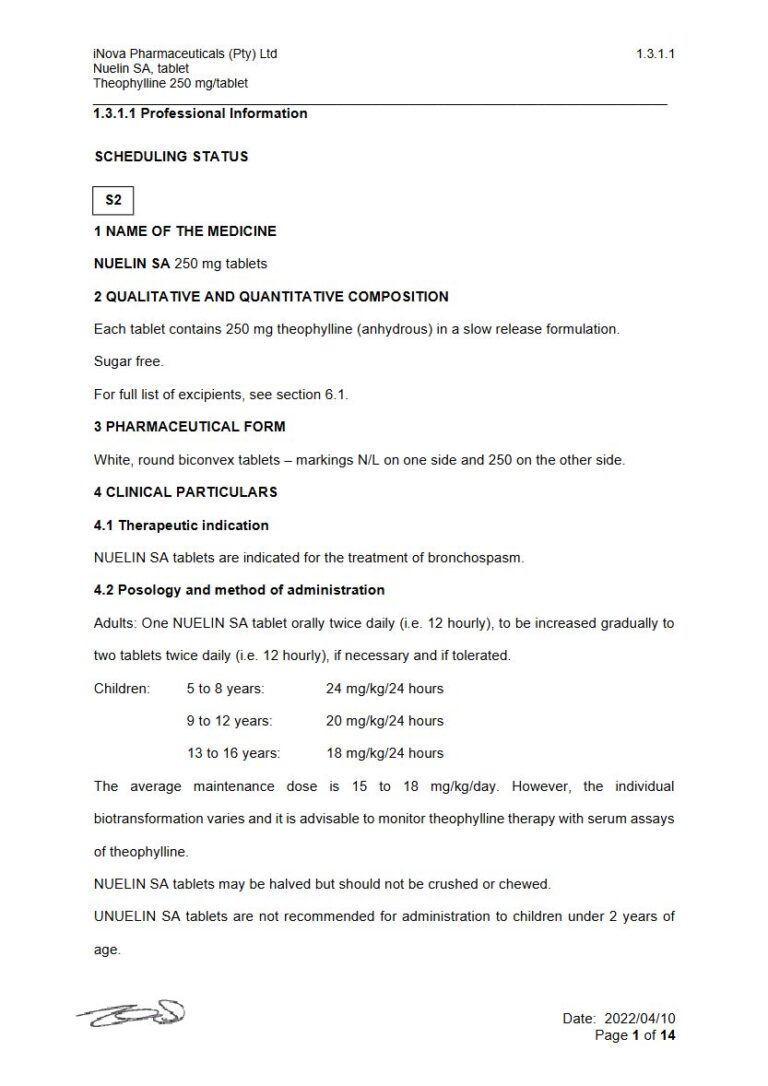
4.1 Therapeutic indication
NUELIN SA tablets are indicated for the treatment of bronchospasm.
4.2 Posology and method of administration
Adults: One NUELIN SA tablet orally twice daily (i.e. 12 hourly), to be increased gradually to two tablets twice daily (i.e. 12 hourly), if necessary and if tolerated.
Children: 5 to 8 years: 24 mg/kg/24 hours 9 to 12 years: 20 mg/kg/24 hours 13 to 16 years: 18 mg/kg/24 hours The average maintenance dose is 15 to 18 mg/kg/day. However, the individual biotransformation varies and it is advisable to monitor theophylline therapy with serum assays of theophylline. NUELIN SA tablets may be halved but should not be crushed or chewed. UNUELIN SA tablets are not recommended for administration to children under 2 years of age. For children taking NUELIN SA tablets, NUELIN LIQUID may be considered as an alternative.
4.3 Contraindications
No other theophylline therapy should be administered concurrently with NUELIN SA. Hypersensitivity to theophylline, aminophylline, xanthine derivatives or any of the excipients included in NUELIN SA. See section 6.1. Recent myocardial infarction. Acute tachydysrythmia. Porphyria. Concomitant use with ephedrine in children. Children under 2 years of age (They cannot metabolize theophylline sufficiently).
4.4 Special warnings and precautions for use
Since status asthmaticus is a medical emergency, a patient who is not rapidly responsive to bronchodilators frequently requires additional appropriate medication. The patientu2019s response to therapy should be carefully monitored. Worsening of asthma symptoms requires urgent medical attention. Monitoring of plasma levels in individual patients is strongly recommended since there is a correlation between theophylline plasma levels and therapeutic effect and since patient response can vary considerably due to variable rates of elimination. The dosage should be individualised if optimal therapeutic effect is to be achieved. However, individual patients also have a widely variable tolerance to adverse effects and therefore symptomatology should be considered together with monitored levels. Other circumstances in which monitoring serum levels is advisable include: unexplained poor control of asthmatic signs and symptoms; occurrence of toxic symptoms; the addition or removal of other medicines from the therapeutic regimen that affect the metabolism of theophylline; use of unusually high doses.
High theophylline serum levels, in association with clinical manifestations of toxicity may result from conventional doses in certain clinical situations such as: patients with lowered body plasma clearances (due to cardiac decompensation); patients with liver dysfunction or chronic obstructive lung disease; patients who are more than 55 years of age. Theophylline should not be used concurrently with other preparations containing xanthine derivatives (eg. caffeine, theobromine and methylxanthines. These are components of coffee, tea and chocolate).and caution should be exercised when sympathomimetic medicine is also part of the regimen. Theophylline clearance decreases in patients with hypothyroidism, congestive heart failure, acute pulmonary oedema, chronic obstructive pulmonary disease, severe hypoxia, pneumonia, acute febrile episodes and during acute viral infection. Use theophylline with caution in patients with cardiac dysrhythmias, coronary artery disease, unstable angina pectoris, cardiomyopathy, acute myocardial infarction, severe hypertension, hyperthyroidism, hepatic impairment renal impairment, chronic alcoholism, chronic obstructive pulmonary disease, dehydration, and in the elderly. Theophylline increases gastric acid secretion and should be used with caution in patients with peptic ulcer or gastro- oesophageal reflux disease. Smoking and chronic alcohol consumption may increase theophylline clearance and increased doses of theophylline may be required. In patients with cardiac failure, hepatic dysfunction/disease and fever the clearance of theophylline may be reduced and these patients may require a reduced dosage. Alternative bronchodilator therapy should be used in patients with a history of seizures.
Xanthine containing beverages (such as tea, coffee, cola, cocoa) may interfere with some serum theophylline assays.
Use in hepatic impairment Clearance is markedly decreased in patients with Child-Pugh Class C liver impairment, and hepatic cirrhosis (see section 4.5). Monitoring of theophylline serum level and dose adjustment are recommended.
Use in elderly There is some evidence that theophylline exhibits dose-dependent kinetics, at least in sick and elderly patients. Care should be exercised by titration of dosage requirements in small increments and by monitoring serum theophylline levels.
4.5 Interaction with other medicines and other forms of interaction
Factors known to influence body clearance of theophylline include: age (decreasing clearance with increasing age), congestive heart failure (decreased clearance), liver disease (decreased clearance), pulmonary oedema (decreased clearance) and concurrent infection (decreased clearance). In the presence of any of these factors, the monitoring of theophylline serum levels periodically is advisable.
The following medicines have been shown to decrease the hepatic clearance of theophylline, thus increasing its serum concentration: Cimetidine, ranitidine, high dose allopurinol, macrolide antibiotics (eg. erythromycin, clarithromycin), quinolone antibiotics (eg. ciprofloxacin and enoxacin), acute alcohol, oral contraceptives, mexiletine, tacrine, thiabendazole, disulfiram, interferon alpha, verapamil, fluvoxamine, viloxazine, carbimazole, fluconazole, digoxin, diltiazem and other calcium channel blockers, furosemide, imipenem, influenza vaccines, isoniazid, methotrexate (MTX), nizatidine, pentoxifylline, propafenone, propranolol and ticlopidine.
The following medicines have been shown to increase the hepatic clearance of theophylline, thus lowering its serum concentration: Tobacco or marijuana smoking, phenobarbitone, phenytoin, carbamazepine, barbiturates, rifampicin, sulfinpyrazone, ritonavir, primidone and aminoglutethimide, chronic alcohol and oral contraceptives.
Theoretical potential interactions of theophylline with products containing Hypericum perforatum (St John's wort), possibly involving the CYP 1A2 isoform, could result in reduced plasma levels of theophylline. It is recommended that serum theophylline levels are monitored, and dosage adjustments made if concomitant therapy with these medicines is commenced or ceased during continued theophylline therapy.
Ventricular dysrhythmias have been reported when halothane is used concurrently with theophylline. Concurrent use of ketamine with theophylline may lower the seizure threshold. Theophylline has been reported to enhance the renal clearance of lithium, thus reducing serum lithium levels.
Synergism with epinephrine (adrenaline) and other sympathomimetic amines has been reported with theophylline. Concomitant administration of a u03b2 -adrenergic agonist with methylxanthines (e.g theophylline) has resulted in cardiac dysrhythmias and sudden death in studies carried out in laboratory animals. The clinical significance of these findings when applied to humans is not known at present.
Concurrent use of theophylline and beta-blockers should be avoided since beta-blockers produce bronchospasm. Theophylline can potentiate hypokalaemia caused by hypoxia or associated with the use of beta 2 -adrenoreceptor stimulants (beta 2 agonists), corticosteroids, and diuretics.
4.6 Fertility, pregnancy and lactation
Women of childbearing potential: No data available.
Pregnancy: Safety in pregnancy has not been established. Theophylline crosses the placental barrier. The effect on foetal development is not known. In premature infants theophylline clearance is significantly decreased. Therefore, if NUELIN SA is administered to the mother near the time of delivery, the neonate should be monitored closely for the pharmacological effects of theophylline.
Breastfeeding: Theophylline is excreted in breast milk and irritability has been reported in infants of nursing mothers taking theophylline. It is advisable to retain serum theophylline concentrations as low as possible in nursing mothers while maintaining adequate asthma control. Breastfeeding should preferably take place immediately before administration of the NUELIN SA. The breast-fed infant must be carefully monitored for any effects of theophylline.
Fertility: Theophylline caused reduced relative seminal vesicle weights and epididymal sperm numbers in mice at 500 mg/kg BW/day, lower absolute testis weights in mice at 300 mg/kg BW/day and in rats at 150 mg/kg BW/day and increased epididymis weights in mice at 400 and 800 mg/kg BW/day. In another study in rats, the absolute cauda epididymis weights were decreased and abnormal sperm was observed at 260 mg/kg BW/day in the absence of growth retardation. In a continuous breeding study, the number of days to deliver each litter was consistently increased after oral exposure of mice to 500 mg/kg BW/day. There are no clinical data on fertility in humans. Nonclinical data on theophylline reveal adverse effects on male and female fertility.
4.7 Effects on ability to drive and use machines
Even when taken as prescribed, NUELIN SA may affect the individual's ability to drive a vehicle, operate machinery or work safely under hazardous conditions. This applies particularly when it is taken in conjunction with alcohol or other medicines liable to impair judgment and motor skills. The effect of NUELIN SA on the individual should always be known before they drive, operate machinery or work under hazardous conditions.
4.8 Undesirable effects
Periodic measurement of theophylline serum levels is recommended to assure maximal benefit without excessive risk. The incidence of toxicity increases at serum levels greater than 20 micrograms/ml.
Metabolism and nutrition disorders: Frequency unknown: Hyperglycaemia, hypokalaemia, hyperuricaemia, hypomagnesaemia, dehydration and electrolyte imbalance.
Psychiatric disorders: Frequent: Anorexia, anxiety, irritability, restlessness.
Nervous system disorders: Frequent: Headache, insomnia, CNS stimulation, reflex hyperexcitability, tremor, convulsions.
Cardiac disorders: Frequent: Tachycardia, palpitations. Less frequent: More serious signs of high serum levels (usually above 30 u03bcg/ml), such as cardiac dysrhythmias may appear without prior warning. Frequency unknown: Extrasystoles.
Vascular disorders: Frequency unknown: Flushing, hypotension.
Respiratory, thoracic and mediastinal disorders: Frequency unknown: Tachypnoea, respiratory arrest.
Gastrointestinal disorders: Frequent: Gastric irritation, nausea, vomiting, epigastric pain, reactivation of peptic ulcer, gastro-oesophageal reflux, haematemesis. Frequency unknown: Diarrhoea.
Skin and subcutaneous tissue disorders: Frequency unknown: Rash, alopecia.
Renal and urinary disorders: Frequency unknown: Potentiation of diuresis, albuminuria, haematuria, inappropriate ADH secretion (high dose), urinary retention in men with prostate enlargement.
Reporting suspected adverse reactions after authorisation of the medicine is important. It allows continued monitoring of the benefit/risk balance of the medicine. Health care providers are asked to report any suspected adverse reactions to SAHPRA via the u201c 6.04 Adverse Drug Reactions Reporting Form u201d, found online under SAHPRAu2019s publications: https://www.sahpra.org.za/Publications/Index/8publications Alternately you can contact iNova Pharmaceuticals (Pty) Ltd at +27 11 087 0000. Website: www.inovapharma.co.za.
4.9 Overdose
Symptoms: Severe toxicity may not be preceded by milder symptoms. Early symptoms of toxicity such as anorexia, nausea, vomiting, headache, irritability, agitation, tremor, hypertonicity, anxiety, insomnia, hypotension, palpitations and tachycardia, may progress to sensory disturbances, maniacal behaviour confusion, hyperthermia, supraventricular and ventricular dysrhythmias, hypotension, repeated vomiting, extreme thirst, delirium, convulsions and death. Metabolic disturbances such as hypokalaemia, hyperglycaemia, hypophosphataemia, hypercalcaemia, metabolic acidosis, and respiratory alkalosis often occur. Other toxic effects reported include dementia, toxic psychosis, acute pancreatitis, rhabdomyolysis with associated renal failure and acute compartment syndrome. In acute intoxication with modified-release preparation such as theophylline SA 250, the onset of major toxic symptoms may be delayed for up to 24 hours and, prolonged monitoring of such patients is required. Theophylline has a narrow therapeutic window. Therefore, even levels slightly above this therapeutic window can have serious adverse effects in the setting of acute and chronic toxicity. Every theophylline overdose should be regarded as potentially fatal and all patients should be closely monitored. Mortality in severe poisoning may be as high as 10 %.
Treatment: There is no specific antidote to theophylline. Symptomatic support is indicated. Gastric lavage or induced emesis is not recommended in theophylline toxicity, general supportive measures (e.g. to maintain circulation, and respiration and fluid electrolyte balance) are recommended. Oral activated charcoal (if there are no contraindications to activated charcoal) may reduce serum theophylline levels, whilst in severe cases haemoperfusion through charcoal cartridges may be required.
The important features of overdose management are: u2022 Gastric decontamination: Gastric lavage is recommended especially when slow release preparations have been ingested. Note that the conscious state, gag reflex or occurrence of seizures may require the patient to be intubated before lavage is carried out. (Ipecac-induced emesis is not appropriate because it reduces the likelihood that patients will be able to tolerate oral charcoal.) u2022 Use Activated Charcoal and Cathartic (either sorbitol or polyethylene glycol): This has been shown in several studies to reduce the half-life of theophylline substantially, even when absorption has been completed. The recommended dose is 1 g/kg every 4-6 hours (or 10 g/hour) until the theophylline level has plateaued or commenced falling or is below 55 u03bcmol/L. Multidose activated charcoal (MDAC) (if there are no contraindications) enhances elimination of theophylline. u2022 Control of emesis (otherwise patients will not tolerate charcoal): Metoclopramide, ranitidine, droperidol and possibly ondansetron can be used but there is no controlled trial evidence for any of these. In adult, intravenous benzodiazepines (lorazepam, midazolam or diazepam), are the first- line treatment for theophylline-induced seizures. Phenobarbitone and continuous infusion of propofol or midazolam can be used for seizures refractory to benzodiazepines. In children, intravenous benzodiazepines are the first-line treatment for seizures. Phenobarbital or continuous infusion of midazolam or pentobarbital or propofol can be used refractory seizures. Phenytoin also may be a useful alternative to lidocaine in the treatment of serious ventricular dysrhythmias. Once seizures appear, they may be refractory to anticonvulsant therapy, sometimes necessitating general anaesthesia or other measures used to treat status epilepticus. In acute overdose, haemodialysis is indicated for life-threatening arrhythmias and seizures, theophylline levels greater than 100 mcg/mL, clinical instability, or increased theophylline levels despite appropriate care. In chronic theophylline toxicity, haemodialysis is indicated with severe symptoms, such as life-threatening dysrhythmias, seizures, and theophylline levels greater than 60 mcg/mL 6 months to 60 years old patients, or levels greater than 50 mcg/mL in patients less than 6 months or greater than 60 years old. Haemodialysis is preferred as opposed to hemoperfusion. However, if haemodialysis is not available, haemoperfusion may be used instead. Decisions to initiate haemodialysis or haemoperfusion should always be made in consultation with a medical toxicologist. Hypokalaemia: Potassium supplementation Is recommended for patients with ventricular dysrhythmias or potassium levels less than 3 mEq/L.
Theophylline Monitoring (Also see section 4.4) If side effects appear or if unusually high doses are required, serum theophylline should be monitored. Blood samples for monitoring should be drawn immediately before administration of the morning dose when the serum theophylline level is lowest (through levels). Another sample should be drawn 5 - 10 hours after administration of NUELIN SA when the theophylline level is at a maximum.
