
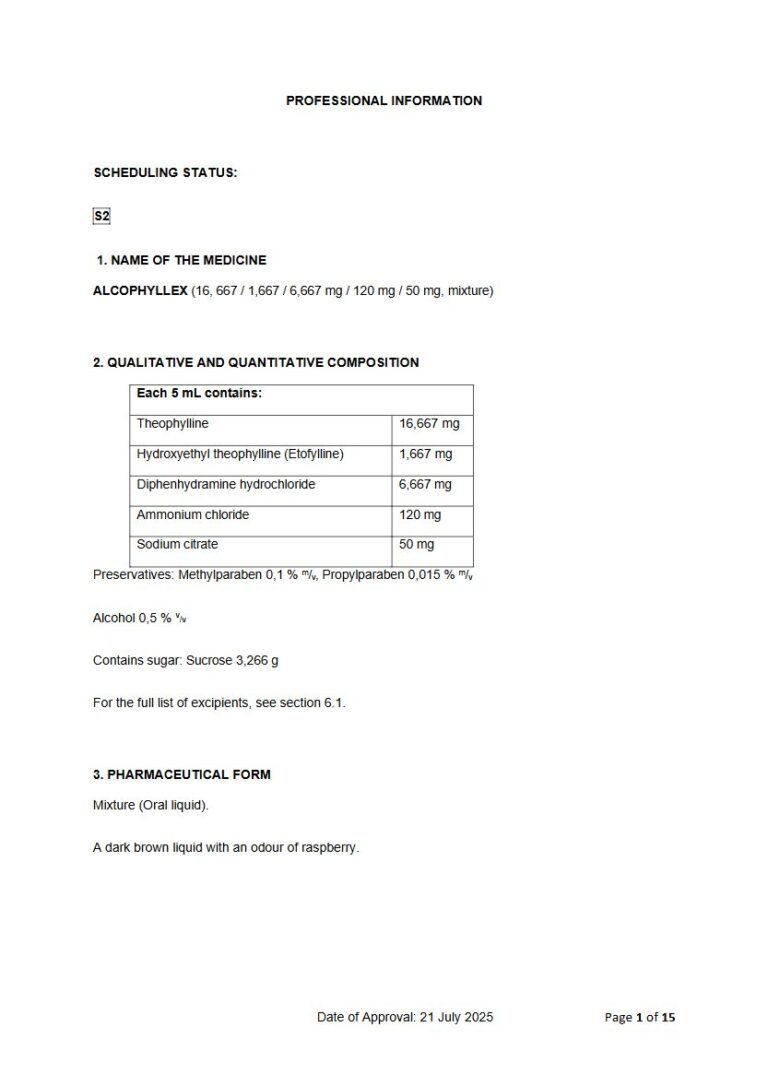
Alcophyllex Syrub
Clinical Summary
Quick overview from the medicine insert
Indication
Management of respiratory conditions such as asthma and bronchospasm, and for symptomatic relief of allergic conditions.
Dosage (summary)
Adults: 10-20 mL three to four times daily. Children: 5-10 mL three to four times daily, or as directed by a healthcare professional.
Onset of Action / Duration
Onset of action: 30 minutes; Duration of action: 4-6 hours.
Special Populations
- Elderly patients
- Patients with hepatic impairment
- Patients with renal impairment
Pregnancy & Breastfeeding
Use with caution during pregnancy; not recommended during lactation due to potential effects on the infant.
Key Drug Interactions
- CNS depressants (e.g., alcohol, sedatives) may enhance sedative effects.
- Other xanthine derivatives may increase the risk of side effects.
- Anticholinergic drugs may enhance the anticholinergic effects of diphenhydramine.
Contraindications
- Hypersensitivity to any of the active ingredients.
- Severe hypertension.
- Severe coronary artery disease.
- Peptic ulcer disease.
Common side effects
- Drowsiness
- Dry mouth
- Nausea
- Tachycardia
- Headache
- Gastrointestinal disturbances
Counselling Points
- Avoid alcohol and other CNS depressants while taking this medication.
- Do not operate heavy machinery or drive until you know how this medication affects you.
- Take the medication as prescribed and do not exceed the recommended dosage.
- Report any unusual side effects or allergic reactions to your healthcare provider.
Serious warnings
- Use with caution in patients with a history of seizures.
- Monitor for signs of toxicity, especially in patients with underlying health conditions.
- Not recommended for use in children under 2 years of age without medical advice.
Important Disclaimer
The Alcophyllex Syrub professional information leaflet below is the property of Adcock Ingram and is provided on Medinsert exactly as issued, with no.. alterations or editorial changes. We make every effort to keep content current by updating documents as soon as new versions become available. Medinsert serves as a trusted access point for healthcare professionals, but does not replace official sources or clinical judgement. For more details, please read our full disclaimer. read more>>
 Healthcare Professionals Only
This content is for registered healthcare professionals
Sign in or create a free account to read the full package insert.
Free for HPCSA-registered professionals. Powered by Medinsert.
Clinical Particulars
Section 4 of the official insert — extracted exactly as issued, no alterations
4.1 Therapeutic Indications
Bronchospasm associated with bronchial congestion e.g., bronchial asthma, paroxysmal dyspnoea, colds, bronchitis, tracheitis, etc.
4.2 Posology and method of administration
Adults: 2 to 3 medicine measures (10 to 15 mL) every four hours
Children: 2 to 6 years: u03a9 to 1 medicine measure (2,5 to 5 mL) every four hours
7 to 12 years: 1 to 2 medicine measures (5 to 10 mL) every four hours
Not for use in children under 2 years of age.
Method of administration: Oral administration only. Shake the bottle before use. Doses must be taken orally with an adequate amount of fluid (half to one glass)
4.3 Contraindications
- If you are hypersensitive to theophylline, hydroxyethyl theophylline (etofylline), diphenhydramine hydrochloride, ammonium chloride, sodium citrate or any of the other ingredients of ALCOPHYLLEX.
- Premature infants or neonates.
- During acute attacks of asthma.
- Patients with metabolic or respiratory alkalosis, hypocalcaemia, or hypochlorhydria.
- Impaired hepatic or renal function.
- Epilepsy
- Porphyria
- Children under the age of 2 years. (see section 4.2 Posology and method of administration)
- Concurrent use of ALCOPHYLLEX in patients taking monoamine oxidase inhibitors (MAOIs) is contraindicated (see section 4.4)
- Recent myocardial infarction. Acute tachyarrhythmia.
- Concomitant use with ephedrine in children.
4.4 Special warnings and precautions for use
A persistent cough may be a sign of a serious condition. If cough persists for more than 1 week, tend to recur or is accompanied by high fever, rash or persistent headache, the patient should be advised to consult a doctor.
ALCOPHYLLEX should not be taken for persistent or chronic cough such as occurring with smoking, asthma, emphysema or where cough is accompanied by excessive phlegm (mucous).
Theophylline: Theophylline should be given with caution to patients with peptic ulceration, hyperthyroidism, hypertension, cardiac arrhythmias, or other cardiovascular diseases, as these conditions may be exacerbated. It should also be given with caution to patients with congestive heart failure, hepatic dysfunction or chronic alcoholism, acute febrile illness, severe hypoxia, cor pulmonale, acute pulmonary oedema, or other chronic lung disease, and to neonates and the elderly.
Diphenhydramine hydrochloride: Diphenhydramine hydrochloride may produce epileptiform seizures in patients with focal lesions of the cerebral cortex. Because of its antimuscarinic properties diphenhydramine hydrochloride should be used with care in conditions such as narrow angle glaucoma, urinary retention, and prostatic hypertrophy. The use of high doses of diphenhydramine-containing medicines, such as ALCOPHYLLEX, may lead to serious heart problems, seizures, coma and death.
Sodium citrate: Sodium citrate should be administered with caution to patients with congestive heart failure, renal impairment, cirrhosis of the liver, or hypertension, and to patients receiving corticosteroids.
Excipient warnings
- Contains sucrose. Patients with rare hereditary conditions such as fructose intolerance, glucose-galactose mal-absorption or sucrose-isomaltase insufficiency should not take ALCOPHYLLEX.
- This medicine contains 0,021 mg of alcohol (ethanol) in each 5 mL which is equivalent to 0,5 % v/v. The small amount of alcohol in this medicine will not have any noticeable effects.
- This medicine contains 50 mg sodium per 5 mL of syrup equivalent to 10 mg/mL of syrup. This is equivalent to 0,5 % of the WHO recommended maximum daily intake of 2 g sodium for an adult.
Elderly: Elderly patients are more susceptible to the central nervous system depressant and hypotensive effects. The elderly are particularly prone to dizziness, sedation, confusion, hypotension and anticholinergic effects.
There is some evidence that theophylline exhibits dose-dependent kinetics, at least in sick and elderly patients. Care should be exercised by titration of dosage requirements in small increments and by monitoring serum theophylline levels.
Paediatrics: May cause excitability especially in children. ALCOPHYLLEX is unsuitable for children suffering from diabetes mellitus.
4.5 Interaction with other medicines and other forms of interaction
Theophylline:
- The bronchodilator and toxic effects of theophylline and sympathomimetics or other xanthines are additive. Concomitant use with other xanthine medications should be avoided.
- Interaction with allopurinol, cimetidine, propranolol, erythromycin and some other macrolides, disulfiram, fluvoxamine, interferon alfa, tetracycline, quinolones, oral contraceptives, caffeine, verapamil, zileuton, tacrine, thiabendazole, viloxazine, BCG vaccination and influenza vaccination may result in decreased hepatic theophylline clearance and increased serum half-life.
- Phenytoin and some other anticonvulsants, ritonavir, rifampicin, sulfinpyrazone, and cigarette smoking may increase theophylline clearance.
- ALCOPHYLLEX can potentiate hypokalaemia associated with the use of beta 2 agonists, corticosteroids, and diuretics.
- There is a risk of synergistic toxicity if ALCOPHYLLEX is given with halothane or ketamine.
- ALCOPHYLLEX may antagonise the effects of adenosine and of competitive neuromuscular blockers.
- ALCOPHYLLEX may enhance the elimination of lithium.
- Isoniazid impairs the elimination of ALCOPHYLLEX.
Diphenhydramine:
- Monoamine oxidase inhibitors may enhance the antimuscarinic effects of antihistamines and antihistamines have an additive anti-muscarinic action with other antimuscarinic drugs such as atropine and tricyclic antidepressants.
- The sedative effects of central nervous system depressants including alcohol, barbiturates, hypnotics, narcotic analgesics, sedatives, and tranquilisers may be enhanced.
- ALCOPHYLLEX could mask the warning signs of damage caused by ototoxic drugs such as aminoglycoside antibacterials.
- Antihistamines may suppress positive skin test results and should be stopped several days before the tests.
Sodium citrate:
- ALCOPHYLLEX can enhance the absorption of aluminium from the gastrointestinal tract.
Interactions with Laboratory tests: None known
Taking ALCOPHYLLEX with food, drink and alcohol: ALCOPHYLLEX should be taken with food to minimise possible side effects. Xanthine containing beverages (e.g.: tea, coffee, cocoa) may interfere with some serum theophylline assays.
4.6 Fertility, pregnancy and lactation
Safety and/or efficacy during pregnancy and lactation has not been established. Theophylline and diphenhydramine cross the placenta and are distributed into breast milk.
4.7 Effects on ability to drive and use machines
The use of this medicine may lead to drowsiness and impaired concentration that may be aggravated by the simultaneous intake of alcohol or other central nervous system depressants. Patients should be warned not to drive a motor vehicle, operate dangerous machinery, or climb dangerous heights, as impaired decision making could lead to accidents.
4.8 Undesirable effects
Theophylline:
| System Organ Class | Frequency | Undesirable effect |
|---|---|---|
| Metabolism and nutrition disorders | Unknown | Hyperglycaemia, hypokalaemia, hypomagnesaemia. |
| Psychiatric disorders | Frequent | Insomnia, anxiety, irritability, agitation, restlessness |
| Nervous system disorders | Frequent | Headache, CNS stimulation reflex hyperexcitability, tremor, convulsions, insomnia. |
| Ear and labyrinth disorders | Unknown | Vertigo |
| Cardiac disorders | Frequent | Palpitations, tachycardia, dysrhythmia. |
| Less Frequent | More serious signs of high serum levels (usually above 30 microgram/mL, such as cardiac dysrhythmias may appear without prior warning). | |
| Unknown | Extrasystoles | |
| Vascular disorders | Unknown | Flushing, hypotension. |
| Respiratory, thoracic, and mediastinal disorders | Unknown | Tachypnoea |
| Gastrointestinal disorders | Frequent | Gastric irritation, nausea, vomiting, abdominal pain, reactivation of peptic ulcer, gastro-oesophageal reflux, gastrointestinal bleeding |
| Unknown | Diarrhoea | |
| Skin and subcutaneous tissue disorders | Unknown | Rash and alopecia. |
| Renal and urinary disorders | Unknown | Potentiation of diuresis, albuminuria, haematuria, inappropriate ADH secretion (high dose). |
Side effects are related to theophylline plasma levels: nausea and vomiting, excitation, nervousness and insomnia occur at plasma concentrations of 20 to 30 mg/L, hysteria at 30 mg/L, cardiac dysrhythmias and coma at concentrations greater than 40 mg/L. These toxic phenomena are enhanced by hypoxia and acidosis. The treatment of toxic effects is symptomatic: (whether or not temporary) discontinuance of the administration of theophylline, correction of the acidosis and hypoxia, and careful supervision of any therapeutic intervention that may aggravate underlying heart or lung diseases, such as overloading with water and salt, oxygen, sedatives, anti-emetics and beta blockers.
Diphenhydramine hydrochloride:
| System Organ Class | Frequency | Undesirable effect |
|---|---|---|
| Blood and the lymphatic system disorders | Less Frequent | Haemolytic anaemia, leucopoenia, thrombocytopaenia |
| Immune system disorders | Less Frequent | Allergic reactions |
| Metabolism and nutrition disorders | Less Frequent | Anorexia or increased appetite, hyper-chloraemic acidosis, hypokalaemia. |
| Psychiatric disorders | Frequent | Elation or depression, irritability, nightmares, euphoria, extra-pyramidal effects, mental confusion. |
| Unknown | Insomnia, nervousness. | |
| Nervous system disorders | Frequent | Headache, drowsiness or progressive drowsiness, inability to concentrate, lassitude, dizziness, insomnia, nervousness, tremors, tingling, epileptiform seizures, convulsions |
| Unknown | Muscular weakness, tinnitus, incoordination. | |
| Eye disorders | Less Frequent | Blurred vision |
| Ear and labyrinth disorders | Less Frequent | Tinnitus |
| Cardiac disorders | Unknown | Dizziness, tightness of the chest, tachycardia and sedation varying from slight drowsiness to deep sleep. |
| Less Frequent | Hyperventilation | |
| Vascular disorders | Unknown | Hypotension |
| Gastrointestinal disorders | Frequent | Gastrointestinal disturbances, nausea, vomiting, diarrhoea or constipation, epigastric pain, dryness of the mouth and thirst. |
| Renal and urinary disorders | Unknown | Difficulty in micturition, dysuria. |
| Skin and subcutaneous tissue disorders | Less Frequent | Photosensitisation of the skin. |
| Investigations | Unknown | Cross-sensitivity to related drugs. |
Ammonium chloride:
| System Organ Class | Frequency | Undesirable effect |
|---|---|---|
| Metabolism and nutrition disorders | Unknown | Acidosis and hypokalaemia. |
| Gastrointestinal disorders | Unknown | Nausea and vomiting. |
Reporting of suspected adverse reactions Reporting suspected adverse reactions after authorisation of the medicine is important. It allows continued monitoring of the benefit /risk balance of the medicine. Healthcare providers are asked to report any suspected adverse reactions to SAHPRA via the the Med Safety APP (Medsafety X SAHPRA) and eReporting platform (who-umc.org) found on SAHPRA website. Adverse Drug Reactions may also report to Adcock Ingram Limited using the following email: [email protected].
4.9 Overdose
Theophylline: Common clinical manifestations of theophylline toxicity after overdose include nausea, vomiting, diarrhoea, agitation, tremor, hypertonicity, hyperventilation, supraventricular and ventricular dysrhythmias, hypotension, and seizures. Metabolic disturbances such as hypokalaemia, hyperglycaemia, hypophosphataemia, hypercalcaemia, metabolic acidosis, and respiratory alkalosis often occur. Other toxic effects reported include dementia, toxic psychosis, symptoms of acute pancreatitis, rhabdomyolysis with associated renal failure, and acute compartment syndrome. Serious toxic symptoms may not be preceded by minor symptoms. After theophylline overdosage, elimination may be enhanced by repeated oral doses of activated charcoal. An osmotic laxative may also be considered. Treatment is symptomatic and supportive.
Diphenhydramine hydrochloride: Overdose may be fatal especially in infants and children in whom the main symptoms are CNS stimulation and antimuscarinic effects, including ataxia, excitement, hallucinations, muscle tremor, convulsions, dilated pupils, dry mouth, flushed face and hyperpyrexia. Deepening coma, cardiorespiratory collapse and death may occur. In adults, the usual symptoms are CNS depression with drowsiness, coma and convulsions. Hypertension may occur. Elderly patients are more susceptible to the CNS depressant and hypotensive effects even at therapeutic levels.
Ammonium chloride: See section 4.8
Sodium citrate: Excessive doses may lead to metabolic alkalosis, especially in patients with impaired renal function. Symptoms may include shortness of breath, muscle weakness, and mental disturbances such as restlessness, convulsions, and coma. Treatment is symptomatic and supportive.
