
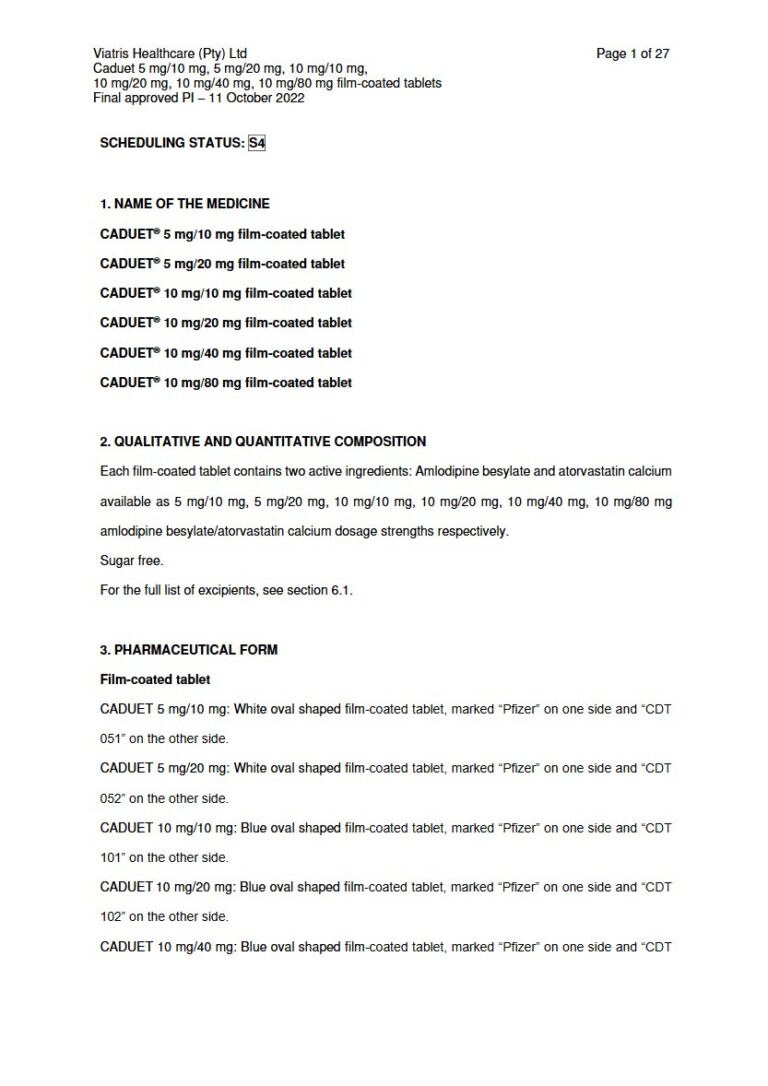
Caduet Tablets
PDF Leaflet Revision Date: 11 October 2022
Clinical Summary
Quick overview from the medicine insert
Indication
For patients at increased cardiovascular risk due to hypertension and dyslipidaemia.
Dosage (summary)
5 mg/10 mg to 10 mg/80 mg once daily, individualized based on effectiveness and tolerance.
Special Populations
- Renal impairment
- Hepatic impairment
- Elderly
Pregnancy & Breastfeeding
Contraindicated in pregnancy and breastfeeding; use effective contraception.
Key Drug Interactions
- CYP3A4 inhibitors
- Ciclosporin
- Fibric acid derivatives
Contraindications
- Hypersensitivity to components
- Active liver disease
- Pregnancy
- Severe hypotension
Common side effects
- Dizziness
- Headaches
- Nausea
- Myalgia
- Fatigue
Counselling Points
- Report muscle pain or weakness
- Monitor blood pressure and lipid levels
- Take with or without food
Serious warnings
- Risk of myopathy and rhabdomyolysis
- Elevated liver enzymes
- Increased risk of stroke
Important Disclaimer
The Caduet Tablets professional information leaflet below is the property of Viatris Healthcare and is provided on Medinsert exactly as issued, with no.. alterations or editorial changes. We make every effort to keep content current by updating documents as soon as new versions become available. Medinsert serves as a trusted access point for healthcare professionals, but does not replace official sources or clinical judgement. For more details, please read our full disclaimer. read more>>
 Healthcare Professionals Only
This content is for registered healthcare professionals
Sign in or create a free account to read the full package insert.
Free for HPCSA-registered professionals. Powered by Medinsert.
Clinical Particulars
Section 4 of the official insert — extracted exactly as issued, no alterations
4.1 Therapeutic indications
CADUET is indicated for:
- Patients at increased cardiovascular risk due to concomitant hypertension and dyslipidaemia.
- Patients with angina and concomitant dyslipidaemia.
CADUET may be used either alone or in combination with other anti-hypertensive or anti-anginal medicines.
4.2 Posology and method of administration
Posology
General considerations
The dosage range for CADUET is 5 mg/10 mg to a maximum dose of 10 mg/80 mg once daily. The starting dose and maintenance dose should be individualised on the basis of both effectiveness and tolerance for each individual component in the treatment of hypertension/angina and dyslipidaemia. Current treatment guidelines should be consulted to establish treatment goals for patients based on their baseline values.
As a component of multiple-risk factor intervention, CADUET should be used in addition to non-pharmacological measures, including an appropriate diet, exercise and weight reduction in obese patients, smoking cessation, and to treat underlying medical problems, when the response to these measures have been inadequate.
Following initiation and/or titration of CADUET, lipid levels should be analysed, and blood pressure measured within 2 u2013 4 weeks, and dosage of the amlodipine and atorvastatin components should be adjusted accordingly. Titration for blood pressure response may proceed more rapidly if clinically warranted.
Initial therapy
CADUET may be used to initiate treatment in patients with hyperlipidaemia and either hypertension or angina. The recommended starting dose of CADUET should be based on the appropriate combination of recommendations for the amlodipine and atorvastatin components considered separately. The maximum dose of the amlodipine component of CADUET is 10 mg once daily. The maximum dose of the atorvastatin component of CADUET is 80 mg once daily.
Substitution therapy
CADUET may be substituted for its individually titrated components. Patients may be given the equivalent dose of CADUET or a dose of CADUET with increased amounts of amlodipine, atorvastatin or both for additional antianginal effects, blood pressure lowering, or lipid lowering effect. CADUET may be used to provide additional therapy for patients already on one of its components. As initial therapy for one indication and continuation of treatment of the other, the recommended starting dose of amlodipine/atorvastatin should be selected based on continuation of the component being used previously and on the recommended starting dose for the component being added.
Concomitant medication (see section 4.5)
The amlodipine component of CADUET has been safely co-administered with thiazide diuretics, ACE inhibitors, alpha-blockers, beta-blockers, long-acting nitrates, and/or sublingual nitroglycerine. CADUET has also been safely administered with the above medicines.
The atorvastatin component of CADUET may be used in combination with a bile acid binding resin for additive effect on lipid lowering. The combination of HMG-CoA reductase inhibitors and fibrates should generally be avoided (see sections 4.4 and 4.5).
Special populations
Use in patients with impaired renal function
No dose adjustment is required in patients with impaired renal function (see section 4.4).
Use in patients with impaired hepatic function
CADUET should not be used in patients with hepatic impairment (see sections 4.3 and 4.4).
Use in the elderly population
CADUET is well tolerated at similar doses in elderly or younger patients. Therefore, normal dosage regimens are recommended.
Paediatric population
Safety and efficacy of CADUET has not been established in children and adolescents.
Use in combination with other medicines
Studies with atorvastatin
Use with ciclosporin
In cases where co-administration of atorvastatin with ciclosporin is necessary, the dose of atorvastatin should not exceed 10 mg (see sections 4.4 and 4.5).
Method of administration
For oral use. Doses may be taken at any time of day with or without food.
4.3 Contraindications
CADUET is contraindicated in patients who:
- Have known hypersensitivity to dihydropyridines*, amlodipine, atorvastatin or to any of the excipients of CADUET (listed in section 6.1).
- Have active liver disease or unexplained persistent elevations of serum transaminases exceeding 3 times the upper limit of normal.
- Are pregnant, breastfeeding their infants, or of childbearing potential not using appropriate contraceptive measures (see section 4.6).
- Have severe hypotension.
- Have shock (including cardiogenic shock).
- Have left ventricular outflow tract obstruction (e.g. severe aortic stenosis).
- Have haemodynamically unstable heart failure after acute myocardial infarction.
- Dose combinations of CADUET where the atorvastatin component is higher than 10 mg are contraindicated in patients taking the HIV protease inhibitors tipranavir plus ritonavir, or the hepatitis C protease inhibitor telaprevir (see section 4.5, Protease inhibitors).
- CADUET is contraindicated in patients taking the hepatitis C antivirals glecaprevir/pibrentasvir.
4.4 Special warnings and precautions for use
Use in patients with heart failure
In patients with NYHA II and IV heart failure of non-ischaemic aetiology, amlodipine was associated with increased reports of pulmonary oedema.
Use in patients with impaired hepatic function (see section 4.3)
Hepatic effects
Due to the atorvastatin component, CADUET should be administered with caution in patients with impaired liver function. Elevations (> 3 x upper limit of normal [ULN]) of serum transaminases have been reported following therapy with atorvastatin. Persistent increases in serum transaminases (> 3 x ULN on two or more occasions) occurred in 0,7 % of patients who received atorvastatin. The incidence of these abnormalities was 0,2 %, 0,2 %, 0,6 %, and 2,3 % for 10, 20, 40 and 80 mg respectively. When the dosage of atorvastatin was interrupted or discontinued, transaminase levels usually returned to pre-treatment levels. Liver function tests should be performed before initiation of treatment with CADUET and repeated as clinically indicated. If liver injury with clinical symptoms and/or hyperbilirubinaemia or jaundice occurs during treatment with CADUET, promptly interrupt therapy. If an alternate aetiology is not found, do not restart CADUET. CADUET should be used with caution in patients who consume substantial quantities of alcohol and/or have a history of liver disease. Active liver disease or unexplained persistent transaminase elevations are contraindications to the use of CADUET (see section 4.3).
Skeletal muscle effects
Myalgia has been reported in CADUET (atorvastatin component) treated patients (see section 4.8). Myopathy, defined as muscle aching or muscle weakness in conjunction with increases in creatine phosphokinase (CPK) values > 10 x ULN, should be considered in any patient with diffuse myalgias, muscle tenderness or weakness, and/or marked elevation of CPK. Patients should be advised to promptly report unexplained muscle pain, tenderness or weakness, particularly if accompanied by malaise or fever. CADUET therapy should be discontinued if markedly elevated CPK levels occur, or myopathy is diagnosed or suspected. The risk of myopathy during treatment with CADUET is increased with concurrent administration of ciclosporin, fibric acid derivatives, erythromycin, niacin, azole antifungals, colchicine, hepatitis C protease inhibitors (telaprevir, boceprevir, elbasvir/grazoprevir), combinations of HIV protease inhibitors, including saquinavir plus ritonavir, lopinavir plus ritonavir, tipranavir plus ritonavir, darunavir plus ritonavir, fosamprenavir, fosamprenavir plus ritonavir and atazanavir plus ritonavir. Many of these medicines inhibit cytochrome P450 3A4 metabolism and/or medicine-transport. Atorvastatin is biotransformed by CYP 3A4. Medical practitioners considering combined therapy with CADUET and fibric acid derivatives, erythromycin, immunosuppressive medicines, azole antifungals, lipid lowering doses of niacin, a combination of saquinavir plus ritonavir, lopinavir plus ritonavir, darunavir plus ritonavir, fosamprenavir, or fosamprenavir plus ritonavir should regularly monitor patients for any signs and symptoms of muscle pain, tenderness, or weakness particularly during the initial months of therapy and during any periods of upward dosage titration of either medicine. Therefore, lower starting and maintenance doses of the atorvastatin component should also be considered when taken concomitantly with the aforementioned medicines. CADUET should be discontinued throughout the duration of fusidic acid therapy. CADUET may be re-introduced seven days after the last dose of fusidic acid. Periodic creatine phosphokinase (CPK) determinations may be considered in such situations, but there is no assurance that such monitoring will prevent the occurrence of severe myopathy (see section 4.5). CADUET may cause an elevation of creatine phosphokinase due to the atorvastatin component (see section 4.8). Cases of rhabdomyolysis with acute renal failure secondary to myoglobinuria, have been reported. A history of renal impairment may be a risk factor for the development of rhabdomyolysis. Such patients merit closer monitoring for skeletal muscle effects. CADUET therapy should be temporarily withheld or discontinued in any patient with an acute, serious condition suggestive of a myopathy or having a risk factor predisposing to the development of renal failure secondary to rhabdomyolysis (e.g. severe acute infection, hypotension, major surgery, trauma, severe metabolic, endocrine and electrolyte disorders, and uncontrolled seizures). Control of hypertension may be continued with the appropriate dose of amlodipine.
Before treatment
CADUET should be prescribed with caution in patients with pre-disposing factors for rhabdomyolysis. A creatine phosphokinase (CPK) level should be measured before starting statin treatment in the following situations:
- Renal impairment.
- Hypothyroidism.
- Personal or familial history of hereditary muscular disorders.
- Previous history of muscular toxicity with a statin or fibrate.
- Previous history of liver disease and/or where substantial quantities of alcohol are consumed.
- In elderly (age > 70 years), the necessity of such measurement should be considered, according to the presence of other predisposing factors for rhabdomyolysis.
In such situations, clinical monitoring is recommended. If CPK levels are significantly elevated (> 5 times ULN) at baseline, treatment should not be started.
Creatine phosphokinase measurement
Creatine phosphokinase (CPK) should not be measured following strenuous exercise or in the presence of any plausible alternative cause of CPK increase as this makes value interpretation difficult. If CPK levels are significantly elevated at baseline (> 5 times ULN), levels should be re-measured within 5 u2013 7 days later to confirm the results.
Whilst on treatment
Patients must be asked to promptly report muscle pain, cramps, or weakness especially if accompanied by malaise or fever.
- If such symptoms occur whilst a patient is receiving treatment, their CPK levels should be measured. If these levels are found to be significantly elevated (> 5 times ULN), treatment should be stopped.
- If muscular symptoms are severe and cause daily discomfort, even if the CPK levels are elevated to u2264 5 x ULN, treatment discontinuation should be considered.
If symptoms resolve and CPK levels return to normal, then re-introduction of atorvastatin or introduction of an alternative statin may be considered at the lowest dose and with close monitoring.
CADUET must be discontinued if clinically significant elevation of CPK levels (> 10 x ULN) occur, or if rhabdomyolysis is diagnosed or suspected.
Risk of rhabdomyolysis is increased when CADUET is administered concomitantly with certain medicines such as: ciclosporin, erythromycin, clarithromycin, itraconazole, ketoconazole, nefazodone, niacin, gemfibrozil, other fibric acid derivatives or HIV-protease inhibitors (see sections 4.5 and 4.8). Many of these medicines inhibit cytochrome P450 3A4 metabolism and/or medicine transport. Atorvastatin is biotransformed by CYP3A4. Medical practitioners considering combined therapy with these medicines should regularly monitor patients for any signs and symptoms of muscle pain, tenderness or weakness, particularly during the initial months of therapy and during any periods of upward dosage titration of either medicine.
Haemorrhagic stroke
CADUET increases the risk of recurrent stroke and transient ischaemic attack.
Endocrine function
Increases in HbA1c and fasting serum glucose levels have been reported with the atorvastatin component of CADUET. Some evidence suggests that statins as a class raise blood glucose and, in some patients, at high risk of future diabetes, may produce a level of hyperglycaemia where formal diabetes care is appropriate. This risk, however, is outweighed by the reduction in vascular risk with statins and therefore should not be a reason for stopping statin treatment. Patients taking CADUET who are at risk (fasting glucose 5,6 u2013 6,9 mmol/L, BMI > 30kg/m2, raised triglycerides, hypertension) should be monitored both clinically and biochemically according to national guidelines for a deterioration of their glycaemic control.
4.5 Interaction with other medicines and other forms of interaction
No medicine interaction studies have been conducted with CADUET and other medicines, although studies have been conducted in the individual amlodipine and atorvastatin components as described below.
Amlodipine interactions
Amlodipine has been safely administered with thiazide diuretics, alpha blockers, beta blockers, angiotensin-converting enzyme inhibitors, long-acting nitrates, sublingual glyceryl trinitrate, non-steroidal anti-inflammatory medicines, antibiotics, and oral hypoglycaemic medicines.
CYP3A4 inhibitors
Co-administration of a 180 mg daily dose of diltiazem with 5 mg amlodipine in elderly hypertensive patients (69 u2013 87 years of age) resulted in a 57 % increase in amlodipine systemic exposure. Erythromycin co-administration in healthy volunteers (18 u2013 43 years of age) did not significantly change amlodipine systemic exposure (22 % increase in AUC). Although the clinical relevance of these findings is uncertain, the pharmacokinetic variations may be more pronounced in the elderly.
Strong inhibitors of CYP3A4 (e.g. ketoconazole, itraconazole, ritonavir) increase the plasma concentrations of amlodipine to a greater extent than diltiazem. CADUET should be used with caution together with CYP3A4 inhibitors.
CYP3A4 inducers
There are no data available regarding the effect of CYP3A4 inducers on amlodipine. The concomitant use of CYP3A4 inducers (e.g. rifampicin, Hypericum perforatum) may give a lower plasma concentration of amlodipine. Amlodipine should be used with caution together with CYP3A4 inducers.
In vitro data from studies with human plasma, indicate that amlodipine has no effect on protein binding of digoxin, phenytoin, warfarin or indomethacin.
Special studies: effect of amlodipine on other medicines
Digoxin
Co-administration of amlodipine with digoxin did not change serum digoxin levels or digoxin renal clearance in normal volunteers.
Ethanol (alcohol)
Single and multiple 10 mg doses of amlodipine had no significant effect on the pharmacokinetics of ethanol.
Ciclosporin
No interaction studies have been conducted with ciclosporin and amlodipine in healthy volunteers or other populations with the exception of renal transplant patients. Various studies in renal transplant patients report that amlodipine co-administration with ciclosporin affect trough concentrations of ciclosporin from no change up to an average increase of 40 %. Consideration should be given for monitoring ciclosporin levels in renal transplant patients on CADUET.
Warfarin
Co-administration with amlodipine does not significantly alter the effect of warfarin on prothrombin response time or the International Normalised Ratio (INR).
Medicine/laboratory test interactions
None known.
Special studies: effect of other medicines on amlodipine
Cimetidine
Co-administration of cimetidine did not alter the pharmacokinetics of amlodipine.
Grapefruit juice
Co-administration of 240 mL of grapefruit juice with a single oral dose of amlodipine 10 mg in 20 healthy volunteers had no significant effect on the pharmacokinetics of amlodipine. The study did not allow examination of the effect of genetic polymorphism in CYP3A4, the primary enzyme responsible for metabolism of amlodipine; therefore, administration of CADUET with grapefruit or grapefruit juice is not recommended as bioavailability may be increased in some patients resulting in increased blood pressure lowering effects.
Aluminium/magnesium
Co-administration of an aluminium/magnesium antacid with a single dose of amlodipine had no significant effect on the pharmacokinetics of amlodipine.
Sildenafil
A single 100 mg dose of sildenafil in subjects with essential hypertension had no effect on the pharmacokinetic parameters of amlodipine. When amlodipine and sildenafil were used in combination, each medicine independently exerted its own blood pressure lowering effects.
Atorvastatin interactions
The risk of myopathy during treatment with atorvastatin is increased with concurrent administration of ciclosporin, fibric acid derivatives, niacin or cytochrome P450 3A4 inhibitors (nefazodone, macrolide antibiotics e.g. erythromycin and azole antifungals) and has resulted in rhabdomyolysis with renal dysfunction secondary to myoglobinuria (see below and section 4.4, Skeletal muscle effects).
Inhibitors of cytochrome P450 3A4
Atorvastatin is metabolised by cytochrome P450 3A4. Concomitant administration of atorvastatin with inhibitors of cytochrome P450 3A4 can lead to increases in plasma concentrations of atorvastatin. The extent of interaction and potentiation of effects depends on the variability of effect on cytochrome P450 3A4.
Transporter inhibitors
Atorvastatin and atorvastatin-metabolites are substrates of the OATP1B1 transporter. Inhibitors of the OATP1B1 (e.g. ciclosporin) can increase the bioavailability of atorvastatin. Concomitant administration of atorvastatin 10 mg and ciclosporin 5,2 mg/kg/day resulted in a 870 % increase in exposure to atorvastatin (see section 4.2, Use in combination with other medicines).
Erythromycin/clarithromycin
Co-administration of atorvastatin and erythromycin (500 mg four times daily), or clarithromycin (500 mg twice daily) known inhibitors of cytochrome P450 3A4, was associated with higher plasma concentrations of atorvastatin (see section 4.4, Skeletal muscle effects).
Protease inhibitors
Co-administration of atorvastatin and protease inhibitors, known inhibitors of cytochrome P450 3A4, was associated with increased plasma concentrations of atorvastatin. Plasma concentrations of atorvastatin increased with concomitant administration of atorvastatin with several combinations of HIV protease inhibitors, as well as with the hepatitis C protease inhibitor telaprevir, compared to that of atorvastatin alone. Therefore, in patients taking the HIV protease inhibitor tipranavir plus ritonavir, or the hepatitis C protease inhibitor telaprevir, concomitant use of atorvastatin should be avoided. In cases where co-administration with CADUET is necessary, doses above 10 mg atorvastatin daily are contraindicated (see section 4.3).
4.6 Fertility, pregnancy and lactation
CADUET is contraindicated in patients who are pregnant, breastfeeding their infants, or of childbearing potential not using appropriate contraceptive measures. CADUET should only be used in women of childbearing potential who are using appropriate contraceptive measures.
4.7 Effects on ability to drive and use machines
CADUET may cause dizziness and syncope or muscle events that can impair a patientu2019s ability to drive or use machinery.
4.8 Undesirable effects
Summary of the safety profile
CADUET has been evaluated for safety in 1 092 patients in double-blind placebo-controlled studies treated for concomitant hypertension and dyslipidaemia. In clinical trials with CADUET, no adverse events peculiar to this combination have been observed. Adverse events have been those that were reported previously with amlodipine and/or atorvastatin (please see respective adverse event tables below).
In controlled clinical trials, discontinuation of therapy due to clinical adverse events or laboratory abnormalities was only required in 5,1 % of patients treated with both amlodipine and atorvastatin compared to 4,0 % of patients given placebo.
Tabulated summary of adverse events
Frequency key: Very common (u2265 1/10); common (u2265 1/100 to < 1/10); uncommon (u2265 1/1 000 to < 1/100); rare (u2265 1/10 000 to < 1/1 000); very rare (< 1/10 000).
Amlodipine experience
System organ class Frequency Undesirable effects
Blood and lymphatic system disorders Very rare Leukopenia, thrombocytopenia
Immune system disorders Very rare Allergic reaction
Metabolism and nutrition disorders Very rare Hyperglycaemia
Psychiatric disorders Uncommon Insomnia, altered mood
Nervous system disorders Common Somnolence, dizziness, headaches Uncommon Tremor, dysgeusia, syncope, hypoaesthesia, paraesthesia Very rare Hypertonia, peripheral neuropathy
Eye disorders Uncommon Visual impairment
Ear and labyrinth disorders Uncommon Tinnitus
Cardiac disorders Common Palpitations Very rare Myocardial infarction, dysrhythmia (including bradycardia, ventricular tachycardia and atrial fibrillation)
Vascular disorders Common Flushing Uncommon Hypotension Very rare Vasculitis
Respiratory, thoracic and mediastinal disorders Uncommon Dyspnoea, rhinitis Very rare Coughing
Gastrointestinal disorders Common Abdominal pain, nausea Uncommon Vomiting, dyspepsia, change in bowel habits, dry mouth Very rare Pancreatitis, gastritis, gingival hyperplasia
Hepatobiliary disorders Very rare Hepatitis, jaundice and hepatic enzyme elevations (mostly consistent with cholestasis)
Skin and subcutaneous tissue disorders Uncommon Alopecia, purpura, skin discolouration, hyperhidrosis, pruritus, rash Very rare Angioedema, erythema multiforme, urticaria
Musculoskeletal and connective tissue disorders Uncommon Arthralgia, myalgia, muscle spasms, back pain
Renal and urinary disorders Uncommon Micturition disorder, nocturia, pollakiuria
Reproductive system and breast disorders Uncommon Erectile dysfunction, gynaecomastia
General disorders and administration site conditions Common Oedema, fatigue Uncommon Chest pain, asthenia, pain, malaise
Investigations Uncommon Increased weight, decreased weight
Atorvastatin experience
In the atorvastatin placebo-controlled clinical trial database of 16 066 (8 755 atorvastatin vs. 7 311 placebo) patients treated for a median period of 53 weeks, 5,2 % of patients on atorvastatin discontinued due to adverse reactions compared to 4,0 % of the patients on placebo.
System organ class Frequency Undesirable effects
Blood and lymphatic system disorders Uncommon Thrombocytopenia
Immune system disorders Common Allergic reaction (including anaphylaxis)
Infections and infestations Common Nasopharyngitis
Metabolism and nutrition disorders Uncommon Hypoglycaemia, hyperglycaemia, anorexia, weight gain
Respiratory, thoracic and mediastinal disorders Common Pharyngolaryngeal pain, epistaxis
Psychiatric disorders Common Insomnia Uncommon Nightmare
Eye disorders Uncommon Blurred vision
Nervous system disorders Common Hypoaesthesia, paraesthesia, dizziness, headache Uncommon Peripheral neuropathy, amnesia, dysgeusia
Ear and labyrinth disorders Uncommon Tinnitus
Gastrointestinal disorders Common Nausea, diarrhoea, abdominal pain, dyspepsia, constipation, flatulence Uncommon Vomiting, abdominal discomfort, eructation Rare Pancreatitis
Hepatobiliary disorders Rare Hepatitis, cholestatic jaundice Uncommon Cholestasis
Injury and poisoning Uncommon Tendon rupture
Skin and subcutaneous tissue disorders Common Pruritus, rash Uncommon Alopecia, urticaria Rare Bullous rashes
Very rare Stevens-Johnson syndrome, toxic epidermal necrolysis, erythema multiforme
Musculoskeletal and connective tissue disorders Common Myalgia, arthralgia, back pain, pain in extremity, musculoskeletal pain, muscle spasms, joint swelling Uncommon Muscle fatigue, neck pain Rare Myositis, muscle cramps Very rare Rhabdomyolysis, myopathy
Investigations Common Abnormal liver function test, increased blood creatine phosphokinase Uncommon White blood cells urine positive
Reproductive system and breast disorders Uncommon Impotence
General disorders and administration site conditions Common Asthenia, chest pain, fatigue Uncommon Malaise, pyrexia Rare Peripheral oedema
Post-marketing reports
There have been post-marketing reports of cognitive impairment (e.g. memory loss, forgetfulness, amnesia, memory impairment, confusion) associated with CADUET use. These events may be reversible upon discontinuation of CADUET. Times to symptom onset are variable (1 day to years).
Immune mediated necrotizing myopathy has been reported.
Reporting of suspected adverse reactions
Reporting suspected adverse reactions after authorisation of the medicine is important. It allows continued monitoring of the benefit/risk balance of the medicine. Health care providers are asked to report any suspected adverse reactions to SAHPRA via the u201c6.04 Adverse Drug Reactions Reporting Formu201d, found online under SAHPRAu2019s publications: https://www.sahpra.org.za/Publications/Index/8.
4.9 Overdose
There is no information on overdosage with CADUET in humans.
Amlodipine
Amlodipine overdosage could result in excessive peripheral vasodilatation and reflex tachycardia. Marked and prolonged systemic hypotension up to and including shock with fatal outcome have been reported. Administration of activated charcoal to healthy volunteers immediately or up to two hours after ingestion of amlodipine 10 mg has been shown to significantly decrease amlodipine absorption. Clinically significant hypotension due to amlodipine overdosage requires active cardiovascular support and monitoring of cardiac and respiratory function, elevation of extremities, and attention to circulating fluid volume and urine output. Intravenous calcium gluconate may be beneficial in reversing the effects of calcium channel blockade. Since amlodipine is highly protein-bound, dialysis is not likely to be of benefit.
Atorvastatin
Specific treatment is not available for atorvastatin overdosage. Should an overdose occur, the patient should be treated symptomatically, and supportive measures instituted, as required. Liver function tests and serum CPK levels should be monitored. Due to extensive atorvastatin binding to plasma proteins, haemodialysis is not expected to significantly enhance atorvastatin clearance.
