
Dilinct Dry Cough Syrup 5 ml SYRUP
Clinical Summary
Quick overview from the medicine insert
Indication
Symptomatic relief of a dry, non-productive cough.
Dosage (summary)
Adults: 1 measure (5 ml) every 4 hours or 2 measures every 6-8 hours.
Special Populations
- Children under 2 years
- Hepatic dysfunction
- Asthma
Pregnancy & Breastfeeding
Safety in pregnancy and lactation not established.
Key Drug Interactions
- Monoamine oxidase inhibitors
- CNS depressants
- CYP2D6 inhibitors
Contraindications
- Children under 2 years
- Hypersensitivity
- Asthma
- Hepatic dysfunction
- Risk of respiratory failure
- Productive cough
Common side effects
- Dizziness
- Mild drowsiness
- Headache
- Confusion
- Constipation
- Nausea
Counselling Points
- Shake before use
- Consult doctor if cough persists
- Keep out of reach of children
Serious warnings
- Risk of hypertension with MAOIs
- CNS depression with other depressants
Important Disclaimer
The Dilinct Dry Cough Syrup 5 ml SYRUP professional information leaflet below is the property of Adcock Ingram and is provided on Medinsert exactly as issued, with no.. alterations or editorial changes. We make every effort to keep content current by updating documents as soon as new versions become available. Medinsert serves as a trusted access point for healthcare professionals, but does not replace official sources or clinical judgement. For more details, please read our full disclaimer. read more>>
 Healthcare Professionals Only
This content is for registered healthcare professionals
Sign in or create a free account to read the full package insert.
Free for HPCSA-registered professionals. Powered by Medinsert.
Clinical Particulars
Section 4 of the official insert — extracted exactly as issued, no alterations
4.1 Therapeutic indications
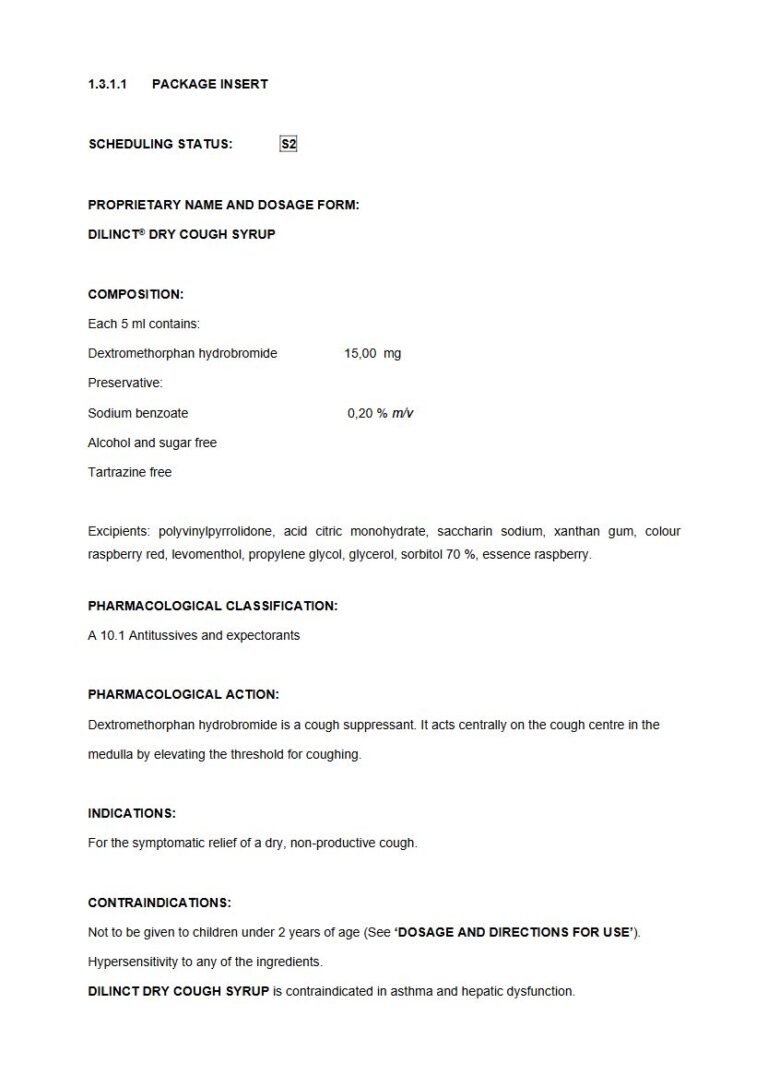
For the symptomatic relief of a dry, non-productive cough.
4.2 Posology and method of administration
Not to be given to children under 2 years of age (See u2018CONTRAINDICATIONSu2019). Shake the bottle before use. 1 medicine measure = 5 ml. Adults: One medicine measure every four hours, or two medicine measures every six to eight hours. Children 6 to 12 years: Half to one medicine measure every six to eight hours. Children 2 to 5 years: Half a medicine measure every six to eight hours.
4.3 Contraindications
Not to be given to children under 2 years of age (See u2018DOSAGE AND DIRECTIONS FOR USEu2019). Hypersensitivity to any of the ingredients. DILINCT DRY COUGH SYRUP is contraindicated in asthma and hepatic dysfunction. It should not be given to patients at risk of developing respiratory failure. Not to be taken for a productive cough.
4.4 Special warnings and precautions for use
Concurrent use of DILINCT DRY COUGH SYRUP with monoamine oxidase inhibitors, or use of monoamine oxidase inhibitors within two to three weeks of DILINCT DRY COUGH SYRUP may cause hypertension, hyperpyrexia and excitation (See u2018INTERACTIONSu2019). Concurrent administration with other central nervous system (CNS) depressants may enhance the CNS depressant effects of these medications (See u2018INTERACTIONSu2019). If the cough persists, a doctor should be consulted. Patients with the rare hereditary condition of sorbitol intolerance should not take DILINCT DRY COUGH SYRUP.
4.5 Interactions with other medicines
Concurrent use of DILINCT DRY COUGH SYRUP with monoamine oxidase inhibitors, or use of monoamine oxidase inhibitors within two to three weeks of DILINCT DRY COUGH SYRUP may cause hypertension, hyperpyrexia and excitation (See u2018WARNINGS and SPECIAL PRECAUTIONSu2019). Concurrent administration with other central nervous system (CNS) depressants may enhance the CNS depressant effects of these medications (See u2018WARNINGS and SPECIAL PRECAUTIONSu2019). Cytochrome P450 (CYP2D6) enzyme inhibitors such as amiodarone, fluoxetine or quinidine may inhibit the hepatic metabolism of dextromethorphan, which could result in increased dextromethorphan serum concentrations. This could cause an increased incidence of side effects.
4.6 Fertility, pregnancy and lactation
The safety of this medicine in pregnant and lactating woman has not been established.
4.7 Effects on ability to drive and use machines
4.8 Undesirable effects
Nervous system disorders: Less frequent: dizziness, mild drowsiness and headache. Psychiatric disorders: Less frequent: confusion. Gastrointestinal disorders: Less frequent: constipation, abdominal pain, nausea and vomiting.
4.9 Overdose
Overdosage with dextromethorphan may cause confusion, excitation, respiratory depression, ataxia, blurred vision, coma, drowsiness or dizziness, severe nausea or vomiting, nervousness, restlessness, irritability or urinary retention. Treatment is symptomatic and supportive. Gastric lavage, assisted respiration, vital sign monitoring and intravenous naloxone may be used to treat an overdosage.
