
Dilinct Junior 10 ml SYRUP
Clinical Summary
Quick overview from the medicine insert
Indication
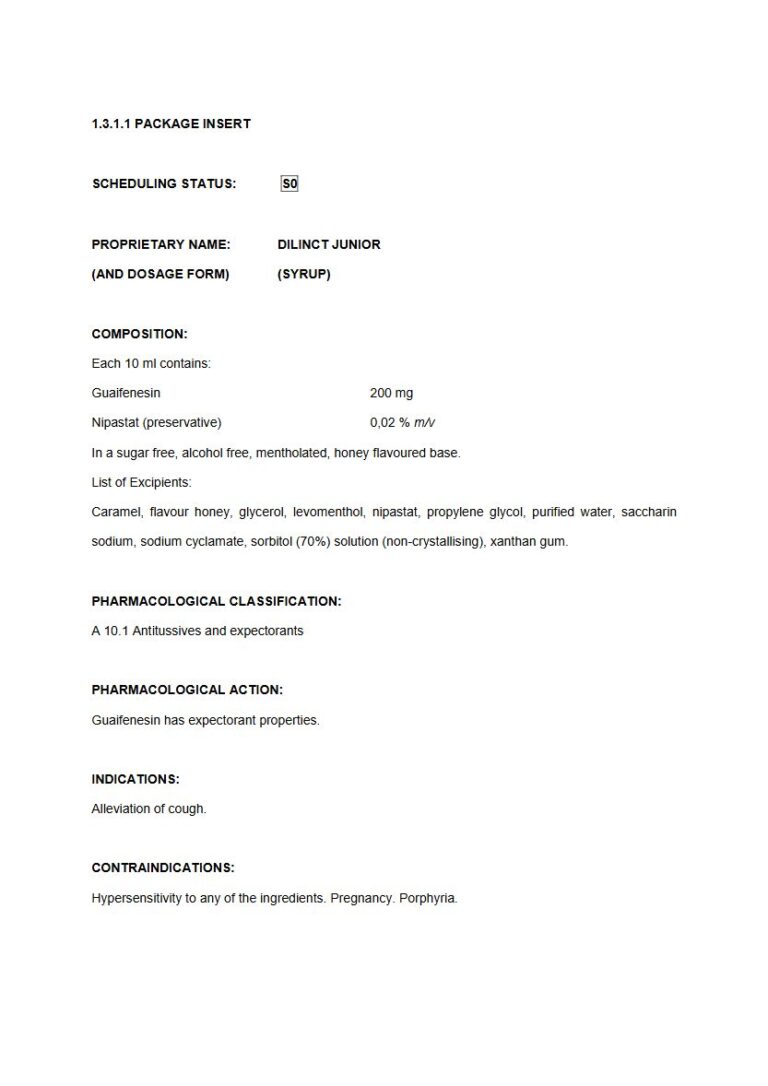
Alleviation of cough.
Dosage (summary)
Adults: 10-20 ml every 4 hours; Children 2-12 years: 2.5-10 ml every 4 hours.
Special Populations
- Children under 2 years
Pregnancy & Breastfeeding
Contraindicated in pregnancy.
Key Drug Interactions
- Interferes with urine tests for 5-HIAA and VMA
Contraindications
- Hypersensitivity to ingredients
- Pregnancy
- Porphyria
Common side effects
- Gastrointestinal discomfort
- Dizziness
- Headache
- Skin rash
Counselling Points
- Take as directed
- Consult doctor if symptoms worsen
- Keep out of reach of children
Serious warnings
- Do not use for persistent cough without doctor supervision
- Consult doctor if cough persists after 7 days
Important Disclaimer
The Dilinct Junior 10 ml SYRUP professional information leaflet below is the property of Adcock Ingram and is provided on Medinsert exactly as issued, with no.. alterations or editorial changes. We make every effort to keep content current by updating documents as soon as new versions become available. Medinsert serves as a trusted access point for healthcare professionals, but does not replace official sources or clinical judgement. For more details, please read our full disclaimer. read more>>
 Healthcare Professionals Only
This content is for registered healthcare professionals
Sign in or create a free account to read the full package insert.
Free for HPCSA-registered professionals. Powered by Medinsert.
Clinical Particulars
Section 4 of the official insert — extracted exactly as issued, no alterations
4.1 Therapeutic indications
Alleviation of cough.
4.2 Posology and method of administration
Adults, adolescents and geriatrics: 10 ml to 20 ml (2 to 4 medicine measures) every 4 hours.
Children: 6 to 12 years: 5 ml to 10 ml (1 to 2 medicine measures) every 4 hours.
2 to 6 years: 2,5 ml to 5 ml (u00bd to 1 medicine measure) every 4 hours.
4.3 Contraindications
Hypersensitivity to any of the ingredients. Pregnancy. Porphyria.
4.4 Special warnings and precautions for use
Guaifenesin should not be taken for persistent cough such as occurs with smoking, asthma, emphysema or where cough is accompanied by excessive secretions except under the advice and supervision of a doctor. A persistent cough may be a sign of a serious condition. If cough persists for more than one week, tends to recur or is accompanied by high fever, rash or persistent headache, consult a doctor. Guaifenesin should not be given to children under 2 years unless recommended by a doctor.
4.5 Interactions with other medicines
Guaifenesin interferes with urine tests for 5-hydroxyindoleacetic acid (5-HIAA) and vanillylmandelic acid (VMA).
4.8 Undesirable effects
Gastrointestinal discomfort (including diarrhoea, nausea, vomiting and stomach pains). Dizziness, headache, skin rash and urticaria occurs less frequently. Precautions: Consult a doctor if cough persists after medication has been used for 7 days or if fever, skin rash, continuing headache, or sore throat is present with cough.
4.9 Overdose
Very large doses can cause nausea and vomiting. Treatment is symptomatic and supportive.
