
Empaped Plus Suspension 5 ml Suspension
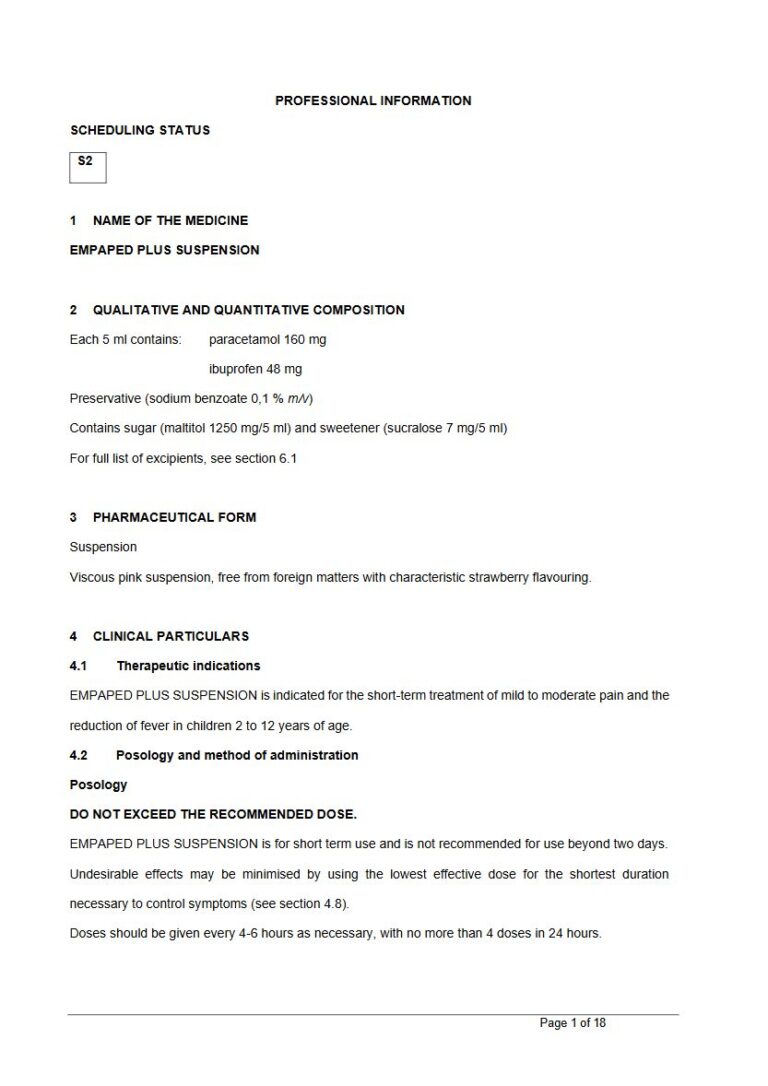
PDF Leaflet Revision Date: 21 November 2025
Clinical Summary
Quick overview from the medicine insert
Indication
Short-term treatment of mild to moderate pain and fever in children 2 to 12 years.
Dosage (summary)
Doses every 4-6 hours, max 4 doses/24 hours; do not exceed 31 ml.
Special Populations
- Children under 2 years
- Renal impairment
- Hepatic impairment
Pregnancy & Breastfeeding
Not recommended during pregnancy or breastfeeding.
Key Drug Interactions
- Warfarin
- Other NSAIDs
- Corticosteroids
- ACE inhibitors
Contraindications
- Hypersensitivity to paracetamol or ibuprofen
- Heart failure
- Gastrointestinal ulceration
- Children under 6 months
Common side effects
- Dizziness
- Nausea
- Abdominal pain
- Rash
Counselling Points
- Do not exceed recommended dose
- Monitor for signs of liver damage
- Avoid use with other paracetamol or NSAIDs
Serious warnings
- Risk of severe liver damage in overdose
- Fluid retention in heart failure
- Serious skin reactions
Important Disclaimer
The Empaped Plus Suspension 5 ml Suspension professional information leaflet below is the property of Acino Pharma and is provided on Medinsert exactly as issued, with no.. alterations or editorial changes. We make every effort to keep content current by updating documents as soon as new versions become available. Medinsert serves as a trusted access point for healthcare professionals, but does not replace official sources or clinical judgement. For more details, please read our full disclaimer. read more>>
 Healthcare Professionals Only
This content is for registered healthcare professionals
Sign in or create a free account to read the full package insert.
Free for HPCSA-registered professionals. Powered by Medinsert.
Clinical Particulars
Section 4 of the official insert — extracted exactly as issued, no alterations
4.1 Therapeutic indications
EMPAPED PLUS SUSPENSION is indicated for the short-term treatment of mild to moderate pain and the reduction of fever in children 2 to 12 years of age.
4.2 Posology and method of administration
Posology
DO NOT EXCEED THE RECOMMENDED DOSE. EMPAPED PLUS SUSPENSION is for short term use and is not recommended for use beyond two days. Undesirable effects may be minimised by using the lowest effective dose for the shortest duration necessary to control symptoms (see section 4.8). Doses should be given every 4-6 hours as necessary, with no more than 4 doses in 24 hours.
Age* Average body weight Dose (ml)
2 to 3 years 12 - 14 kg 5 ml
3 to 4 years 14 - 16 kg 5 - 6 ml
4 to 5 years 16 - 18 kg 6 - 7 ml
6 to 7 years 18 - 20 kg 7 - 8 ml
7 to 8 years 20 - 22 kg 8 ml
8 to 9 years 22 - 25 kg 8 - 9 ml
9 to 10 years 28 - 32 kg 9 - 11 ml
10 to 11 years 32 - 36 kg 12 - 14 ml
11 to 12 years 36 - 41 kg 14 - 15 ml
* If the childu2019s weight is less than the weight corresponding to their age in the table, select the dose for their weight. Do not exceed a dose of 31 ml, regardless of the weight of the child.
Paediatric population
Children under 2 years of age: EMPAPED PLUS is not recommended for children under 2 years of age.
Method of administration
The bottle should be shaken well before use. The graduated syringe should be used to draw up the correct volume in millilitres. Directions for using the syringe:
1. Shake the bottle for at least 10 seconds before use.
2. Push the syringe firmly into the plug (hole) in the opening of the bottle.
3. To fill the syringe, turn the bottle upside down. Whilst holding the syringe in place, gently pull the plunger down drawing the medicine to the correct mark on the syringe.
4. Turn the bottle the right way up, and then gently twist the syringe to remove from the bottle plug.
5. Place the end of the syringe into the childu2019s mouth, normally to the side of the mouth between the gums and cheek. Press the plunger down to slowly and gently release the medicine.
6. If the dosing table above recommends a dose of more than 5 ml, repeat steps 2 to 5 to administer the correct amount of medicine.
7. After use replace the cap on the top of the bottle tightly. Store all medicines out of the sight and reach of children.
8. Wash the syringe in warm water and allow to dry.
4.3 Contraindications
- Hypersensitivity reaction to paracetamol, ibuprofen, other NSAIDs or to any of the excipients (see section 6.1)
- Heart failure, cardiovascular disease, renal and hepatic impairment
- A history of gastrointestinal perforation, ulceration or bleeding (PUBs) related to previous NSAIDs, including EMPAPED PLUS SUSPENSION
- Active or history of recurrent ulcer/haemorrhage/perforations.
- A history of asthma, urticaria, or other allergic-type reactions after taking aspirin, ibuprofen or other NSAIDs
- Uncontrolled asthma and bronchospasm
- Children under the age of 6 months
- In patients undergoing treatment of perioperative pain in setting of coronary artery bypass surgery (CABG).
4.4 Special warnings and precautions for use
This product contains paracetamol which may be fatal in overdose. In the event of overdosage or suspected overdose and notwithstanding the fact that the person may be asymptomatic, the nearest doctor, hospital or Poison Centre must be contacted immediately.
EMPAPED PLUS should not be taken with other products containing ibuprofen, paracetamol, or with any other anti-inflammatory medicines unless under a medical practitioneru2019s instruction (see section 4.5).
Hepatic effects
Dosages in excess of those recommended may cause severe liver damage. Elevations of one or more liver function tests may occur. Meaningful elevations (three times the upper limit of normal) of ALT or AST occurred in less than 1 % of patients.
Patients should be advised to remain alert for hepatotoxicity and be informed about the signs and/or symptoms of hepatotoxicity (e.g. nausea, fatigue, lethargy, pruritis, jaundice, abdominal tenderness in the right upper quadrant and flu-like symptoms). Excessive use can be harmful and increase the risk of liver damage.
Cardiovascular effects
Caution is required in patients with significant risk factors for cardiovascular events (e.g. hypertension, hyperlipidaemia, history of atherosclerotic cardiovascular disease, diabetes mellitus) and should only be treated with EMPAPED PLUS SUSPENSION after careful consideration. EMPAPED PLUS SUSPENSION is contraindicated in patients with heart problems.
Hypertension and heart failure
Caution is required in patients with a history of hypertension and/or heart failure as fluid retention and oedema have been reported in association with EMPAPED PLUS SUSPENSION therapy. In view of the EMPAPED PLUS SUSPENSION inherent potential to cause fluid retention, heart failure may be precipitated in some compromised patients. NSAIDs may lead to onset of new hypertension or worsening of pre-existing hypertension and patients taking antihypertensive medicines with NSAIDs may have an impaired anti-hypertensive response. Blood pressure should be monitored closely during initiation of NSAID treatment and at regular intervals thereafter.
Gastrointestinal events
The risk of gastrointestinal perforation, ulceration, or bleeding (PUBs) is higher with increasing doses of EMPAPED PLUS SUSPENSION, in patients with a history of ulcers. When gastrointestinal bleeding or ulceration occurs in patients receiving EMPAPED PLUS SUSPENSION, treatment with EMPAPED PLUS SUSPENSION should be stopped. EMPAPED PLUS SUSPENSION should be given with caution to patients with a history of gastrointestinal disease (e.g. ulcerative colitis, Crohnu2019s disease, hiatus hernia, gastroesophageal reflux disease, angiodysplasia) as the condition may be exacerbated.
Combination use of ACE inhibitors or angiotensin receptor antagonists, NSAIDu2019s, thiazide diuretics
The use of an ACE inhibiting medicine (ACE-inhibitor or angiotensin receptor antagonist), an anti-inflammatory medicine (NSAID or COX-2 inhibitor) and thiazide diuretic at the same time increases the risk of renal impairment (see also section 4.3). This includes use in fixed-combination products containing more than one class of medicine. Combined use of these medicines should be accompanied by increased monitoring of serum creatinine, particularly at the institution of the combination. The combination of medicines from these three classes should be used with caution.
Severe cutaneous adverse reactions
Serious skin reactions, some of them fatal, including exfoliative dermatitis, Stevens-Johnson syndrome, and toxic epidermal necrolysis have been reported. EMPAPED PLUS SUSPENSION should be discontinued at the first appearance of skin rash, mucosal lesions, or any other sign of hypersensitivity. Severe cutaneous adverse reactions (SCARs) such as toxic epidermal necrolysis (TEN), Steven-Johnson syndrome (SJS), acute generalized exanthematous pustulosis (AGEP), Drug reaction with eosinophilia and systemic symptoms (DRESS)/Drug-induced hypersensitivity syndrome (DIHS) and fixed drug eruptions (FDE) have been reported in patients treated with paracetamol containing medicines. If a patient develops SCAR, treatment with EMPAPED PLUS SUSPENSION must immediately be discontinued and appropriate treatment instituted.
Drug reaction with eosinophilia and systemic symptoms (DRESS) has been reported in patients taking NSAIDs such as EMPAPED PLUS SUSPENSION. Some of these events have been fatal or life-threatening. DRESS typically, although not exclusively, presents with fever, rash, lymphadenopathy, and/or facial swelling. Other clinical manifestations may include hepatitis, nephritis, haematological abnormalities, myocarditis, or myositis. Sometimes symptoms of DRESS may resemble an acute viral infection. Eosinophilia is often present. Because this disorder is variable in its presentation, other organ systems not noted here may be involved. It is important to note that early manifestations of hypersensitivity, such as fever or lymphadenopathy, may be present even though rash is not evident. If such signs or symptoms are present, discontinue EMPAPED PLUS SUSPENSION and evaluate the patient immediately. Patients appear to be at highest risk for these reactions early in the course of therapy. Patients should be advised of the signs and symptoms of serious skin reactions and to consult their doctor at the first appearance of a skin rash or any other sign of hypersensitivity.
Coagulation defects
Ibuprofen, as in EMPAPED PLUS SUSPENSION, can inhibit platelet aggregation and it has been shown to prolong bleeding time (but within the normal range), in normal subjects. Because this prolonged bleeding effect may be exaggerated in patients with underlying haemostatic defects, products containing ibuprofen, as in EMPAPED PLUS SUSPENSION, should be used with caution in persons with intrinsic coagulation defects and those on anti-coagulation therapy.
Pre-existing asthma
Products containing ibuprofen, as in EMPAPED PLUS SUSPENSION, should not be administered to patients with aspirin sensitive asthma and should be used with caution in patients with pre-existing asthma.
Ophthalmological effects
Adverse ophthalmological effects have been observed with NSAIDs; accordingly, patients who develop visual disturbances during treatment with products containing ibuprofen, as in EMPAPED PLUS SUSPENSION, should have an ophthalmological examination.
Aseptic meningitis
For products containing ibuprofen, as in EMPAPED PLUS SUSPENSION, aseptic meningitis has been reported only less frequently in patients with systemic lupus erythematosus (SLE) or other connective tissue disorders.
Masking signs of infection
Medicines containing ibuprofen, as in EMPAPED PLUS SUSPENSION, by reducing fever it may mask the usual signs of infection.
Renal effects
Severe hypokalaemia and renal tubular acidosis have been reported due to prolonged use of ibuprofen at higher than recommended doses (see section 4.8 and section 4.9). Presenting signs and symptoms included reduced level of consciousness and generalised weakness. Ibuprofen induced renal tubular acidosis should be considered in patients with unexplained hypokalaemia and metabolic acidosis.
Special precautions
In order to avoid exacerbation of disease or adrenal insufficiency, patients who have been on prolonged corticosteroid therapy should have their therapy tapered slowly rather than discontinued abruptly when products containing ibuprofen, as in EMPAPED PLUS SUSPENSION, are added to the treatment program.
Effects on laboratory tests
Urine tests
Paracetamol, as in EMPAPED PLUS SUSPENSION, in therapeutic doses may interfere with the determination of 5-hydroxyindoleacetic acid (5HIAA), causing false-positive results. False determinations may be eliminated by avoiding EMPAPED PLUS SUSPENSION ingestion several hours before and during the collection of the urine specimen.
Special precaution necessary relating to excipients
EMPAPED PLUS SUSPENSION contains maltitol and may have a laxative effect.
4.5 Interaction with other medicines and other forms of interaction
- Do not use EMPAPED PLUS SUSPENSION with products containing paracetamol. The combination can result in an overdose of paracetamol, causing severe liver damage (see section 4.4).
- NSAIDs: use of two or more NSAIDs concomitantly could result in an increase in side effects.
- Corticosteroids: increased risk of gastrointestinal perforation, ulceration or bleeding (PUBs)
- Anti-coagulants: EMPAPED PLUS SUSPENSION may enhance the effects of anti-coagulants such as warfarin. Ibuprofen interferes with the stability of INR and may increase risk of severe bleeding and sometimes fatal haemorrhage, especially from the gastrointestinal tract.
- Anti-platelet medicines and selective serotonin reuptake inhibitors (SSRIs): increased risk of gastrointestinal bleeding.
- ACE inhibitors, beta-blockers and diuretics: ibuprofen may reduce the anti-hypertensive effect of these medicines and may cause natriuresis and hyperkalaemia.
- Cardiac glycosides: ibuprofen may increase the plasma levels of these medicines.
- Lithium: ibuprofen may decrease renal clearance and increase plasma concentration of lithium.
- Methotrexate: There is potential for an increase in plasma methotrexate.
- Zidovudine: Severe hepatotoxicity has occurred after concomitant use with paracetamol. Ibuprofen may prolong bleeding time in patients treated with this zidovudine.
- Metoclopramide: Paracetamol absorption is increased by medicines that increase gastric emptying.
- Propantheline, antidepressants with anticholinergic properties, and narcotic analgesics: Paracetamol absorption is decreased by substances that decrease gastric emptying.
- Hepatotoxic medicines or medicines that induce liver microsomal enzymes such as alcohol and anticonvulsant medicines: The risk of paracetamol toxicity may be increased.
- Probenecid: Paracetamol excretion may be affected, and plasma concentrations altered.
- Cholestyramine: Reduces the absorption of paracetamol if given within 1 hour of paracetamol.
- Isoniazid alone or with other medicines for tuberculosis: Severe hepatotoxicity at therapeutic doses or moderate overdoses of paracetamol has been reported.
- Co-trimoxazole: paracetamol may increase chloramphenicol plasma concentrations.
4.6 Fertility, pregnancy and lactation
Pregnancy
There is inadequate information regarding the use of EMPAPED PLUS SUSPENSION in pregnancy. Therefore, EMPAPED PLUS SUSPENSION should not be used during pregnancy or in patients planning to become pregnant.
Breastfeeding
EMPAPED PLUS SUSPENSION is not recommended for nursing mothers.
4.7 Effects on ability to drive and use machines
EMPAPED PLUS SUSPENSION may be associated with dizziness, drowsiness, fatigue, and visual disturbances (see SECTION 4.8). Therefore, the ability to perform difficult tasks may be impaired.
4.8 Undesirable effects
Tabulated summary of adverse reactions
Adverse reactions have been ranked under headings of frequency using the following convention: frequent, less frequent or frequency unknown (cannot be estimated from the available data)
MedDRA System Organ Class Frequency Side Effects
Infections and infestations Less frequent Exacerbation of infection-related inflammations (e.g. development of necrotising fasciitis)
Blood and lymphatic system disorders Less frequent Decrease in haemoglobin and haematocrit and bleeding episodes, e.g. epistaxis and menorrhagia, haematopoietic disorders, such as agranulocytosis, anaemia, aplastic anaemia, haemolytic anaemia, leukopenia, neutropenia, pancytopenia, thrombocytopenia with or without purpura
Immune system disorders Less frequent Hypersensitivity reactions including skin rash, cross-sensitivity with sympathomimetics, serum sickness, lupus erythematosus syndrome, Henoch-Schu00f6nlein vasculitis, angioedema
Metabolism and nutrition disorders Less frequent Gynaecomastia, hypoglycaemic reaction, metabolic acidosis at very high doses
Frequency unknown Hypokalaemia*
Nervous system Frequent Dizziness, headache, nervousness disorders Less frequent Depression, insomnia, confusion, emotional lability, somnolence, aseptic meningitis with fever, coma, paraesthesia, hallucinations, dream abnormalities, paradoxical stimulation, optic neuritis, somnolence, psychomotor impairment, extrapyramidal effects, tremor, convulsions
Eye disorders Less frequent Amblyopia (blurred and/or diminished vision, scotomata and/or changes in colour vision)
Ear and labyrinth disorders Frequent Tinnitus Less frequent Vertigo
Cardiac disorders Frequent Oedema, fluid retention Less frequent Tachycardia, palpitations, dysrhythmia
Respiratory, thoracic and mediastinal disorders Less frequent Thickened respiratory tract secretions, stridor, hypoxemia, respiratory reactivity including asthma, exacerbation of asthma, bronchospasm and dyspnoea
Gastrointestinal disorders Frequent Abdominal pain, diarrhoea, dyspepsia, nausea, stomach discomfort, vomiting, flatulence, constipation, slight gastrointestinal blood loss that may cause anaemia Less frequent Peptic/gastrointestinal ulcers, perforation or gastrointestinal haemorrhage, with symptoms of melaena haematemesis sometimes fatal, dyspepsia, abdominal pain, ulcerative stomatitis, exacerbation of colitis and Crohnu2019s disease, gastritis, pancreatitis, acid peptic disease, oesophagitis, formation of intestinal diaphragm-like strictures
Hepatobiliary disorders Less frequent Hepatic damage, hepatic failure, abnormal liver function, hepatitis and jaundice. In overdose paracetamol can cause acute hepatic failure, hepatic necrosis and liver injury
Skin and subcutaneous tissue disorders Frequent Rash (including maculopapular type), pruritus Less frequent Alopecia, hyperhidrosis, purpura and photosensitivity, exfoliative dermatoses and bullous reactions including erythema multiform, Stevens Johnson syndrome and toxic epidermal necrolysis, severe skin infections and soft-tissue complications during varicella infection. Drug Reaction with Eosinophilia and Systemic Symptoms (DRESS).
Renal and urinary disorders Less frequent Urinary retention, kidney tissue damage (papillary necrosis), nephrotoxicity in various forms, including interstitial nephritis, nephrotic syndrome, and acute and chronic renal failure, acute tubular necrosis, risk of renal cell carcinoma with chronic paracetamol use. Frequency unknown Renal tubular acidosis*.
General disorders and administration site conditions Less frequent Fatigue, malaise, pyrexia
Injury, poisoning and procedural complications Less frequent Post-operative haemorrhage following tonsillectomy
Investigations Frequent Increased alanine aminotransferase, increased gamma-glutamyl transferase, abnormal liver function tests with paracetamol, increased blood creatinine, increased blood urea Less frequent Increased aspartate aminotransferase, increased blood alkaline phosphatase, increased blood creatine phosphokinase, decreased haemoglobin, increased platelet count, elevated blood uric acid concentrations
Description of Selected Adverse Reactions
*Renal tubular acidosis and hypokalaemia have been reported in the post-marketing setting typically following prolonged use of the ibuprofen component at higher than recommended doses.
Reporting of suspected adverse reactions
Reporting suspected adverse reactions after authorisation of the medicine is important. It allows continued monitoring of the benefit/risk balance of the medicine. Health care providers are requested to report any suspected adverse drug reactions to Acino Pharma via email on [email protected] OR SAHPRA via the Med Safety APP (Medsafety X SAHPRA) and eReporting platform (who-umc.org) found on SAHPRA website.
4.9 Overdose
Ibuprofen
Symptoms include nausea, abdominal pain and vomiting, dizziness, convulsion and rarely, loss of consciousness. Clinical features of overdose with ibuprofen, which may result, are depression of the central nervous system and the respiratory system. Prolonged use at higher than recommended doses may result in severe hypokalaemia and renal tubular acidosis. Symptoms may include reduced level of consciousness and generalised weakness (see section 4.4 and section 4.8).
Paracetamol
Prompt treatment is essential. In the event of an overdosage, consult a doctor immediately, or take the person directly to a hospital. A delay in starting treatment may mean that antidote is given too late to be effective. Evidence of liver damage is often delayed until after the time for effective treatment has lapsed. Susceptibility to paracetamol toxicity is increased in patients who have taken repeated high doses (greater than 5 -10 g/day) of paracetamol for several days, in chronic alcoholism, chronic liver disease, AIDS, malnutrition, and with the use of medicines that induce liver microsomal oxidation such as barbiturates, isoniazid, rifampicin, phenytoin and carbamazepine.
Symptoms of paracetamol overdosage in the first 24 hours include pallor, nausea, vomiting, anorexia and possibly abdominal pain. Mild symptoms during the first two days of acute poisoning, do not reflect the potential seriousness of the overdosage. Liver damage may become apparent 12 to 48 hours, or later after ingestion, initially by elevation of the serum transaminase and lactic dehydrogenase activity, increased serum bilirubin concentration and prolongation of the prothrombin time. Liver damage may lead to encephalopathy, coma and death. Acute renal failure with acute tubular necrosis may develop even in the absence of severe liver damage. Abnormalities of glucose metabolism and metabolic acidosis may occur. Cardiac arrhythmias have been reported.
Treatment for paracetamol overdosage
Although evidence is limited it is recommended that any adult person who has ingested 5 - 10 grams or more of paracetamol (or a child who has had more than 140 mg/kg) within the preceding four hours, should have a single dose of 50 g activated charcoal given. Ingestion of amounts of paracetamol smaller than this may require treatment in patients susceptible to paracetamol poisoning (see above). N-acetylcysteine should be administered to all cases of suspected overdose as soon as possible preferably within eight hours of overdosage, although treatment up to 36 hours after ingestion may still be of benefit, especially if more than 150 mg/kg of paracetamol was taken. An initial dose of 150 mg/kg N-acetylcysteine in 200 ml dextrose injection given intravenously over 15 minutes, followed by an infusion of 50 mg/kg in 500 ml dextrose injection over the next four hours, and then 100 mg/kg in 1 000 ml dextrose injection over the next sixteen hours. The volume of intravenous fluid should be modified for children. Although the oral formulation is not the treatment of choice, 140 mg/kg dissolved in water may be administered initially, followed by 70 mg/kg every four hours for seventeen doses. A plasma paracetamol level should be determined four hours after ingestion in all cases of suspected overdosage. Levels done before four hours may be misleading. Patients at risk of liver damage, and hence requiring continued treatment with N-acetylcysteine, can be identified according to their 4-hour plasma paracetamol level. The plasma paracetamol level can be plotted against time since ingestion in the nomogram below. The nomogram should be used only in relation to a single acute ingestion. Those whose plasma paracetamol levels are above the u201cnormal treatment lineu201d, should continue N-acetylcysteine treatment with 100 mg/kg IV over sixteen hours repeatedly until recovery. Patients with increased susceptibility to liver damage as identified above, should continue treatment if concentrations are above the u201chigh risk treatment lineu201d. Prothrombin index correlates best with survival.
