
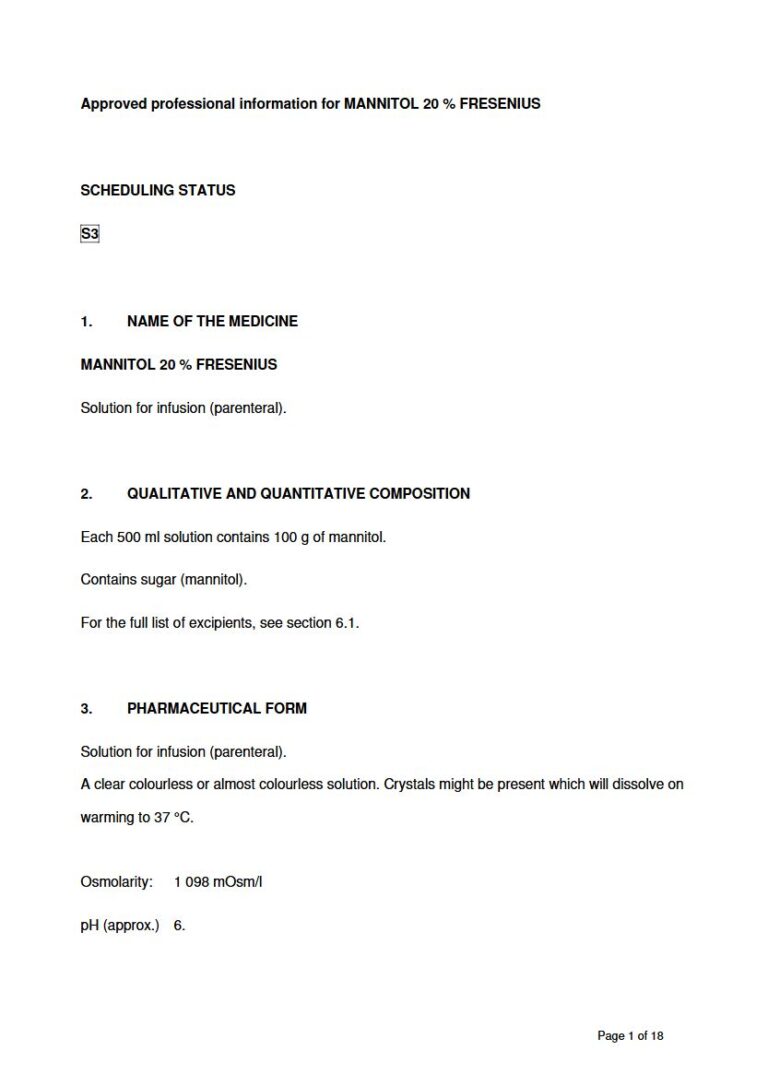
Mannitol 20 %/500 ml Solution
PDF Leaflet Revision Date: 26 May 2022
Clinical Summary
Quick overview from the medicine insert
Indication
Promotes diuresis, reduces intracranial pressure, and lowers intraocular pressure.
Dosage (summary)
50-200 g over 24 hours; test dose of 200 mg/kg for oliguria.
Special Populations
- Elderly
- Renal impairment
Pregnancy & Breastfeeding
Safety in pregnancy and lactation not established.
Key Drug Interactions
- Increased clearance of lithium
- Potentiation with other diuretics
Contraindications
- Hypersensitivity to mannitol
- Severe renal disease
- Pulmonary congestion
- Intracranial bleeding
- Congestive heart failure
Common side effects
- Headache
- Dizziness
- Nausea
- Fluid imbalance
- Oliguria
Counselling Points
- Monitor fluid and electrolyte balance
- Infusion site reactions possible
- Do not mix with blood
Serious warnings
- Risk of CNS toxicity
- Risk of renal complications
- Risk of hypervolaemia
Important Disclaimer
The Mannitol 20 %/500 ml Solution professional information leaflet below is the property of Fresenius Kabi Manufacturing Sa and is provided on Medinsert exactly as issued, with no.. alterations or editorial changes. We make every effort to keep content current by updating documents as soon as new versions become available. Medinsert serves as a trusted access point for healthcare professionals, but does not replace official sources or clinical judgement. For more details, please read our full disclaimer. read more>>
 Healthcare Professionals Only
This content is for registered healthcare professionals
Sign in or create a free account to read the full package insert.
Free for HPCSA-registered professionals. Powered by Medinsert.
Clinical Particulars
Section 4 of the official insert — extracted exactly as issued, no alterations
4.1 Therapeutic indications
Therapeutic use. MANNITOL 20 % FRESENIUS is indicated for:
- The promotion of diuresis, in the prevention and/or treatment of the oliguric phase of acute renal failure before irreversible renal failure becomes established.
- The reduction of intracranial pressure and treatment of cerebral oedema by reducing brain mass.
- The reduction of elevated intraocular pressure and volume of cerebrospinal fluids when the pressure cannot be lowered by other means.
- Promoting the urinary excretion of toxic substances.
- If given in sufficiently large amounts, MANNITOL 20 % FRESENIUS increases extracellular osmolarity, which in turn may decrease cellular swelling and improve renal blood flow.
- For the evaluation of acute oliguria.
4.2 Posology and method of administration
For intravenous use only. Warm before use to dissolve crystals. Do not use unless solution is clear. Use filter type administration set.
The adult dose for promotion of diuresis ranges from 50 to 200 g over a 24 hour period of infusion; the rate is generally adjusted to maintain a urinary output of at least 30 to 50 ml per hour. It should be preceded by a test dose in patients with marked oliguria or questionable adequacy of renal function. The recommended test dose is 200 mg/kg (approximately 75 ml MANNITOL 20 % FRESENIUS OR 60 ml MANNITOL 25 % FRESENIUS for an adult patient), infused over 3 to 5 minutes. If the first or a second test dose fails to promote a urinary flow greater than 30 ml per hour for 2 to 3 hours, the patientu2019s status should be re-evaluated prior to continuation of therapy.
When used for the prevention of acute renal failure during various types of surgery or for the treatment of oliguria, the total dose is 50 to 100 g of mannitol for an adult patient. The dose for the reduction of intracranial pressure and brain mass prior to neurosurgery, or for the reduction of intraocular tension during an acute attack of congestive glaucoma or for ophthalmic surgery, is 1,5 to 2 g/kg given as a 20 % solution over a period of 30 to 60 minutes.
4.3 Contraindications
- Hypersensitivity to mannitol or to any of the excipients listed in section 6.1.
- Renal disease of sufficient severity to produce anuria and marked pulmonary congestion.
- MANNITOL 20 % FRESENIUS is contraindicated in patients with pulmonary congestion or oedema, intracranial bleeding (except during craniotomy), metabolic oedema with abnormal capillary fragility, severely dehydrated patients, or patients with renal failure unless a test dose has produced a diuretic response.
- MANNITOL 20 % FRESENIUS is also contraindicated in patients with congestive heart failure because in patients with diminished cardiac reserve, expansion of the extracellular fluid may lead to fulminating heart failure.
- MANNITOL 20 % FRESENIUS should not be administered with whole blood.
- Progressive renal damage or dysfunction after the institution of mannitol therapy, including oliguria and azotaemia.
- Pre-existing plasma hyperosmolarity.
- Disturbance of the blood-brain barrier.
4.4 Special warnings and precautions for use
MANNITOL 20 % FRESENIUS is a hyperosmolar solution. This solution may not be mixed with other products.
Hyperosmotic solutions of MANNITOL 20 % FRESENIUS should be administered slowly by intravenous injection and should not be mixed with blood in the transfusion apparatus. MANNITOL 20 % FRESENIUS contains mannitol and may have a laxative effect.
Hypersensitivity
Anaphylactic/anaphylactoid reactions, including anaphylaxis, as well as other hypersensitivity/infusion reactions have been reported with MANNITOL 20 % FRESENIUS. Fatal outcome has been reported (see section 4.8). The infusion must be stopped immediately if any signs or symptoms of a suspected hypersensitivity reaction develops. Appropriate therapeutic countermeasures must be instituted as clinically indicated. Mannitol occurs in nature (e.g. in some fruits and vegetables) and is widely used as an excipient in medicines and cosmetics. Therefore, patients may be sensitised without having received intravenous treatment with MANNITOL 20 % FRESENIUS.
CNS toxicity
CNS toxicity manifested by confusion, lethargy and/or coma has been reported in patients treated with MANNITOL 20 % FRESENIUS, in particular in the presence of impaired renal function. Fatal outcomes have been reported. CNS toxicity may result from:
- high serum mannitol concentrations
- serum hyperosmolarity resulting in intracellular dehydration within the CNS
- hyponatraemia or other disturbances of electrolyte and acid/base balance secondary to mannitol administration.
At high concentrations, mannitol may cross the blood-brain barrier and interfere with the ability of the brain to maintain the pH of the cerebrospinal fluid especially in the presence of acidosis.
In patients with pre-existing compromised blood-brain barrier, the risk of increasing cerebral oedema (general or focal) associated with repeated or continued use of mannitol must be individually weighed against the expected benefits. A rebound increase of intracranial pressure may occur several hours after the use of mannitol. Patients with compromised blood-brain barrier are at increased risk.
Risk of renal complications
Reversible, acute oligoanuric renal failure has occurred in patients with normal pre-treatment renal function who received large intravenous doses of MANNITOL 20 % FRESENIUS. Although the osmotic nephrosis associated with MANNITOL 20 % FRESENIUS administration is in principle reversible, osmotic nephrosis in general is known to potentially proceed to chronic or even end-stage renal failure. Patients with pre-existing renal disease, or those receiving potentially nephrotoxic medicinal products, are at increased risk of renal failure following administration of MANNITOL 20 % FRESENIUS. Serum osmolar gap and renal function should be closely monitored and appropriate action initiated, should signs of worsening renal function or haematuria appear. MANNITOL 20 % FRESENIUS should be administered with caution to patients with severely impaired renal function. A test dose should be employed and therapy with mannitol continued only if an adequate urine flow is achieved (see section 4.2). If the urine output declines or haematuria is observed during MANNITOL 20 % FRESENIUS infusion, the patient's clinical status should be closely reviewed for developing renal impairment, and the mannitol infusion suspended, if necessary.
Risk of hypervolaemia
The cardiovascular status of the patient should be carefully evaluated before rapidly administering MANNITOL 20 % FRESENIUS. High doses and/or high rates of infusion, as well as accumulation of mannitol (due to insufficient renal excretion of mannitol), may result in hypervolaemia, overexpansion of the extracellular fluid, which may lead to or exacerbate existing congestive heart failure. Accumulation of mannitol may result if urine output continues to decline during administration and this may worsen existing or latent congestive heart failure. The infusion of MANNITOL 20 % FRESENIUS should be terminated if the patient develops signs of progressive renal dysfunction, heart failure or pulmonary congestion. The expansion of extracellular volume can precipitate pulmonary oedema and patients with diminished cardiac reserve are at special risk.
Risk of water and electrolyte imbalances and hyperosmolarity
Mannitol-induced osmotic diuresis may cause or worsen dehydration/hypovolaemia and haemoconcentration. Acute water toxicity and hyperosmolarity may follow the intravenous administration of MANNITOL 20 % FRESENIUS if renal flow is inadequate. Patients should be closely observed for signs of electrolyte and fluid imbalance and renal function should be monitored. Should patient serum osmolarity increase during treatment, the effects of mannitol on diuresis and reduction of intracranial and intraocular pressure may be impaired. In addition, depending on dosage and duration of administration, electrolyte and acid/base imbalances may result from transcellular shifts of water and electrolytes, osmotic diuresis and/or other mechanisms. Such imbalances may be severe and potentially fatal. Imbalances that may result from MANNITOL 20 % FRESENIUS treatment include:
- hypernatraemia, dehydration and haemoconcentration (resulting from excessive water loss).
Hyponatraemia
A shift of sodium-free intracellular fluid into the extracellular compartment following MANNITOL 20 % FRESENIUS infusion may lower serum sodium concentration and aggravate pre-existing hyponatraemia. Loss of sodium and potassium in the urine increases. Hyponatraemia can lead to headache, nausea, seizures, lethargy, coma, cerebral oedema, and death. Acute symptomatic hyponatraemic encephalopathy is considered a medical emergency. The risk for developing hyponatraemia is increased:
- in children
- in elderly patients
- in women
- post-operatively
- in persons with psychogenic polydipsia.
The risk for developing encephalopathy as a complication of hyponatraemia is increased:
- in paediatric patients (u2264 16 years of age)
- in women (in particular, premenopausal women)
- in patients with hypoxaemia
- in patients with underlying central nervous system disease.
Other electrolyte imbalances
u2022 hypokalaemia
u2022 hyperkalaemia
u2022 metabolic acidosis
u2022 metabolic alkalosis.
By sustaining diuresis, MANNITOL 20 % FRESENIUS administration may obscure and intensify inadequate hydration or hypovolaemia.
Infusion reactions
Infusion site reactions have occurred with the use of MANNITOL 20 % FRESENIUS. They include signs and symptoms of infusion site irritation and inflammation, as well as severe reactions (compartment syndrome) when associated with extravasation. See section 4.8. Adding other medications or using an incorrect administration technique may cause febrile reactions due to possible introduction of pyrogens. In case of an adverse reaction, infusion must be stopped immediately. For information on incompatibilities and preparation of the product and additives, please see sections 6.2 and 6.6.
Volume and electrolyte replacement before use
In patients with shock and renal dysfunction, MANNITOL 20 % FRESENIUS should not be administered until volume (fluid and/or blood) and electrolytes have been replaced.
Monitoring
The acid base balance, renal function and serum osmolarity must be monitored carefully when MANNITOL 20 % FRESENIUS is used. Patients receiving MANNITOL 20 % FRESENIUS should be monitored for any deterioration in renal, cardiac or pulmonary function and treatment discontinued in the case of adverse events. Urinary output, fluid balance, central venous pressure and electrolyte balance (in particular serum sodium and potassium levels) should be carefully monitored.
4.5 Interactions with other medicines
MANNITOL 20 % FRESENIUS infusion should not be administered with, before or after administration of blood through the same infusion equipment.
Effect potentialisation
Concurrent use of other diuretics may potentiate the effects of MANNITOL 20 % FRESENIUS and dose adjustments may be required.
Effect inhibition
MANNITOL 20 % FRESENIUS promotes urine flow, which will mainly affect medicines that are renally reabsorbed to a large extent, thereby increasing their clearance and reducing their exposure.
MANNITOL 20 % FRESENIUS increases urinary excretion of lithium and therefore concomitant use may impair the response to lithium.
Nephrotoxicity of medicines due to fluid imbalance related to MANNITOL 20 % FRESENIUS
Although an interaction in humans is unlikely, patients receiving concomitant ciclosporin and aminoglycoside should be closely monitored for signs of nephrotoxicity.
Neurotoxic medicines
Concomitant use of neurotoxic medicines (e.g. aminoglycoside) and MANNITOL 20 % FRESENIUS may potentiate the toxicity of neurotoxic medicines. (See also section 4.4.)
Medicines affected by electrolyte imbalances
The development of electrolyte imbalances (e.g. hyperkalaemia, hypokalaemia) associated with MANNITOL 20 % FRESENIUS administration may alter the effects of medicines that are sensitive to such imbalances (e.g. digoxin, agents that may cause QT prolongation, neuromuscular blocking medicines). Other potential interactions are with tubocurarine and depolarising neuromuscular blocking medicines (enhancement of their effects by MANNITOL 20 % FRESENIUS), oral anticoagulants (MANNITOL 20 % FRESENIUS may reduce their effects by increasing the concentration of clotting factors secondary to dehydration) and digoxin (if hypokalaemia follows mannitol treatment there is a risk of digoxin toxicity).
4.6 Fertility, pregnancy and lactation
Safety and efficacy in pregnancy and lactation have not been established.
4.7 Effects on ability to drive and use machines
There is no information of the effects of MANNITOL 20 % FRESENIUS on the ability to operate a vehicle or other heavy machinery.
4.8 Undesirable effects
Immune system disorders
Frequency unknown: Allergic reaction, anaphylactic reaction including anaphylactic shock.
Metabolism and nutrition disorders
Frequency unknown: Fluid and electrolyte imbalance, dehydration, oedema, circulatory overload, metabolic acidosis and electrolyte loss.
Nervous system disorders
Frequency unknown: Headache, dizziness and rebound intracranial pressure increase. Central nervous system symptoms including convulsions, coma, confusion and lethargy.
Eye disorders
Frequency unknown: Blurred vision.
Cardiac disorders
Frequency unknown: Cardiac dysrhythmia, congestive heart failure, palpitations, tachycardia and angina-like chest pains.
Vascular disorders
Frequency unknown: Hypotension and hypertension.
Respiratory, thoracic and mediastinal disorders
Frequency unknown: Pulmonary oedema and rhinitis.
Gastrointestinal disorders
Frequency unknown: Dryness of mouth, thirst, nausea and vomiting.
Skin and subcutaneous tissue disorders
Frequency unknown: Urticaria and skin necrosis.
Musculoskeletal and connective tissue disorders
Frequency unknown: Arm pain and cramps.
Renal and urinary disorders
Frequency unknown: Excessive diuresis, osmotic nephrosis, urinary retention, acute renal failure, azotaemia, anuria, haematuria, oliguria and polyuria.
General disorders and administration site conditions
Frequency unknown: Chills, fever, asthenia, malaise, tissue dehydration, infusion site reactions including infusion thrombophlebitis, infusion site inflammation, infusion site pain, infusion site rash, infusion site erythema, infusion site pruritis and compartment syndrome (associated with extravasation and swelling at the injection site).
Reporting of suspected adverse reactions: Reporting suspected adverse reactions after authorisation of MANNITOL 20 % FRESENIUS is important. It allows continued monitoring of the benefit/risk balance of MANNITOL 20 % FRESENIUS. Healthcare providers are asked to report any suspected adverse reactions to SAHPRA via the u201c6.04 Adverse Drug Reactions Reporting Formu201d, found online under SAHPRAu2019s publications: https://www.sahpra.org.za/Publications/Index/8. Healthcare providers are asked to report any suspected adverse drug reactions to the Holder of the Certificate of Registration at the following email address: [email protected] and to the relevant medicineu2019s regulatory authority in the country where the product is marketed.
4.9 Overdose
Symptoms: Hypotension, polyuria that rapidly converts to oliguria, stupor, convulsions, pulmonary oedema, hyperosmolarity and hyponatraemia.
Treatment: Discontinue infusion immediately. Institute supportive measures to correct fluid and electrolyte imbalances. Haemodialysis is beneficial to clear mannitol and reduce serum osmolarity. See sections 4.4 and 4.8.
