
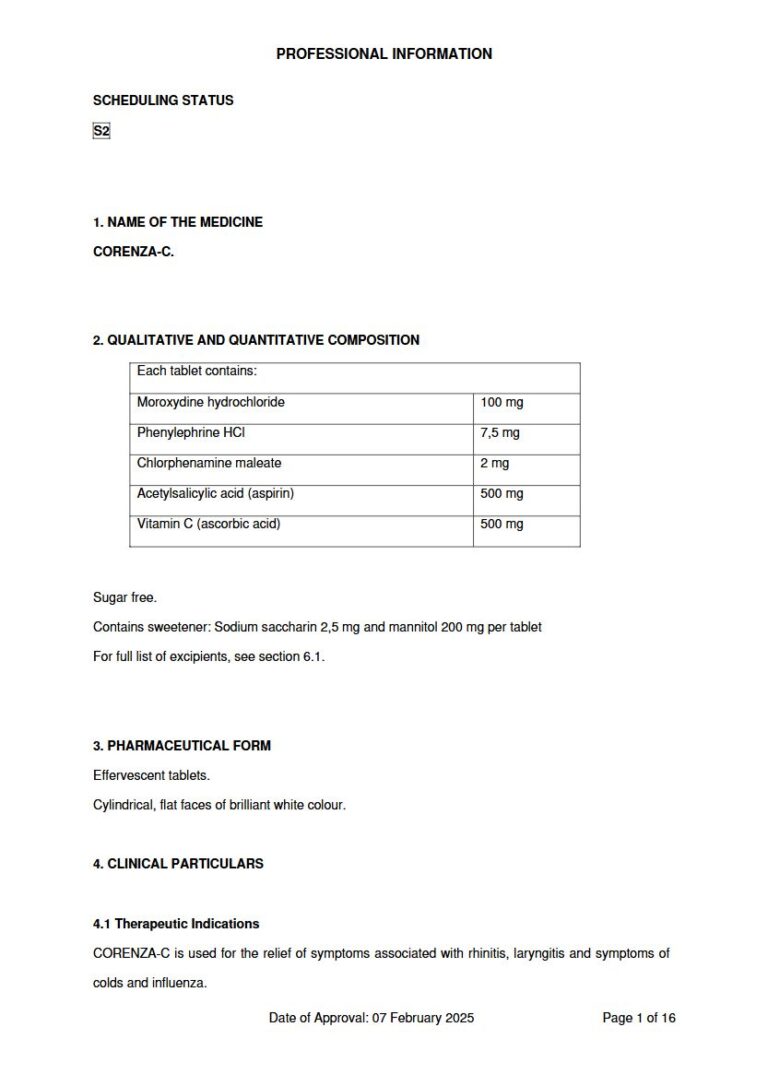
Corenza-C 2,5 mg and 200 mg White, effervescent tablet.
PDF Leaflet Revision Date: 07 February 2025
Clinical Summary
Quick overview from the medicine insert
Indication
Relief of symptoms associated with rhinitis, laryngitis, colds, and influenza.
Dosage (summary)
Adults and children >12 years: 2 tablets initially, then 1 tablet 3-4 times daily as needed.
Special Populations
- Elderly
- Renal impairment
- Hepatic impairment
Pregnancy & Breastfeeding
Use with caution; avoid in late pregnancy due to risks of renal dysfunction and Reye's syndrome in breastfeeding infants.
Key Drug Interactions
- CNS depressants
- MAOIs
- Other NSAIDs
- Antiplatelet medications
Contraindications
- Hypersensitivity
- Gastrointestinal lesions
- Severe hyperthyroidism
- Children <12 years
Common side effects
- Drowsiness
- Gastrointestinal bleeding
- Hypertension
- Dyspnoea
Counselling Points
- Avoid alcohol
- Consult doctor if symptoms persist
- Monitor for signs of gastrointestinal bleeding
Serious warnings
- Risk of Reye's syndrome
- Gastrointestinal perforation
- Serious skin reactions
Important Disclaimer
The Corenza-C 2,5 mg and 200 mg White, effervescent tablet. professional information leaflet below is the property of Adcock Ingram and is provided on Medinsert exactly as issued, with no.. alterations or editorial changes. We make every effort to keep content current by updating documents as soon as new versions become available. Medinsert serves as a trusted access point for healthcare professionals, but does not replace official sources or clinical judgement. For more details, please read our full disclaimer. read more>>
 Healthcare Professionals Only
This content is for registered healthcare professionals
Sign in or create a free account to read the full package insert.
Free for HPCSA-registered professionals. Powered by Medinsert.
Clinical Particulars
Section 4 of the official insert — extracted exactly as issued, no alterations
4.1 Therapeutic Indications
CORENZA-C is used for the relief of symptoms associated with rhinitis, laryngitis and symptoms of colds and influenza.
4.2 Posology and method of administration
Use the lowest effective dose for the shortest possible duration of treatment.
Adults and children older than 12 years: 2 tablets immediately, thereafter 1 tablet 3 to 4 times a day as required.
Paediatric population: CORENZA-C should not be used in children under the age 12 years (see section 4.3).
Method of administration: For oral use. Drop the tablet in half a glass of cold water. The tablet quickly dissolves producing an effervescent drink. Drink the mixture as soon as the effervescing has stopped.
4.3 Contraindications
- Hypersensitivity to the active substances or to any of the excipients listed in section 6.1.
- Dyspepsia, lesions of the gastric mucosa, renal dysfunction or hepatic impairment, haemophilia or other haemorrhagic disorders.
- Patients with severe hyperthyroidism, gout, diabetes mellitus, prostatic hyperplasia, high blood pressure, heart conditions, asthma, chronic urticaria, chronic rhinitis, hypersensitivity to pseudoephedrine and other NSAIDs.
- Patients with heart failure.
- Patients with a history of gastrointestinal perforation, ulceration or bleeding (PUBs) related to previous NSAIDs, including CORENZA-C, and/or active or history of recurrent ulcer/ haemorrhage/ perforations.
- Children under the age of 12 years.
- Avoid use of NSAIDs in women around 30 weeks gestation and later in pregnancy due to the risks of oligohydramnios/foetal renal dysfunction and premature closure of the foetal ductus arteriosus.
4.4 Special warnings and precautions for use
- Acetylsalicylic acid (aspirin) has been implicated in Reye's syndrome, a rare but serious illness, in children and teenagers with chickenpox and influenza. A doctor should be consulted before acetylsalicylic acid (aspirin) is used in such patients.
- Acetylsalicylic acid (aspirin) has been associated with haemolytic anaemia in patients with G6PD deficiency.
- Acetylsalicylic acid (aspirin) may interfere with insulin and glucagon control in diabetics and may cause hepatotoxicity in patients with juvenile idiopathic arthritis or other connective tissue disorders.
- Acetylsalicylic acid (aspirin) prolongs bleeding time and should be stopped several days prior to scheduled surgical procedures.
- Continuous prolonged use of acetylsalicylic acid (aspirin) should be avoided in the elderly, because of the risk of gastrointestinal bleeding.
- Chlorphenamine maleate has antimuscarinic actions and should be used with care in conditions such as angle-closure glaucoma, urinary retention or pyloroduodenal obstruction.
- Phenylephrine hydrochloride should be avoided in phaeochromocytoma.
- Phenylephrine hydrochloride induces tachycardia or reflex bradycardia and should therefore be avoided in severe hyperthyroidism (see Section 4.3).
- Patients with diabetes mellitus or prostatic hyperplasia should also avoid phenylephrine as contained in CORENZA-C (see section 4.3).
- Cross-sensitivity to phenylephrine has been reported in patients hypersensitive to pseudoephedrine (see section 4.3).
- Porphyria: Safety for use in porphyria has not been established.
- Caution is required in patients with a history of hypertension and/or heart failure as fluid retention and oedema have been reported in association with CORENZA-C therapy. In view of the productu2019s inherent potential to cause fluid retention, heart failure may be precipitated in some compromised patients.
- Elderly: The elderly have an increased frequency of adverse reactions to NSAIDs, including CORENZA-C, especially gastrointestinal perforation, ulceration and bleeding (PUBs) which may be fatal.
- The risk of gastrointestinal perforation, ulceration or bleeding (PUBs) is higher with increasing doses of CORENZA-C, in patients with a history of ulcers, and the elderly.
- When gastrointestinal bleeding or ulceration occurs in patients receiving CORENZA-C, treatment with CORENZA-C should be stopped.
- CORENZA-C should be given with caution to patients with a history of gastrointestinal disease (e.g. ulcerative colitis, Crohnu2019s disease, hiatus hernia, gastro-oesophageal reflux disease, angiodysplasia) as the condition may be exacerbated.
- Serious skin reactions, some of them fatal, including exfoliative dermatitis, Stevens-Johnson syndrome, and toxic epidermal necrolysis have been reported.
- CORENZA-C should be discontinued at the first appearance of skin rash, mucosal lesions, or any other sign of hypersensitivity.
- Foetal Toxicity: Limit use of NSAIDs, including CORENZA-C, between 20 to 30 weeks of pregnancy due to the risk of oligohydramnios/foetal renal dysfunction.
- If NSAID treatment is necessary between 20 weeks and 30 weeks gestation, limit CORENZA-C use to the lowest effective dose and shortest duration possible. Consider ultrasound monitoring of amniotic fluid if CORENZA-C treatment extends beyond 48 hours. Discontinue CORENZA-C, if oligohydramnios occurs and follow up according to clinical practice. (See section 4.6)
- Do not use for more than 10 days without consulting your doctor.
- Corticosteroids may increase the risk of gastrointestinal perforation, ulceration or bleeding (PUBs).
- Drug Reaction with Eosinophillia and Systemic Symptoms (DRESS) has been reported in patients taking NSAIDs such as CORENZA-C. Some of these events have been fatal or life-threatening. DRESS typically, although not exclusively, presents with fever, rash, lymphadenopathy, and/or facial swelling. Other clinical manifestations may include hepatitis, nephritis, haematological abnormalities, myocarditis, or myositis. Sometimes symptoms of DRESS may resemble an acute viral infection. Eosinophillia is often present. Because this disorder is variable in its presentation, other organ systems not noted here may be involved. It is important to note that early manifestations of hypersensitivity, such as fever or lymphadenopathy, may be present even though rash is not evident. If such signs or symptoms are present, discontinue CORENZA-C and evaluate the patient immediately.
- This medicinal product contains 288,11 mg sodium per effervescent tablet equivalent to 14,4 % of the WHO recommended maximum daily intake of 2 g sodium for an adult.
4.5 Interaction with other medicines and other forms of interaction
- Vitamin C may increase the absorption of iron in iron-deficiency states.
- Chlorphenamine maleate may enhance the sedative effects of CNS depressants including alcohol, barbiturates, hypnotics, opioid analgesics, anxiolytic sedatives and antipsychotics.
- Sedating antihistamines have an additive antimuscarinic action with other antimuscarinic drugs, such as atropine and some antidepressants.
- Sedating antihistamines could also mask the warning signs of damage caused by ototoxic drugs such as aminoglycoside antibacterials.
- Phenylephrine hydrochloride may cause severe hypertension when used concurrently with MAOIs.
- Use of two or more NSAIDs concomitantly could result in an increase in side effects.
- Corticosteroids increase the risk of gastrointestinal perforation, ulceration or bleeding (PUBs).
- Anti-platelet medicines and selective serotonin reuptake inhibitors (SSRIs): increased risk of gastrointestinal bleeding.
- Acetylsalicylic acid (aspirin) may enhance the effects of coumarin anticoagulants (such as warfarin), sulfonylurea hypoglycaemic drugs, zafirlukast, methotrexate, phenytoin and valproate.
- Acetylsalicylic acid (aspirin) diminishes the effects of uricosurics such as probenecid.
- Acetylsalicylic acid (aspirin) may alter the efficacy of mifepristone.
- Griseofulvin might interfere with the absorption of acetylsalicylic acid (aspirin).
- Acetylsalicylic acid (aspirin) may reduce or abolish the hypotensive action of ACE inhibitors.
Interactions with laboratory tests
- Vitamin C interferes with laboratory tests, falsely elevated or false-negative test results may be obtained from plasma, faeces or urine samples.
4.6 Fertility, pregnancy and lactation
Safety in pregnancy and lactation have not been established. Use of NSAIDs, including CORENZA-C, can cause premature closure of the foetal ductus arteriosus and foetal renal dysfunction leading to oligohydramnios and, in some cases, neonatal renal impairment. Because of these risks, the use of CORENZA-C dose and duration between 20 and 30 weeks of gestation should be limited and avoided at around 30 weeks of gestation and later in pregnancy. The onset of labour may be delayed and its duration increased. Acetylsalicylic acid (aspirin) should be given with caution to breastfeeding mothers because of the risk of Reyeu2019s syndrome and metabolic acidosis in nursing infants.
4.7 Effects on ability to drive and use machines
CORENZA-C may lead to drowsiness and impaired concentration, which may be aggravated by the simultaneous intake of alcohol or other central nervous system depressant agents. Chlorphenamine maleate can cause CNS depression and the sedative effects can range from slight drowsiness to deep sleep. This can impair a personu2019s ability to drive or operate machinery.
4.8 Undesirable effects
CORENZA-C
| System Organ Class | Frequency | Undesirable effect |
|---|---|---|
| Blood and lymphatic system disorders | Frequent | slight blood loss |
| Less frequent | agranulocytosis, leukopenia, thrombocytopenia, pancytopenia, aplastic anaemia and haemolytic anaemia | |
| Unknown | increases bleeding time, decreases platelet adhesiveness, hypoprothrombinaemia | |
| Immune system disorders | Unknown | Hypersensitivity (including bronchospasm, angioedema and anaphylaxis) |
| Endocrine disorders | Unknown | hyperglycaemia |
| Metabolism and nutrition disorders | Frequent | anorexia |
| Unknown | lactic acidosis | |
| Psychiatric disorders | Unknown | sleep disturbances, depression and confusion, anxiety, fear, restlessness, insomnia, irritability, psychotic states |
| Nervous system disorders | Frequent | headache, CNS depression varying from slight drowsiness to deep sleep and including lassitude, dizziness and incoordination (see sections 4.4 and 4.7) |
| Unknown | headache, convulsions, paraesthesia, extrapyramidal effects, tremor, tinnitus and antimuscarinic effects such as dry mouth, thickened respiratory-tract secretions, blurred vision, urinary difficulty or retention, constipation and increased gastric reflux, Reyeu2019s syndrome | |
| Eye disorders | Unknown | mydriasis |
| Ear and labyrinth disorders | Unknown | increase in intensity of ototoxicity with increasing salicylate dose |
| Cardiac disorders | Frequent | oedema, hypertension and cardiac failure |
| Unknown | Palpitations, dysrhythmias. May induce tachycardia or reflex bradycardia | |
| Vascular disorders | Unknown | hypotension. Excessive vasopressor response may cause a prolonged rise in blood pressure |
| Respiratory, thoracic and mediastinal disorders | Frequent | dyspnoea |
| Gastrointestinal disorders | Frequent | Peptic ulcers, perforation or gastrointestinal bleeding, sometimes fatal. Nausea, vomiting, diarrhoea, flatulence, constipation, dyspepsia, abdominal pain, melaena, haematemesis, ulcerative stomatitis, exacerbation of colitis and Crohnu2019s disease, gastritis |
| Less Frequent | epigastric pain | |
| Unknown | Large doses can cause gastrointestinal disturbances. Irritation of the gastric mucosa with erosion. Increased salivation | |
| Hepato-biliary disorders | Unknown | hepatotoxicity |
| Skin and subcutaneous tissue disorders | Less Frequent | rashes |
| Unknown | Bullous reactions, including Stevens-Johnson syndrome and toxic epidermal necrolysis, piloerection, sweating and hair loss, Drug Reaction with Eosinophillia and Systemic Symptoms (DRESS) | |
| Musculoskeletal and connective tissue disorders | Unknown | myalgia |
| Renal and urinary disorders | Unknown | Large doses may result in hyperoxaluria and the formation of renal calcium oxalate calculi and should therefore be given with care to patients with hyperoxaluria. Difficulty in micturition, urinary retention. |
| General disorders and administration site conditions | Frequent | weakness |
| Unknown | Tolerance may be induced with prolonged use of large doses, resulting in symptoms of deficiency when intake is reduced to normal |
4.9 Overdose
Acetylsalicylic acid (aspirin): Nausea, dizziness, vomiting, hyperventilation, fever, restlessness, ketosis, respiratory alkalosis, metabolic acidosis, mental clouding, irritation of gastric mucosa and resultant dyspepsia, haematemesis and melaena. Depression of the CNS may lead to coma; cardiovascular collapse and respiratory failure may also occur. In acute salicylate overdosage, an oral dose of activated charcoal is recommended if the patient is suspected of ingesting more than 125 mg/kg of salicylate. Activated charcoal prevents the absorption of any salicylate remaining in the stomach and aids the elimination of any salicylate that has been absorbed. Forced diuresis by intravenous infusions of saline with sodium bicarbonate or of compound lactate injection or dextrose solution, should be considered. Fluid and electrolyte management is essential to correct acidosis, hyperpyrexia, hypokalaemia, and dehydration. In patients with acute allergic reactions to aspirin (acetylsalicylic acid), epinephrine (adrenaline) and corticosteroids followed by an antihistamine should be given. Respiratory failure to be treated by artificial respiration or respiratory stimulants.
Phenylephrine hydrochloride: Overdosage may result in nausea, vomiting, hyperglycaemia, anorexia, lactic acidosis, headaches, anxiety, fear, restlessness, insomnia, confusion, irritability, mydriasis, tachycardia, reflex bradycardia, high blood pressure, increased salivation, sweating difficulty in micturition, urinary retention and general weakness. Treatment is symptomatic and supportive (see section 4.8).
Vitamin C: Large doses are reported to cause diarrhoea and other gastrointestinal disturbances, hyperoxaluria and tolerance may be induced. Large doses can also cause formation of kidney stones. Treatment is symptomatic and supportive.
Chlorphenamine Maleate: Overdosage with sedating antihistamines is associated with antimuscarinic, extrapyramidal, and CNS effects. When CNS stimulation predominates over CNS depression, which is more likely in children or the elderly, it causes ataxia, excitement, tremors, psychoses, hallucinations, and convulsions; hyperpyrexia may also occur. Deepening coma and cardiorespiratory collapse may follow. In adults, CNS depression is more common with drowsiness, coma, and convulsions, progressing to respiratory failure and cardiovascular collapse. Treatment is symptomatic and supportive.
