
Compral Pain 100 mg, 400 mg, 30 mg Adcock Ingram
PDF Leaflet Revision Date: 05 November 2024
Clinical Summary
Quick overview from the medicine insert
Indication
Relief of mild to moderate pain and febrile conditions.
Dosage (summary)
Adults: 1-2 tablets every 4 hours, max 4 doses/24 hours.
Special Populations
- Elderly
- Renal impairment
- Hepatic impairment
Pregnancy & Breastfeeding
Not recommended in pregnancy (especially 1st and 3rd trimesters) and breastfeeding due to risks.
Key Drug Interactions
- Anticoagulants
- Other NSAIDs
- Alcohol
Contraindications
- Haemophilia
- Severe renal impairment
- Active gastrointestinal bleeding
- Hypersensitivity to ingredients
Common side effects
- Gastrointestinal bleeding
- Nausea
- Dizziness
- Skin reactions
Counselling Points
- Do not exceed recommended dose
- Consult doctor if no relief
- Avoid alcohol and other NSAIDs
Serious warnings
- Risk of overdose leading to liver damage
- Reye's syndrome in children
- Caution in cardiovascular disease
Important Disclaimer
The Compral Pain 100 mg, 400 mg, 30 mg Adcock Ingram professional information leaflet below is the property of Adcock Ingram and is provided on Medinsert exactly as issued, with no.. alterations or editorial changes. We make every effort to keep content current by updating documents as soon as new versions become available. Medinsert serves as a trusted access point for healthcare professionals, but does not replace official sources or clinical judgement. For more details, please read our full disclaimer. read more>>
 Healthcare Professionals Only
This content is for registered healthcare professionals
Sign in or create a free account to read the full package insert.
Free for HPCSA-registered professionals. Powered by Medinsert.
Clinical Particulars
Section 4 of the official insert — extracted exactly as issued, no alterations
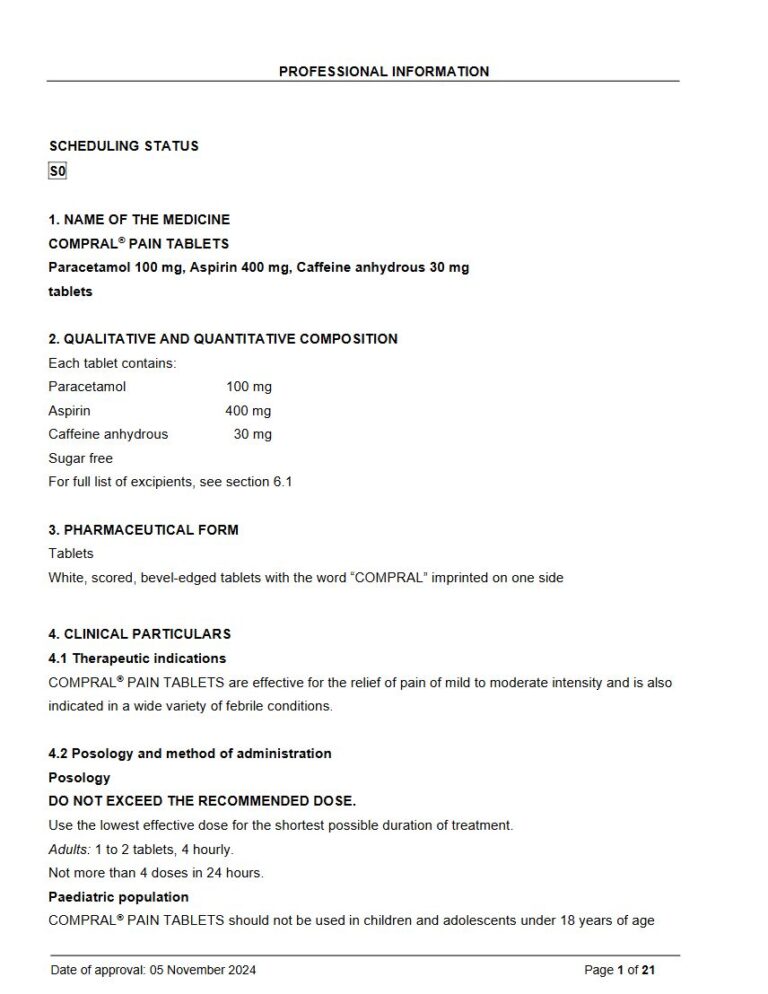
4.1 Therapeutic indications
COMPRAL u00ae PAIN TABLETS are effective for the relief of pain of mild to moderate intensity and is also indicated in a wide variety of febrile conditions.
4.2 Posology and method of administration
Posology
DO NOT EXCEED THE RECOMMENDED DOSE.
Use the lowest effective dose for the shortest possible duration of treatment.
Adults: 1 to 2 tablets, 4 hourly. Not more than 4 doses in 24 hours.
Paediatric population
COMPRAL u00ae PAIN TABLETS should not be used in children and adolescents under 18 years of age (see sections 4.3 and 4.4).
Method of administration
Dose to be taken orally
4.3 Contraindications
- Patients with haemophilia, severe renal impairment, or patients receiving oral anticoagulant therapy.
- Intolerance or hypersensitivity to aspirin or other NSAIDs, paracetamol, caffeine or to any of the ingredients of COMPRALu00ae PAIN TABLETS.
- Patients in whom asthma, bronchospasm, angioedema, urticaria, or acute rhinitis are precipitated by aspirin or other non-steroidal anti-inflammatory drugs (NSAIDu2019s).
- Patients with active or a history of recurrent ulcer/haemorrhage/ perforations.
- Patients with heart failure.
- Patients with a history of gastrointestinal perforation, ulceration or bleeding (PUBs) related to previous NSAIDs, including COMPRALu00ae PAIN TABLETS.
- Patients with renal failure.
- Patients with hepatic failure.
- Patients with a history of gout.
- Third trimester of pregnancy (see section 4.6).
- Avoid use of NSAIDs in women around 30 weeks gestation and later in pregnancy due to the risks of oligohydramnios/ foetal renal dysfunction and premature closure of the foetal ductus arteriosus.
- Children and adolescents under 18 years of age (see section 4.4).
4.4 Special warnings and precautions for use
COMPRAL u00ae PAIN TABLETS contains paracetamol which may be fatal in overdose. In the event of overdosage or suspected overdose and notwithstanding the fact that the person may be asymptomatic, the nearest doctor, hospital or Poison Centre must be contacted immediately.
- Dosages in excess of those recommended may cause severe liver damage.
- Do not use continuously for more than 10 days without consulting a doctor.
- Consult a doctor if no relief is obtained from the recommended dosage.
- Excessive and prolonged use of this medicine may be dangerous.
- Medical advice should be sought if cough persists (see section 4.8), or if it is accompanied by high fever, skin rash or persistent headache.
Aspirin
Reyeu2019s syndrome
Aspirin has been implicated in Reyeu2019s Syndrome, a rare but serious illness, in children and teenagers with chickenpox or influenza. A doctor should be consulted before aspirin is used in such patients. There is an association between aspirin and Reyeu2019s syndrome when given to children during or immediately after a viral illness. Reyeu2019s Syndrome is a rare but serious illness, which affects the brain and liver. For this reason, children and teenagers (under 18 years of age) who have or are recovering from chicken pox or flu-like symptoms should not use this product, unless prescribed by a physician. When using this product, if changes in behaviour with nausea and vomiting occur, the patient should consult a doctor because these symptoms could be an early sign of Reyeu2019s syndrome.
Cardiovascular disease
Caution is required in patients with a history of hypertension and/or heart failure as fluid retention and oedema have been reported in association with COMPRAL u00ae PAIN TABLETS therapy. In view of the COMPRAL u00ae PAIN TABLETS inherent potential to cause fluid retention, heart failure may be precipitated in some compromised patients.
Elderly
The elderly have an increased frequency of adverse reactions to NSAIDs including COMPRAL u00ae PAIN TABLETS, especially gastrointestinal perforation, ulceration, and bleeding (PUBs) which may be fatal.
Gastrointestinal disease
The risk of gastrointestinal perforation, ulceration or bleeding (PUBs) is higher with increasing doses of COMPRAL u00ae PAIN TABLETS, in patients with a history of ulcers, and the elderly (see section 4.3). When gastrointestinal bleeding or ulceration occurs in patients receiving COMPRAL u00ae PAIN TABLETS, treatment with COMPRAL u00ae PAIN TABLETS should be stopped. COMPRAL u00ae PAIN TABLETS should be given with caution to patients with a history of gastrointestinal disease (e.g. ulcerative colitis, Crohnu2019s disease, hiatus hernia, gastro-oesophageal reflux disease, angiodysplasia) as the condition may be exacerbated.
Skin reactions
Serious skin reactions, some of them fatal, including exfoliative dermatitis, Stevens-Johnson syndrome, and toxic epidermal necrolysis have been reported. COMPRAL u00ae PAIN TABLETS should be discontinued at the first appearance of skin rash, mucosal lesions, or any other sign of hypersensitivity. Drug Reaction with Eosinophilia and Systemic Symptoms (DRESS) has been reported in patients taking NSAIDs such as COMPRAL u00ae PAIN TABLETS. Some of these events have been fatal or life-threatening. DRESS typically, although not exclusively, presents with fever, rash, lymphadenopathy, and/or facial swelling. Other clinical manifestations may include hepatitis, nephritis, haematological abnormalities, myocarditis, or myositis. Sometimes symptoms of DRESS may resemble an acute viral infection. Eosinophilia is often present. Because this disorder is variable in its presentation, other organ systems not noted here may be involved. It is important to note that early manifestations of hypersensitivity, such as fever or lymphadenopathy, may be present even though rash is not evident. If such signs or symptoms are present, discontinue COMPRAL u00ae PAIN TABLETS and evaluate the patient immediately.
Foetal Toxicity
Limit use of NSAIDs, including COMPRAL u00ae PAIN TABLETS, between 20 and 30 weeks of pregnancy due to the risk of oligohydramnios/foetal renal dysfunction. Avoid use of NSAIDs in women around 30 weeks gestation and later in pregnancy due to the risks of oligohydramnios/foetal renal dysfunction and premature closure of the foetal ductus arteriosus. If NSAID treatment is necessary between 20- and 30-weeksu2019 gestation, limit COMPRAL u00ae PAIN TABLETS use to the lowest effective dose and shortest duration possible. Consider ultrasound monitoring of amniotic fluid if COMPRAL u00ae PAIN TABLETS treatment extends beyond 48 hours. Discontinue COMPRAL u00ae PAIN TABLETS if oligohydramnios occurs and follow up according to clinical practice. Regular use of NSAIDs such as COMPRAL u00ae PAIN TABLETS during the third trimester of pregnancy, may result in premature closure of the foetal ductus arteriosus in utero, and possibly, in persistent pulmonary hypertension of the new-born. The onset of labour may be delayed, and its duration increased (see section 4.6).
Other precautions
Aspirin should be administered with caution to patients with uncontrolled hypertension, impaired renal or hepatic function, dyspepsia, anaemia and when the patient is dehydrated, or suffering from diabetes mellitus. Prolonged use of high doses may lead to metabolic acidosis, anaemia, blood dyscrasias, gastrointestinal haemorrhage, peptic ulceration and renal papillary necrosis. Prolonged use of high doses may also lead to overdose (see section 4.9).
Doses of more than 1 g aspirin daily may precipitate acute haemolytic anaemia in patients with G6PDH deficiency.
Other NSAIDs
Concomitant use of aspirin with other systemic NSAIDu2019s including cyclooxygenase-2-selective inhibitors, should be avoided due to the potential for additive undesirable effects. Serious hypersensitivity reactions or anaphylaxis can occur, bronchospasm may be precipitated in patients suffering from or with previous history of asthma, allergic disease or nasal polyps.
Surgery
Aspirin decreases platelet adhesiveness and increases bleeding time. Therefore, aspirin therapy should be stopped several days before surgical procedures. Haematological and haemorrhagic effects can occur and may be severe. Patients should report any unusual bleeding symptoms to their physician.
Paracetamol
u2022 COMPRAL u00ae PAIN TABLETS contains paracetamol. Do not use with any other paracetamol containing products. Concomitant use with other products containing paracetamol may lead to an overdose. Paracetamol overdose may cause liver failure which may require liver transplant or lead to death.
u2022 Paracetamol, as contained in COMPRAL u00ae PAIN TABLETS, should be given with care to patients with impaired kidney and liver function and patients with alcohol dependence.
u2022 Patients suffering from liver or kidney disease should take COMPRAL u00ae PAIN TABLETS under medical supervision.
u2022 Underlying liver disease increases the risk of paracetamol related liver damage. The overall benefit-risk should be considered in patients diagnosed with liver or kidney impairment before use.
u2022 Cases of hepatic failure have been reported in patients with depleted glutathione levels, such as those who are severely malnourished, anorexic, have a low body mass index or are chronic heavy users of alcohol or have sepsis. In patients with glutathione depleted states, the use of paracetamol or COMPRALu00ae PAIN TABLETS may increase the risk of metabolic acidosis.
u2022 Severe cutaneous adverse reactions (SCARs) such as toxic epidermal necrolysis (TEN), Stevens-Johnson syndrome (SJS), acute generalized exanthematous pustulosis (AGEP), drug reaction with eosinophilia and systemic symptoms (DRESS)/ Drug-induced hypersensitivity syndrome (DIHS) and fixed drug eruptions (FDE) have been reported in patients treated with paracetamol containing medicines. If a patient develops SCAR, treatment with COMPRAL u00ae PAIN TABLETS must immediately be discontinued and appropriate treatment instituted (see section 4.8).
Caffeine
Excess intake of caffeine (e.g. tea, coffee and some canned drinks) should be avoided while taking COMPRAL u00ae PAIN TABLETS.
Paediatric population
COMPRAL u00ae PAIN TABLETS should not be used in children and adolescents under 18 years of age (see section 4.3). There is an association between aspirin and Reyeu2019s syndrome when given to children during or immediately after a viral illness (see Reyesu2019s syndrome subheading in section 4.4 above).
4.5 Interaction with other medicines and other forms of interaction
Aspirin, paracetamol and caffeine combination medicines should not be used together with other non-steroidal anti-inflammatory drugs (NSAIDs) including acetylsalicylic acid and cyclo-oxygenase-2-specific inhibitors as these may increase the risk of adverse effects. Aspirin, paracetamol and caffeine combination medicines should be used with caution when taken in combination with the following medicines as interactions have been reported.
Aspirin
Sulphonylureas: Possible enhanced activity of oral antidiabetic preparations and sulphonamides. Some downward readjustment of the dosage of the antidiabetic may be appropriate if large doses of salicylates are used. Increased blood glucose controls are recommended.
Uricosurics: Diminished effect of antigout preparations such as probenecid and sulphinpyrazone, due to inhibition of tubular resorption, leading to high plasma levels of aspirin.
Barbiturates and other sedatives: may mask the respiratory symptoms of aspirin overdosage and have been reported to enhance its toxicity.
Other Non-Steroidal Anti-Inflammatory Drugs (NSAIDs): Use of two or more NSAIDs concomitantly could result in an increase in side effects.
Corticosteroids: increased risk of gastrointestinal ulceration or bleeding (PUBs).
Anti-platelet medicines and selective serotonin reuptake inhibitors (SSRIs): increased risk of gastrointestinal bleeding.
Anticoagulants and Platelet Aggregation Inhibitors: COMPRAL u00ae PAIN TABLETS may enhance the effects of anticoagulants such as coumarins (e.g. warfarin) and heparin, and of platelet aggregation inhibitors such as ticlopidine, clopidogrel and cilostazol as there is an increased risk of bleeding. Clinical and laboratory monitoring of the bleeding time and prothrombin time should be performed.
Thrombolytics: There is an increased risk of bleeding. Particularly treatment with COMPRAL u00ae PAIN TABLETS should not be initiated within the first 24 hours after treatment with alteplase in acute stroke patients. Concomitant use is therefore not recommended.
Loop Diuretics (e.g. furosemide): Aspirin, as contained in COMPRAL u00ae PAIN TABLETS, may reduce their activity due to competition and inhibition of urinary prostaglandins. NSAIDs can cause acute kidney failure, especially in dehydrated patients. If a diuretic is administered simultaneously with aspirin, it is necessary to ensure adequate hydration of the patient to monitor the kidney function and blood pressure, particularly when starting diuretic treatment.
Phenytoin: Aspirin, as contained in COMPRAL u00ae PAIN TABLETS, increases serum levels of phenytoin; serum phenytoin should be well monitored.
Valproate: Aspirin, as contained in COMPRAL u00ae PAIN TABLETS, inhibits its metabolism and hence could increase its toxicity; valproate levels should be well monitored.
Methotrexate (u226415 mg/ week): The toxicity of methotrexate may be enhanced by concomitant use of aspirin. In case of concomitant use with aspirin as contained in COMPRAL u00ae PAIN TABLETS, renal function should be monitored.
Alcohol: Co-administration with aspirin, as contained in COMPRAL u00ae PAIN TABLETS, increases the risk of gastrointestinal haemorrhage.
Diuretics and antihypertensive agents (e.g. beta blockers, angiotensin converting enzyme (ACE) inhibitors): Antihypertensive effect may be decreased. Therefore, take caution when co-administering with COMPRAL u00ae PAIN TABLETS. Patients, especially the elderly, should have their blood pressure periodically monitored. Patients should be adequately hydrated and consideration should be given to monitoring of renal function after initiation of concomitant therapy and periodically thereafter, particularly for diuretics and ACE inhibitors, due to the increased risk of nephrotoxicity.
Potassium-sparing drugs: Concomitant treatment may be associated with increased serum potassium levels. Serum potassium levels should be monitored frequently.
Antacids: may increase excretion of aspirin by alkalinisation of urine.
Gold compounds: Use of gold compounds with aspirin, as contained in COMPRAL u00ae PAIN TABLETS, may exacerbate aspirin-induced liver damage.
Dipyridamole: Use of aspirin, as contained in COMPRAL u00ae PAIN TABLETS, may result in an increase in plasma-Salicylate concentrations.
Metoprolol: May also increase peak plasma-salicylate concentrations.
Carbonic anhydrase inhibitors: Salicylate intoxication has occurred in patients on high-dose salicylate regimens (aspirin, as contained in COMPRAL u00ae PAIN TABLETS) and carbonic anhydrase inhibitors.
Paracetamol
Metoclopramide and domperidone: Absorption of paracetamol may be accelerated.
Cholestyramine: Absorption of paracetamol is reduced if given within one hour of cholestyramine.
Antibacterials: Chronic use of isoniazid or rifampicin may increase the risk of liver damage when combined with COMPRAL u00ae PAIN TABLETS, even at recommended doses.
Flucloxacillin: Caution is advised when COMPRAL u00ae PAIN TABLETS is used concurrently with flucloxacillin due to accumulation of pyroglutamic acid, resulting in pyroglutamic aciduria and high anion gap metabolic acidosis.
Anticoagulants: The anticoagulant effect of warfarin and other coumarins may be enhanced by prolonged regular daily use of paracetamol with increased risk of bleeding.
Antiepileptics: Possible decrease in therapeutic effects of COMPRAL u00ae PAIN TABLETS with concomitant use with enzyme-inducing medicines such as carbamazepine, phenobarbital, phenytoin or primidone.
Lamotrigine: COMPRAL u00ae PAIN TABLETS affects the metabolic disposition of lamotrigine. Lamotrigineu2019s area under the plasma concentration-time curve and half-life are reduced and increase the percentage of lamotrigine recovered in the urine.
Antivirals: COMPRAL u00ae PAIN TABLETS may delay the metabolism of zidovudine which can result in severe hepatotoxicity.
Probenecid: Pre-treatment with probenecid can decrease COMPRAL u00ae PAIN TABLETS clearance and increase its plasma half-life.
NSAIDS: Prolonged concurrent use of COMPRAL u00ae PAIN TABLETS with NSAIDS increases the risk of adverse renal effects.
Alcohol: Reduces the liveru2019s capacity to deal with paracetamol, as contained in COMPRAL u00ae PAIN TABLETS.
Chloramphenicol: Co-administration with paracetamol, as contained in COMPRAL u00ae PAIN TABLETS, may increase plasma concentration of chloramphenicol.
Caffeine
Caffeine undergoes extensive metabolism by hepatic microsomal cytochrome P450 isoenzyme CYP1A2 and is subject to many interactions with other medicines and substances that enhance or reduce its metabolic clearance.
4.6 Fertility, pregnancy and lactation
Pregnancy
Not to be taken during the first and third trimesters of pregnancy (See section 4.3 and section 4.4), except under the advice and supervision of a medical doctor. Use of NSAIDs, including COMPRAL u00ae PAIN TABLETS, can cause premature closure of the foetal ductus arteriosus and foetal renal dysfunction leading to oligohydramnios and, in some cases, neonatal renal impairment. Because of these risks, the use of COMPRAL u00ae PAIN TABLETS dose and duration between 20 and 30 weeks of gestation should be limited and avoided at around 30 weeks of gestation and later in pregnancy. Regular use of NSAIDs such as COMPRAL u00ae PAIN TABLETS during the third trimester of pregnancy, may result in premature closure of the foetal ductus arteriosus in utero, and possibly, in persistent pulmonary hypertension of the new-born. The onset of labour may be delayed and its duration increased, with increased risk of bleeding tendency in both the mother and child. If the expected benefit to the mother is greater than the possible risk to the foetus, the lowest effective dose and the shortest duration of treatment should be considered.
Caffeine is not recommended for use during pregnancy due to the possible increased risk of spontaneous abortion associated with caffeine consumption.
Breastfeeding
Not recommended for use during breastfeeding. Aspirin is secreted into breastmilk in low concentrations. There is insufficient information on the effects of aspirin at low concentration in infants. Treatment should be avoided during lactation because of the possible risk of Reyeu2019s syndrome and the potential impairment of platelet function in the infant. Paracetamol is excreted in breastmilk but not in a significant amount at recommended dosages. Caffeine in breastmilk may potentially have a stimulating effect on breast fed infants but significant toxicity has not been observed.
Fertility
No data available.
4.7 Effects on ability to drive and use machines
Undesirable effects such as dizziness and vertigo are possible after intake of COMPRAL u00ae PAIN TABLETS. If affected, patients should not drive or operate machinery.
4.8 Undesirable effects
a) Summary of the safety profile
Adverse events are more likely to occur with increasing dose and duration of use.
b) Tabulated list of adverse reactions
Adverse reactions are tabulated below by System Organ Class (SOC) and frequency.
Aspirin
| Body System | Undesirable Effect | Frequency |
|---|---|---|
| Blood and lymphatic system disorders | Prolonged bleeding time, thrombocytopenia, ecchymosis anaemia and blood dyscrasias. | Frequency Unknown |
| Immune system disorders | Hypersensitivity reactions (e.g. anaphylaxis, angioedema, paroxysmal bronchospasm, dyspnoea, urticaria, skin reactions and rhinitis). | Frequency Unknown |
| Metabolism and nutrition disorders | Sodium retention, and fluid retention | Frequency Unknown |
| Nervous system disorders | Dizziness, aseptic meningitis, headache. | Frequency Unknown |
| Ear and labyrinth disorders | Temporary hearing loss, tinnitus. | Frequency Unknown |
| Cardiac disorders | Oedema, cardiac failure. | Frequency Unknown |
| Vascular disorders | Hypertension. | Frequency Unknown |
| Respiratory, thoracic, and mediastinal disorders | Bronchospasm, asthma attack. | Frequency Unknown |
Gastrointestinal disorders
The most commonly observed adverse events are gastrointestinal in nature. Peptic ulcers, irritation of the gastric mucosa, perforation or gastrointestinal bleeding sometimes fatal. Nausea, vomiting, diarrhoea, flatulence, constipation, dyspepsia, abdominal pain, melaena, haematemesis, ulcerative stomatitis, exacerbation of colitis and Crohnu2019s disease, gastritis. Frequency Unknown
Hepatobiliary
Reyeu2019s Syndrome (see section 4.4), Elevation in transaminase levels. Frequency Unknown
Skin and subcutaneous tissue disorders
Bullous reactions, including Stevens-Johnson syndrome and toxic epidermal necrolysis. Frequency Unknown
Drug Reaction with Eosinophilia and Systemic Symptoms (DRESS) (see section 4.4) Less frequent
Renal and urinary disorders
Renal dysfunction, increased blood uric acid levels. Prolonged use of high doses may lead to renal papillary necrosis Frequency Unknown
Paracetamol
| Body System | Undesirable Effect | Frequency |
|---|---|---|
| Blood and lymphatic system disorders | Thrombocytopenia, leucopenia, pancytopenia, neutropenia and agranulocytosis. | Less frequent |
| Immune system disorders | Anaphylaxis, cutaneous hypersensitivity reactions including among others, skin rashes (erythematous or urticarial, may be more serious and may be accompanied by fever and mucosal lesions). Angioedema can also occur. | Less frequent |
| Drug-induced hypersensitivity syndrome | (DIHS). | Frequency unknown |
| Metabolism and nutrition disorders | Accumulation of pyroglutamic acid, resulting in pyroglutamic aciduria and high anion gap metabolic acidosis. | Less frequent |
| Ear and labyrinth disorders | Hearing loss. | Less frequent |
| Vascular disorders | Hypertension. | Frequency unknown |
| Gastrointestinal disorders | Pancreatitis | Frequency unknown |
| Hepatobiliary disorders | Hepatitis. | Less frequent |
| Renal and urinary disorders | Nephropathy. | Frequency unknown |
| Skin and subcutaneous tissue disorders | Dermatitis and skin rashes, severe cutaneous adverse reactions such as Stevens-Johnson Syndrome (SJS), Toxic Epidermal Necrolysis (TEN), acute generalized exanthematous pustulosis (AGEP) (see section 4.4) | Less frequent |
| Fixed drug eruptions (FDE) (see Section 4.4). | Frequency unknown |
Caffeine
| Body System | Undesirable Effect | Frequency |
|---|---|---|
| Psychiatric disorders | Insomnia, restlessness, anxiety and irritability, nervousness | Frequency unknown |
| Nervous system disorders | Dizziness, headache, convulsions, excitement, sensory disturbances, muscle tremor | Frequency unknown |
| Ear and labyrinth disorders | Tinnitus, vertigo | Frequency unknown |
| Cardiac disorders | Palpitations, tachycardia | Frequency unknown |
| Gastrointestinal disorders | Nausea, increased gastric secretions, may cause gastric ulceration. Gastrointestinal disturbances | Frequency unknown |
| Renal and urinary disorders | Diuresis | Frequency unknown |
Post-marketing experience: The following side effects have been reported and frequencies are unknown: Fixed drug eruptions (FDE) and drug-induced hypersensitivity syndrome (DIHS) (see section 4.4).
Reporting of suspected adverse reactions
Reporting suspected adverse reactions after authorisation of the medicine is important. It allows continued monitoring of the benefit/risk balance of the medicine. Health care providers are asked to report any suspected adverse reactions to SAHPRA via the Med Safety APP (Medsafety X SAHPRA) and eReporting platform (who-umc.org) found on SAHPRA website. You may also report to Adcock Ingram Limited using the following e-mail address: [email protected].
4.9 Overdose
Prompt treatment is essential. In the event of an overdosage, consult a doctor immediately, or take the person directly to a hospital. A delay in starting treatment may mean that antidote is given too late to be effective. Evidence of liver damage is often delayed until after the time for effective treatment has lapsed. Immediate medical management is required in the event of overdose, even if symptoms of overdose are not present. If overdose is confirmed or suspected, seek immediate advice from your Poison Centre (contact details: Phone: 0861-555-777 ; Website: http://www.paediatrics.uct.ac.za/poisons-information-centre ; Email: [email protected] ) and refer patient to nearest Emergency Medical Centre for management and expert treatment. This should happen even in patients without symptoms or signs of overdose due to the risk of delayed liver damage.
Paracetamol
Susceptibility to paracetamol toxicity is increased in patients who have taken repeated high doses (greater than 5 -10 g/day) of paracetamol for several days, in chronic alcoholism, chronic liver disease, AIDS, malnutrition and with the use of drugs that induce liver microsomal oxidation such as barbiturates, isoniazid, rifampicin, phenytoin and carbamazepine.
Symptoms: Symptoms of paracetamol overdosage in the first 24 hours include pallor, nausea, vomiting, anorexia and possibly abdominal pain. Mild symptoms during the first two days of acute poisoning, do not reflect the potential seriousness of the overdosage.
Liver damage may become apparent 12 to 48 hours, or later, after ingestion, initially by elevation of the serum transaminase and lactic dehydrogenase activity, increased serum bilirubin concentration and prolongation of the prothrombin time. Liver damage may lead to encephalopathy, coma and death. Acute renal failure with acute tubular necrosis may develop even in the absence of severe liver damage. Abnormalities of glucose metabolism and metabolic acidosis may occur. Cardiac dysrhythmias have been reported. Nausea, vomiting, anorexia and abdominal pain may persist for a week or more. Cerebral oedema and nonspecific myocardial depression have also occurred.
In the event of overdosage consult a doctor or take the patient to the nearest hospital immediately. Specialised treatment is essential as soon as possible.
Treatment for paracetamol overdosage: N-acetylcysteine should be administered to all cases of suspected overdose as soon as possible preferably within eight hours of overdosage, although treatment up to 36 hours after ingestion may still be of benefit, especially if more than 150 mg/kg of paracetamol was taken. An initial dose of 150 mg/kg N-acetylcysteine in 200 ml dextrose injection given intravenously over 15 minutes, followed by an infusion of 50 mg/kg in 500 ml dextrose injection over the next four hours, and then 100 mg/kg in 1 000 ml dextrose injection over the next sixteen hours. The volume of intravenous fluid should be modified for children. Although the oral formulation is not the treatment of choice, 140 mg/kg dissolved in water may be administered initially, followed by 70 mg/kg every four hours for seventeen doses. A plasma paracetamol level should be determined four hours after ingestion in all cases of suspected overdosage. Levels done before four hours, may be misleading. Patients at risk of liver damage, and hence requiring continued treatment with N-acetylcysteine, can be identified according to their 4-hour plasma paracetamol level. The plasma paracetamol level can be plotted against time since ingestion in the nomogram below. The nomogram should be used only in relation to a single acute ingestion.
Source: Martindale: The Complete Drug Reference u2013 37 th Edition.
Those whose plasma paracetamol levels are on or above the u201cnormal treatment lineu201d, should continue N-acetylcysteine treatment with 100 mg/kg IV over sixteen hours repeatedly until recovery. Patients with increased susceptibility to liver damage as identified above, should continue treatment if concentrations are above the u201chigh risk treatment lineu201d. Prothrombin index correlates best with survival. Monitor all patients with significant ingestions for at least ninety-six hours.
Aspirin
Symptoms: Symptoms include dizziness, tinnitus, vertigo, deafness, sweating, nausea, vomiting, mental confusion, increased respiratory rate hyperventilation, warm extremities with bounding pulses, respiratory alkalosis, metabolic acidosis, ketosis and depression of the central nervous system. In children serious signs of overdosage may develop rapidly. Uncommon features include haematemesis, hyperpyrexia, hypogylcaemia, hypokalaemia, thrombocytopaenia, increased INR/ PTR, intravascular coagulation, renal failure and noncardiac, pulmonary oedema. Central nervous system features including confusion, disorientation, coma and convulsions are less common in adults than in children.
Management of overdosage: Treatment is symptomatic and supportive: the serum salicylate levels should be closely monitored and forced alkaline diuresis instituted if appropriate. Restoration of fluid, electrolyte and acid balance, dialysis and supportive therapy may be required. Adult presenting within one hour of ingestion of more than 250 mg/kg should be given activated charcoal. Elimination is increased by urinary alkalinisation. The urine pH should be monitored. Correct metabolic acidosis with intravenous 8,4 % sodium bicarbonate (first check serum potassium). Forced diuresis should not be used since it does not enhance salicylic excretion and may cause pulmonary oedema. Haemodialysis is the treatment of choice for severe poisoning and should be considered in patients with plasma salicylate concentrations >700 mg/L (5,1 mmol/L) or lower concentrations associated with severe clinical or metabolic features. Patients under ten years or over 70 have increased risk of salicylate toxicity and may require dialysis at an earlier stage.
Caffeine
Symptoms: Large doses may cause epigastric pain, vomiting, diuresis, cardiac arrhythmia, restlessness, excitement, agitation, anxiety, convulsions, muscle tremor, tinnitus, scintillating scotoma, tachycardia and extrasystoles. Other symptoms of overdosage, associated with the caffeine component, include diuresis and facial flushing.
Treatment: In the event of overdosage consult a doctor or take the patient to the nearest hospital immediately. Specialised treatment is essential as soon as possible. Treatment of caffeine overdose is primarily symptomatic and supportive. Diuresis should be treated by maintaining fluid and electrolyte balance and CNS symptoms can be controlled by intravenous administration of diazepam. In cases of overdosage short-acting barbiturates may be given under the direction of a healthcare provider.
