
Lopimune 40 mg and 10 mg CAPSULE (ORAL PELLETS)
PDF Leaflet Revision Date: 13 October 2025
Clinical Summary
Quick overview from the medicine insert
Indication
Treatment of HIV-1 infection in combination with other antiretrovirals.
Dosage (summary)
Adults: 400/100 mg twice daily; Children: weight-based dosing.
Special Populations
- Hepatic impairment
- Renal impairment
Pregnancy & Breastfeeding
Not recommended during pregnancy; avoid breastfeeding.
Key Drug Interactions
- CYP3A4 substrates
- Rifampicin
- Colchicine
- PDE5 inhibitors
Contraindications
- Severe hepatic insufficiency
- Hypersensitivity to components
Common side effects
- Diarrhoea
- Nausea
- Vomiting
- Dyslipidaemia
Counselling Points
- Take with food
- Do not chew or crush pellets
- Monitor for liver function abnormalities
Serious warnings
- Risk of pancreatitis
- Increased bleeding in haemophilia
- Immune reactivation syndrome
Important Disclaimer
The Lopimune 40 mg and 10 mg CAPSULE (ORAL PELLETS) professional information leaflet below is the property of Cipla Medpro and is provided on Medinsert exactly as issued, with no.. alterations or editorial changes. We make every effort to keep content current by updating documents as soon as new versions become available. Medinsert serves as a trusted access point for healthcare professionals, but does not replace official sources or clinical judgement. For more details, please read our full disclaimer. read more>>
 Healthcare Professionals Only
This content is for registered healthcare professionals
Sign in or create a free account to read the full package insert.
Free for HPCSA-registered professionals. Powered by Medinsert.
Clinical Particulars
Section 4 of the official insert — extracted exactly as issued, no alterations
4.1 THERAPEUTIC INDICATIONS
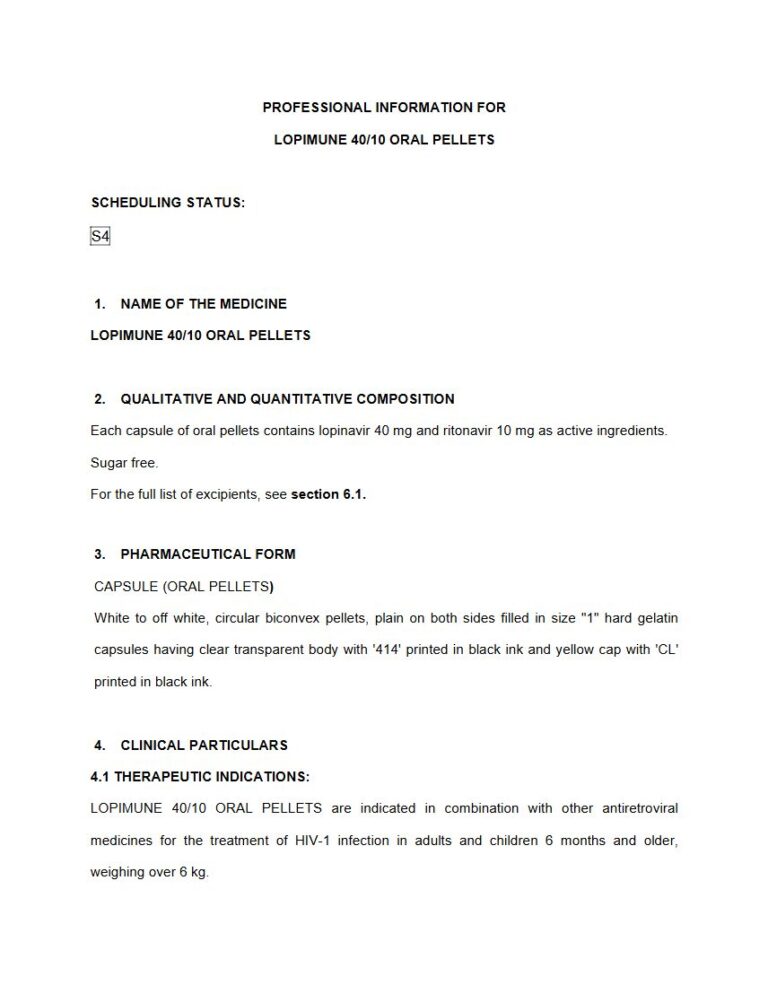
LOPIMUNE 40/10 ORAL PELLETS are indicated in combination with other antiretroviral medicines for the treatment of HIV-1 infection in adults and children 6 months and older, weighing over 6 kg. The choice of LOPIMUNE 40/10 ORAL PELLETS to treat protease inhibitor-experienced HIV-1 infected patients should be based on individual viral resistance testing and their treatment history (see sections 4.4 and 5.1).
4.2 Posology and method of administration
Posology
- LOPIMUNE 40/10 ORAL PELLETS should be initiated by a health care provider experienced in the management of HIV infection.
- LOPIMUNE 40/10 ORAL PELLETS should be given in a twice daily (every 12 hours) dosing regimen. LOPIMUNE 40/10 ORAL PELLETS should not be administered once daily (every 24 hours) to children < 18 years of age.
- LOPIMUNE 40/10 ORAL PELLETS should not be administered to premature neonates (born one month or more before expected date of delivery) until 14 days after their due date.
- LOPIMUNE 40/10 ORAL PELLETS administered in combination with efavirenz, nevirapine, or nelfinavir in patients younger than 6 months of age is not recommended. Total dose of lopinavir and ritonavir oral pellets in paediatric patients should not exceed the recommended adult daily dose of 400/100 mg twice daily.
The recommended dose of LOPIMUNE 40/10 ORAL PELLETS for children is as follows:
- Childu2019s weight 6 u2013 9.9 kg: 3 capsules twice daily (lopinavir 120 mg/ritonavir 30 mg twice daily)
- Childu2019s weight 10 u2013 13.9 kg: 4 capsules twice daily (lopinavir 160 mg/ritonavir 40 mg twice daily)
- Childu2019s weight 14 u2013 19.9 kg: 5 capsules twice daily (lopinavir 200 mg/ritonavir 50 mg twice daily)
- Childu2019s weight 20 u2013 24.9 kg: 6 capsules twice daily (lopinavir 240 mg/ritonavir 60 mg twice daily)
For patients co-treated with nevirapine or efavirenz, see section 4.5.
Special populations
Hepatic impairment: In HIV-infected patients with mild to moderate hepatic impairment, an approximate 30 % increase in lopinavir exposure has been observed but is not expected to be of clinical relevance (see section 5.2). No data are available in patients with severe hepatic impairment. LOPIMUNE 40/10 ORAL PELLETS must not be given to these patients (see section 4.3).
Renal impairment: No dose adjustment is necessary in patients with renal impairment.
Method of administration: For oral administration. LOPIMUNE 40/10 ORAL PELLETS must be taken with a meal twice daily. LOPIMUNE 40/10 ORAL PELLETS should be sprinkled/mixed with soft food such as applesauce or porridge, or mixed with liquid such as water, as described below. LOPIMUNE 40/10 ORAL PELLETS should not be chewed or crushed.
4.3 Contraindications
- LOPIMUNE 40/10 ORAL PELLETS are contraindicated in patients with known hypersensitivity to lopinavir, ritonavir or any other ingredients of LOPIMUNE 40/10 ORAL PELLETS. (see section 6.1).
- Must not be administered in patients with severe hepatic insufficiency as LOPIMUNE 40/10 ORAL PELLETS have not been studied in this condition.
- LOPIMUNE 40/10 ORAL PELLETS should not be co-administered with medicines with a narrow therapeutic window that are substrates of the isoenzyme CYP3A4, such as alfuzosin, amiodarone, dronedarone, bepridil, quinidine, propafenone, verapamil, lurasidone, pimozide, quetiapine, astemizole, terfenadine, cisapride, elbasvir/grazoprevir, ombitasvir/paritaprevir/ritonavir (with or without dasabuvir), oral midazolam, triazolam, clorazepate, diazepam, flurazepam, ergot derivatives, fusidic acid, venetoclax, colchicine, simvastatin and lovastatin, avanafil, sildenafil vardenafil (non-exhaustive list). Inhibition of CYP3A4 by ritonavir could increase plasma concentrations of these medicines, potentially causing serious or life-threatening reactions (see also sections 4.4 and 4.5).
- Herbal preparations containing St Johnu2019s wort (Hypericum perforatum) must not be used while taking lopinavir and ritonavir due to the risk of decreased concentrations and reduced clinical effects of lopinavir and ritonavir (see section 4.5).
4.4 Special warnings and precautions for use
Patients with coexisting conditions
Hepatic impairment: LOPIMUNE 40/10 ORAL PELLETS is contraindicated in patients with severe liver impairment. Patients with chronic hepatitis B or C and treated with combination antiretroviral therapy are at an increased risk for severe and potentially fatal hepatic adverse reactions. For concomitant antiviral therapy for hepatitis B or C, refer to the relevant medicine information for these medicines. Patients with liver dysfunction including chronic hepatitis have increased frequency of liver function abnormalities during combination antiretroviral therapy and should be monitored according to standard practice. If there is evidence of worsening liver disease in such patients, interruption or discontinuation of treatment should be considered. Laboratory tests should be conducted before starting treatment with lopinavir and ritonavir and during treatment.
Renal impairment: Since the renal clearance of lopinavir and ritonavir is negligible, increased plasma concentrations are not expected in patients with renal impairment. Lopinavir and ritonavir are highly protein bound, therefore it is unlikely that they will be significantly removed by haemodialysis or peritoneal dialysis.
Haemophilia: There have been reports of increased bleeding, including spontaneous skin haematomas and haemarthrosis in patients with haemophilia type A and B treated with protease inhibitors. A causal relationship is likely but a biological explanation has not been elucidated. Patients with haemophilia should therefore be warned of the possibility of increased bleeding.
Specific adverse reactions
Lipid elevations: Treatment with lopinavir and ritonavir has resulted in increases, sometimes marked, in the concentration of total cholesterol and triglycerides. Triglyceride and cholesterol should be measured before starting LOPIMUNE 40/10 ORAL PELLETS and periodically during therapy. Particular caution should be paid to patients with high values at baseline and with history of lipid disorders. Lipid disorders should be managed as clinically appropriate.
Pancreatitis: Cases of pancreatitis have been reported in patients receiving lopinavir and ritonavir. Most of these patients have had a history of pancreatitis or concurrent therapy with other medicines associated with pancreatitis. Marked triglyceride elevation is a risk factor for development of pancreatitis. Patients with advanced HIV disease may be at risk of elevated triglycerides and pancreatitis. Pancreatitis should be considered if clinical symptoms (nausea, vomiting, abdominal pain) or abnormal laboratory values (such as increased serum lipase or amylase values) suggestive of pancreatitis occur. Patients who exhibit these signs or symptoms should be evaluated and LOPIMUNE 40/10 ORAL PELLETS therapy should be suspended if pancreatitis is diagnosed (see section 4.8).
Hyperglycaemia: New onset diabetes mellitus, hyperglycaemia or exacerbation of diabetes mellitus has been reported in patients receiving protease inhibitors. In some of these cases hyperglycaemia was severe and also associated with ketoacidosis. Many patients had confounding medical conditions. A causal relation between ritonavir-boosted lopinavir and these events has not been established.
Weight and metabolic parameters: An increase in weight and in levels of blood lipids and glucose may occur during antiretroviral therapy. Such changes may in part be linked to disease control and life-style. For lipids, there is in some cases evidence for a treatment effect, while for weight gain there is no strong evidence relating this to any particular treatment. For monitoring of blood lipids and glucose, reference is made to established HIV treatment guidelines. Lipid disorders should be managed as clinically appropriate.
Immune Reactivation Syndrome: In HIV-infected patients with severe immune deficiency, typically in the first few weeks or months after initiation of combination antiretroviral treatment, an inflammatory reaction to asymptomatic or residual opportunistic pathogens (e.g. CMV retinitis, mycobacterial infections, Pneumocystis pneumonia) may arise and cause serious clinical conditions or aggravation of symptoms. Treatment should be instituted when necessary. Autoimmune disorders (such as Gravesu2019 disease) have also been reported in the setting of immune reactivation; however, the reported time to onset is more variable and can occur many months after initiation of treatment.
Osteonecrosis: Although the aetiology is considered to be multifactorial (including corticosteroid use, alcohol consumption, severe immunosuppression, higher body mass index), cases of osteonecrosis have been reported, particularly in patients with advanced HIV-disease and/or long-term exposure to combination antiretroviral therapy. So far, this disorder has been reported mainly in adults. Patients should be advised to seek medical advice if they experience joint aches and pain, joint stiffness or difficulty in movement.
PR interval prolongation: Lopinavir/ritonavir has been shown to cause modest asymptomatic prolongation of the PR interval in some healthy adult subjects. Second- or third-degree atrioventricular block has been reported in patients taking lopinavir/ritonavir who have underlying structural heart disease and conduction abnormalities or who are taking medicines that prolong the PR interval (such as verapamil or atazanavir). LOPIMUNE 40/10 ORAL PELLETS should be used with caution in such patients (see sections 4.8, 5.1 and 5.3).
Warnings on specific interactions with other medicines: LOPIMUNE 40/10 ORAL PELLETS contains ritonavir, which is a very potent inhibitor of the P450 isoform CYP3A. LOPIMUNE 40/10 ORAL PELLETS is likely to increase plasma concentrations of medicines that are primarily metabolised by CYP3A. These increases of plasma concentrations of co-administered medicines could increase or prolong their therapeutic effect and adverse events (see sections 4.3 and 4.5).
4.5 Interactions with other medicines
LOPIMUNE 40/10 ORAL PELLETS contains lopinavir and ritonavir, both of which inhibit the P450 isoform CYP3A in vitro. Co-administration of LOPIMUNE 40/10 ORAL PELLETS and medicines primarily metabolised by CYP3A may increase plasma concentrations of the other medicines, which could increase or prolong its therapeutic and adverse reactions (see section 4.3). LOPIMUNE 40/10 ORAL PELLETS does not inhibit CYP2D6, CYP2C9, CYP2C19, CYP2E1, CYP2B6 or CYP1A2 at clinically relevant concentrations (see section 4.3).
Lopinavir/ritonavir has been shown in vivo to induce its own metabolism and to increase the biotransformation of some medicines metabolised by cytochrome P450 (including CYP2C9 and CYP2C19) enzymes and by glucuronidation. This may lower plasma concentrations and potentially decrease efficacy of co-administered medicines. Medicines that are contraindicated specifically due to the expected magnitude of interaction and potential for serious adverse events are listed in section 4.3.
Concomitant medicine class: name of medicine Effect on concentration of lopinavir or concomitant medicine Clinical comments
- HIV - 1 antivirals
- HIV - 1 protease inhibitor: fosamprenavir/ritonavir Lowered amprenavir and lopinavir concentrations. An increased rate of adverse reactions has been observed with co-administration of these medicines.
- HIV-1 protease inhibitor: indinavir Increased indinavir concentration. Decrease indinavir dose to 600 mg twice daily, when co-administered with lopinavir/ritonavir 400/100 twice daily. Lopinavir/ritonavir once daily has not been studied in combination with indinavir.
- HIV-1 protease inhibitor: nelfinavir Increased concentrations of nelfinavir and m8 metabolite of nelfinavir. Lowered lopinavir concentration. Lopinavir/ritonavir once daily in combination with nelfinavir is not recommended.
- HIV-1 protease inhibitor: ritonavir Increased lopinavir concentration. Appropriate doses of additional ritonavir in combination with LOPIMUNE 40/10 ORAL PELLETS have not been established.
- HIV-1 protease inhibitor: saquinavir Increased saquinavir concentration. The saquinavir dose is 1000 mg twice daily, when co-administered with lopinavir/ritonavir 400/100 mg twice daily. Lopinavir/ritonavir once daily has not been studied in combination with saquinavir.
- HIV CCR5 u2013 antagonist: maraviroc Increased maraviroc concentrations. When co-administered, patients should receive 150 mg twice daily of maraviroc. For further details see complete prescribing information for maraviroc.
- Non-nucleoside reverse transcriptase inhibitors: efavirenz and nevirapine Lowered lopinavir concentrations. The dose of lopinavir/ritonavir should be increased when co-administered with efavirenz or nevirapine.
- Nucleoside reverse transcriptase inhibitor: didanosine - It is recommended that didanosine be administered on an empty stomach; therefore, didanosine should be given one hour before or two hours after LOPIMUNE 40/10 ORAL PELLETS (given with food).
- Nucleoside reverse transcriptase inhibitor: tenofovir disoproxil fumarate Increased tenofovir concentrations. Patients receiving LOPIMUNE 40/10 ORAL PELLETS and tenofovir should be monitored for adverse reactions associated with tenofovir.
- Nucleoside reverse transcriptase inhibitors: abacavir and zidovudine Lowered concentrations of abacavir and zidovudine. The clinical significance of this potential interaction is unknown.
Other medicines
- Antidysrhythmics e.g. amiodarone and lidocaine (systemic) Increased concentrations of antidysrhythmics. See u2018 CONTRAINDICATIONSu2019 for contraindicated antidysrhythmics. Caution is warranted and therapeutic concentration monitoring (if available) is recommended for antidysrhythmics when co-administered with LOPIMUNE 40/10 ORAL PELLETS.
- Anticancer medicines: vincristine, vinblastine, dasatinib, nilotinib Increased concentrations of anticancer medicines. For vincristine and vinblastine, consideration should be given to initiating a revised regimen that does not include a CYP3A or P-gp inhibitor. A decrease in the dosage or an adjustment of the dosing interval of nilotinib and dasatinib may be necessary for patients requiring co-administration with strong CYP3A inhibitors such as LOPIMUNE 40/10 ORAL PELLETS. Please refer to the nilotinib and dasatinib prescribing information for dosing instructions.
- Anticoagulants: warfarin and rivaroxaban Increased or decreased warfarin concentrations. Concentrations of warfarin may be affected. Initial frequent monitoring of the INR (international normalised ratio) during LOPIMUNE 40/10 ORAL PELLETS and warfarin co-administration is recommended. Avoid concomitant use of rivaroxaban and LOPIMUNE 40/10 ORAL PELLETS. Co-administration of LOPIMUNE 40/10 ORAL PELLETS and rivaroxaban may lead to increased risk of bleeding.
- Anticonvulsants: carbamazepine, phenobarbitone, phenytoin Lowered lopinavir and phenytoin concentrations. LOPIMUNE 40/10 ORAL PELLETS may be less effective due to decreased lopinavir concentrations in patients taking these medicines concomitantly and should be used with caution. LOPIMUNE 40/10 ORAL PELLETS once daily in combination with carbamazepine, phenobarbitone, or phenytoin is not recommended. In addition, co-administration of phenytoin and LOPIMUNE 40/10 ORAL PELLETS may cause decreases in steady-state phenytoin concentrations. Phenytoin levels should be monitored when co-administering with LOPIMUNE 40/10 ORAL PELLETS.
- Anticonvulsants: lamotrigine, valproate Lowered lamotrigine concentrations. Valproate concentrations may be lowered or remain unchanged. A dose increase of lamotrigine or valproate may be needed when co-administered with LOPIMUNE 40/10 ORAL PELLETS and therapeutic concentration monitoring for lamotrigine may be indicated, particularly during dosage adjustments.
- Antidepressant: bupropion Lowered concentrations of bupropion and its active metabolite, hydroxybupropion. Patients receiving LOPIMUNE 40/10 ORAL PELLETS and bupropion concurrently should be monitored for an adequate clinical response to bupropion.
- Antidepressant: trazodone Increased trazodone concentrations. Adverse reactions of nausea, dizziness, hypotension and syncope have been observed following co-administration of trazodone and ritonavir. A lower dose of trazodone should be considered.
- Anti-infective: clarithromycin Increased clarithromycin concentrations. For patients with renal impairment, adjust clarithromycin dose.
- Antifungals: ketoconazole, itraconazole and voriconazole Increased concentrations of ketoconazole and itraconazole. Lowered concentrations of voriconazole. High doses of ketoconazole (>200 mg/day) or itraconazole (> 200 mg/day) are not recommended. The co-administration of voriconazole and LOPIMUNE 40/10 ORAL PELLETS should be avoided. Alternative antifungal therapies should be considered in these patients.
- Anti-gout: colchicine Increased concentrations of colchicine. Concomitant administration with colchicine is contraindicated in patients with renal and/or hepatic impairment (see u2018 CONTRAINDICATIONSu2019).
- Antimycobacterial: rifabutin Increased concentrations of rifabutin and its metabolite. Dosage reduction of rifabutin may be necessary.
- Antiparasitic: atovaquone Lowered concentrations of atovaquone. Clinical significance is unknown; however, increase in atovaquone doses may be needed.
- Antipsychotics: quetiapine Increased concentrations of quetiapine. Initiation of LOPIMUNE 40/10 ORAL PELLETS in patients taking quetiapine: Consider alternative antiretroviral therapy to avoid increases in quetiapine exposures.
- Sedative/ hypnotics: parenterally administered midazolam Increased midazolam concentrations. See u2018 CONTRAINDICATIONSu2019 for contraindicated sedatives/ hypnotics.
- Contraceptive: ethinyl estradiol Lowered concentrations of ethinyl estradiol. Because contraceptive steroid concentrations may be altered when LOPIMUNE 40/10 ORAL PELLETS are co-administered with oral contraceptives or with the contraceptive patch, alternative methods of non-hormonal contraception are recommended.
- Corticosteroids (systemic): e.g. budesonide, dexamethasone, prednisone Increased concentrations of glucocorticoids and decreased concentrations of lopinavir. Use with caution. LOPIMUNE 40/10 ORAL PELLETS may be less effective due to decreased lopinavir plasma concentrations in patients taking these medicines concomitantly.
- Dihydropyridine calcium channel blockers: e.g. felodipine and nifedipine Increased concentrations of dihydropyridine calcium channel blockers. Clinical monitoring of patients is recommended and a dose reduction of the dihydropyridine calcium channel blocker may be considered.
- HMG-CoA reductase inhibitors: atorvastatin and rosuvastatin Increased concentrations of atorvastatin and rosuvastatin. See u2018 CONTRAINDICATIONSu2019 for contraindicated HMG-CoA reductase inhibitors.
- Immunosuppressants: e.g. ciclosporin, tacrolimus and sirolimus Increased concentrations of immunosuppressants. Therapeutic concentration monitoring is recommended for immunosuppressant medicines when co-administered with LOPIMUNE 40/10 ORAL PELLETS.
- Inhaled or intranasal steroids e.g.: fluticasone and budesonide Increased concentrations of glucocorticoids. Concomitant use of LOPIMUNE 40/10 ORAL PELLETS and fluticasone or other glucocorticoids that are metabolised by CYP3A is not recommended.
- Long-acting beta-adrenoceptor agonist: salmeterol Increased concentrations of salmeterol. Concurrent administration of salmeterol and LOPIMUNE 40/10 ORAL PELLETS is not recommended.
- Narcotic analgesics: methadone and fentanyl Decreased concentrations of methadone and increased concentrations of fentanyl. Dosage of methadone may need to be increased when co-administered with LOPIMUNE 40/10 ORAL PELLETS. Careful monitoring of therapeutic and adverse effects (including potentially fatal respiratory depression) is recommended when fentanyl is concomitantly administered with LOPIMUNE 40/10 ORAL PELLETS.
- PDE5 inhibitors: sildenafil, tadalafil and vardenafil Increased concentrations of sildenafil, tadalafil and vardenafil. Use of PDE5 inhibitors for pulmonary arterial hypertension (PAH): sildenafil is contraindicated.
4.6 Fertility, pregnancy and lactation
Pregnancy: The safety of LOPIMUNE 40/10 ORAL PELLETS in pregnant women has not been established, as there are no adequate and well-controlled studies in pregnant women. The use of LOPIMUNE 40/10 ORAL PELLETS during pregnancy is not recommended.
Breastfeeding: HIV-infected mothers should not breastfeed their infants to avoid risking postnatal transmission of HIV. Because of both the potential for HIV transmission and the potential for serious adverse reactions in nursing infants, mothers should be instructed not to breastfeed if they are receiving LOPIMUNE 40/10 ORAL PELLETS. It is not known whether lopinavir is secreted in human milk.
Fertility: Animal studies have shown no effects on fertility. No human data on the effect of lopinavir/ritonavir on fertility are available.
4.7 Effects on ability to drive and use machines
No studies on the effects on the ability to drive and use machines have been performed. Nevertheless, the clinical status of the patient and adverse reactions of LOPIMUNE 40/10 ORAL PELLETS should be borne in mind when considering the patientu2019s ability to drive or operate machinery.
4.8 Undesirable effects
a) Summary of adverse effects: The most common adverse reaction associated with lopinavir therapy is diarrhoea, nausea and vomiting, usually at the start of treatment. Also, dyslipidaemia, including hypertriglyceridaemia and hypercholesterolaemia are common, and may require treatment or discontinuation of the medicine. Pancreatitis has been reported in patients receiving ritonavir-boosted lopinavir. Furthermore, increases in the PR interval have been reported during therapy with ritonavir-boosted lopinavir (see section 4.4).
b) Tabulated summary of adverse reactions: The following adverse reactions of moderate to severe intensity with possible or probable relationship to lopinavir/ritonavir have been reported. The adverse reactions are displayed by system organ class. Events shown with a frequency Unknown were identified during post-marketing surveillance.
Undesirable effects in clinical and post-marketing studies in adults and paediatric patients
| System organ class | Frequency | Adverse reaction |
|---|---|---|
| Infections and infestations | Frequent | Upper respiratory-tract infection |
| Frequent | Lower respiratory-tract infection, skin infections including cellulitis, folliculitis and furuncle | |
| Blood and lymphatic system disorders | Frequent | Anaemia, leucopenia, neutropenia, lymphadenopathy |
| Immune system disorders | Frequent | Hypersensitivity including urticaria and angioedema |
| Less frequent | Immune reconstitution inflammatory syndrome | |
| Endocrine disorders | Less frequent | Hypogonadism |
| Metabolism and nutrition disorders | Frequent | Blood glucose disorders including diabetes mellitus, hypertriglyceridaemia, hypercholesterolemia, weight decreased, decreased appetite |
| Less frequent | Weight increased, increased appetite | |
| Psychiatric disorders | Frequent | Anxiety |
| Less frequent | Abnormal dreams, libido decreased | |
| Nervous system disorders | Frequent | Headache (including migraine), neuropathy (including peripheral neuropathy), dizziness, insomnia |
| Less frequent | Cerebrovascular accident, convulsion, dysgeusia, ageusia, tremor | |
| Eye disorders | Less frequent | Visual impairment |
| Ear and labyrinth disorders | Less frequent | Tinnitus, vertigo |
| Cardiac disorders | Less frequent | Atherosclerosis such as myocardial infarction, atrioventricular block, tricuspid valve incompetence |
| Vascular disorders | Frequent | Hypertension |
| Less frequent | Deep-vein thrombosis | |
| Gastrointestinal disorders | Frequent | Diarrhoea, nausea |
| Frequent | Pancreatitis (see section 4.4: pancreatitis and lipids), vomiting, gastro-oesophageal reflux disease, gastroenteritis and colitis, abdominal pain (upper and lower), abdominal distension, dyspepsia, haemorrhoids, flatulence | |
| Less frequent | Gastrointestinal haemorrhage including gastrointestinal ulcer, duodenitis, gastritis and rectal haemorrhage, stomatitis and oral ulcers, faecal incontinence, constipation, dry mouth | |
| Hepatobiliary disorders | Frequent | Hepatitis including AST, ALT and GGT increases |
| Less frequent | Hepatic steatosis, hepatomegaly, cholangitis, hyperbilirubinemia | |
| Frequency unknown | Jaundice | |
| Skin and subcutaneous tissue disorders | Frequent | Rash including maculopapular rash, dermatitis/rash including eczema and seborrheic dermatitis, night sweats, pruritus |
| Less frequent | Alopecia, capillaritis, vasculitis | |
| Frequency unknown | Stevens-Johnson syndrome, erythema multiforme | |
| Musculoskeletal and connective tissue disorders | Frequent | Myalgia, musculoskeletal pain including arthralgia and back pain, muscle disorders such as weakness and spasms |
| Less frequent | Rhabdomyolysis, osteonecrosis | |
| Renal and urinary disorders | Less frequent | Creatinine clearance decreased, nephritis, haematuria |
| Reproductive system and breast disorders | Frequent | Erectile dysfunction, menstrual disorders - amenorrhoea, menorrhagia |
| General disorders and administration site conditions | Frequent | Fatigue including asthenia |
c) Description of selected adverse reactions: Cushingu2019s syndrome has been reported in patients receiving ritonavir and inhaled or intranasally administered fluticasone propionate; this could also occur with other corticosteroids metabolised via the P450 3A pathway e.g. budesonide (see section 4.4 and 4.5). Increased creatine phosphokinase (CPK), myalgia, myositis, and rarely, rhabdomyolysis have been reported with protease inhibitors, particularly in combination with nucleoside reverse transcriptase inhibitors. Combination antiretroviral therapy has been associated with metabolic abnormalities such as hypertriglyceridaemia, hypercholesterolaemia, insulin resistance, hyperglycaemia and hyperlactataemia (see section 4.4). In HIV-infected patients with severe immune deficiency at the time of initiation of combination antiretroviral therapy (CART), an inflammatory reaction to asymptomatic or residual opportunistic infections may arise. Autoimmune disorders (such as Gravesu2019 disease) have also been reported; however, the reported time to onset is more variable and can occur many months after initiation of treatment (see section 4.4). Cases of osteonecrosis have been reported, particularly in patients with generally acknowledged risk factors, advanced HIV disease or long-term exposure to combination antiretroviral therapy (CART). The frequency of this is unknown (see section 4.4).
d) Paediatric populations: In children 2 years of age and older, the nature of the safety profile is similar to that seen in adults.
Reporting of suspected adverse reactions: Reporting suspected adverse reactions after authorisation of the medicine is important. It allows continued monitoring of the benefit/risk balance of the medicine. Health care providers are requested to report any suspected adverse drug reactions to SAHPRA via the Med Safety APP (Medsafety X SAHPRA) and eReporting platform (who-umc.org) found on the SAHPRA website, or to Cipla Medpro (Pty) Ltd. by email: [email protected] or telephone: 080 222 6662 (toll free).
4.9 Overdose
Treatment of overdose with LOPIMUNE 40/10 ORAL PELLETS should consist of general supportive measures including monitoring of vital signs and observation of the clinical status of the patient. There is no specific antidote for overdose with LOPIMUNE 40/10 ORAL PELLETS. If indicated, elimination of unabsorbed medicine should be achieved by emesis. Administration of activated charcoal may also be used to aid in removal of unabsorbed medicine. Since LOPIMUNE 40/10 ORAL PELLETS are highly protein bound, dialysis is unlikely to be beneficial in significant removal of the medicine.
