
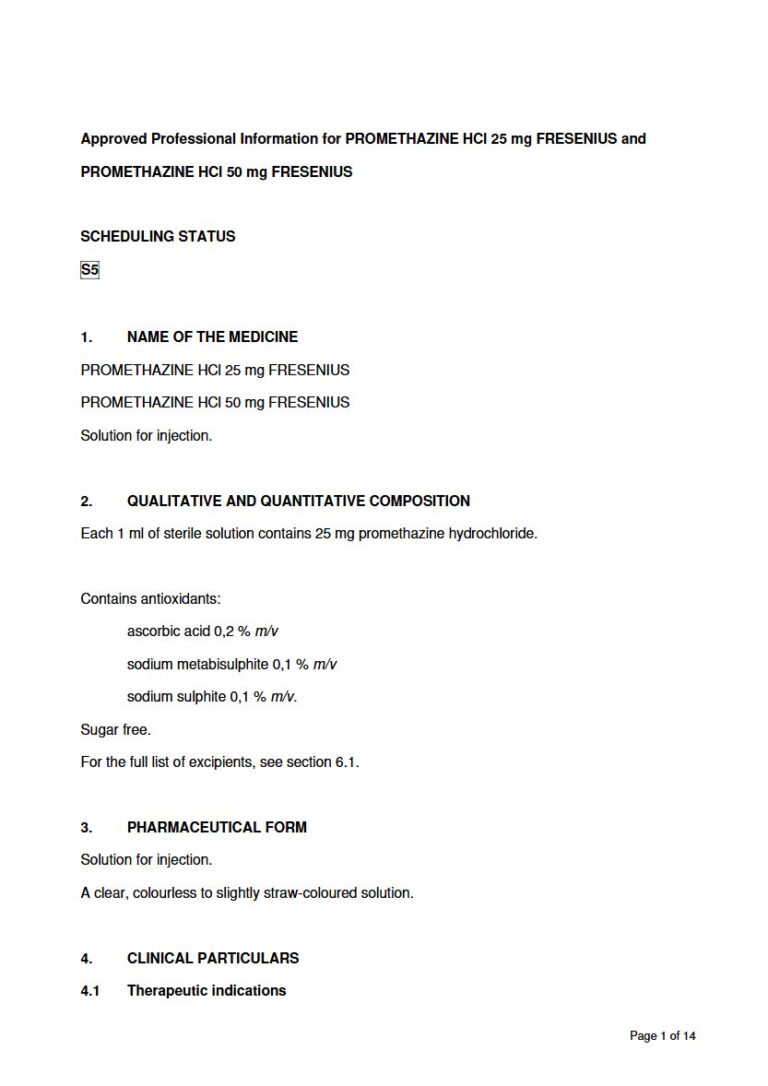
Promethazine Hcl 25 Mg/50 Mg Solution
PDF Leaflet Revision Date: 22 April 2022
Clinical Summary
Quick overview from the medicine insert
Indication
Treatment of allergic disorders, nausea, and as a sedative.
Dosage (summary)
Adults: 25 mg IM/IV; may repeat every 2 hours. Children: 0.125 mg/kg every 4-6 hours.
Special Populations
- Elderly
- Children under 2 years
- Renal impairment
- Hepatic impairment
Pregnancy & Breastfeeding
Not recommended in pregnancy; may cause drowsiness in breastfed infants.
Key Drug Interactions
- CNS depressants
- MAO inhibitors
- Anticholinergics
Contraindications
- Hypersensitivity
- Children under 2 years
- Acute asthma attacks
- CNS depression
Common side effects
- Sedation
- Dizziness
- Dry mouth
- Urinary retention
Counselling Points
- Avoid alcohol
- Caution with machinery
- Report any severe side effects
Serious warnings
- May cause drowsiness
- Risk of severe chemical irritation with IV injection
Important Disclaimer
The Promethazine Hcl 25 Mg/50 Mg Solution professional information leaflet below is the property of Fresenius Kabi Manufacturing Sa and is provided on Medinsert exactly as issued, with no.. alterations or editorial changes. We make every effort to keep content current by updating documents as soon as new versions become available. Medinsert serves as a trusted access point for healthcare professionals, but does not replace official sources or clinical judgement. For more details, please read our full disclaimer. read more>>
 Healthcare Professionals Only
This content is for registered healthcare professionals
Sign in or create a free account to read the full package insert.
Free for HPCSA-registered professionals. Powered by Medinsert.
Clinical Particulars
Section 4 of the official insert — extracted exactly as issued, no alterations
4.1 Therapeutic indications
PROMETHAZINE HCl FRESENIUS is indicated in disorders known to respond to antihistamine therapy. It is used for the treatment of seasonal rhinitis (hay fever), rhinoconjunctivitis (allergic conjunctivitis), perennial allergic conjunctivitis, vasomotor rhinitis, conjunctivitis, pruritus, urticaria, angioedema, dermatographism and urticarial transfusion reactions. PROMETHAZINE HCl FRESENIUS is used in anaphylactic or anaphylactoid reactions as a treatment adjunct with adrenaline. PROMETHAZINE HCl FRESENIUS can be used as prophylaxis and treatment of nausea, vomiting, dizziness and vertigo associated with motion sickness. It is used prophylactically and as treatment for nausea and vomiting associated with anaesthesia and surgery. It is used for its sedative and hypnotic effects and as adjunct to preoperative and post-operative medication. Larger doses have been given for control of Parkinsonian symptoms, e.g. oculogyric crises.
4.2 Posology and method of administration
Antihistaminic: Usual adult and adolescent dose: 25 mg intramuscular or intravenous. May be repeated within 2 hours if required. Children 2 years and older: Intramuscularly: 0,125 mg/kg body mass every 4 to 6 hours OR 0,5 mg/kg body mass at bedtime as needed OR 6,25 u2013 12,5 mg three times a day as needed OR 25 mg at bedtime as needed.
Anti-emetic: Usual adult and adolescent dose: 25 mg initially and then 10 u2013 25 mg every 4 u2013 6 hours as needed. Children: 0,25 u2013 0,5 mg/kg every 4 to 6 hours as needed OR 10 u2013 25 mg every 4 to 6 hours as needed.
Antivertigo/motion sickness: Usual adult and adolescent dose: 25 mg twice a day as needed. Children: 0,5 mg/kg every 12 hours as needed OR 10 u2013 25 mg twice a day as needed.
Sedative/hypnotic: Usual adult and adolescent dose: 25 u2013 50 mg at night, or pre- or post-surgically. Children: 0,5 u2013 1,0 mg/kg OR 10 u2013 25 mg as needed.
PROMETHAZINE HCl FRESENIUS may be given by slow intravenous injection or injected into the tubing of a freely running infusion in a concentration of not more than 25 mg/ml, although it is usually diluted to 2,5 mg/ml. The rate of infusion should not exceed 25 mg per minute.
4.3 Contraindications
- Hypersensitivity to promethazine or to any of the other ingredients (see sections 2 and 6.1). Cross sensitivity to other antihistamines.
- Not for use in children under 2 years of age. The use of PROMETHAZINE HCl FRESENIUS may be associated with the sudden infant death syndrome (SIDS).
- PROMETHAZINE HCl FRESENIUS is contraindicated during acute attacks of asthma and in comatose patients.
- Phenothiazines should not be used in patients with pre-existing central nervous system depression, bone marrow depression, liver disorders, phaeochromocytoma or Reyeu2019s Syndrome.
- Monoamine oxidase inhibitors will potentiate both the drowsiness effect and the anticholinergic effects if taken with antihistamines. Concurrent use is not recommended. PROMETHAZINE HCl FRESENIUS should be avoided in patients who were taking monoamine oxidase inhibitors up to 14 days previously.
- Anticholinergics or medicines with anticholinergic activity will be potentiated if used concurrently with antihistamines.
4.4 Special warnings and precautions for use
PROMETHAZINE HCl FRESENIUS may cause drowsiness and impaired concentration, which may be aggravated by simultaneous intake of alcohol or other central nervous system depressant agents e.g. sedatives and tranquillisers. Caution is advised when the following medical conditions exist:
- severe cardiovascular disorders or coronary artery disease
- prostatic hypertrophy
- narrow angle glaucoma
- emphysema or chronic bronchitis
- porphyria
- epilepsy
- jaundice
- parkinsonism
- diabetes mellitus
- hypothyroidism
- myasthenia gravis
- during an acute attack of asthma
- hepatic and renal insufficiency
- bladder neck or pyloro-duodenal obstruction.
Promethazine-induced toxic psychosis occurred in a patient with chronic renal failure who had been given promethazine, such as contained in PROMETHAZINE HCl FRESENIUS. PROMETHAZINE HCl FRESENIUS may thicken or dry lung secretions and impair expectoration. It should therefore be used with caution in patients with asthma, bronchitis or bronchiectasis.
PROMETHAZINE HCl FRESENIUS may mask the warning signs of ototoxicity caused by ototoxic medicines, e.g. salicylates. It may also delay the early diagnosis of intestinal obstruction or raised intracranial pressure through the suppression of vomiting. PROMETHAZINE HCl FRESENIUS should not be given by subcutaneous injection. Intravenous injections of PROMETHAZINE HCl FRESENIUS must be given slowly and extreme care must be taken to avoid perivascular extravasation or inadvertent intra-arterial injection, due to the risk of severe chemical irritation. Venous thrombosis has been reported at the site of intravenous injection and arteriospasm and peripheral gangrene may follow inadvertent intra-arterial injection. If a patient complains of pain during intravenous injection, stop the injection immediately, as this may be a sign of extravasation or inadvertent intra-arterial injection. Intramuscular injections must also be performed carefully to avoid inadvertent subcutaneous injections, which could lead to local necrosis. PROMETHAZINE HCl FRESENIUS contains sodium sulphite and may rarely cause severe hypersensitivity reactions and bronchospasm.
Paediatric population: Use is not recommended in children under 2 years of age except on the advice of a doctor. Should be used with care in dehydrated or acutely ill children, as these patients have an increased incidence of dystonias. The use of PROMETHAZINE HCl FRESENIUS should be avoided in children and adolescents with signs and symptoms suggestive of Reyeu2019s syndrome.
Elderly population: Elderly patients are especially susceptible to dizziness, sedation, confusion, hypotension and anticholinergic effects such as dry mouth and urinary retention.
4.5 Interaction with other medicines and other forms of interaction
PROMETHAZINE HCl FRESENIUS may enhance the sedative effects of central nervous system depressants including alcohol, barbiturates, hypnotics, opioid analgesics, anxiolytic sedatives and neuroleptics. Mono-amine oxidase inhibitors (MAOIs) may enhance the antimuscarinic effects of PROMETHAZINE HCl FRESENIUS and PROMETHAZINE HCl FRESENIUS has an additive antimuscarinic action with other antimuscarinic medicines, such as atropine and tricyclic antidepressants. Tricyclic antidepressants or maprotiline potentiates anticholinergic effects if taken with antihistamines (such as PROMETHAZINE HCl FRESENIUS). The alpha-adrenergic effect of adrenaline may be blocked, possibly resulting in severe hypotension and tachycardia. Medications tending to cause extrapyramidal reactions may be potentiated by phenothiazines and the extrapyramidal effects aggravated. The antiparkinsonian effects of levodopa may be inhibited. It has been suggested that some sedating antihistamines (such as PROMETHAZINE HCl FRESENIUS) could mask the warning signs of damage caused by ototoxic medicines such as aminoglycosides antibiotics. PROMETHAZINE HCl FRESENIUS may cause hypotension and dosage adjustment of antihypertensive therapy may therefore be required. PROMETHAZINE HCl FRESENIUS may lower the convulsive threshold, and dosage adjustment of anticonvulsant medicines may therefore be required. Positive skin tests may be suppressed by antihistamines, such as PROMETHAZINE HCl FRESENIUS, therefore treatment with PROMETHAZINE HCl FRESENIUS should be stopped at least 72 hours before the test. False negative and positive results have been reported with some pregnancy tests. PROMETHAZINE HCl FRESENIUS may increase glucose tolerance.
Solutions of PROMETHAZINE HCl FRESENIUS are incompatible with alkaline substances. Compounds reported to be incompatible with PROMETHAZINE HCl FRESENIUS include aminophylline, barbiturates, benzylpenicillin salts, carbenicillin sodium, chloramphenicol sodium succinate, chlorothiazide sodium, cefmetazole sodium, cefoperazone sodium, cefotetan disodium, dimenhydrinate, doxorubicin hydrochloride, furosemide, heparin sodium, hydrocortisone sodium succinate, methicillin sodium, morphine sulphate, nalbuphine hydrochloride and some contrast media.
4.6 Fertility, pregnancy and lactation
Pregnancy: Safety in pregnancy has not been established. PROMETHAZINE HCl FRESENIUS should not be used in pregnancy. PROMETHAZINE HCl FRESENIUS is not recommended in the 2 weeks prior to delivery in view of the risk of irritability and excitement in the neonate.
Lactation: PROMETHAZINE HCl FRESENIUS crosses the blood-brain barrier and the placenta and is distributed into breast milk. Phenothiazine derivatives have been reported to cause jaundice and extrapyramidal symptoms in infants whose mothers received these agents during pregnancy. When used in breastfeeding phenothiazine derivatives may cause drowsiness or excitement and/or irritability in infants.
4.7 Effects on ability to drive and use machines
PROMETHAZINE HCl FRESENIUS may cause drowsiness and impaired concentration. Patients undergoing treatment with PROMETHAZINE HCl FRESENIUS should not take charge of vehicles or other means of transport, or machinery, or perform potentially dangerous tasks, where loss of attention may lead to accidents.
4.8 Undesirable effects
After the administration of PROMETHAZINE HCl FRESENIUS the following side effects may occur:
Immune system disorders: Frequency unknown: Anaphylaxis.
Blood and the lymphatic system disorders: Frequency unknown: Agranulocytosis, haemolytic anaemia, leucopenia, thrombocytopenia.
Nervous system disorders: Frequent: Sedation, varying from slight drowsiness to deep sleep, and including lassitude, dizziness, fatigue and incoordination. Sedative effects diminish after a few days of treatment. Frequency unknown: Confusion, diplopia, headache and paraesthesia. Paradoxical CNS stimulation may occur especially in children, with insomnia, nervousness, euphoria, irritability, tremors, nightmares, hallucinations, and convulsions. In high doses, CNS stimulation may be attributed to antimuscarinic activity. Extrapyramidal symptoms have been reported. These include dry mouth, thickened respiratory tract secretions and tightness of the chest, blurred vision, urinary difficulty and retention; a reduction in tone and motility of the gastrointestinal tract resulting in constipation and increased gastric reflux (at high doses), transient bradycardia followed by tachycardia with palpitations and arrhythmias; also at high doses, CNS stimulation.
Ear and labyrinth disorders: Frequency unknown: Tinnitus.
Cardiac disorders: Frequent: Cardiovascular side effects are more commonly seen after injection and include bradycardia, tachycardia, transient minor increases in blood pressure and occasional hypotension. Frequency unknown: Tight chest, palpitations and dysrhythmias.
Respiratory, thoracic and mediastinal disorders: Frequency unknown: Dryness of the respiratory passages, thickening of mucous and coughing.
Gastrointestinal disorders: Frequency unknown: Loss of appetite (anorexia), nausea, vomiting, epigastric distress, diarrhoea and dry mouth. Reduction in tone and motility of the gastrointestinal tract, resulting in gastric reflux and constipation.
Hepato-biliary disorders: Frequency unknown: Jaundice and thrombocytopenic purpura.
Skin and subcutaneous tissue disorders: Frequency unknown: Hypersensitivity reactions, particularly of the skin, may occur. Allergic dermatitis. Less frequent: Urticaria, rash and pruritus. Photosensitivity has been reported.
Renal and urinary disorders: Frequency unknown: Urinary retention or frequency, and dysuria.
Congenital, familial and genetic disorders: Frequency unknown: Drug fever.
General disorders and administration site conditions: Frequency unknown: Increased sweating. Venous thrombosis has been reported at the site of intravenous injections, and arteriospasm and gangrene may follow inadvertent intra-arterial injection.
Reporting of suspected adverse reactions: Healthcare providers are asked to report any suspected adverse drug reactions to the Holder of the Certificate of Registration at the following email address: [email protected] and to the relevant medicineu2019s regulatory authority in the country where the product is marketed.
Reporting suspected adverse reactions after authorisation of PROMETHAZINE HCl FRESENIUS is important. It allows continued monitoring of the benefit/risk balance of PROMETHAZINE HCl FRESENIUS. Healthcare providers are asked to report any suspected adverse reactions to SAHPRA via the u201c6.04 Adverse Drug Reactions Reporting Formu201d, found online under SAHPRAu2019s publications: https://www.sahpra.org.za/Publications/Index/8.
4.9 Overdose
Symptoms include drowsiness or paradoxical excitement, ataxia, tremors, athetosis, hallucinations and convulsions. Fixed dilated pupils with a flushed face, sinus tachycardia, dyspnoea, urinary retention, dry mouth and fever. Terminally there may be deepening coma and cardiorespiratory collapse. Central excitatory effects constitute the greatest danger, particularly in children who are more likely to exhibit central nervous system stimulation. Adults more frequently exhibit central nervous system depression and the aged are particularly prone to experience hypotension.
Treatment of overdose: The stomach should be emptied by emesis or lavage. There is no specific antidote and treatment is symptomatic and supportive. Treatment of extrapyramidal reactions may be necessary with diphenhydramine or barbiturates.
